
將舊衣織入空間的美感革命:FabBRICK 打造新世代建材,翻轉永續成為附加價值
© FabBRICK
當我們談論永續,腦海中快速浮現的往往是生硬的數據、制式化標章或證書,甚至是成分單一純粹的原料。然而,走進位於巴黎十九區,這座四百平方公尺工作室,眼前整齊排列、色調多元,且可以靈活組合磚體,正在顛覆我們對「循環材質」的刻板想像。
FabBRICK ,由法國建築師 Clarisse Merlet 於 2018 年創立的材質設計工作室,核心概念源自於她對當代建築營建環境的反思:當都市中存在著大量被遺棄的紡織廢料,而室內建築又極度依賴傳統工業建材時,這些富含色彩的紡織餘料,是否有建構空間語彙的可能?
-
When we talk about sustainability, cold data, standardized certifications, or pure, single-ingredient raw materials often come to mind. Yet, stepping into a 400-square-meter studio in the 19th arrondissement of Paris, an array of neatly arranged, vibrantly colored, and highly modular bricks immediately shatters our stereotypical image of "circular materials."
Founded in 2018 by French architect Clarisse Merlet, material design studio FabBRICK was born from a reflection on contemporary construction environments: with urban spaces overflowing with discarded textiles and interior architecture heavily reliant on traditional industrial materials, could these colorful textile scraps be repurposed to create a new spatial vocabulary?
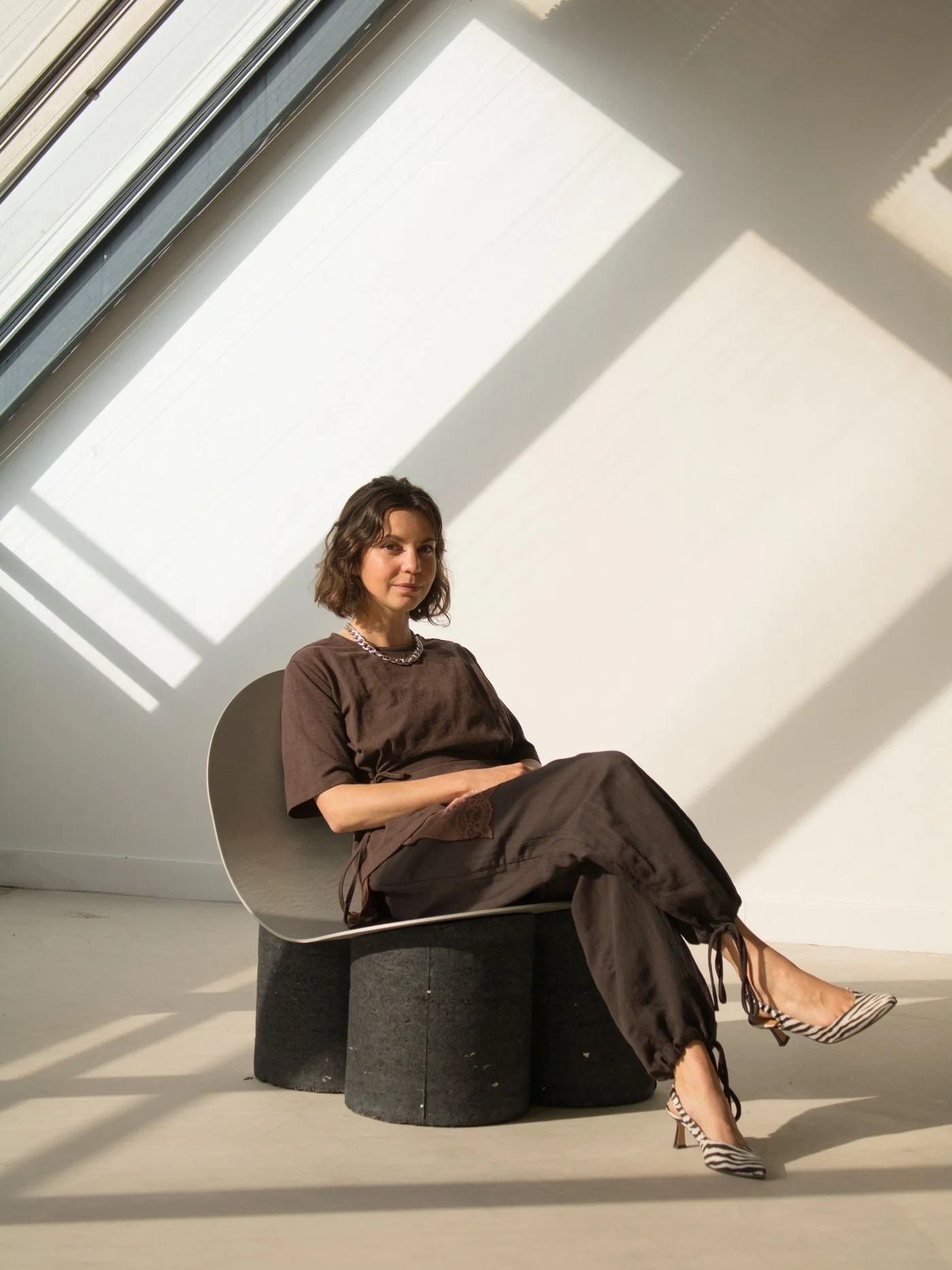
FabBRICK 創辦人 Clarisse Merlet © FabBRICK
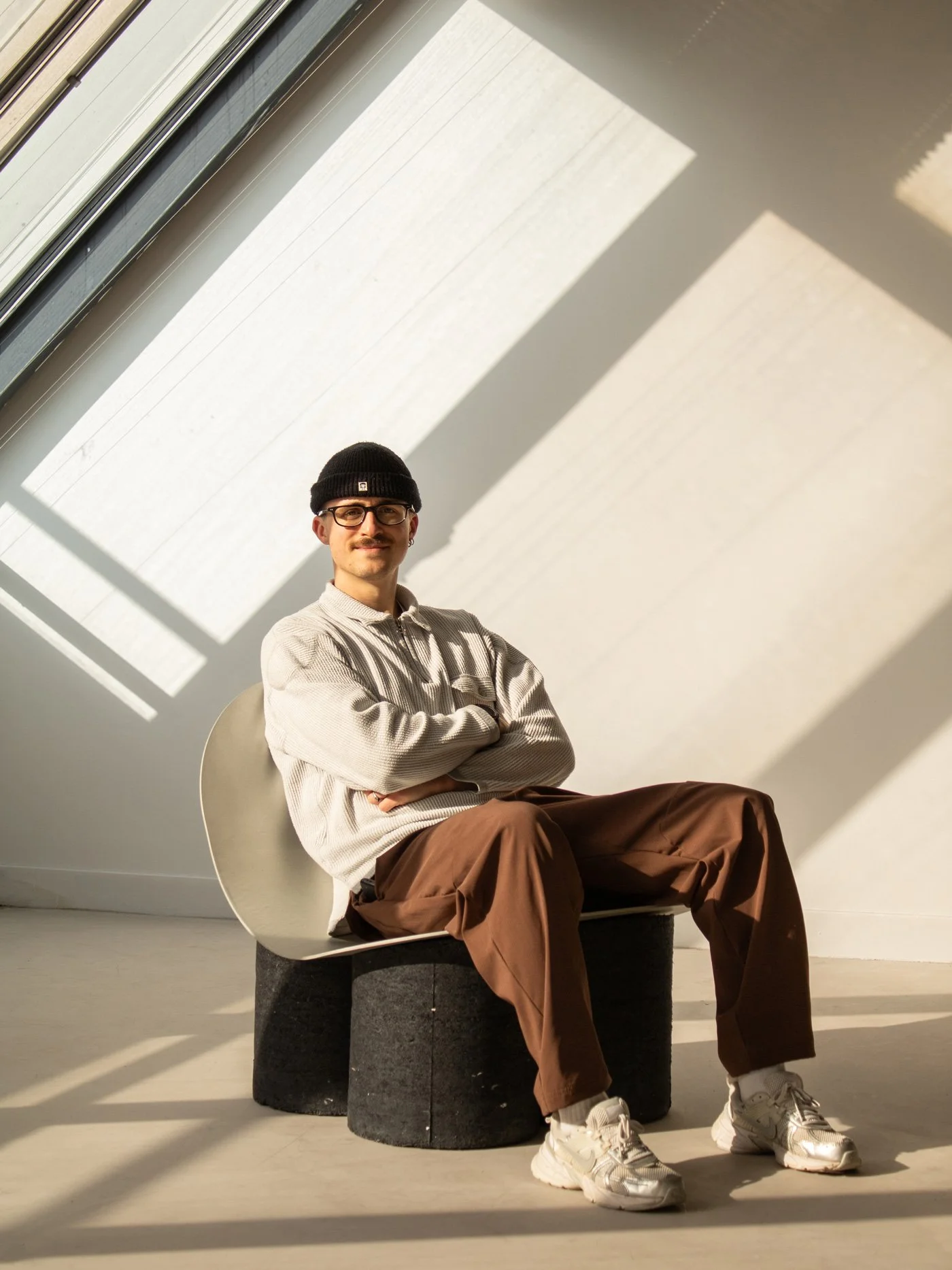
FabBRICK 設計總監 Théo Robert © FabBRICK
以往,這類創新嘗試多半被歸類為概念性的永續實驗;但在 2026 年,隨著品牌首度參與 Maison & Objet 巴黎時尚家居設計展,並全面開展藝術雕塑支線,Clarisse Merlet 所做的,早已超越單純的廢棄物再製,而是賦予紡織廢料一套嶄新生命,創造出具視覺張力與共鳴的感官體驗。
賦予廢料第二生命,開啟永續材料的機能革命
由於 Clarisse 具備純美術與建築的雙重背景,看待物質世界的方式自然也展現出獨特視角。建築帶給她理性的邏輯與功能思維,造型藝術則揉入了敏銳的美學直覺;這讓她格外重視材料的色彩與肌理,期望人們在靠近與觸摸的瞬間,能建立起更具溫度的連結。
在攻讀建築碩士學位的第一年,面對當代建築過度依賴傳統工業建材,而產生大量碳排與廢棄物的現狀, Clarisse 開始思索替代方案。當時,時尚產業產生的巨大紡織廢棄物正成為全球性議題,但在傳統回收鏈中,這些衣服多半只能被降級回收為抹布、絕緣墊,或直接送往焚化爐與掩埋場,很難重新進入具高經濟價值的循環體系。
-
In the past, such innovative attempts were largely relegated to the realm of conceptual sustainability experiments. However, in 2026, as the brand makes its debut at the Maison & Objet Paris and fully launches its artistic sculpture line, what Clarisse Merlet is doing goes far beyond the mere upcycling of waste. She is breathing new life into discarded textiles, creating sensory experiences full of visual tension and emotional resonance.
Giving Waste a Second Life
Clarisse’s dual background in fine arts and architecture naturally lends her a unique perspective on the physical world. Architecture provides her with rational logic and functional thinking, while plastic arts infuse a keen aesthetic intuition. This duality makes her deeply attentive to the color and texture of materials, aspiring to forge a warmer, more tactile connection the moment people approach and touch them.
During the first year of her master’s degree in architecture, confronted with the reality that contemporary construction relies far too heavily on traditional industrial materials—generating massive carbon emissions and waste—Clarisse began seeking alternatives. At the time, the fashion industry’s colossal textile waste was emerging as a global crisis. Within the traditional recycling chain, these garments were mostly downcycled into rags and insulation pads, or sent straight to incinerators and landfills, rarely re-entering a high-value circular economy.
© FabBRICK
為什麼不把這些色彩豐富,且具備吸音與隔熱潛力的纖維,變成真正能構築空間的元素?
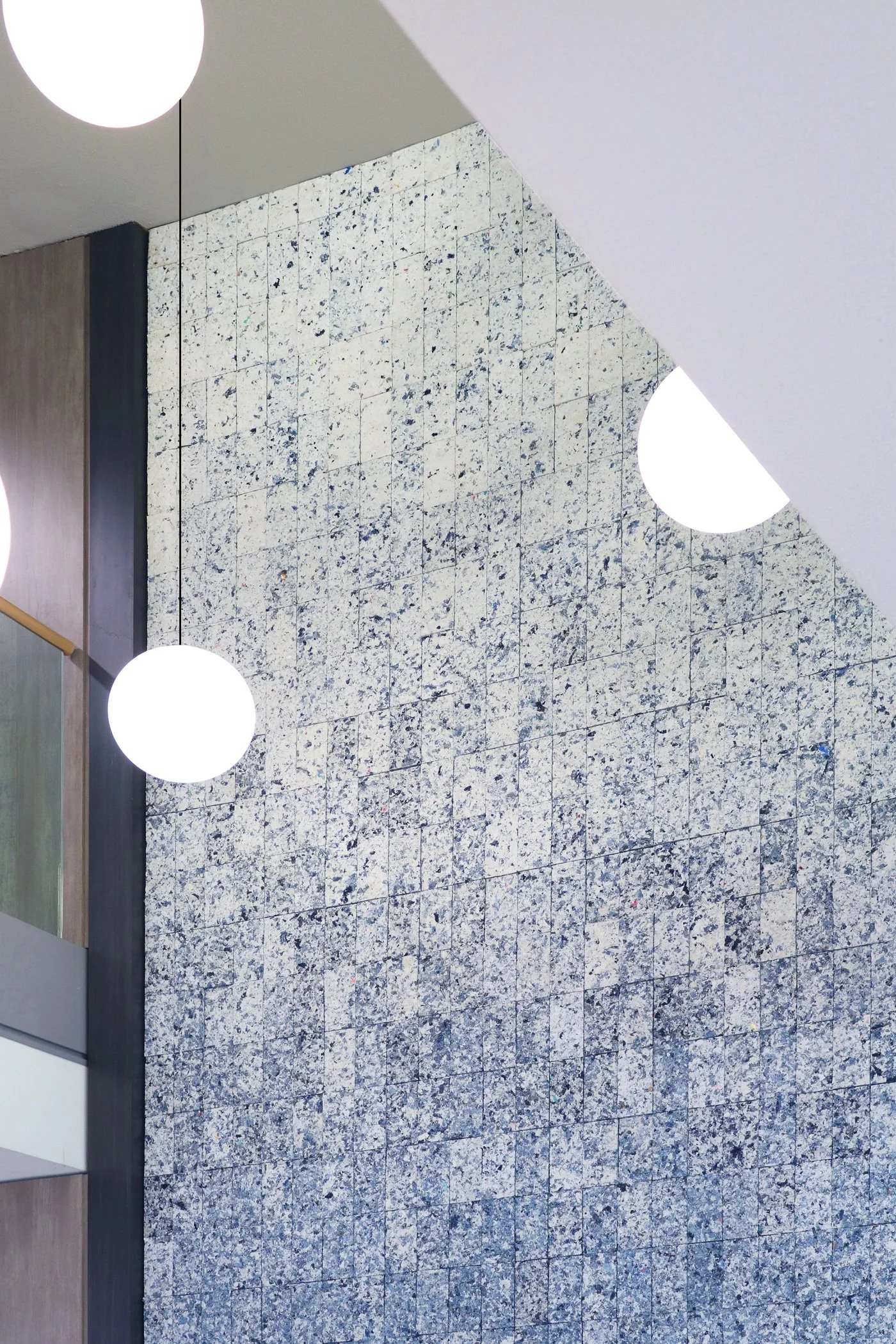
這個想法成為她畢業製作的雛形,也逐步孵化出如今的 FabBRICK。為了證明這項研發不只是實驗室裡的空想,Clarisse 先後取得法國與歐洲的專利認證,成功將這份設計藍圖,落實為兼具工藝手感與規模化生產的成熟材質。每一塊 FabBRICK 磚體皆由 81%的回收紡織纖維與 19% 的環保黏合劑組成;而這款獨家研發的黏合劑由一種生物基成分與兩種礦物調配而成,製程不需經過窯燒,且堅持不添加任何化學防腐劑。這種工法不僅大幅降低能源消耗,更完整保留紡織纖維原本的物理特性,讓最終產出的磚體質地堅固且具備抗燃效果,更擁有優異的低頻吸音性能,能有效地融入各種當代空間的裝飾與應用。
-
"Why not turn these colorful fibers, which inherently possess acoustic and thermal insulation potential, into actual spatial building blocks?"
This idea served as the prototype for her graduation project and gradually incubated what is now FabBRICK. To prove this was more than just a laboratory pipe dream, Clarisse secured patents in France and across Europe, successfully translating her design blueprint into a mature material that balances artisanal craftsmanship with scalable production. Every single FabBRICK block is composed of 81% recycled textile fibers and 19% eco-friendly binder. This exclusive binder formula consists of one bio-based ingredient and two minerals, requiring no firing process and strictly avoiding the addition of any chemical preservatives. This proprietary process not only drastically reduces energy consumption but also fully preserves the physical properties of the textile fibers. The resulting bricks are structurally sound, fire-resistant, and boast excellent low-frequency acoustic absorption, making them seamlessly adaptable for contemporary interior decoration and architectural application.
© FabBRICK
© FabBRICK
© FabBRICK
翻轉永續的底色,當美學成為最高明的情感說服
在當前的設計界中,許多循環材質很容易陷入「強調減少了多少廢棄物」的環保框架,卻忽略了建材作為空間主角時,本就該具備的視覺與觸覺吸引力 。Clarisse 對此有著一定堅持:如果創新材料僅僅因為「它是回收物」而被選用,那這項設計並不算真正成功。
我希望人們首先注意到的是這款材質的美。永續固然重要,但我更希望它被視為材料本身的附加特質,而不是定義它的唯一標籤 。
在商業空間案中,許多室內設計師與業主在初次接觸 FabBRICK 時,往往先被它獨特的色彩與特殊紋理所吸引。透過不同紡織品的組合,團隊創造出常規建材少見的質地與細節;許多人甚至是在決定選用材質後,才了解它們背後的永續故事,這樣的轉折與互動其實最令人覺得有趣,也證明了永續材料不必一直訴諸道德宣傳,它同樣能憑藉自身魅力,與使用者建立起更深層的情感連結。
-
Flipping the Script on Sustainability: Aesthetics as the Ultimate Emotional Persuasion
In today’s design world, many circular materials easily fall into the "eco-trap" of merely highlighting how much waste they’ve reduced, neglecting the visual and tactile appeal a building material must possess when serving as the protagonist of a space. Clarisse is steadfast on this point: if an innovative material is selected solely because it is recycled, the design cannot be considered a true success.
"I want people to notice the beauty of this material first. Sustainability is undeniably important, but I prefer it to be seen as an added value of the material itself, rather than the sole label that defines it."
In commercial projects, interior designers and clients encountering FabBRICK for the first time are often captivated by its unique colors and distinct textures. By mixing different textiles, the team creates textures and details rarely found in conventional building materials. Many clients only discover the profound sustainability story after deciding to use the material. This fascinating pivot proves that sustainable materials don't always need to rely on moral messaging; they can forge deeper emotional connections with users purely through their own intrinsic charm.
© Martina Gemmola
從方正矩陣到有機自由,打破邊界的材質尺度
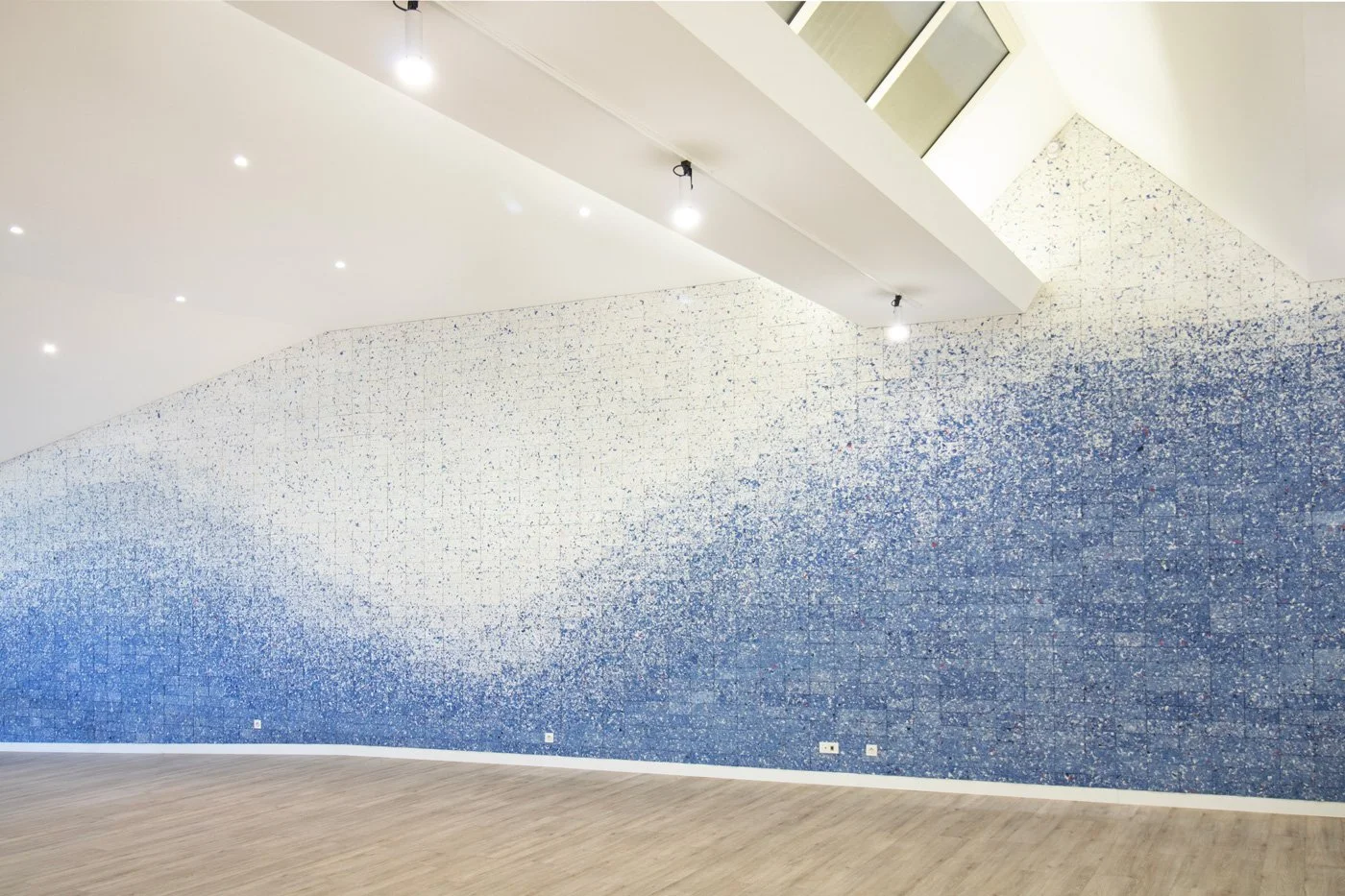
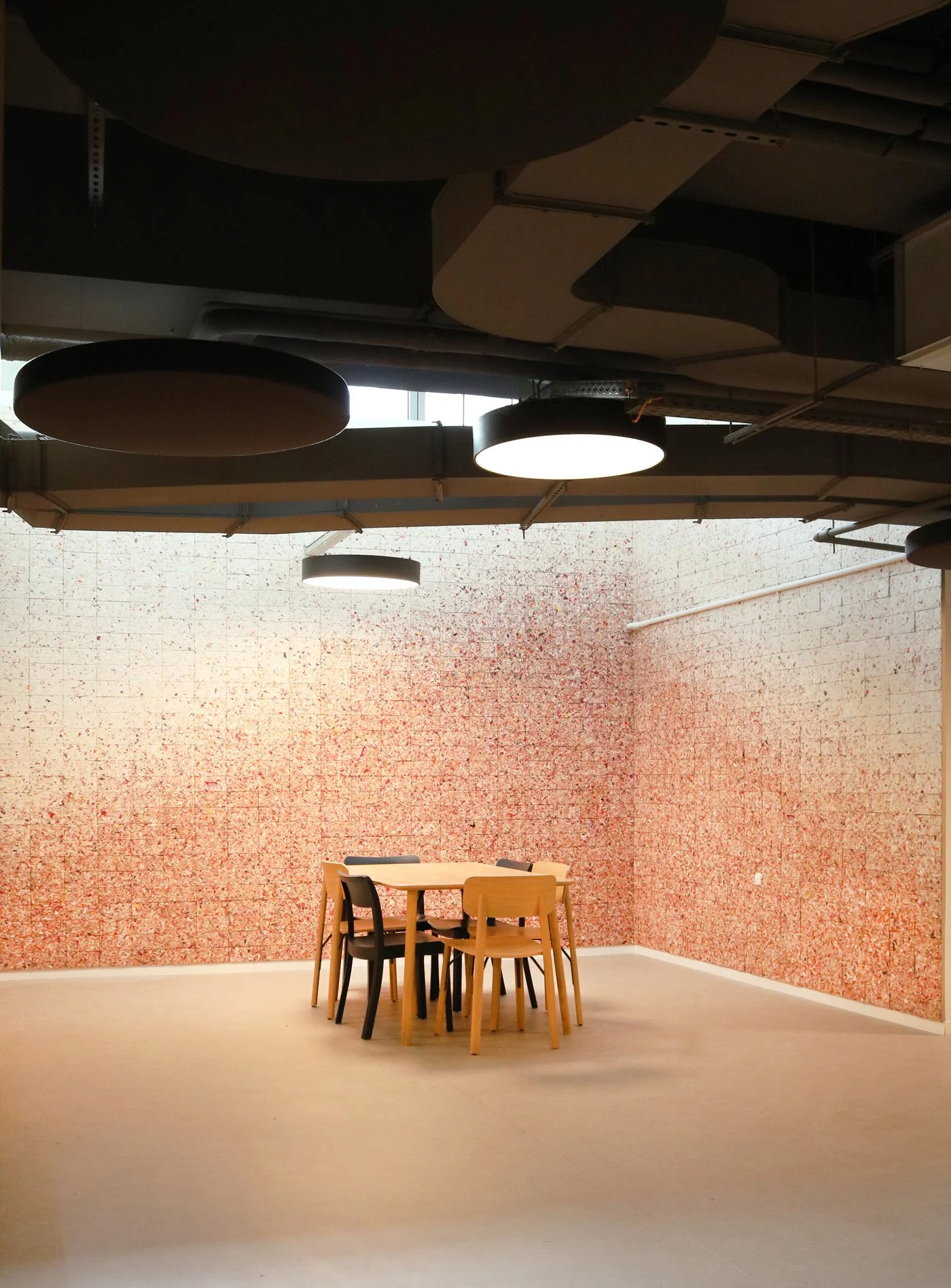
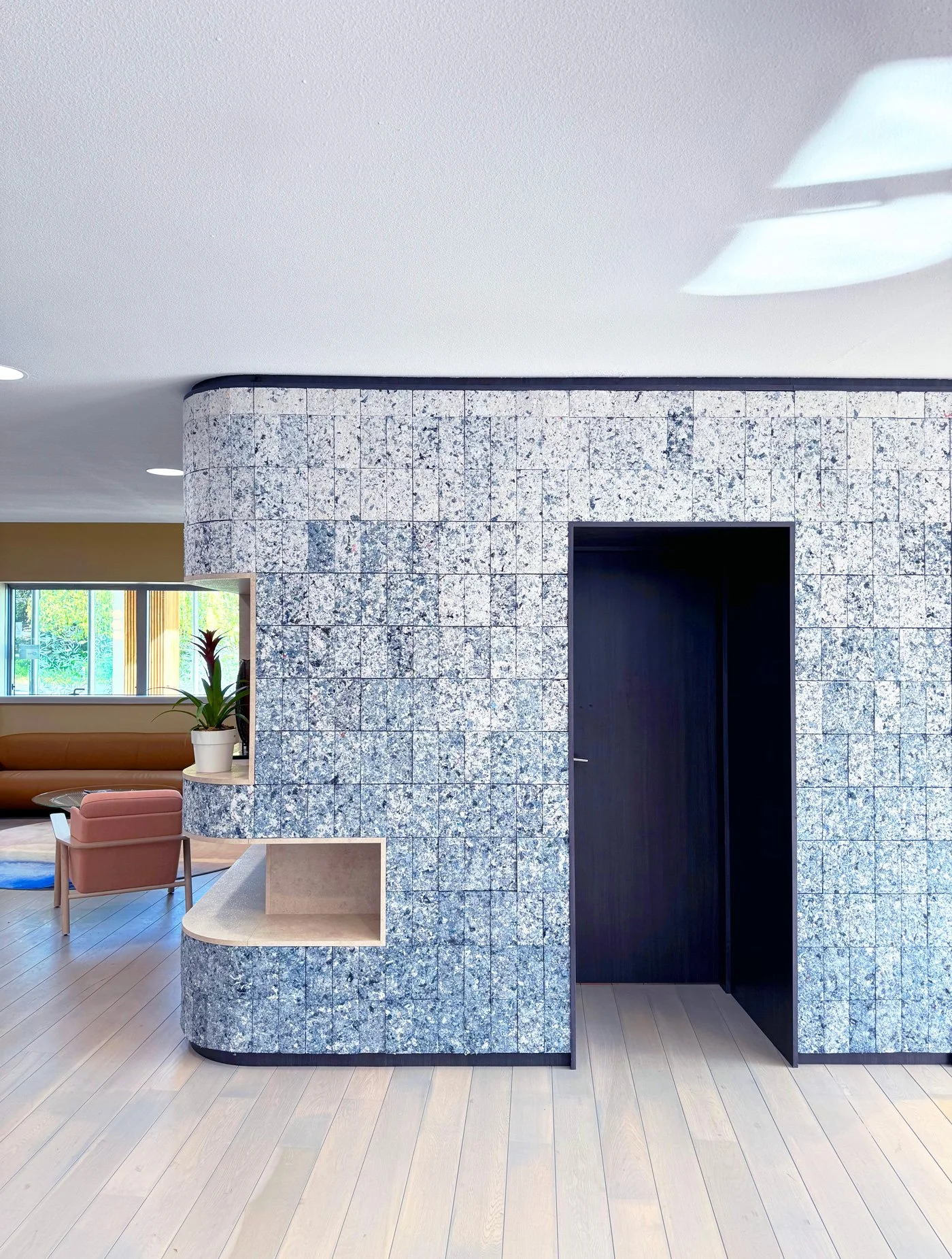
自工作室成立以來,FabBRICK 最具代表性的產品是標準化的牆磚。這些磚體以模組化邏輯,成功進駐超過 300 家法國成衣品牌的店鋪,這背後仰賴的是 FabBRICK 具智慧的 B2B 循環商業模式:團隊直接向法國客戶收集廢棄紡織品。舉例來說,當為特定品牌打造空間時,便直接將該品牌庫存廢料轉化爲建材。這種做法不僅解決了客戶的廢棄物痛點,更確保了整個生產鏈的「可追溯性」與製程的合理性。
目前,FabBRICK 的常規系列提供 9 種色調與 3 種幾何紋樣,同時也能針對大型專案提供客製化開發。然而,標準化方磚雖然在工程施工上極具優勢,卻也無形中限制了造型可能性。
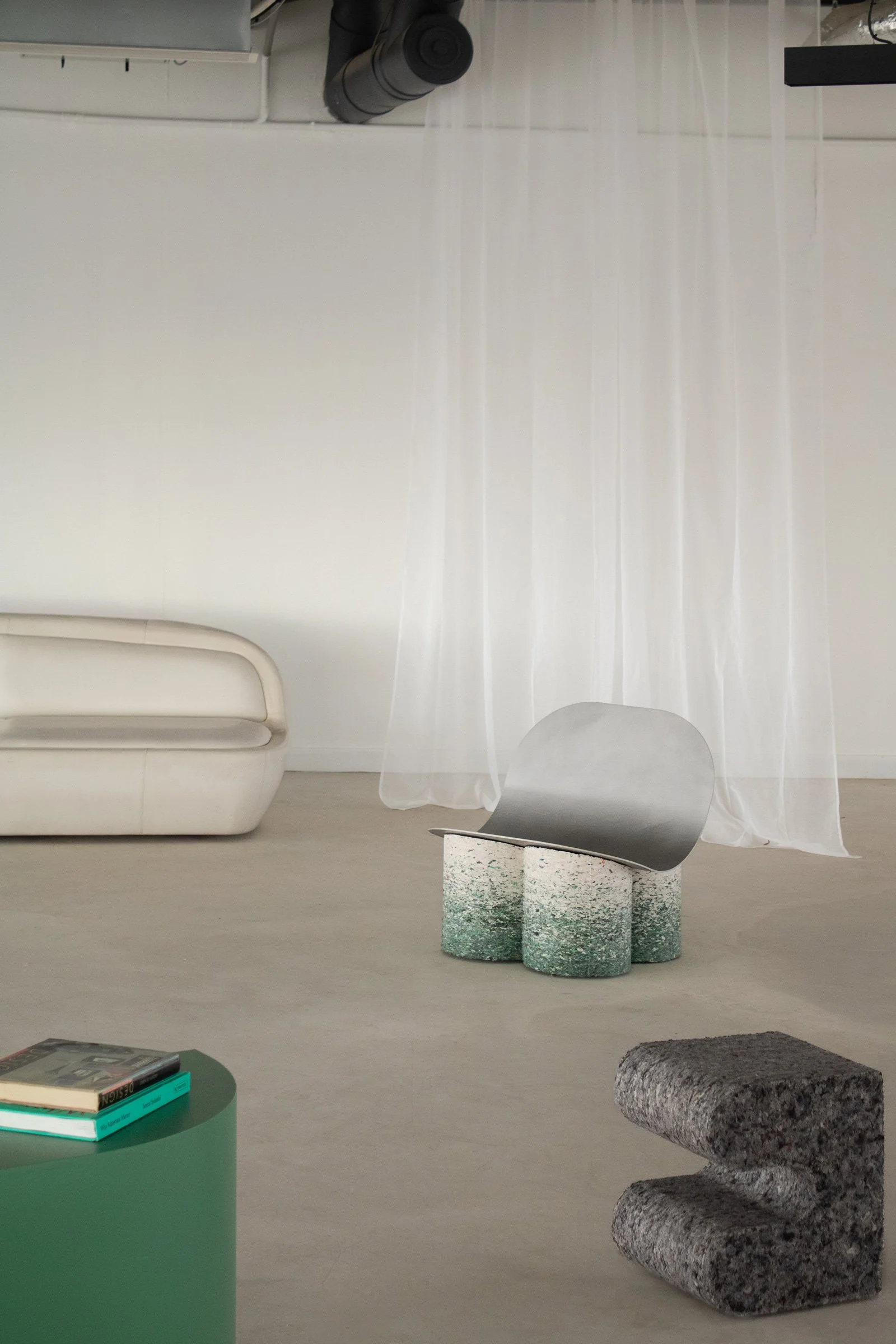
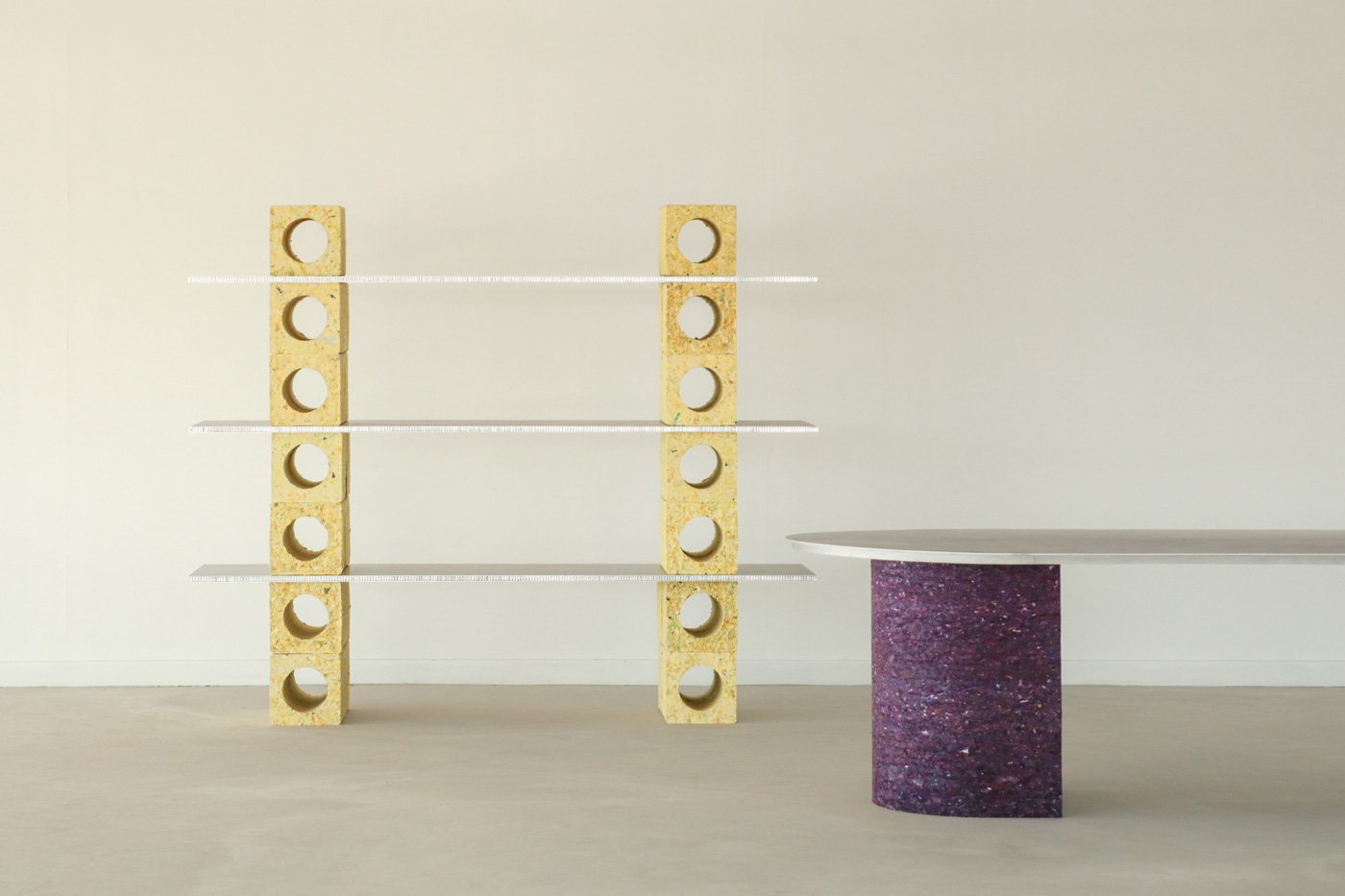
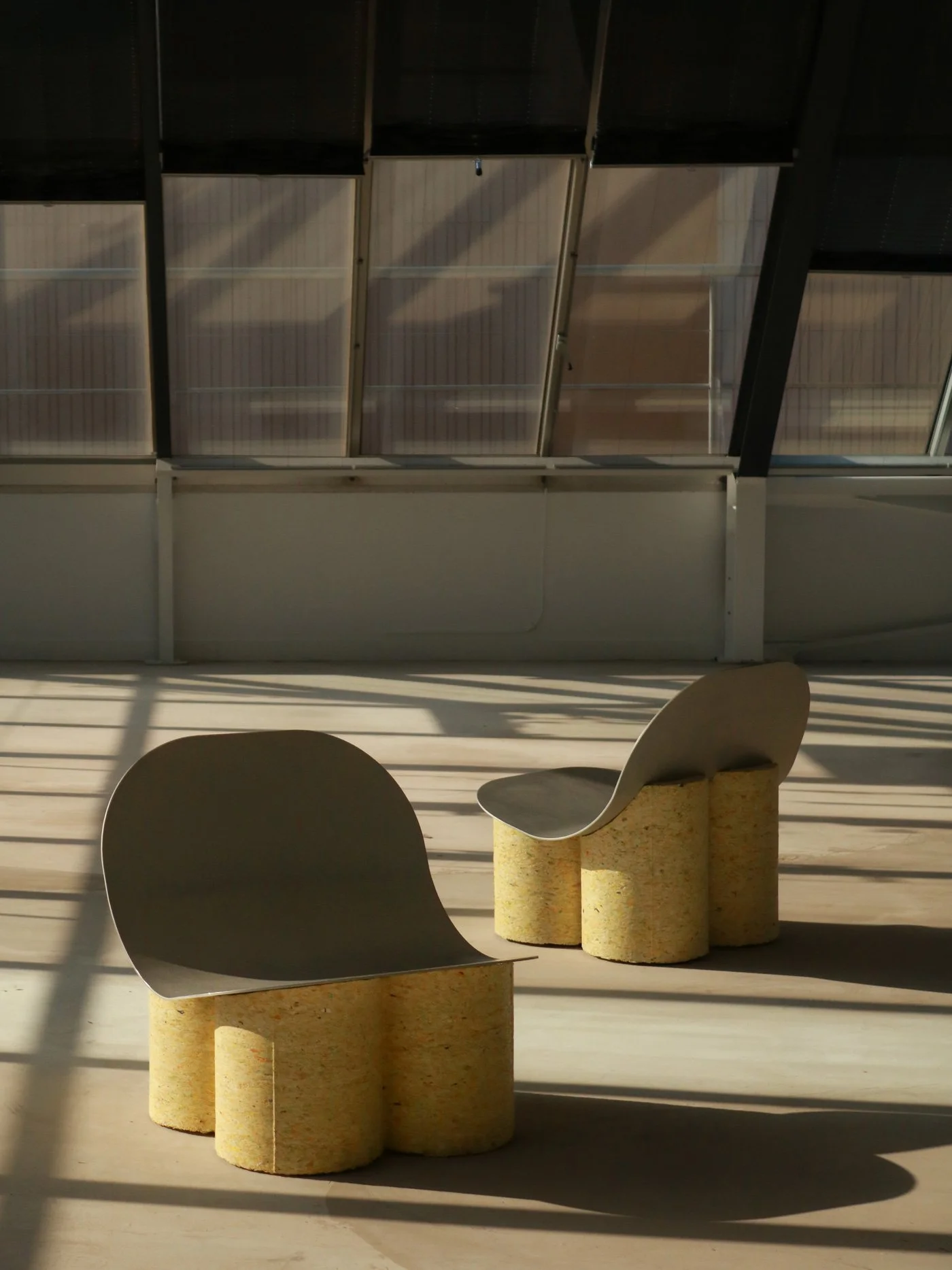
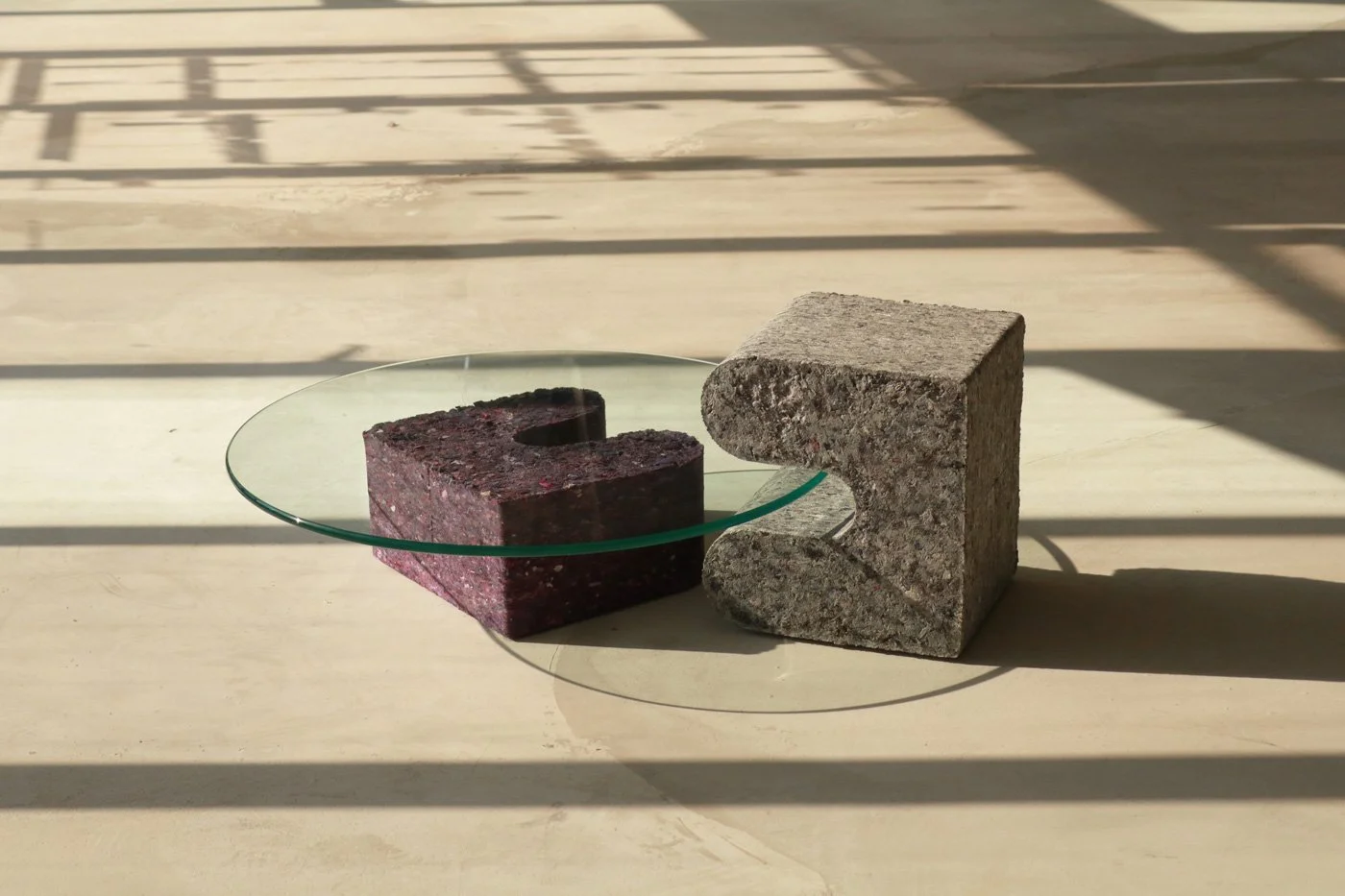
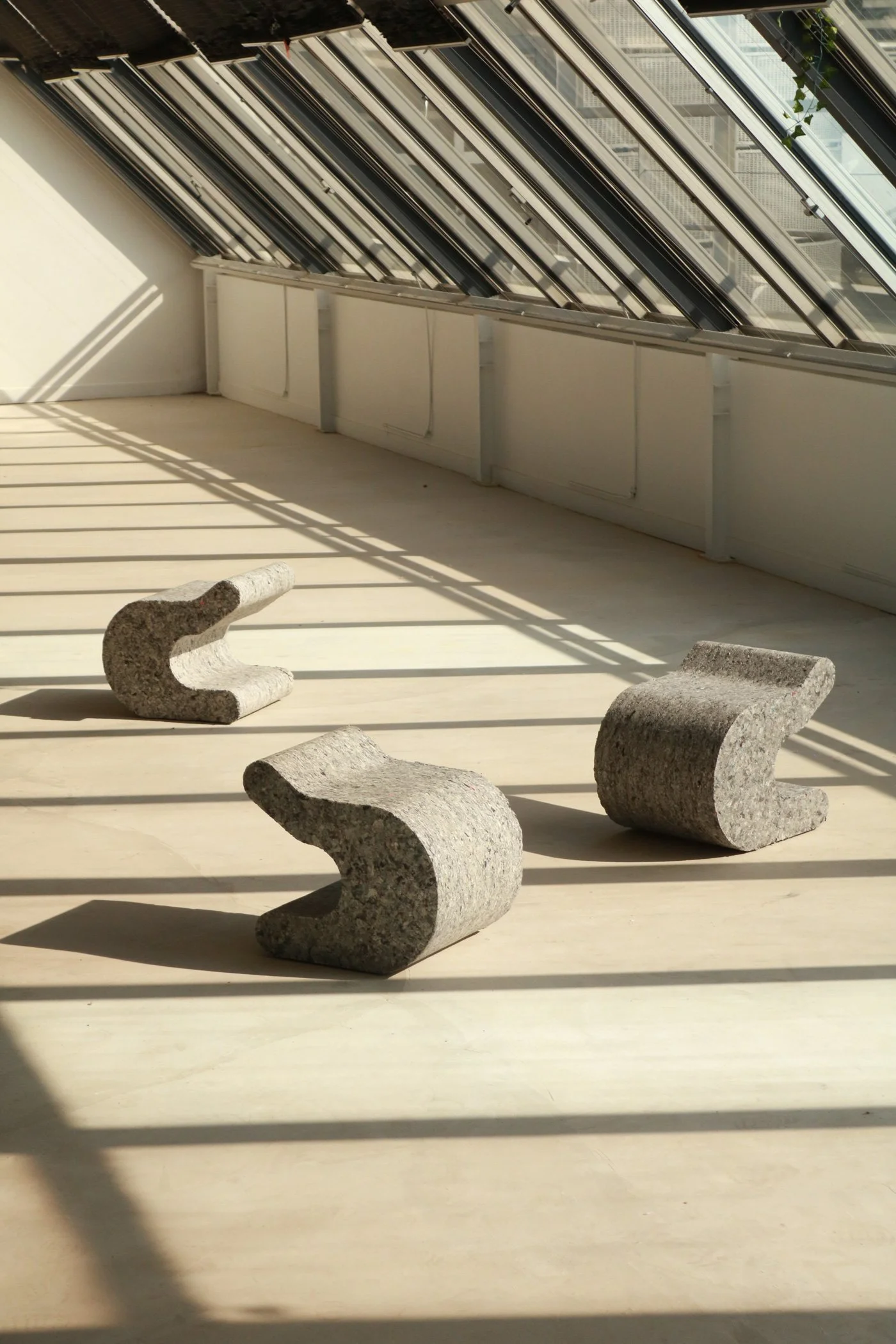
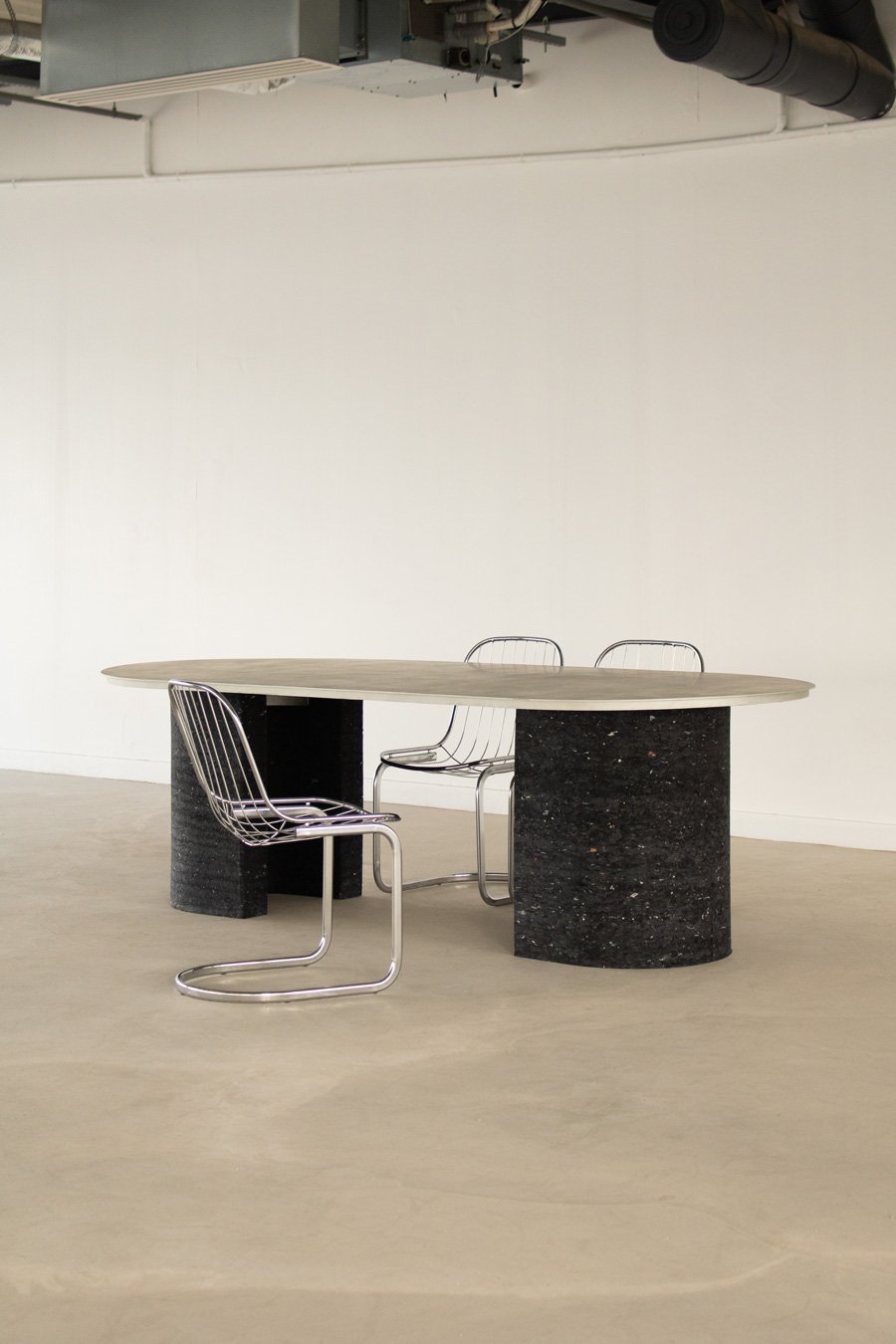
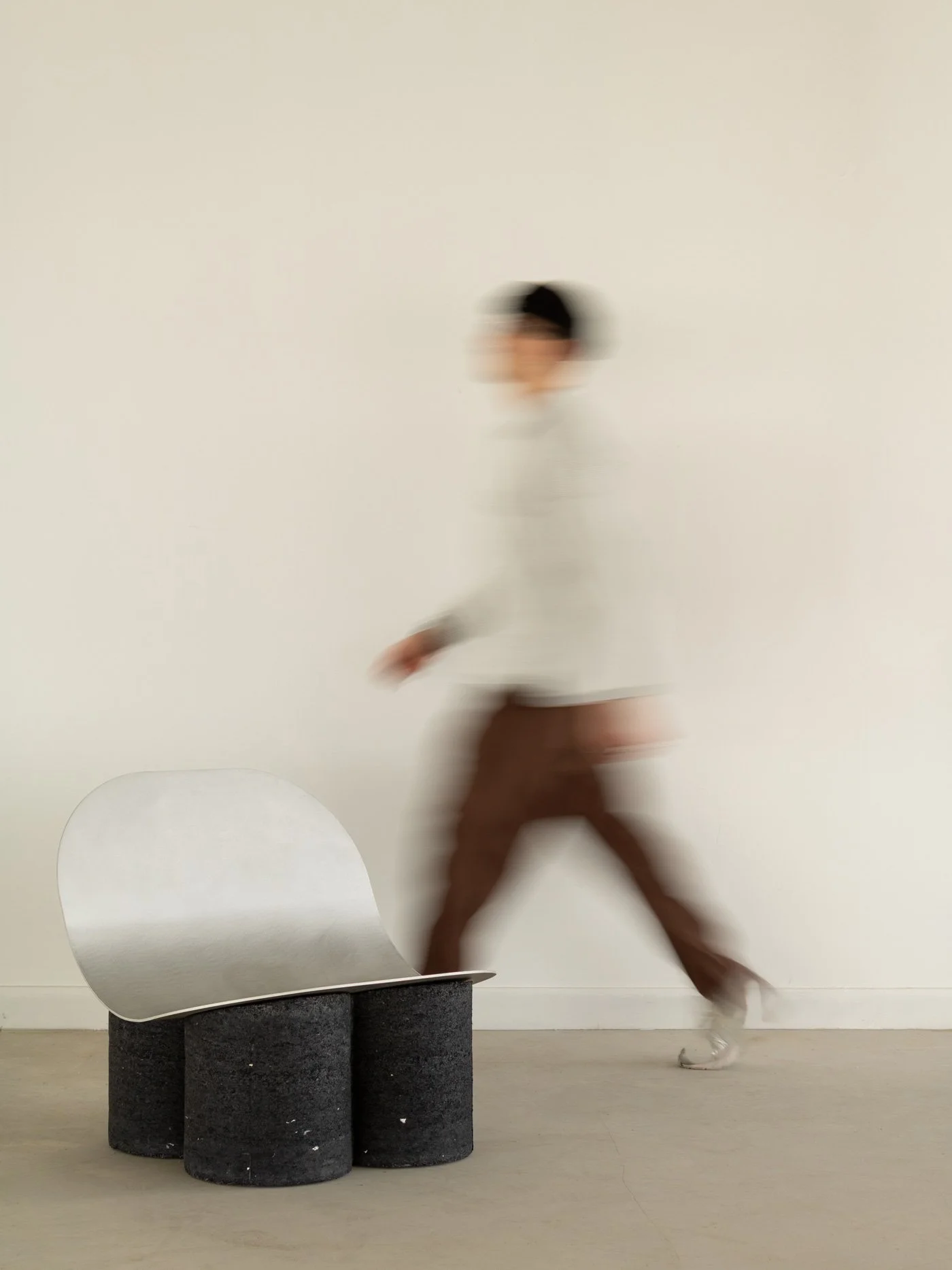
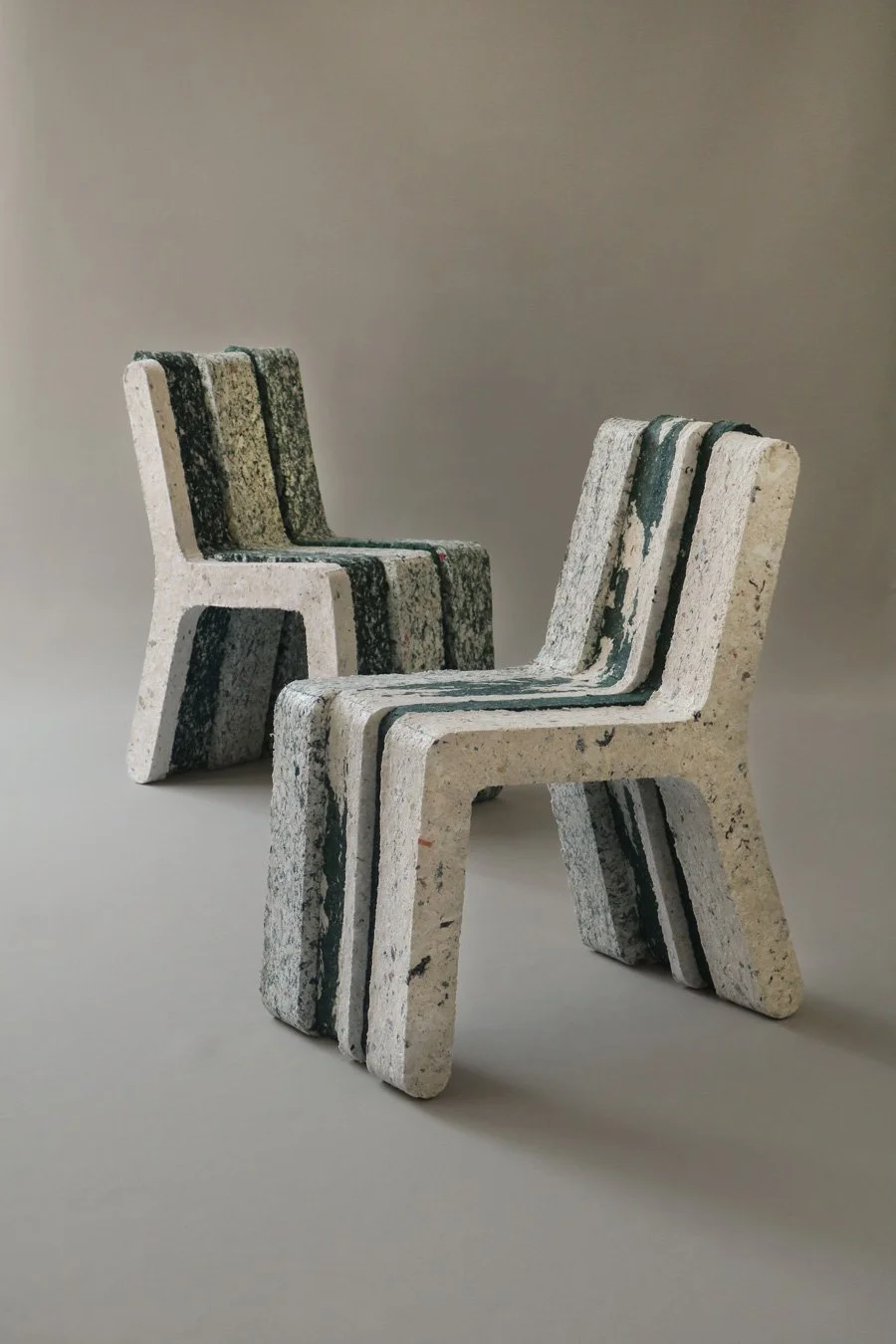
經過多年的技術累積,2025 年秋季的巴黎設計周(Paris Design Week)成為 FabBRICK 的另一個里程碑,Clarisse 與團隊正式推出首個「雕塑與自由造型系列」(Sculptural and Free-form Works),他們打破以往的矩形限制,發展出更有機流暢的立體物件,這實驗也挑戰了團隊的技術極限,促使他們開發出全新的生產製程與複雜的三維模具。
-
From Rigid Matrices to Organic Freedom: Pushing the Boundaries of Material Scale
Since the studio’s inception, FabBRICK’s signature product has been its standardized wall bricks. Utilizing a modular logic, these bricks have successfully been integrated into the retail spaces of over 300 French apparel brands. This success is underpinned by FabBRICK’s smart B2B circular business model: the team collects textile waste directly from their French clients. For instance, when designing a space for a specific brand, they convert that very brand's deadstock into the building materials used for their store. This not only solves the client's waste pain points but also guarantees the traceability and logical integrity of the entire production chain.
Currently, FabBRICK’s regular line offers 9 color palettes and 3 geometric patterns, while also providing bespoke development for large-scale projects. However, while standardized rectangular bricks offer distinct advantages in construction, they inherently restrict formal possibilities.
Following years of technical accumulation, the Autumn 2025 Paris Design Week marked another major milestone for FabBRICK. Clarisse and her team officially launched their inaugural "Sculptural and Free-form Works" series. Breaking free from rectangular constraints, they developed fluid, organic, three-dimensional objects. This experimentation pushed the team's technical limits, prompting the development of entirely new production processes and complex three-dimensional molds.
© FabBRICK
對 Clarisse 個人而言,這一步更像是找回當初在純美術與創作上的初心。過往,為了向講求規範的營建市場證明這款新型材質的性能與可行性,她必須將精力專注於理性的技術研發與規格驗證。隨著材料在 2025 年達到成熟階段,她的藝術創作也隨之跨入了全新的維度。
一旦 FabBRICK 的尺度從「建築立面」切換至「獨立雕塑」,創作者與材質間的對話也隨之轉變。在面對建築材料時,團隊必須考量物理性能、安裝工法與空間整合;但在創作雕塑物件時,思考方式會變得更為直觀,必須去探索材料形體的自然動態,以及人們如何與物件產生視覺與身體的互動。
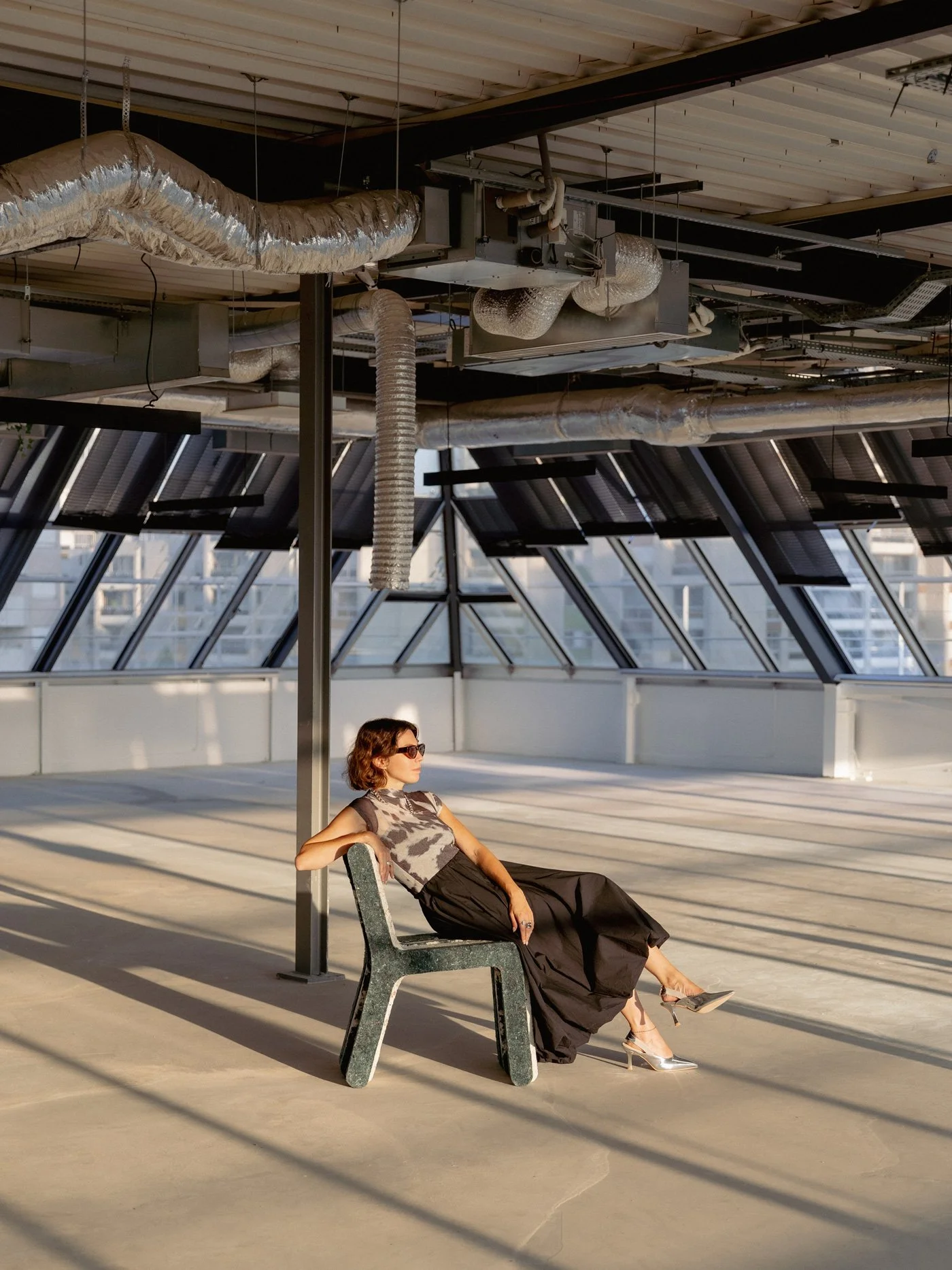
在這些藝術創作中,FabBRICK 從附屬在建築結構上的物件,變成空間的主角,在藝術、家具設計與裝置的邊界上,展現出多變的可能。此外,為了貫徹品牌對「在地溯源」的堅持,在製作這些藝術與雕塑單品時,所使用的其他附加材料(如木材、金屬或結構元件),皆是 100% 於法國當地加工製作。
-
For Clarisse, this step was akin to returning to her roots in fine art. Previously, to prove the performance and viability of this novel material to a highly regulated construction market, she had to focus her energy on rational technical research and development alongside specification verification. With the material reaching full maturity in 2025, her artistic endeavors naturally expanded into a new dimension.
Once FabBRICK’s scale shifts from an architectural facade to an independent sculpture, the dialogue between creator and material fundamentally changes. While architectural materials require considerations of physical performance, installation techniques, and spatial integration, creating sculptural objects allows for a more intuitive approach—exploring the natural dynamics of the material's form and how people interact with the objects visually and physically.
In these artistic pieces, FabBRICK transitions from a structural accessory to the focal point of the space, revealing versatile possibilities at the intersection of art, furniture design, and installation. Furthermore, to uphold the brand's commitment to local sourcing, all additional materials used in these artistic and sculptural pieces (such as wood, metal, or structural components) are entirely processed and manufactured in France.
© FabBRICK
© FabBRICK
當不可預測性成為材料的履歷,在變異中尋找美感
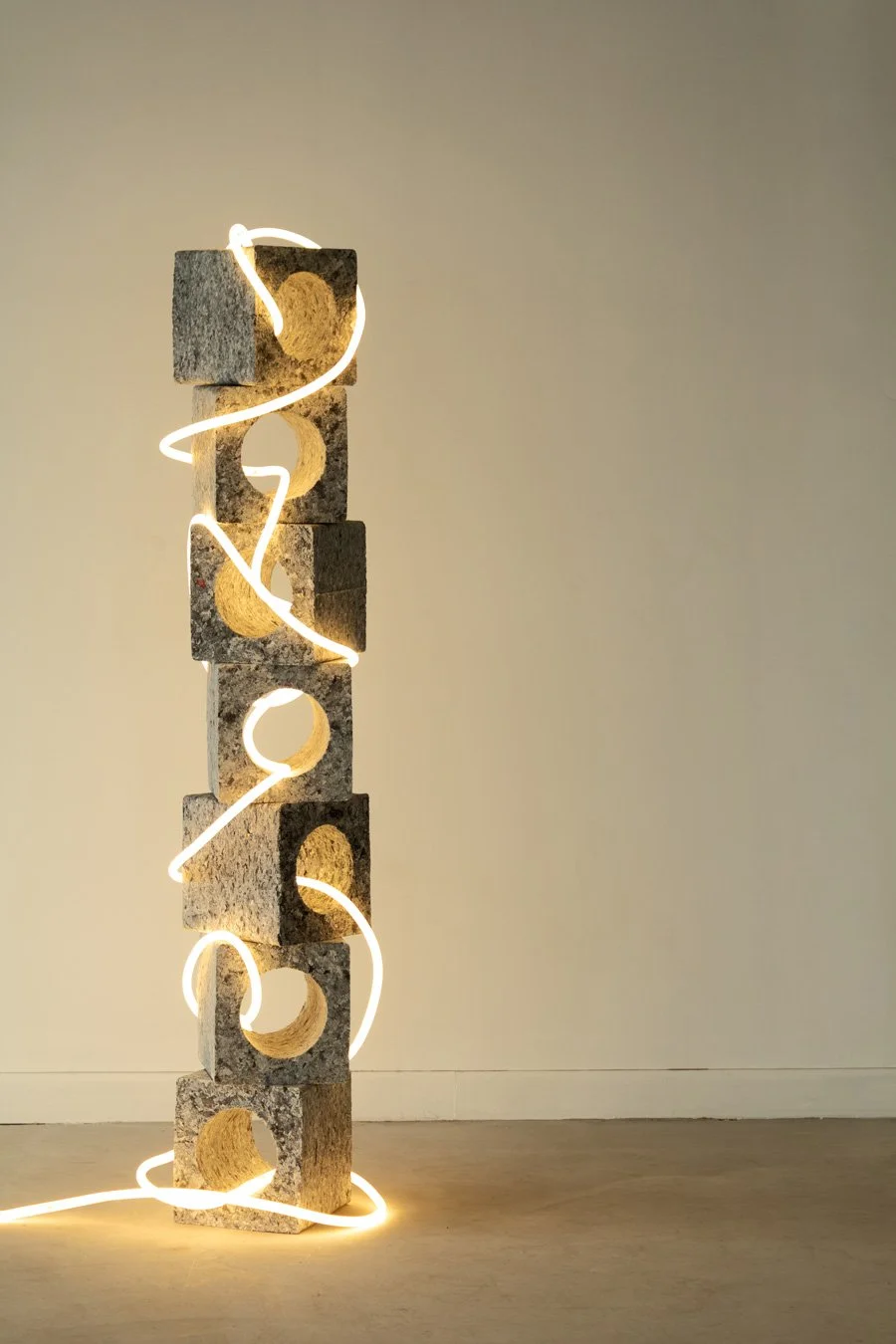
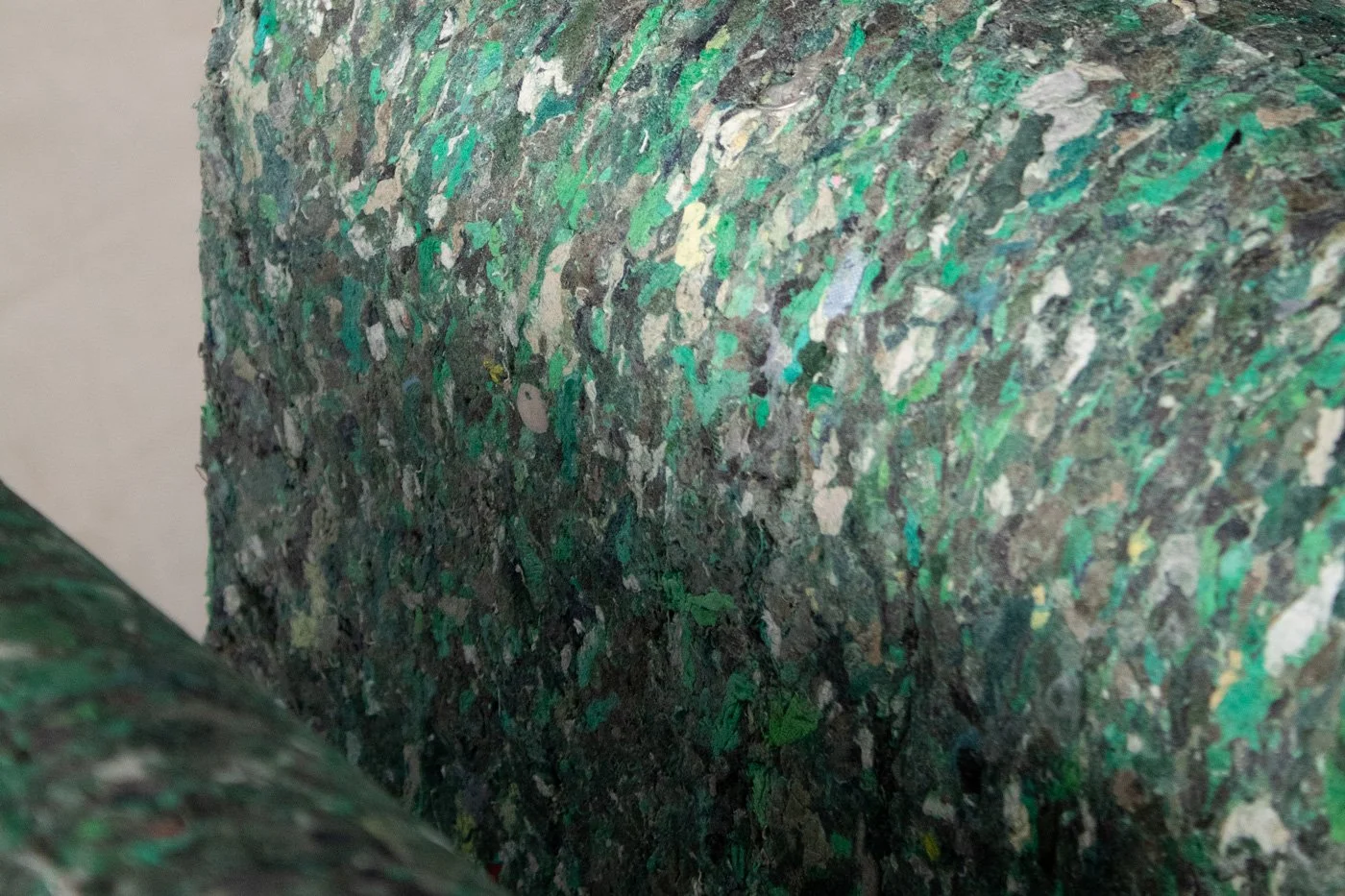
在主流工業生產的邏輯裡,規格化與零瑕疵是不可動搖的鐵律。為了追求絕對的均質,當代建材往往剔除所有可能產生的隨機變異。然而,FabBRICK 卻反其道而行。由於每一批回收衣物的來源、成分與染色工藝都截然不同,在生產過程中,磚體的表面色彩與紋理是無法被百分之百預測的。對 Clarisse 而言,這種工業體系眼中的「不穩定因素」,恰好是這款材料最無可取代的靈魂。
在一個充斥著標準化工業製品的世界裡,這種無法複製的不可預測性,反而成了一種豐富的表現形式 。
這項特質也點出了當前營建產業的盲點。目前市場仍傾向用傳統工業產品的既定標準,來評估並規範新型的循環材料。但 Clarisse 認為,面對大環境對永續建材的需求,產業的評價機制也需要隨之改變:我們應該在技術性能之外,賦予材料的可適性、在地溯源與環境足跡更多的價值。
-
When Unpredictability Becomes a Material's Resume: Finding Beauty in Variation
In mainstream industrial production, standardization and zero defects are ironclad rules. To achieve absolute homogeneity, contemporary building materials typically eradicate any random variation. FabBRICK, however, does the exact opposite. Because the source, composition, and dyeing process of every batch of recycled clothing are vastly different, the surface color and texture of the resulting bricks cannot be entirely predicted. To Clarisse, this "instability"—a flaw in the eyes of the industrial system—is exactly what gives the material its irreplaceable soul.
"In a world saturated with standardized industrial products, this irreplicable unpredictability actually becomes a rich form of expression."
This trait also highlights a blind spot in the current construction industry, which still tends to evaluate and regulate new circular materials using the rigid standards of traditional industrial products. Clarisse believes that given the macro-environmental demand for sustainable materials, the industry's evaluation mechanisms must evolve. Beyond technical performance, we need to assign greater value to a material’s adaptability, local traceability, and environmental footprint.
© FabBRICK
© FabBRICK
為了讓材料達到能與常規室內建材相同的精緻度,Clarisse 與團隊在巴黎工作室中投入大量時間,專注於色彩配比、紋理呈現與表面處理的優化。他們不把舊衣當作需要被掩蓋的廢料,而是順應材質本身的特質來引導創作,藉由精細的手工分類與配方調整,讓每一批產出的磚體都展現出獨一無二的質地。
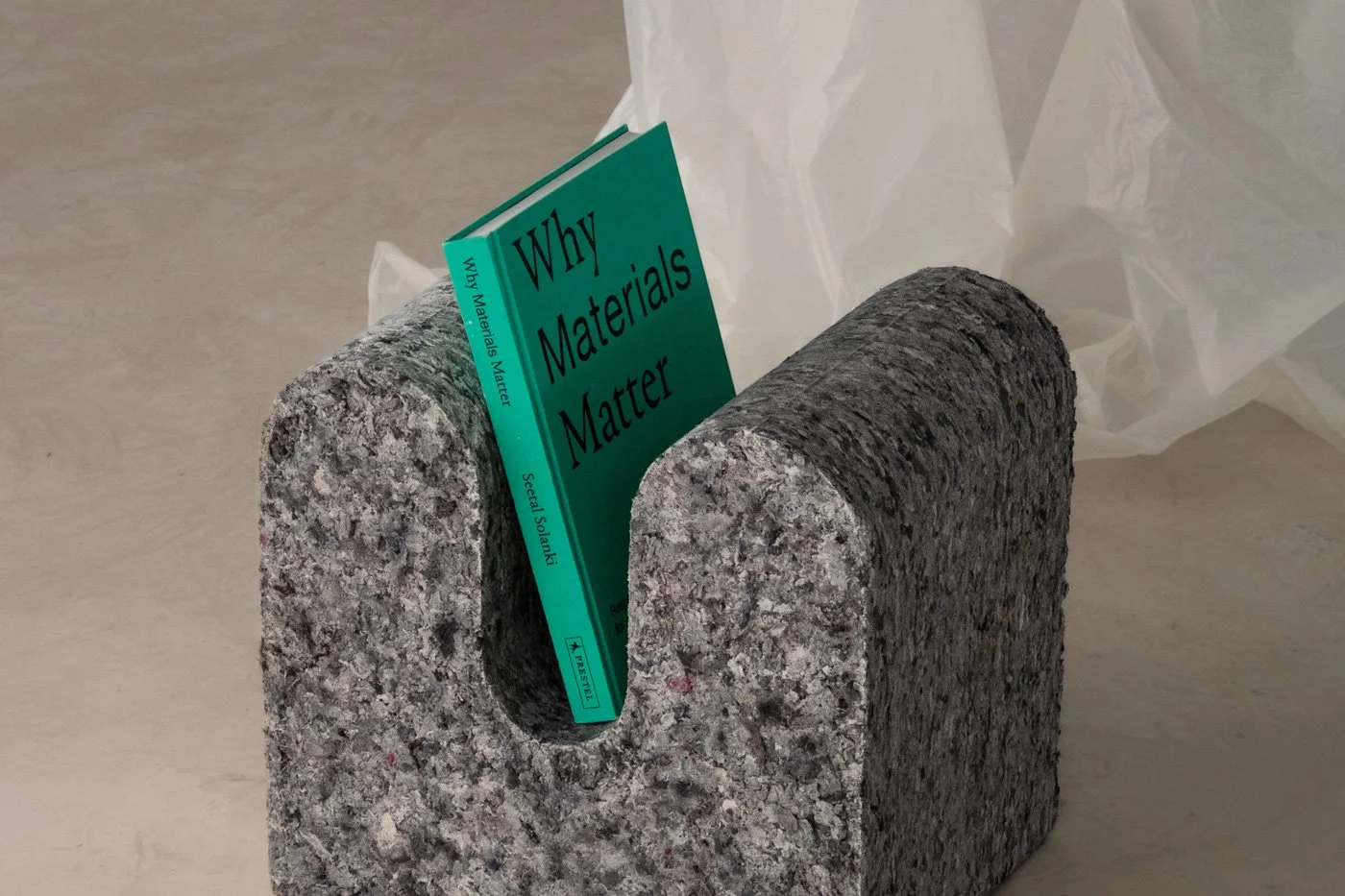
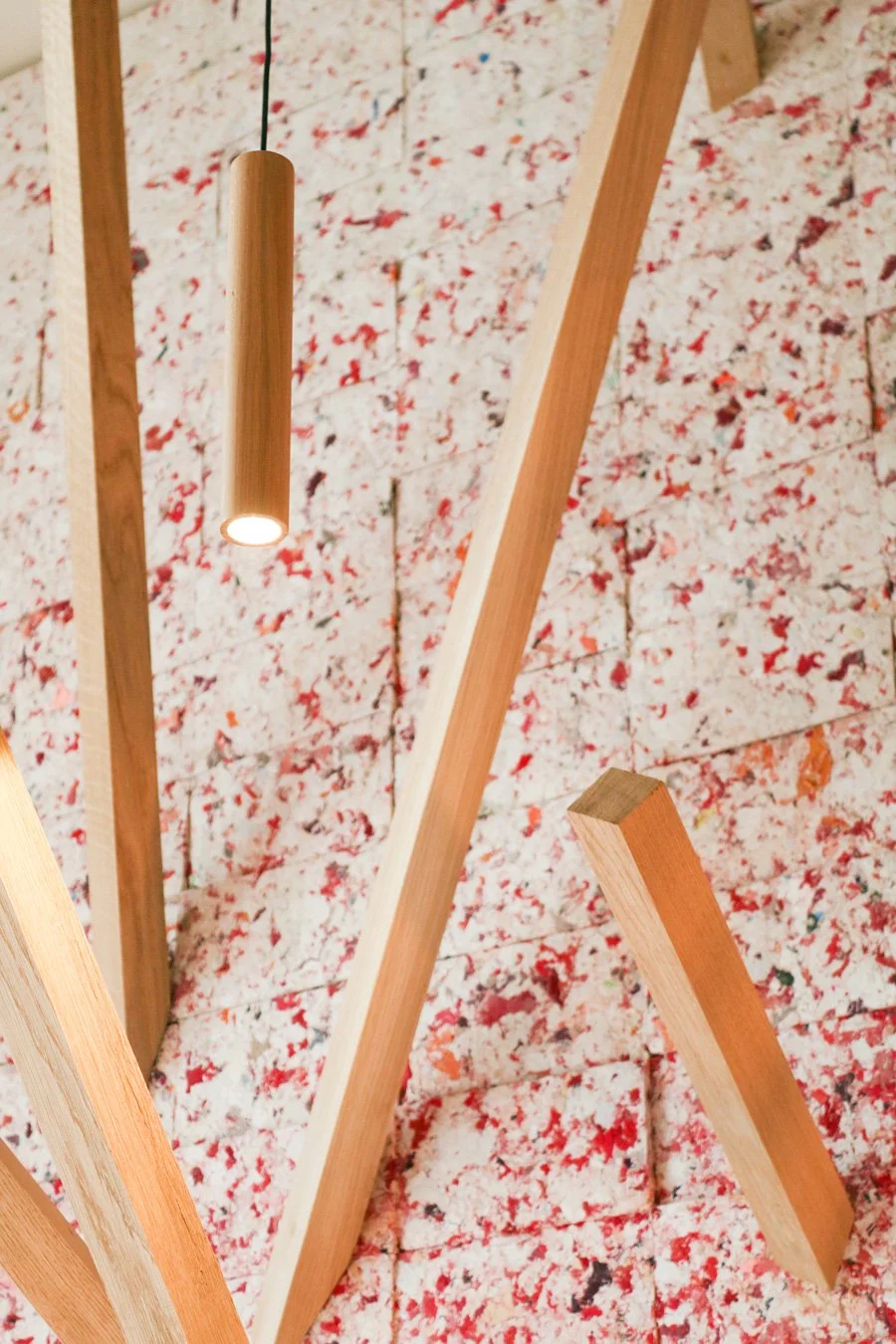
當人們走近 FabBRICK 的產品時,能清晰地看見不同紡織品的細微纖維與不規則的材質變化。這種遠觀如石材般堅實,近看卻保有織品溫潤的反差,創造出具深度的視覺層次,也同時展現材料的來源與歷史;而正是這種不加掩飾的真實性,讓使用者與空間之間,建立起一種更為真誠且具信任感的連結。
-
To ensure the material achieves a level of refinement on par with conventional interior finishes, Clarisse and her team invest massive amounts of time in their Paris studio, focusing on optimizing color ratios, texture presentation, and surface treatments. They don't treat old clothing as waste that needs to be concealed; instead, they allow the inherent characteristics of the material to guide their creation. Through meticulous manual sorting and formula adjustments, every batch of bricks emerges with a one-of-a-kind texture.
When people approach a FabBRICK product, they can clearly see the fine fibers of different textiles and irregular material variations. The contrast of looking as solid as stone from afar, yet retaining the warm touch of fabric up close, creates profound visual depth and openly displays the material's history. It is this unapologetic authenticity that establishes a more genuine, trust-based connection between the user and the space.
© FabBRICK
© FabBRICK
以時間與工藝為經緯,編織材料的空間維度
時至今日,FabBRICK 已不再只是紙上的永續藍圖。目前團隊已擴張至 11 人,並成功回收了超過 84,000 公斤的紡織廢料,影響力更跨越法國本土——在 2024 年獲得新一輪募資後,品牌成功接獲了來自美國的首個大型訂單,成為邁向國際的關鍵里程碑。
隨著巴黎工作室的設備升級,團隊計畫將產能翻倍,目標是每年回收處理 10 萬公斤的紡織廢料,並將牆磚的年產量提升至 10 萬塊。與此同時,強調純手工與實驗性質的藝術創作支線,也將維持刻意放慢的步調,透過特定的藝術場域與藝廊網絡,向大眾展現材料的更多可能性。
然而,產能的擴張與技術的升級,在 Clarisse 的藍圖裡都只是起點。她更期望能削弱建築、家具設計與純藝術的邊界,將那些看似不同的創作尺度,收攏為探索同一個核心材料的不同路徑。
-
Weaving the Spatial Dimension of Materials Through Time and Craftsmanship
Today, FabBRICK is no longer just a sustainable blueprint on paper. The team has now expanded to eleven dedicated members and has successfully recycled over 84,000 kilograms of textile waste, extending its impact far beyond French borders. Following a successful funding round in 2024, the brand secured its first major order from the United States, marking a crucial milestone in its journey onto the international stage.
With equipment upgrades at the Paris studio, the team plans to double their production capacity, targeting the recycling of 100,000 kilograms of textile waste annually and boosting wall brick production to 100,000 units a year. Concurrently, their highly experimental, purely handcrafted artistic line will maintain a deliberately slow pace, showcasing the material's broader potential to the public through specific art venues and gallery networks.
Yet, for Clarisse, capacity expansion and technical upgrades are merely the beginning. Her ultimate ambition is to blur the boundaries between architecture, furniture design, and fine art, converging these seemingly disparate creative scales into different pathways for exploring the exact same core material.
© FabBRICK
© FabBRICK
© FabBRICK
材料永遠是我們的出發點。有時它成為牆面的一部分,有時是一件家具,有時則是一件雕塑。改變的只是尺度與意圖,但本質上的材料探索是完全相同的。
她心中最理想的發展願景,是跳脫目前單純回應客製訂單的模式。她期盼未來有機會能主導整體空間規劃—— 從零售空間、旅宿飯店甚至整棟建築的硬裝立面,到家具、藝術品與軟裝物件,皆能由這款材料思維貫穿。在這樣的環境裡,材料不再只是附屬的點綴,而是成為建構整體空間的核心主軸。
Clarisse 與團隊正以時間與工藝為經緯,將那些被都市拋棄的紡織餘料,細細編織成當代空間裡兼具機能與美學的立體風景。
-
"The material is always our starting point. Sometimes it becomes part of a wall, sometimes a piece of furniture, and sometimes a sculpture. What changes is the scale and the intention, but the fundamental exploration of the material is exactly the same."
Her ideal vision for the future is to transcend the current model of merely fulfilling custom orders. She envisions a future where she can spearhead holistic spatial planning—where everything from the hardscape facades of retail spaces, boutique hotels, or entire buildings, down to the furniture, artworks, and soft furnishings, is unified by this material philosophy. In such an environment, the material is no longer just a supplementary embellishment; it becomes the core axis constructing the entire space.
Using time and craftsmanship as their warp and weft, Clarisse and her team are meticulously weaving the textile waste discarded by cities into a three-dimensional landscape of functional and aesthetic beauty for contemporary spaces.
© FabBRICK