
設計與人長久相伴的器物 — 與設計師李慧倫談好好生活,和那些還想試試看的事
© Hey!Cheese
[ZH]
相較於建築空間的尺度,日常物件以更貼身的方式參與生活。一盞燈如何被點亮,一件家具如何與身體相處,乃至一本書翻閱的手感,這些看似尋常的操作體驗,都蘊含著設計者對人的洞察與體貼。
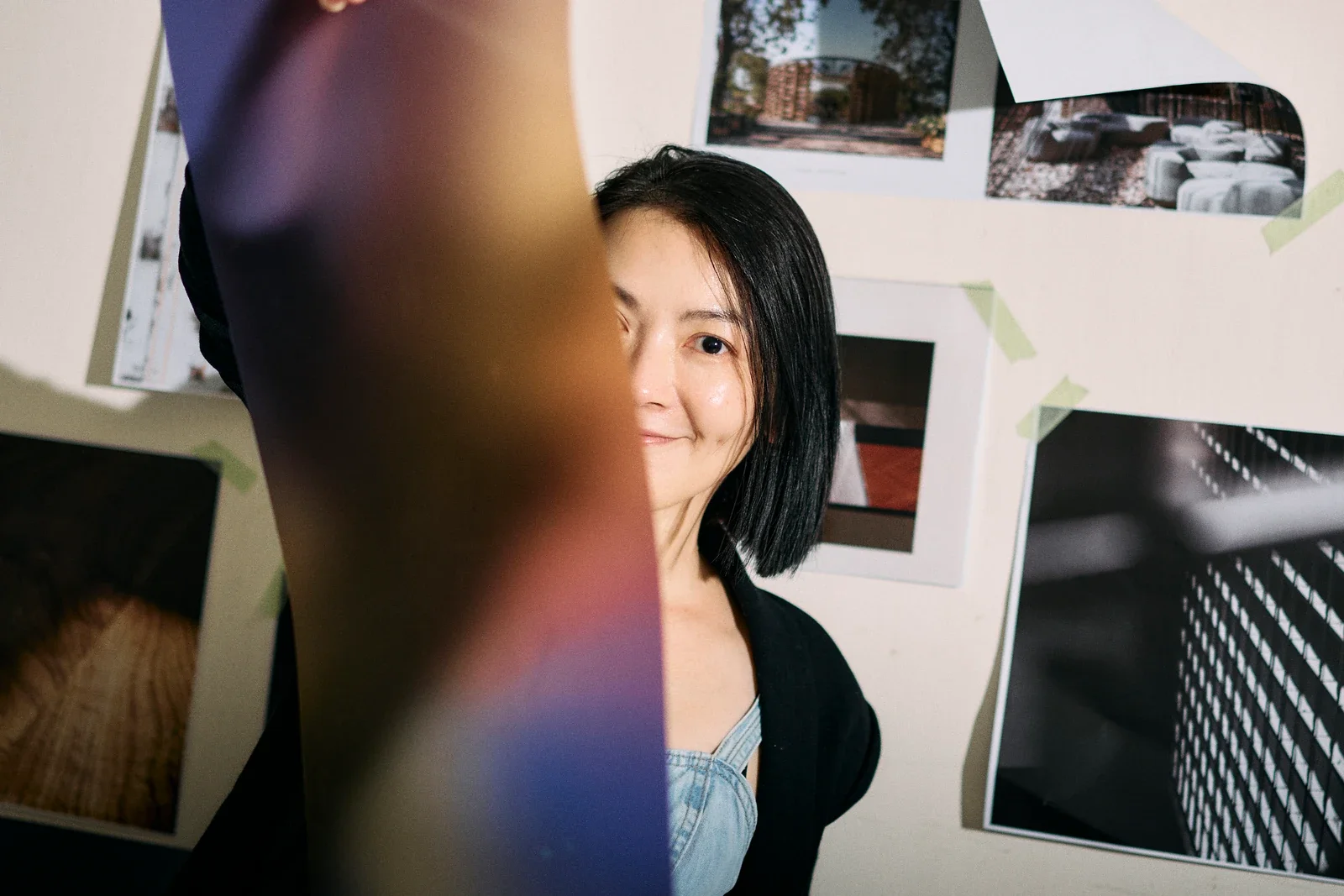
設計師李慧倫(小白)的創作橫跨燈具、家具與平面視覺。不論媒材與尺度如何轉換,她皆細膩關照著物件的觸感、使用情境,以及人在其中感受到的微妙差異。
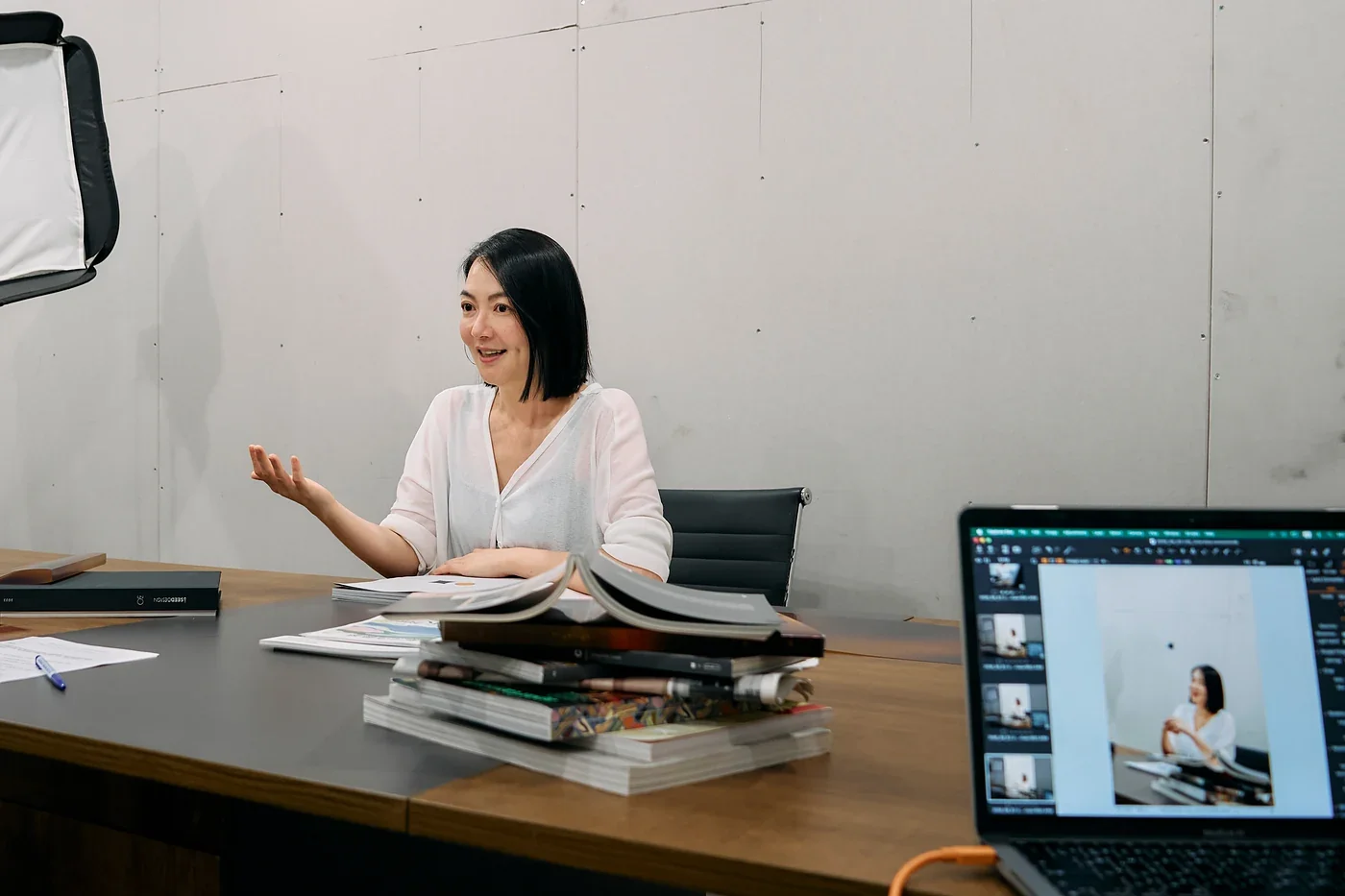
因為共同製作《HCS Journal》,有機會近距離參與她的工作過程。幾個月來,我們一起閱讀、編排了許多來自不同領域的創作者故事。而在梳理別人經歷的同時,也常不經意地在字裡行間,照見彼此當下的心境。這回我們再次坐下,桌上少了成堆等待校對的書稿,談論的主題,也從他人的故事,轉向小白自己。
[EN]
Compared to the scale of architecture and space, everyday objects engage with life in a far more intimate way. How a lamp is switched on, how a piece of furniture meets the body, the tactile pleasure of turning a page. These seemingly ordinary interactions carry within them a designer's insight into, and care for, the people who use them.
Designer Huilun Lee works across lighting, furniture and graphic design. Regardless of medium or scale, she brings the same attentiveness to texture, context of use, and the subtle differences people feel in the process.
Through our collaboration on HCS Journal, I had the chance to work closely alongside her. Over several months, we read and shaped stories from creators across many disciplines. In the course of sorting through other people's journeys, we often caught unexpected reflections of our own. This time we sat down again, but with no stack of proofs waiting on the table. The subject, too, had shifted from other people's stories to Huilun's own.
© Hey!Cheese
[ZH]
我的設計都跟生活有關。
假如我自己都沒有去好好生活,我怎麼讓我的東西、讓使用者,也可以好好生活?
[EN]
Everything I design is rooted in everyday life. If I’m not living fully myself, how can I expect my work to help anyone else do the same?
© Hey!Cheese
[ZH]
以身體為度量的日常採集
問起設計的養分從何而來,小白沒有搬出厚重的理論。她細數了自己日復一日的作息,半開玩笑地自嘲幾句後,語氣一轉,把一切歸結為最簡單的事:「就是好好吃飯,好好睡覺,好好生活。」
在她眼裡,所謂的生活,是由無數細微的知覺組建而成。她慣於用身體去記憶這一切,像是睡前撫過床單的織紋、夜裡亮起的那盞燈,或是空氣中浮動的氣味。近乎本能的好奇心,讓小白把日子過成一場饒富趣味的田野調查。遇到感興趣的商品,她總想買回家用用看,看看它是否真如想像中理想。如果好用,好在哪裡?假設不夠順手,那退一步想,還可以怎麼改進?抑或是,有些物件其實這樣就已經夠好了,不需要為了功能而多加設計。
[EN]
The body knows first
When asked where her design thinking comes from, Huilun didn’t reach for grand theories. She walked through her daily routine, poked fun at herself for a moment, then brought it all back to the simplest possible answer: “Just eat well, sleep well, live fully.”
For Huilun, life is built from countless small perceptions, and she registers them through the body: the weave of a bedsheet brushed before sleep, a lamp coming on in the dark, a scent drifting through the room. A curiosity that borders on instinct turns her days into a kind of ongoing field study. When a product catches her eye, she wants to take it home and try it. Does it live up to what she imagined? If it works, what exactly makes it good? If it falls short, how might it be improved? Or maybe the thing is already good enough as it is, and designing more into it would only get in the way.
© Hey!Cheese
[ZH]
她笑著分享自己曾有一陣子極度迷戀收集各種材質的杯子。從琺瑯杯、陶杯,一路買到一只價格高昂的玻璃薄口杯。「那時候很好奇為什麼它可以賣這麼貴,結果買回來一喝,因為玻璃燒得極薄,液體滑進嘴裡的質地真的很細緻。」不過,令人驚豔的唇齒觸感背後,也伴隨著易碎與不易清潔的代價。那只薄口杯沒有成為標準答案,反倒讓她在心裡琢磨起,設計在追求極致與實用性之間的取捨。
甚至連看電影時,小白也常不自覺分心。明明鏡頭正聚焦在主角身上,她的目光卻是越過演員,停留在背景那張好看的沙發上。「我會去觀察那個場域,想像住在裡面的人有什麼樣的作息習慣?那張沙發旁邊,應該要配一盞什麼樣的燈才合適?」物件無法抽離生活而單獨存在。總得先有了人、伴隨空間的氣息與輪廓,物品才找得到安身的位置。
[EN]
She laughed about a phase she went through, collecting cups in every material imaginable. Enamel, ceramic, and finally an expensive thin-walled glass. “I just wanted to know why it cost that much. And then I drank from it, and because the glass was blown so thin, the liquid just glided in. It was a completely different sensation.” But the tradeoff was real: fragile, a pain to clean. It never became her daily cup. What it did become was a lasting question about how far design should chase refinement before practicality starts to suffer.
She can’t even watch a film without drifting. The camera might be on the lead, but her eyes land on the sofa in the background. “I’ll start reading the room. What kind of life does the person living here have? What lamp belongs next to that sofa?” For Huilun, no object stands on its own. There has to be someone in the picture first, a space with its own rhythm, before a thing can find its place.
© Hey!Cheese
© Hey!Cheese
[ZH]
談論美感之前,先成為使用的人
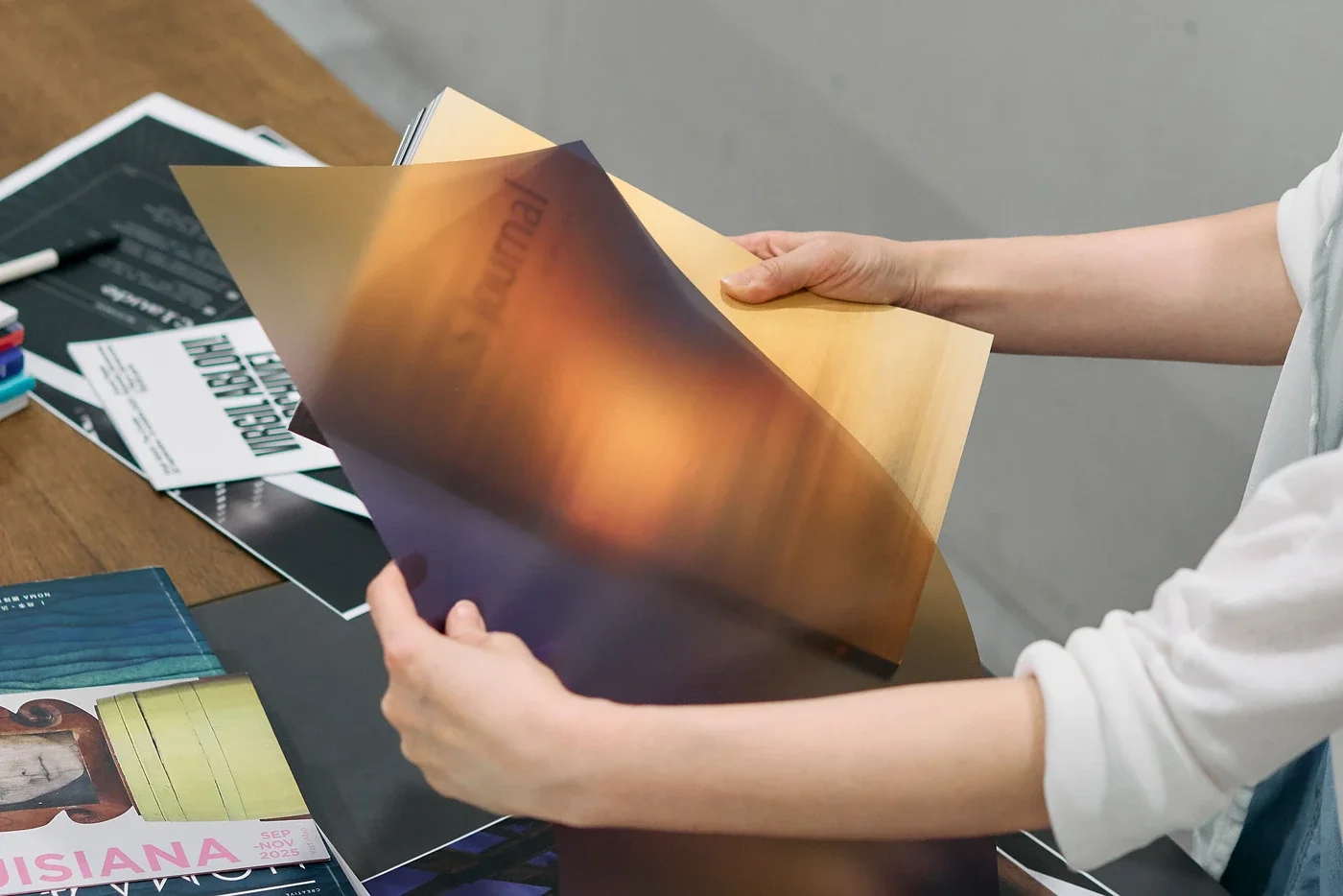
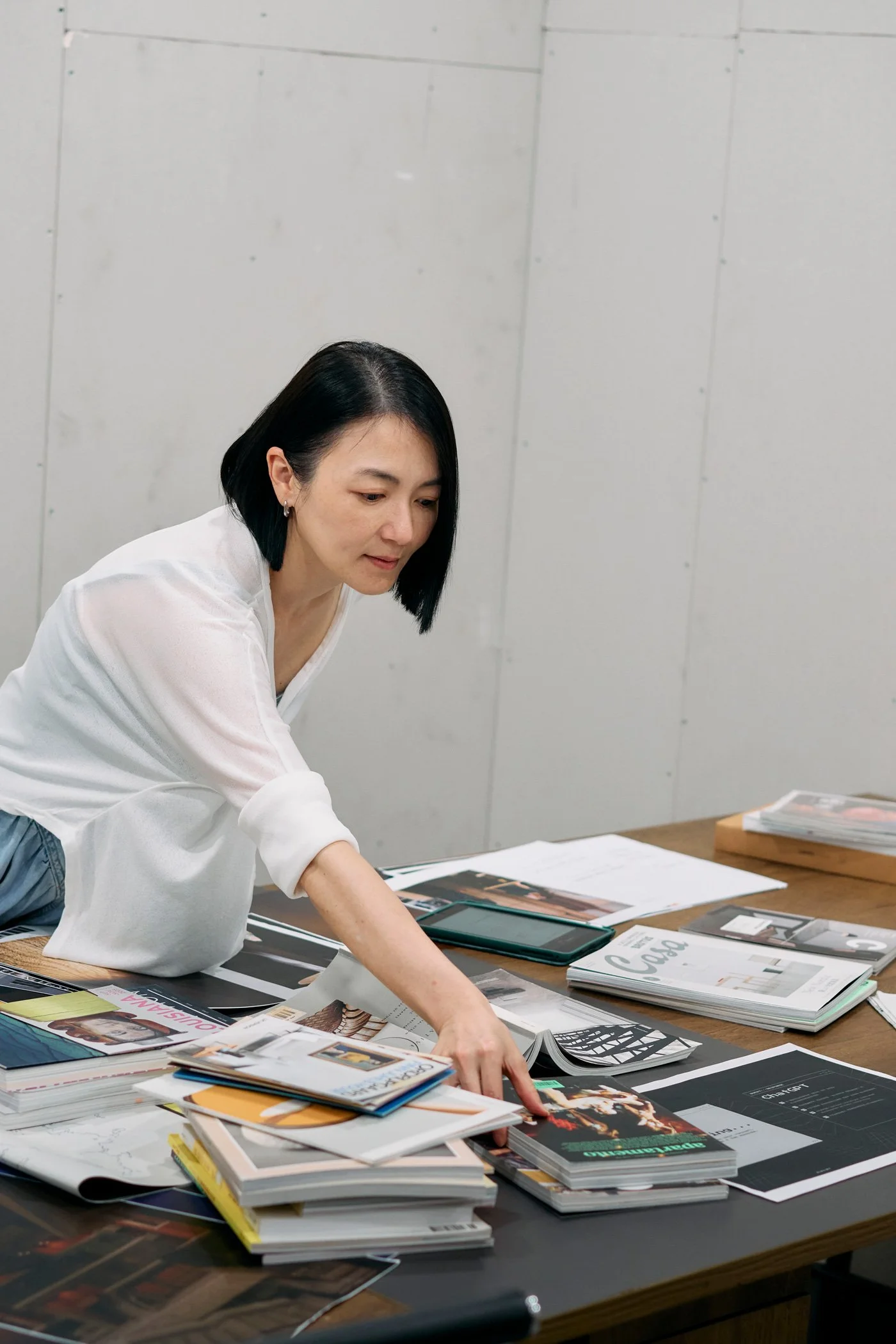
正因明白設計終究要回歸被使用、被觸摸,小白在面對每個新專案時,都會先將自己還原成「使用它的人」。
「我希望我的設計不只是擺著好看,在視覺和體感使用上都要是舒服的。」她曾為了設計一支工程用的麥克筆,泡在文具店研究各式各樣的筆,向客戶索取大量樣品,在手裡反覆拿起、放下,甚至只是對著筆發呆。
如果純粹追求線條的俐落美感,筆身大可不必多做任何摺痕或機構;但一想到使用者在工地或案場需要隨手收納、夾在衣領口袋,她便知道自己必須挖凹槽、設計筆扣。同樣的講究也發生在提袋上,握把的寬度與粗細,都得考慮負重時是否會勒痛掌心。而這份對使用細節的在意,也延續到她為《HCS Journal》所做的裝幀與編排。
[EN]
Thinking like a user before Design
Huilun starts every project the same way: she stops being the designer and becomes the person who will actually use the thing.
“I don’t want my work to just look good on a shelf. It needs to feel right, visually and physically.” For a drafting marker she once designed for an engineering client, she spent days in stationery shops studying every pen she could get her hands on, requested stacks of samples, and picked them up and set them down over and over, sometimes just staring at them.
If all she cared about was clean lines, the barrel could have stayed smooth. But the moment she pictured someone on a construction site needing to clip it to a shirt pocket, she knew it needed a groove and a clip. The same thinking carried over to a tote bag: the width and thickness of the handle had to account for whether a heavy load would dig into the palm. And that attention to how things are actually used runs through the binding and layout she developed for HCS Journal.
© Hey!Cheese
[ZH]
閱讀本身即是設計的一部分
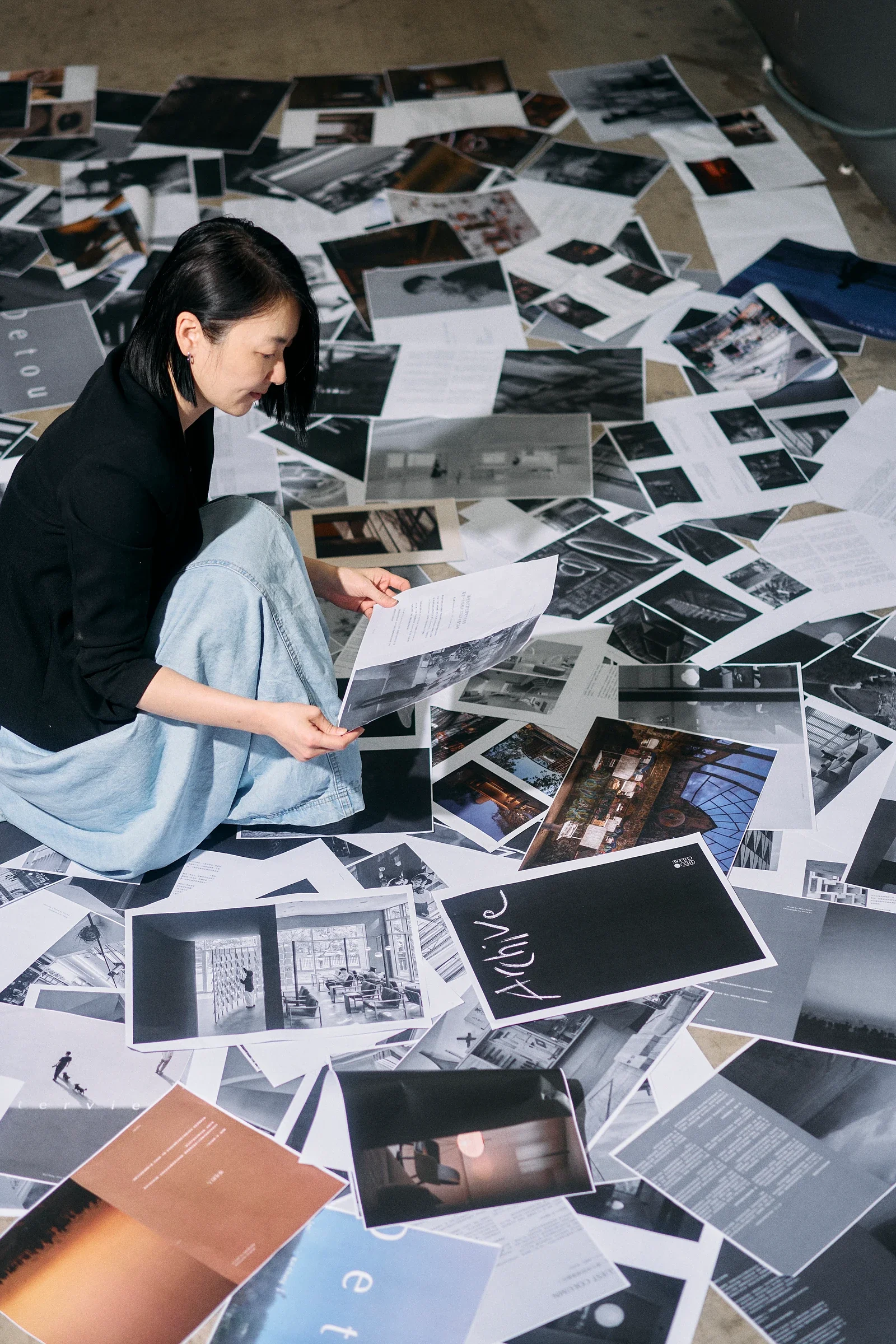
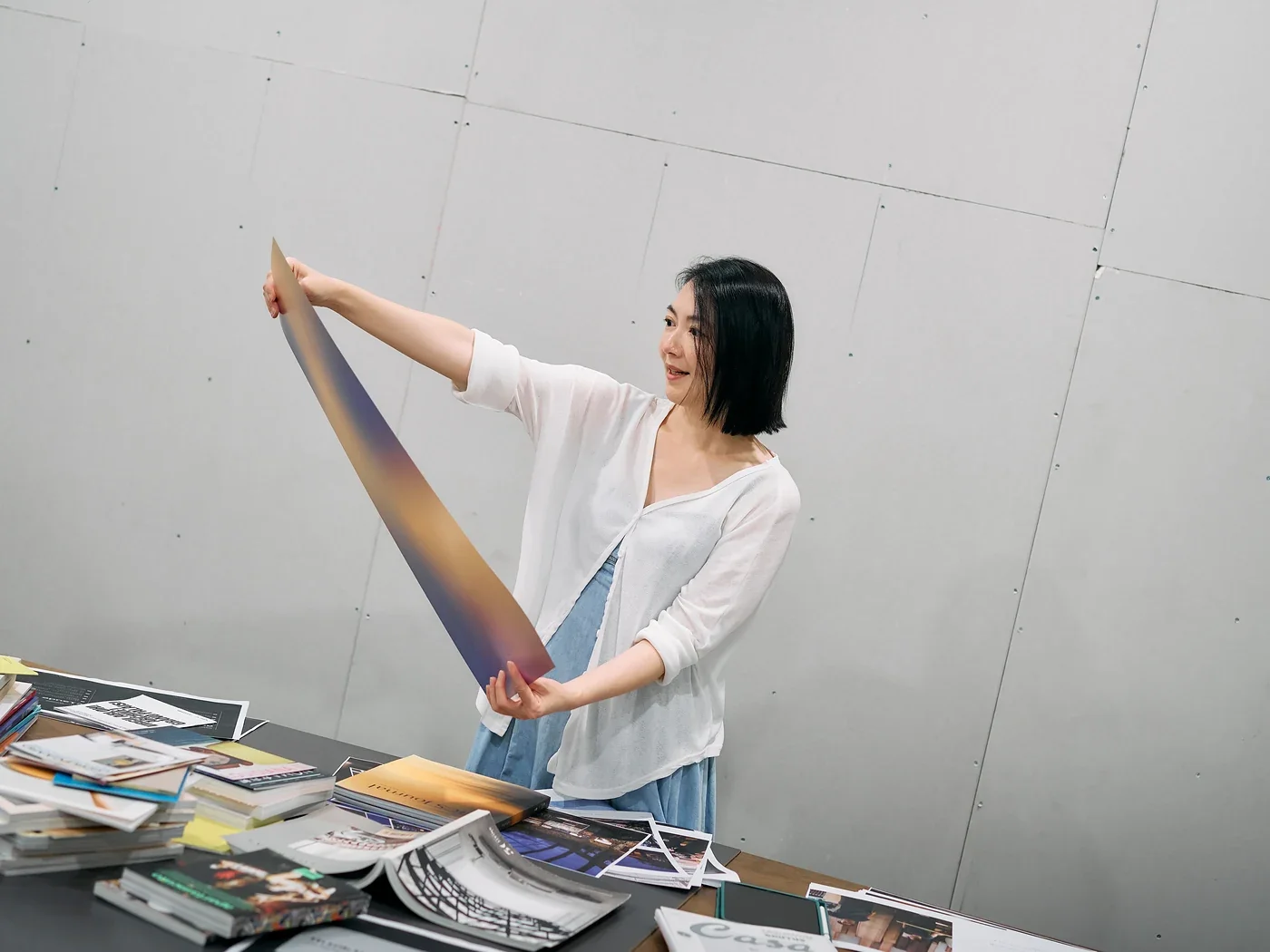
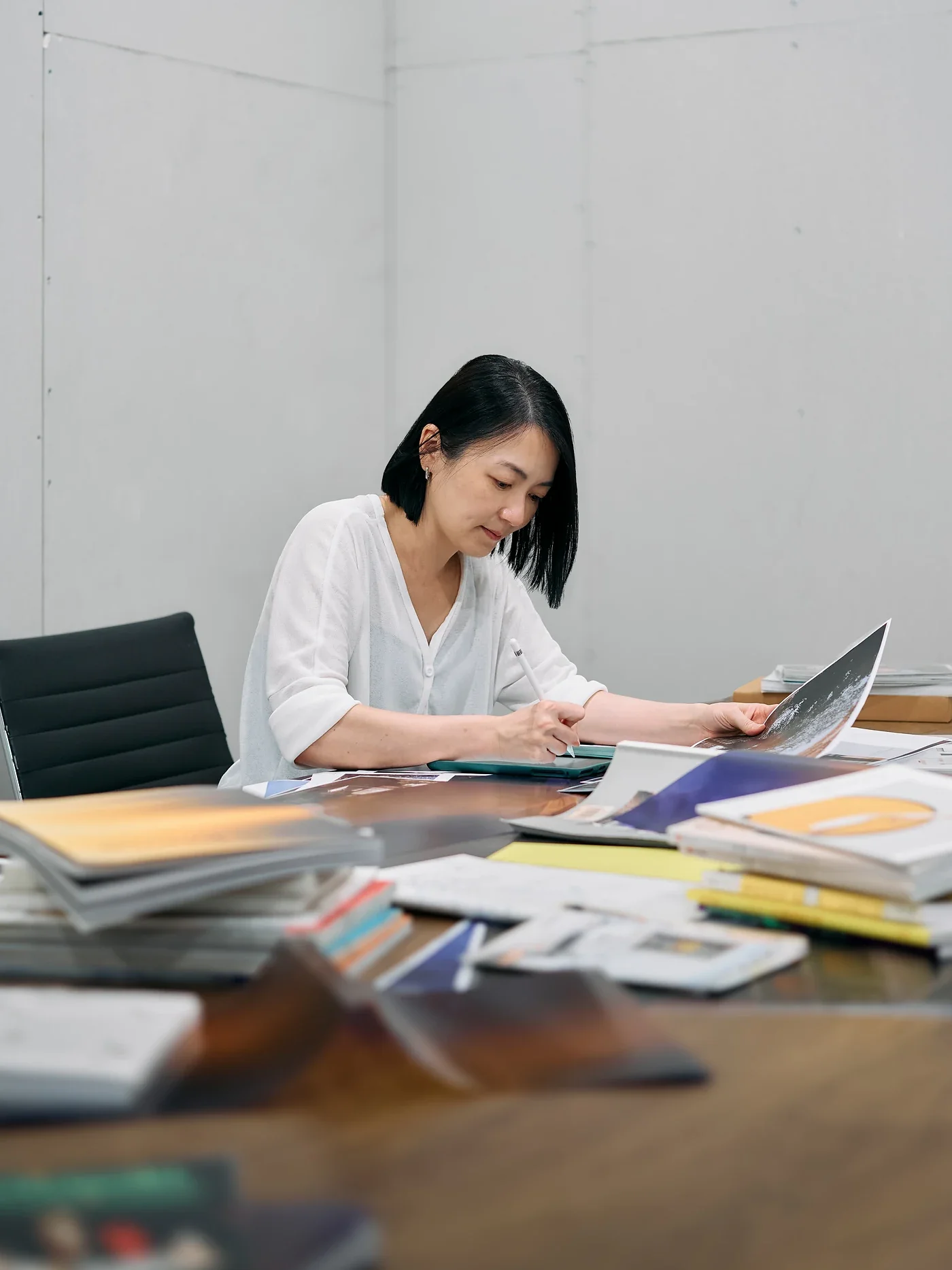
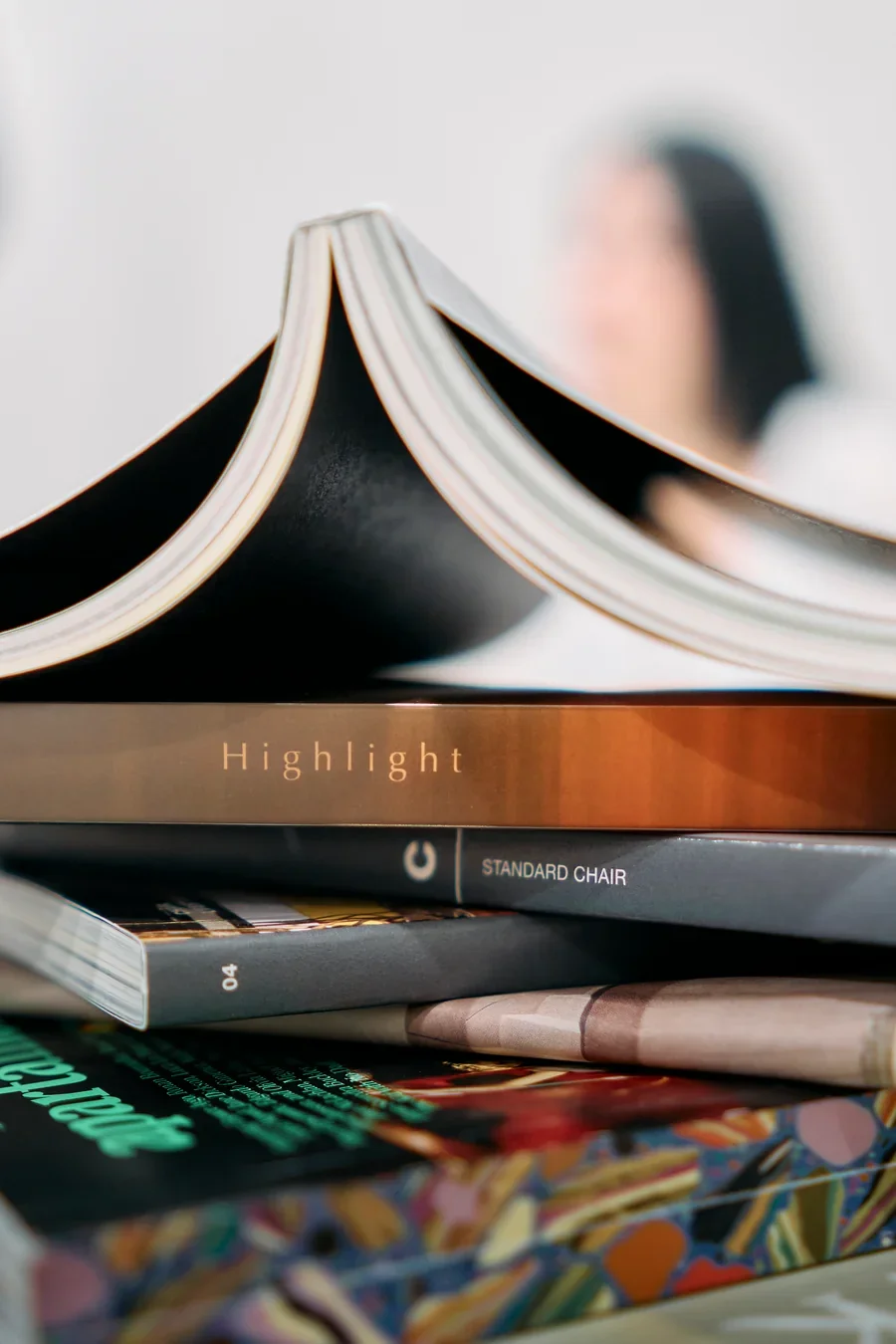
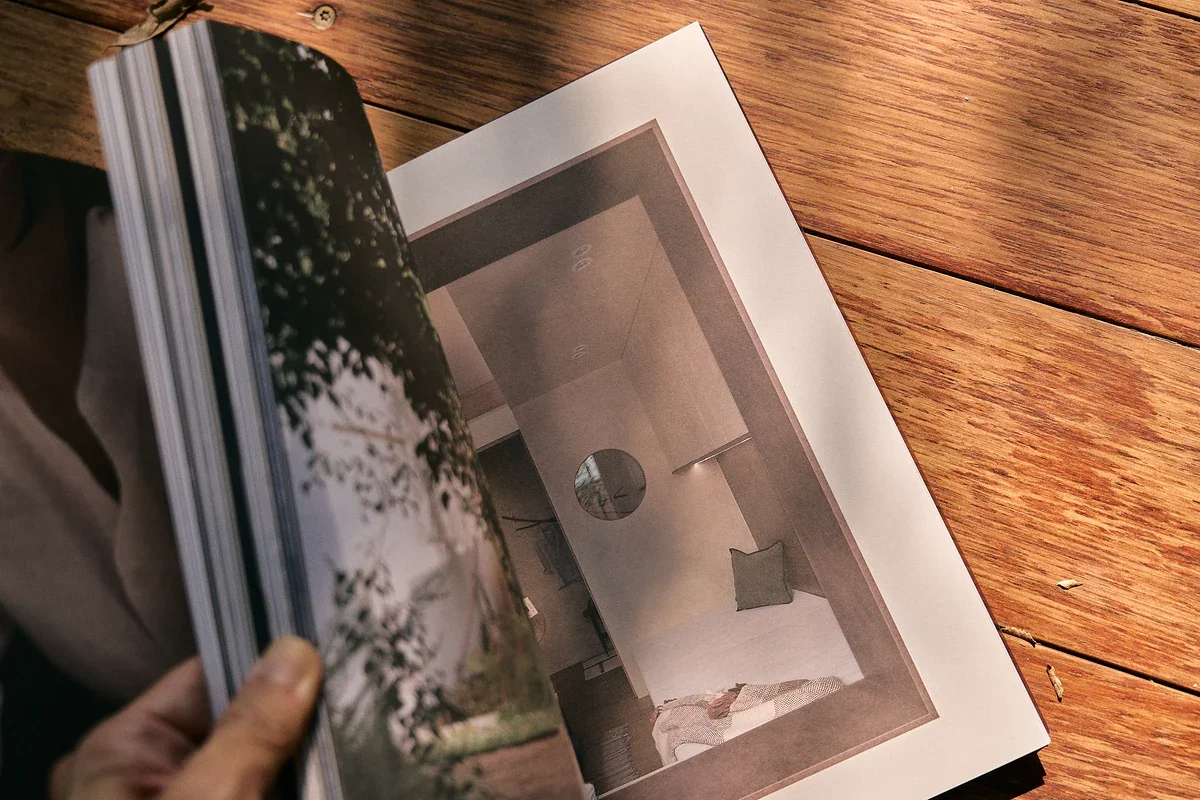
籌備前期,我們抱著好幾本雜誌反覆比對,從紙本攤開在掌心的翻閱舒適度,一路討論到它立放在書架上的視覺份量,以及內頁的編排。小白回想起自己借書的經驗:「有時候我去借書,有些書頁被折了一角,上面的油墨或文字剛好被吃掉、疊在一起,我會覺得好可惜。」
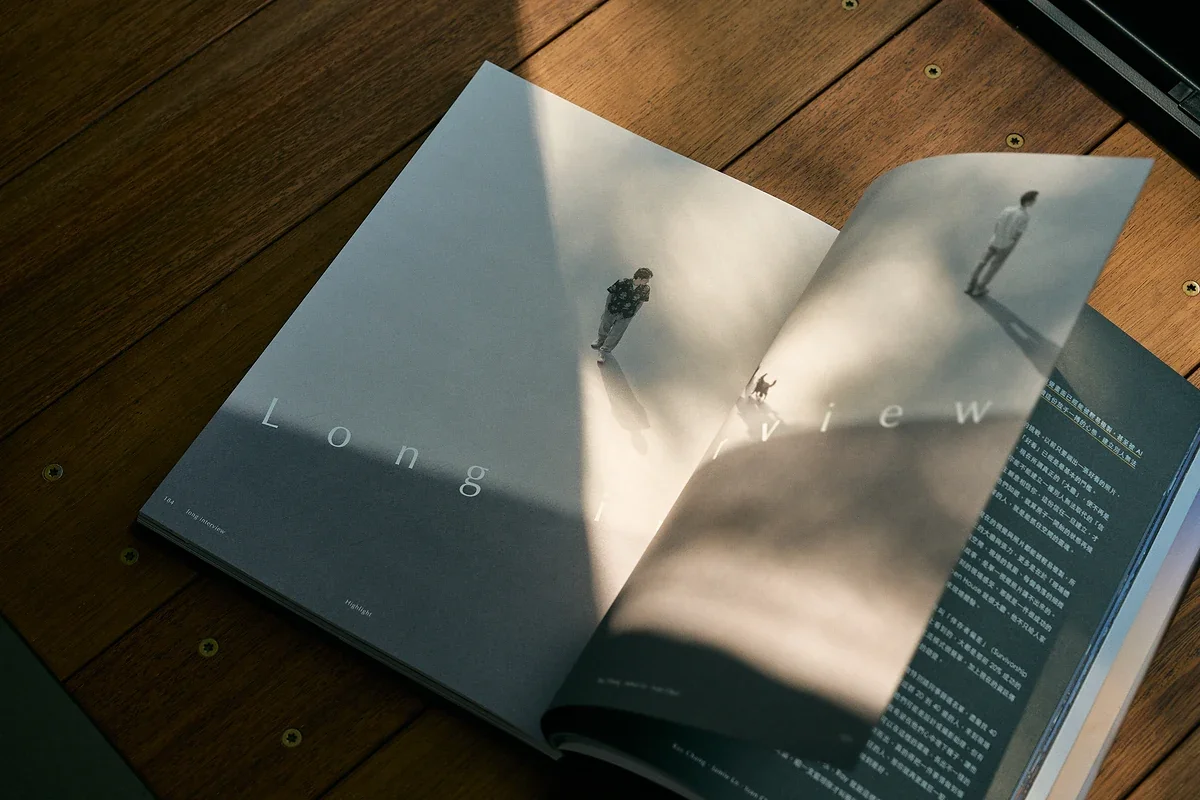
本著惜書與體貼讀者的心,加上年刊開本較大、各篇訪談字數不一,若一律由頁面上方往下排列,容易使版面顯得過度密集或零散。所以她改以頁面下緣為基準線,讓文字由下往上編排。這麼一來,頁面上方自然形成舒展的留白,文字在視覺上也更靠近閱讀者的身體。即使讀者在書頁上方夾入書籤,或是隨手折頁標記,也不容易因此遮蔽字句,影響閱讀。
[EN]
Reading as part of the design
In the early stages of production, we sat with stacks of magazines, comparing everything from how a spread felt in the hand, to how the spine held up on a shelf, to how the pages were laid out inside. Huilun recalled her own experience borrowing books: “Sometimes I’d borrow a book and find a corner had been folded over, and the ink or text right at the crease was smudged or stuck together. It always felt like such a loss.”
That care for the book as an object, combined with the journal’s larger format and varying article lengths, shaped a key layout decision. If text always started from the top of the page and ran down, denser articles would feel cramped and shorter ones would feel sparse. So she anchored the text to the bottom of each page and let it build upward. The top of the page opens into generous white space, and the text sits closer to where the reader’s hands naturally rest. If someone slips in a bookmark or dog-ears a corner, the words underneath stay untouched.
© Hey!Cheese
© Hey!Cheese
[ZH]
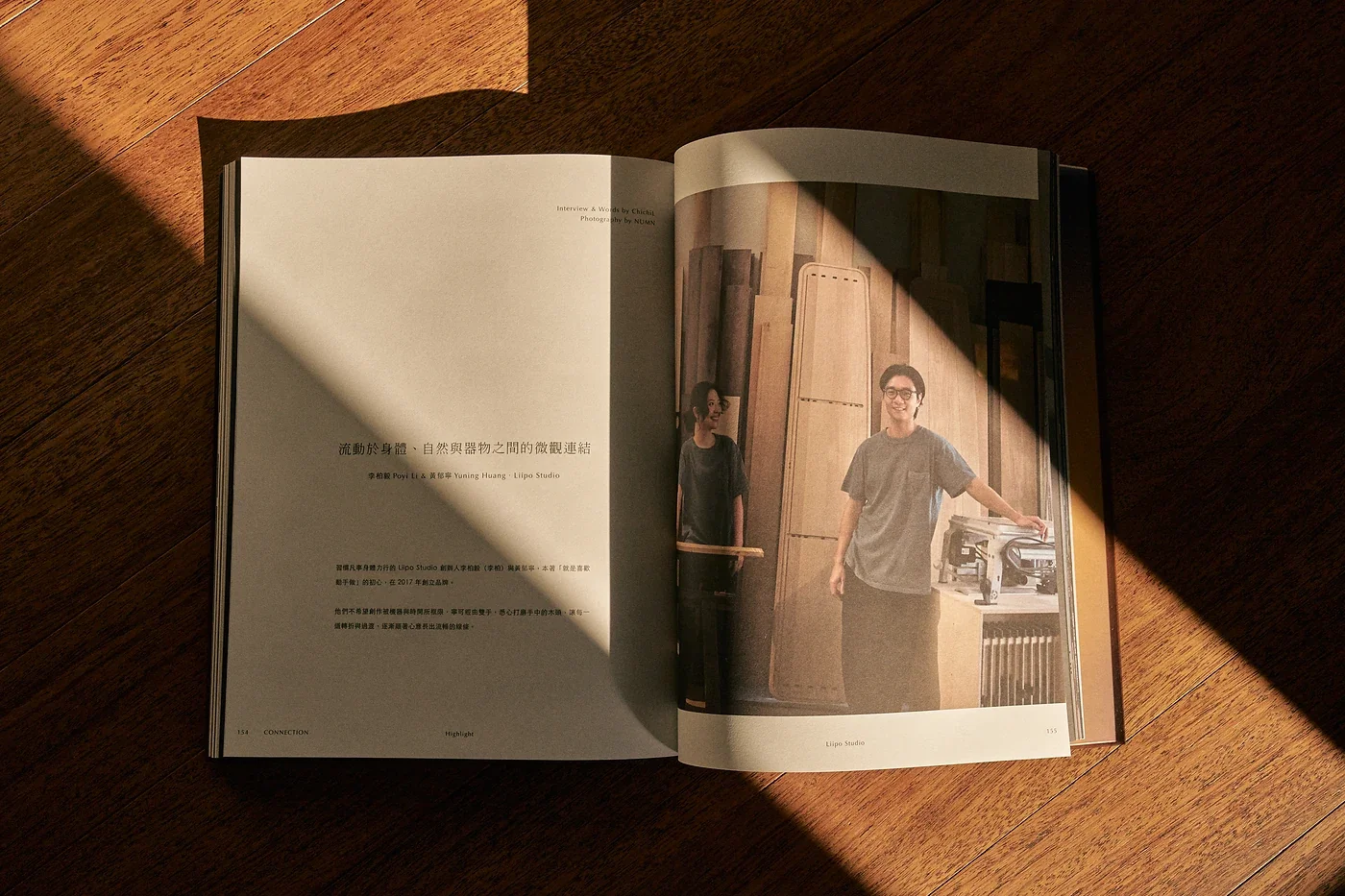
除了閱讀時的細節,設計師的判斷,有時也體現在知道自己該介入多少。共同打磨這本書的期間,小白總會仔細讀完每一篇人物訪談,與我聊起受訪者帶給她的感受,討論哪些影像更貼近人物的氣質,以及版面該怎麼呈現文字語句間的停頓與情緒。
「由於訪問的人物內容已經很豐富了,我要做的反而像編輯一樣,把外在的表現收斂回來,讓排版維持在同一個框架內,把文字跟影像強調到最大。」她選擇搭建出一個乾淨、舒適的空間,讓不同的故事在同一本書裡各得其所。
[EN]
Beyond the details of reading, a designer’s judgment also shows in knowing how much to intervene. Throughout our time working on the book together, Huilun would read every interview carefully, share with me what the subject made her feel, discuss which images best captured their character, and think through how the layout could carry the pauses and emotions between the lines.
“Because the people featured already bring so much to the page, my job was more like an editor’s: pull back the visual expression, keep the layout within a consistent framework, and let the writing and images do as much as possible.” She chose to build a clean, comfortable space where very different stories could each find their place within the same book.
© Hey!Cheese
[ZH]
「只要時間還沒到最後一刻,都可以試試看」
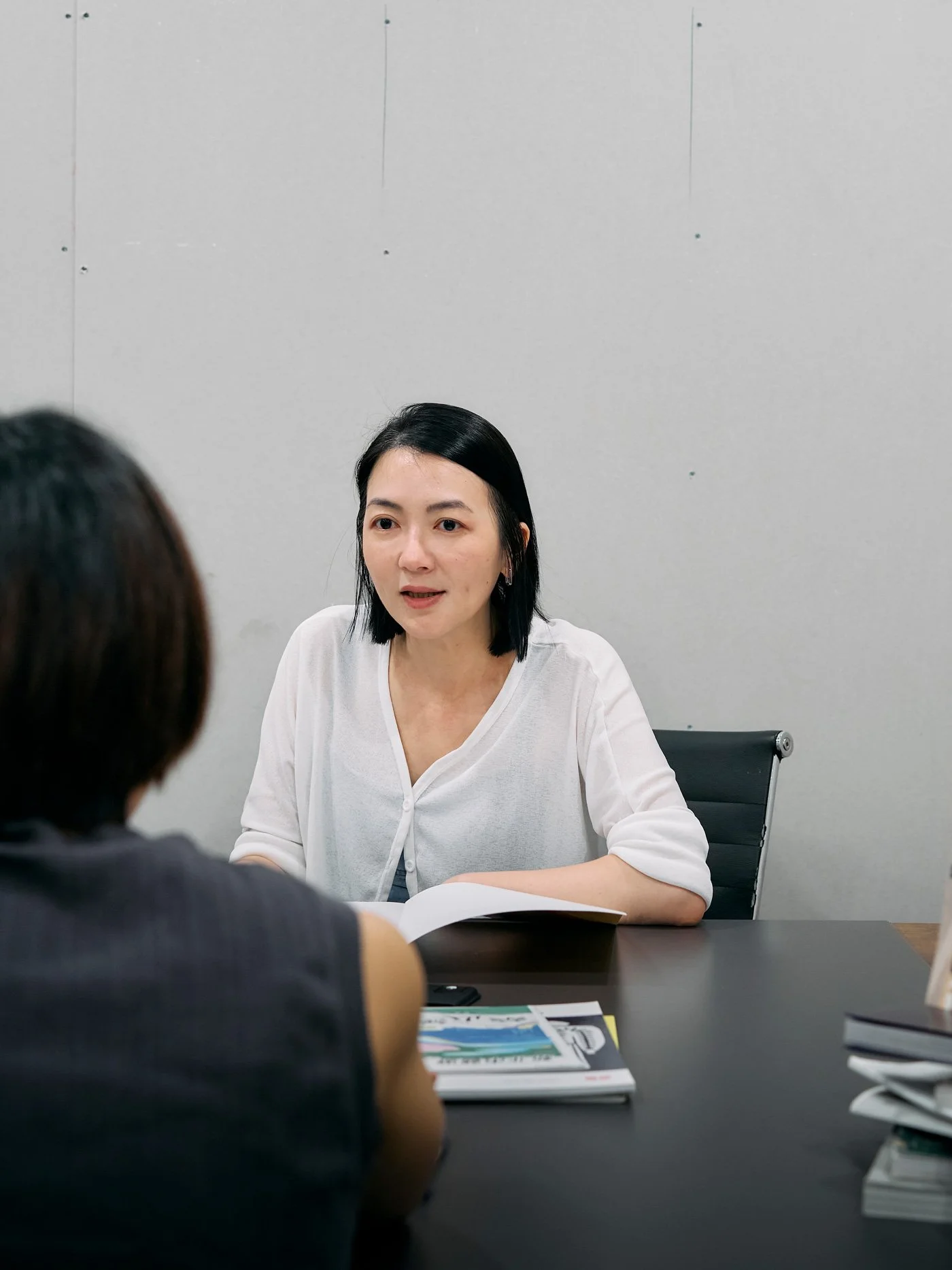
和小白共事,常會感受到一股安定的力量。那份從容,來自她面對各種想法時的開放。
只要有機會,我都會想試試看。
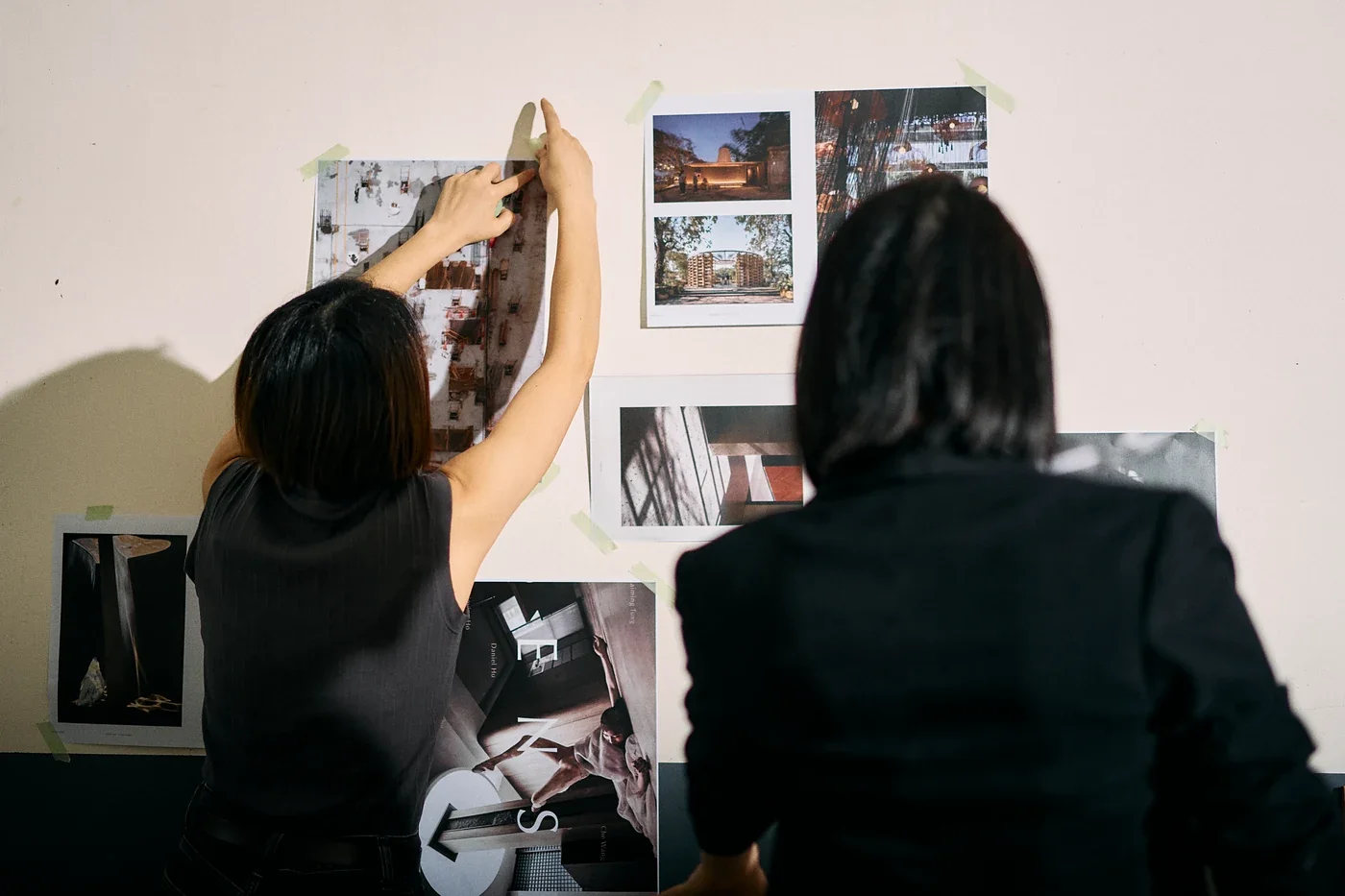
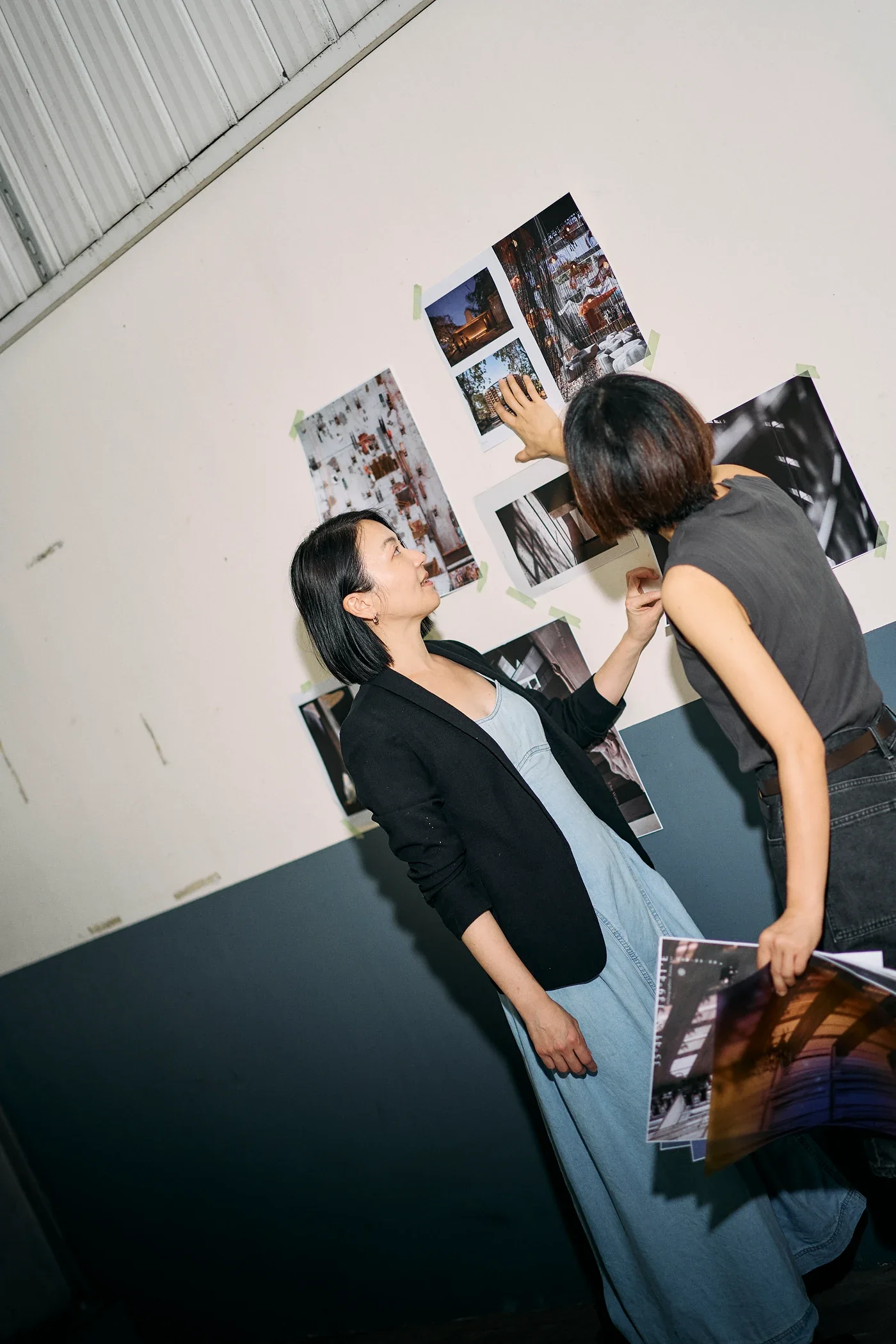
設計產業有許多約定俗成的做法。一個新想法拋出,經常會聽見前輩和工廠善意地提醒:「以前不是這樣做的」、「這在產線上不可能實現」,也可能是客戶面露難色地表示成本代價太高。遇上這類阻力,小白很少直接妥協,但也不正面衝撞。「我理解對方是為我好,但我同時也會想,會不會是他把自己的觀念框住了呢?如果成本高,那代價具體是多少?知道了報價,也許我稍微修改一下結構,便能降低成本,而設計就可以被繼續推進。」
[EN]
As long as there’s still time, it’s worth trying
Working alongside Huilun, you feel a kind of steadiness. It comes from how open she is to ideas, wherever they lead.
If there’s a chance, I want to try it.
The design industry runs on convention. Float a new idea and you’ll often hear well-meaning pushback from experienced fabricators or suppliers: “That’s not how it’s done,” or “The production line can’t handle that.” Sometimes it’s a client wincing at the cost. When Huilun hits this kind of resistance, she rarely gives in, but she doesn’t push back head-on either. “I know they’re looking out for me. But I also wonder whether they might be limiting themselves. If the cost is high, how high exactly? Once I see the numbers, maybe I adjust the structure slightly, bring the price down, and the design can keep moving forward.”
© Hey!Cheese
© Hey!Cheese
[ZH]
曾經在一個合作案,她的構想再次被告知「沒有人這樣做」。為了不讓自己留下遺憾,她一口氣畫了三個不同的方案供客戶選擇。「就算最後客戶還是選擇安全牌,提出來,我至少過了自己心裡那一關。」結果,最後被採用、並拿下 Good Design 大獎的,正是當初那個差點被放棄、最突破常規的第三案。
不過,試試看也不意味著總是要不斷往前衝。遇到思緒膠著,或是畫出來的結果不如預期時,小白反而會讓自己暫時抽離。當時完成年刊內頁編排、準備進入封面設計前,她便刻意停下一整週,先淨空思緒,看看其他東西,讓自己沉澱一下再繼續。
[EN]
On one project, her idea was met again with “Nobody does it that way.” Rather than let it go and regret it later, she drew up three different proposals for the client. “Even if they end up picking the safe option, at least I’ve put it out there and cleared it with myself.” As it turned out, the one that was chosen, and went on to win a Good Design Award, was the third proposal, the one that had nearly been dropped for pushing too far.
That said, trying doesn’t always mean pushing forward. When her thinking stalls or a design isn’t coming together the way she hoped, Huilun pulls back. After finishing the interior layout of the journal, just before moving on to the cover, she deliberately stopped for a full week. She cleared her head, looked at other things, and let everything settle before picking it up again.
© Hey!Cheese
[ZH]
設計不會有真正完結、完美的一天
有趣的是,這樣一個在設計過程不輕易放棄可能性的人,到了作品即將完成的時刻,也會適時放手。
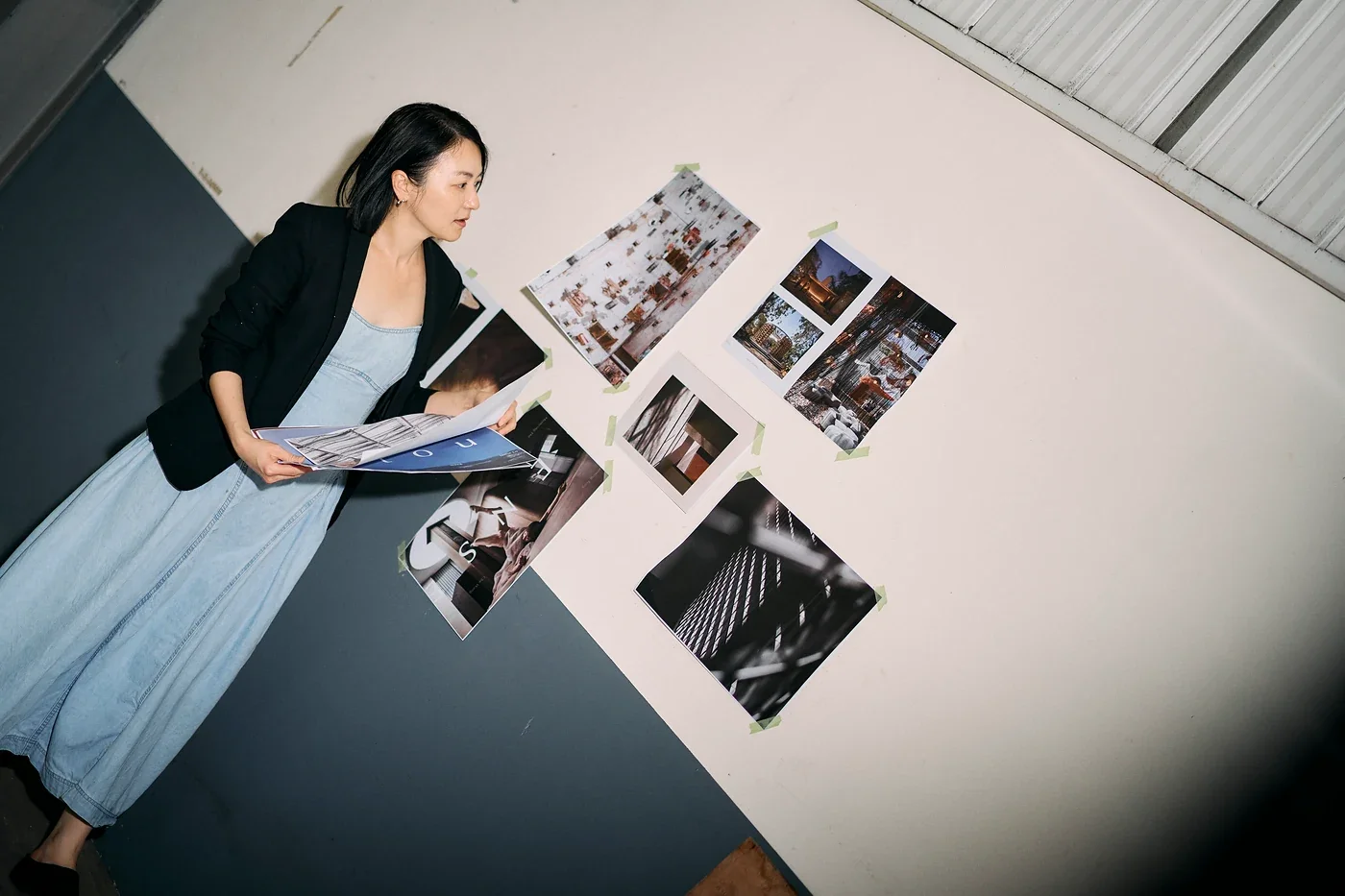
對時間與完成度的體悟,她提到,一部分來自先生的影響,另一部分則是帶領學生做專題時的觀察。「學生常會覺得作品還沒做完。但你給他一個月,他說沒做完;給他一年,一年到了還是覺得沒做完。所以不要過度糾結,如果在約定的時間內,成果已經過了我心裡那一關,達到了八、九十分,我就該學會放手。剩下的十分,就交由後續製作過程中材質、機構的協力,慢慢為成品加分。」
[EN]
Design never truly finishes
There’s an irony here: someone who refuses to let go of any possibility during the process also knows when to let go at the end.
Her sense of timing, she said, comes partly from her husband’s influence, and partly from mentoring students on their thesis projects. “Students always feel like the work isn’t done. Give them a month and they say they need more time. Give them a year, and at the end of the year they still feel it’s not finished. So I’ve learned not to overthink it. If the work clears my own bar within the time we’ve agreed on, if it’s at eighty or ninety percent, I need to let go. The last ten percent comes later, through the materials and the fabrication process. Those collaborators add their own contribution to the final piece.”
© Hey!Cheese
[ZH]
每當產品上市,小白總是滿懷期待想聽使用者的真實回饋。笑稱自己容錯率極高的她,即使是負評,也認真聽進去。「有些人看到你的缺點並不會特別告訴你。如果有人願意講,哪怕是站在反方,我也覺得他很有勇氣,是希望為我好。也許那個負評正好是我沒看見的盲點,那下一次,我就知道可以怎麼做得更好。」
[EN]
Whenever a product hits the market, Huilun is eager to hear what people actually think. She jokes that her tolerance for criticism is unusually high. Even negative feedback, she'll take it seriously. "Most people who spot a flaw won't bother telling you. So when someone does speak up, even from the other side, I think that takes courage. They want to help. Maybe what they're pointing out is exactly the blind spot I missed, and next time I'll know how to do it better."
© Hey!Cheese
[ZH]
惜物之人,把盼想畫成陪伴
回顧這些年來的作品,佔據小白設計生涯超過三分之一時間、也最讓她畫起來樂此不疲的,一直都是燈具。在大眾眼裡,燈可能就是照明的工具;但就她而言,桌燈、立燈、吊燈、壁燈,每一種高度與姿態,都對應著空間不同的情緒。從電腦螢幕上的 3D 建模、賦予材質、渲染場景,到打樣、量產,最後真正走入某個人的家裡被點亮 —— 那份身為設計者的滿足感,是一層一層堆疊起來的。
我做的事情滿足到使用者,我自己同時也被滿足了。
[EN]
Objects as company
Of everything Huilun has designed, lighting is the constant. It accounts for more than a third of her career and remains the thing she’s happiest drawing. Most people see a lamp as something that lights a room. For her, a table lamp, a floor lamp, a pendant, a wall sconce, each sits at a different height, strikes a different tone in a space. From 3D modelling on screen, assigning materials, rendering a scene, through to prototyping, production, and the moment it’s finally switched on in someone’s home, the satisfaction compounds with every stage.
When what I’ve made genuinely serves someone’s life, I feel it too.
© Hey!Cheese
[ZH]
那些人與物長久相伴的故事,特別容易打動小白。她分享在燈具品牌 SEEDDESIGN 工作時,有些客人從最初的小坪數房子搬進更寬敞的新家,淘汰了許多舊家具,卻特地請師傅將牆上的壁燈拆下、跟著搬往新居;甚至燈壞了也捨不得丟,總想方設法送修或尋找備品。「因為他們覺得那盞燈已經是家的一部分,回家沒看到它亮著,就少了一點家的感覺。」
「我是個惜物的人,如果東西很快就被丟掉會很捨不得。所以我很喜歡做燈或家具,期盼作品能扮演『陪伴』的角色,陪著人們很久很久。」而這份心念,也安放在她至今仍在使用、最鍾愛的兩盞燈具裡。
[EN]
What moves Huilun most are the stories of people living with objects over time. She shared one from her years at the lighting brand SEEDDESIGN: customers who moved from a small apartment into a bigger home would let go of most of their old furniture, but have an electrician carefully remove the wall sconce and bring it with them. Some kept a broken lamp for years, determined to get it repaired or track down replacement parts. "Because for them, that lamp had become part of the home. Coming back at night and not seeing it lit, the place just wouldn't feel the same."
"I'm someone who can't stand seeing things thrown away too soon. That's why I love designing lamps and furniture. I hope what I make can play the role of a companion, staying with people for a very long time." That feeling lives in the two lamps she still uses every day, her all-time favourites.
SEEDDESIGN 燈具 HOODIE, by Huilun Lee。© Hey!Cheese
[ZH]
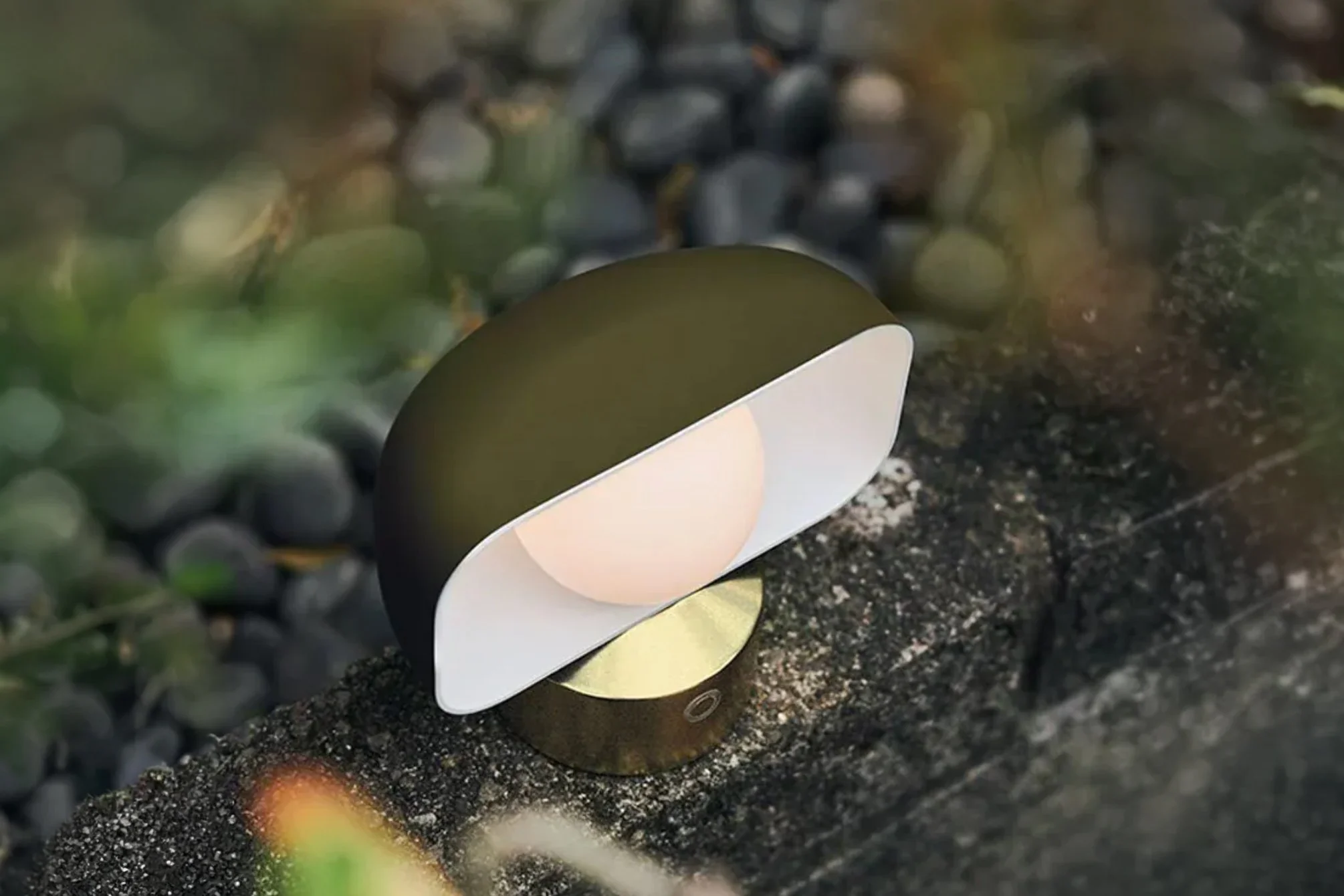
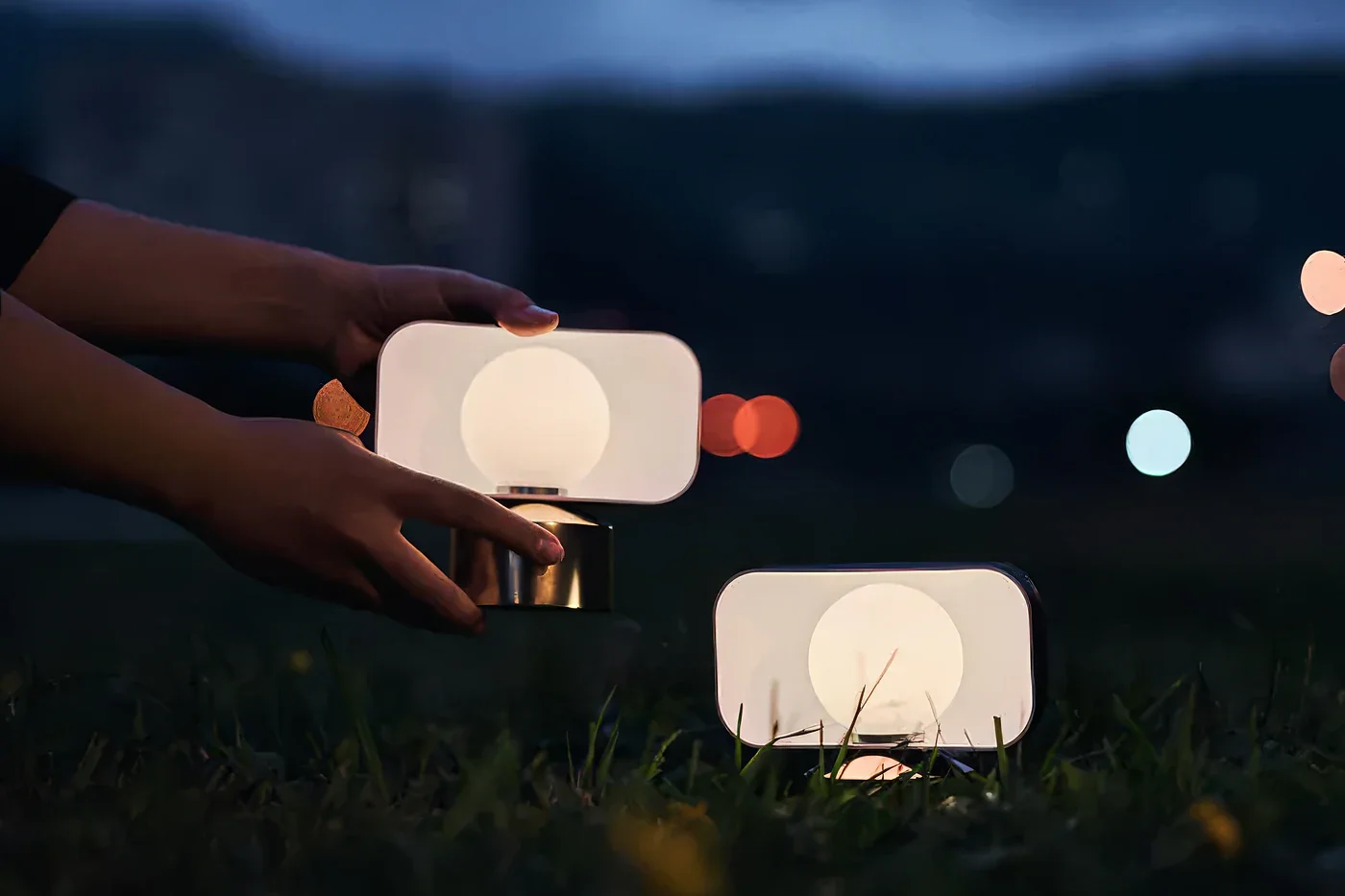
一盞是外型圓潤、帶著一頂小帽兜的無線充電燈《HOODIE 無敵》。那是在她剛有孩子、起居日夜顛倒的時期所誕生的作品。無數個摸黑起身餵母奶的深夜,那抹微光陪伴著初為人母的疲憊與期盼。直到現在,她偶爾還是會指著燈跟兒子吉寶說起這個故事:
這個亮亮的、圓圓的部分,就是你的臉,外面的帽子就是你的包巾。這是一盞可以帶著走的小燈,就像媽媽一樣,不管你想去哪裡,我都可以陪著你去。等你長大了,你把燈罩轉向哪裡,光照亮的地方,就是你想要看、想要去追求的遠方。
[EN]
The first is HOODIE, a soft, rounded wireless charging lamp with a small hood. It was born during the early days of motherhood, when her schedule had flipped entirely. Through countless nights of getting up in the dark to nurse, that quiet glow kept her company through the exhaustion and the tenderness of being a new mother. Even now, she still points to the lamp and tells her son, Jibao, the story behind it:
The round, glowing part? That's your face. The hood around it is your swaddle. It's a lamp you can carry with you, just like me. Wherever you want to go, I'll go with you. And when you grow up, whichever way you turn the shade, the light will fall on the place you want to see, the place you want to reach.
SEEDDESIGN 燈具 HOODIE, by Huilun Lee。© Hey!Cheese
[ZH]
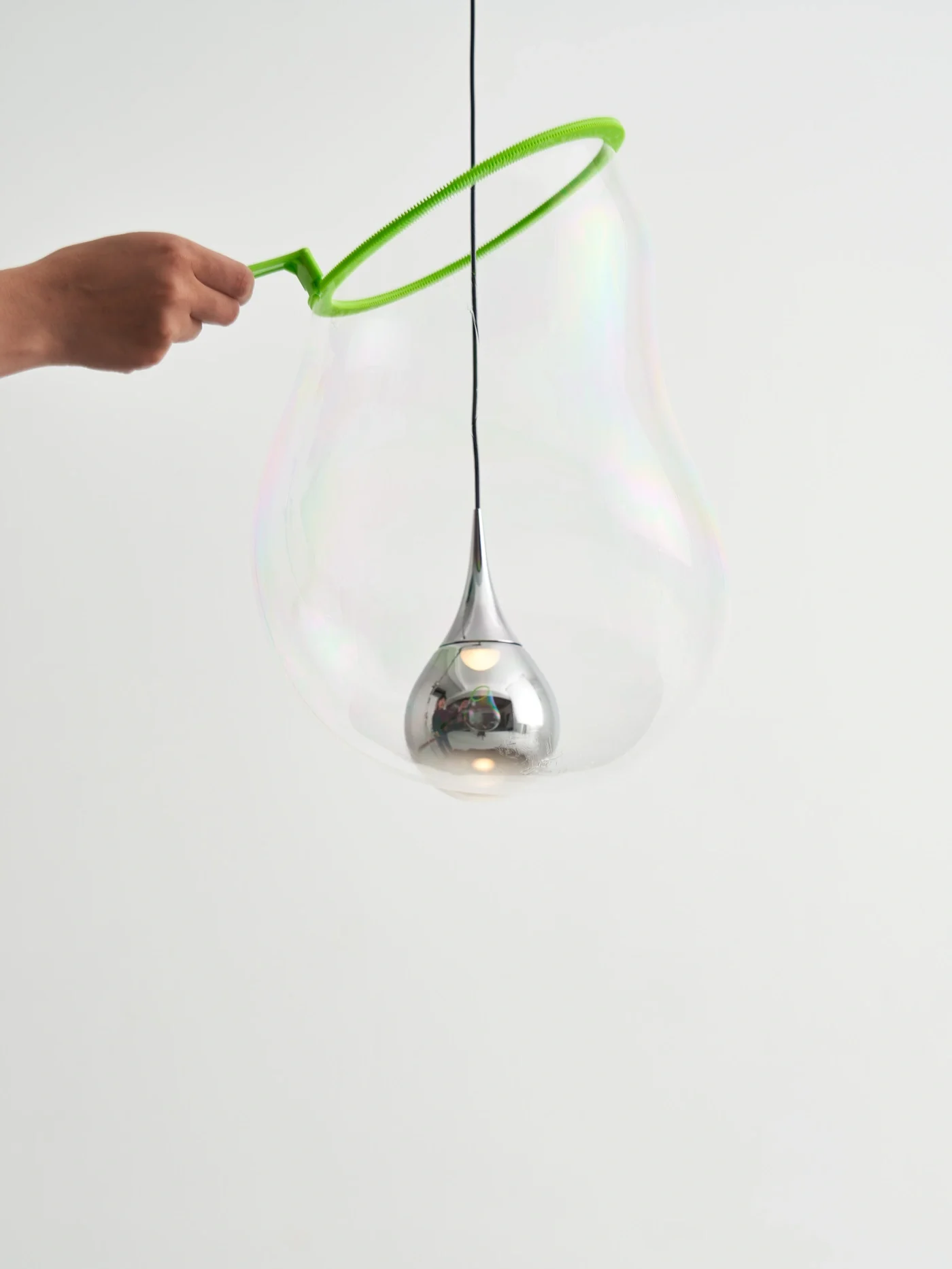
另一盞燈《PAOPAO 泡泡》,則封存一個晴朗午後的記憶。
那時兒子再長大了一些,母子倆在華山大草原上吹了一整個下午的泡泡。看著陽光下七彩的泡泡在半空中飄浮,兒子開心地追逐、伸手將它們一一戳破。小白站在草地上,目光被泡泡表面折射出的光影牢牢吸引。
「我在想,為什麼小孩這麼喜歡泡泡,卻又喜歡把它戳破?在泡泡底下,它映照出來的其實是我們的笑臉。那一刻我心裡突然有一個好強烈的念頭—— 我好想要那個笑臉不要破。我希望那道光影,還有我跟孩子的笑臉,可以一直印在上面。」
[EN]
The other is PAOPAO, a pendant that holds the memory of one clear afternoon.
Jibao was a little older by then. The two of them spent an entire afternoon blowing bubbles on the lawn at Huashan. Iridescent spheres drifted in the sunlight while her son chased them down, popping each one with a finger. Huilun stood on the grass, transfixed by the play of light and colour across their surfaces.
“I kept thinking, why do children love bubbles so much and yet love popping them? If you look at the underside of a bubble, what it reflects is our smiling faces. And in that moment I felt something so strong. I wanted that smile not to break. I wanted the light, and the way my son and I looked in it, to stay there.”
SEEDDESIGN 燈具 PAOPAO, by Huilun Lee。© Hey!Cheese
[ZH]
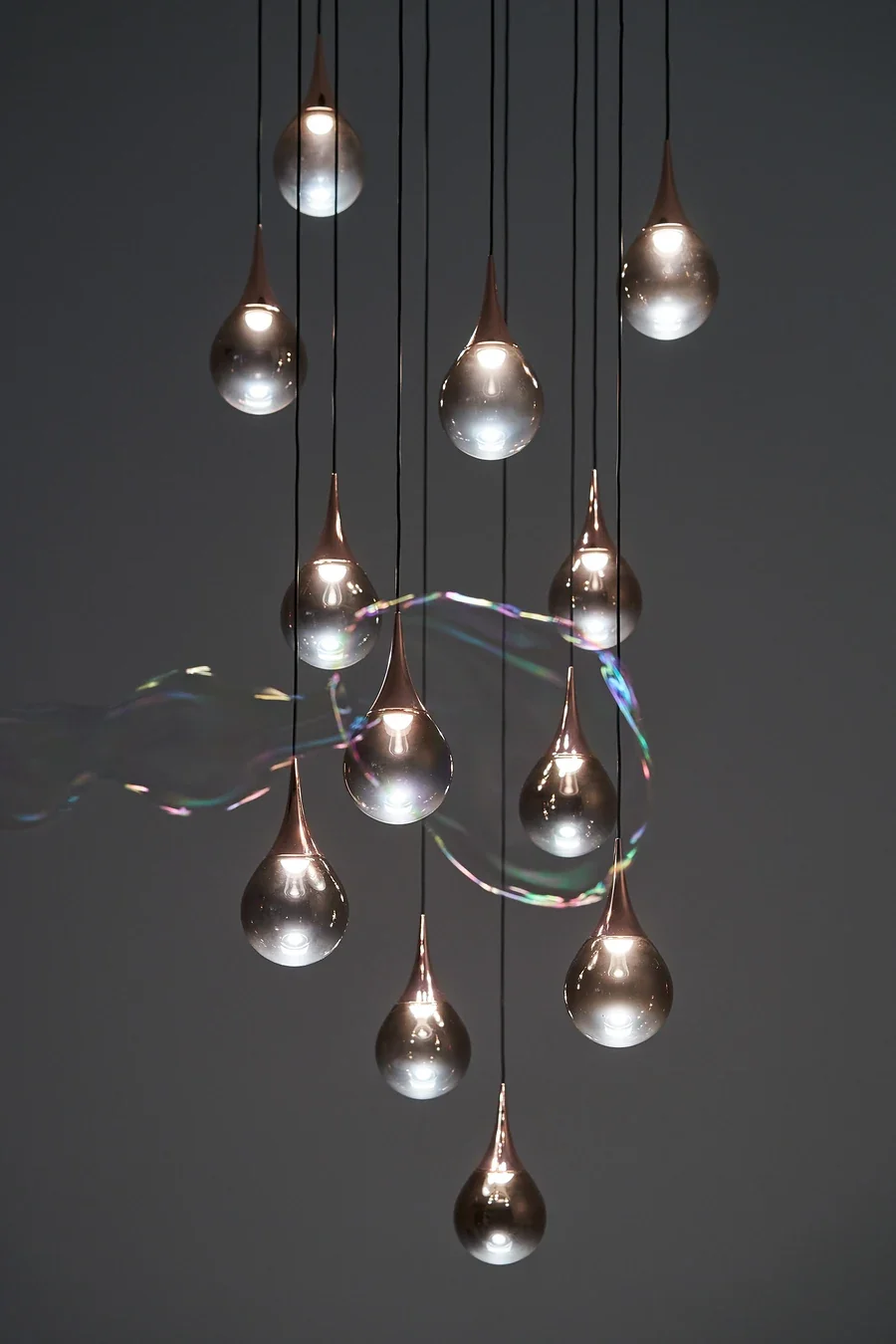
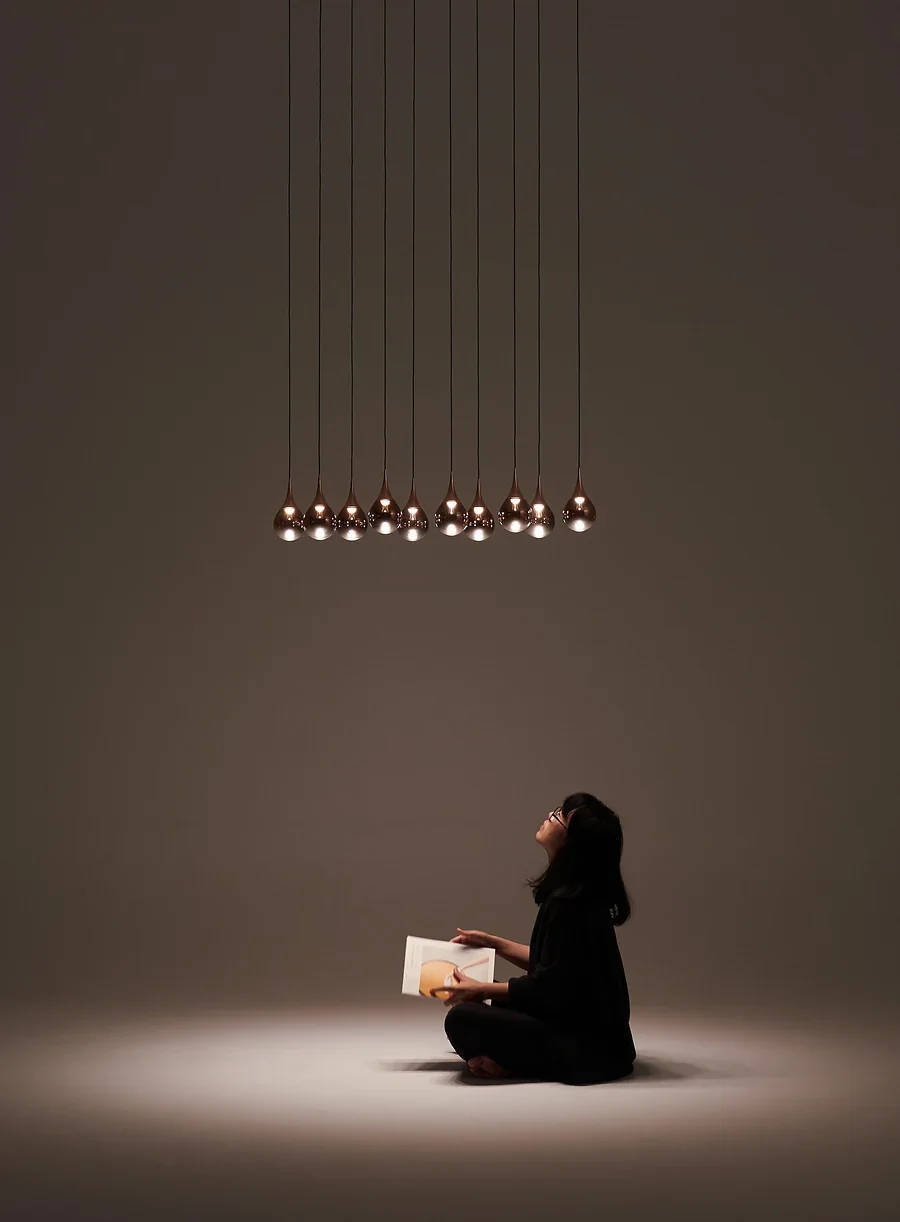
為了留住那個瞬間,她畫出了《PAOPAO》。然而,要把記憶裡那層既能反射周遭景象、開燈時又能透出溫潤光線的薄膜變成現實,卻是一道難題。為了實現沒有做過的「漸層電鍍」工藝,她與工廠反覆測試不同的玻璃與電鍍製法,最終才讓那顆不會破的泡泡誕生,兼顧如夢似幻的美感與照明的實用性。
後來燈上市了,我帶著吉寶去門市看實體。我們兩個人就站在那盞燈底下,看著玻璃上映照出的彼此,一起傻笑。
[EN]
To hold on to that moment, she designed PAOPAO. But turning the memory into a real object posed a problem: how to create a surface that reflects its surroundings when the light is off, yet lets a warm glow through when it's on. To achieve a gradient electroplating finish that had never been done before, she and the factory tested round after round of different glass types and plating methods. Eventually, the unbreakable bubble came to life, balancing that dreamlike shimmer with the practicality of actual light.
After it launched, I took Jibao to the showroom to see it in person. The two of us just stood underneath, looking up at each other's reflections in the glass, grinning like idiots.
[ZH]
在陶裡,多一點自己的樣子
如果說過去十多年的燈具設計,盛裝著小白大大小小的記憶;那麼近期剛完成的這本年刊,則意外在她心底掀起另一波漣漪。
「裡面的創作者,對於自己生活的堅持或創作動機,都有一種毅然決然投身所愛的專注。有些人的心境剛好跟我當下遇到的狀態很雷同,也因此觸動到我。我想,既然別人都可以跨出那一步,我會對別人試試看,我也會對自己試試看!」
做了多年以使用者和品牌為出發點的設計,她開始期待,能留一點空間給自己,單純順著內心喜好和構想去創作。
[EN]
A little more of herself, in clay
If the past decade of lighting design has held Huilun’s memories large and small, then the recently completed HCS Journal stirred something else entirely.
“The creators in the journal, the way they commit to how they live, their reasons for making things, there’s a real resolve in how they throw themselves into what they love. Some of them were going through something that mirrored exactly where I was at the time, and that got to me. I thought, if they can take that step, and I’d encourage anyone else to try, then I should say the same thing to myself.”
After years of designing for users and brands, she’s beginning to make room for something of her own: work that follows nothing but her own instincts and curiosity.
© Hey!Cheese
[ZH]
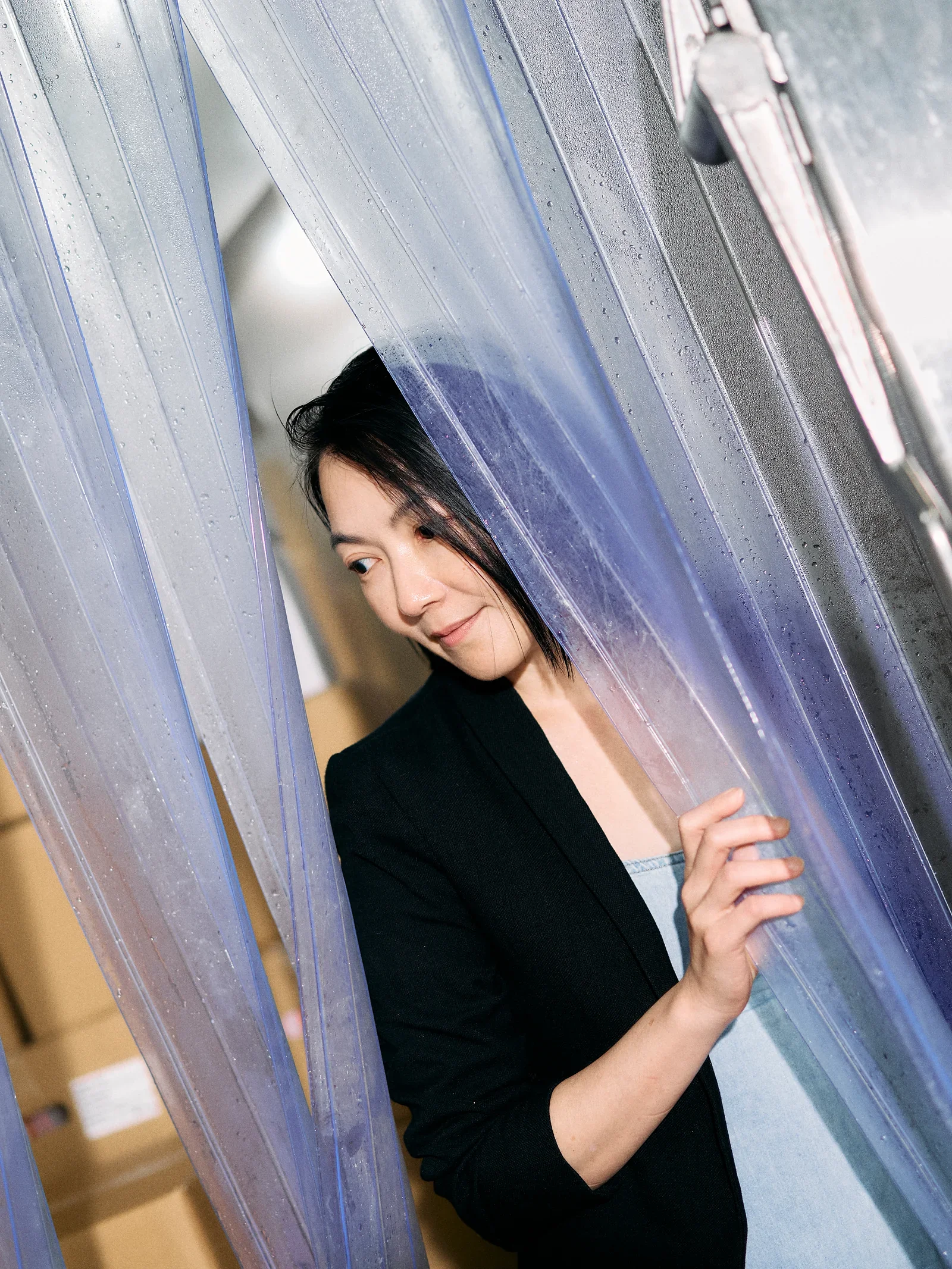
於是,原本就著迷於雙手掰開、揉捏泥土觸感的小白,決定一頭栽進陶藝的世界。
她利用假日,從陶藝的基礎一步步學起。每次上課從早上十點一路捏到下午五點,有時太過投入,連午飯都忘了吃。就算結束後才察覺雙肩與手指痠痛不已,心裡卻仍滿是幹勁,還想繼續做下去。
走在鶯歌街上,小白逐漸體會到,陶藝在這裡是件再平常不過的事。街角巷弄擺滿各式器皿,擦肩而過的當地人彷彿個個都懂捏陶;教室裡當義工的退休阿公阿媽,明明有著足以授課的手藝,也不以老師自居,只是單純地捏陶。
陶,是碗盤、是水缸,是自然而然的存在。
[EN]
So Huilun, who had always loved the feel of pulling clay apart and working it between her fingers, decided to dive in.
She started from the basics, spending her weekends at a ceramics studio. Each session ran from ten in the morning until five. Sometimes she got so absorbed she forgot to eat. By the end her shoulders and fingers would be aching, but she still wanted to keep going.
Walking around Yingge, she started to see how matter-of-fact ceramics are here. Every corner is lined with vessels of some kind. The locals all seem to know their way around a wheel. Retired grandparents who volunteer at the studio could easily teach the class themselves, but they don’t bother with the title. They just show up and make things.
Here, clay is as ordinary as the dishes you eat from.
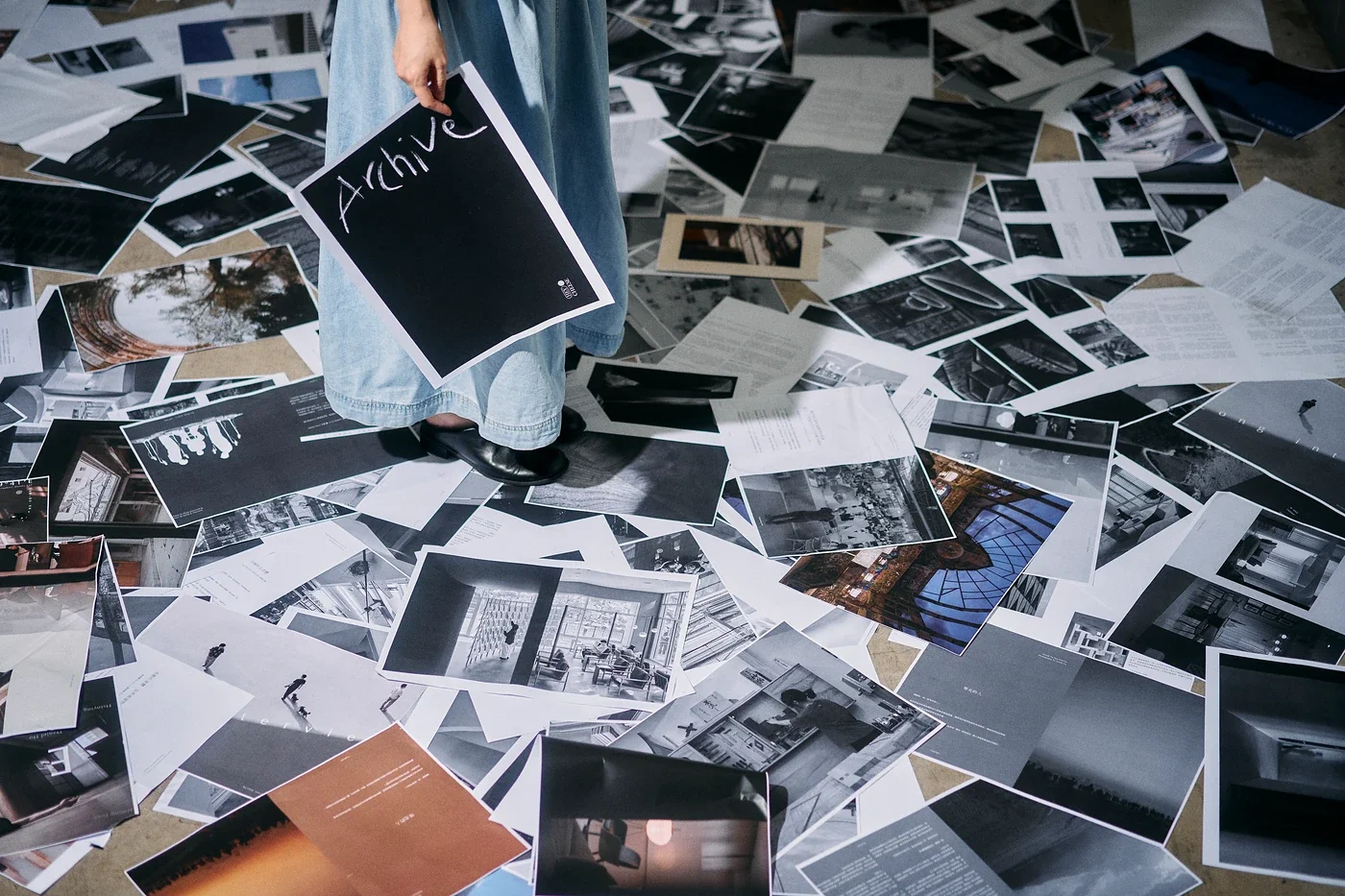
© Hey!Cheese
[ZH]
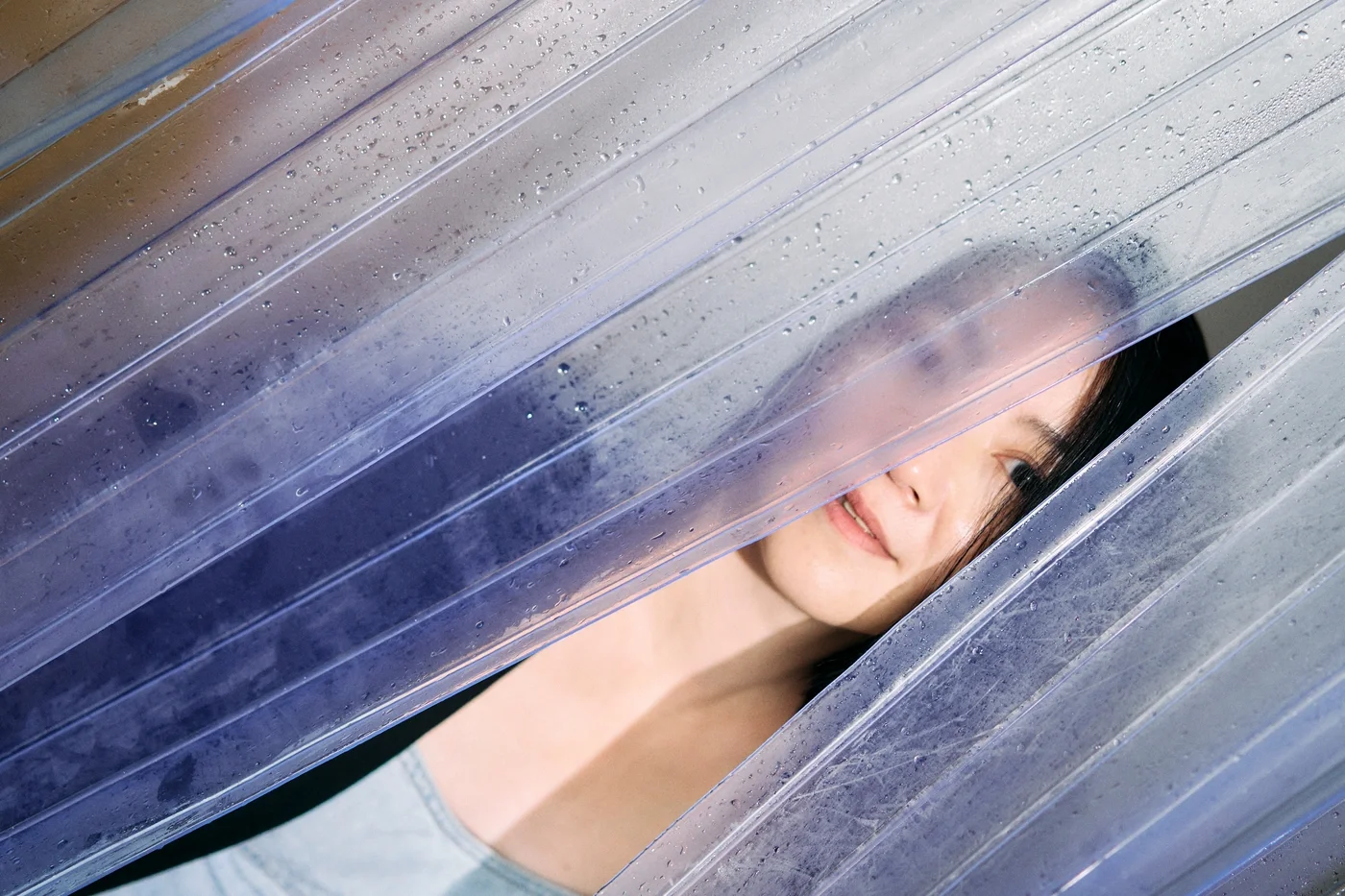
我最近的狀態,好像是想要去一個『彼岸』。雖然我還不知道那個彼岸具體在哪裡,也沒有捷徑,可能繞了一圈才明白自己不喜歡,也可能很喜歡,但我知道我現在就是要去走它。
[EN]
Lately I feel like I'm trying to reach some kind of other shore. I don't know exactly where it is yet, and there's no shortcut. Maybe I'll go all the way around and realise it's not for me. Maybe I'll love it. But I know I need to walk that path right now.
© Hey!Cheese
[ZH]
在這段尚未看清終點的旅程中,她最想做的,是把身上的標籤通通卸除。什麼公司的設計師、什麼學校的老師、拿過什麼獎項的得主......「以前我也曾經很渴望拿到某個獎項或肯定,但真正拿到之後,發覺我還是原來的我。我只是在體驗這份工作、體驗這段人生。完成一個案子,我就關機,再重新開機;不斷歸零,接著重新開始。」
她的歸零,是讓自己在心態上回到最初的好奇與求知,帶著一路走來的累積,輕裝走向下一個起點。也許有天驀然回望,才意識到自己早站在五年前最渴望抵達的那個彼岸;至於五年後的風景,儘管還不清楚究竟在哪裡,她也不急著替未來的自己,安上一個確切的身分。原因無他:
我希望這些身份都拿掉之後,我還是我。
她是李慧倫。
當年說給兒子吉寶聽的那句話,如今也像是說給自己 —— 光照的地方,就是你想去的地方。
[EN]
On this journey where the destination is still out of sight, what she wants most is to strip away every label. Designer at such-and-such company, lecturer at such-and-such school, winner of such-and-such award. “There was a time when I desperately wanted a certain prize or recognition. But once I actually got it, I was still the same person. I’m just experiencing this work, experiencing this life. I finish a project, shut down, restart. Zero out, begin again.”
Her version of zeroing out isn’t about erasing what came before. It’s about returning to the curiosity she started with, carrying everything she’s learned, and walking lighter toward whatever comes next. Maybe one day she’ll look back and realise she’s already standing on the shore she longed for five years ago. As for the view five years from now, she’s in no rush to assign her future self a fixed identity. The reason is simple:
Take all those titles away, and I want to still be me.
She is Huilun Lee.
What she once told her son Jibao now sounds like something she’s saying to herself: wherever the light falls, that’s where you want to go.
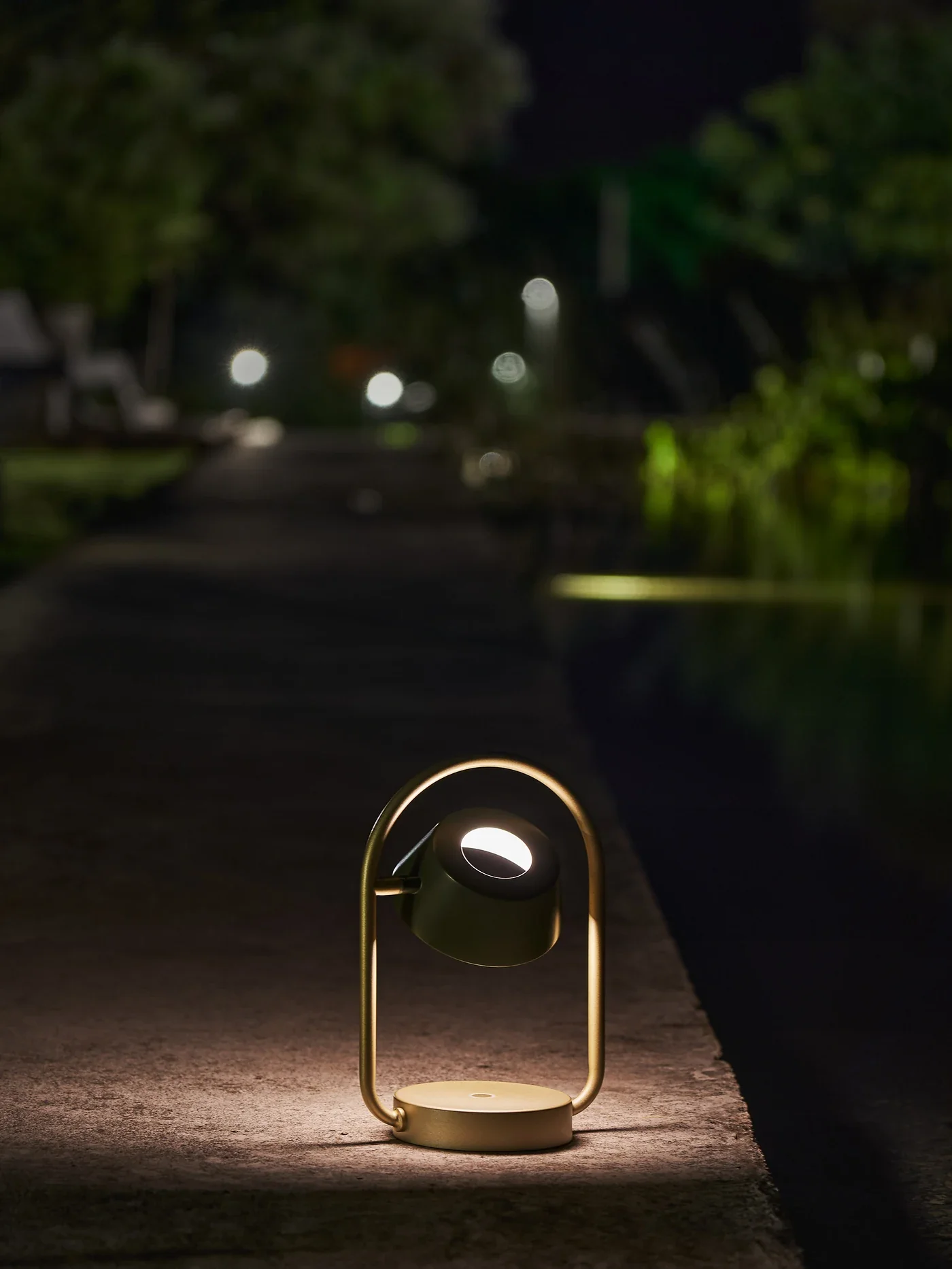
SEEDDESIGN 燈具 OLO, by Huilun Lee。© Hey!Cheese