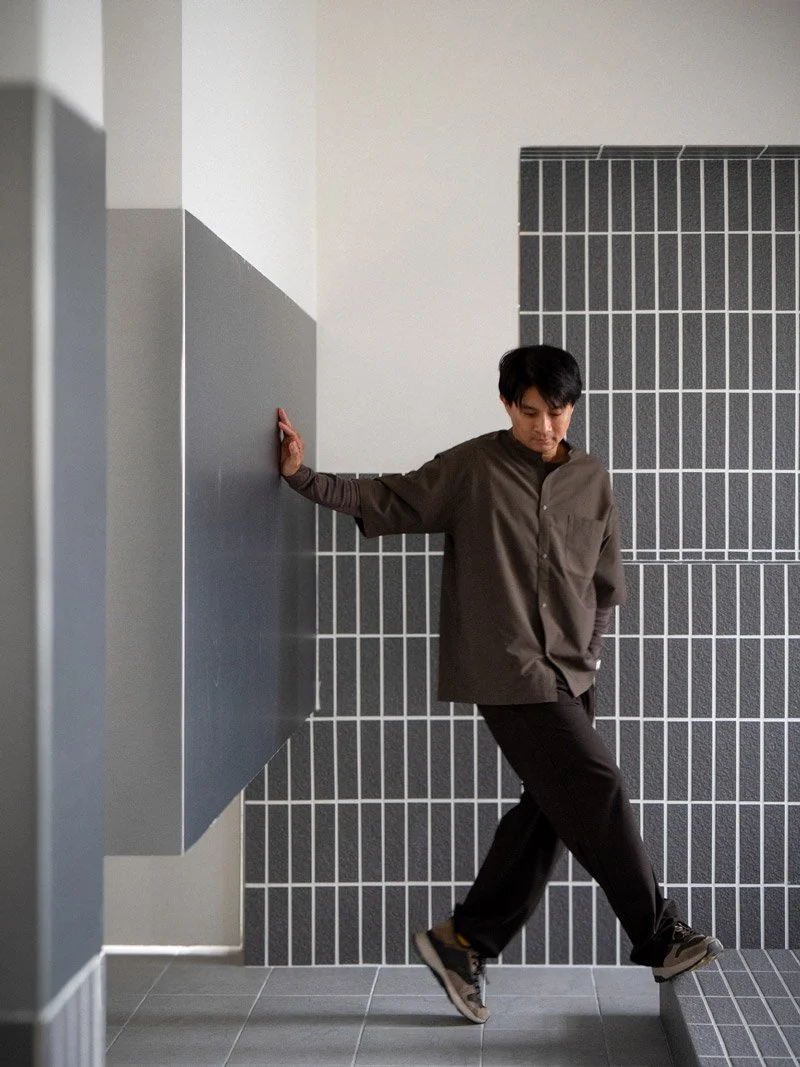
放下執著,才能讓設計擁有「空間」— 新澄設計總監黃重蔚:「最好的設計,是找到『剛剛好』的中庸之道」
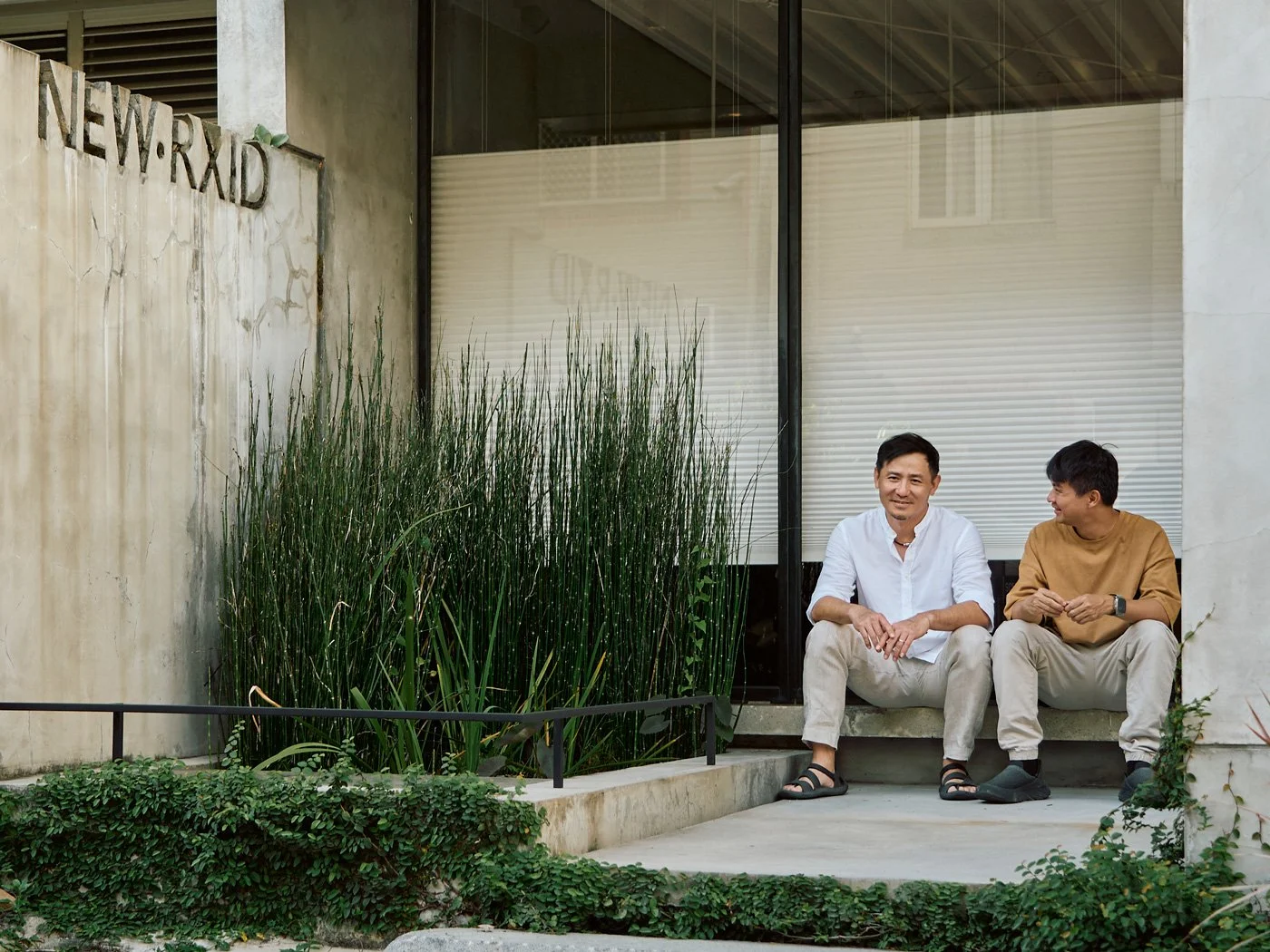
新澄設計總監, 黃重蔚(Johnson Huang, Head Director of NEWRXID Design)
-
What should we learn as we reach a certain stage in life?
Part of the answer may lie in a line often mentioned by Johnson Huang, Design Director of NEWRXID: “At fifty, you understand your destiny.”
For many of us, the journey from pushing ourselves in design to understanding how to live with ease has taken time. When we were younger, design felt like something that had to be tightly controlled. Every detail seemed critical, and any small compromise felt like a risk to the integrity of the work. That persistence is admirable, but it also carries a quiet burden that only experience can reveal.
After my conversation with Johnson, I began to understand something. Mature designers eventually learn not to add more, but to take away. The ideas he shared letting go, finding calm, and returning to what truly matters are lessons shaped by years of working through projects, navigating expectations, and learning how to balance ideals with real situations.
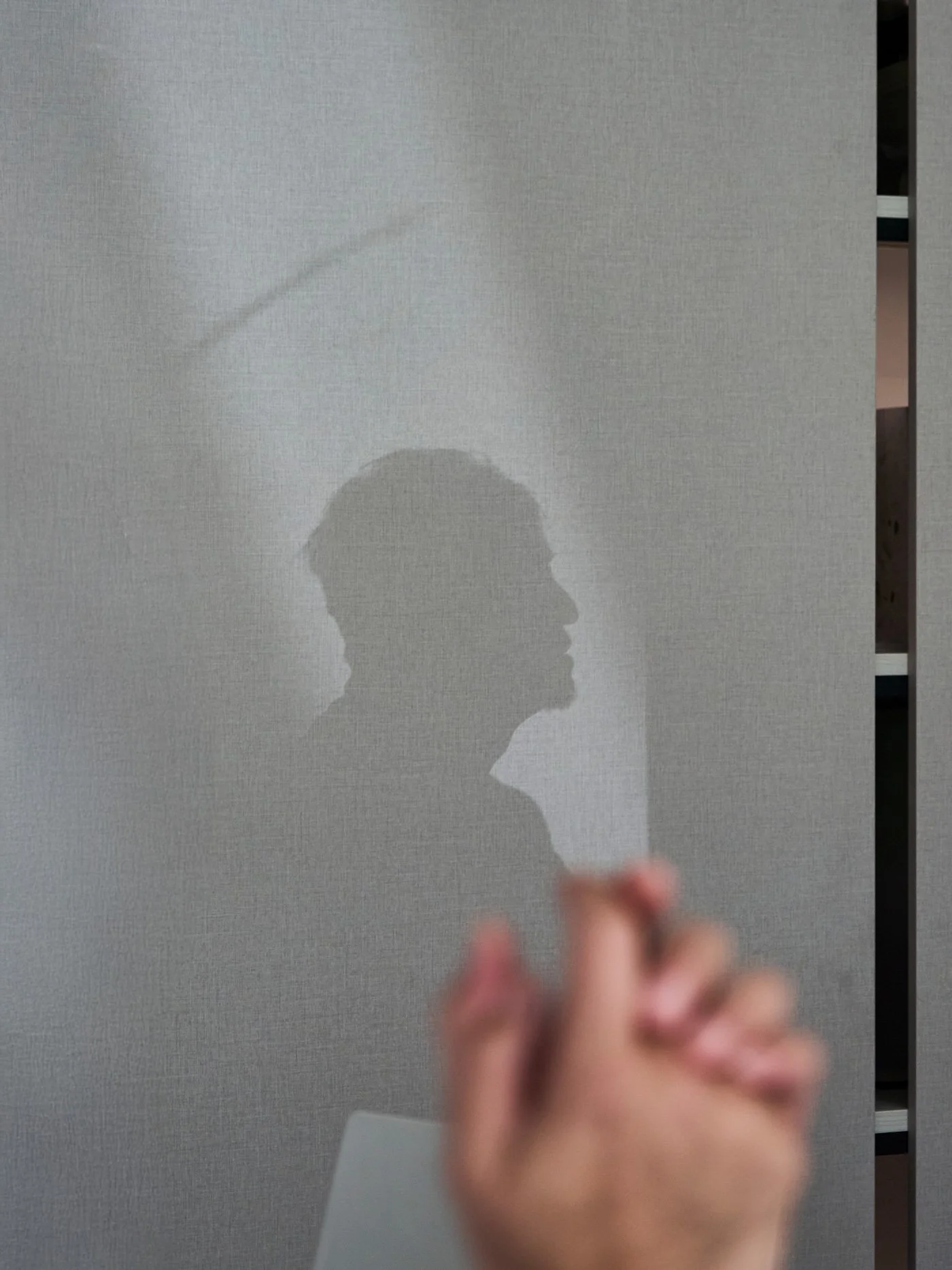
-
After speaking with Johnson, I realized that experienced designers eventually learn the value of taking away rather than adding more. The ideas he shared letting go, finding calm, and returning to what is essential are insights shaped through years of working with different projects and clients.
He mentioned that he no longer sees himself as a director but as someone who sets the scene. It is an incredibly accurate description. A designer’s role is not only to project personal intent but also to help shape the way people imagine a good life and bring that vision into reality with care.
If you are also standing at a turning point, you may find a sense of ease in his story.
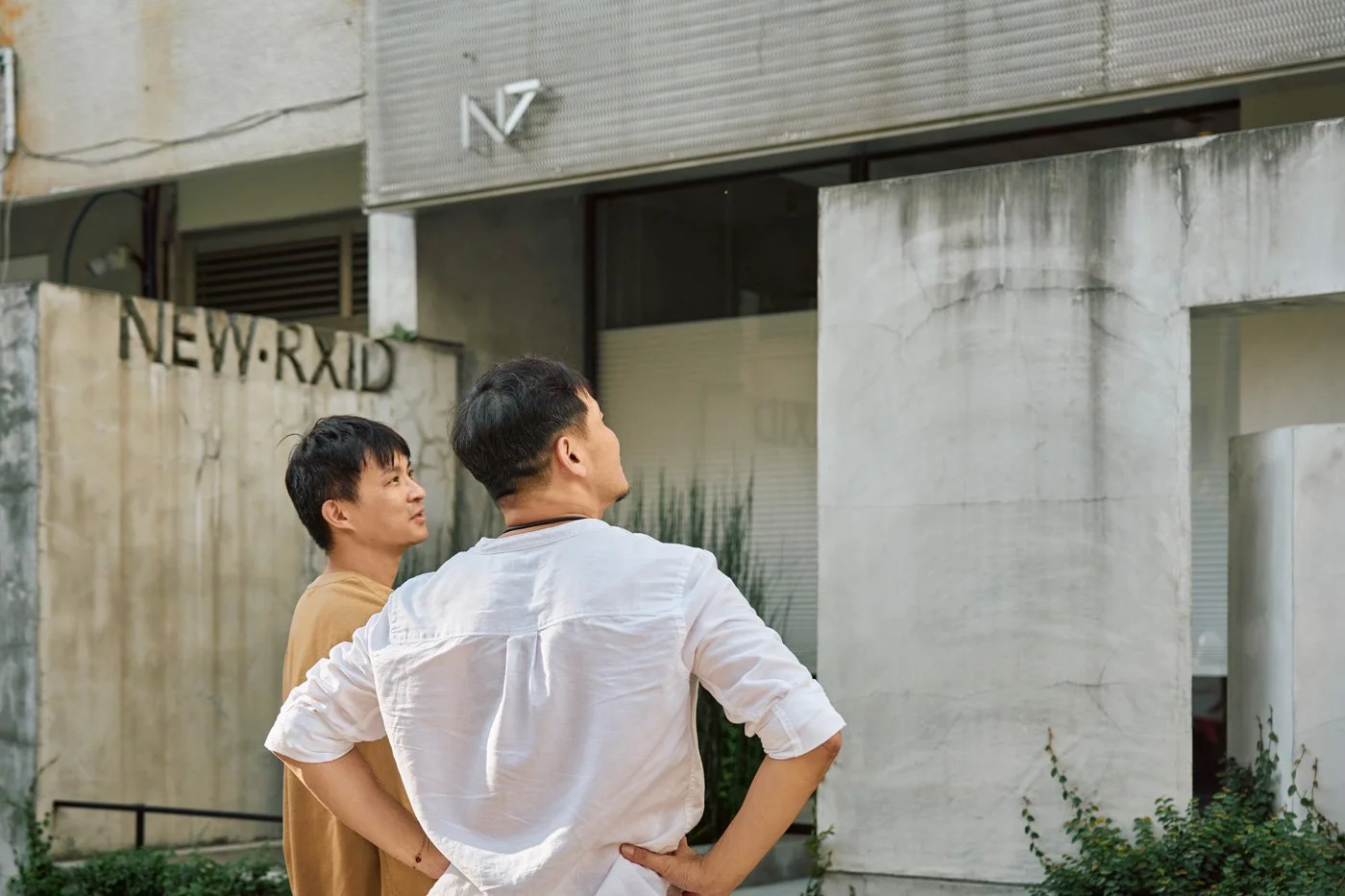
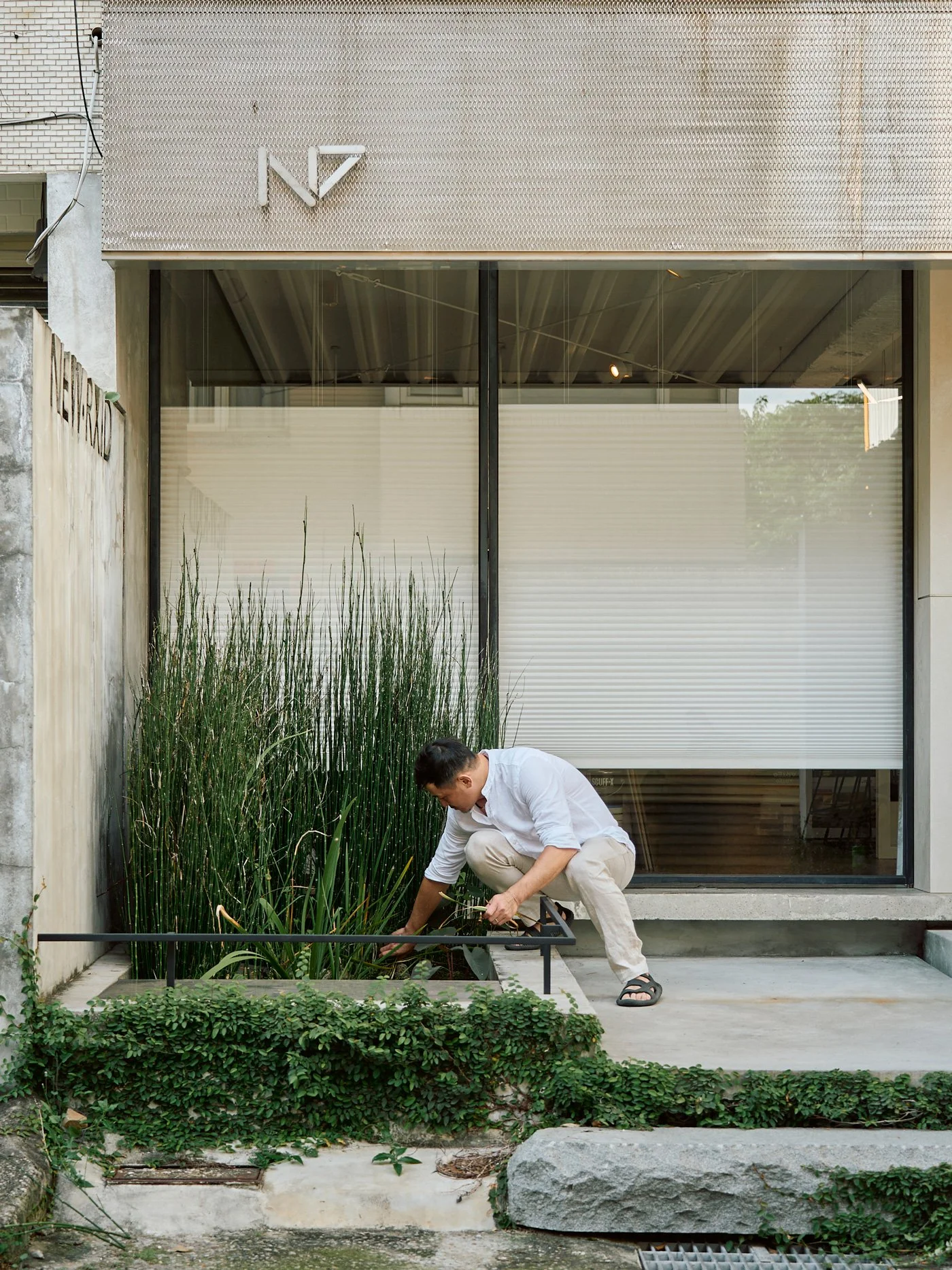
以前我拍照很執著天氣跟陽光,但現在覺得沒有陽光拍昏暗氛圍也不錯。總之看事情的角度不同了,對事沒有再那麼堅持。我認為「堅持」其實就是「固執」修飾的代名詞。
往好的方向去想,事情自然會往好的地方發展。
— 黃重蔚/ Johnson Huang
-
From Persistence to Ease: A Designer’s Path of Practice
Q: You once mentioned the idea of “understanding your destiny at fifty.” How has reaching this stage changed the way you think about design?
Johnson:
When I was younger, I was very persistent. Every detail had to be precise and presented exactly the way I imagined it. At that time, I believed that control was a designer’s duty. I thought the entire process had to follow my rhythm for the work to be considered complete.But over time, I realized that this kind of force makes everything rigid. Many obstacles are not created by others. They are created by yourself. The more you try to control, the more exhausting it becomes. It took years of practice before I learned how to go with the flow.
Jamie:
When you say “go with the flow,” do you mean accepting the variables rather than giving up?Johnson:
Exactly. It means moving with the material, with the light, and with the personalities of the people involved. Once I allowed myself to do that, the result became more natural, and that sense of tension began to loosen.Today, I believe that the best design is not about pushing everything to the extreme. It is about finding what feels just right. A bit more feels wrong, and a bit less also feels off. On site, we often tell the craftsmen that the proportion needs to be just right, because that sense of balance is the soul of the design.
-
Q: When you talk about finding what feels “just right,” does that sense of balance have something to do with time?
Johnson:
It does. When I was younger, I wanted to break boundaries and prove what I could do. I wanted to experiment with new proportions and new ideas, so people could immediately see that the design was different.Back then, the most difficult thing for me was the idea of “style.” Clients are not professionals, so it is hard for them to describe what they feel. They use words like style because it is the only way for them to express something abstract. But relying on that kind of term can trap the design in a fixed frame.
Now I care more about leaving space. I hope the interior allows people to slow down and breathe. That quiet margin often matters more than any dramatic gesture.
身為設計師,要看的是「人的動線」,不是「空間的動線」
-
Design That Begins with People
Q: You once said, “Taking good care of yourself is the most important responsibility you have toward the people who love you.” How does this way of thinking show up in your design work?
Johnson:
In the past, design was a way for me to prove something. Now it is a way for me to care for others. And this form of care is not sentimental. It comes from a sense of responsibility. I ask myself what this space truly means for the client’s daily life. When they come home each day, can this light, this table, or even this scent help them feel grounded?So I ask my team to start by observing who the user really is. How do they move, pause, work, rest, or simply exist in the space? Once you understand a person, you naturally understand what should remain and what should be taken away.
-
Jamie:
The way you described “taking things away” is interesting. Could you give an example? How do you break apart design elements that everyone assumes should exist?Johnson:
We recently encountered a very typical situation. People often assume that a bedside table is necessary. So I asked myself what a bedside table is actually for. It holds a phone, provides a spot for charging, a place for a glass of water, some books, an outlet, and a night light. When you list it out like that, you start to wonder whether these functions can be combined into something simpler.In the end, we created a single shelf. It holds objects and also contains a built–in charger. The night light is installed underneath the shelf. It is a small adjustable lamp, so you can change both its angle and brightness. One shelf takes care of four functions and is more flexible than a traditional bedside table.
This is what it means to work from function and find the balance that feels just right.

-
Q: Would you say that a good space is defined by relationships? Not only between people, but also between people and the space itself?
Johnson:
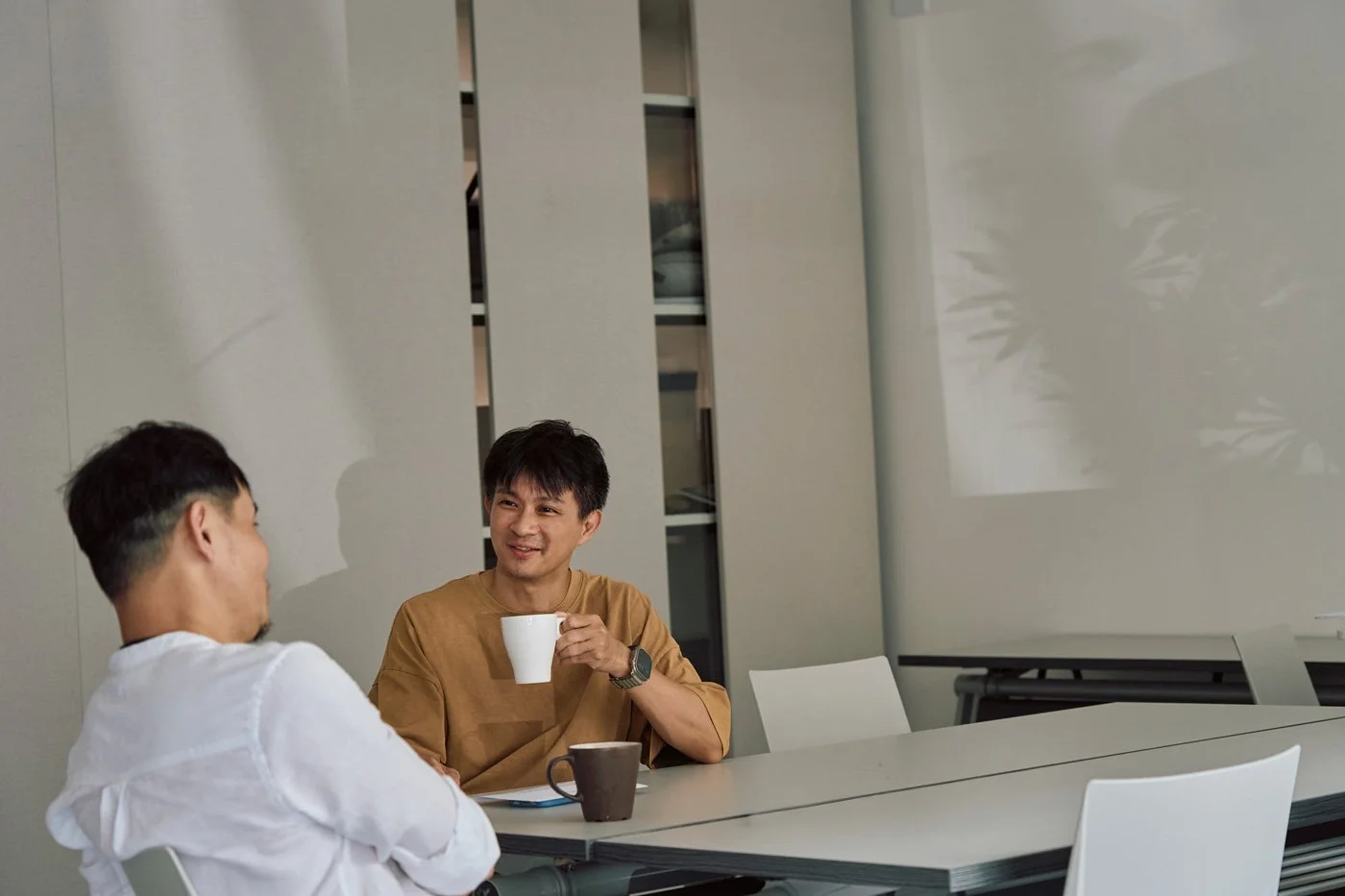
I believe so. A good space eventually helps relationships unfold more naturally. A home should support easy, comfortable interaction. When you truly understand how people relate to one another, you know where to keep things open and where to place focus.As designers, we should observe the movement of people rather than the movement of the space. One of my clients cared deeply about family interaction. He wanted the living room to be a place where people could spend time together. I did not change the layout dramatically. I simply shifted the orientation so the sofa and lounge chairs encouraged conversation instead of lining up toward the television. I also reduced visual clutter in the shared areas to make the room feel more open and breathable. The result was clear. The eye contact, the small gestures, even the distance between seats began to feel more natural.
Many people think these are aesthetic decisions, but they are in fact decisions about relationships and how they are arranged.
-
Q: When working with clients, how do you balance your own expression with understanding what they need?
Johnson:
The essence of design is not persuasion. It is understanding. I used to want to take full control, but that created a one–sided relationship. Now I see myself more as a translator. I take the feelings, emotions, and sometimes vague ideas that clients struggle to articulate and turn them into a space they can actually live in.Jamie:
I like the word “translator.” Do you mean giving shape to abstract ideas? For example, when someone says they want something “grand,” you try to understand what that word really means?Johnson:
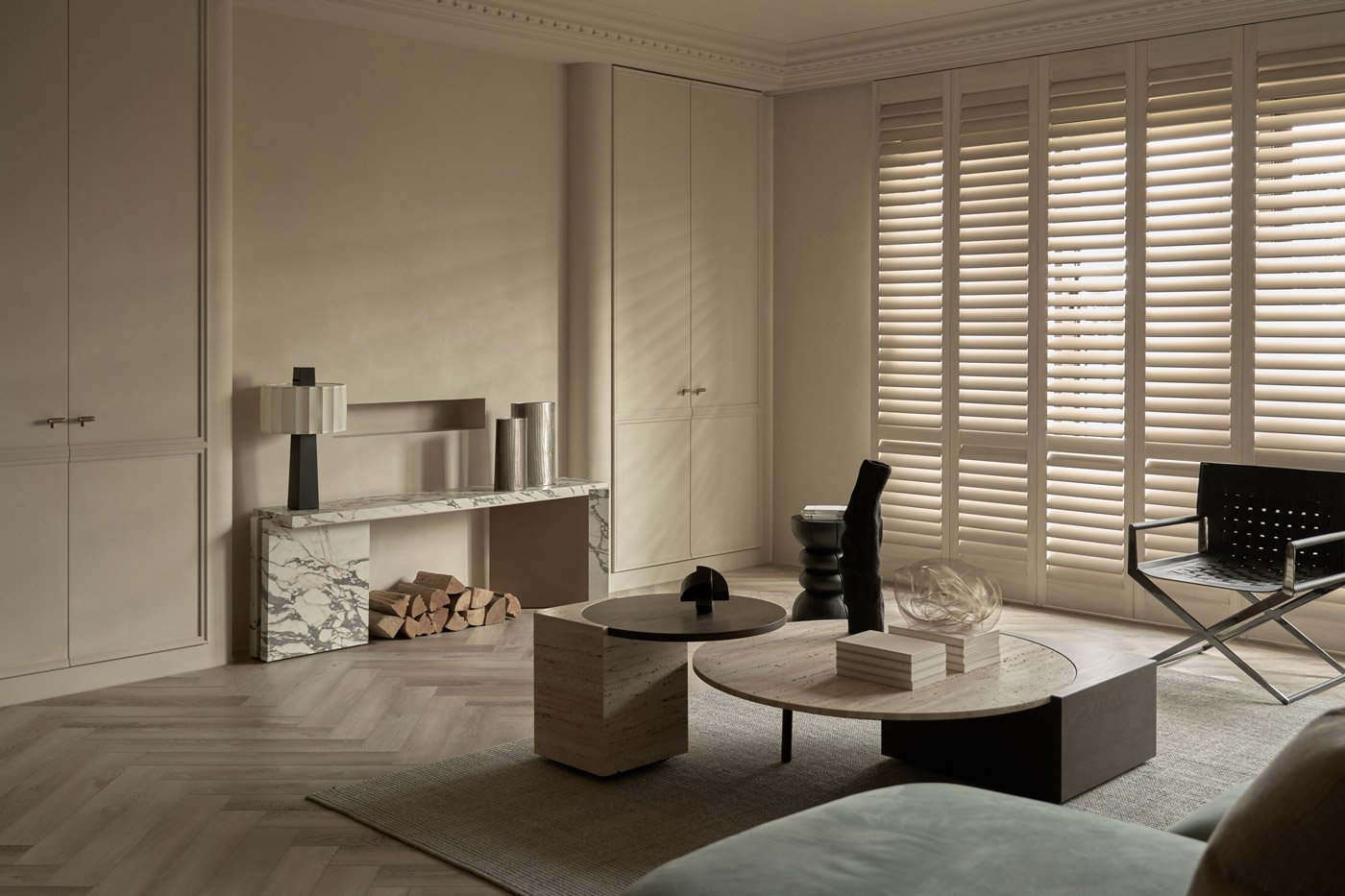
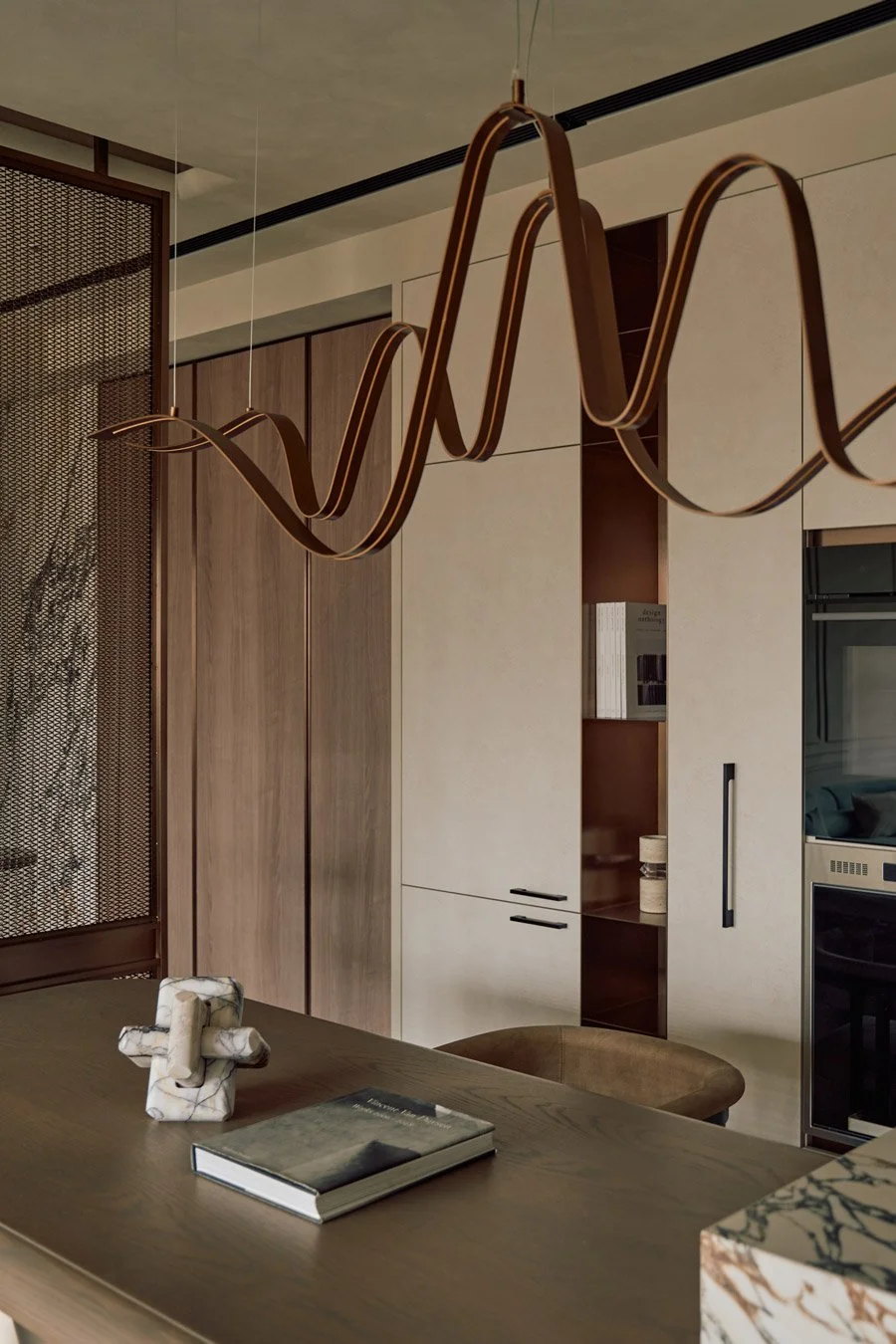
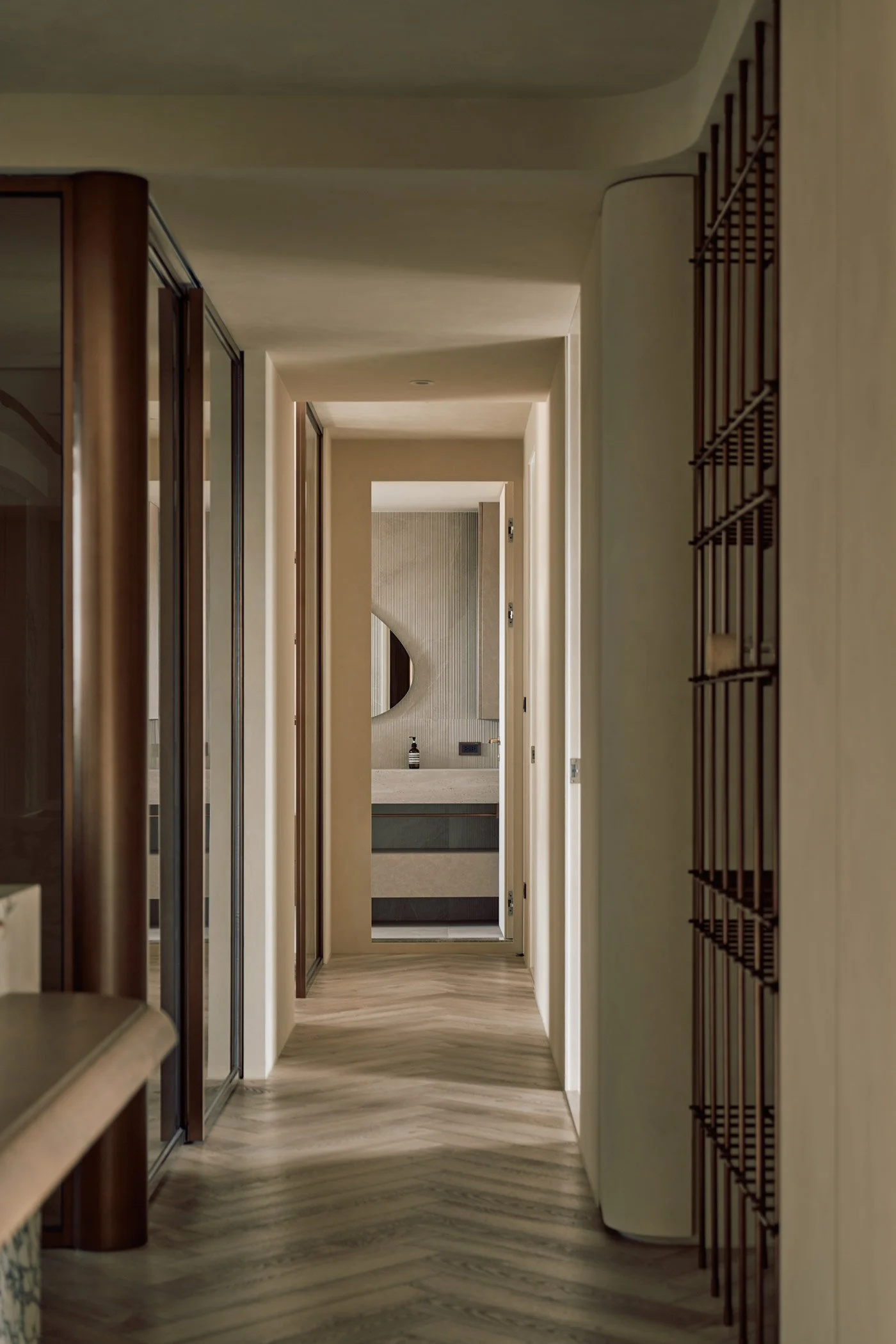
Exactly. When a client says they want something grand, I do not create a space that is visually heavy or dramatic. I work with layers of materials, clear movement through the space, or softer light to build an atmosphere that feels steady rather than overwhelming.I often say I am now more like someone who sets the scene. The client is the director and the one living the story. My job is to make sure the scene aligns with the life they want to create. This shift has helped me understand what care truly means. Care is not about giving in. It is about helping someone see the needs they have not yet recognized. It is like laying out a path so that when they walk into the space, they realize it is the life they were looking for.
-
Practicing a Designer’s Mindset in Everyday Life
Q: How do you view the idea of “designing life”? Does design create a better quality of living, or does one’s attitude toward life shape design?
Johnson:
The two are connected. You cannot separate them. Designers should not design only when they are working. They should be designing within their own lives as well.Jamie:
What aspects of daily life influence the way you think about design?Johnson:
Life has taught me something important. The more ordinary something is, the more worth designing it becomes.The pace at which we eat, the speed at which we walk, the direction of natural light at home. These small, everyday details shape how we understand space. When I was younger, I focused on how to make a space look more designed. Now I work with a softer mindset. I care more about whether the space can help someone relax.
Take light for example. I try to use reflected light rather than direct light, so it can flow through the room and reveal the grain of the materials and the layers of the space. All these shifts came from observing life itself.
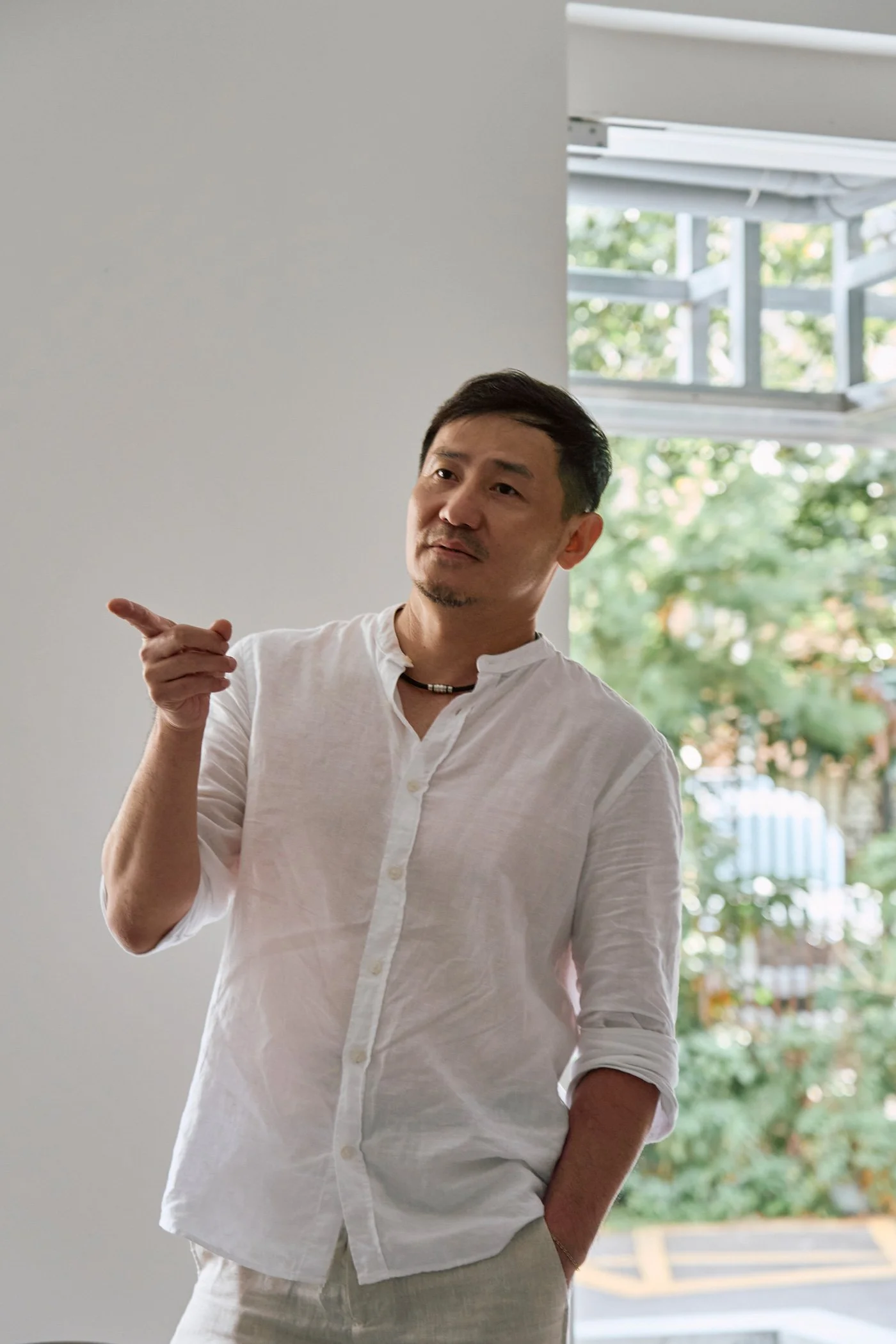
生活教會我一件事:越是日常的東西,越值得被好好設計。
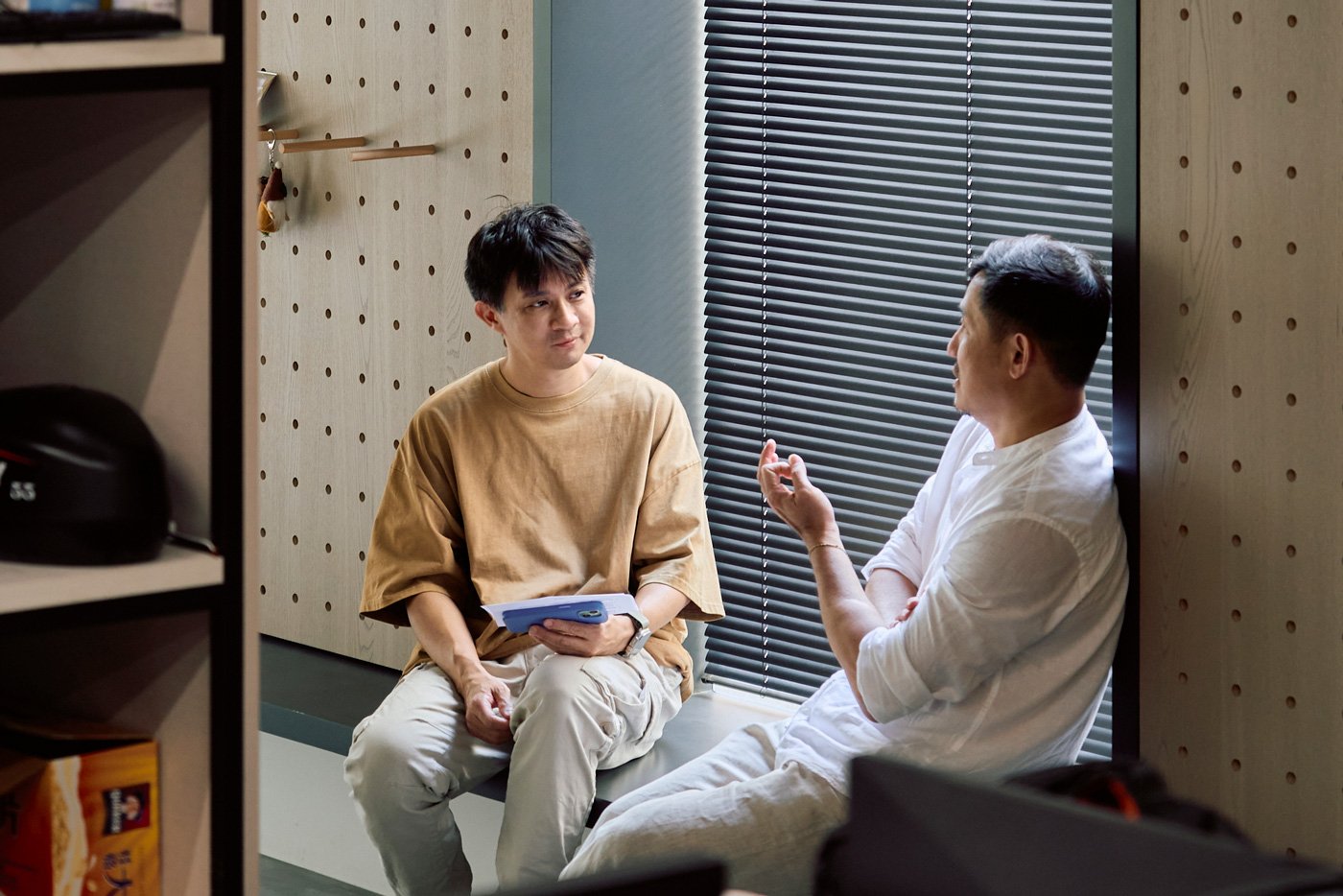
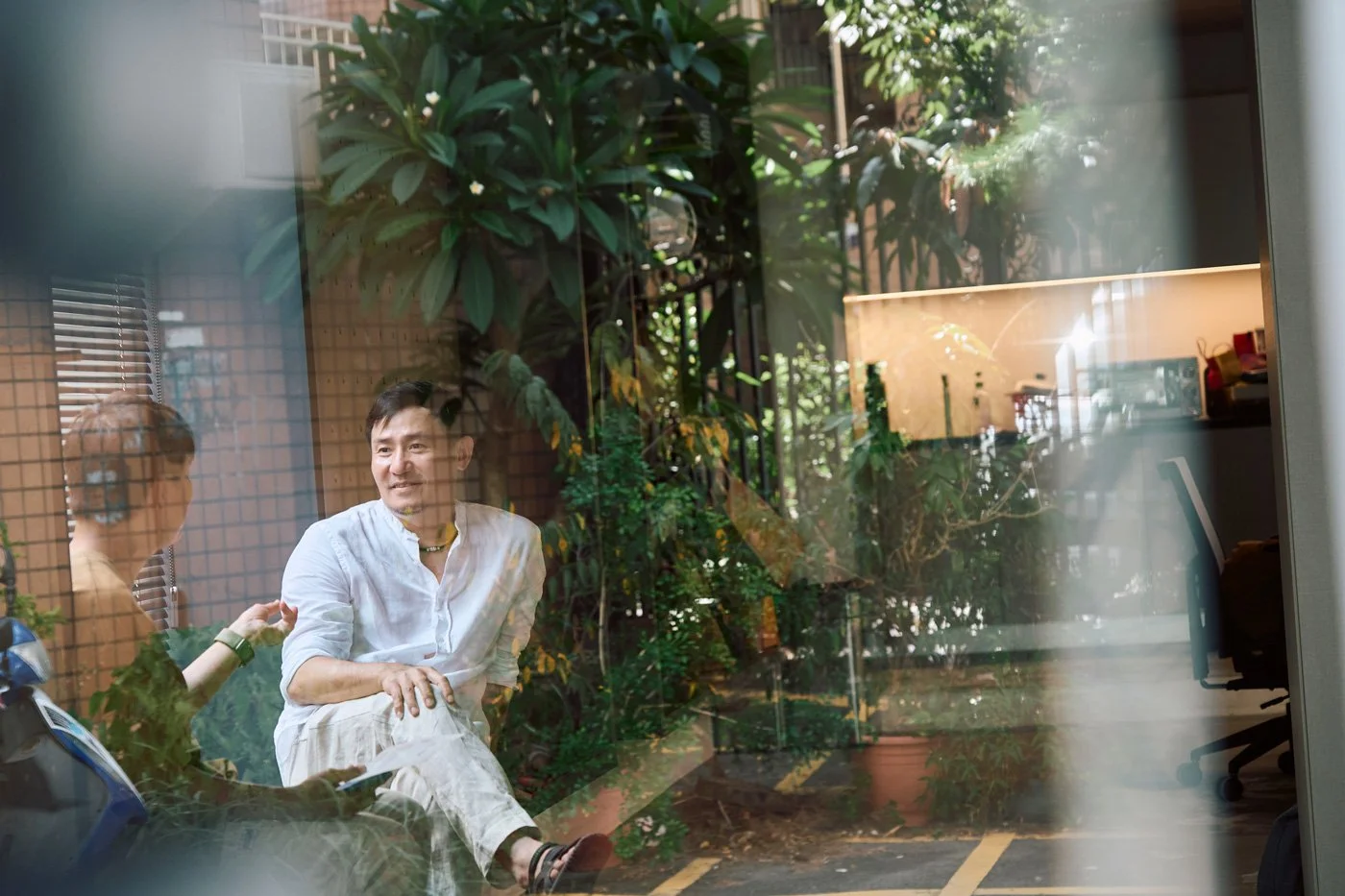
-
Q: What kind of atmosphere or quality do you personally appreciate in a space? Does it relate to age or your state of mind?
Johnson:
I like spaces that feel quiet, warm, and naturally blended together.As I grow older, the idea of what I like has become more restrained. I want a space to feel like a slow song, something that reveals more the longer you stay with it. The quiet I mean is not the absence of sound. It is when every sound falls into place.
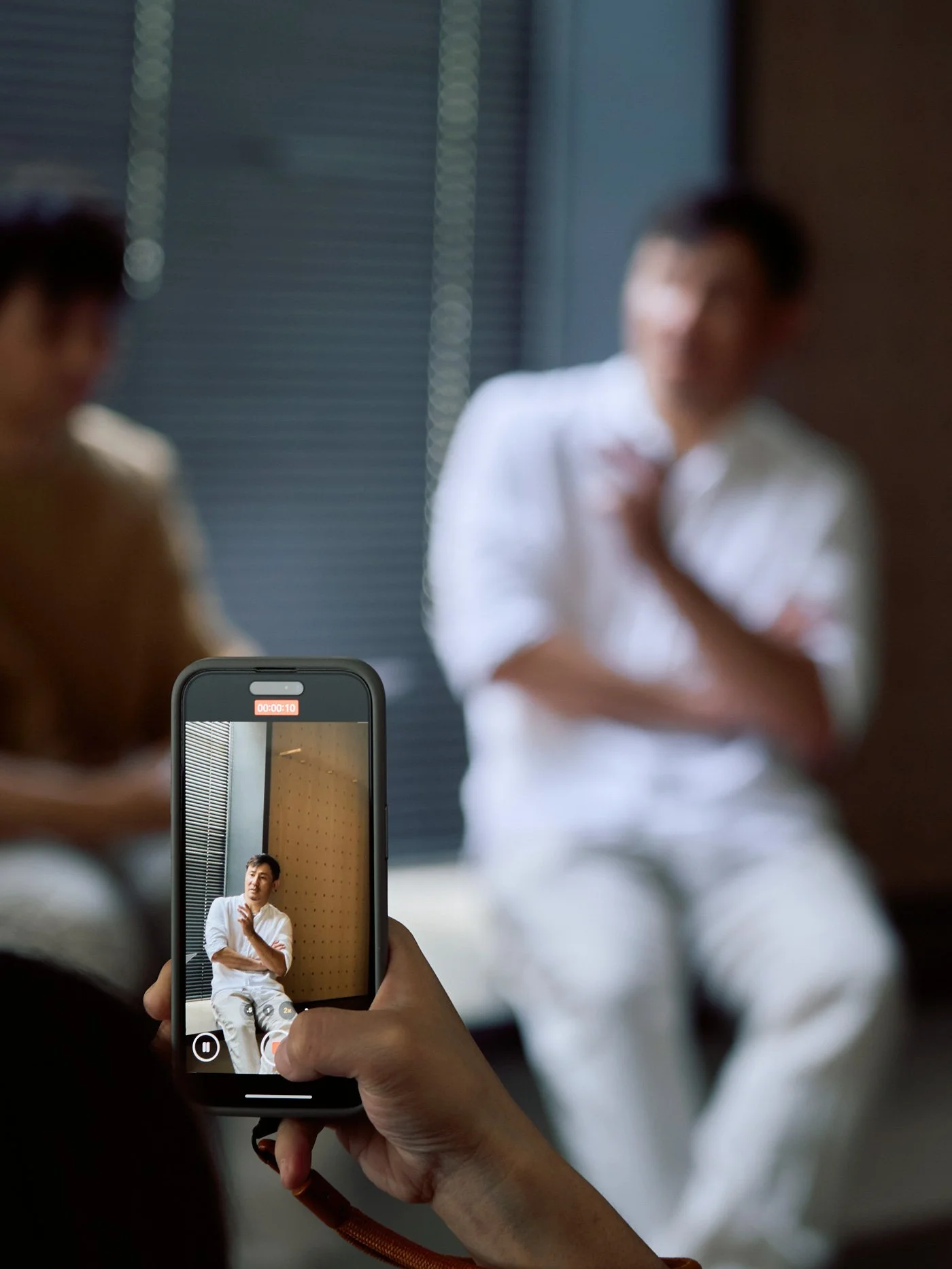
當你不再執著於「一定要哪種結果」,自由才真正開始
-
From Leading to Co-Creating: Finding a New Sense of Place
Q: As you’ve moved from pushing yourself in design to finding a sense of ease, what has been the most important realization for you?
Johnson: I learned to see my own place. I used to feel that I had to carry everything on my shoulders and handle every detail myself. But I later realized that design is never the work of one person. It is the result of many professionals working together. When I started to let go and allow everyone to contribute, the work became stronger, and the decisions we made were more grounded in real conditions.
When you stop insisting on a single outcome, that is when freedom truly begins.
-
Q: Has this way of thinking influenced how you lead your team?
Johnson:
Very much. In the past, I held on to too many things. I decided the thickness of every line, every proportion, every junction. But I eventually understood that this left no room for my colleagues to think. A designer’s most important skill is not drawing. It is the ability to identify problems. And growth does not come from being told what to do. It comes from thinking.I see myself more like a coach now. I do not give out right or wrong answers. I do not hand them a standard solution. I often tell my team, “When you give me three options, it is not for me to choose. It is for you to figure out which one you believe in.” Sometimes they ask, “Which one is the best?” And I tell them, “There is no absolute best. You tell me why you choose this one first.” When they can think for themselves, analyze the issues, and propose solutions, they begin to build their own judgement. That is when they start creating work that truly belongs to them.
不要害怕迷惘,因為迷惘是正在成長的證明;覺得困惑的時候,代表你開始思考了
-
For Designers Still Finding Their Way
Q: What would you say to young designers who may be going through the same confusion or struggle you experienced in your thirties and forties?
Johnson:
Do not rush to define yourself. Many people want to claim a “style” from the very beginning, but style is something others recognize in your work. It is not something you declare for yourself.Jamie:
So style should be the result of the process, not the direction you set at the start?Johnson:
Exactly. First learn to observe, then learn to create. Pay attention to the details of everyday life. Watch how people use a space and how they live. Do not be afraid of feeling lost. Confusion is proof that you are growing. When you start to feel uncertain, it often means real thinking has begun.And one more thing. Do not distance yourself from craft.
If a designer can only draw but does not understand materials or how things are made, the work will lack soul. Craft is the bridge that turns design into reality. The deeper your understanding of craft, the further your design can go.
-
Q: If you imagine yourself ten years from now, what kind of person do you hope to be?
Johnson:
I hope I can be lighter, both in design and in life. I want to keep my passion for design, but with less attachment and more ease. I want my work to feel simpler and more natural, and I want to have time to experience the world.I have always felt that the goal of design is not to leave behind objects, but to leave behind a sense of warmth that people can understand. If one day I no longer say much, and the work can speak for itself, that will be enough for me.
攝影|Jamie Lo、Weng、Jyun