墨跡裡的捉迷藏:書法藝術家王意淳大型個展《躲貓貓》,把生活慢熬成字
-
Characters possess both form and deeper meaning. A character's architecture is the spatial choreography of its strokes. The moment brush meets paper, the push and pull reveal a spirit that is either grounded or soaring, restrained or unbridled. The pressure applied betrays hesitation or conviction; the rhythm of the ink—thick or thin, dry or saturated—echoes urgency or ease. While the brush writes mere strokes, what it leaves behind is a raw, unreplicable reflection of the self.
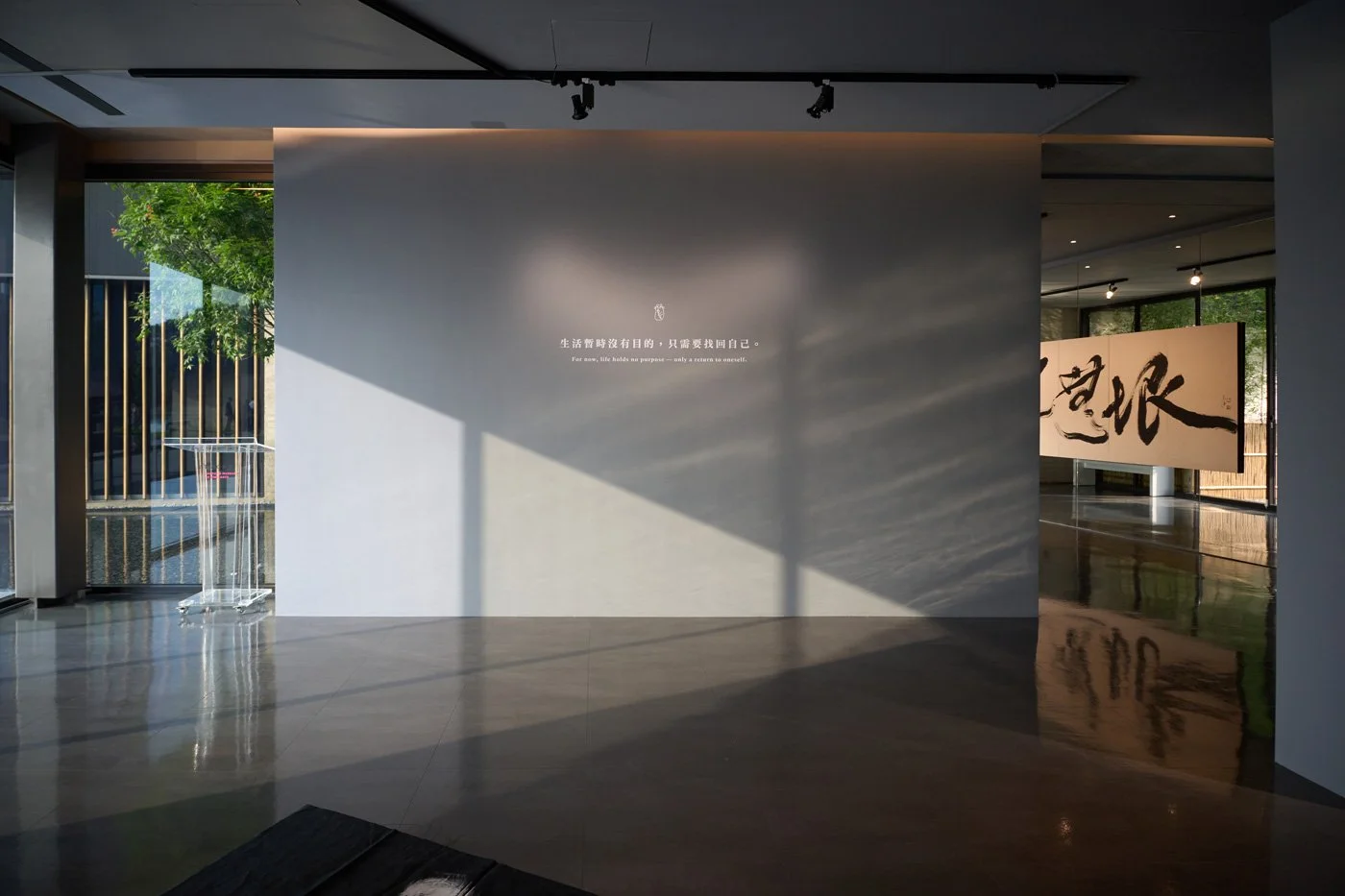
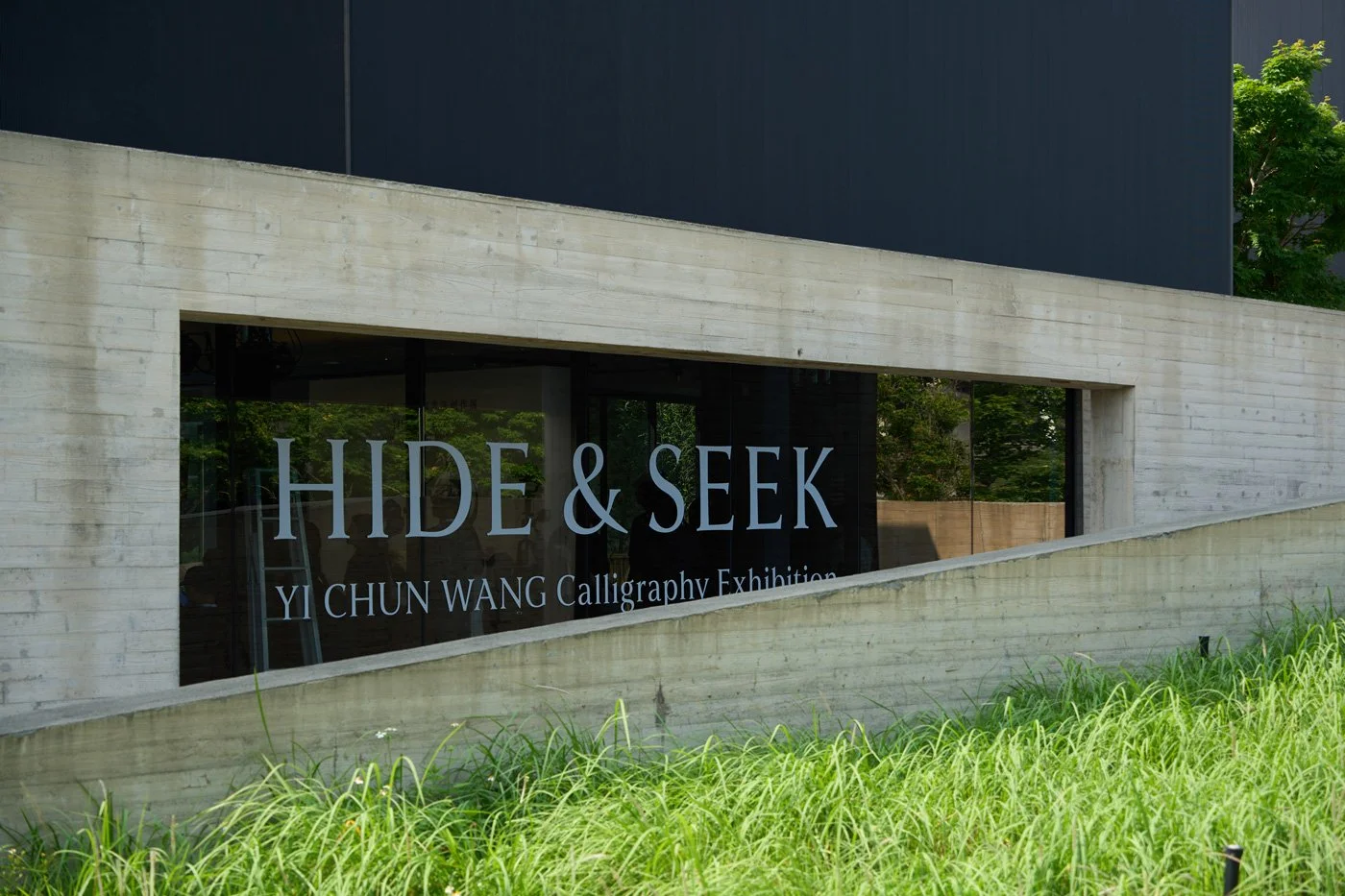
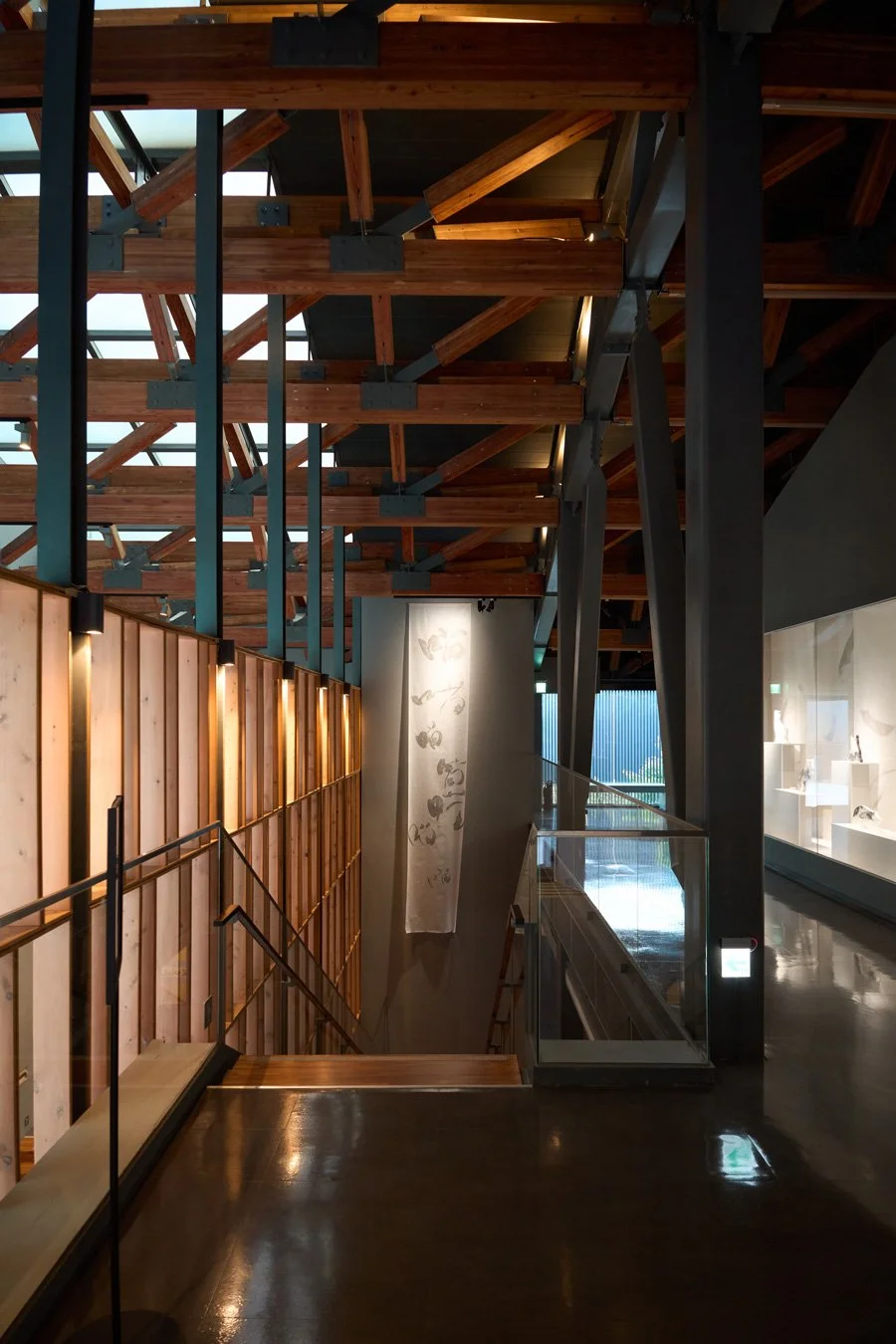
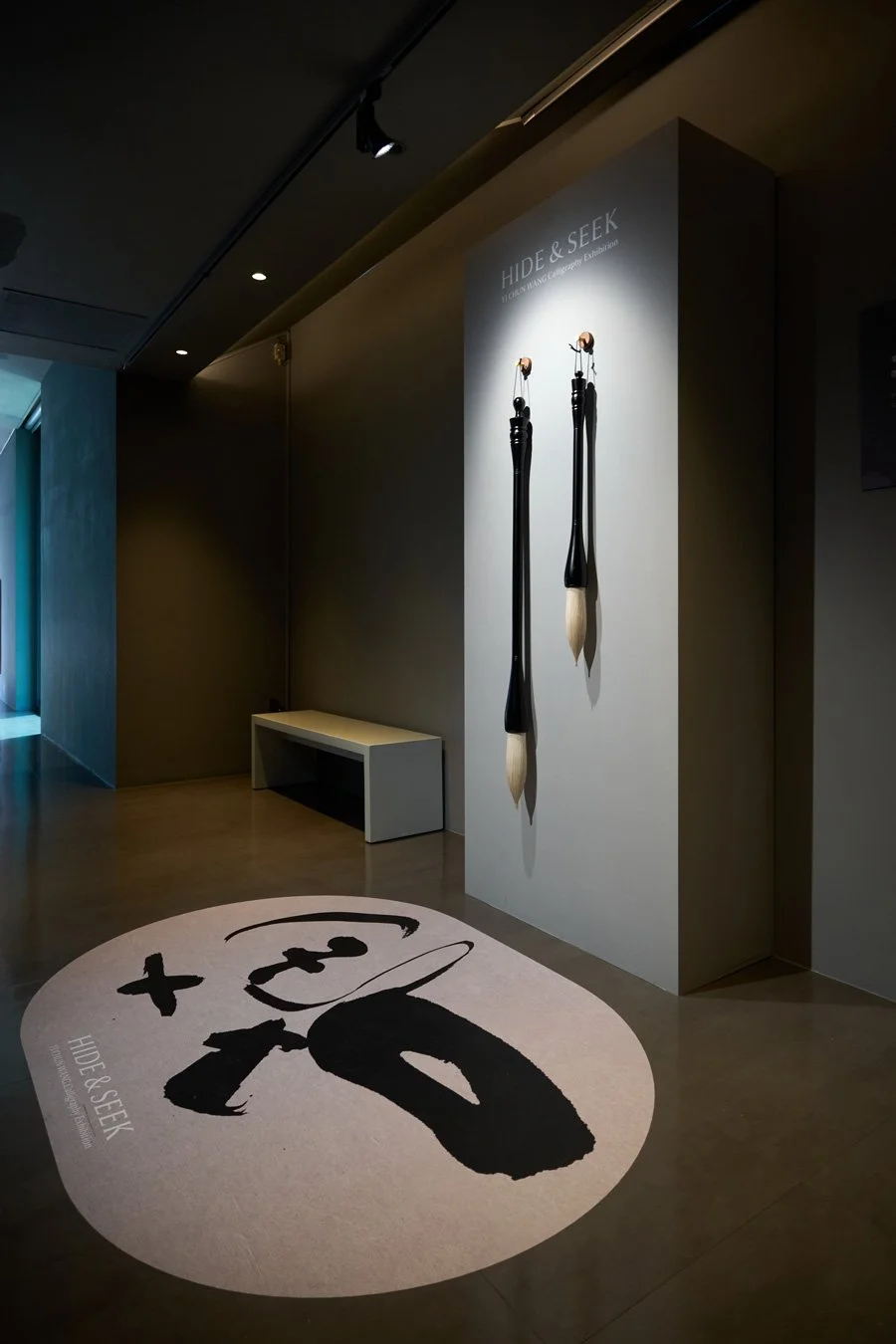
This early summer, calligrapher Yi Chun Wang presents her first large-scale solo exhibition, Hide & Seek, at the Hengshan Calligraphy Art Center (on view now until August 3, 2026). She cleverly weaves calligraphy into a familiar childhood game, utilizing the scale of the entire building to unfold a two-way dialogue of "hiding and being found." To her, writing isn't a one-way display; as we step into the space, we can quietly hear the voices—far more than we can see—lingering in the gaps and flow of the ink.
我一直希望書法可以走進生活裡
— 王意淳
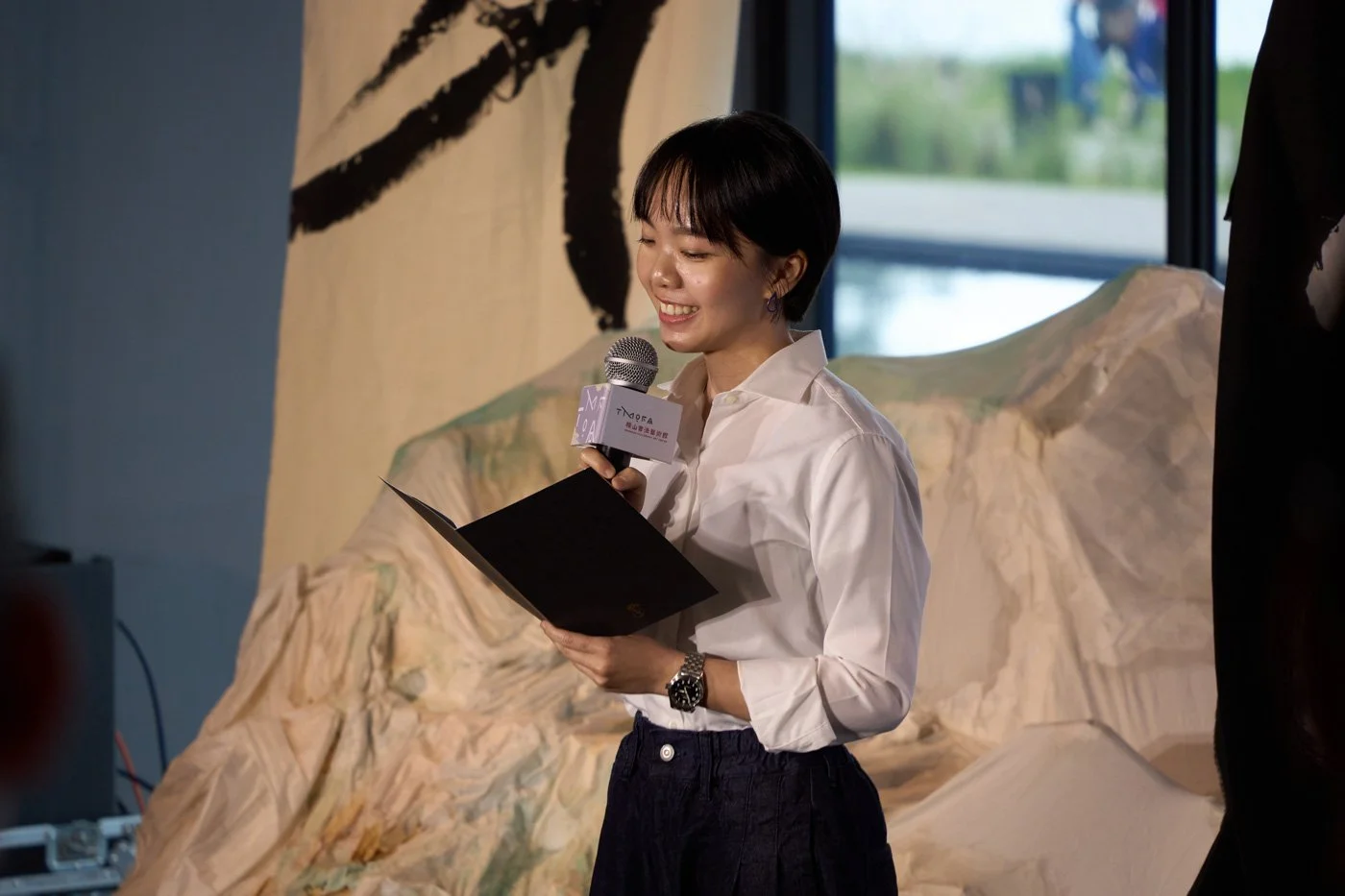
書法藝術家.王意淳 Yi Chun, Wang
-
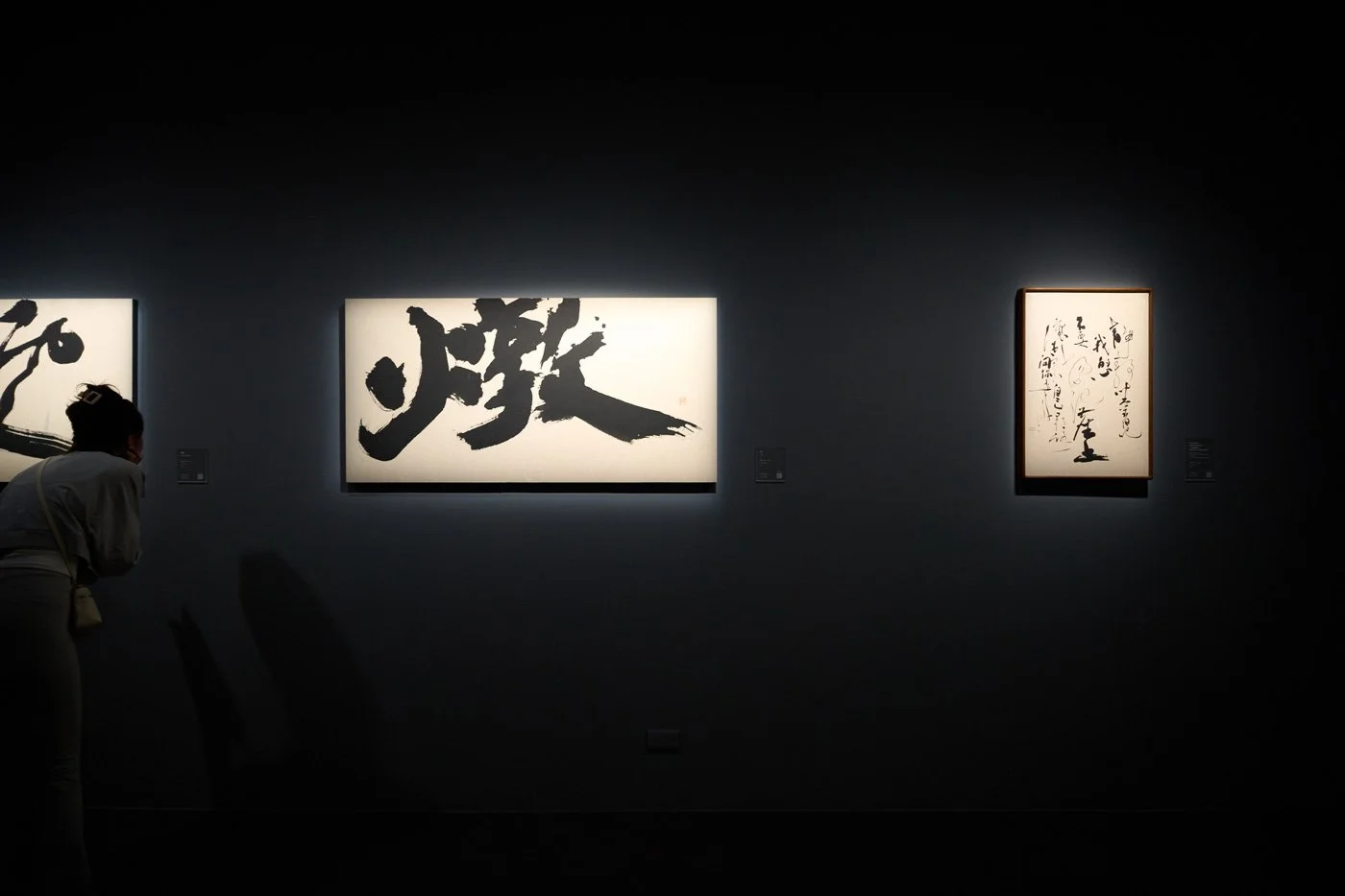
Traditionally, calligraphy has been viewed as a high art meant to be hung in grand halls. But for thirty-year-old Yi Chun, writing is like breathing and living—it shouldn't be confined by any framework. Her subjects range from classical scriptures and modern poetry to microscopic slices of everyday life. She writes Maturation and Sourdough Bread, a process that takes days to ferment, allowing each stroke to find its balance within an uncontrollable state. She eschews complex techniques, mirroring the natural, fluid intention of fermenting dough.
Consider her deeply relatable, urban-centric pieces like Long-Haul Flight and Finding a Parking Space. The former stems from her journey to the UK to find an animator: being trapped in a cabin for eighteen hours made her realize this was a "forced slow-down." It is a reminder that many things in life—loving someone, understanding oneself, or even simmering a pot of soup—require time, patience, and accumulation. Next to Finding a Parking Space, the tiny characters "In Taipei" are squeezed into a severely confined area, symbolizing the city's notoriously tight parking spots. At the very end of the piece, the strokes suddenly stretch out, visually capturing the exact sense of release upon finally finding a space.
"Anything stewed requires a long time to absorb the flavors," she notes. This exhibition is the result of a slow "stewing" process between Yi Chun and the curatorial team—a maturity brewed through patient waiting.
-
What the Cat Taught Her
Her daily life with her pet cat, Taro, is not just a spark of inspiration, but a lens through which Yi Chun views life. The cat's sudden zoomies or dives into recycling boxes—these seemingly absurd, meaningless behaviors—oddly soothe the frantic air, healing her and her space. From this, Yi Chun realized that life contains many such moments: they lack clear meaning, yet are indispensable. She captured this epiphany in the piece Meaningless Yet Indispensable, using bold, crisp brushwork to record those varied moments that need no reason to be cherished.
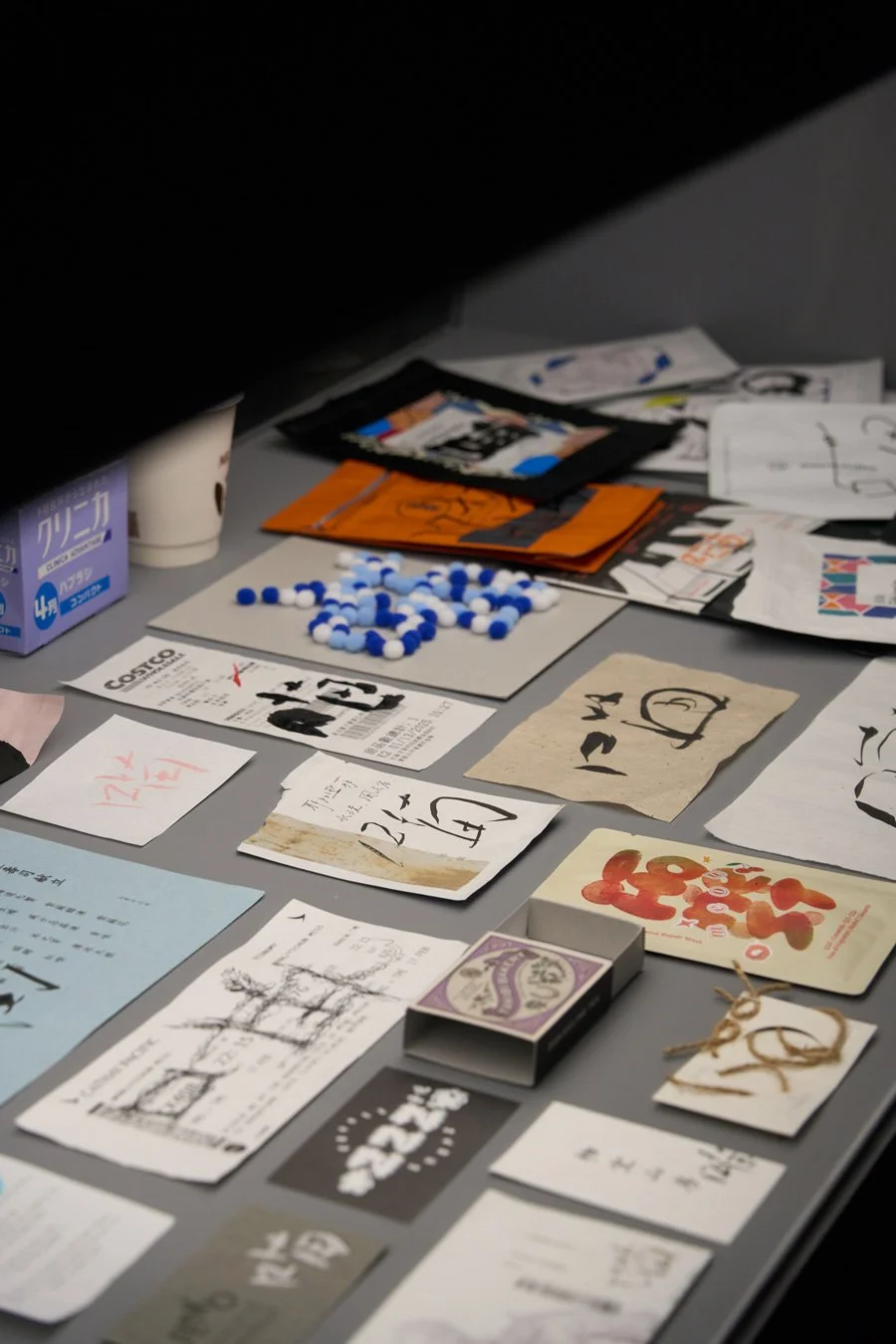
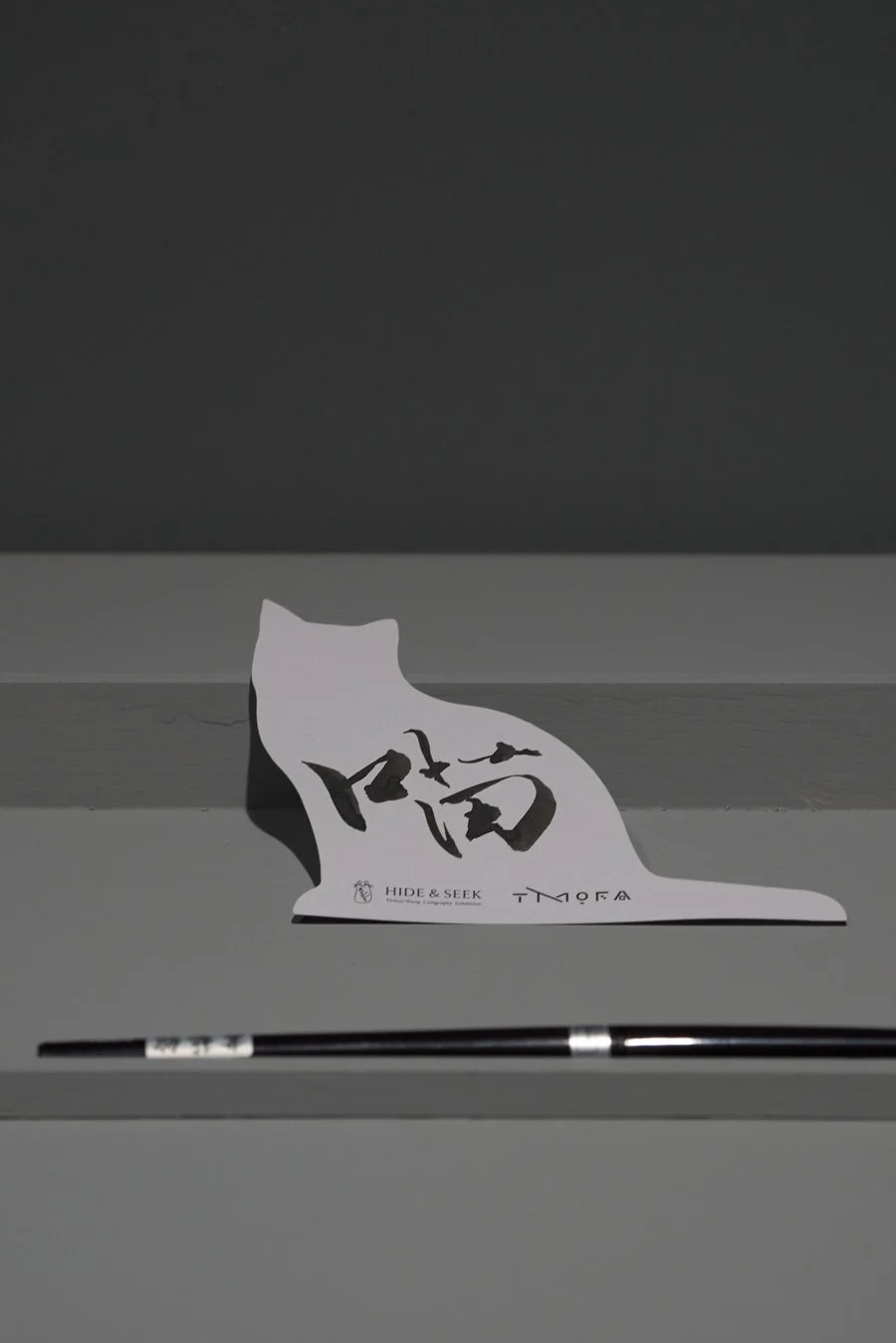
Taro’s meow, the most frequent and intimate sound in her life, also birthed the year-long Meow Project. For 365 consecutive days, she abandoned the formal posture of writing on rice paper. Instead, she wrote the character "Meow" on readily available items like receipts or empty coffee bean bags, accumulating an ink diary that documented where she went, what she used, and what she experienced. In the exhibition, these diaries are tucked inside "Meow Tofu," a giant cat-bed-shaped seat crafted by the Sleepy Tofu team, where viewers can curl up like a cat and slowly flip through her year.
-
Leaping off the Paper: Cross-Disciplinary Translation
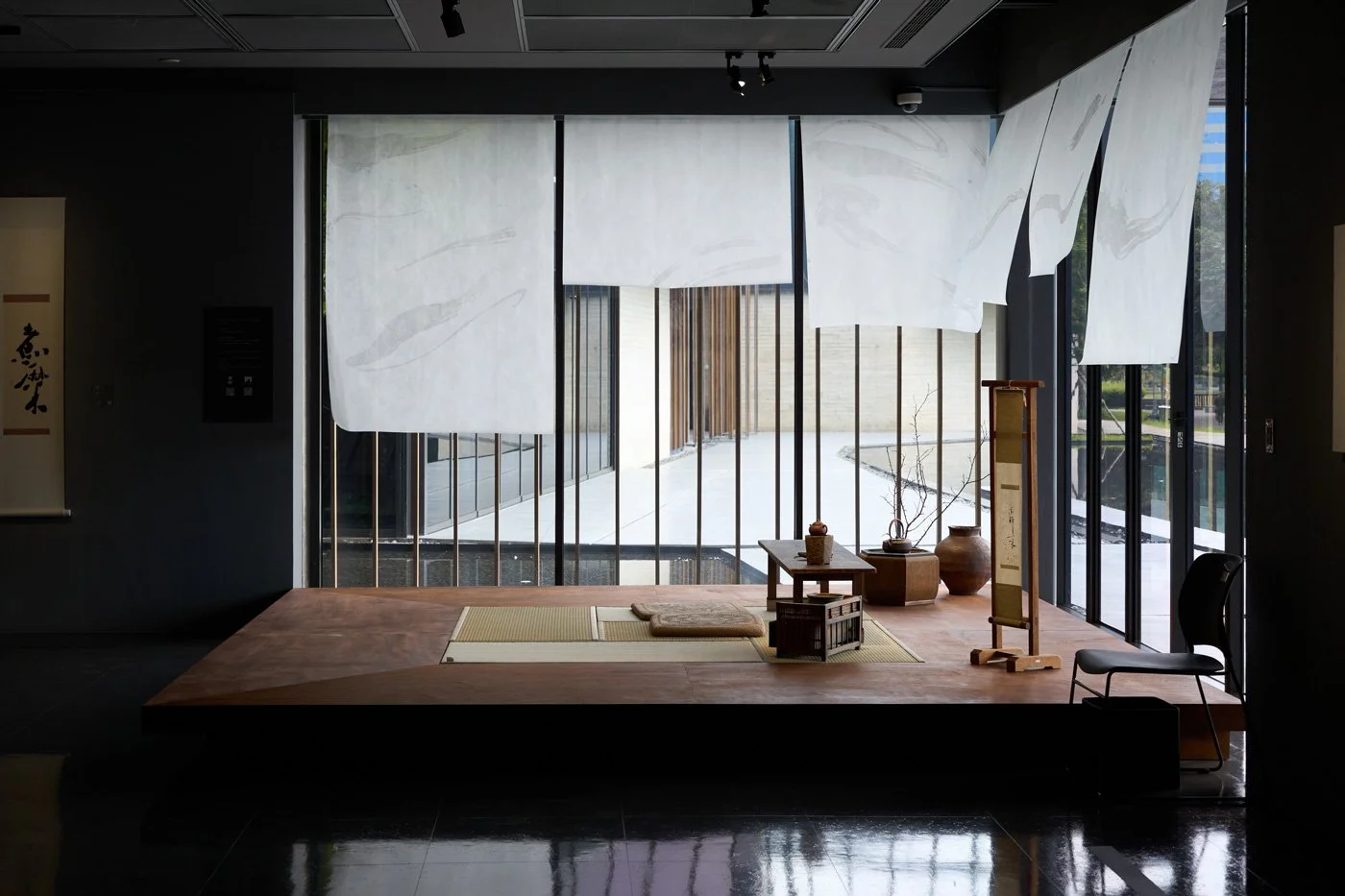
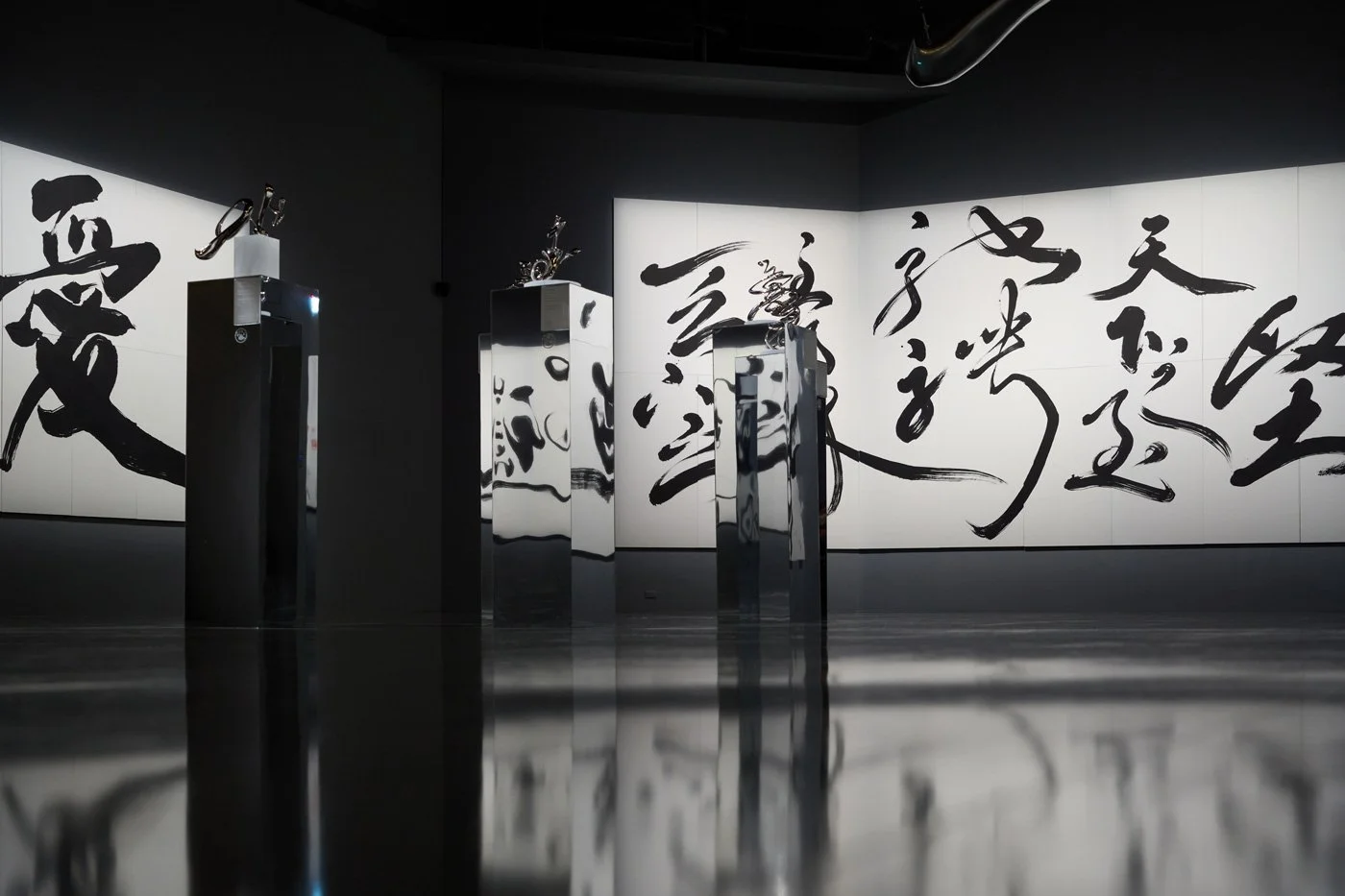
Yi Chun allows her calligraphy to transcend the two-dimensional plane into different mediums, enabling words to live within diverse contexts. The curatorial team collaborated with Yilan Fanghua and Urasan to install indoor plant landscapes, borrowing the outdoor greenery through large glass windows to help visitors slow down amidst the light and shadows.
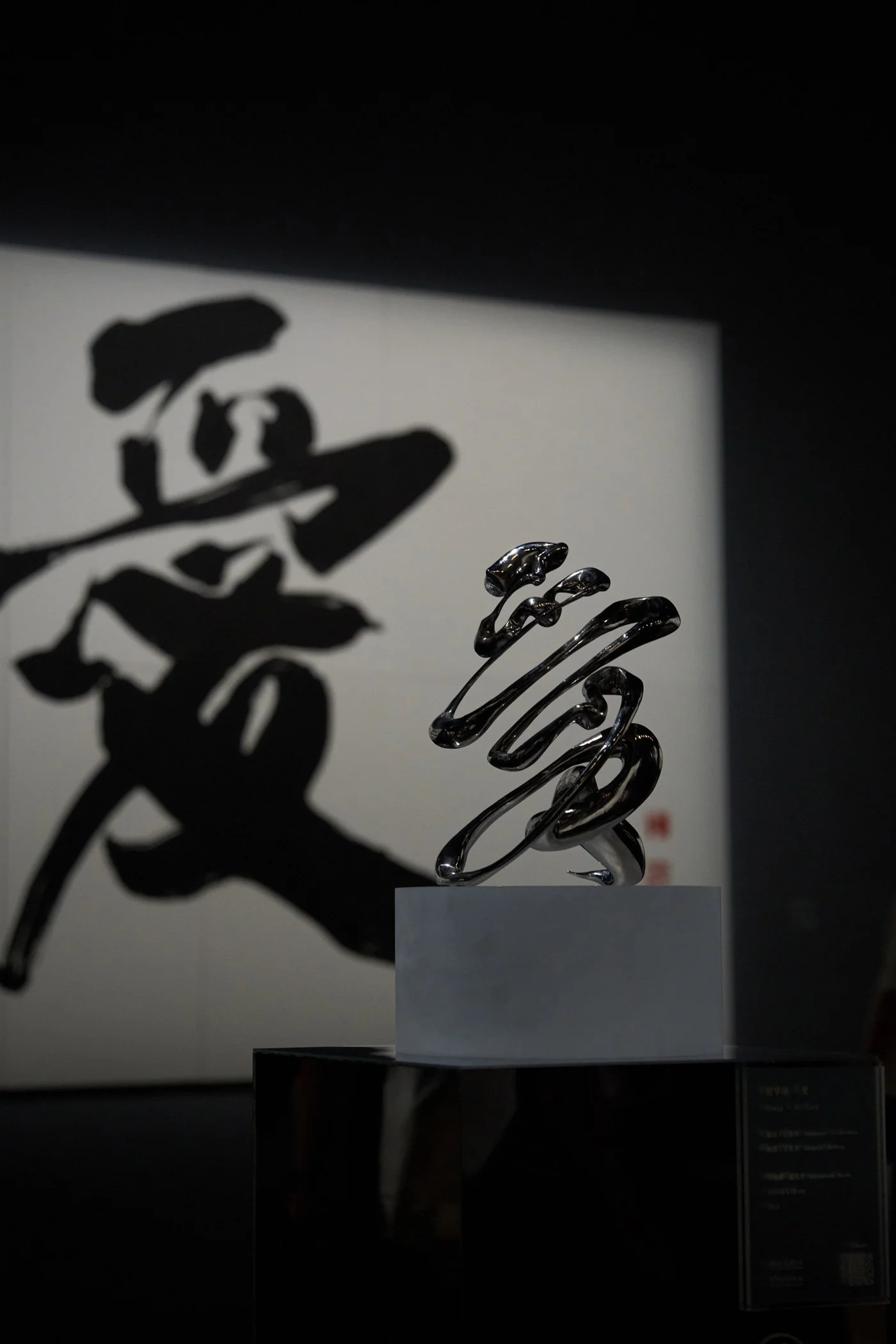
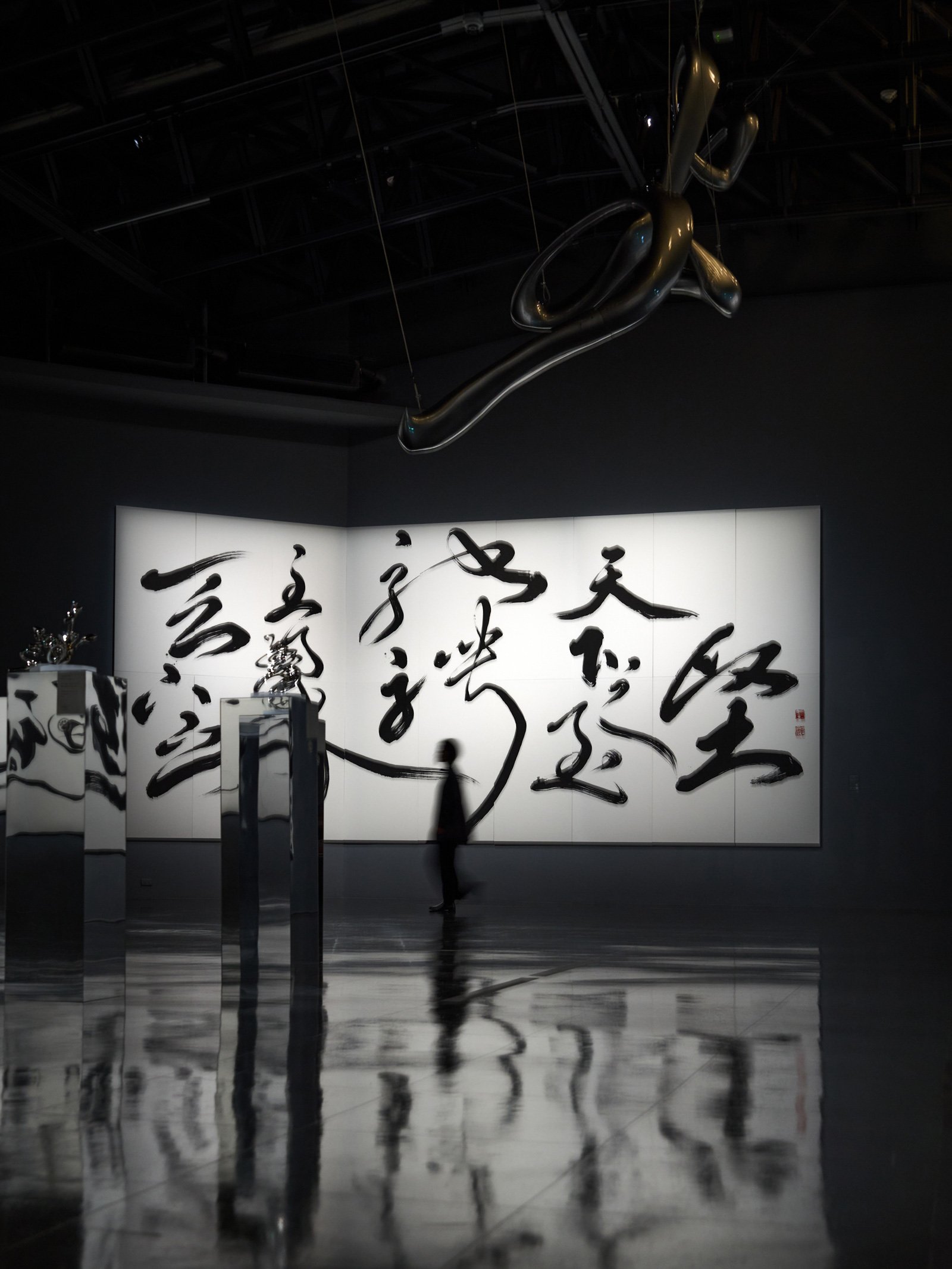
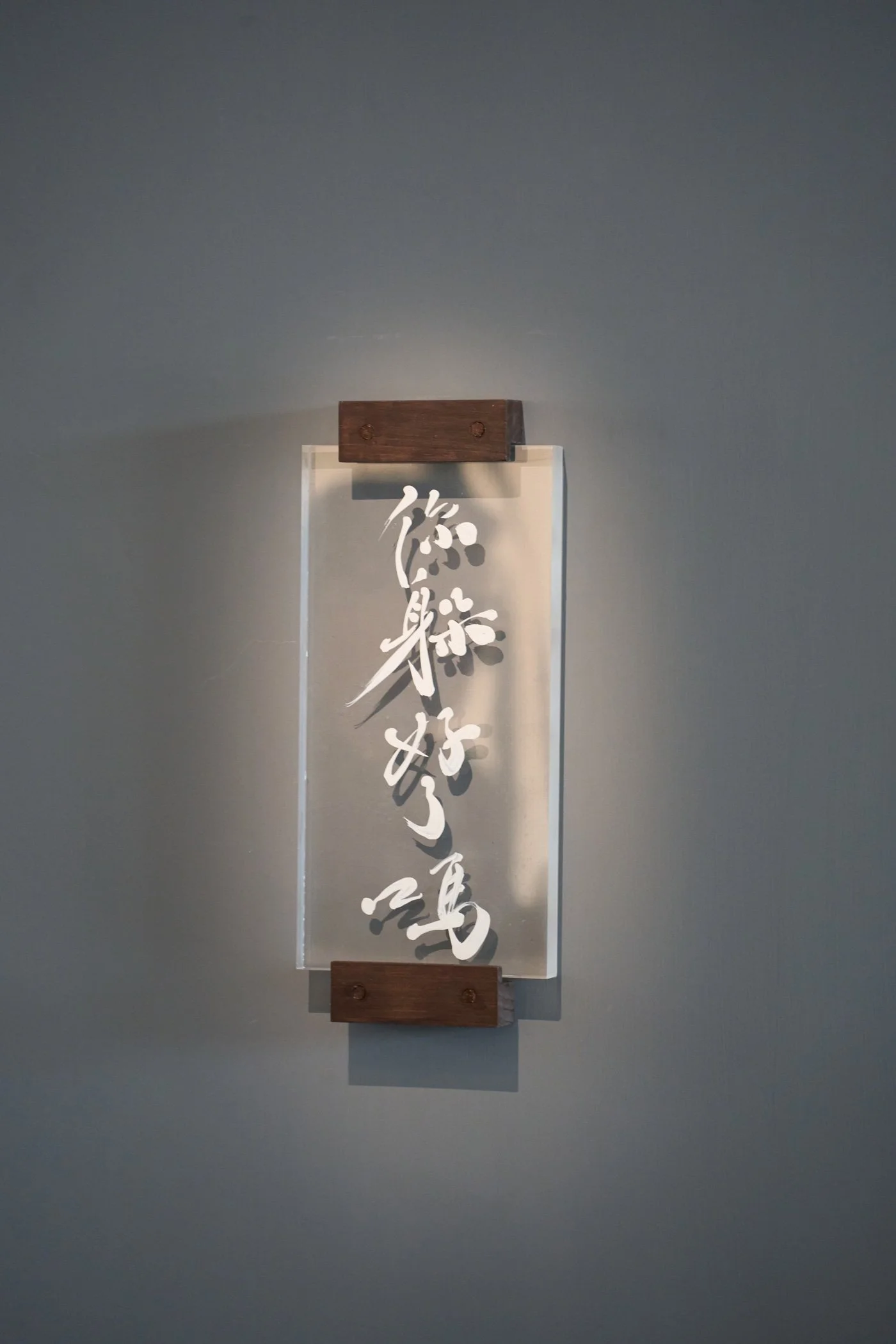
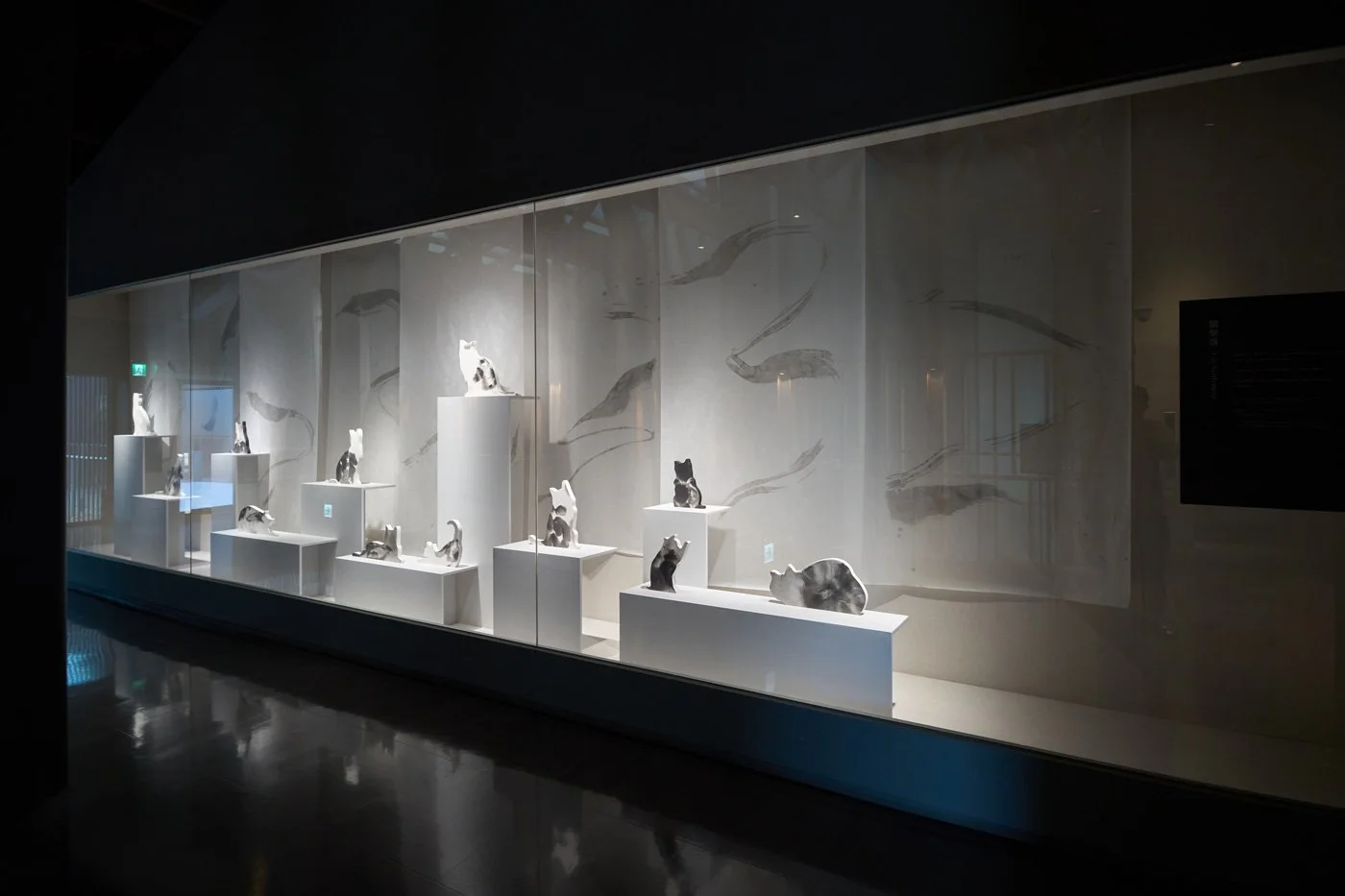
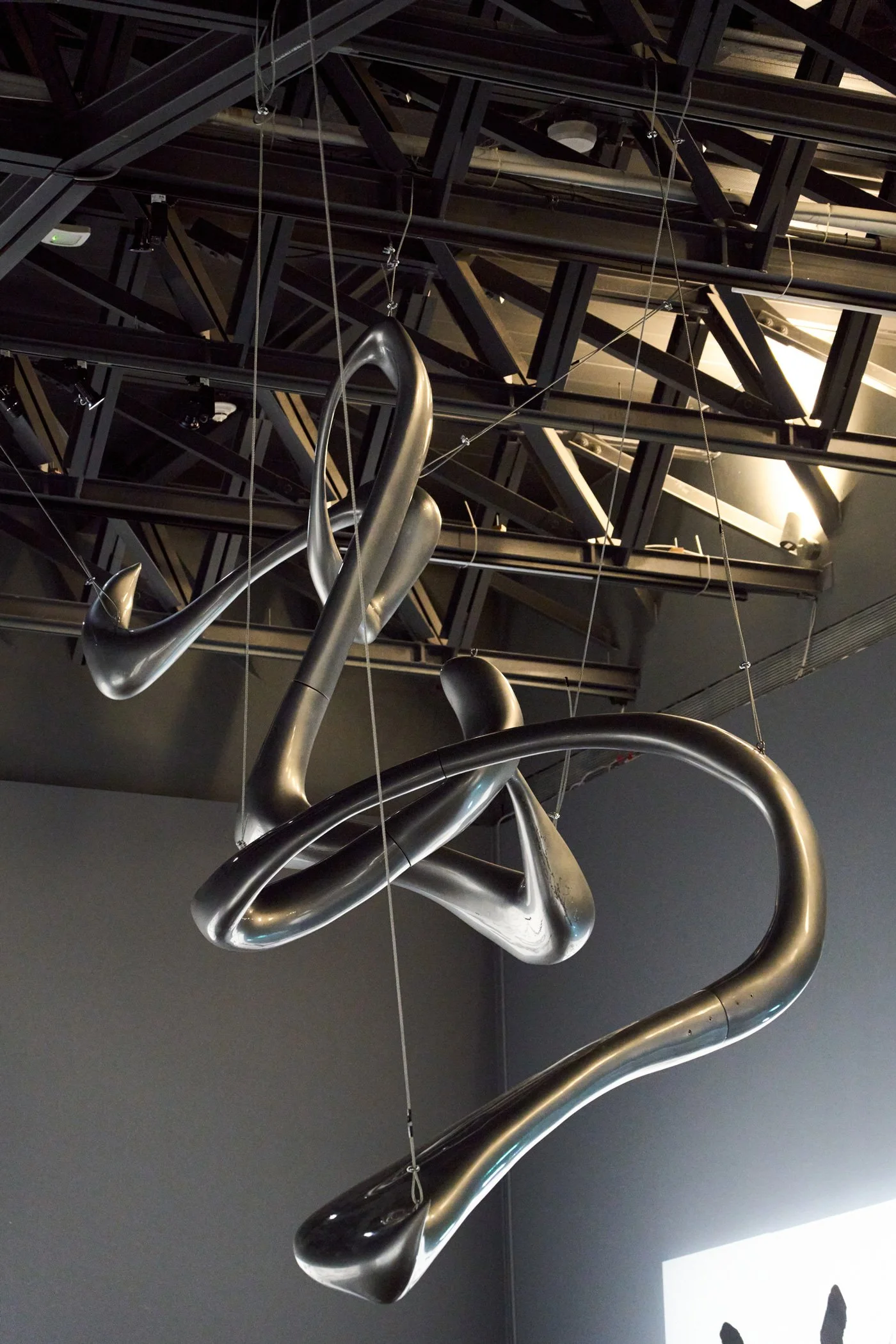
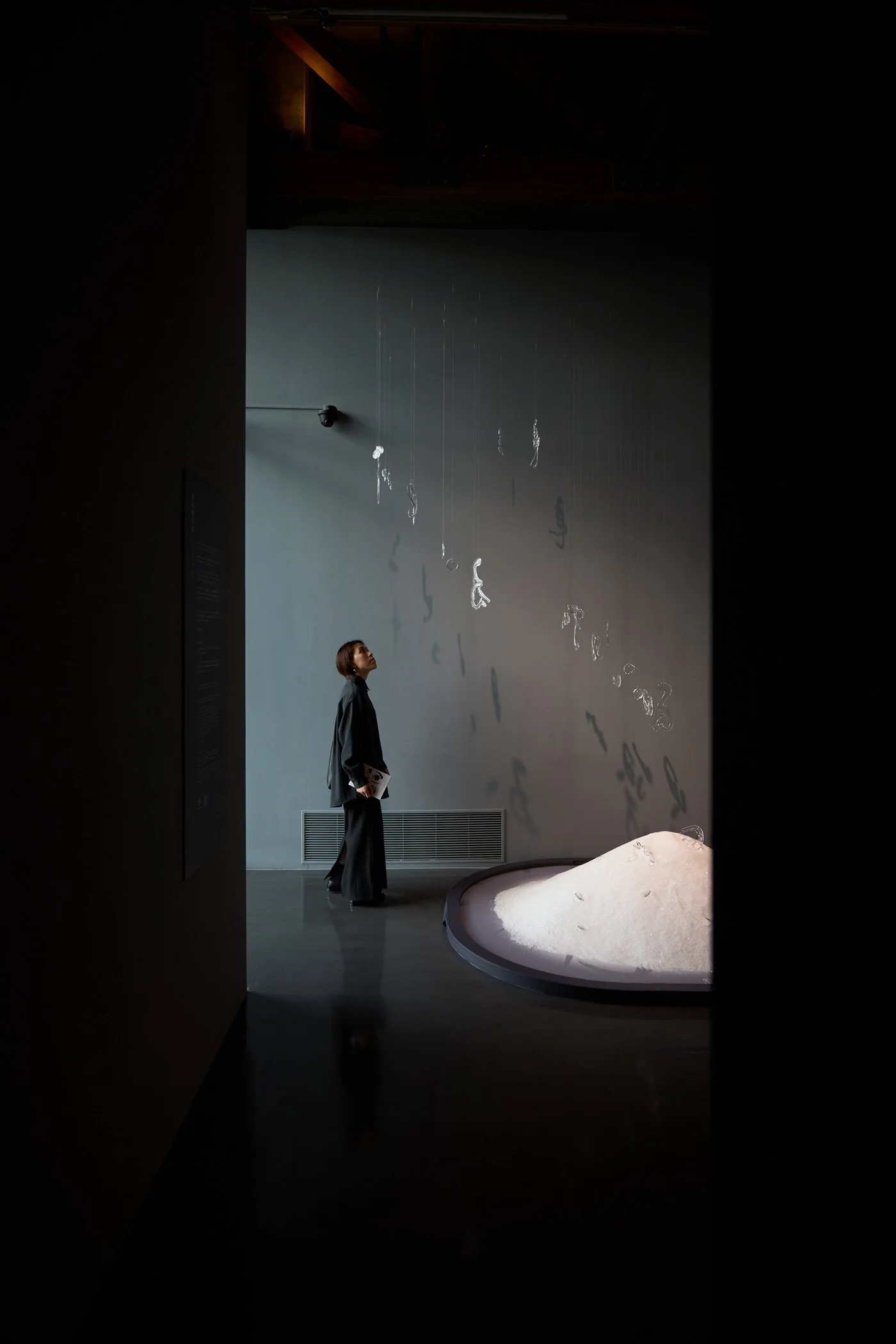
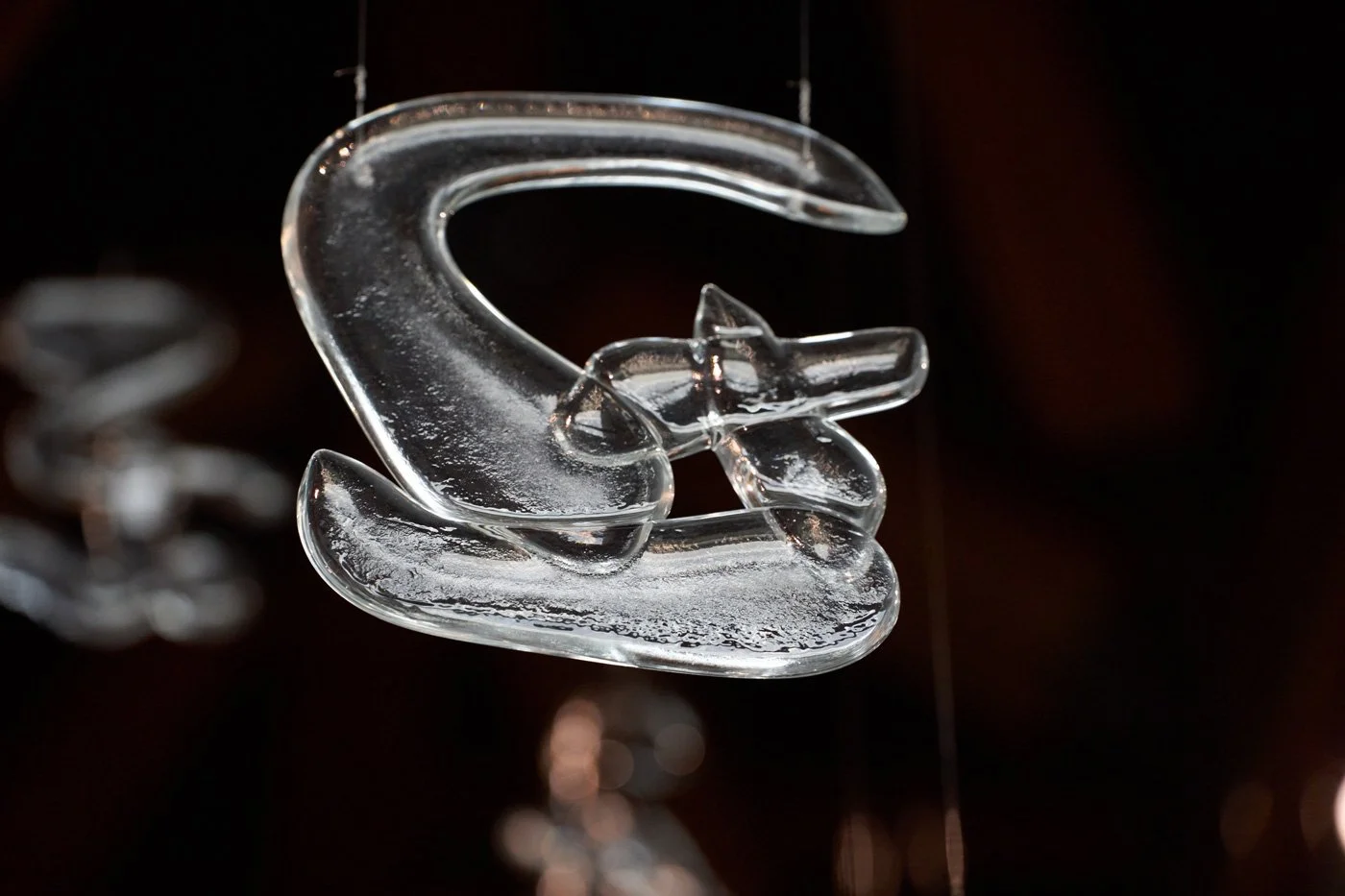
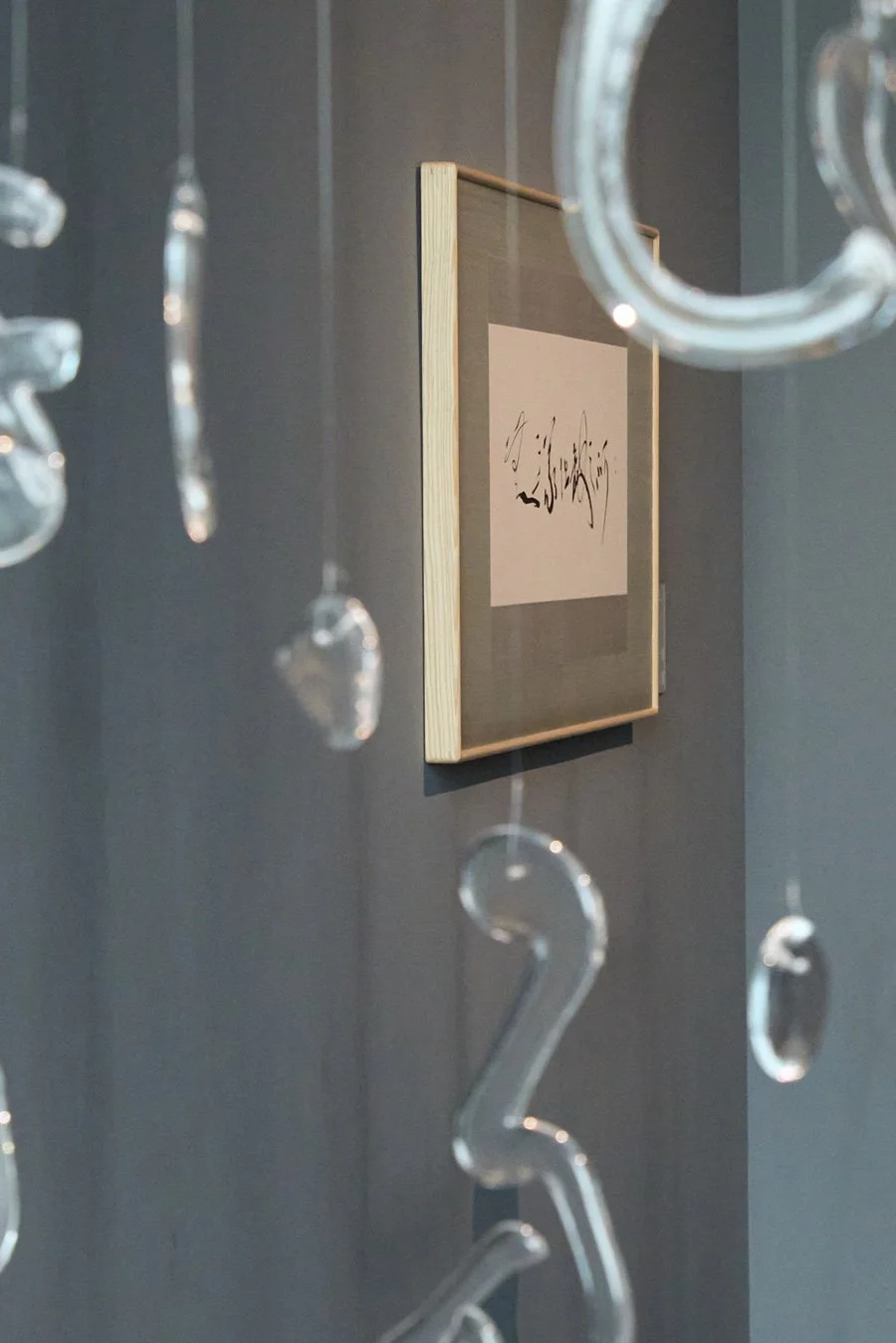
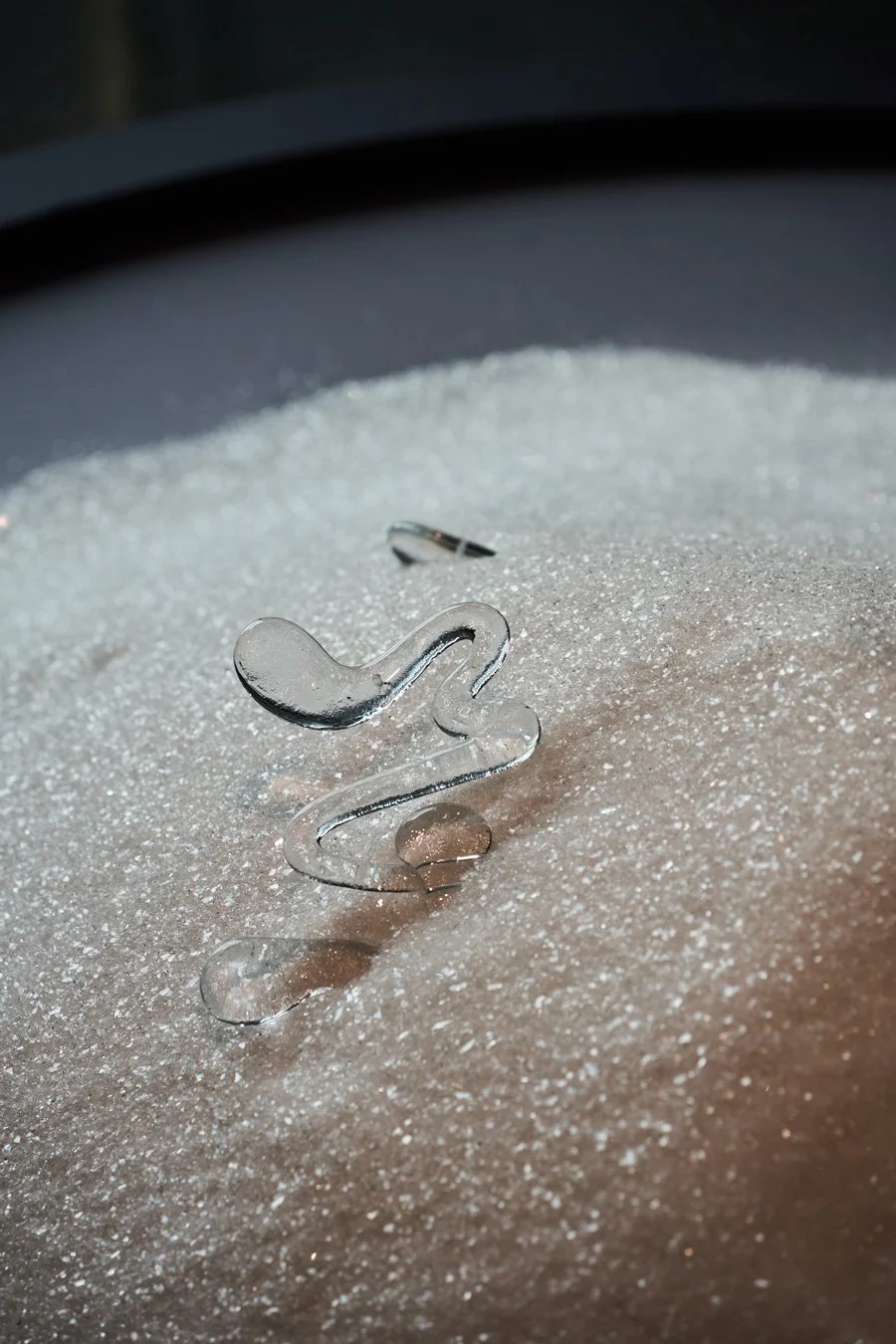
Among these installations, the main visual typography is transformed into a freestanding, gravity-balanced sculpture. In a collaboration with Spring Pool Glass, calligraphy is rendered on translucent glass, underlaid with a humorous visual resembling cat litter. Furthermore, she commissioned animator Pei-Hsin Cho to hide her calligraphy within a two-and-a-half-minute video. Narrated from Taro's perspective and incorporating a year's worth of recorded eating and purring sounds, the animation invites viewers to search for hidden ink marks within Yi Chun's creative world. This act in itself is a game of hide and seek.
-
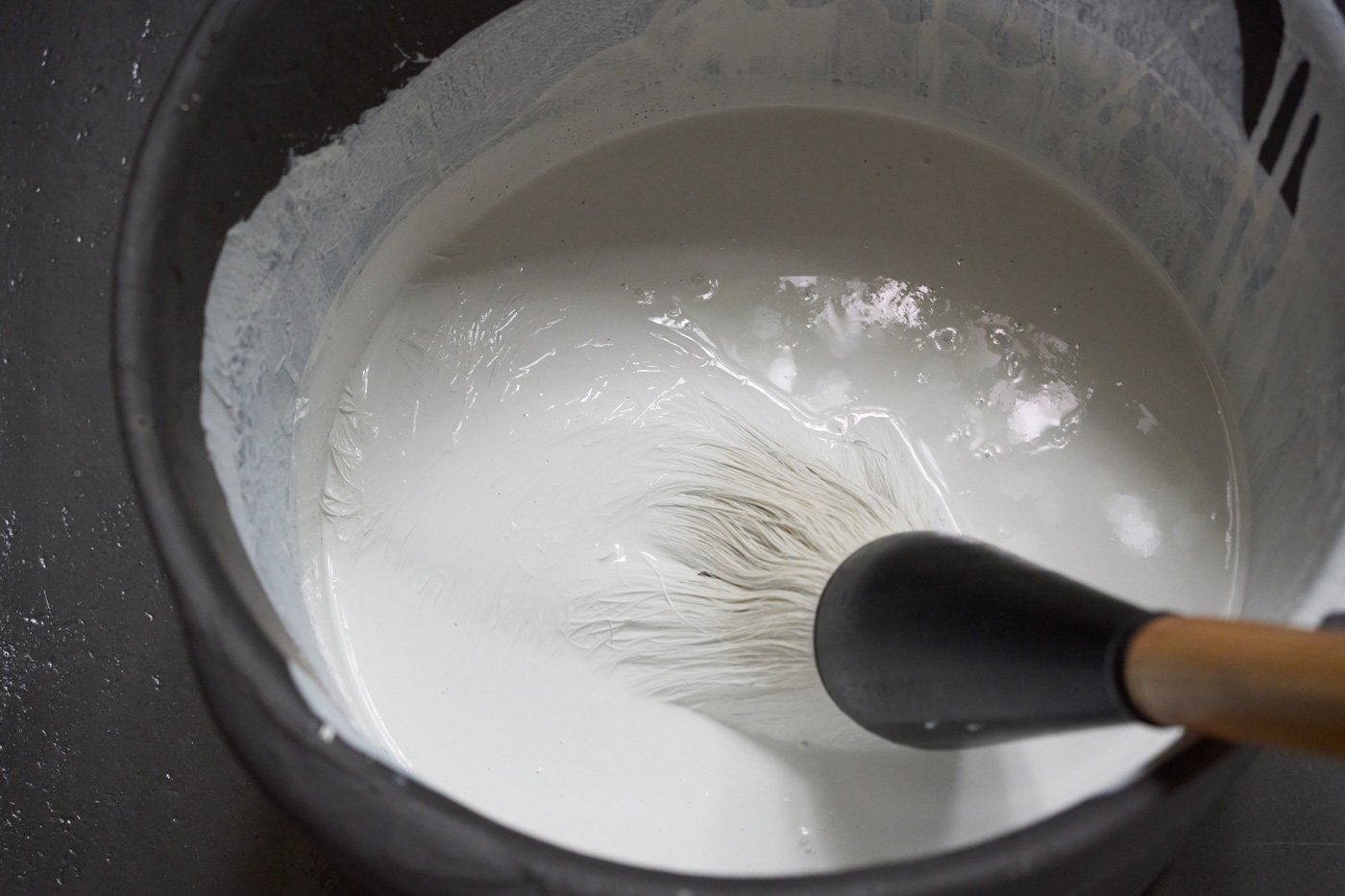
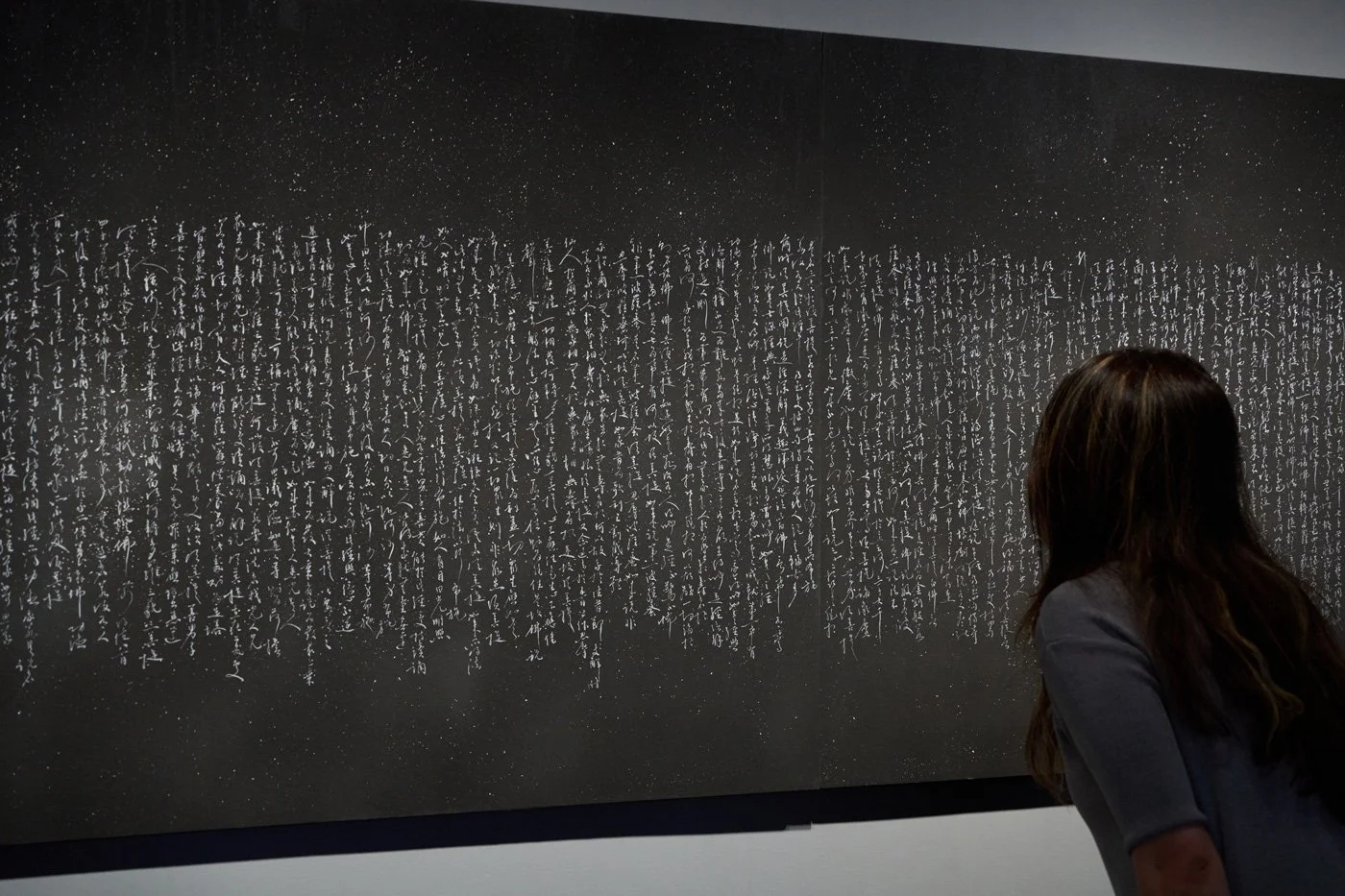
At the same time, she pushes the boundaries of writing. With the help of a gouache painter, she created a special baseboard using natural mineral pigments and white gold leaf. On this surface—where ink struggles to adhere—she solidly wrote the 5,400-character Diamond Sutra. The piece Human Life is Rare, Do Not Live in Vain spans 720 centimeters. Executing such a massive work requires meticulous planning and rhythmic calculation. She uses dramatic, undulating strokes to echo the bumps of life's journey, transitioning from the heavy "Human Life" to the ethereal "Do Not Live in Vain." It is her personal motto, reflecting her attitude toward life.
-
Hiding in the Backlight: Finding a Place of Comfort
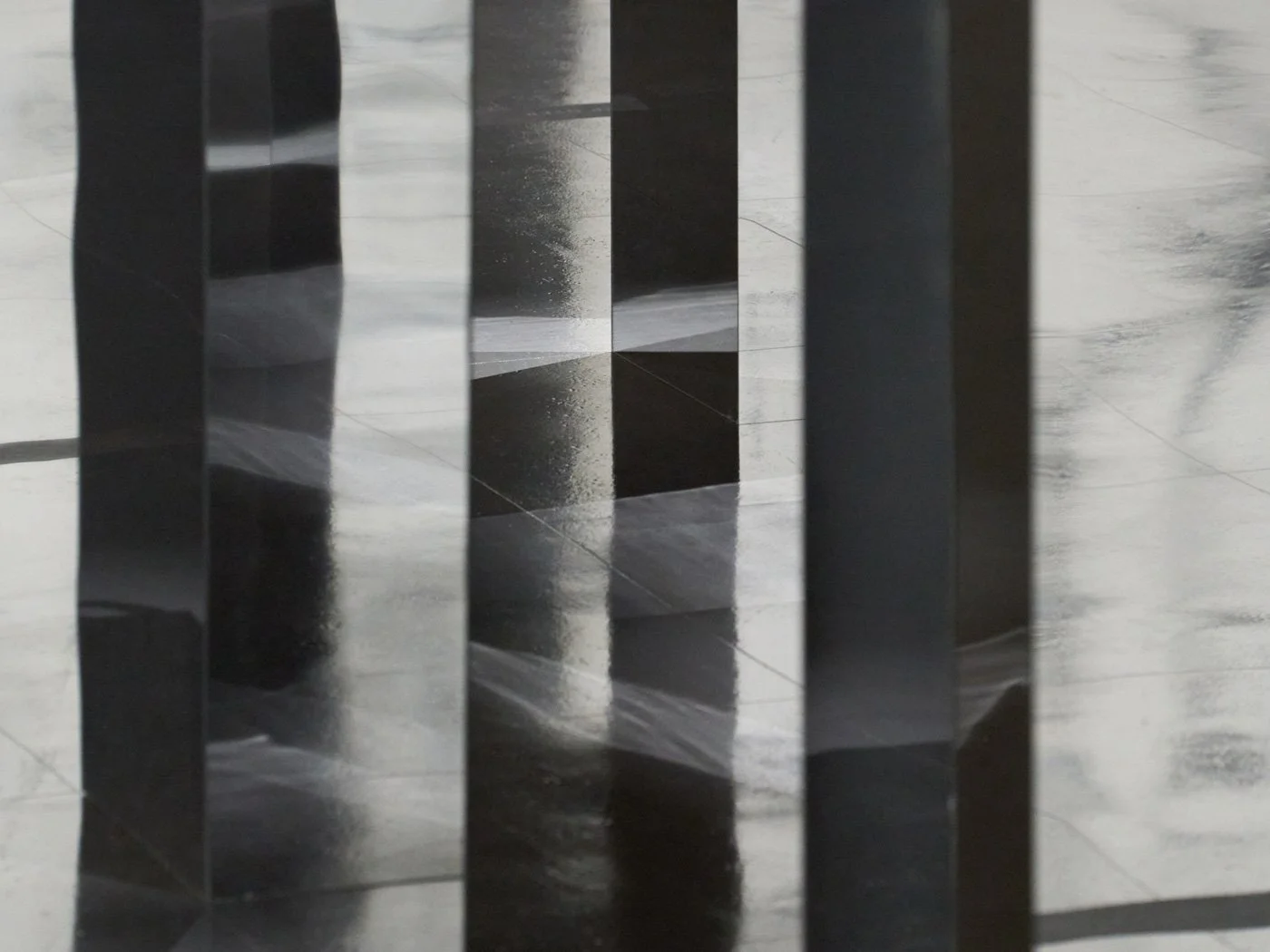
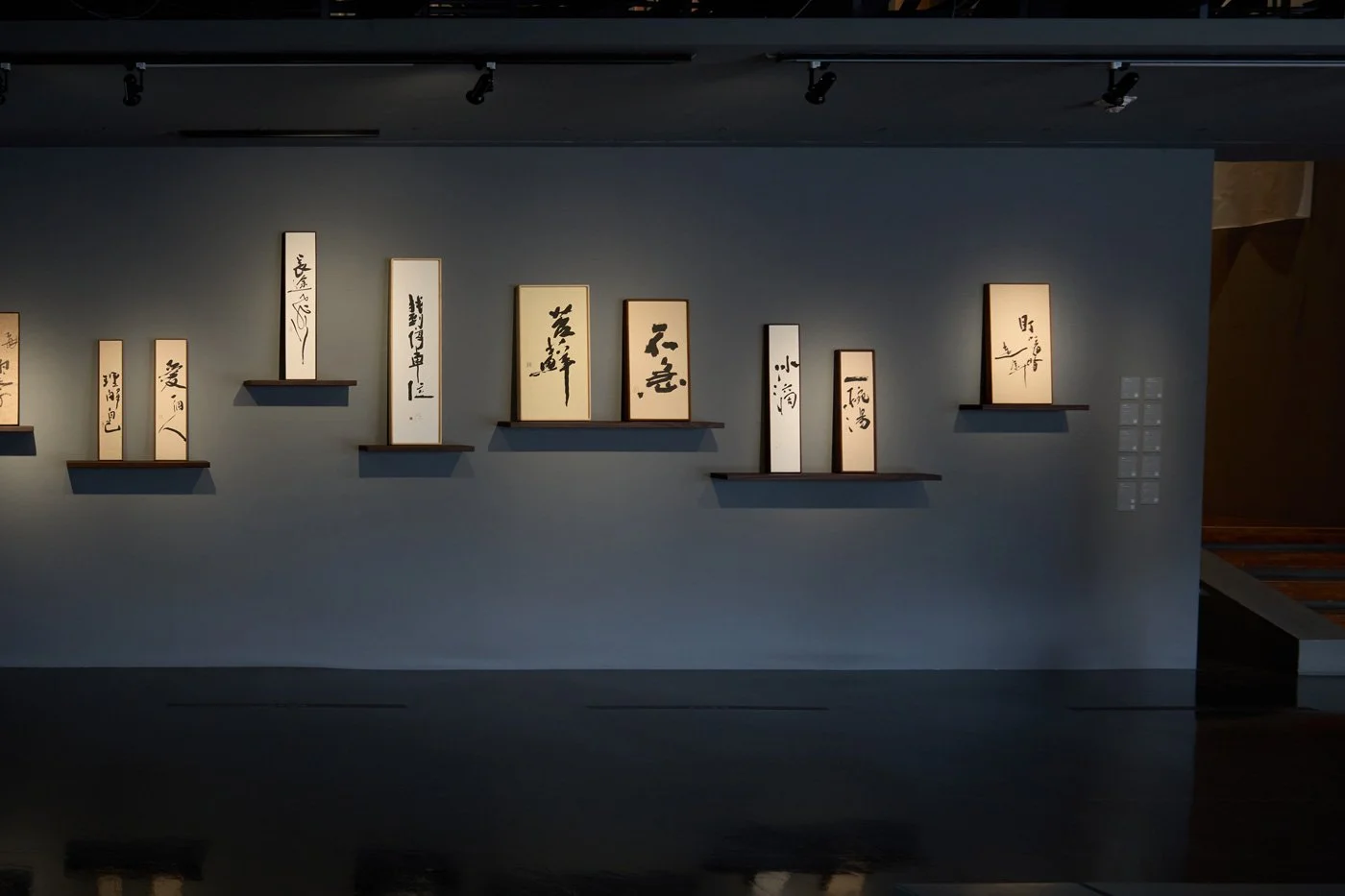
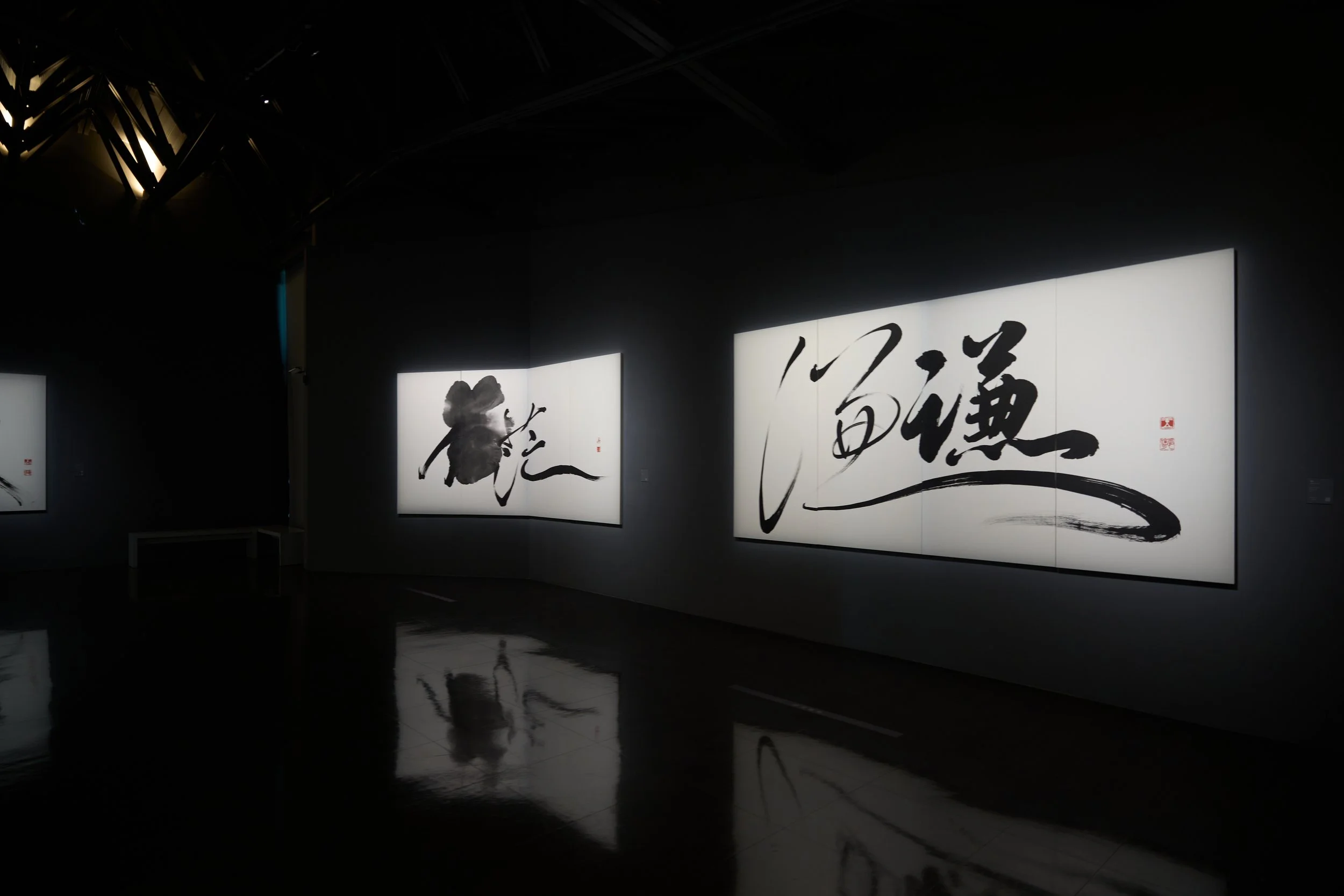
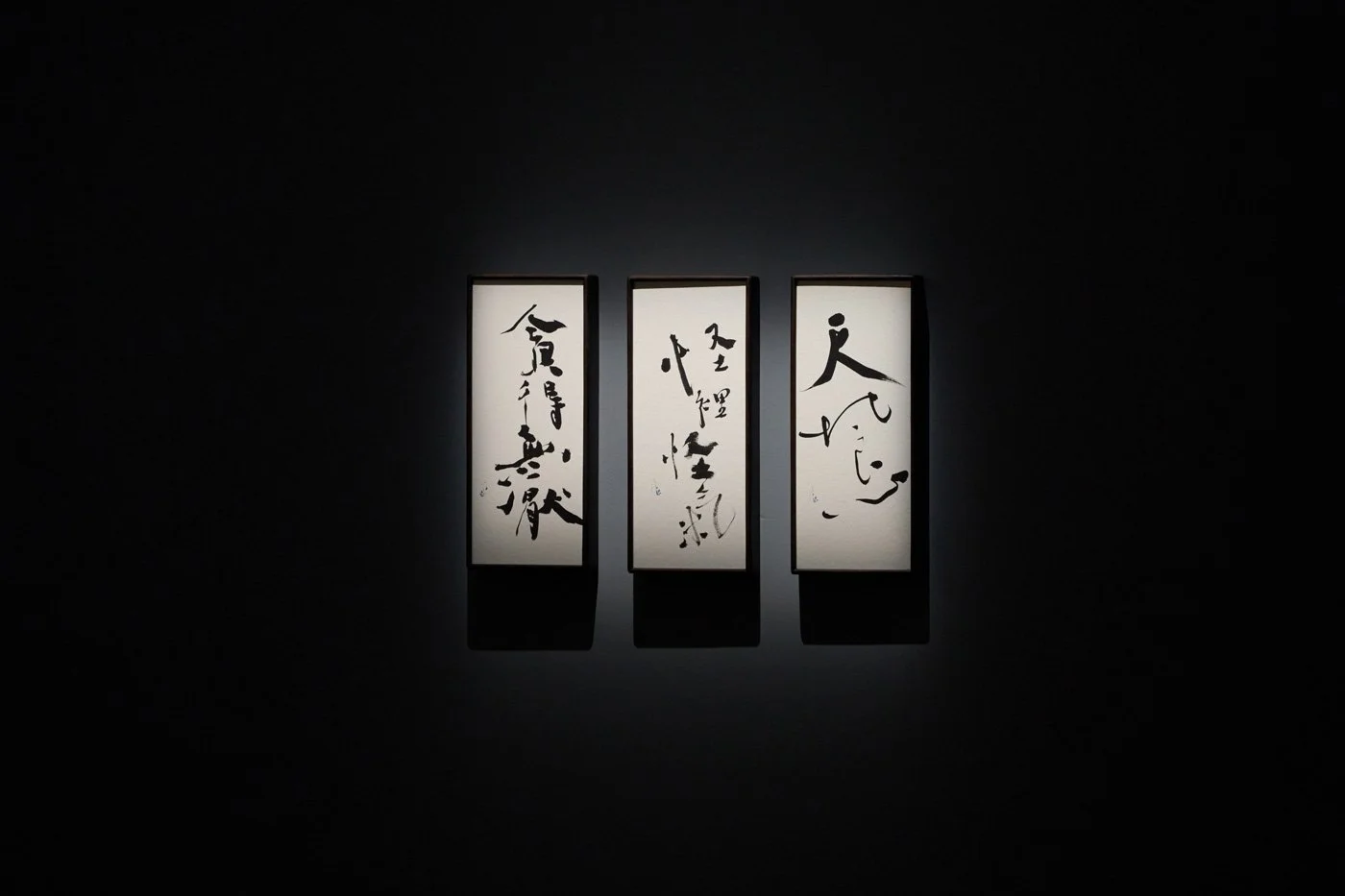
This exhaustive writing ultimately points to an immense honesty with oneself. Traditional calligraphy often carries grand aspirations; there are certain words a calligrapher might never write in their lifetime. Yet, in a space aptly named "The Backlit Area"—the only zone without natural light—Yi Chun writes Eccentric, Insatiable, and A Clear Conscience, leaving behind a more internal, imperfectly real self.
She shares that she is often considered eccentric, "but my weirdness seems to be my signature." These relatively negative or self-deprecating works are intentionally placed close to the ground, forcing viewers to crouch down to read them. This bent posture carries a kindness, a willingness to draw close; and she, in turn, reserves her most private self-doubts for those willing to lower themselves.
-
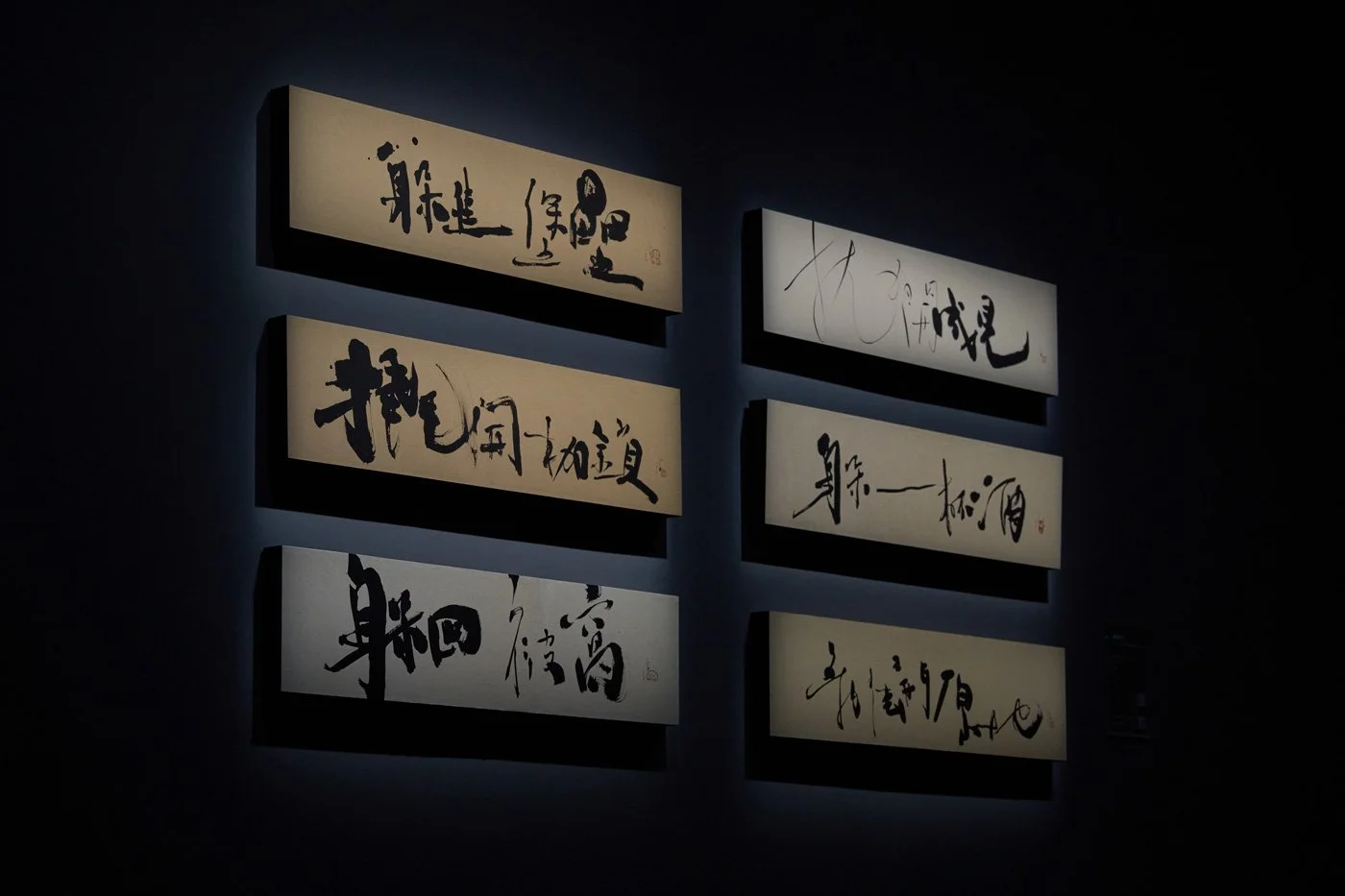
The six pieces titled Practice Hiding invite the audience to make a choice between hiding and not hiding. Perhaps you detest your current situation, so you can leave; perhaps you are experiencing pain, so you can retreat to your bed, hide in your fortress, or even bravely dodge a drink you don't want. These sentences are like one person whispering to another: It's okay, you can decide for yourself.
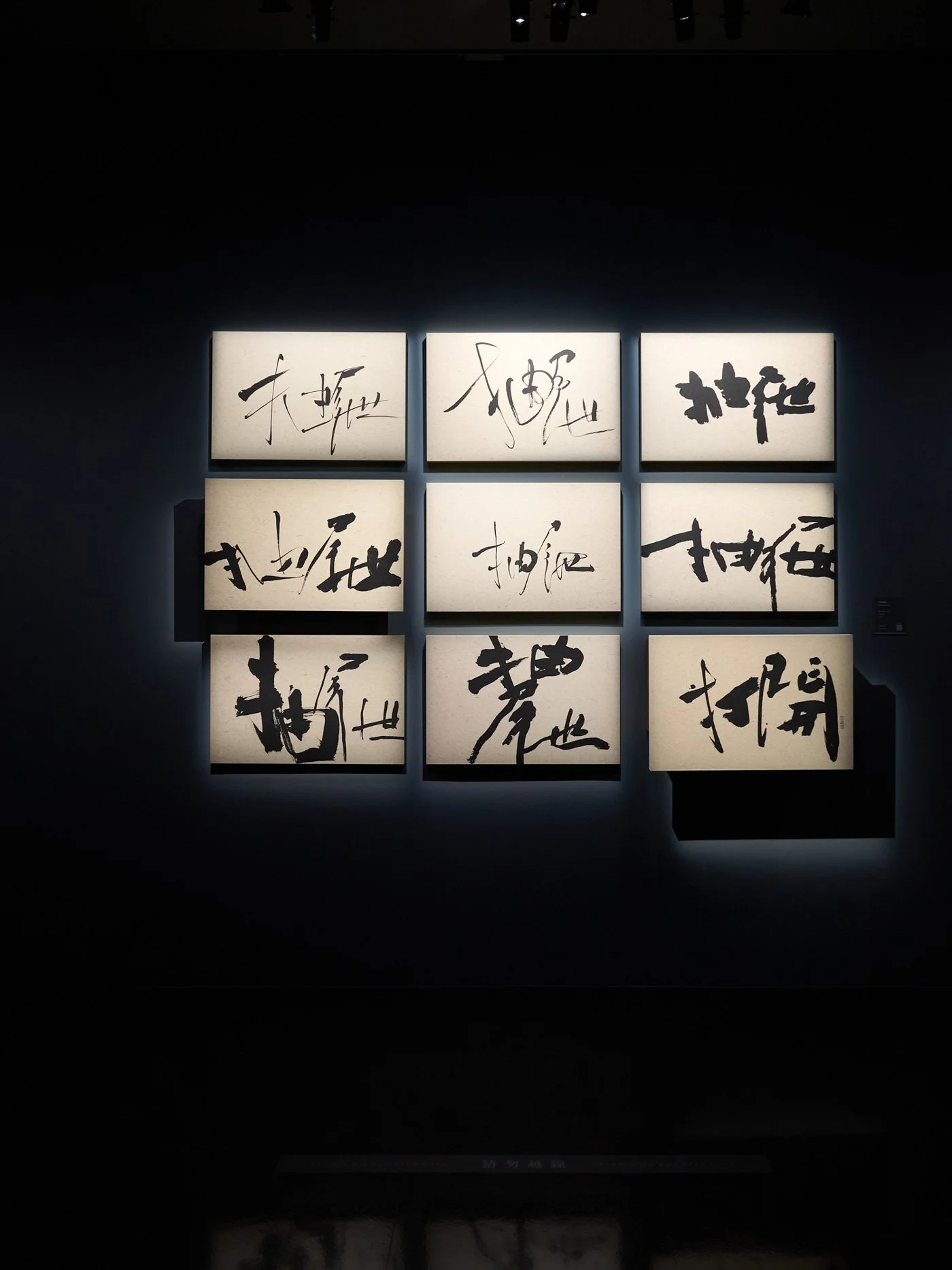
Moreover, a piece bearing the characters for Drawer encapsulates Yi-chun’s intimate memories. Since childhood, she would stash her collected stickers and little keepsakes inside a drawer; the rush of surprise and excitement upon opening it was always profound. For her, the very act of writing the word "drawer" is a form of "opening" in itself. By choosing a term that most traditional calligraphers would overlook, it is as though she uses brush and ink to willingly unveil a deeply personal space—one that harbors both wonder and vulnerability.
-
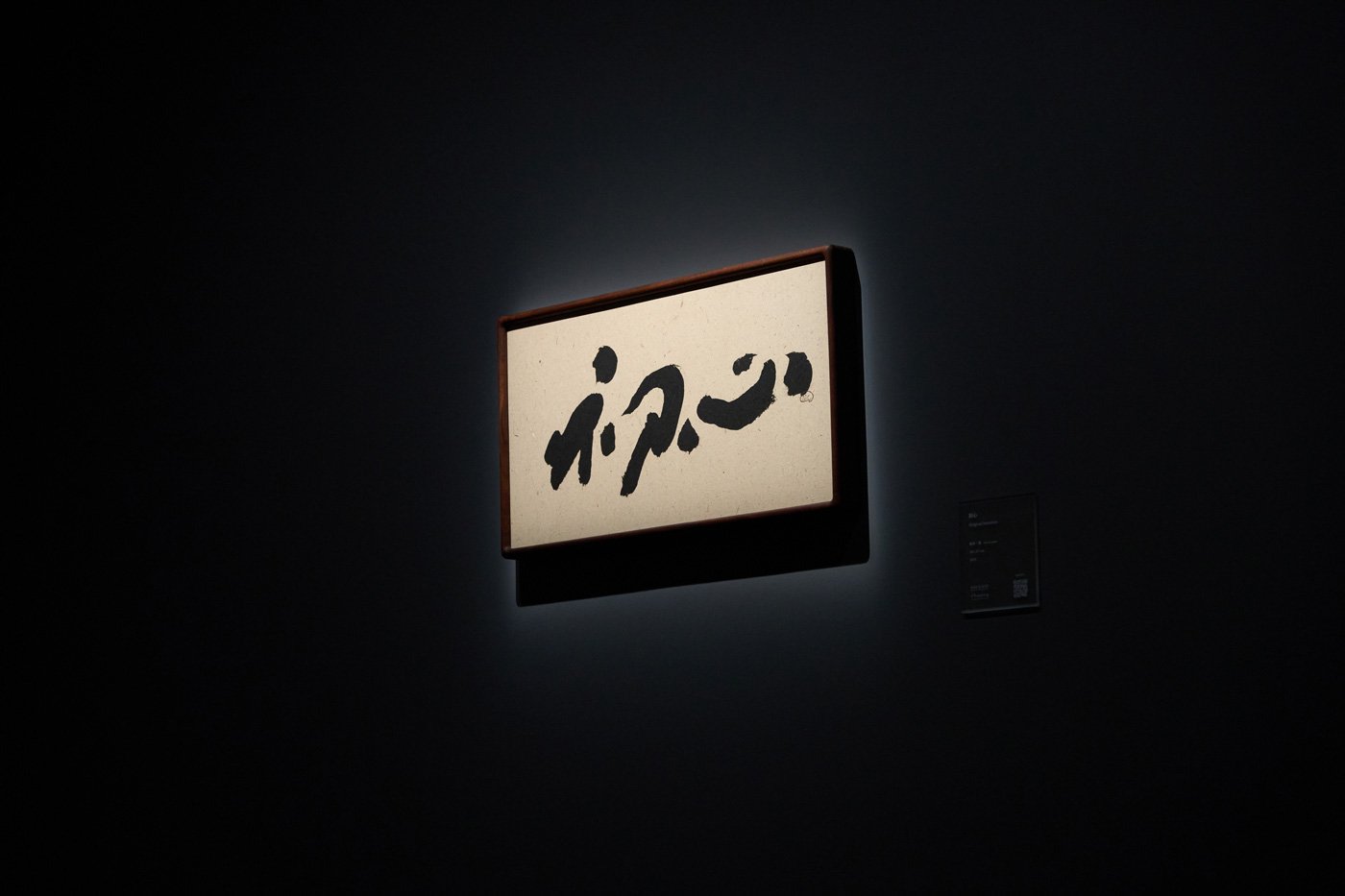
After navigating these emotional twists, she ultimately returns to the essence of writing. Yi Chun mentions a piece hanging in her studio with the characters Beginner's Mind. The characters seem to smile at her, constantly reminding her never to forget the purest, most joyful moments when she first started writing calligraphy.
-
"For now, life holds no purpose - only a return to oneself" With brush and ink, Yi Chun props open a temporary mental sanctuary for hiding—no rush to find answers, no rush to be understood. If, in the moment of viewing, you feel you understand yourself just a little bit more, that is enough.
As viewers walk past the shadows, the exhibition's final chapter, Sending You a Piece of the Sea, acts as a broad exit. It quietly reflects upon everyone who arrives, whispering that even on backlit days, one can still face the sparkling, sunlit ocean.