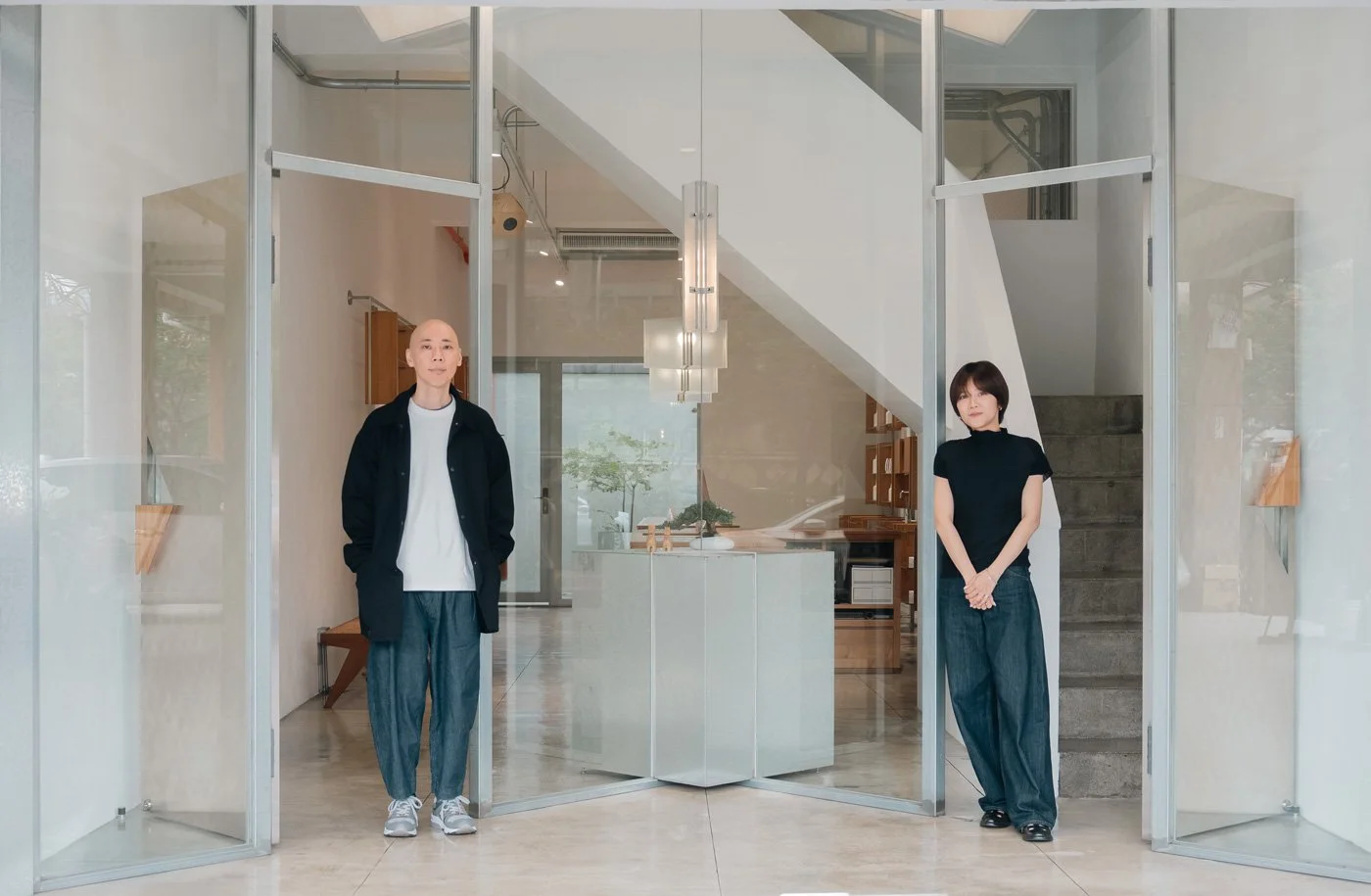
構築感官漫遊的「氣味美術館」,透過 November Treasure Nikki 與 Sam 的氣味策展,喚回潛藏於空間中的生活記憶
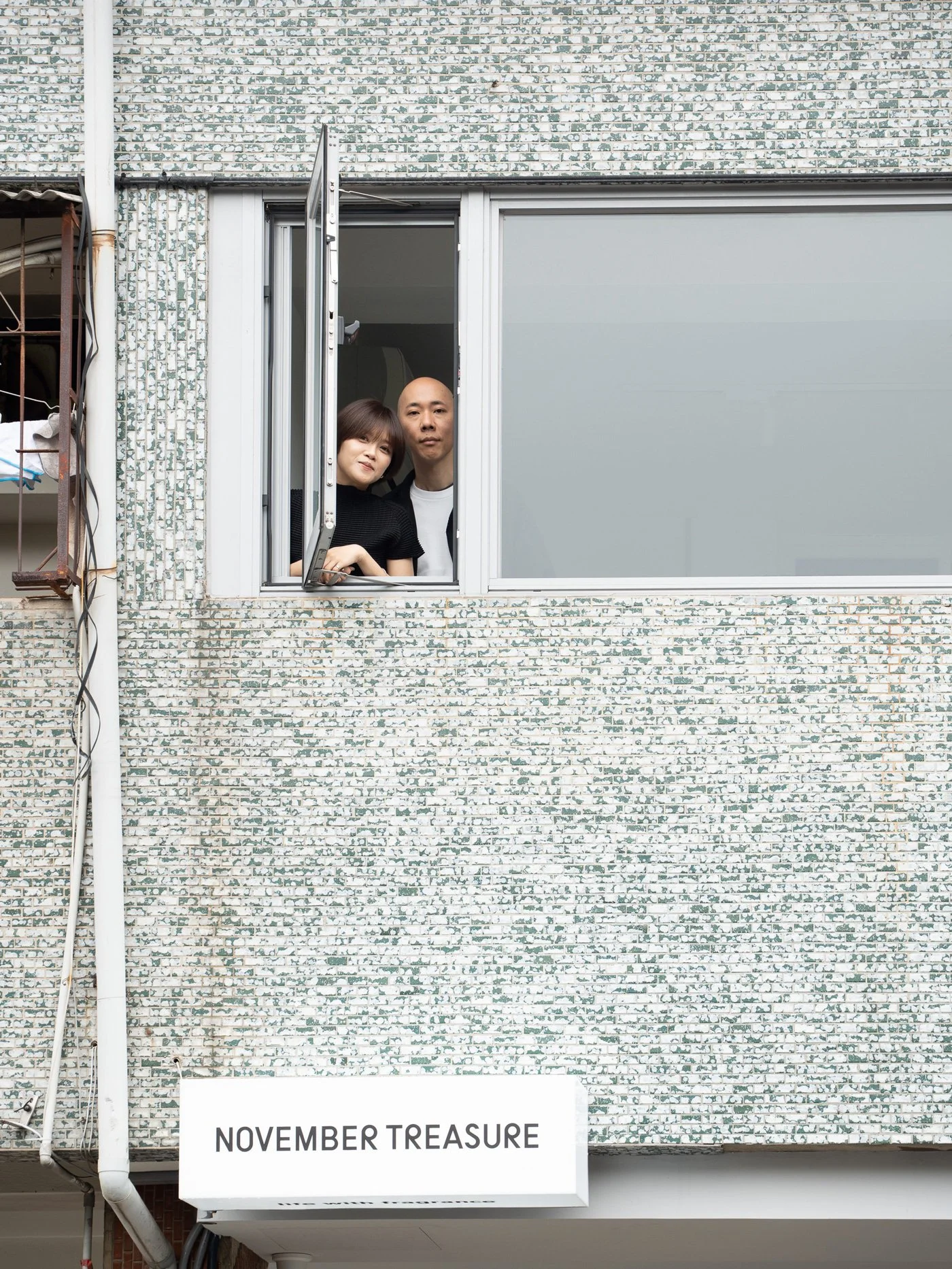
November Treasure 兩位主理人 Sam 與 Nikki
-
The word “fragrance” derives from the Latin “per fumum”, meaning “through smoke.” Thousands of years ago, people communicated with deities and ancestors through the mist rising from the burning of wood and resins. As a wisp of smoke curled upwards, it carried not only the ritual itself but also the inexpressible longings deep within people’s hearts, as well as imaginings and hopes for things beyond reach.
Fast forward to the modern era, and as history unfolded across different regions and the Renaissance advanced, fragrance has evolved into diverse narrative threads and commercial forms. The one constant is that people still use their sense of smell to capture fleeting moments in time, attempting to summon the past into the present through scent. When one wears a fragrance, it carries not only a reflection of personal taste and lifestyle but also serves as a means of exchanging life experiences with others through scent.
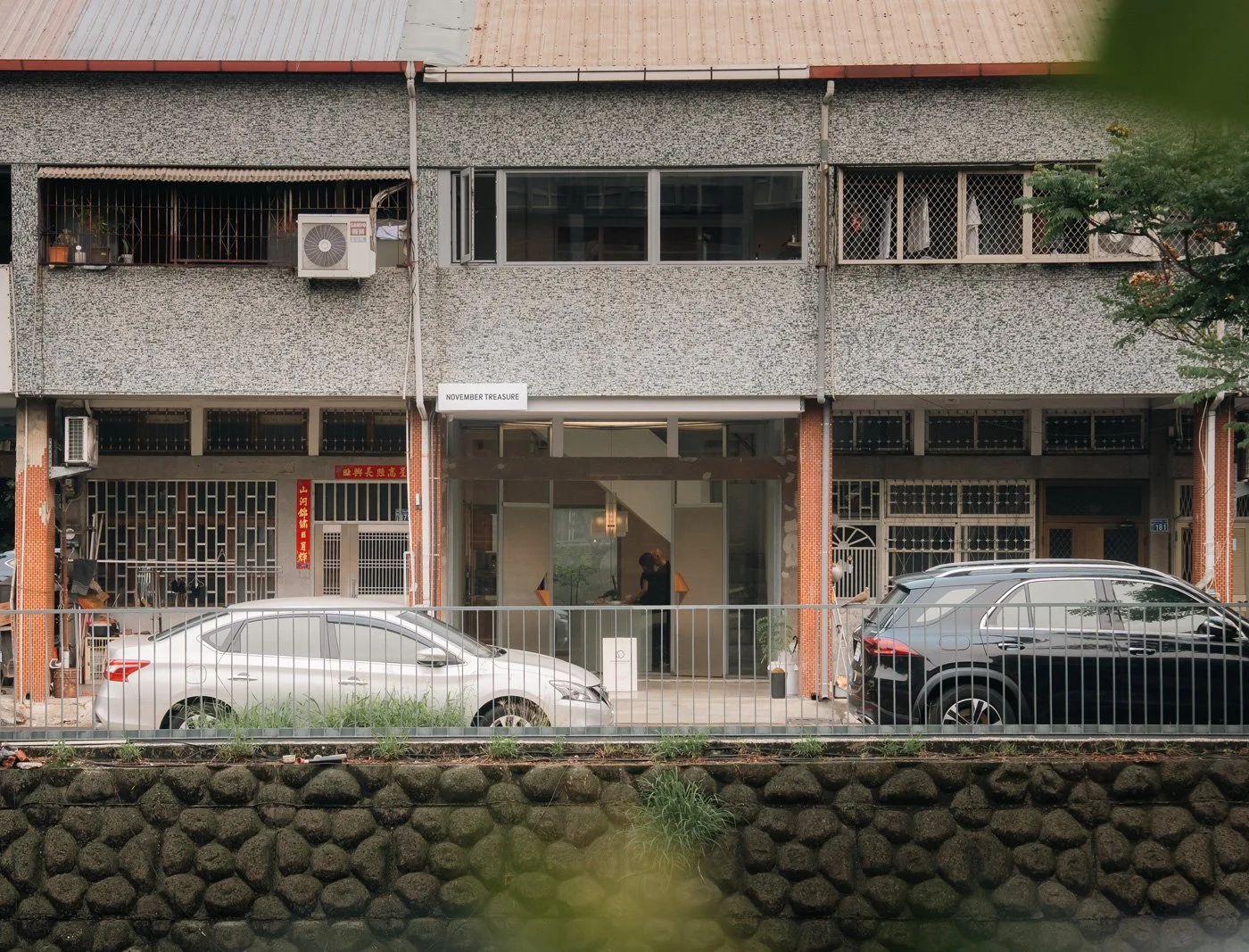
Founded in 2014, the Taiwanese fragrance brand November Treasure began at street markets and, following the opening of its first physical store in Taichung, has consistently dedicated itself to capturing “the scent of a space.” After more than a decade of development, the brand officially embarked on a comprehensive upgrade in 2026, constructing a “Scent Museum” centered on the senses on the banks of the river along Huamei 1st Road in West District, Taichung.
-
As the brand’s first directly operated concept store, everything from the scents and craftsmanship to the spatial design is centered on the themes of geometry, transparency, and brightness, which extend to the overall visual language. This guides visitors to begin with their sense of smell, progressing through the senses step by step, and entering a more complete and multidimensional narrative space.
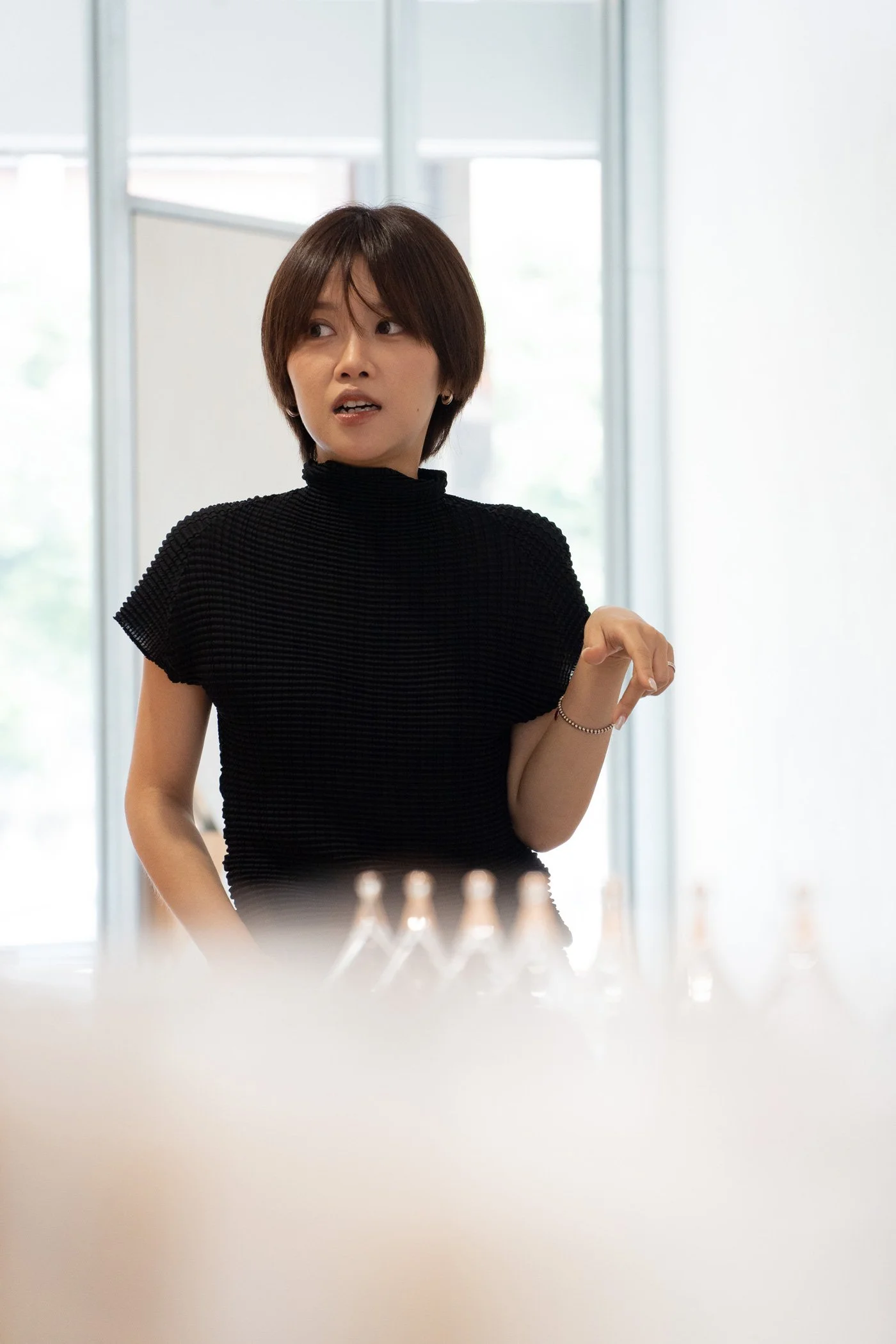
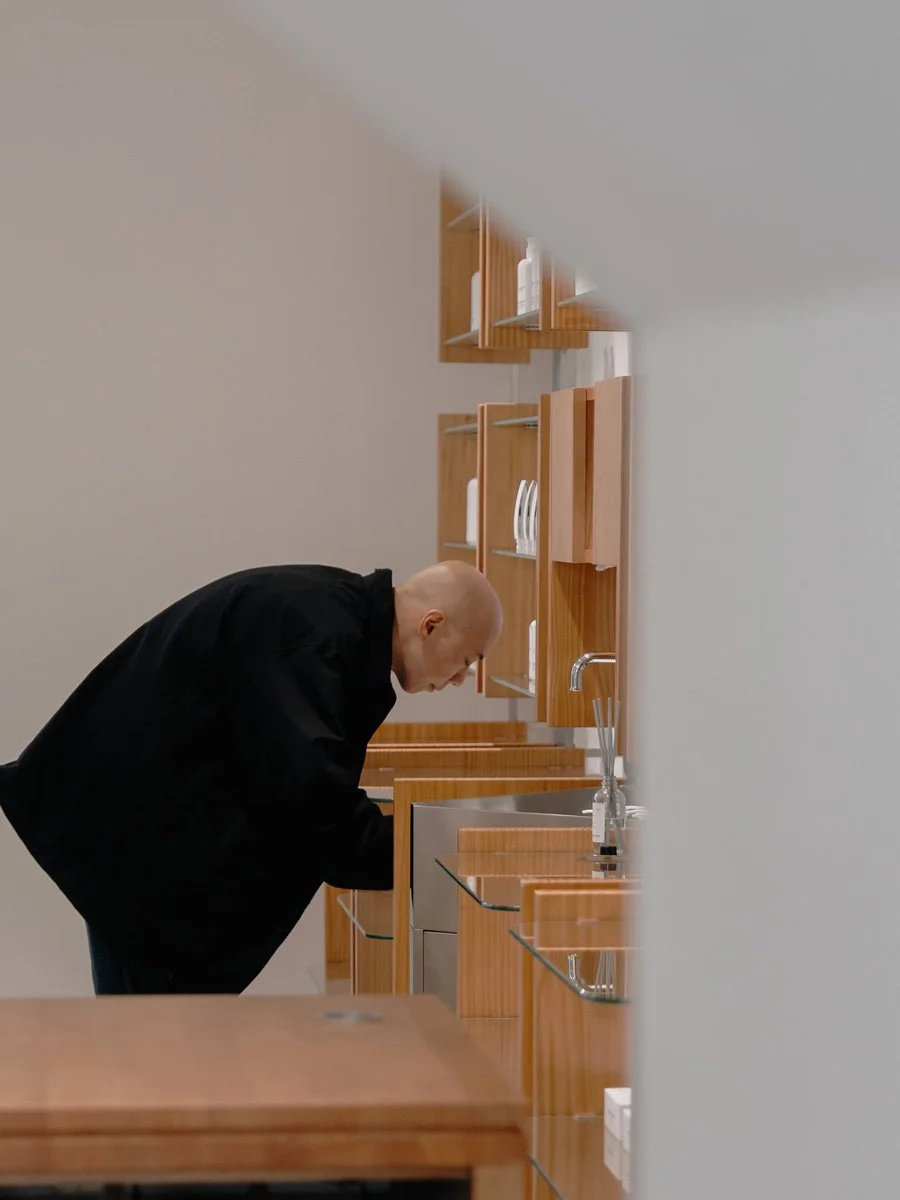
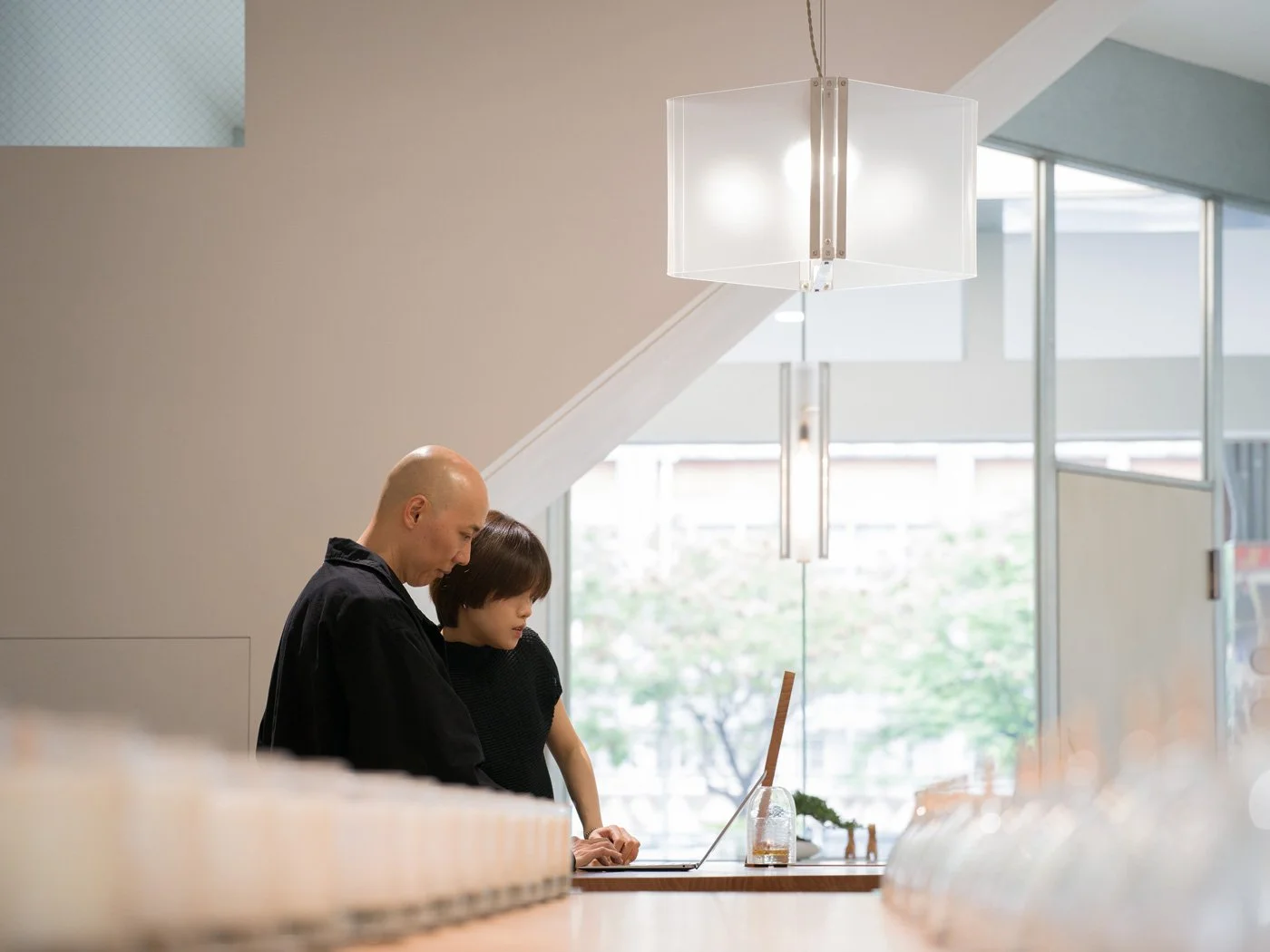
Within this “Scent Museum,” hidden away in a terraced row of old townhouses, November Treasure’s co-founders, Nikki and Sam, move about the space as they prepare the merchandise for display. In a space where scents permeate layer upon layer, light and shadow refract and shift across the materials, catching the eye. Like curators of this space, the pair guide us into the olfactory universe they have crafted, recounting the entrepreneurial journey and its evolution along the way.
-
Q: Could you share a bit about your backgrounds and what motivated you to start this business? What was the catalyst that led you to launch a fragrance brand?
Nikki:
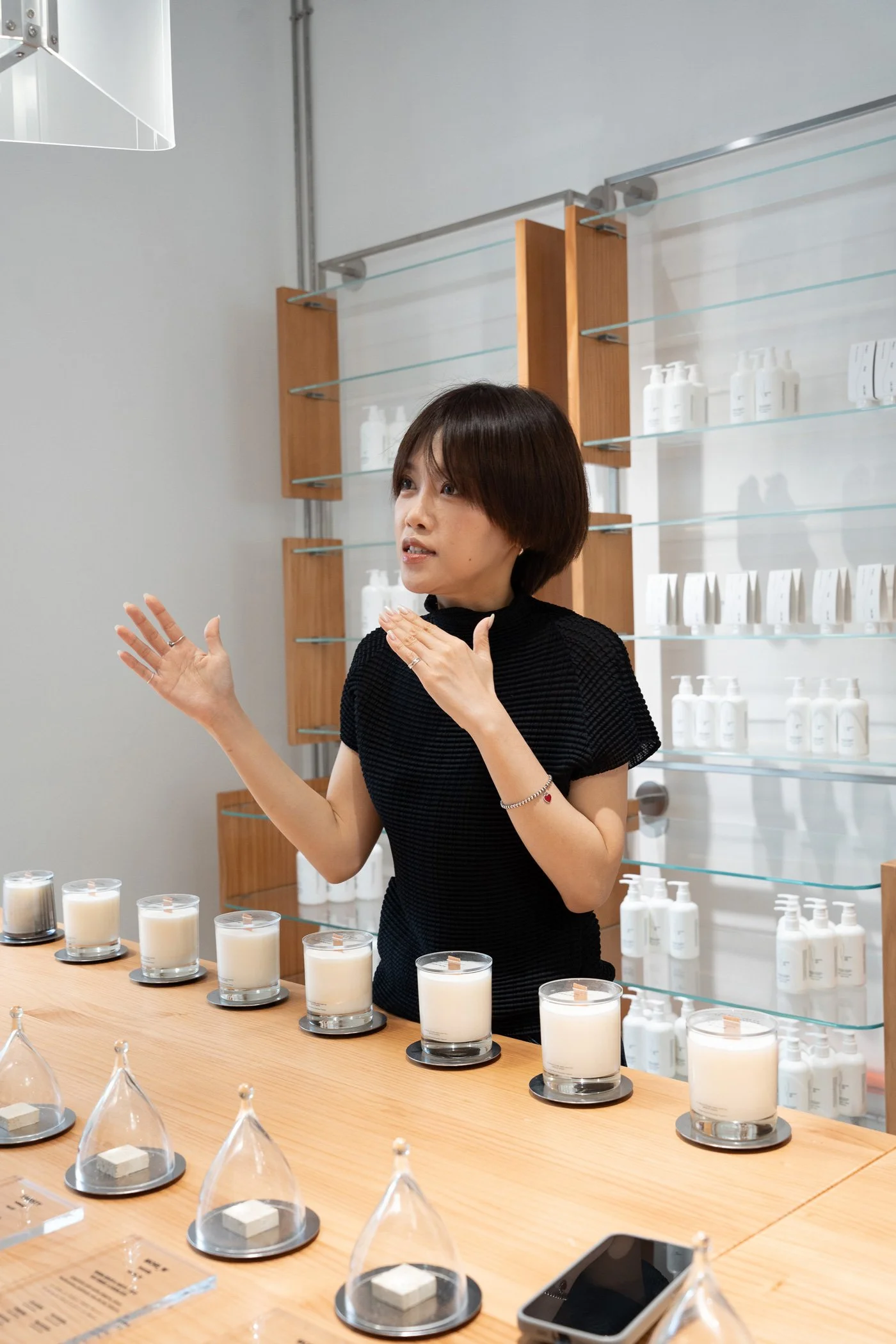
Actually, my very first job after graduating was launching this brand. I originally studied international trade. At the time, while attending a language school in the US to prepare for business school, I experienced a significant culture shock with my host family. For them, fragrance was an everyday thing, but for me back in 2013, it was quite unfamiliar. Back then in Taiwan, fragrance wasn’t widespread; you rarely found such products in people’s homes. Later, after accidentally knocking over a candle, I became interested in the subject and realized there were no fragrance products on the Taiwanese market that met my needs. So, upon returning to Taiwan, I decided to start my own business, and we’ve been learning through trial and error ever since.Sam:
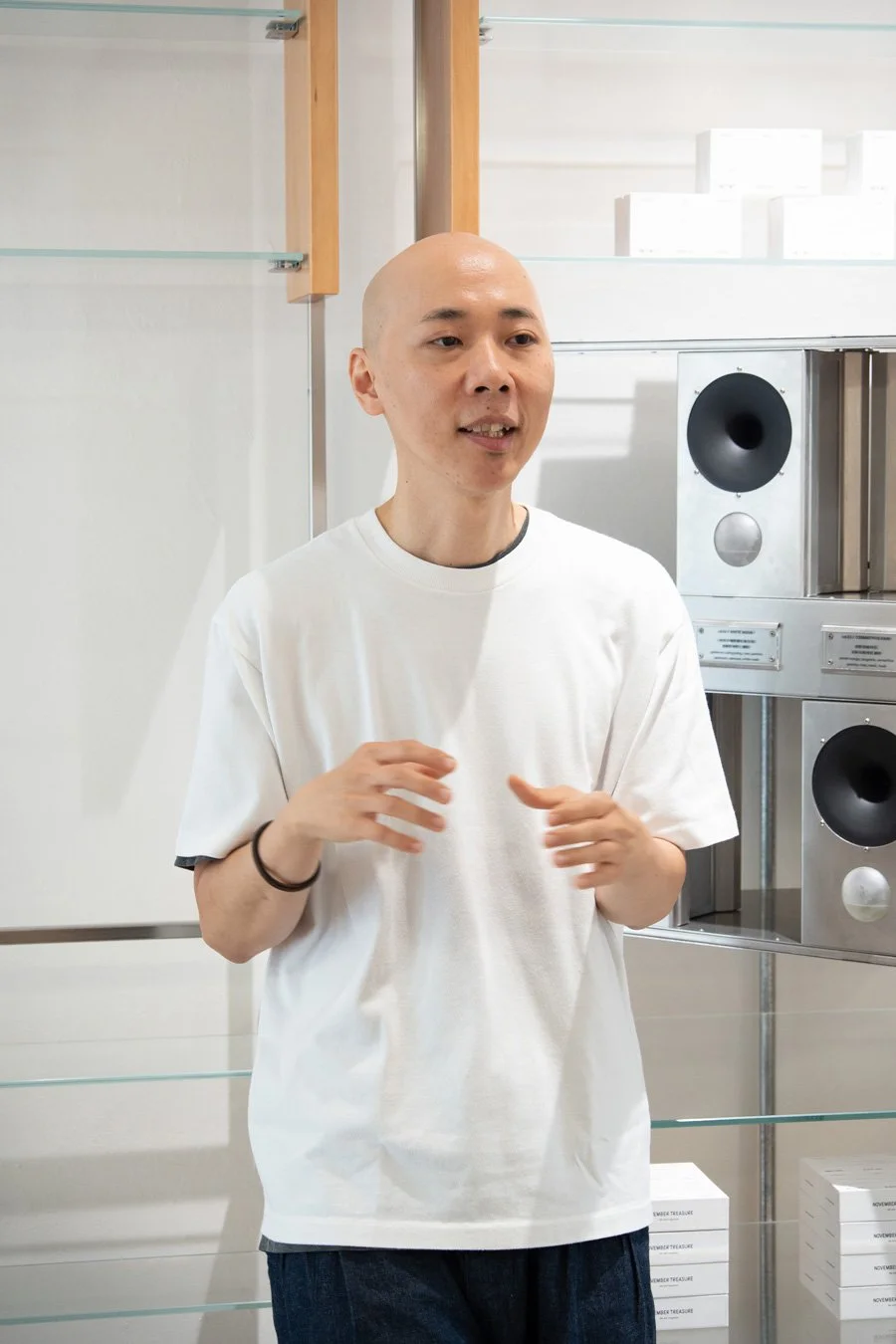
I originally worked mainly in retail and the fashion industry. When I left my previous company, Nikki had already been running the brand for some time; it wasn’t until I officially joined in 2020 that I began helping to manage the brand. My main contribution has been bringing in my experience in retail, corporate structures, and operational planning. Nikki is in charge of fragrance design, while I handle the execution of matters beyond that, including brand planning, sales, product display, and packaging design—areas where I have more experience and expertise.
-
Q: With so many options and diverse styles in the fragrance market today, what motivated you to launch November Treasure?
Nikki:
We’ve actually always been quite “willful.” Take the hand cream we launched this year, for instance—it's not just about adding a scent. Given Taiwan’s humid and stifling climate, we specifically developed a “hydrophilic” formula that draws moisture from the air into the skin. It absorbs very quickly and isn’t heavy, unlike European and American brands that leave a greasy film. I hope that customer feedback focuses not just on the scent itself, but also on its practicality, as our aim is to be more closely attuned to people’s daily lives.Sam:
Just as the fashion industry sees new trends every year, we are well aware of current market trends and which scents sell well. However, we remain committed to creating the scents we want to create, even if they are not mainstream, have a higher price point, or are more challenging to sell. We still want to respond to the brand’s philosophy and local needs, so this isn’t a choice driven by commercial trends; this logic is the same as when we develop our accessories.
-
The transformation of the architectural structure becomes a gentle concession to the traces of neighborhood life
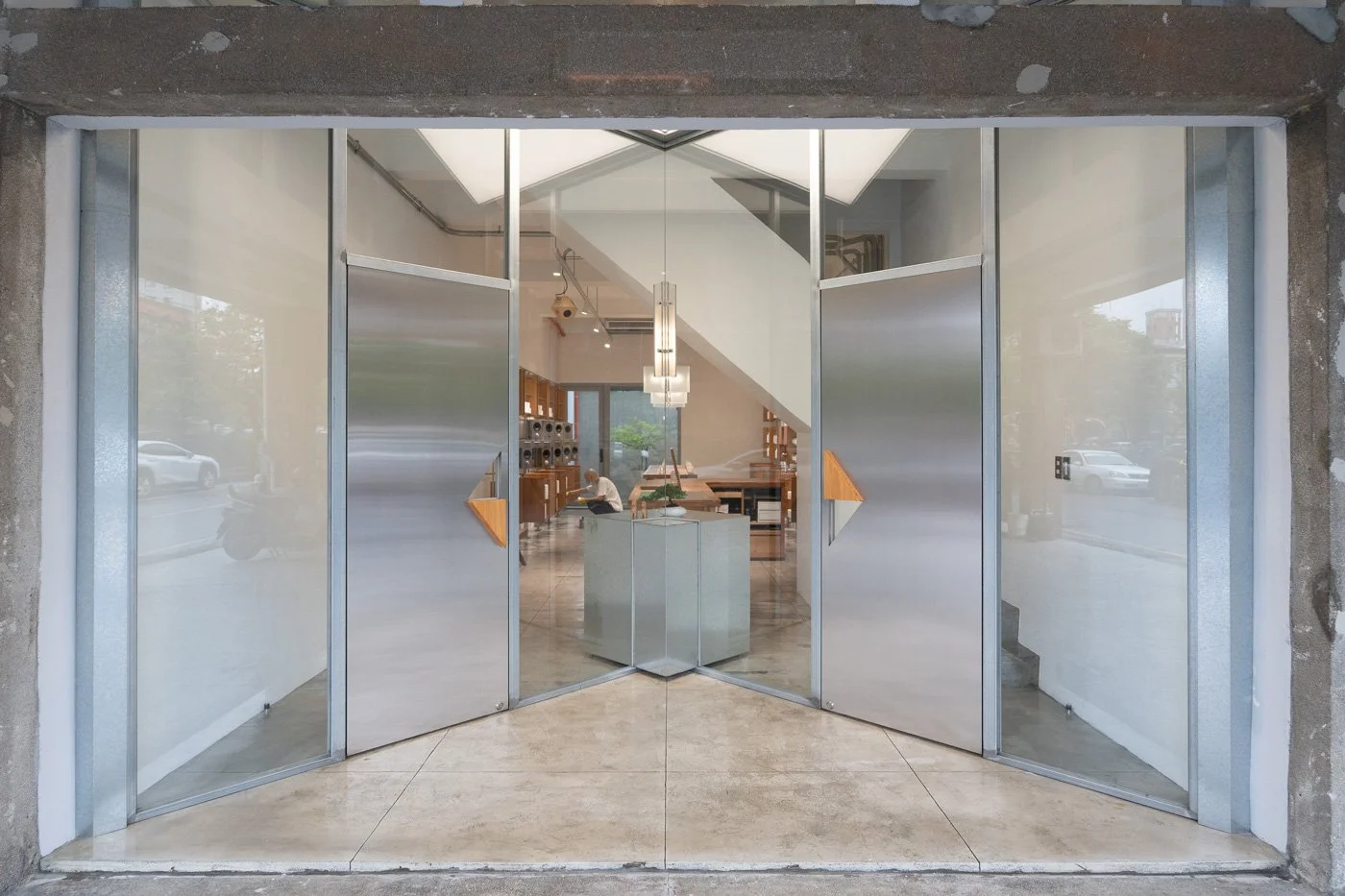
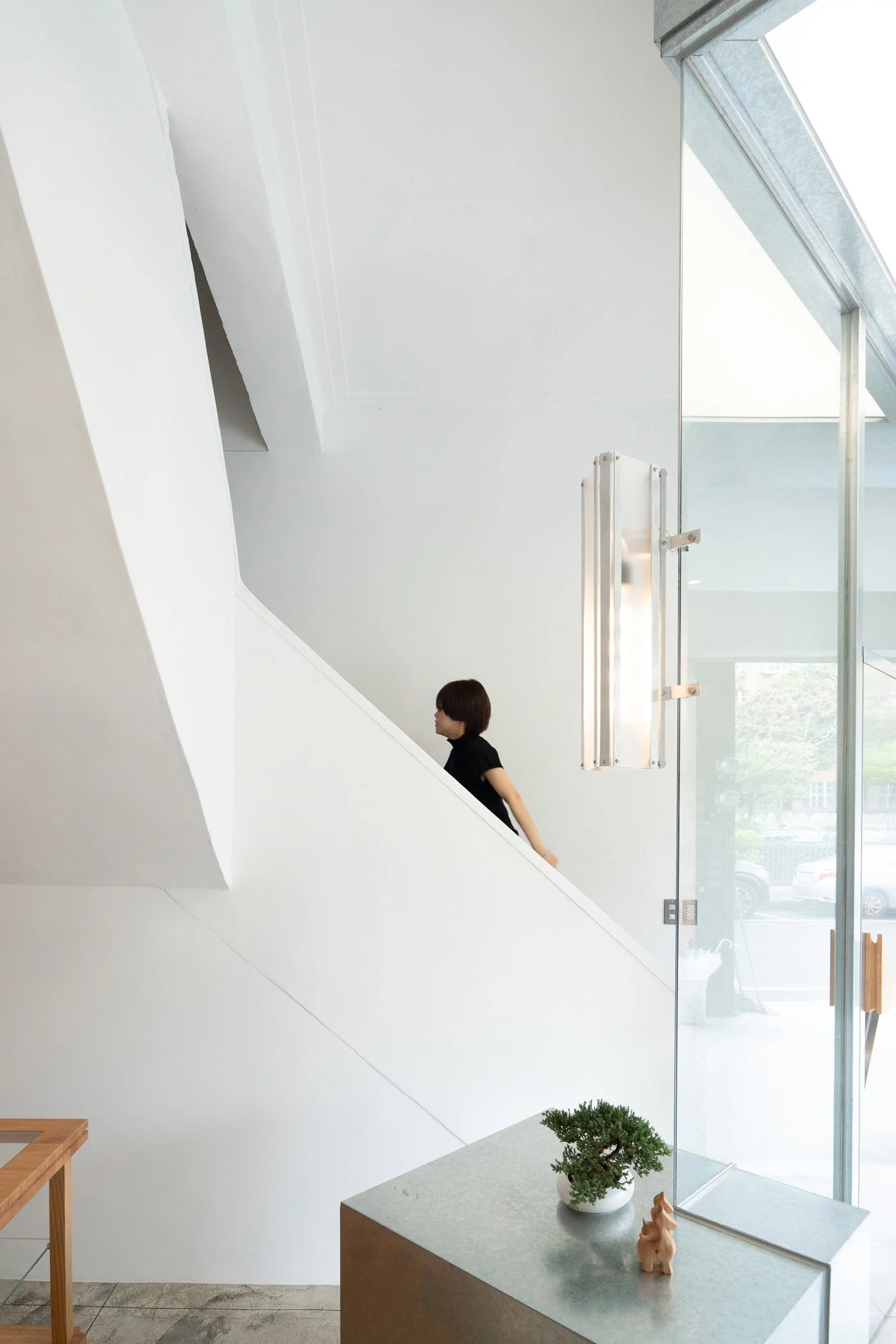
The spatial design, crafted by skilLABility, deliberately cedes part of the commercial floor area, employing a geometric design with a significant recess at the entrance. Like outstretched arms welcoming visitors, this also creates the greatest sense of openness and breathing space within the venue.
This almost extravagant use of space dispels the sense of oppression and gloom often found in narrow, elongated buildings, allowing natural light to permeate the interior like a fragrance, spreading imperceptibly and heralding a pure and focused sensory journey.
-
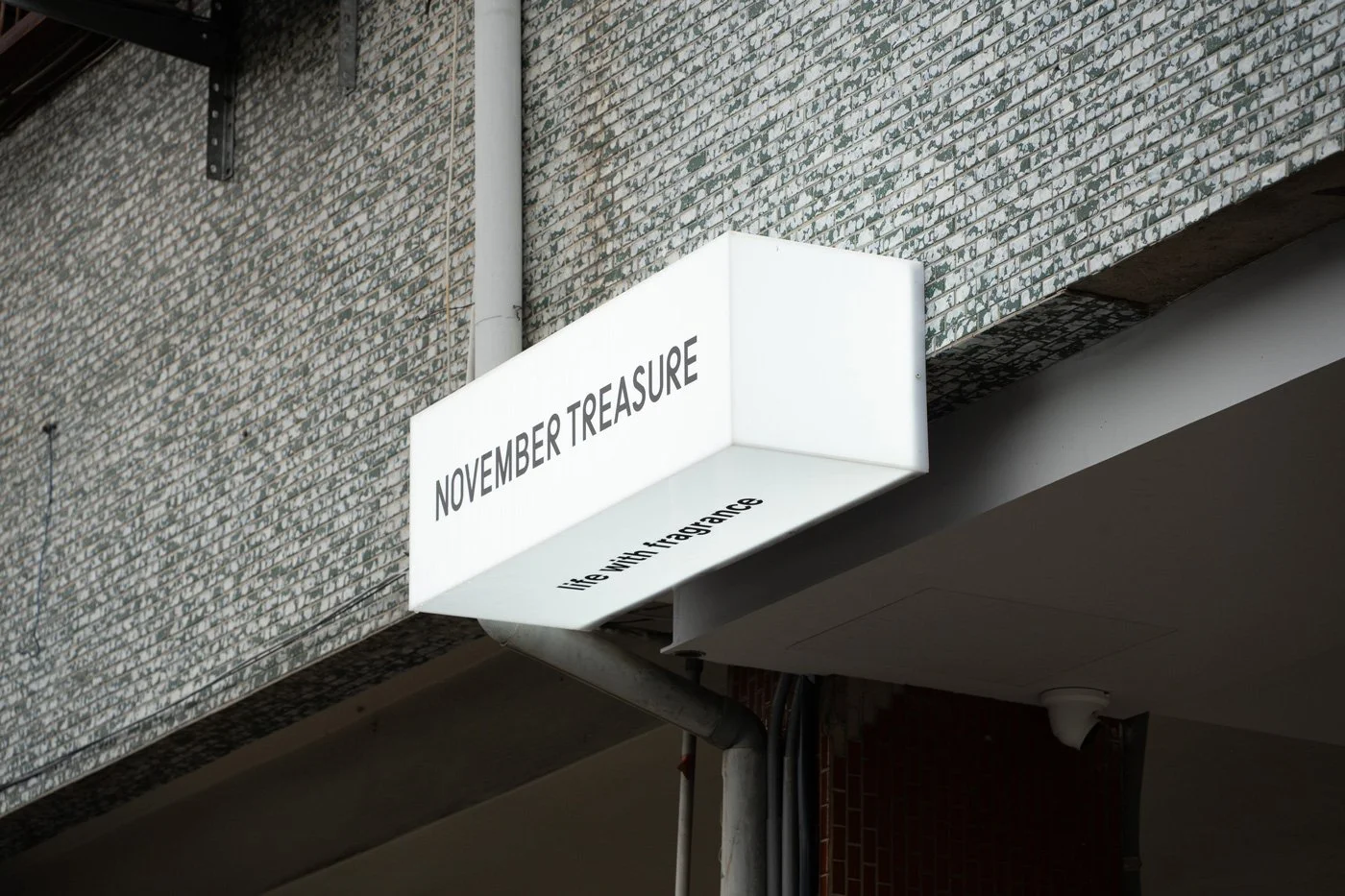
To ensure this historic house blends naturally into the fabric of the surrounding neighborhood, the brand and design team chose to retain the building’s original façade, using only a minimalist sign for identification. They deliberately avoided the visual distraction of excessive ornamentation, ensuring the space does not create a jarring contrast with the neighborhood.
The original architectural structure features a “double-door” layout, designed specifically for the three-generation household that once lived there. The positioning of the doors has been retained, allowing the circulation routes of the ground and first floors to converge naturally here. This creates a rhythm of separate entry and exit in daily life while also laying the groundwork for the exhibition space on the first floor, which is yet to be opened.
-
Constructing a rational framework for scent through geometric language, striking an emotional balance between curves and angles
The design team of skilLABility, renowned for its ability to tell stories through materials and structural language, has transformed November Treasure’s rational approach to perfumery into a precise and restrained geometric vocabulary.
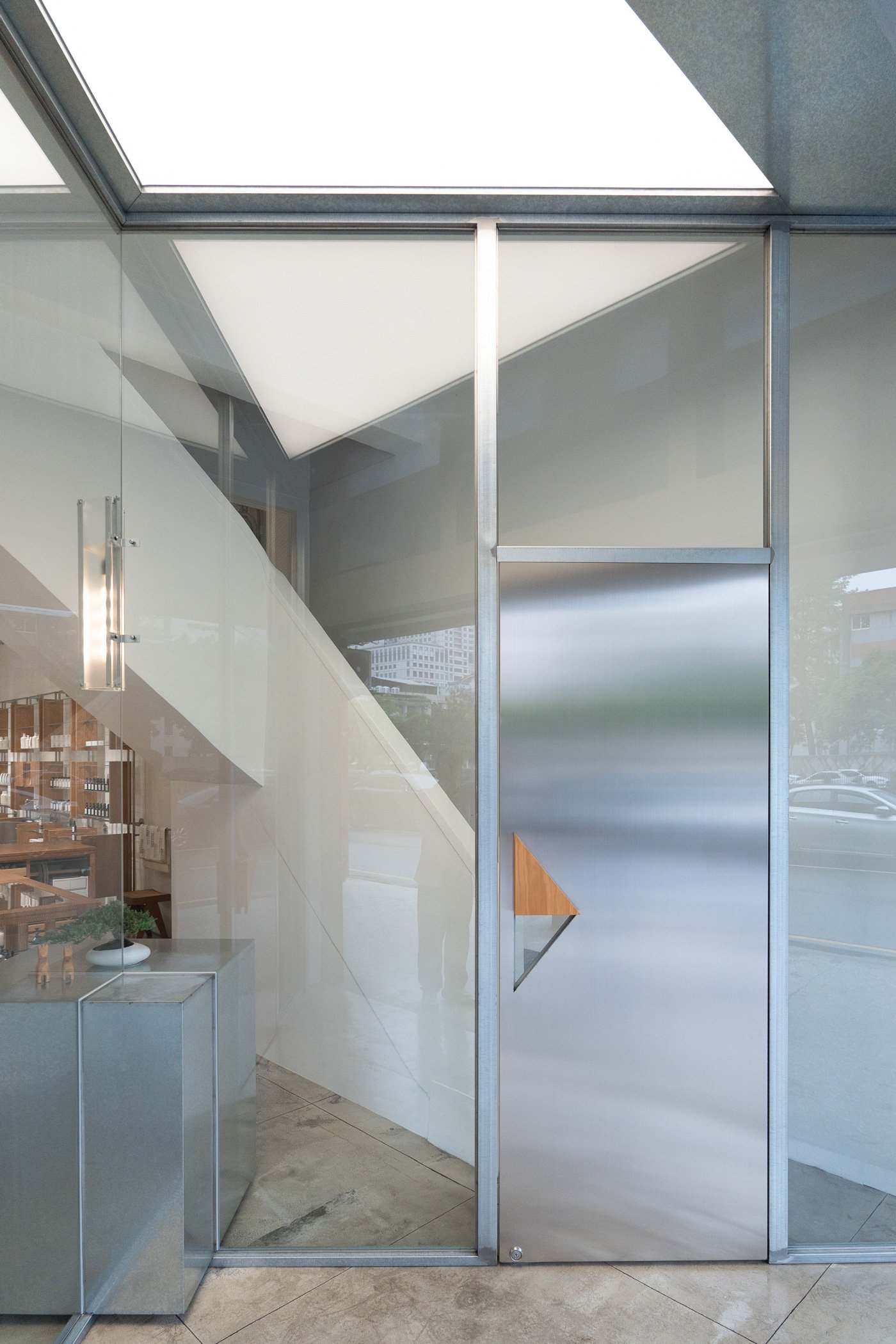
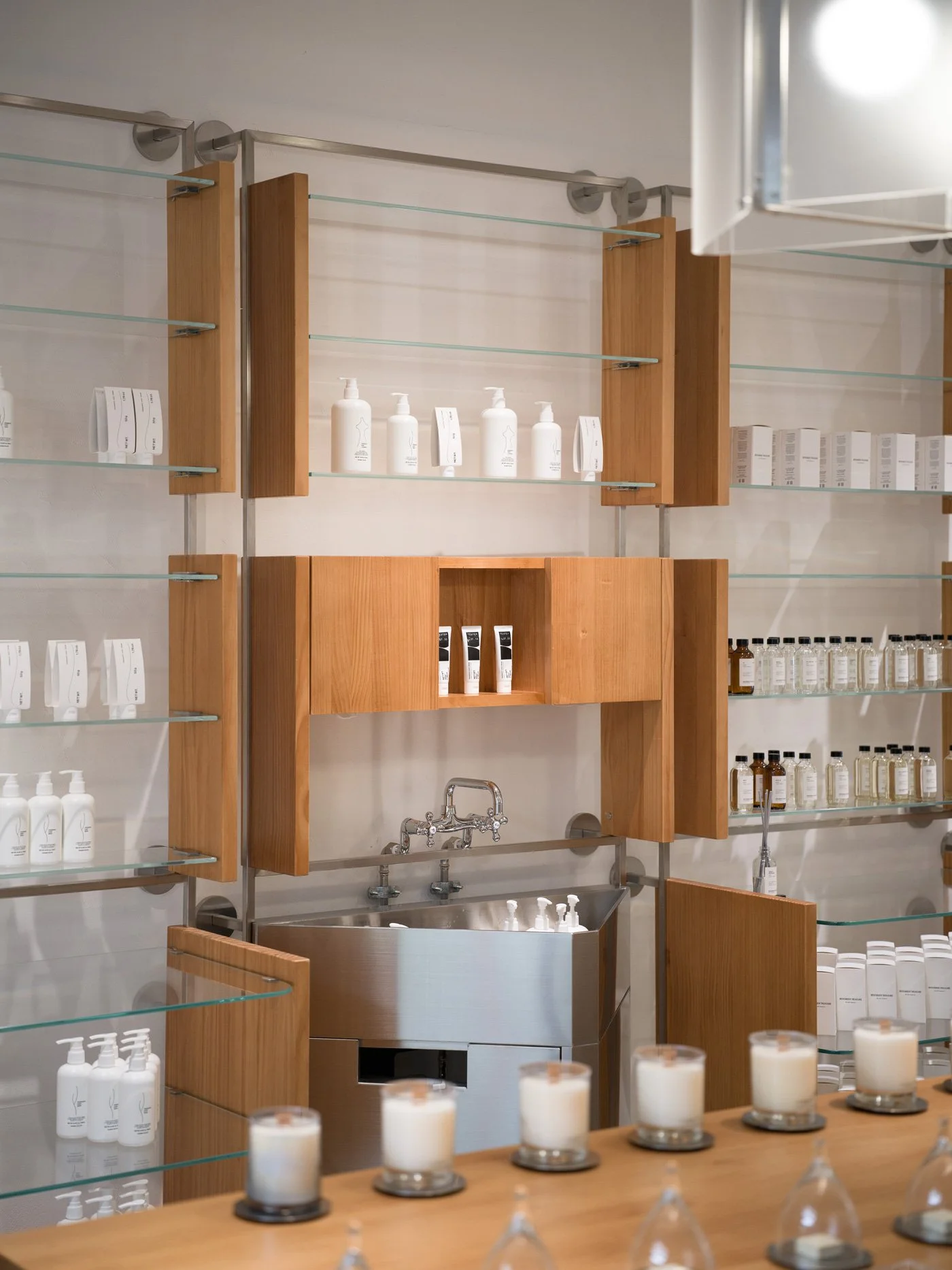
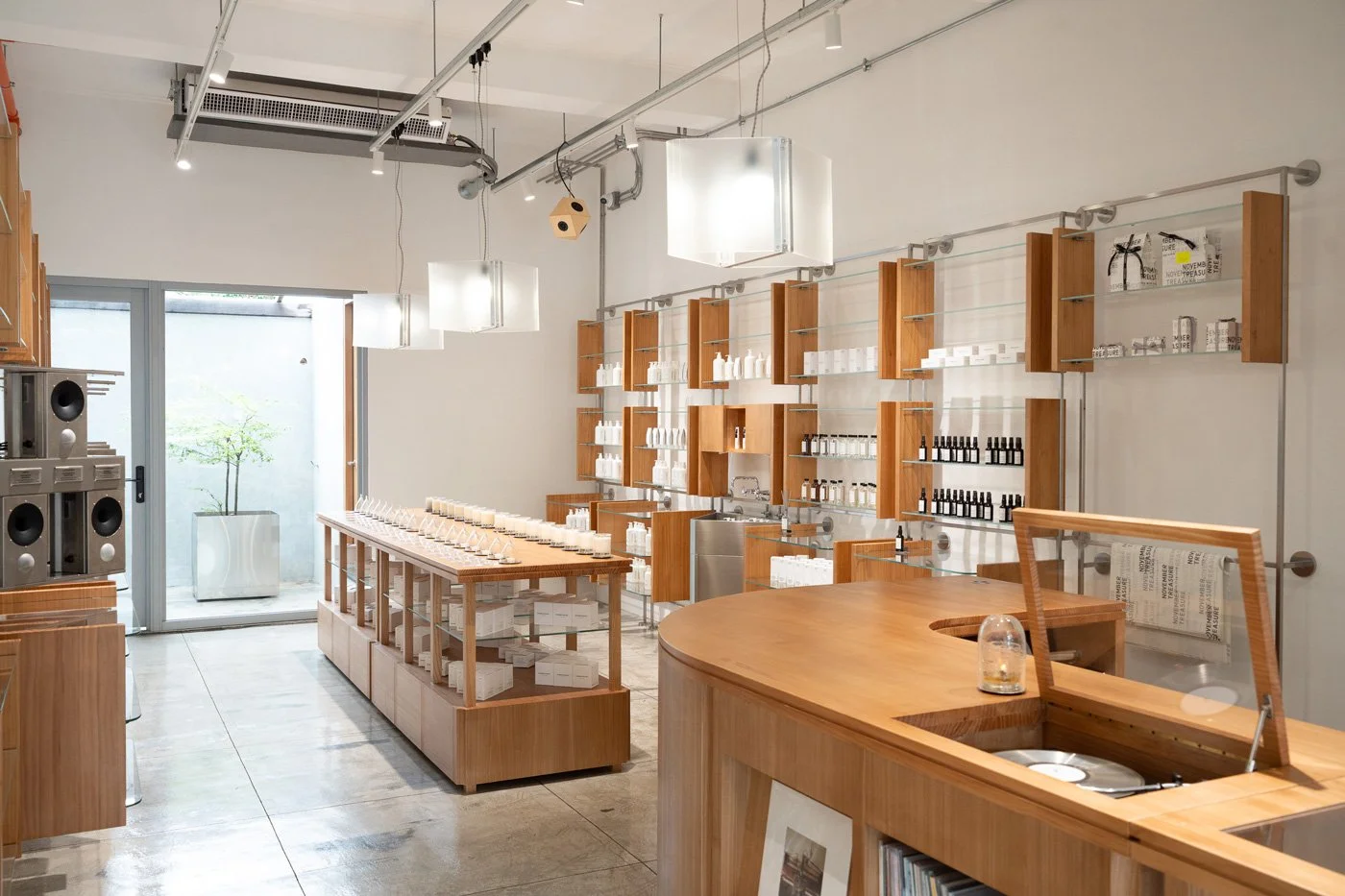
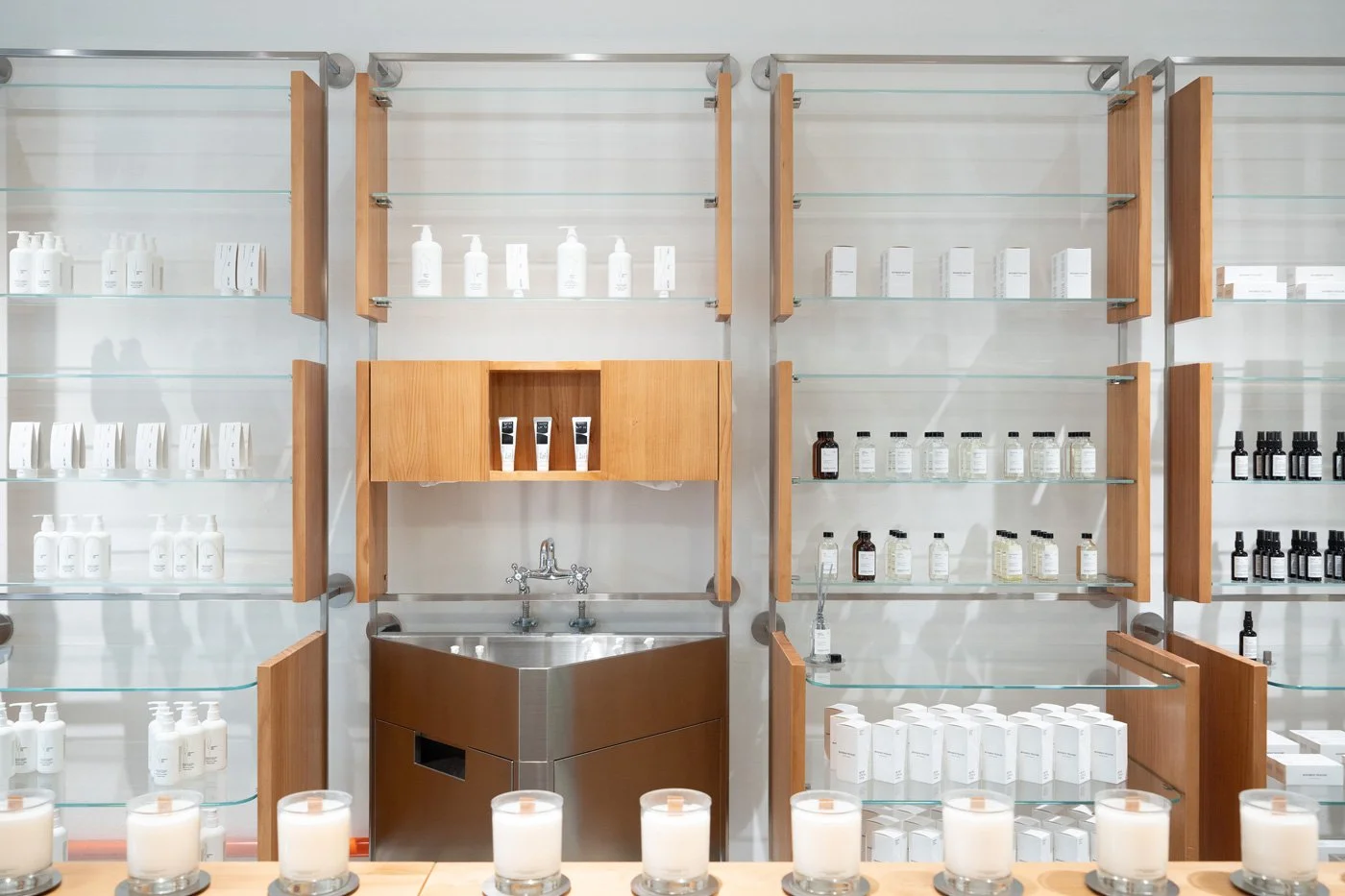
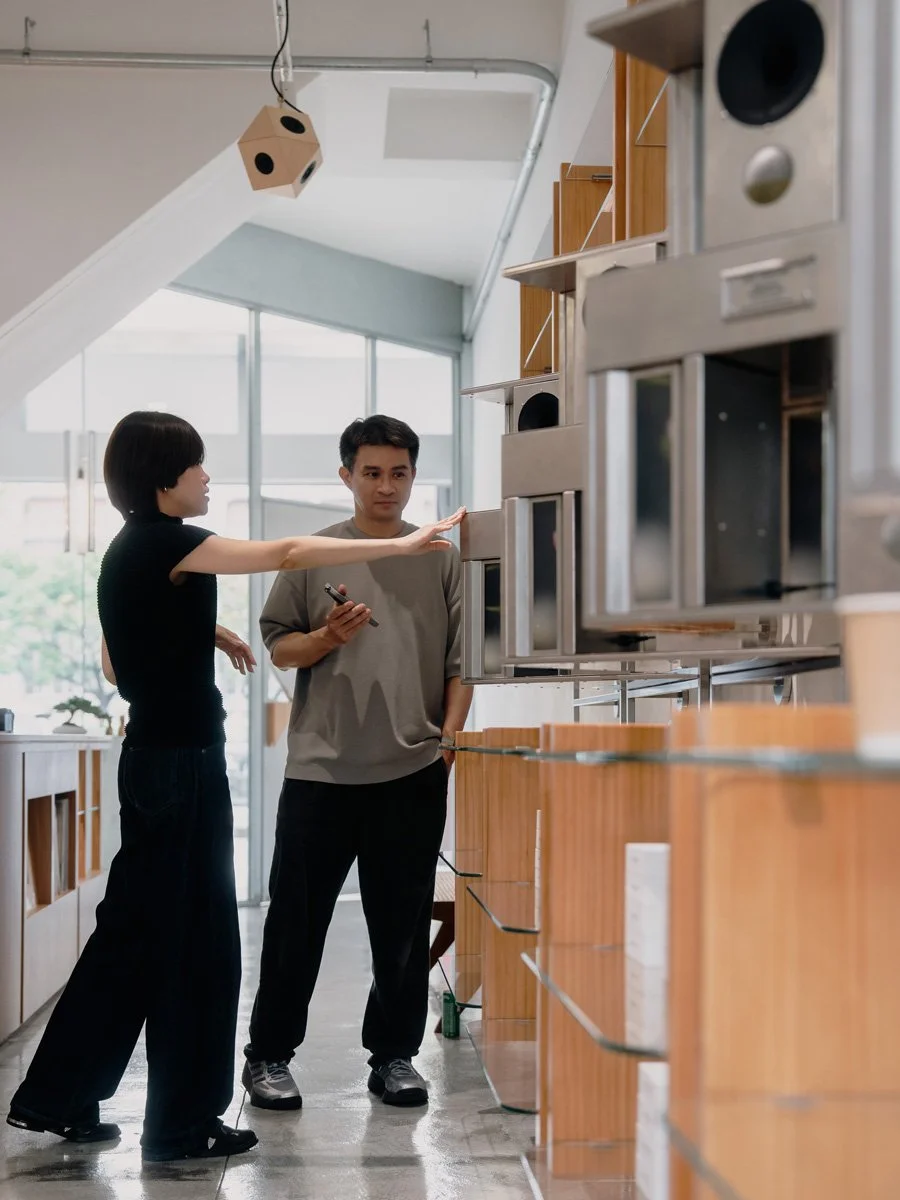
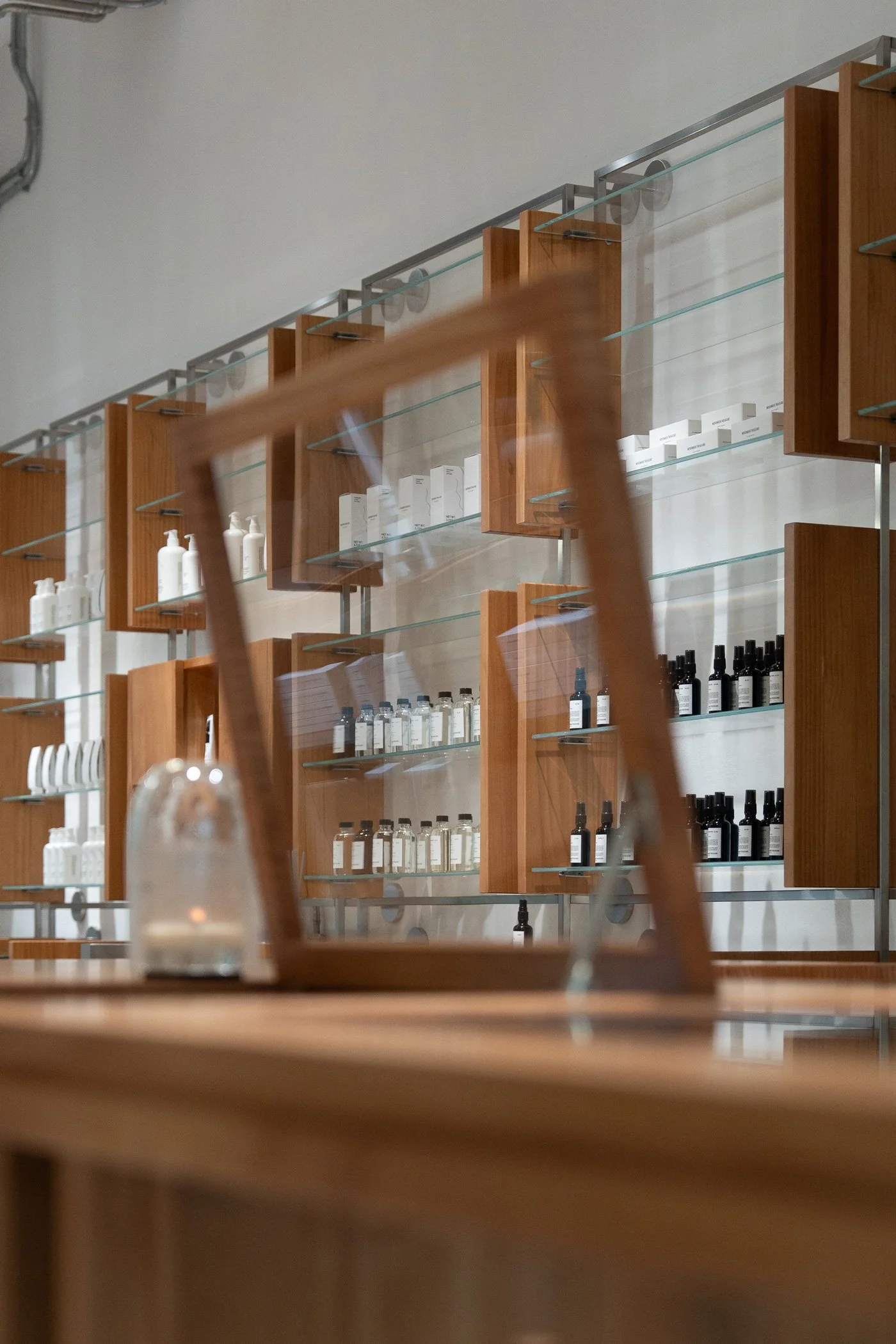
Drawing inspiration from the brand’s original triangular motif, the design transforms geometry into a language and structure that permeates the entire space, supporting the rational framework of this olfactory realm. Stainless steel reflects a cool, restrained luster; glass allows light to penetrate and extend, while wood channels the light, creating gentle, understated layers. The three elements intertwine within the space, layering to create an aesthetic state imbued with a sense of order.
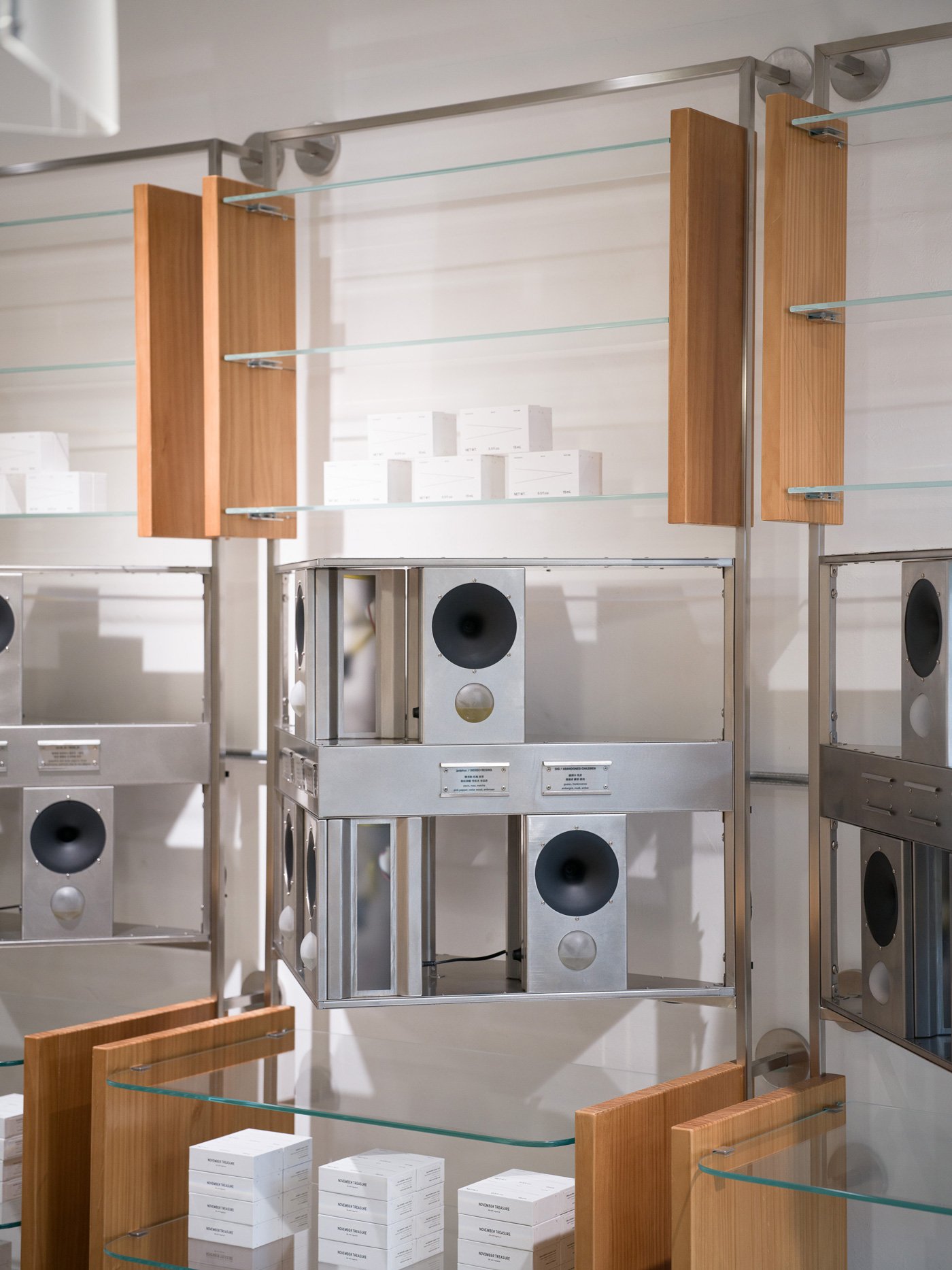
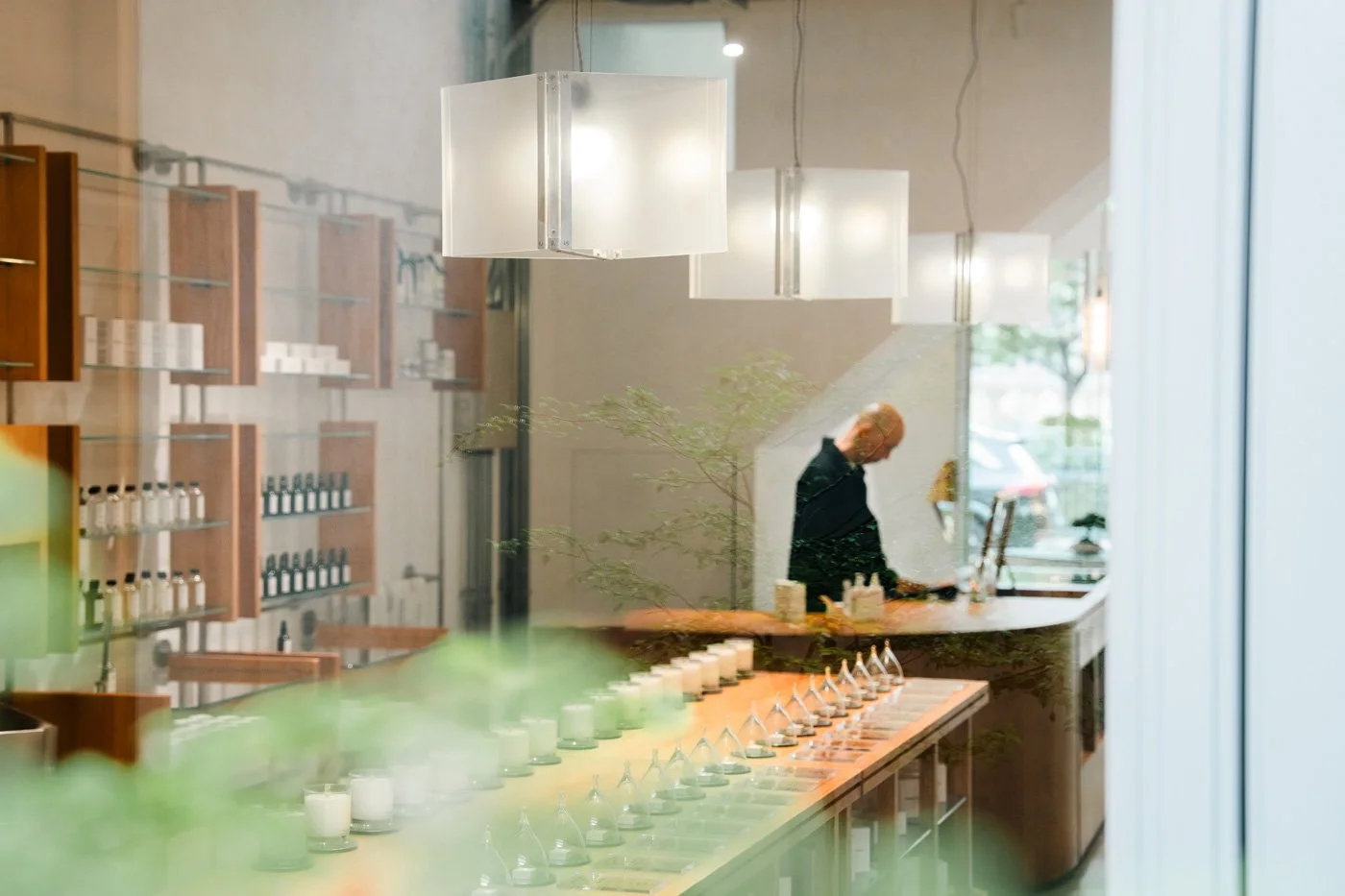
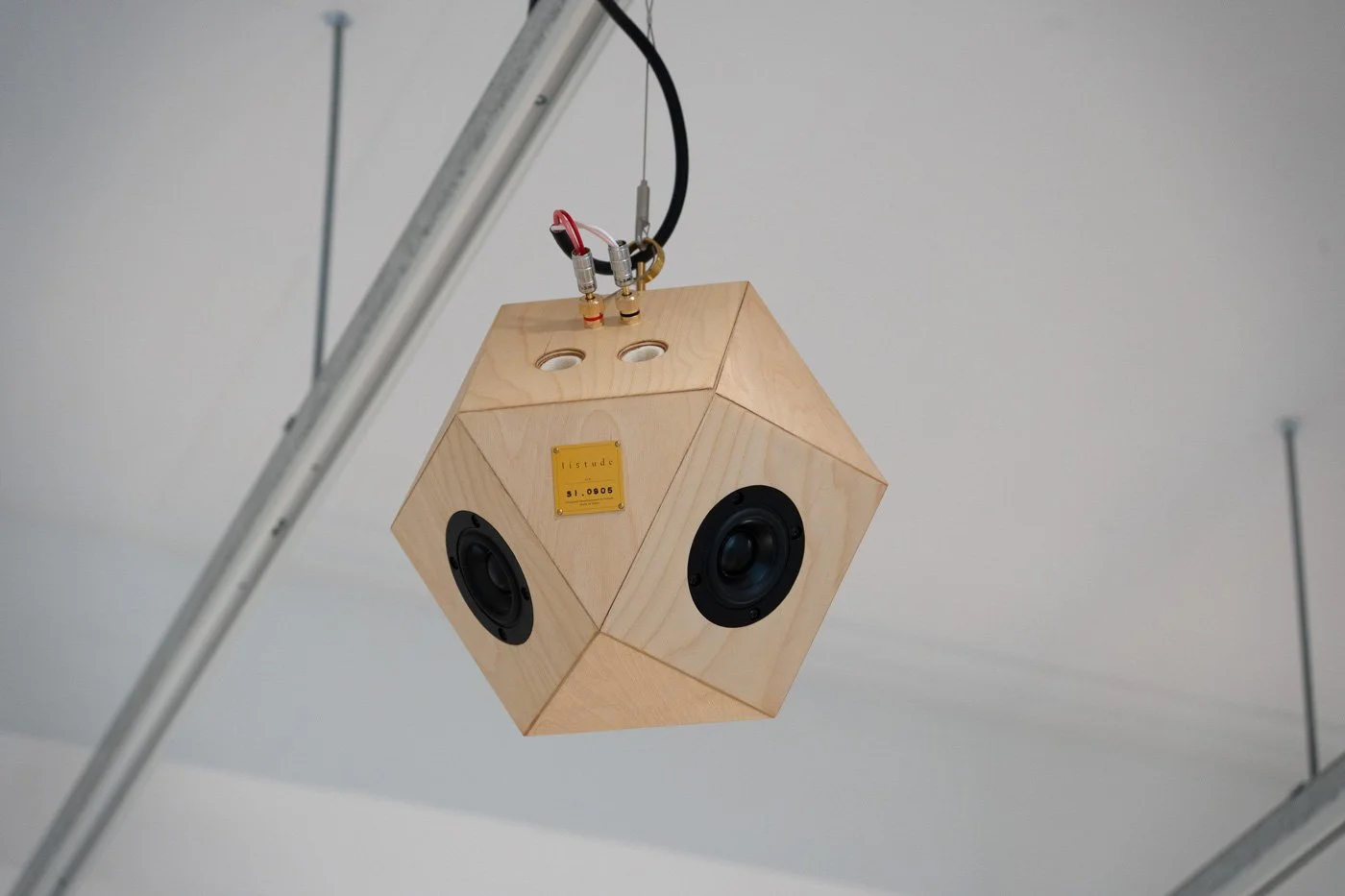
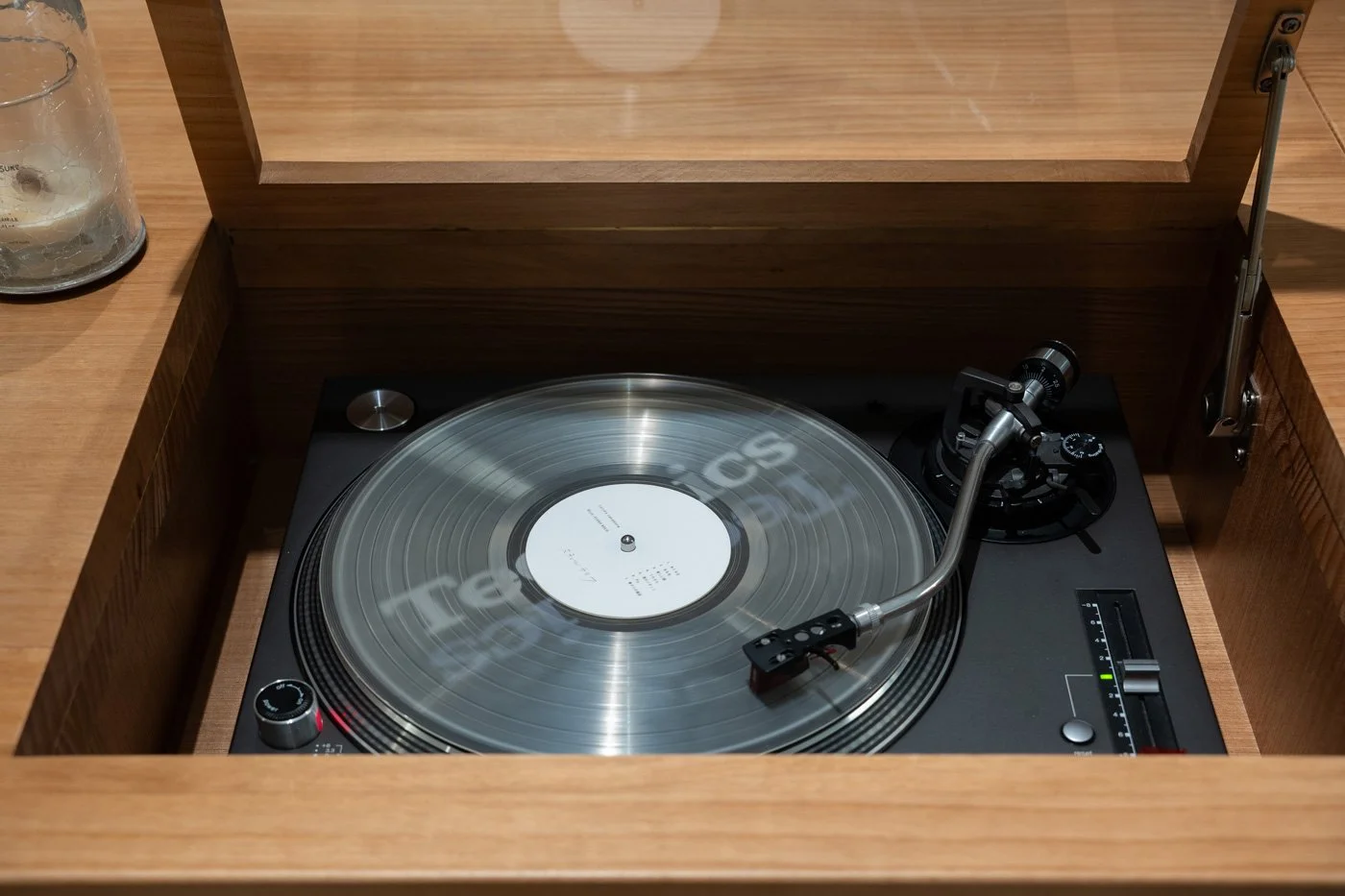
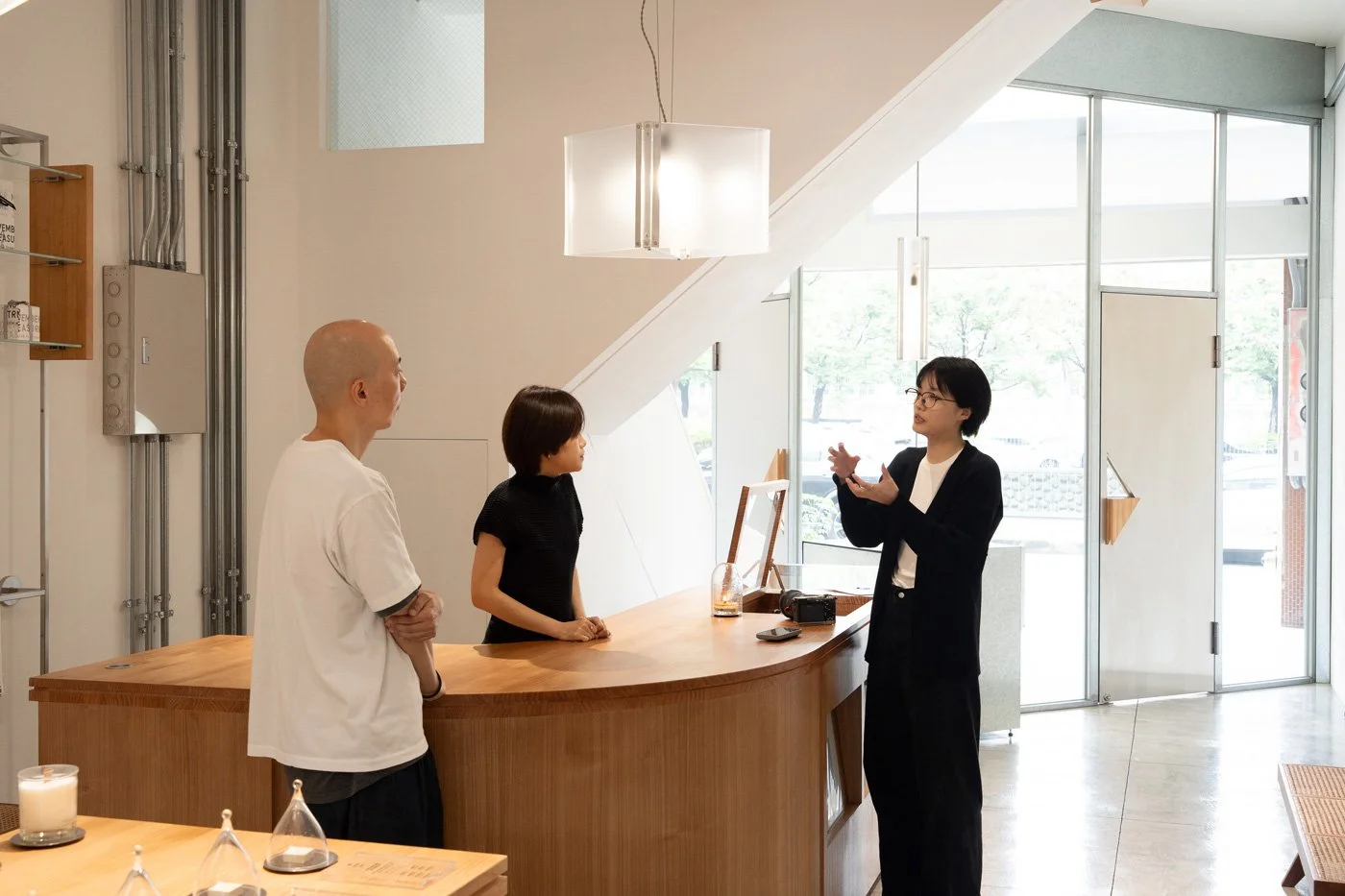
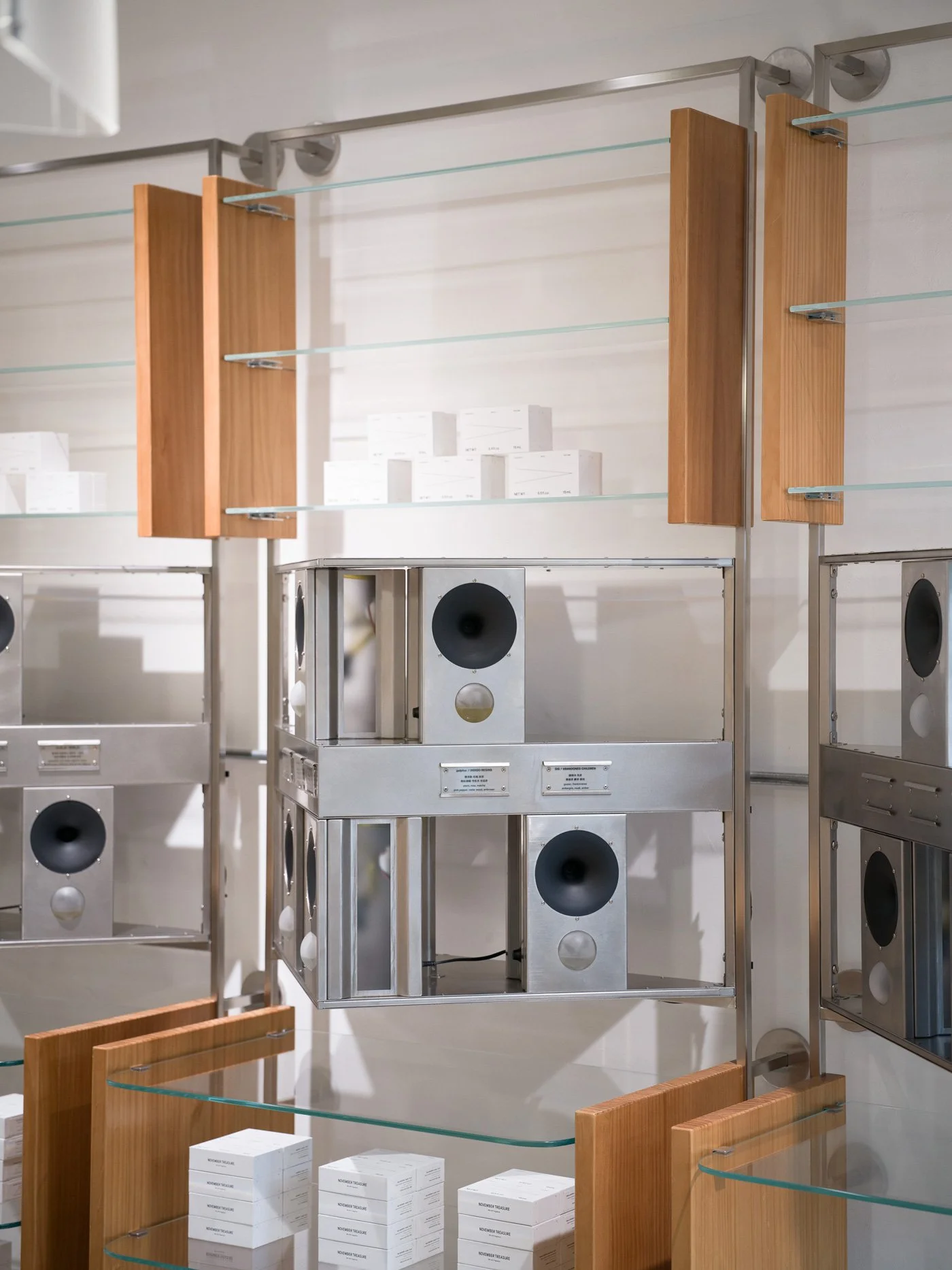
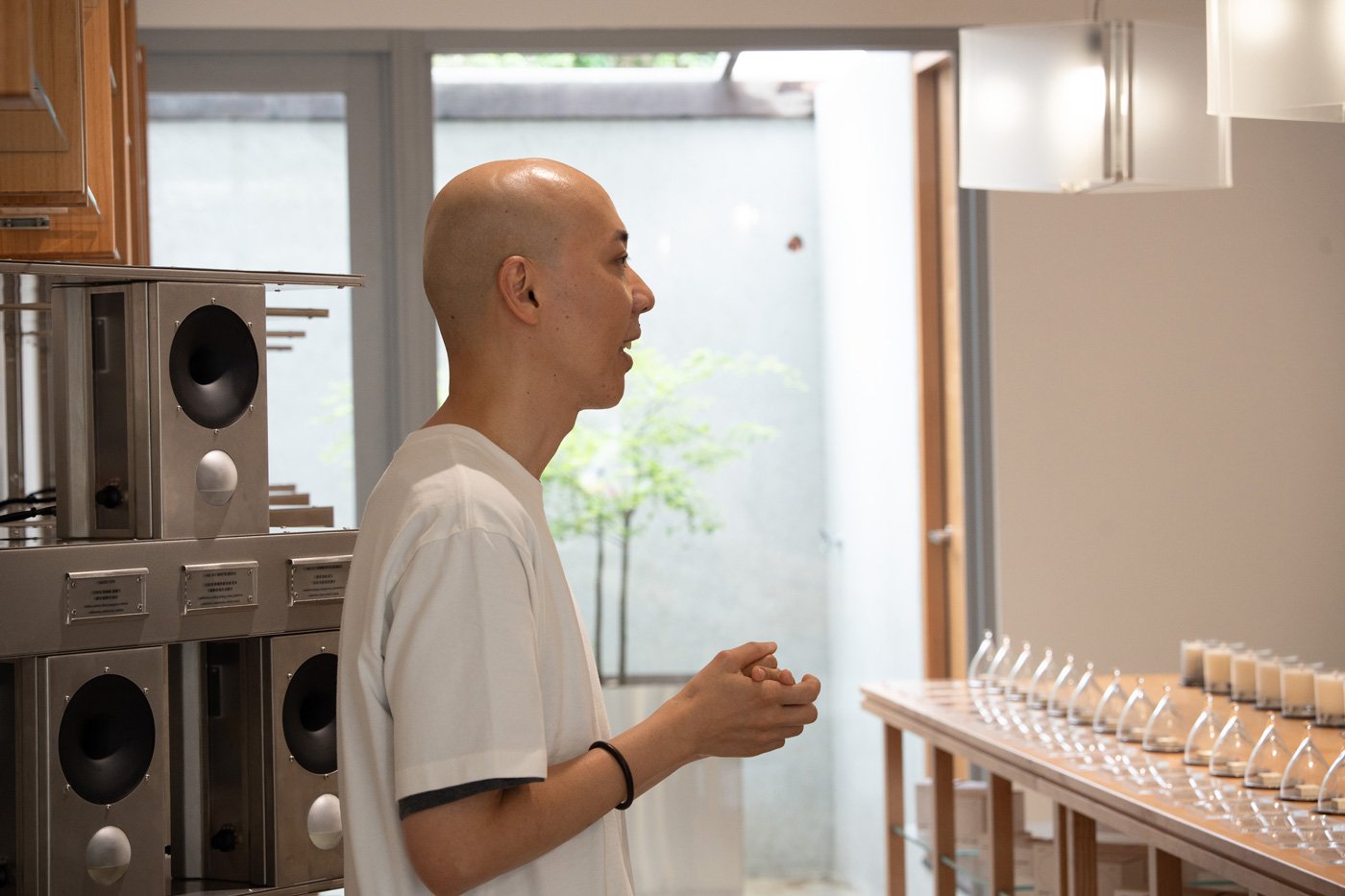
Upon entering, a wooden multifunctional bar—blending vinyl record players with product displays—greets visitors with sweeping, curved lines. Suspended from the ceiling are handcrafted polyhedral speakers from “Listude” in Nara, Japan, which, through the ambient soundscape, subtly hint at the olfactory journey about to unfold. The wall-mounted display and the bespoke triangular stainless steel washbasin present sculptural geometric lines through sharp, clean edges.
The juxtaposition of rounded forms and sharp edges creates a subtle tension between rationality and sensibility. The relationship between different materials is redefined through the interplay of light and shadow and the shifting textures, maintaining a delicate and enduring balance between rigidity and softness. Following the lines and flow extending from the entrance, each element unfolds in mutual resonance, constructing a three-dimensional outline of the brand’s philosophy.
-
Q: From the opening of your first physical store to the launch of this new space, what changes have you noticed in yourselves?
Sam:
In the early days, our budget wasn’t as generous. In fact, because the previous shop was quite small, we designed and arranged everything ourselves. But now, the scale of the new space has exceeded what we can manage on our own, so we decided to outsource the design. The main reason for this move was that the landlord didn’t renew the lease. This involuntary event has actually been a form of growth for us, forcing us to move into the next phase. Had we continued with the previous space, some of the plans we wanted to implement might have been put on hold indefinitely.Nikki:
We used to refer to our first shop as the “cabin”; it had a very cozy atmosphere, but it felt more like a studio. People would see us as a stylish little shop, but they might not necessarily view us as a mature “brand.” In this new space, we’ve combined the “all-metal” elements from our previous SCCP (Songshan Cultural and Creative Park) site in Taipei with the “all-wood” aesthetic of our first physical shop, creating a more contemporary space. We’ve also placed greater emphasis on ‘bespoke’ design; almost all the furniture in the shop has been custom-made for this space.
-
Q: You’ve defined the new space as a “Scent Museum”– what’s the thinking behind this name?
Nikki:
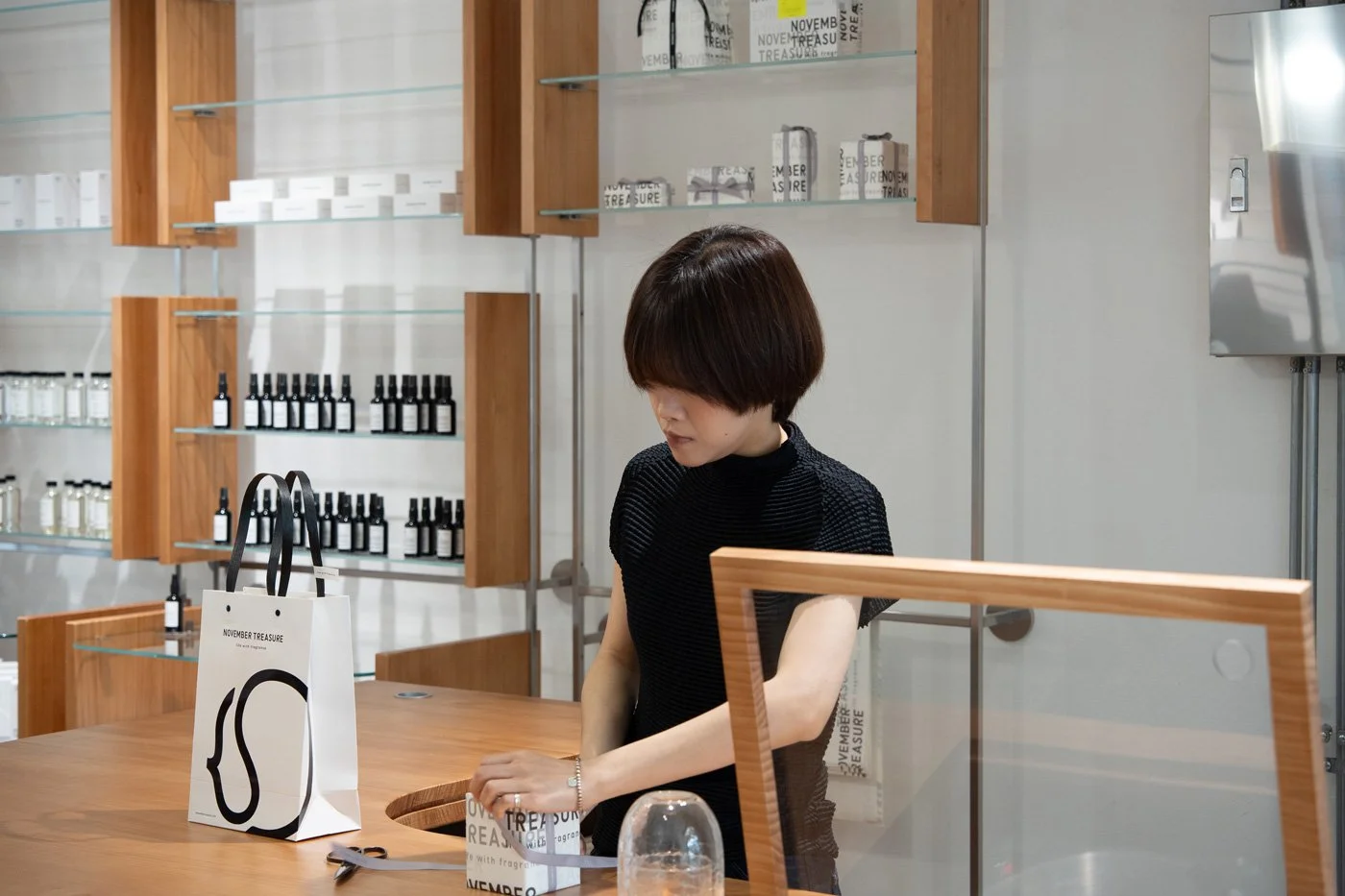
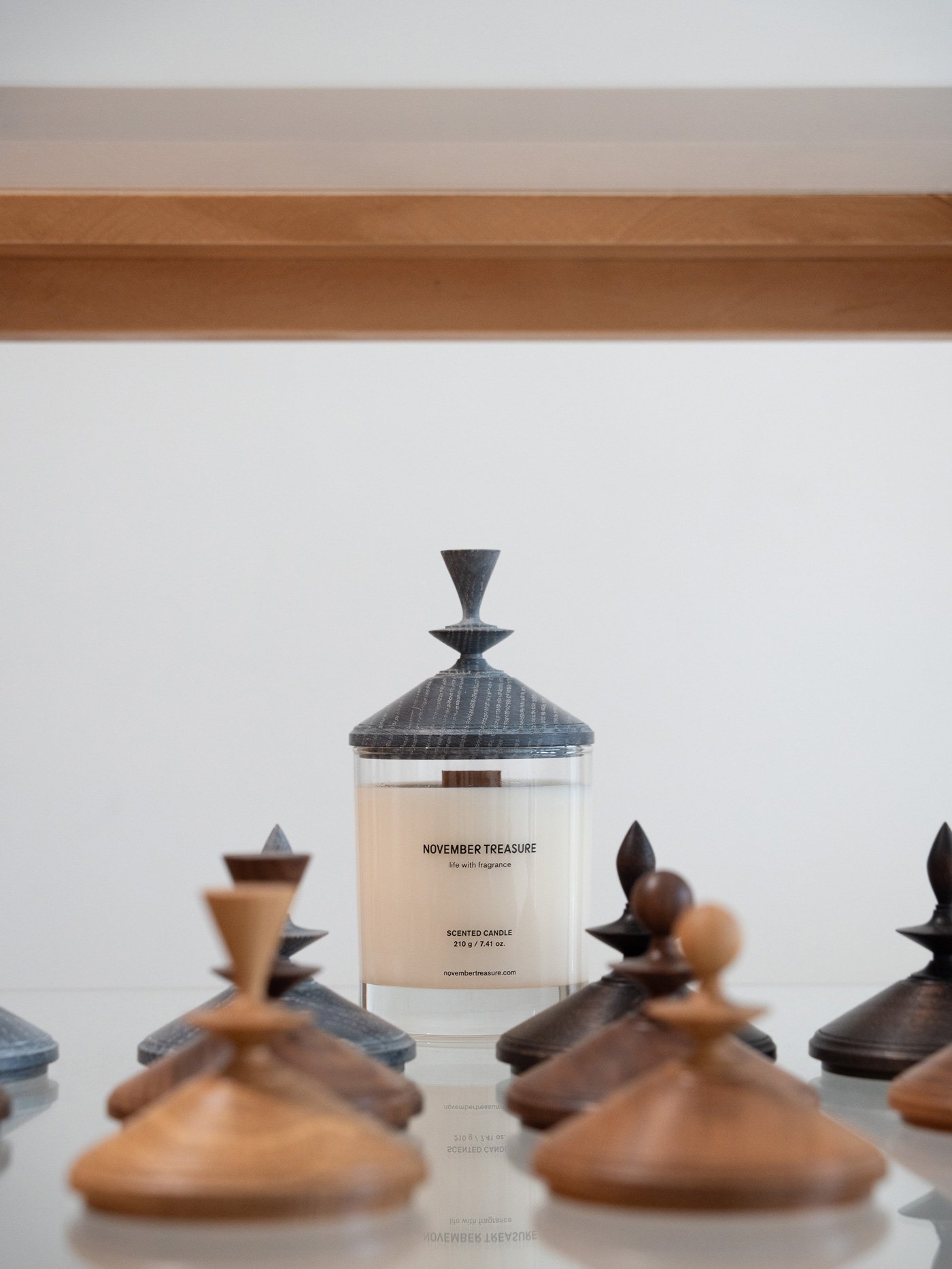
We want every item in this space to be viewed as if it were a work of art. This is also one of the reasons why the shop is so bright and airy, unlike the dimly lit atmosphere of typical fragrance boutiques. The décor is minimalist, with a restrained color palette, specifically designed to draw the focus back to the items themselves—without being distracted by the surroundings. The music plays a significant role in guiding guests into the space; elements such as vinyl records and hi-fi systems were key features we decided to include right from the start. From the moment guests step inside, we provide them with a comprehensive tour. As we have many regular customers, we want everyone to experience something entirely new, rather than simply a replica of our previous store. We collaborate from time to time with artisans whose work we admire, commissioning bespoke accessories designed to complement our fragrances. When guests take home the fragrance products they have chosen, it feels as though they are taking home a unique “collector’s item.”
-
Light as a carrier of scent, leaving perceptible coordinates within the space
In a world where scents flow, people need an anchor where they can pause and focus, and light thus becomes a vital coordinate within this museum of scent.
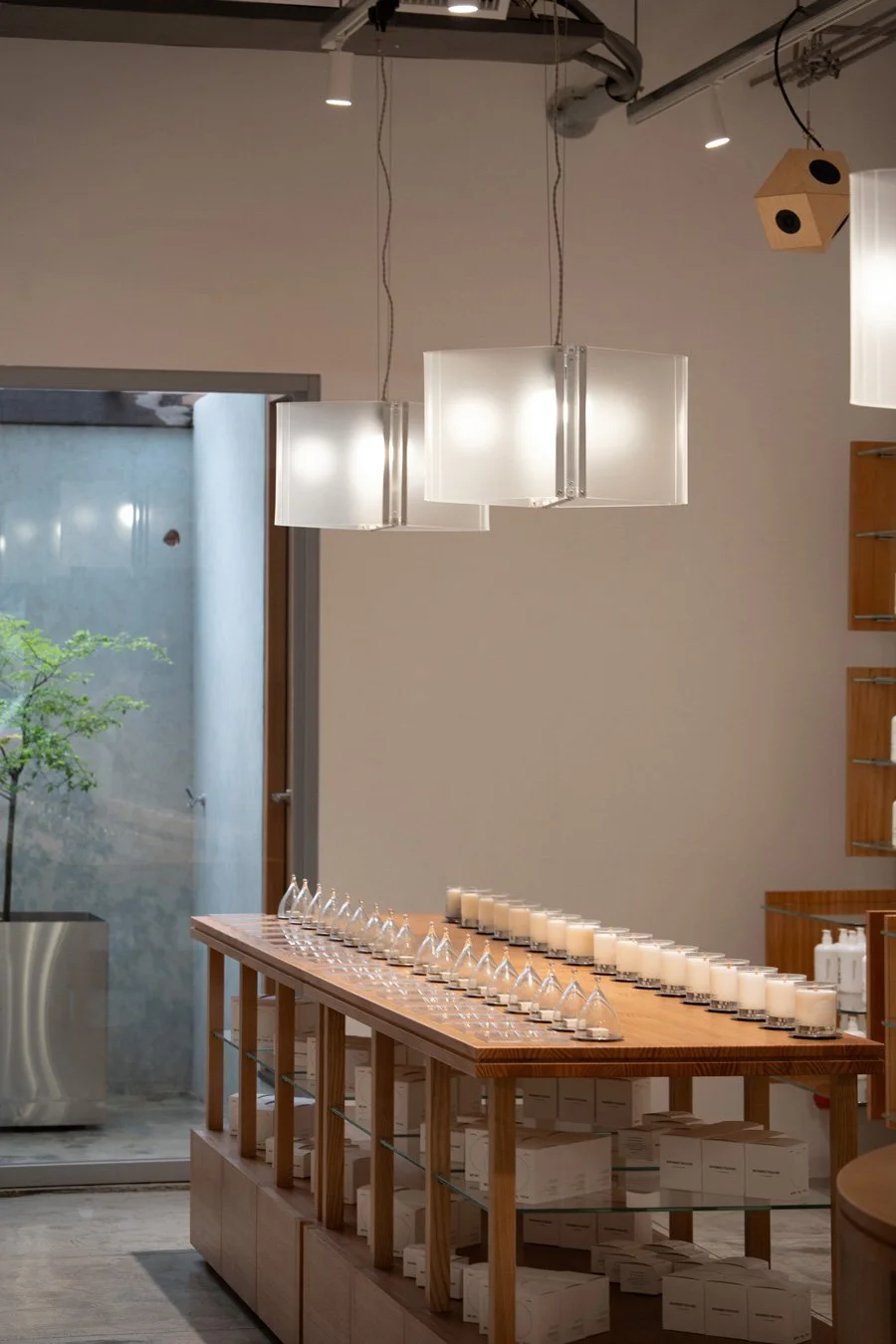
The lighting design, created by “The Undercurrent Object,” features bespoke fixtures tailored to the space. Their appearance does not overshadow the surroundings but rather blends seamlessly as an integral element of the environment. Viewed from the entrance, the luminaires hang along the visual axis, extending straight into the depths of the space, much like the rhythm of unfolding scents. Light permeates and flows through them in layers, ultimately merging like flowing water to harmonize the overall atmosphere.
Nikki:
When we first decided to commission “The Undercurrent Object,” we gave the artisan considerable creative freedom. Throughout the process, we provided only the spatial design drawings and an overall concept for the atmosphere, refraining from interfering with their creative process whatsoever. It wasn’t until the day of installation that we saw the physical fixture for the first time, and the result was an astonishingly perfect fit for the space.

-
Making scent the protagonist of the narrative: a sensory experience that transcends the neutrality of space
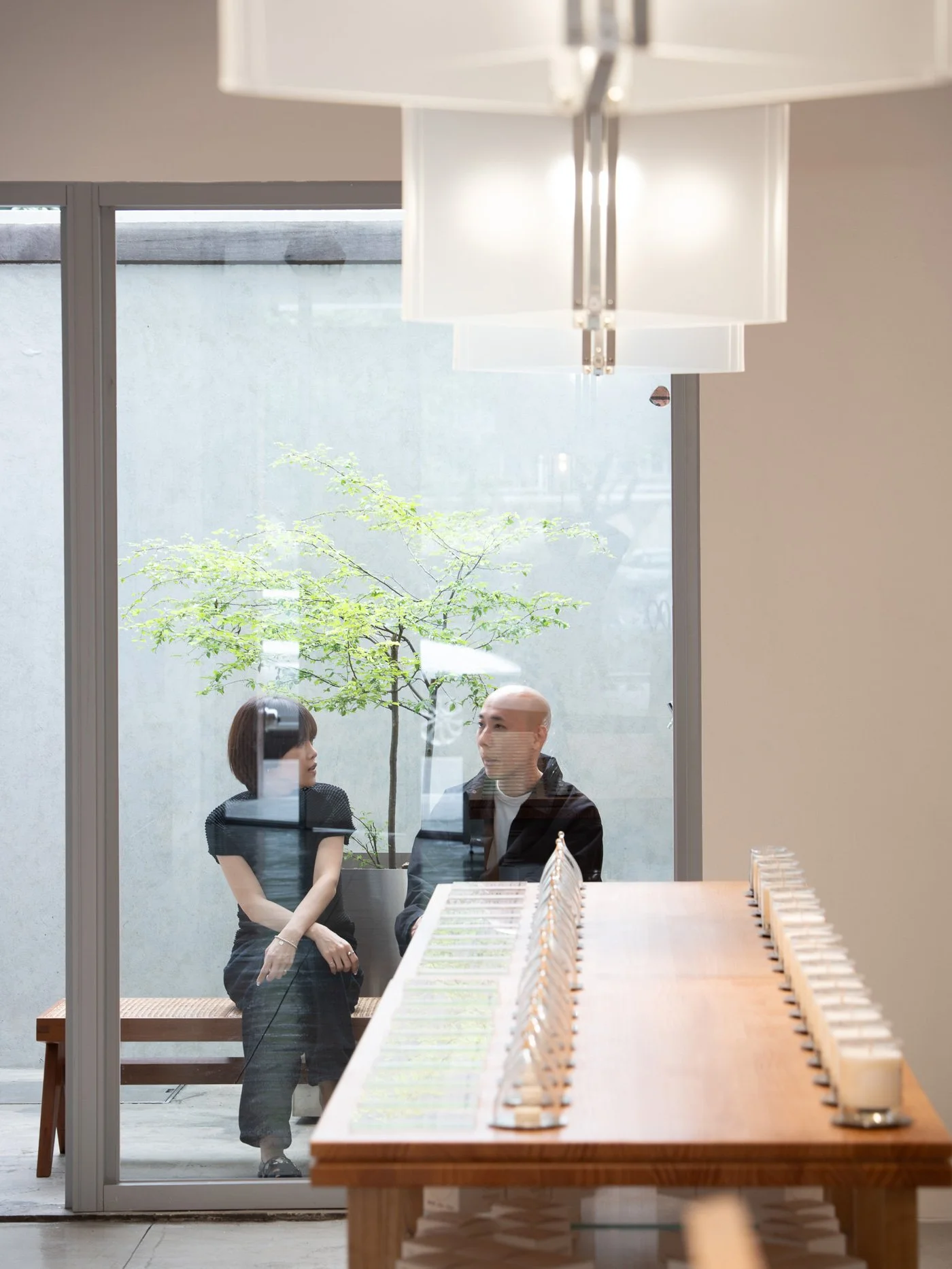
To realize the concept of the “Scent Museum,” November Treasure re-examined the pain points of past scent-testing experiences and chose not to place any open-bottle fragrances within the space. Instead, a dedicated atrium was reserved within the museum for visitors to sample scents.
All scents are contained within specially crafted exhibits, returning the sense of smell to a purer state. With the elimination of mixed odors, every scent-tasting becomes a focused process of connecting with one’s own perception.
Q: Have you ever designed a fragrance that you personally loved, but which failed to meet market expectations or even sold poorly?
Nikki:
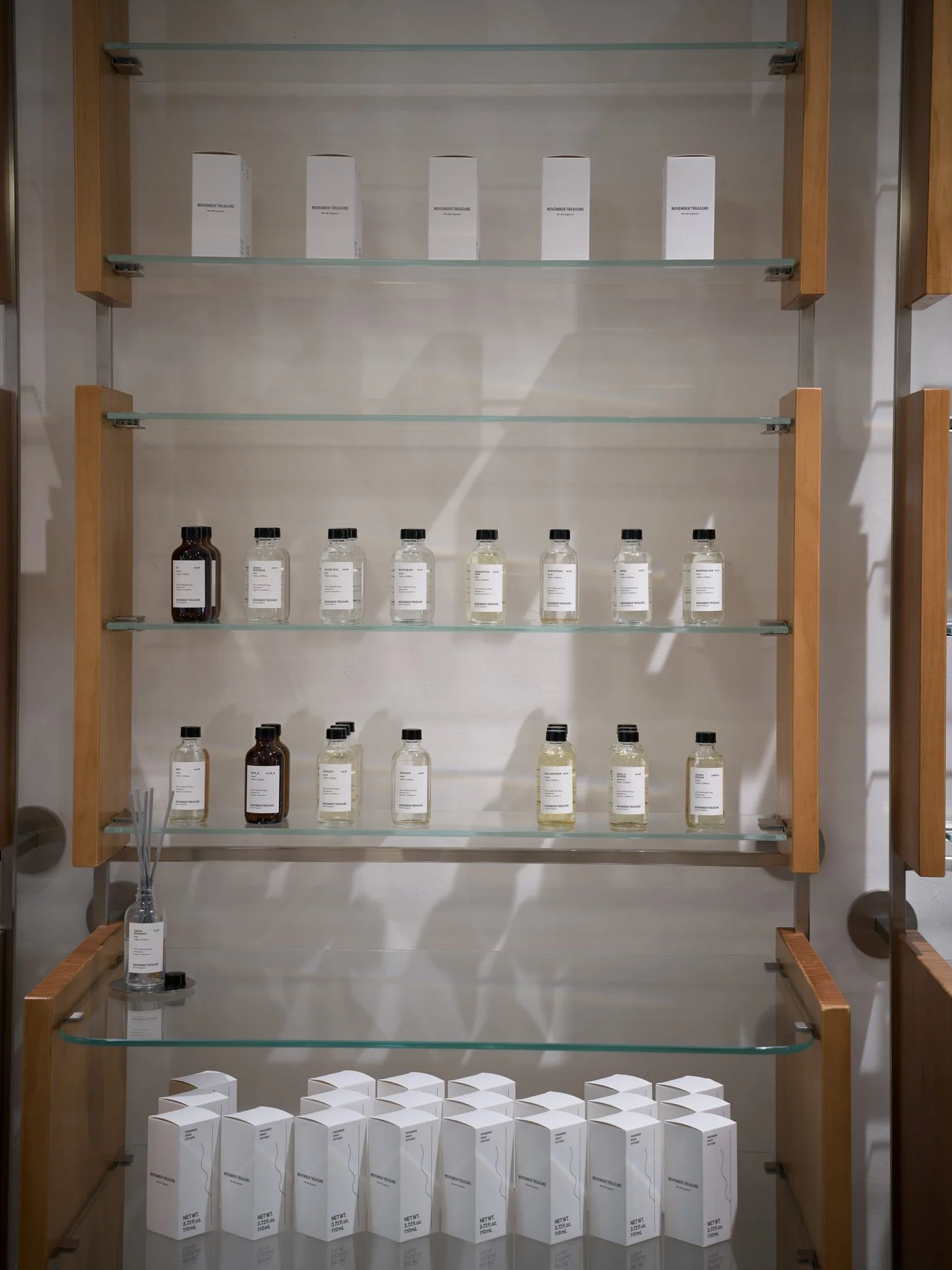
Indeed, there have been. If you look closely at our numbering system, we’re now in the 40s, but there are gaps in the sequence—for instance, it jumps from No. 1 straight to No. 9. Those missing numbers represent scents I personally loved but which didn’t perform well commercially. We regularly review our current range and remove the less popular scents.
-
Q: Do customers ever ask you to recommend less popular scents because they don’t want the same fragrance as everyone else?
Nikki:
In such cases, I’d recommend unique scents that are relatively unfamiliar to most people. Scent is actually quite a curious and subjective thing; when people smell a fragrance, they’re often first drawn to the scents they encountered during their upbringing—the ones most familiar to them from their memories.Q: When designing scents, have you ever tried to revisit the familiar scents from your own childhood?
Nikki:
Yes, in 2019 I developed a fragrance collection called “Diaspora,” which was my attempt to recreate memories of growing up at my grandmother’s house. The collection features three scents: a woody note representing the cypress furniture in my grandmother’s home, the fragrance of magnolias from the garden, and the scent of tomato leaves from the vegetable patch. Those were the scents I missed most whilst studying in the US. I named the woody fragrance directly after my grandmother: “JIAN XIANG.” When it was first launched, many customers were moved to tears upon smelling it. However, as the raw materials for that series are no longer available, I wanted to ensure it was presented in its purest form, so I have temporarily archived it for now.Sometimes, when we smell fragrances from international brands, although they are lovely, they don’t feel like the scents we remember from our past. This is because many floral notes found abroad are not native to Taiwan, so they lack a strong personal connection. Although my grandmother is no longer with us, whenever a customer mentions “JIAN XIANG,” I feel as though she has been preserved in my life in a different way.
-
Q: How do you go about recalling and recreating the scents from your memories?
Nikki:
I actually spent a long time creating the “Diaspora” series, drawing on memories of my childhood with my grandmother and visualizing the spaces in her home. We rely heavily on sight these days, but olfactory memories run deep; they act as a ‘trigger.’ The moment you smell something; it instantly transports you back to the feelings of that specific moment. This is also something I do when designing fragrances: I first imagine the sensation a scent should evoke, visualizing a scene in my mind before blending the fragrance.
-
Resonance between the senses: a concerto composed of scent and sound
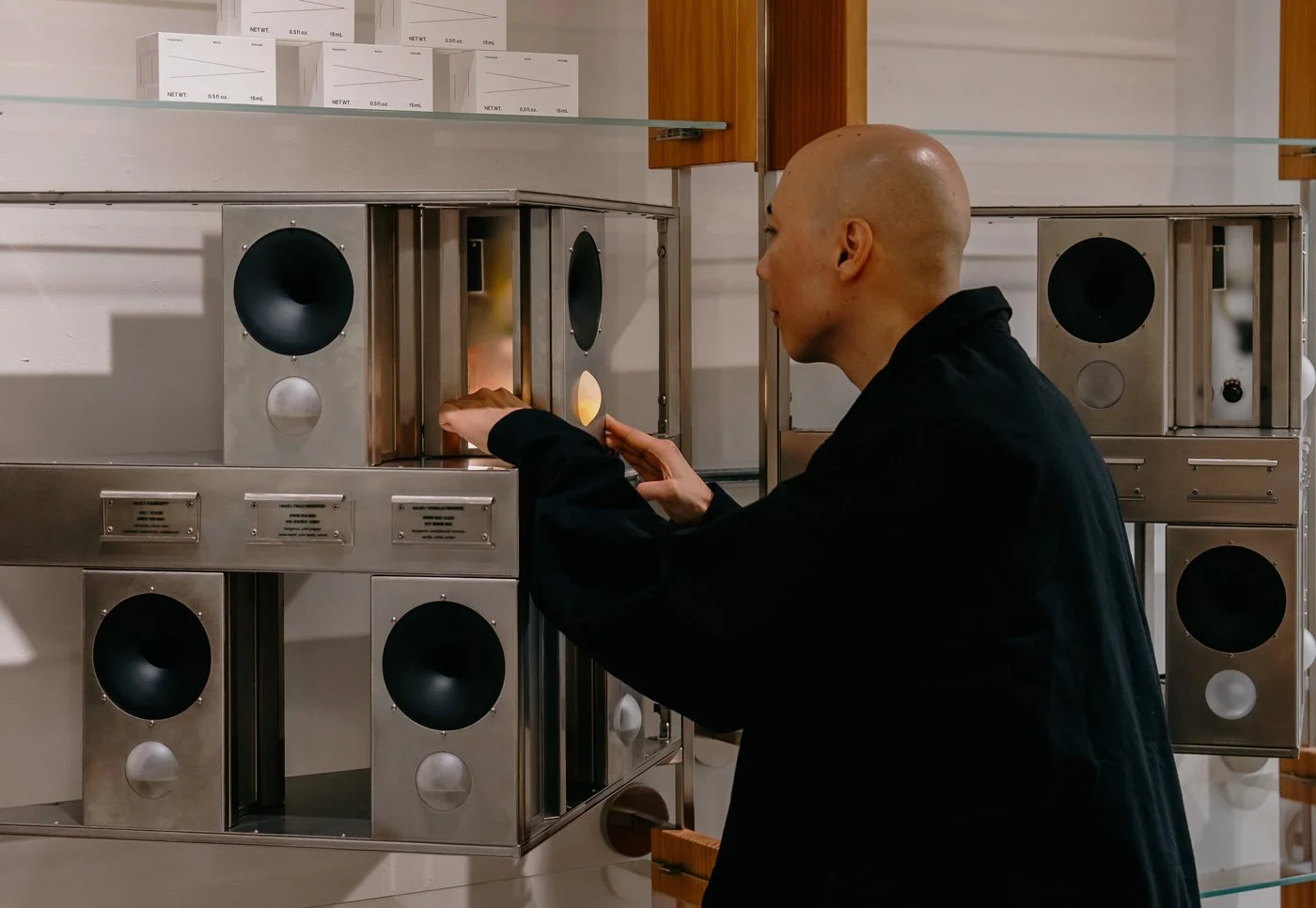
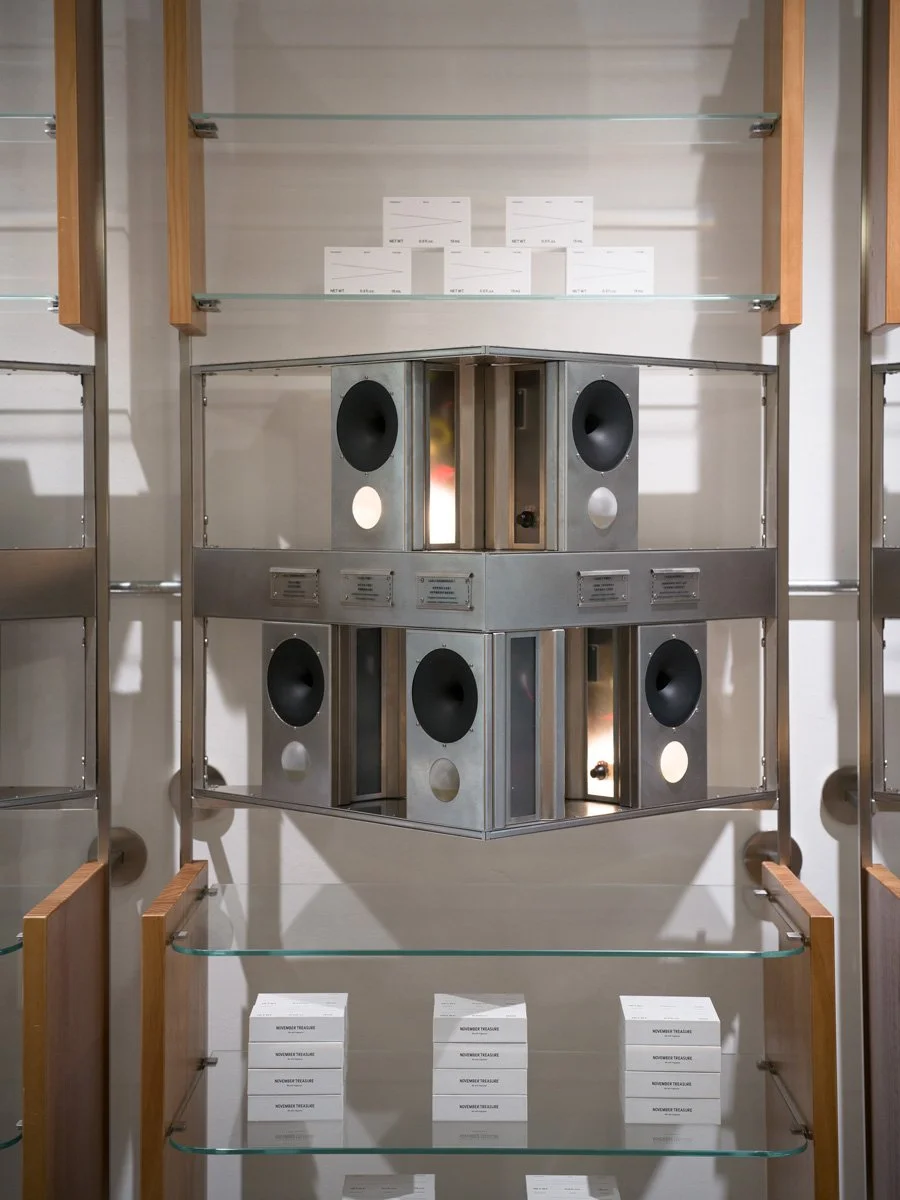
The centerpiece of the collection is the “Scent Resonance” device, developed in collaboration with Not Found Object, a Taiwanese experimental brand specializing in bespoke objects.
This speaker-like installation transforms the top, middle, and base notes of a fragrance into high, mid, and low pitches. The moment the knob is turned, an industrial-grade motor propels air, allowing the scent to be perceived in a more three-dimensional way, turning the act of smelling into an interactive experience akin to listening to a complete musical composition.
This design also replaces traditional scent strips, allowing the layers of the fragrance to unfold more fully and simulating the actual variations in intensity that occur when perfume is worn on the skin.
-
Crafting miniature scent fields within the exhibits
The display stand showcases scent-based exhibits co-created by the brand and Taiwanese and Japanese craftspeople.
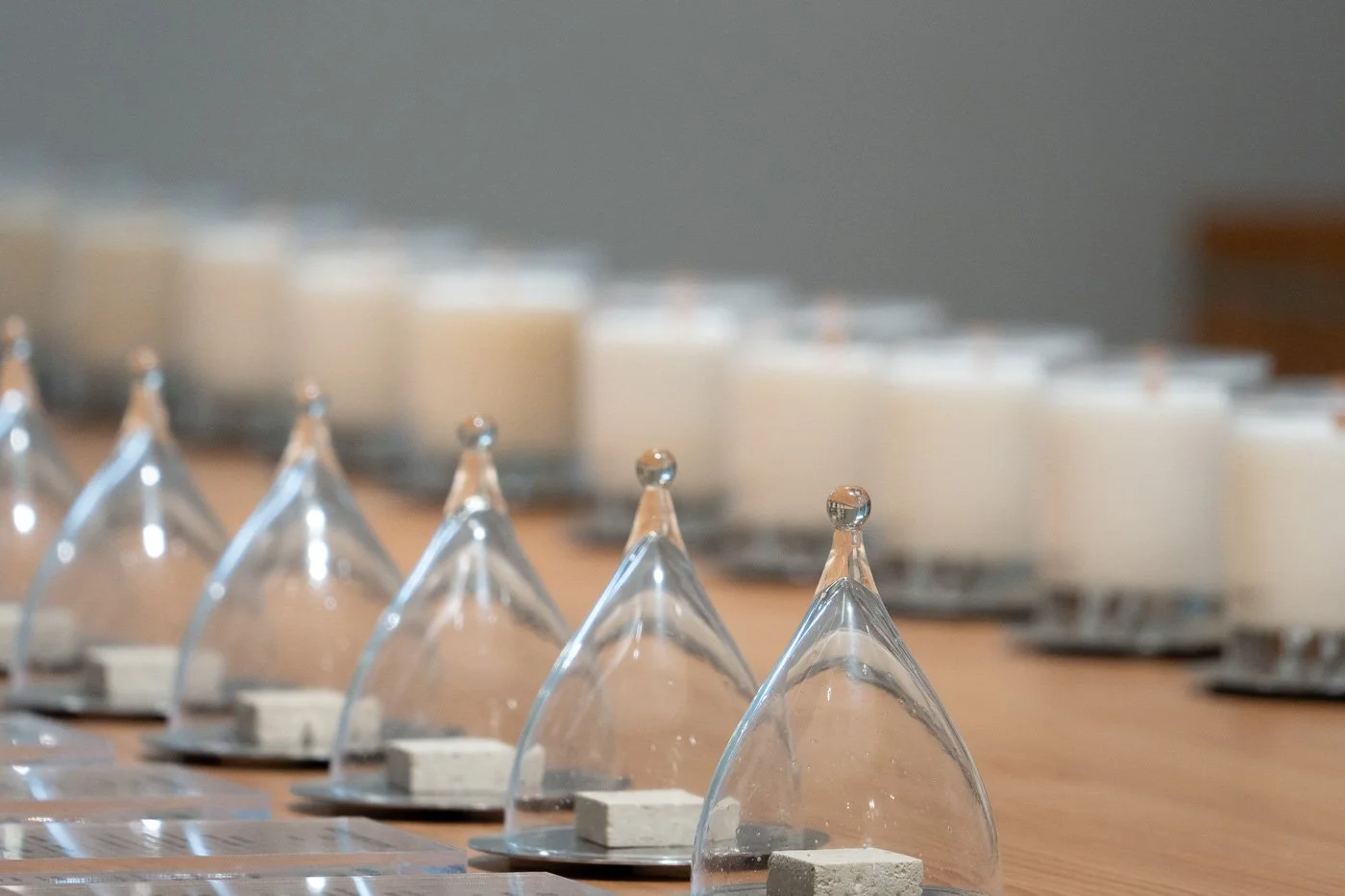
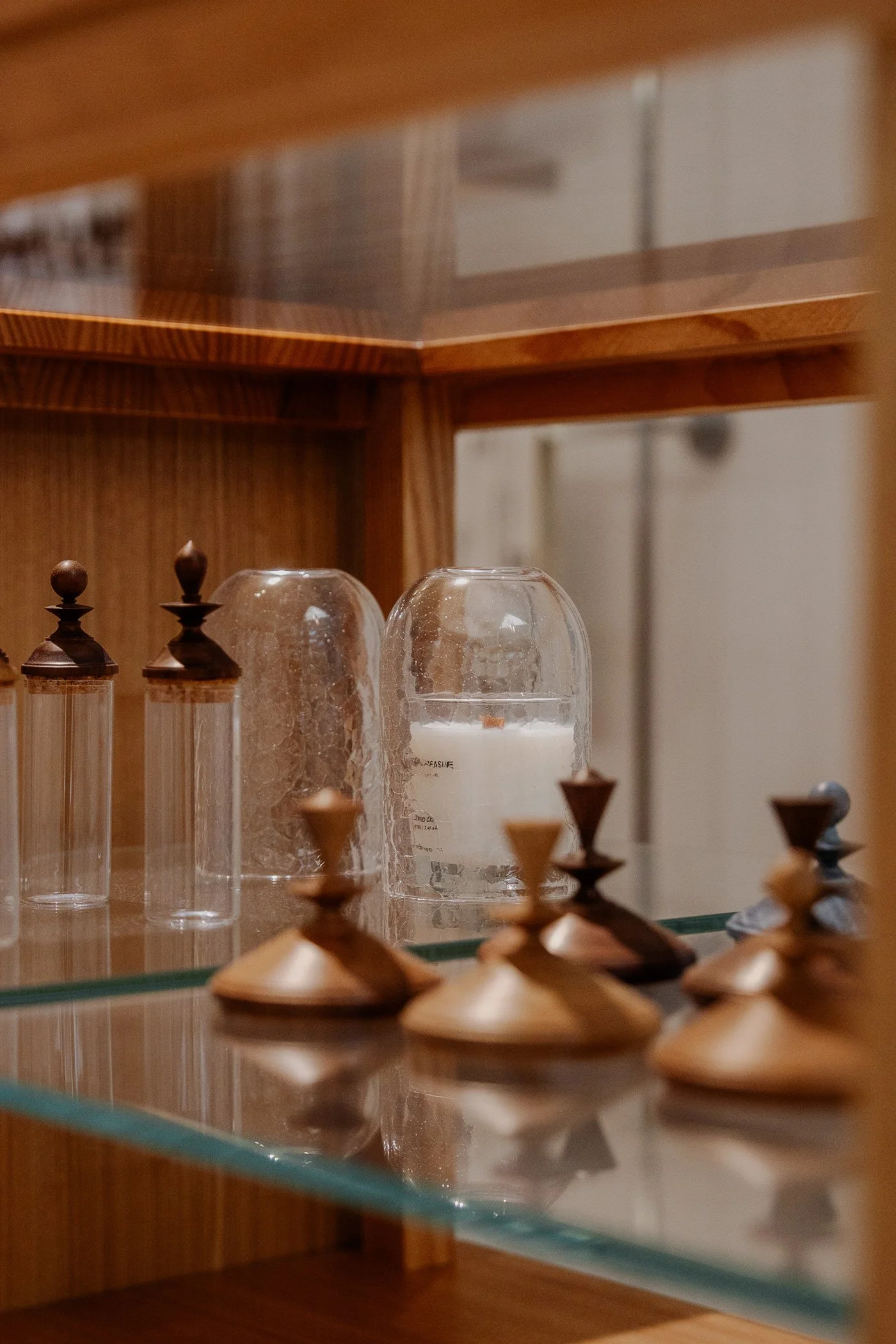
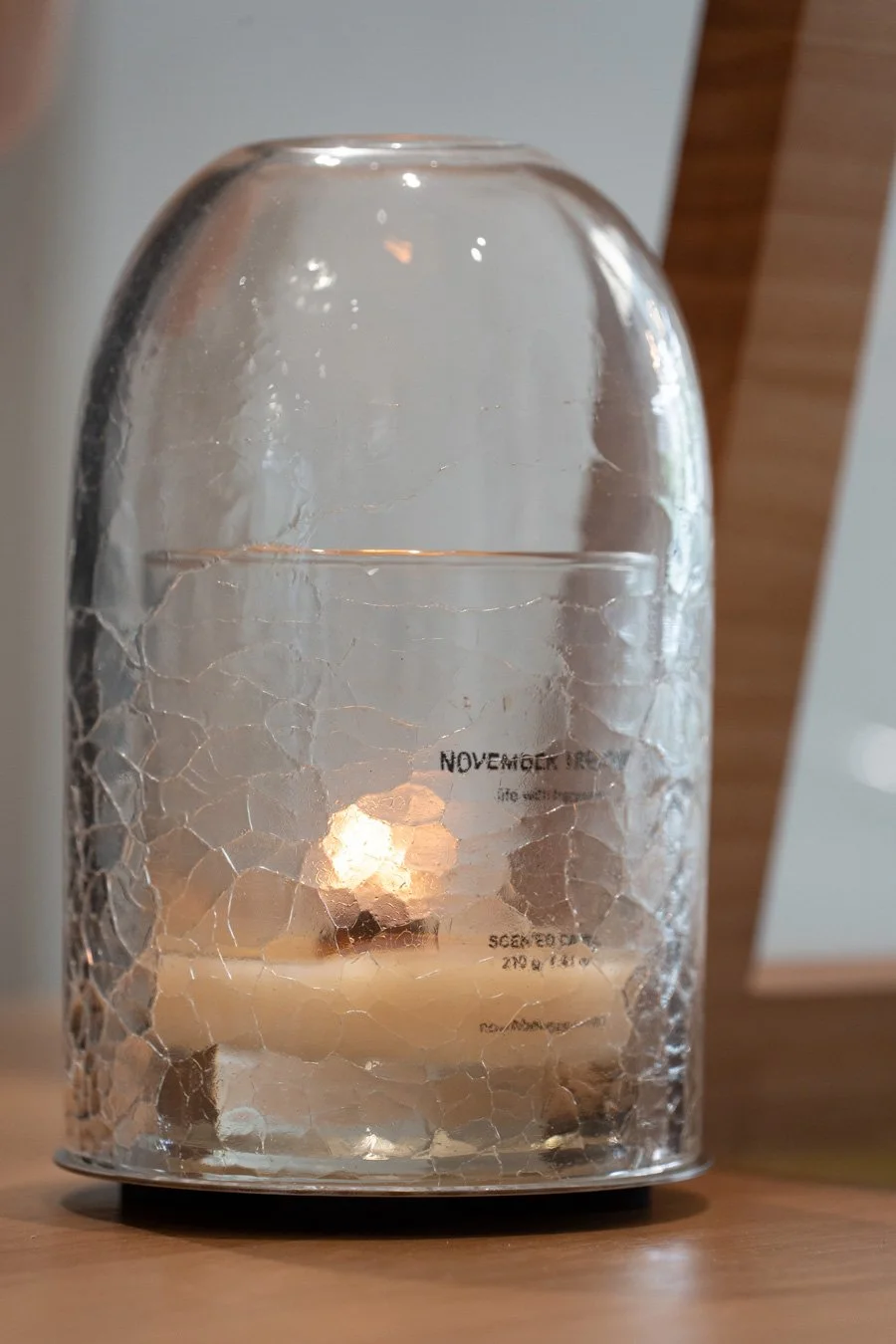
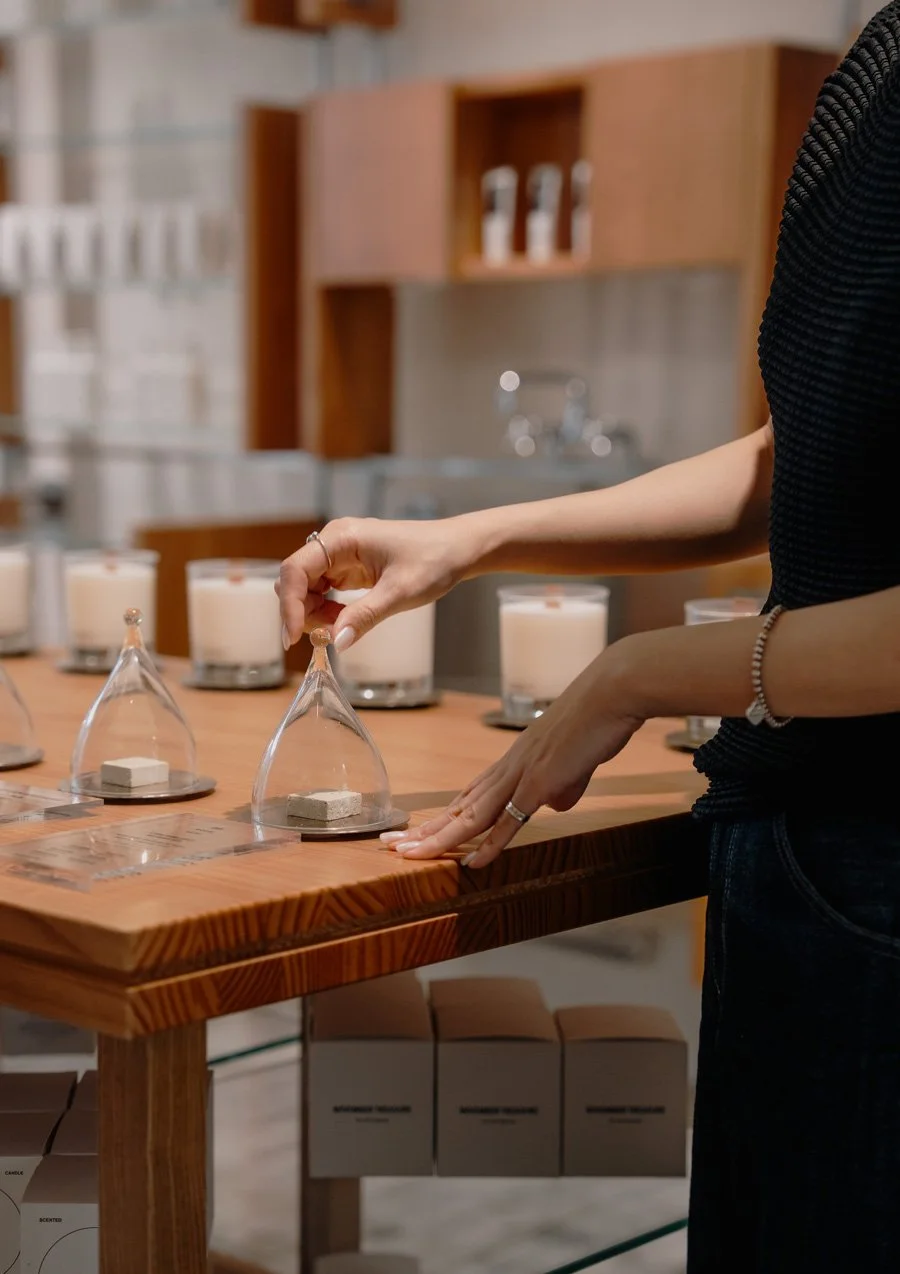
The mouth-blown glass dome, crafted by Taiwanese glass artist Din You-Wei, is adorned with droplets of water, infusing a subtle sense of life into its minimalist form. Its substantial feel and lever-based design make the act of flipping the dome to smell the fragrance light and fluid. Inside the glass dome rests a scent cube crafted by Japanese ceramic artist MO’STO. Its sponge-like capillary structure ensures a steady and sustained release of fragrance. The moment the glass dome is gently lifted, it feels as though a miniature world has been cradled in the palm of one’s hand.
Q: When selecting craftspeople to collaborate with, do you have any specific criteria? How does the entire planning and communication process typically unfold?
Nikki:
For every collaborative project we undertake, the timeline from initial discussions to the final production generally starts from one year, and we do not produce in large quantities. For instance, I’d long wanted a brand-exclusive glass candle shade, so I commissioned Taiwanese glass artisan Ding Youwei to create it. The cracks on this shade echo the design language of the glass window at the entrance to our first shop. I hope that when people use this shade, they’ll feel as though they’re also preserving the memories of that little shop.
-
Sam:
Our approach to selecting collaborators is actually quite intuitive. Whether it’s their creative methods, the elements they use, or their overall design style, if we simply like the work of a particular artisan, we’ll arrange a time to visit them in person. Although modern communication is highly advanced, we dislike the cold, impersonal nature of business collaborations that are finalized through a simple online message. This isn’t driven by commercial interests; we want the merchandise we produce to not only reflect our personal tastes but also serve a practical purpose. Although the production process is often time-consuming, mass-produced merchandise isn’t the direction we wish to take, and our products are quite rare on the market.
-
Q: It sounds as though your business model and journey are quite different from others. How do you handle it when the two of you disagree?
Nikki:
I’m a typical dreamer, while Sam is a doer. Sometimes, as soon as a product is finalized, I’m eager to launch it straight away so everyone can see it. When I used to work alone, I could launch a new product within a month. Now, just as I’m getting excited about a launch, he immediately lists all the potential issues we might face during execution. Hearing that often gives me a real chill down my spine, and I even find myself thinking I don’t want to do it anymore. Because of Sam’s insistence on “Completeness, “the process can be extended to six months or even a year. This is something I need to learn from him. However, if I’m struggling with a fragrance design, he doesn’t tend to push me; he gives me time to sort it out myself.Sam:
Where circumstances allow, I will still try my best to make decisions in a way that Nikki finds acceptable. I assess things from the consumer’s perspective; if a product isn’t fully packaged or I haven’t worked out how to present it to customers, I see that as carrying a certain risk. I prefer to plan things out to a certain extent before moving forward, rather than making changes as we go along. The standard marketing approach often involves launching new products to coincide with festive seasons, but with fragrances, customers should be given the time to experience them properly. As festive promotions have such a short lifespan, I wouldn’t want all the hard work we’ve put into a product to go to waste.
-
Q: As the brand grows, there may come a day when you can no longer handle everything yourselves. What are your thoughts or plans regarding the need to “let go” in the future?
Nikki:
This is certainly a turning point we’ll face in the future. If the brand continues to grow, the proportion of products requiring outsourcing will inevitably increase, and we may well need to take on some assistants. In response to the launch of our new bath and body range, we’ve already begun introducing some outsourcing partnerships; previously, almost everything was handmade and packaged in-house at our studio.Sam:
Actually, what we value most is the connection we’ve built since our market stall days. Many customers who’ve been with us all the way feel a real closeness to our brand. We don’t want the brand to grow so large that, once we’ve scaled up and hired lots of full-time staff, we end up providing a very formulaic service and conducting very standardized sales. We have tried to find assistants to help us, but at the moment it’s really difficult to find someone we both agree on and are happy with. Furthermore, we want this person to be a true representative of the brand, rather than just an employee.
-
The birth of the ‘Scent Museum’ marks a significant turning point for November Treasure, as it transitions from a market-based brand to a professional enterprise. For Nikki and Sam, what people take away from here is never merely a scent, but a collection imbued with the memories of a lifetime.
What the brand conveys is not merely an olfactory experience but an emotional connection shared by people living on the same land. This is not just a shop selling fragrances but a curation of scents that transcends the senses, linking space and memory.