
在折痕與光影間,尋回日常的溫柔:紐約工作室 Vy Voi 如何以手工設計重塑越南文化遺產
© Andrew Bui
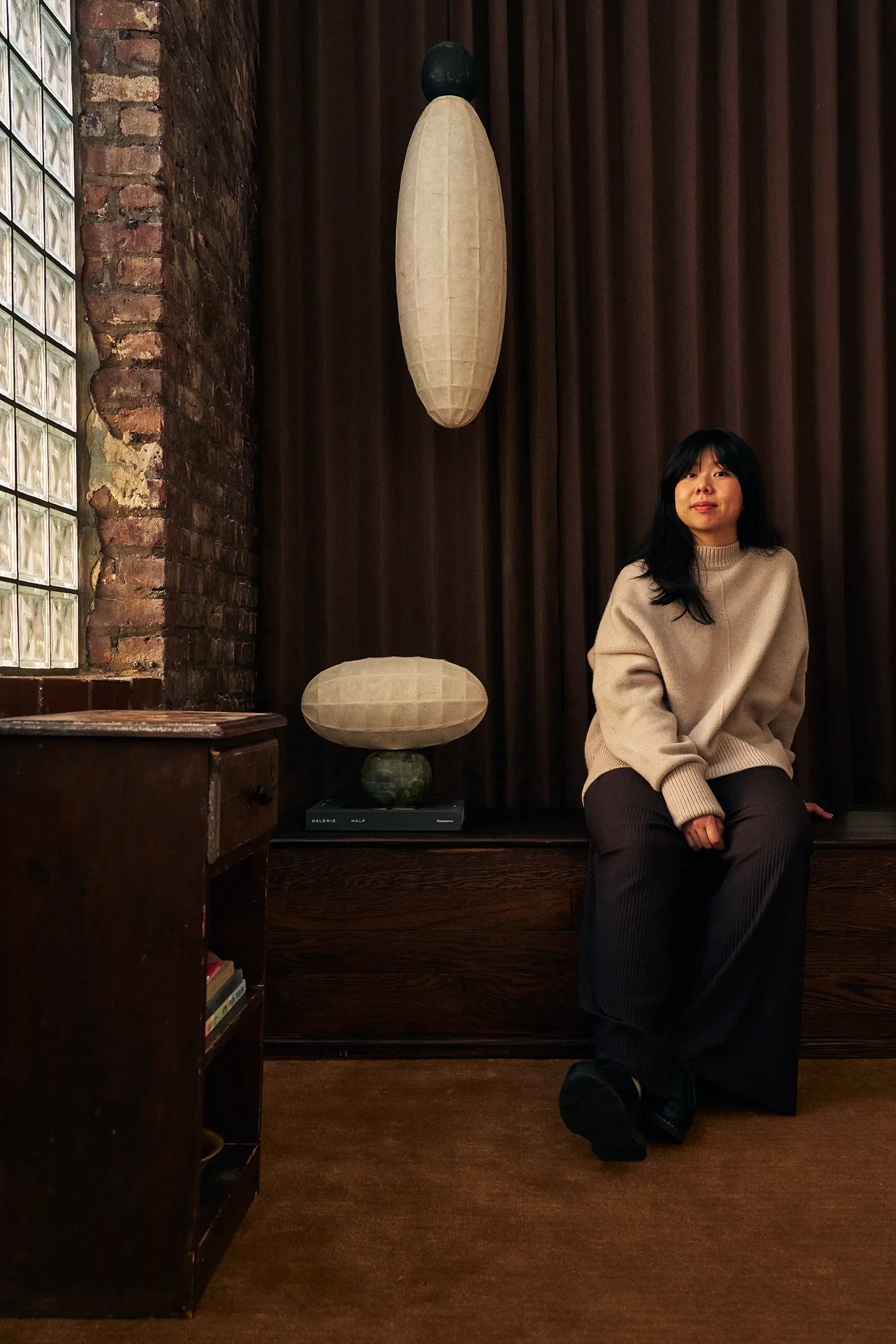
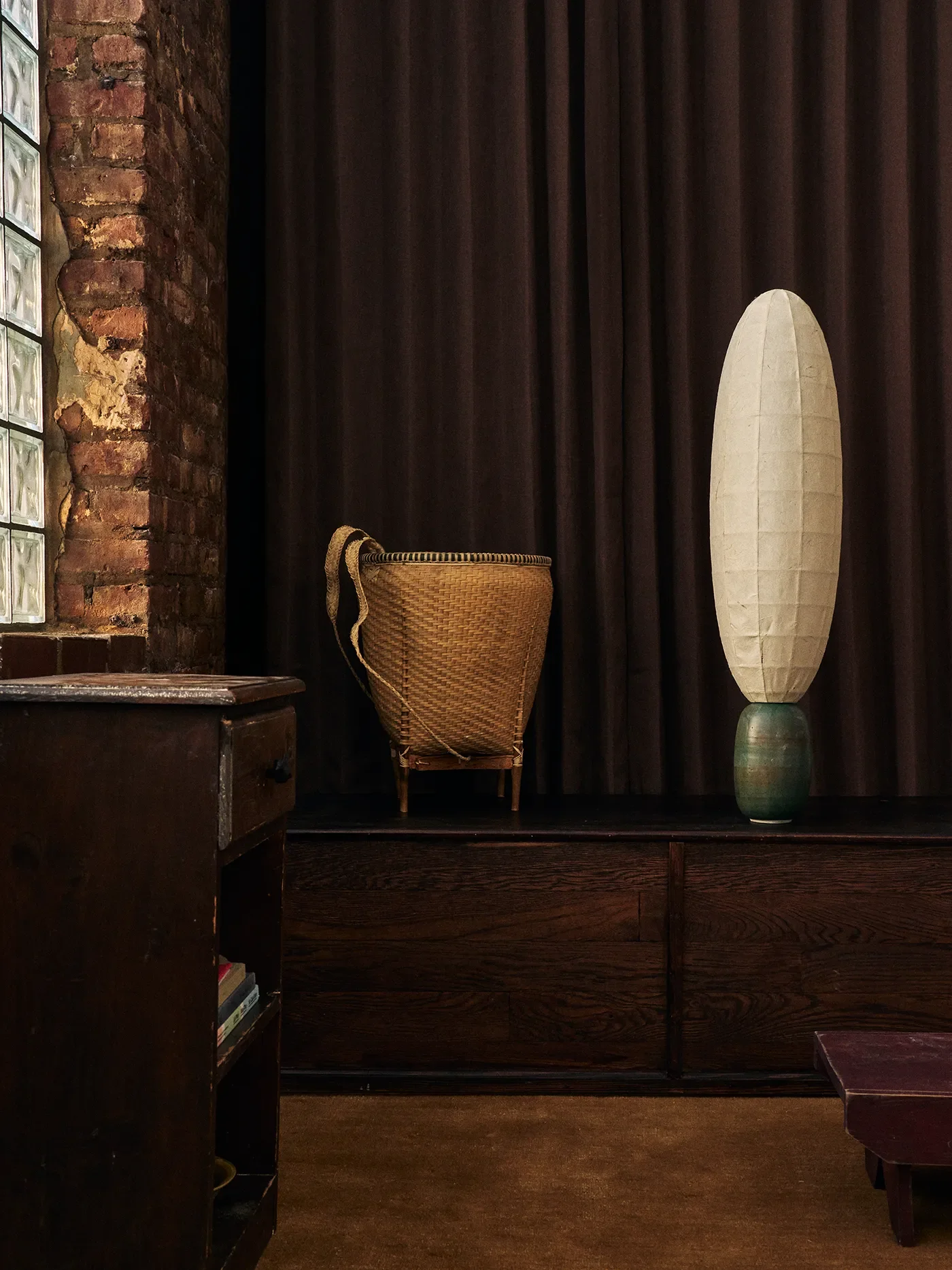
午後的陽光穿過紐約曼哈頓老建築頂樓的玻璃窗,在深色木几與紅磚牆上落下溫柔光影。幾盞手作燈具錯落擺放,有的像剛出土的塊根植物般低矮溫厚,有的則如乘風的風箏,在空中拉出一道輕盈弧線。走近細看,透光的燈罩浮著交錯的植物纖維與樹皮紋理,那是來自越南傳統的手工樹皮紙(Giấy Dó, Dó paper)特有的溫潤手感。
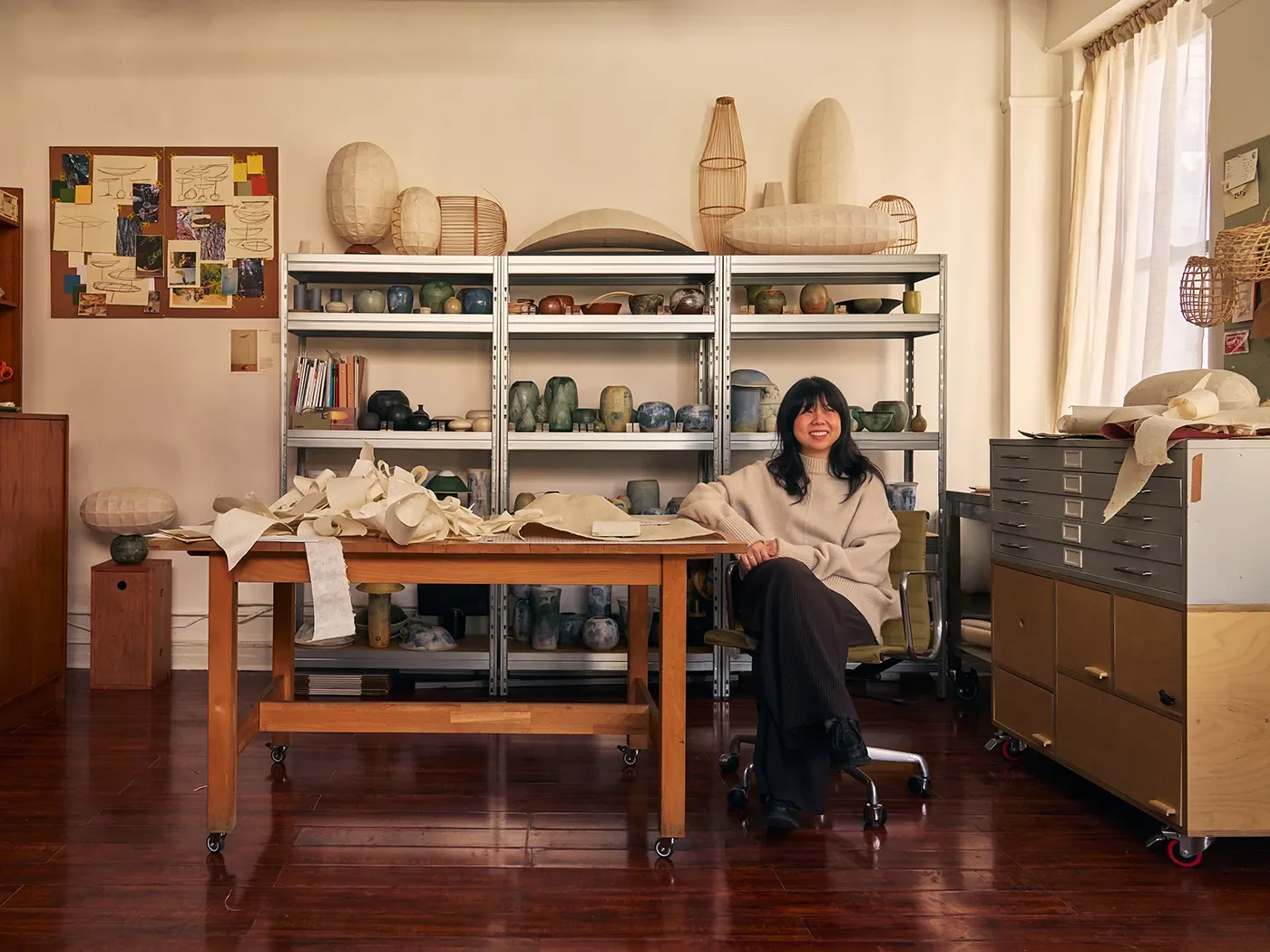
這座名為 Vy Voi(發音為 vee-voy)的工作室,以創辦人 Steffany Trần 童年時的乳名命名,也是她重新找回雙手觸感的起點。
離開講求精準公差與大量複製的工業設計體系後,Steffany 開始把創作交還給泥土、木頭與手工紙,從材料本身尋找新的可能。在品牌創立之初,她甚至只能在自家客廳與廚房餐桌上捏陶、裁紙,在有限的空間裡慢慢摸索,一步步走到今天這座結合工作坊與展間的複合空間。
-
Between Fold and Light: How New York Studio Vy Voi Reshapes Vietnamese Heritage Through Handmade Design
Afternoon light comes through the glass windows of a top-floor space in an old Manhattan building, falling softly across dark wood tables and brick walls. Handmade lamps are scattered about — some low and rounded, like a root freshly pulled from the earth; others arcing lightly through the air, like a kite caught on the wind. Look closer and the translucent shades reveal a web of plant fibre and bark, the particular warmth of traditional Vietnamese bark paper, Giấy Dó (Dó paper).
The studio is called Vy Voi (pronounced vee-voy), named after founder Steffany Trần's childhood nickname — and it marks the point where she found her way back to working with her hands.
Having left a world of industrial design built on precise tolerances and mass replication, Steffany began handing her work back over to clay, wood and handmade paper, searching for new possibilities in the materials themselves. In the studio's earliest days, she was shaping clay and cutting paper on her own living-room floor and kitchen table, working things out in whatever space she had — a path that has since led to today's combined workshop and showroom.
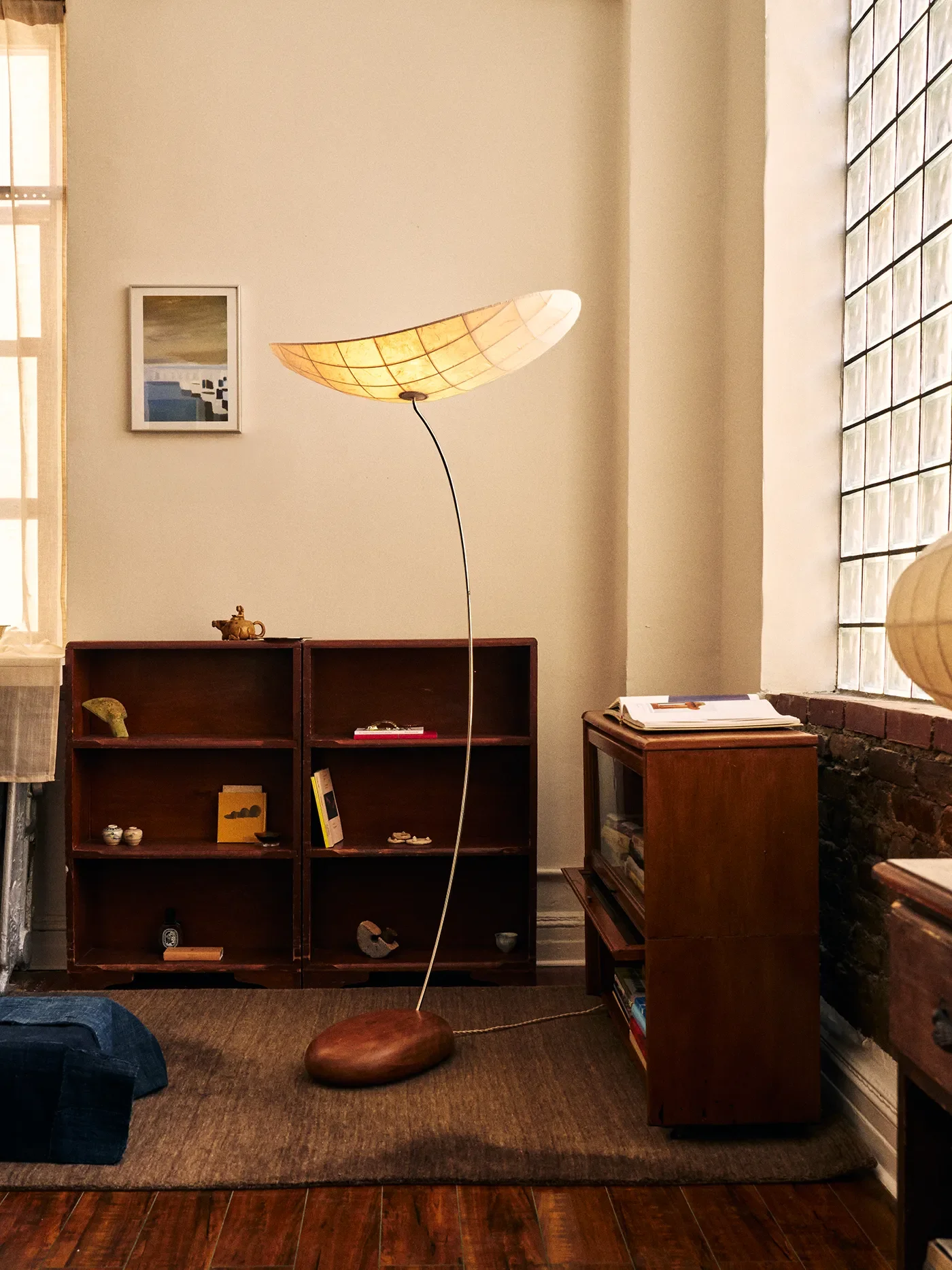
Kite In-Flight 01 © Andrew Bui
從圖紙回到泥土,在古籍與手作之間重拾感知
畢業於聖荷西州立大學(San Jose State University)的 Steffany,受過紮實完整的工業設計訓練。過去的工作使她長時間必須埋首於圖紙、尺寸與供應鏈數據之間,每天面對一件件需要被精準複製的產品。久而久之,她心中漸漸生出一種難以言喻的疏離感,看著產品從產線上成千上萬件地送往市場,自己卻越來越難從中體會到創作的意義。
「每天看著一模一樣的產品從產線上送出,我發現自己對它們毫無共鳴,」她回憶道。「當創作只剩下電腦裡的尺寸修改,人和材料之間的連結就被切斷了。我很想念用雙手去觸碰,進而思考,向大自然材質學習的那種踏實感。」
-
From Blueprint Back to Clay: Recovering a Sense of Touch Through Old Books and Handwork
Steffany trained thoroughly in industrial design at San Jose State University. Her earlier work kept her buried in drawings, dimensions and supply-chain data, facing products that had to be replicated with precision, day after day. Over time, a distance she couldn't quite name settled in — watching thousands of identical units head out to market, she found it harder and harder to feel any meaning in the making of them.
“Watching the exact same product come off the line every day, I realised I felt nothing for it,” she recalls. “When making something is reduced to adjusting dimensions on a screen, the connection between a person and their material is cut off. I missed the groundedness of touching something with my hands and learning from it — from what a natural material could teach me.”
這份重新使用雙手創作的渴望,也讓她開始回頭尋找與自己文化之間的連結,而陶藝成了最初的起點。只是身在紐約,關於越南傳統藝術與設計的資料並不容易尋得,她只能沿著零星線索,在圖書館與舊書堆裡慢慢找。透過那些泛黃的書頁,帶她走進越南古老的陶瓷村落,看見一代代匠人如何辨認泥土的性質、掌握它適合成形的時機,也學著把窯火的變化留給最後的結果。
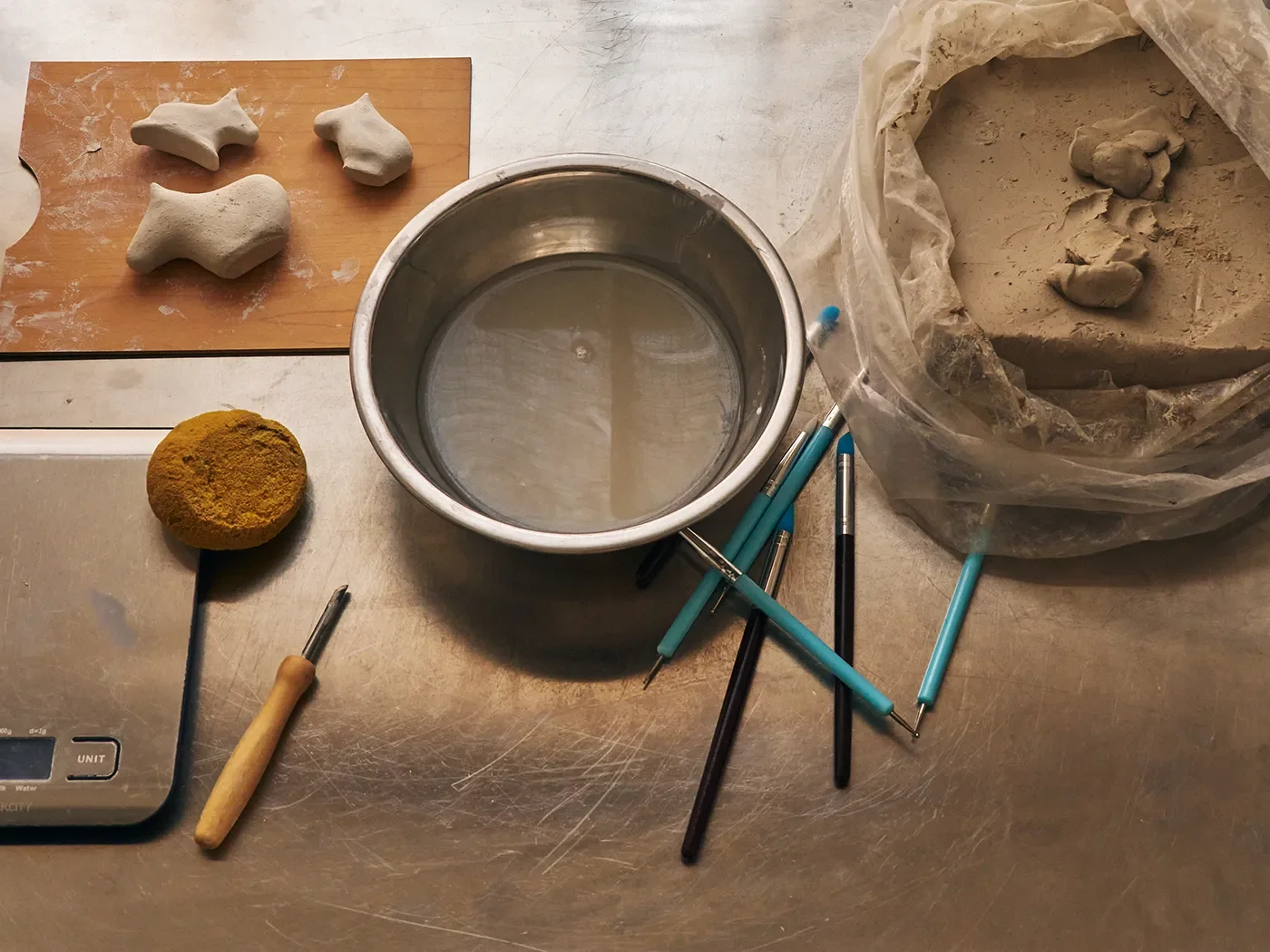
當濕潤的泥土在拉坯機上隨著掌心力道緩緩成形,泥土的阻力與乾濕的細微變化真實傳遞至指尖,雙手終於重新找回與材質對話的默契。在這樣反覆觸摸與製作的過程裡,Steffany 也慢慢找到了 Vy Voi 的方向。
我想透過自己親手製作的器物、燈具與家具,在當代的生活空間裡,溫柔講述屬於越南的故事。
-
That longing to make things by hand again also sent her looking for a connection back to her own culture, and ceramics became the starting point. Material on traditional Vietnamese art and design wasn't easy to find from New York, so she followed whatever scattered leads she could, working slowly through libraries and stacks of old books. Those yellowed pages led her into Vietnam's old pottery villages, showing her how generations of craftsmen had learned to read the character of clay, to sense the right moment to shape it, and to leave what the kiln's fire did last to chance.
As wet clay slowly took shape on the wheel under the pressure of her palms, its resistance and every small shift between wet and dry came through directly to her fingertips, and her hands finally found their old understanding with material again. Through that repeated cycle of touching and making, Steffany gradually found her direction for Vy Voi. “I wanted to tell a Vietnamese story, gently, through objects, lamps and furniture I made with my own hands, in a contemporary living space.”
© Andrew Bui
經由祖母的視角,在日常微物裡發現美
如果說工業設計的背景賦予 Steffany 結構與形式的理性思維,那麼童年時與祖母相處的記憶與深厚情感,則為作品注入了靈魂。
雖然在加州出生長大,但父母從小就在她心中建立起對自身文化的自豪與認同,越南語更成為她的第一語言,藉由母語的親密連結,也讓她即使隔著太平洋,始終能與遠在胡志明市的家人保持親近的聯繫。而在所有長輩中,祖母是她生活與創作最重要的精神寄託。
「我的祖母是我如何生活、如何設計的核心支柱。」Steffany 說道。在那些與祖母共處的時光裡,祖母總是帶領她放慢腳步,引導她去注意周遭最容易被忽略的微小細節:
「你看,那棵樹根把水泥人行道撐出了裂縫。」
「瞧,那隻蝴蝶正穿過冰冷的金屬門柵。」
「注意到了嗎?陽光正穿透交錯的樹枝,落在地上的影子有多美。」
祖母總會問她:「你覺得它怎麼會這樣呢?」
-
Seeing Through a Grandmother's Eyes: Finding Beauty in the Small Things
If her background in industrial design gave Steffany a rational sense of structure and form, it was her childhood memories with her grandmother, and the depth of feeling in them, that gave her work its soul.
Though she was born and raised in California, her parents instilled a pride in her own culture from early on, and Vietnamese became her first language — a closeness that has kept her connected to family in Ho Chi Minh City across the whole span of the Pacific. Of all her elders, her grandmother has meant the most to how she lives and how she makes things.
“My grandmother is the backbone of how I live, and how I design,” Steffany says. In their time together, her grandmother would always slow her down, drawing her attention to the small things around them that are easiest to miss:
“Look, that tree root has cracked right through the concrete pavement.”
“See, that butterfly is passing through the cold metal gate.”
“Notice how beautiful the shadow is, where the sunlight comes through the branches?”
And always, her grandmother would ask: “Why do you think it happens that way?”
© Andrew Bui
這些漫步時的微小片刻,在她心中種下對微觀世界的好奇,也建立一種與世間萬物共生的溫柔視角。她漸漸明白,真正動人的美,往往藏在自然界那些稍縱即逝的微小細節之中。
細看 Vy Voi 的燈具與器物時,那些看似簡約的當代線條,正是這些微觀記憶的具體轉化,例如:樹冠間漏下的斑駁光影、石縫中延展的根系姿態,以及指尖觸摸時的溫潤手感。Steffany 將這些日常片段融入造型、肌理與釉色之中,那些童年時跟著祖母看過的景象,經過多年之後,換了一種方式留在她身邊,也成為 Vy Voi 與世界相處的一種語言。
-
Those small moments on their walks planted a curiosity in her about the world at close range, and built a gentle way of seeing herself as part of everything around her. She came to understand that real beauty is usually found in nature's smallest, most fleeting details.
Look closely at Vy Voi's lamps and objects, and their seemingly simple contemporary lines turn out to be these small memories made concrete: dappled light falling through a canopy, the way roots spread through a crack in stone, the warmth of something felt under a fingertip. Steffany folds these everyday fragments into form, texture and glaze — the same sights she once took in beside her grandmother, staying with her, years later, in a different shape, and becoming the language through which Vy Voi meets the world.
© Andrew Bui
讓光穿透纖維,把越南手工紙帶進當代生活
在當代設計中,傳統工藝很容易被簡化成數個可辨識的符號,成為作品表面的裝飾。Vy Voi 對傳統材料的理解,則從材料本身出發。木材、陶土與手工紙各自保留著原有的質地與製作痕跡,也在日常使用中繼續發生變化。
Steffany 對於材料的選擇始終集中在自然材質,其中最具代表性的,便是與越南北部北寧省(Bắc Ninh)匠人家族合作製作的傳統手工樹皮紙(Dó Paper)。
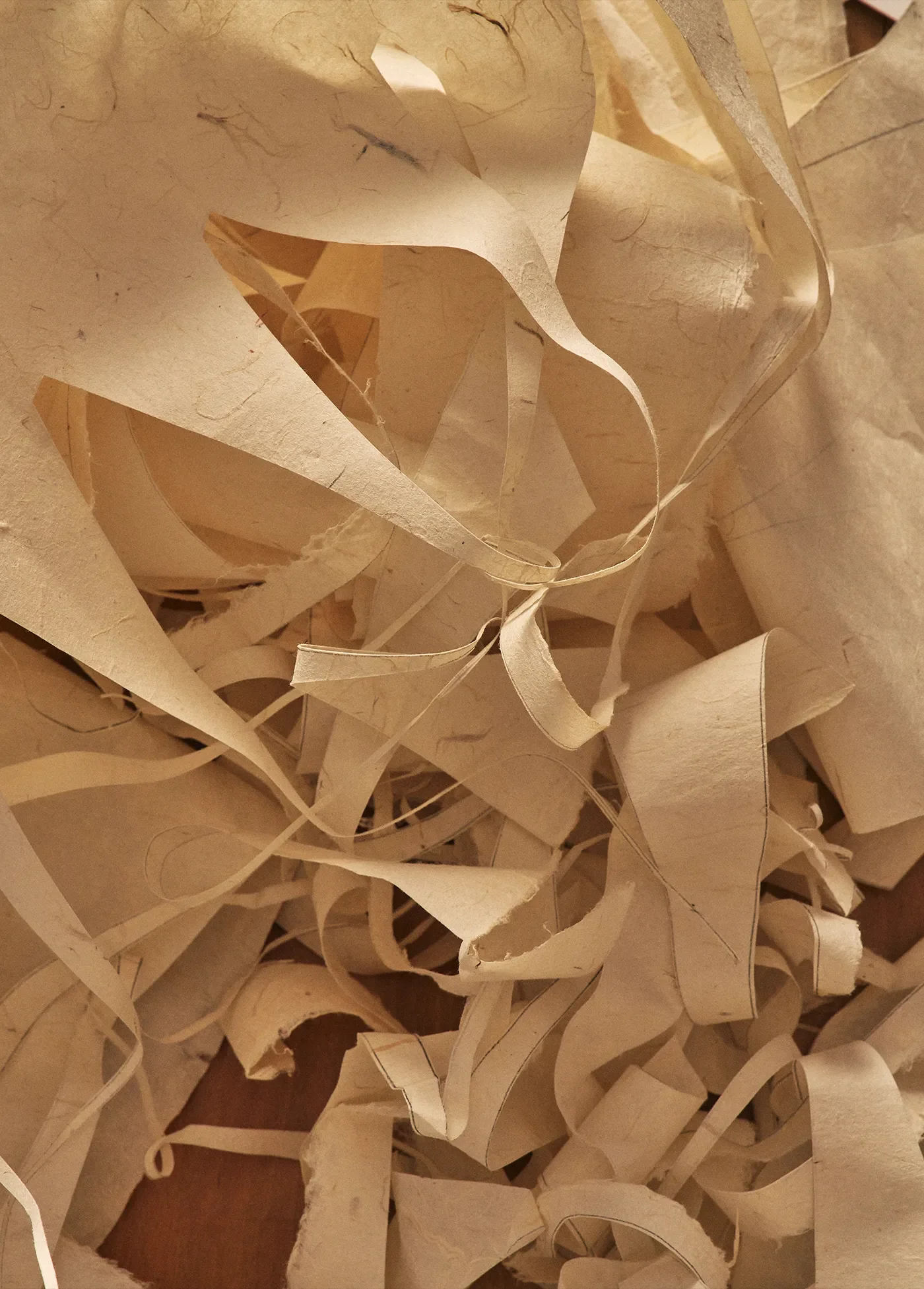
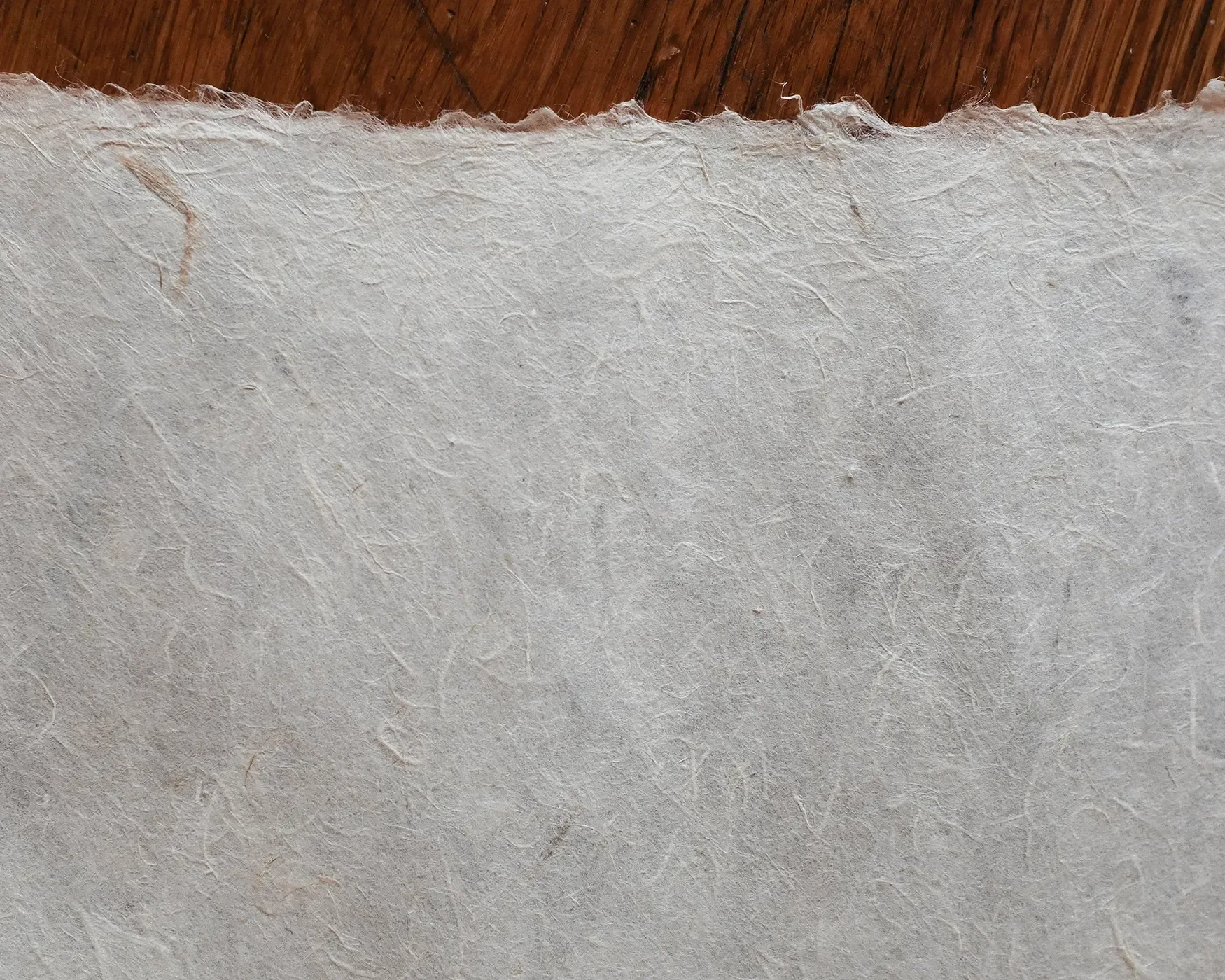
在越南歷史中,這種以蕘花屬樹皮經繁複手工蒸煮、捶打、抄造而成的手工樹皮紙,曾長時間承載著重要的文字與圖像。纖維強韌、耐潮且不易受蟲害,使它過去常被用於抄寫文獻、宗教典籍,以及製作民間木刻畫,例如越南著名的東胡畫。漫長而細緻的製程,也讓許多紙本文獻能夠保存數百年。
-
Letting Light Through the Fibre: Bringing Vietnamese Handmade Paper Into Contemporary Life
In contemporary design, traditional craft is easily reduced to a few recognisable symbols, decorating the surface of a piece. Vy Voi's understanding of traditional material starts from the material itself. Wood, clay and handmade paper each keep their own texture and the trace of how they were made, and each keeps changing with everyday use.
Steffany's choice of material has always centred on the natural, and the most emblematic of them is Dó paper, the traditional bark paper she makes in partnership with a family of craftsmen in Bắc Ninh Province in northern Vietnam.
Through Vietnamese history, this bark paper, made from Dó tree bark through a lengthy hand process of steaming, beating and forming, carried some of the country's most important writing and imagery for centuries. Strong, damp-resistant and unappealing to insects, it was long used for copying documents and religious texts, and for printing folk woodcuts such as Vietnam's famous Đông Hồ paintings. The slow, exacting process behind it is also why so many paper records have survived for hundreds of years.
© Jonathan Fratti
然而,隨著現代工業造紙與印刷技術的普及,越南手工樹皮紙在日常生活中的實用需求逐漸減少,這門古老工藝也面臨失傳的考驗。當 Steffany 為燈具尋找最合適的透光材質時,她注意到越南手工樹皮紙獨特的質地,並試著撕開、對著光線觀看,注意到紙張裡細密交錯的植物纖維。每一張紙的厚薄、纖維分布都略有不同,光線穿過時,也會沿著這些細微的差異散開,在表面形成深淺不一的光澤。
「越南手工樹皮紙在歷史上是用來記錄事實與文獻的。」Steffany 說,「而當我把它運用在燈具系列中時,我看見了它在光影擴散上的潛力。在某種意義上,這盞燈變成了另一種形式的記錄,手工樹皮紙不寫滿文字,而是把這項即將消失的古老手藝,重新帶回我們的起居生活裡。」對她而言,這也是材料進入當代生活的方式:保留它原本的製作方法與質地,再讓它在另一種用途裡繼續被使用。
陶土則是另一種與 Steffany 長時間相處的材料。相較於模具注漿所帶來的快速複製,工作室裡的每一座陶瓷底座,全由她親手逐件捏塑成型,例如:指腹留下的痕跡,以及燒製後釉色自然產生的變化,都被保留下來。每一件作品都有自己的紋理與表情,也讓那些原本屬於製作過程的手作痕跡,成了器物最真實動人的靈魂。
-
But as industrial papermaking and printing spread, everyday demand for handmade bark paper dwindled, and the old craft faced the risk of disappearing altogether. Looking for the right translucent material for her lamps, Steffany noticed the particular texture of Vietnamese bark paper, and tried tearing a sheet and holding it up to the light, where she could see the fine, interwoven plant fibres inside it. Every sheet varies slightly in thickness and fibre distribution, and as light passes through, it scatters along those small differences, leaving a surface of uneven sheen.
“Historically, this paper was used to record facts and documents,” Steffany says. “When I used it in a lighting collection, I saw its potential to scatter light. In a way, the lamp becomes another kind of record — the paper isn't covered in text, it's bringing a craft on the edge of disappearing back into how we actually live.” For her, this is how a material enters contemporary life: keeping how it was originally made, and its texture, and letting it carry on being used in a different way.
Clay is the other material Steffany has spent a long time with. Rather than the fast replication of slip-casting, every ceramic base in the studio is shaped by her own hands, piece by piece — the marks her fingertips leave, and the way a glaze shifts naturally after firing, are all left as they are. Every piece carries its own texture and expression, and the traces of the making itself become the object's truest, most affecting soul.
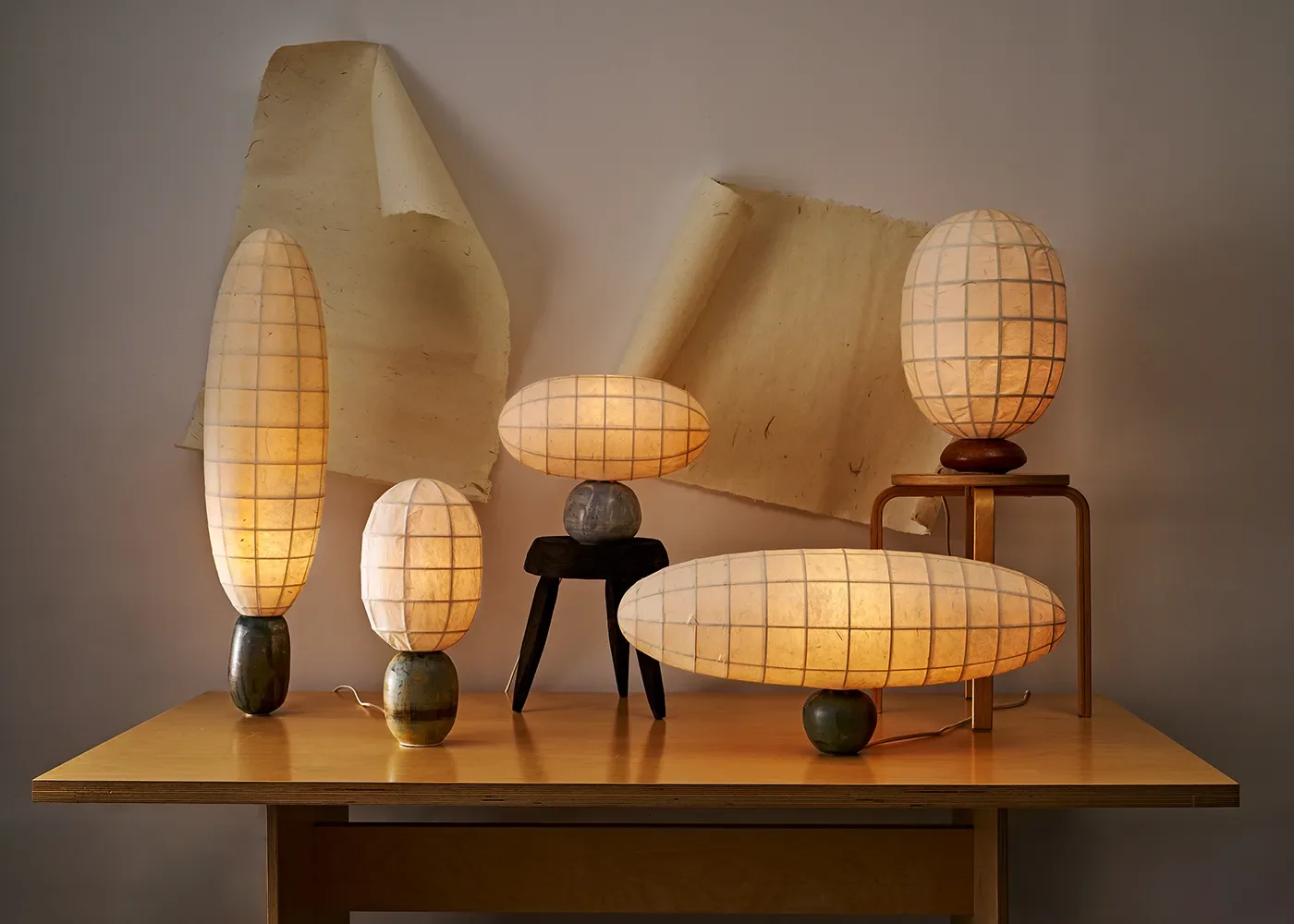
Rễ Cây Lighting Collection, 2024 © Andrew Bui
擁抱不確定性,在隨機中發展出器物的獨特性格
「從傳統工業設計背景出發,剛開始確實很難接受材料與製程中的不一致性。」Steffany 坦言。過去,她習慣用毫米計算公差,也習慣在產品完成之前,預先知道它最後的成果。轉向手工製作後,這套邏輯開始失去作用。泥土有含水量,紙張有不同的纖維分布,窯火則會在燒製過程中改變釉色。很多結果,直到最後一刻才真正揭曉。
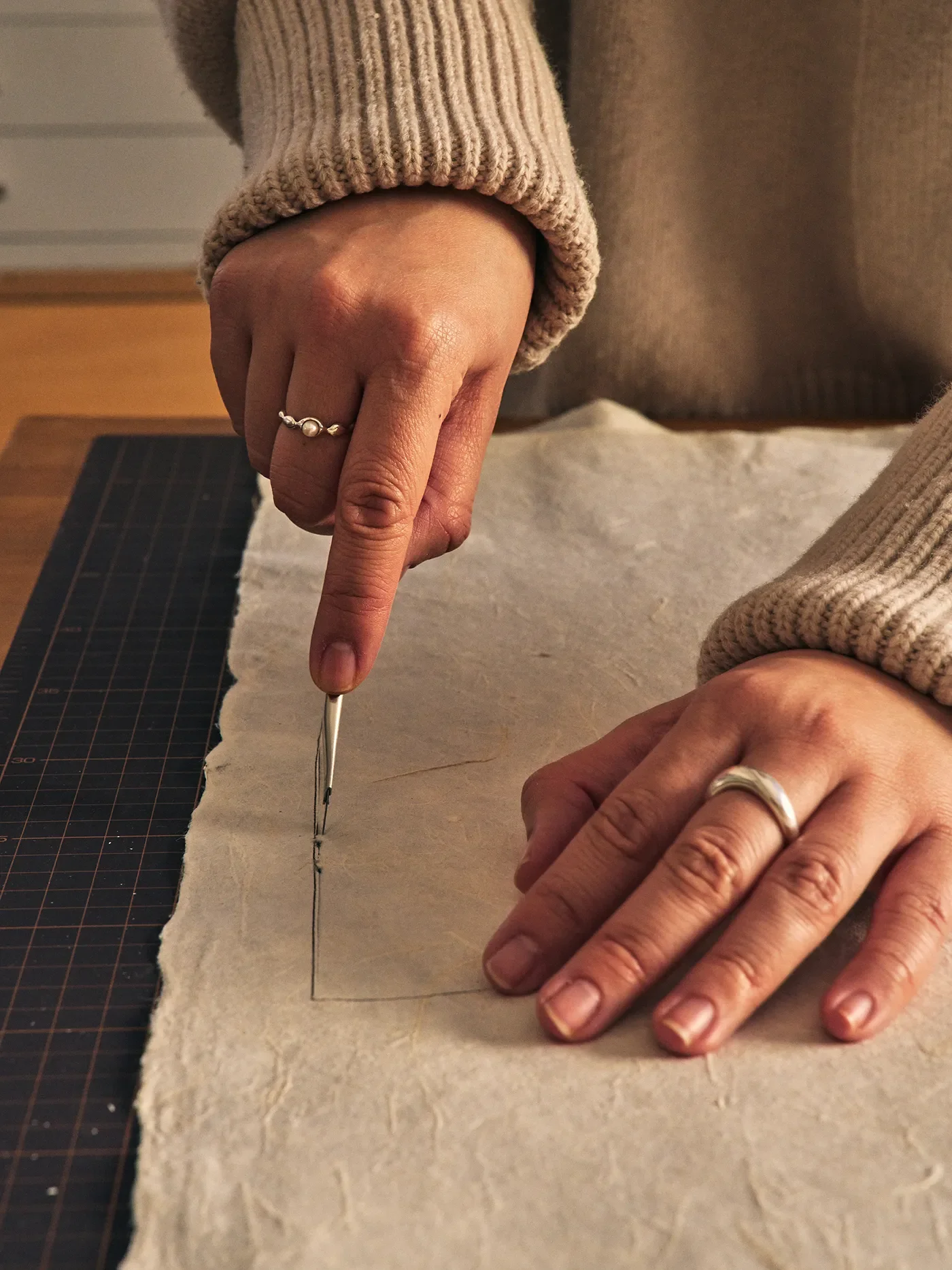
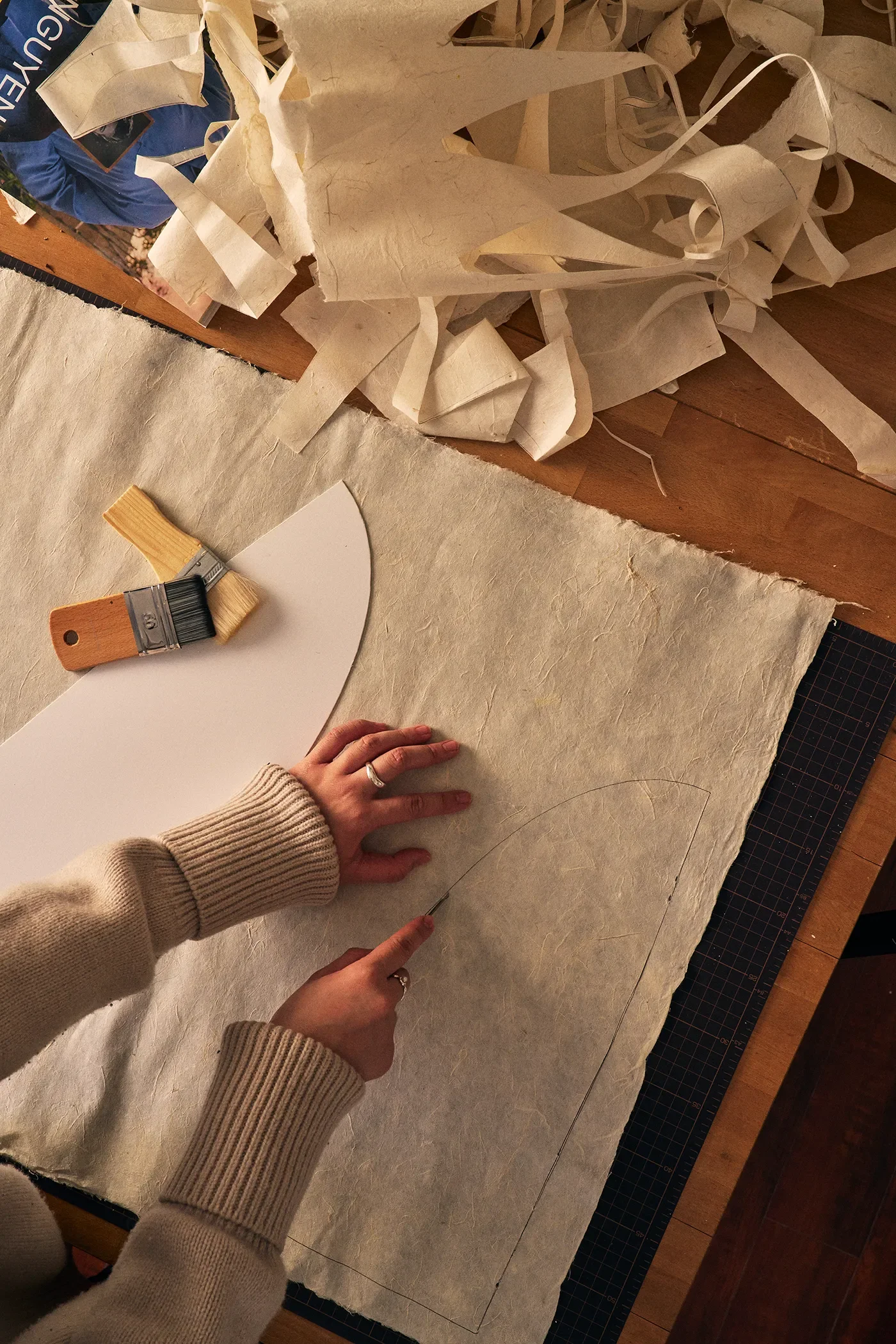
這種對不確定性的包容,讓每件作品都有了各自的個性。以手工樹皮紙的處理為例,Steffany 堅持親自挑選每張紙並手工剪裁。由於手工抄紙的纖維厚度與樹皮殘留分布皆不盡相同,繃上燈架時會自然形成微妙的弧度,再藉由順應每張紙的張力,修剪出自然流暢的線條。
-
Embracing Uncertainty: Letting Chance Shape an Object's Character
"With a background in traditional industrial design, I found it genuinely hard to accept the inconsistency in material and process at first," Steffany admits. She was used to calculating tolerance in millimetres, and to knowing what a product would look like before it was even finished. That logic stopped working once she turned to making things by hand. Clay holds moisture, paper's fibres never distribute quite the same way twice, and the kiln's fire shifts a glaze as it fires. Many outcomes only reveal themselves at the very last moment.
That openness to uncertainty is what gives every piece its own character. With the bark paper, Steffany insists on choosing and cutting every sheet herself. Because the fibre thickness and remaining bark texture vary from sheet to sheet, each one takes on a subtly different curve once stretched over the frame, and she trims each one along its own tension, letting a natural line emerge.
© Andrew Bui
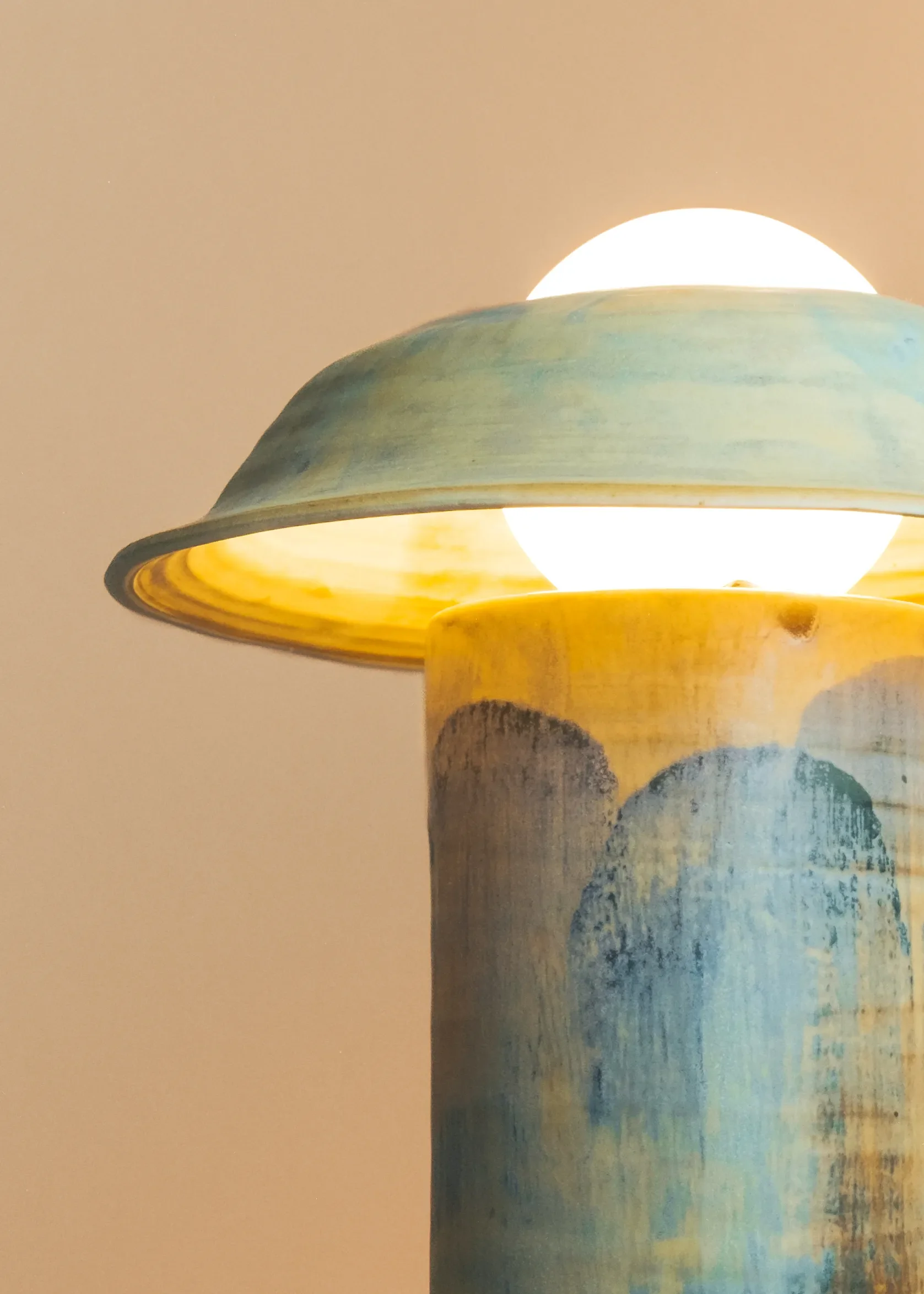
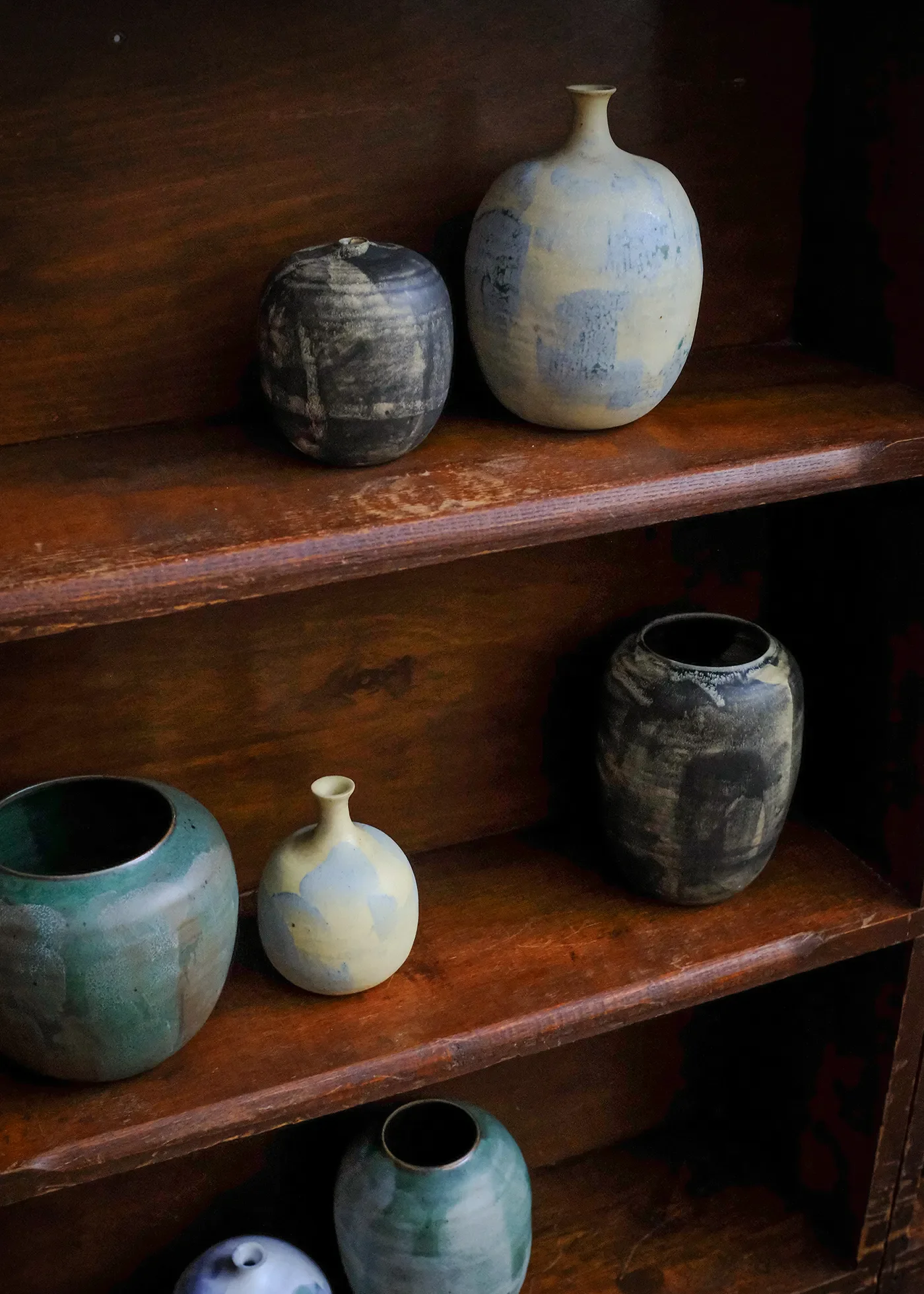
而陶瓷的釉燒過程,同樣是一場結合溫度、時間與手感的實驗。Steffany 汲取大自然與文化意象,發展出多款特色釉色:
● 茶塵與青苔釉(Tea Dust with Moss Glaze):呈現古樸深邃的暗綠與褐黃層次。
● 青苔與地衣釉(Moss with Lichen Glaze):取自老樹皮上地衣與青苔的色澤,呈現灰綠與粉白交錯的斑駁質地。
● 紅土釉(Red Soil Glaze):源自越南高原溫厚沉穩的泥土色澤。
● 蛋咖啡與青苔釉(Egg Coffee with Moss Glaze):結合越南標誌性飲品「蛋咖啡」的暖黃色調與濕潤苔綠。
「每次開窯都是一場驚喜,成果全看窯內熱氣的流動,以及當初下筆施釉時厚薄的微妙差異,」原本在工業生產裡需要被修正的色差,在手作世界裡,反倒成了無法複製的肌理與印記。在節奏快速與充斥量產規格的現代生活中,這些保留人手溫度的器物,以質樸溫潤的姿態,為空間帶來沉靜的陪伴。
-
The ceramic glazing process is its own experiment in temperature, time and feel. Drawing on nature and cultural imagery, Steffany has developed a range of signature glazes:
● Tea Dust with Moss Glaze: layers of aged, deep green and amber-brown.
● Moss with Lichen Glaze: taken from the colour of lichen and moss on old bark, a mottled texture of grey-green and powdery white.
● Red Soil Glaze: drawn from the warm, settled red-earth tones of Vietnam's highlands.
● Egg Coffee with Moss Glaze: pairing the warm yellow of Vietnam's signature egg coffee with a damp mossy green.
“Every time we open the kiln is a surprise — the result all comes down to how the heat moved inside, and the tiny differences in how thick the glaze was applied,” she says. What industrial production would treat as a colour defect to be corrected becomes, in the world of handwork, a texture and a mark that can never be copied. In a fast-moving life full of mass-produced standards, these objects, carrying the warmth of a human hand, bring a quiet, unassuming companionship to a space.
把文化記憶折進光裡,Vy Voi 的當代造物語彙
Steffany 面對傳統文化時,關心的始終是那些留在日常裡的動作與細節。她希望文化能從生活、材料與工藝本身出發,找到可以延續到今天的形式。
「我刻意避免任何字面上的直接翻版,那樣做不僅對設計不尊重,也辜負了我們所參考的文化靈感。」她將具象的文化記憶與自然意象加以提煉,轉化為俐落的幾何造型與空間光影:
1. 幾何折痕:香蕉葉壁燈(Banana Leaf Sconces, 2026)
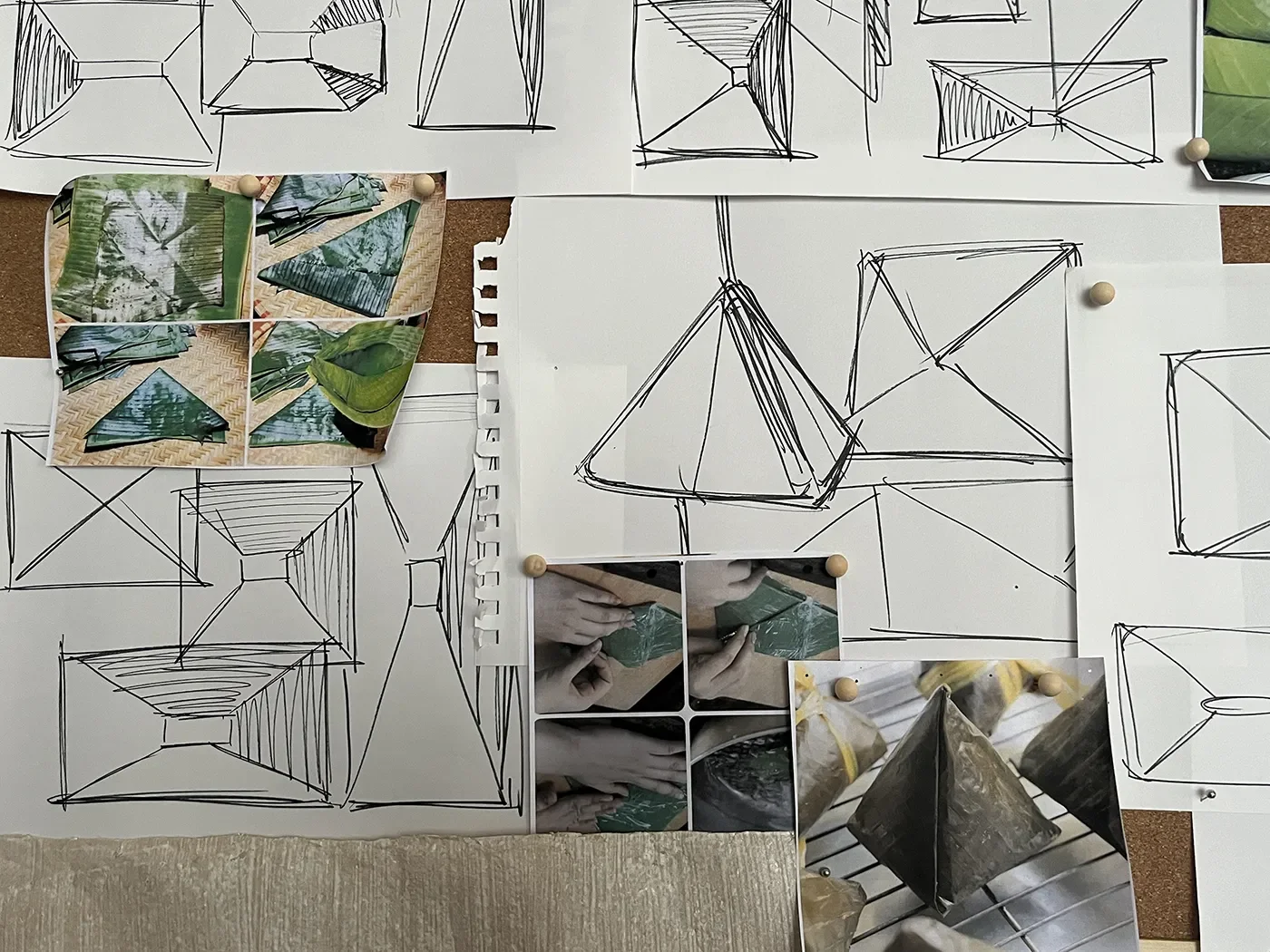
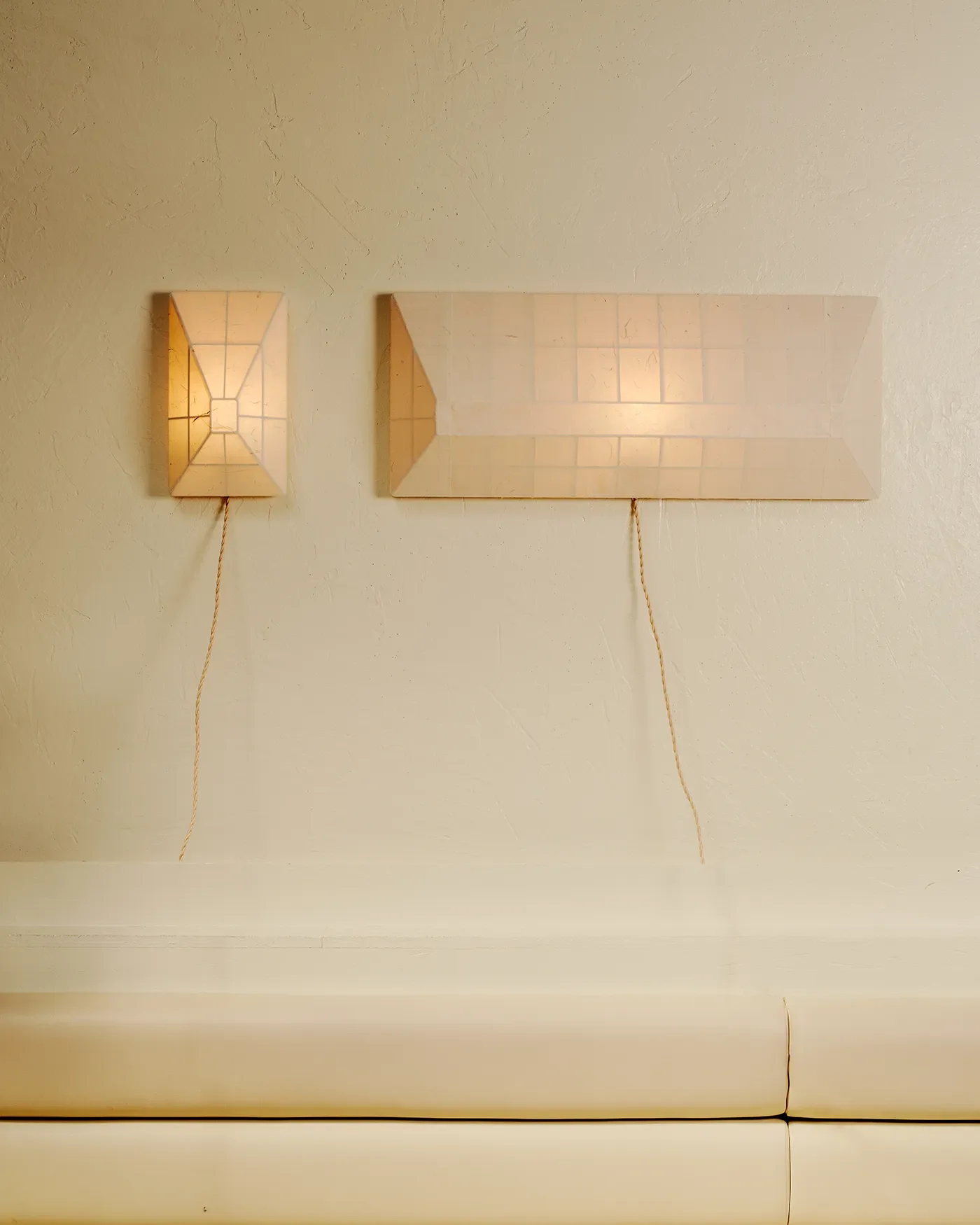
在 2026 年紐約設計週(NYCXDESIGN)亮相的香蕉葉壁燈,靈感來自東南亞用葉片包裹米食甜點的日常習慣。
她留意到人們折疊包裹食物時,葉片受力所留下的俐落折痕。她把這個動作拆解成幾何輪廓,再利用手工樹皮紙本身的挺度與透光特性,配合結構支撐,讓紙面形成明確的折面。燈光亮起時,紙面纖維與折痕陰影相互襯托,在光影流轉間隱隱喚起東南亞日常廚房中的溫暖記憶。
-
Folding Cultural Memory Into Light: Vy Voi's Contemporary Vocabulary of Making
When Steffany looks at tradition, what she cares about is always the gesture and the detail that survive in daily life. She wants culture to grow out of life, material and craft themselves, finding a form that can carry on into the present.
“I deliberately avoid any literal translation — doing that would disrespect the design, and let down the culture that inspired it.” She distils concrete cultural memory and natural imagery into clean geometric forms and plays of light in space:
1. Geometric Folds: Banana Leaf Sconces (2026)
Debuted at NYCxDESIGN in 2026, the Banana Leaf Sconces take their inspiration from the everyday Southeast Asian habit of wrapping sticky rice sweets in leaves.
Steffany noticed the clean crease a leaf takes on under the pressure of being folded around food. She broke that gesture down into a geometric outline, then used the stiffness and translucency of the bark paper itself, together with a supporting structure, to give the paper its own defined folds. Lit up, the paper's fibre and the shadow of each crease play off one another, quietly summoning the warmth of an everyday Southeast Asian kitchen.
© Vy Voi
Banana Leaf Sconces, 2026 © Jingyu Lin
2. 重力平衡:根系燈飾系列(Rễ Cây Lighting Collection, 2024)
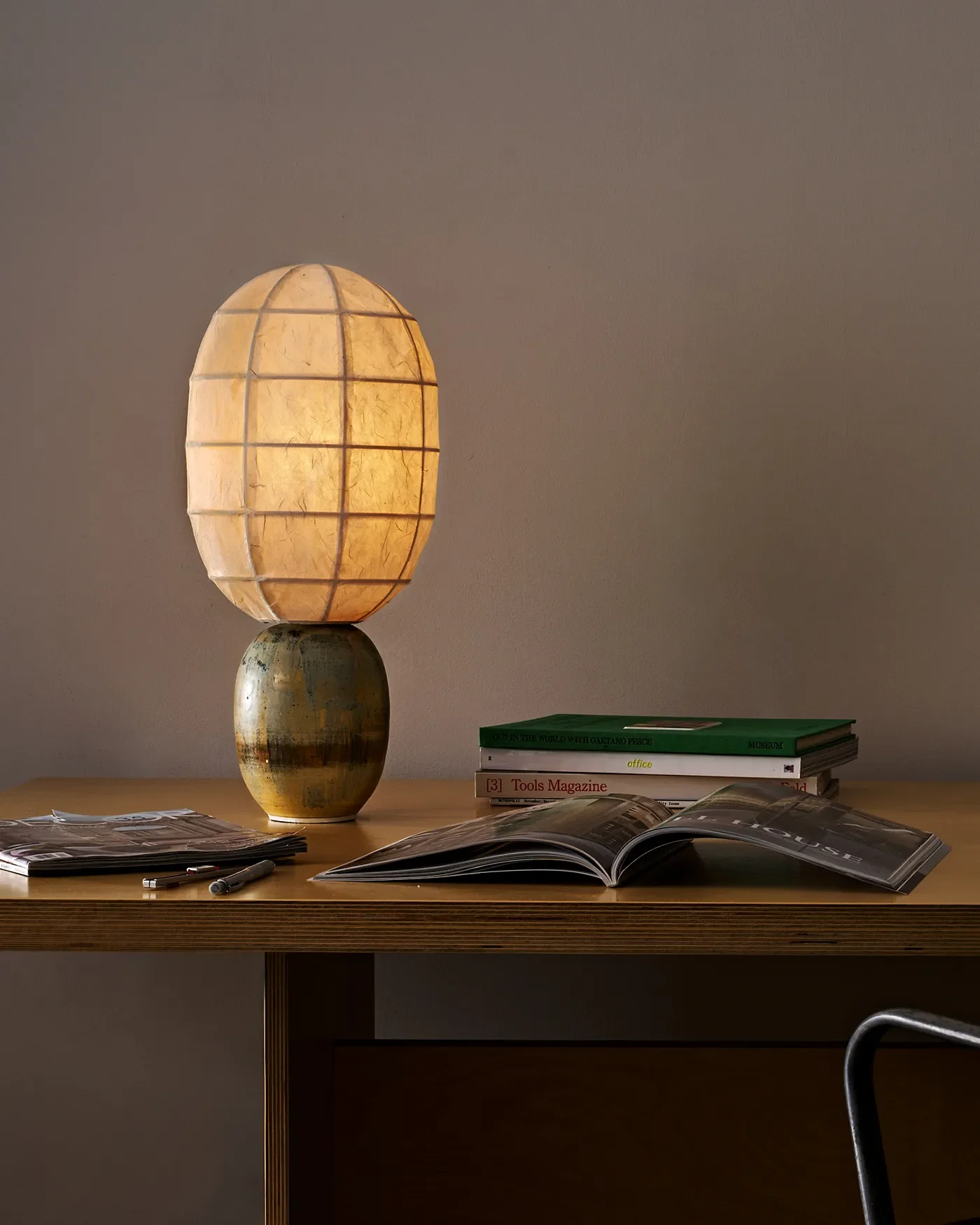
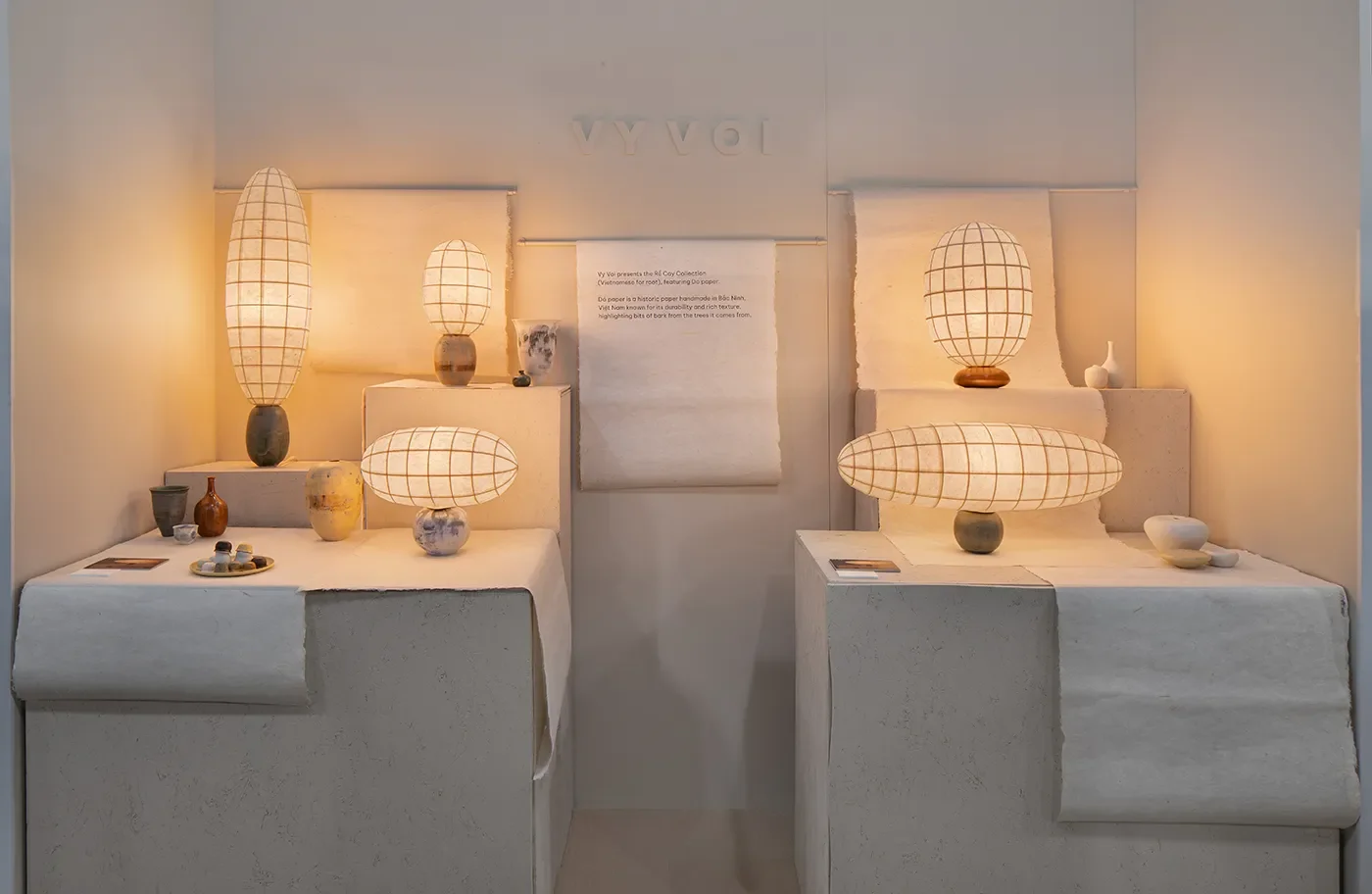
入選《Wallpaper*》Class of 2025、並在米蘭 Triennale 博物館展出的「Rễ Cây(根系)」系列,靈感來自深植於泥土之中的根莖植物,包含 Sắn(木薯)、Củ Cải(白蘿蔔)、Khoai Môn(芋頭)與 Cà-rốt(紅蘿蔔)等。
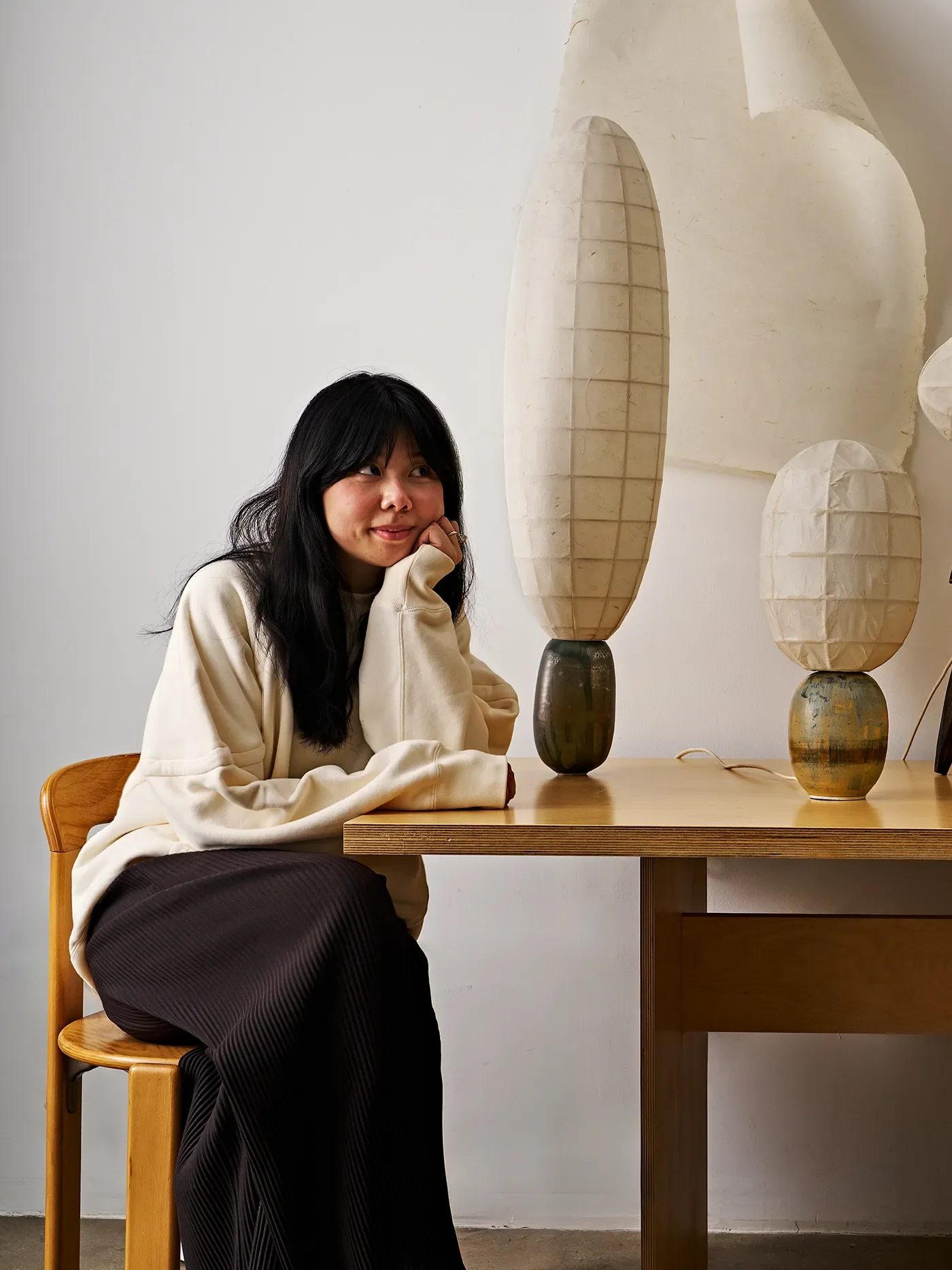
Steffany 以手工捏製出圓潤沉穩的陶瓷底座象徵根部,上方則搭配由手工樹皮紙拉伸成型的透光燈罩。這種重量與輕盈之間的關係,也是 Rễ Cây 最有趣的地方,使燈具呈現出既扎根大地、又向空間延展光芒的姿態。
-
2. Balancing Weight: The Rễ Cây (Root) Lighting Collection (2024)
Named to Wallpaper*'s Class of 2025 and shown at the Triennale Milano, the Rễ Cây (Root) collection draws on root vegetables planted deep in the earth — Sắn (cassava), Củ Cải (daikon), Khoai Môn (taro) and Cà-rốt (carrot) among them.
Steffany hand-shapes a rounded, weighty ceramic base to stand in for the root, paired with a translucent shade stretched from bark paper above. That relationship between weight and lightness is what makes Rễ Cây interesting — each lamp reads as rooted in the ground while still reaching its light out into the room.
Củ Cải (Daikon) Light, 2024 © Andrew Bui
Rễ Cây Lighting Collection, 2024 © Daniel Wang
3. 風中張力:Kite In-Flight 限量落地燈
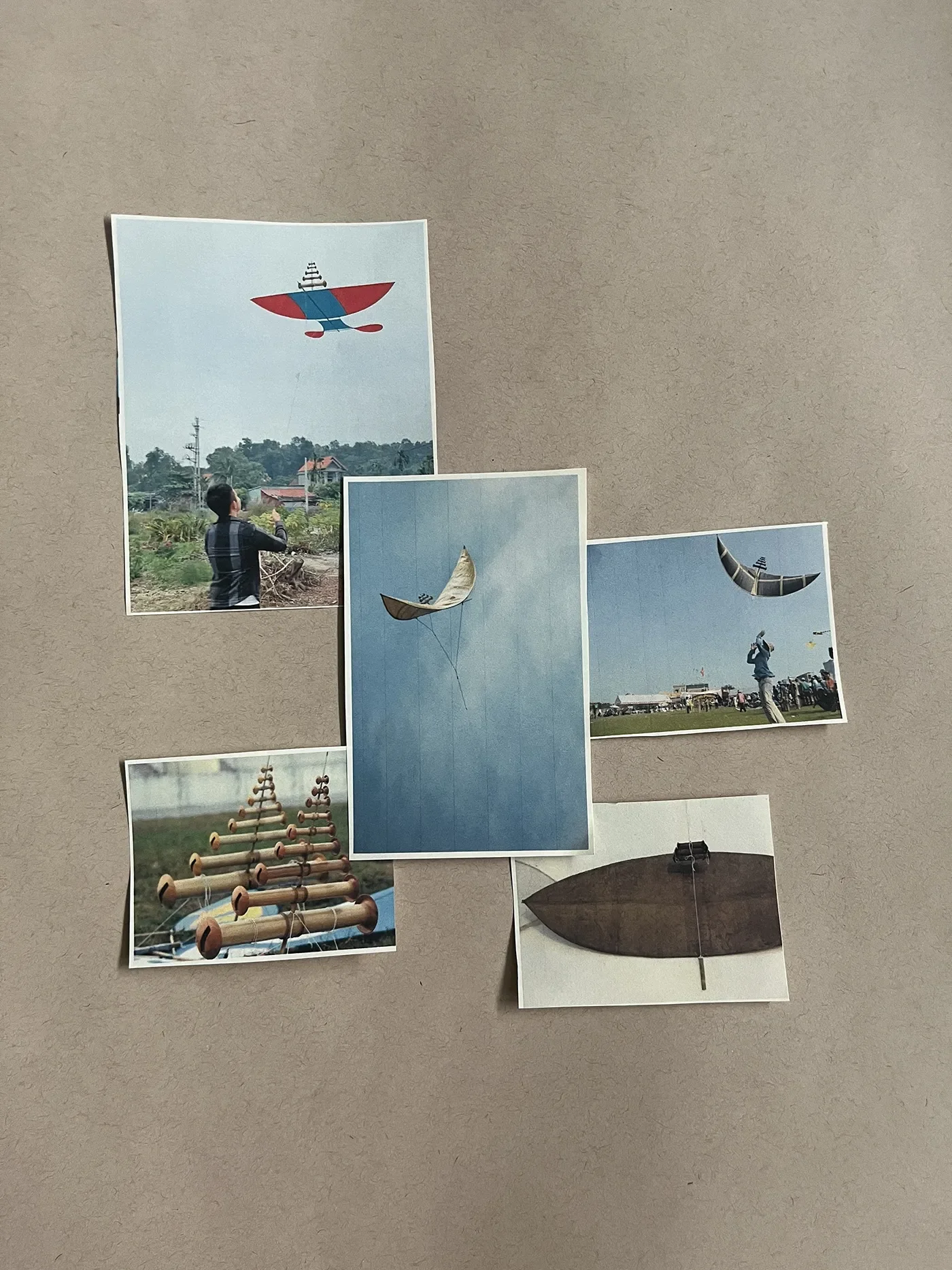
獲《紐約時報》報導的「Kite In-Flight 01」落地燈,靈感源自越南北部紅河三角洲地區擁有超過兩千年歷史的傳統風笛風箏( Diều Sáo)。這項珍貴技藝長年仰賴河內市小村莊 Bá Dương Nội 等地民間匠人代代傳承,直到 2025 年春季才正式被列入官方文化遺產體系。
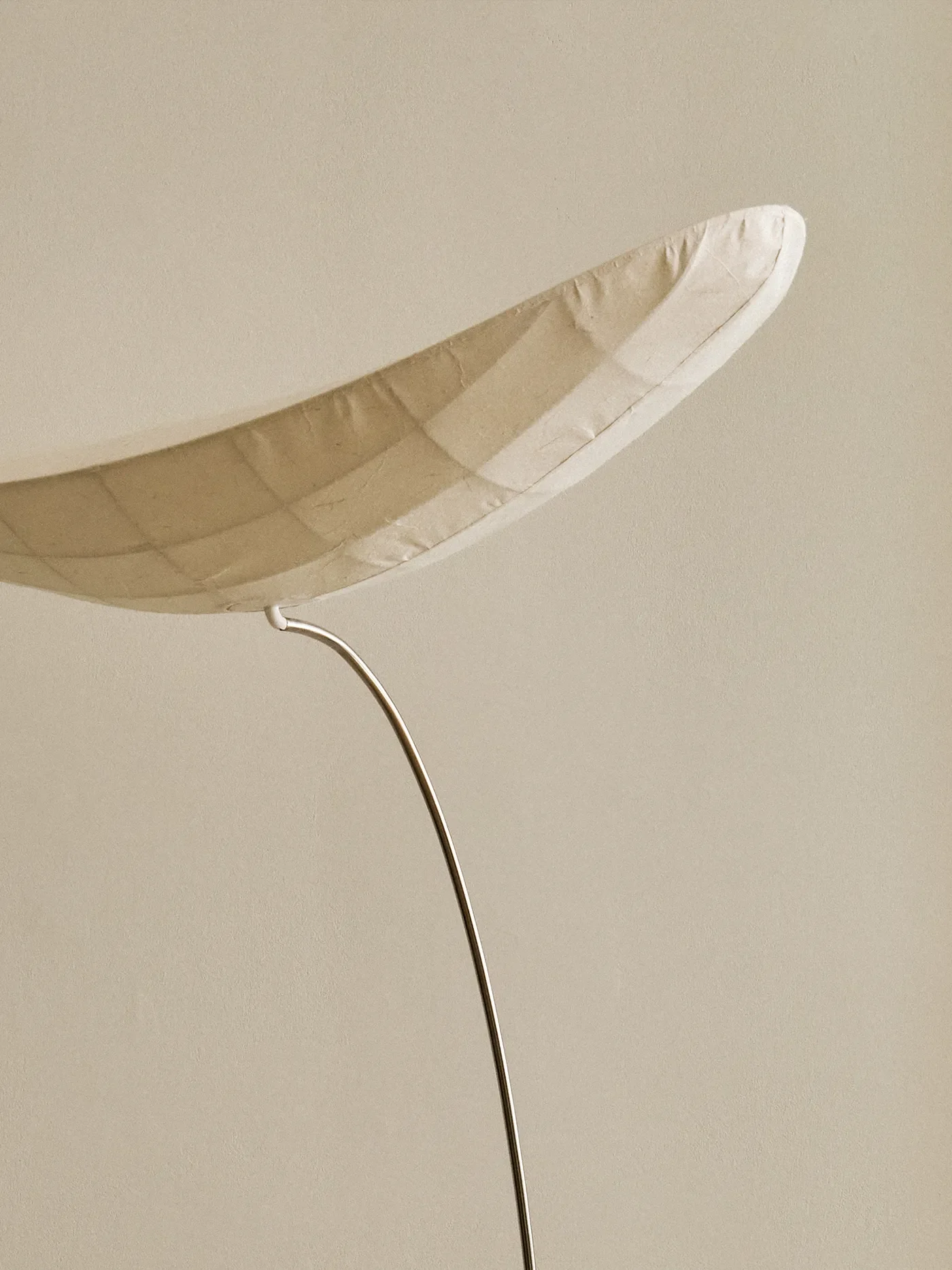
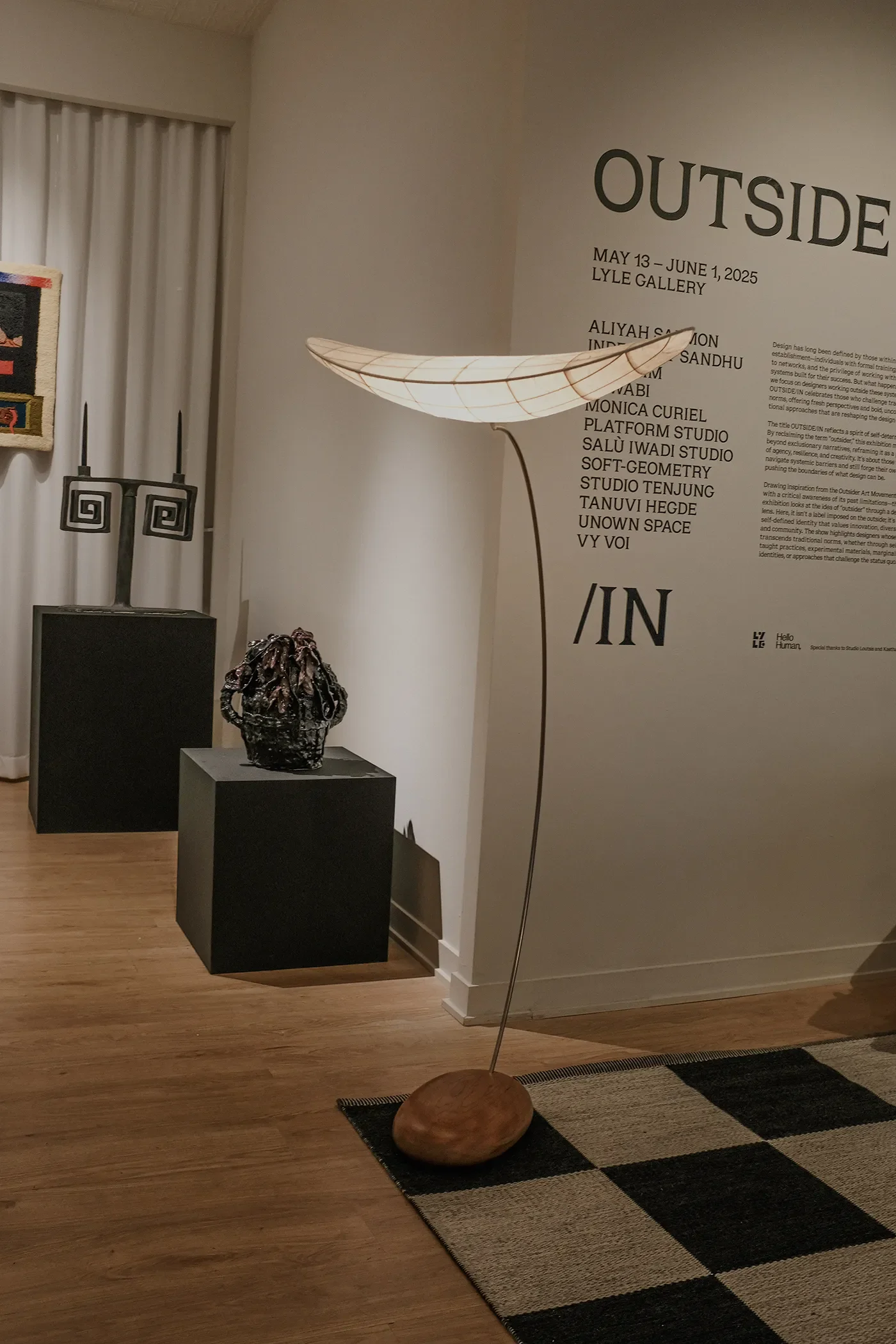
Steffany 捕捉風箏在空中受風拉扯時的動態張力,而這也是她首次跳脫陶瓷媒介,以金屬與木工的創新嘗試。她選用形似鵝卵石的實木作為基座,代表大地與引線的重量;從基座延伸出一道具備優雅彈性弧度的金屬細桿,頂端懸掛新月形的手工樹皮紙燈罩,宛如在風中舒展的風箏,將風中飛行的張力凝固在起居室的光影之中。
-
3. Tension in the Wind: The Kite In-Flight Limited-Edition Floor Lamp
Featured in The New York Times, the Kite In-Flight 01 floor lamp takes its cue from Diều Sáo, the whistling kites with over two thousand years of history in Vietnam's northern Red River Delta. The craft has survived through generations of folk makers in villages such as Bá Dương Nội near Hanoi, and was only formally recognised as official cultural heritage in the spring of 2025.
Steffany set out to capture the tension of a kite pulling against the wind mid-flight — her first move beyond ceramics, into metal and woodwork. A solid-wood base shaped like a river stone stands for the weight of the earth and the pull of the string; from it rises a slender metal rod with a graceful, springing curve, a crescent-shaped bark-paper shade hanging from its tip, like a kite still unfurling in the wind, holding that mid-air tension still in the light of a living room.
Kite In-Flight 01, 2025 © Vy Voi
在曼哈頓點亮越南工藝,讓「Sáng」走進日常
在全球產業分工中,越南常被標上廉價代工與大量製造一次性日常用品的標籤,而當地深厚的傳統技藝,例如天然織染、精細木雕(Điêu Khắc Gỗ)以及大漆螺鈿鑲嵌等耗時費工的慢工藝鮮少在全球當代設計舞台上獲得應有的重視。
這種刻板印象,讓人們輕易忽略越南豐富的手藝歷史,也讓在地匠人逐漸失去傳承技藝的動力與生存空間,我希望證明越南不僅僅是個代工製造地,更擁有深厚且值得被世人駐足欣賞的卓越手工藝。
-
Lighting Up Vietnamese Craft in Manhattan: Bringing ‘Sáng’ Into Everyday Life
In the global division of labour, Vietnam is often filed under cheap contract manufacturing and disposable mass-produced goods, while its deep well of traditional craft — natural dyeing, fine woodcarving (Điêu Khắc Gỗ), lacquer and mother-of-pearl inlay, all of them slow, labour-intensive work — rarely gets the recognition it deserves on the global contemporary design stage.
“That stereotype makes it easy to overlook Vietnam's rich history of craft, and it's slowly squeezing out the motivation and the livelihood local craftsmen need to keep passing their skills on,” Steffany says. “I want to prove that Vietnam isn't just a place that manufactures for other people — it holds a depth of craft worth the world stopping to look at.”
© Andrew Bui
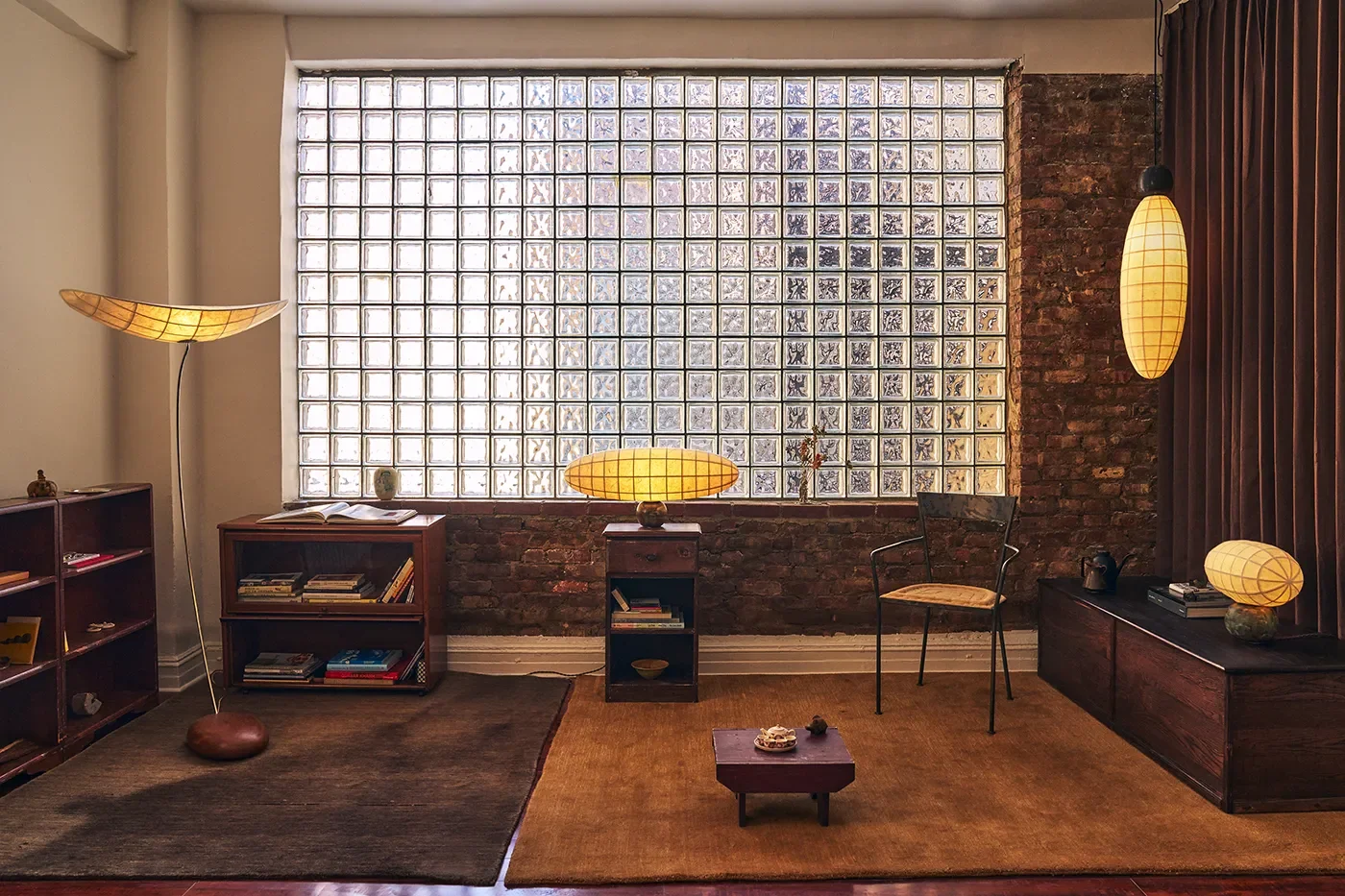
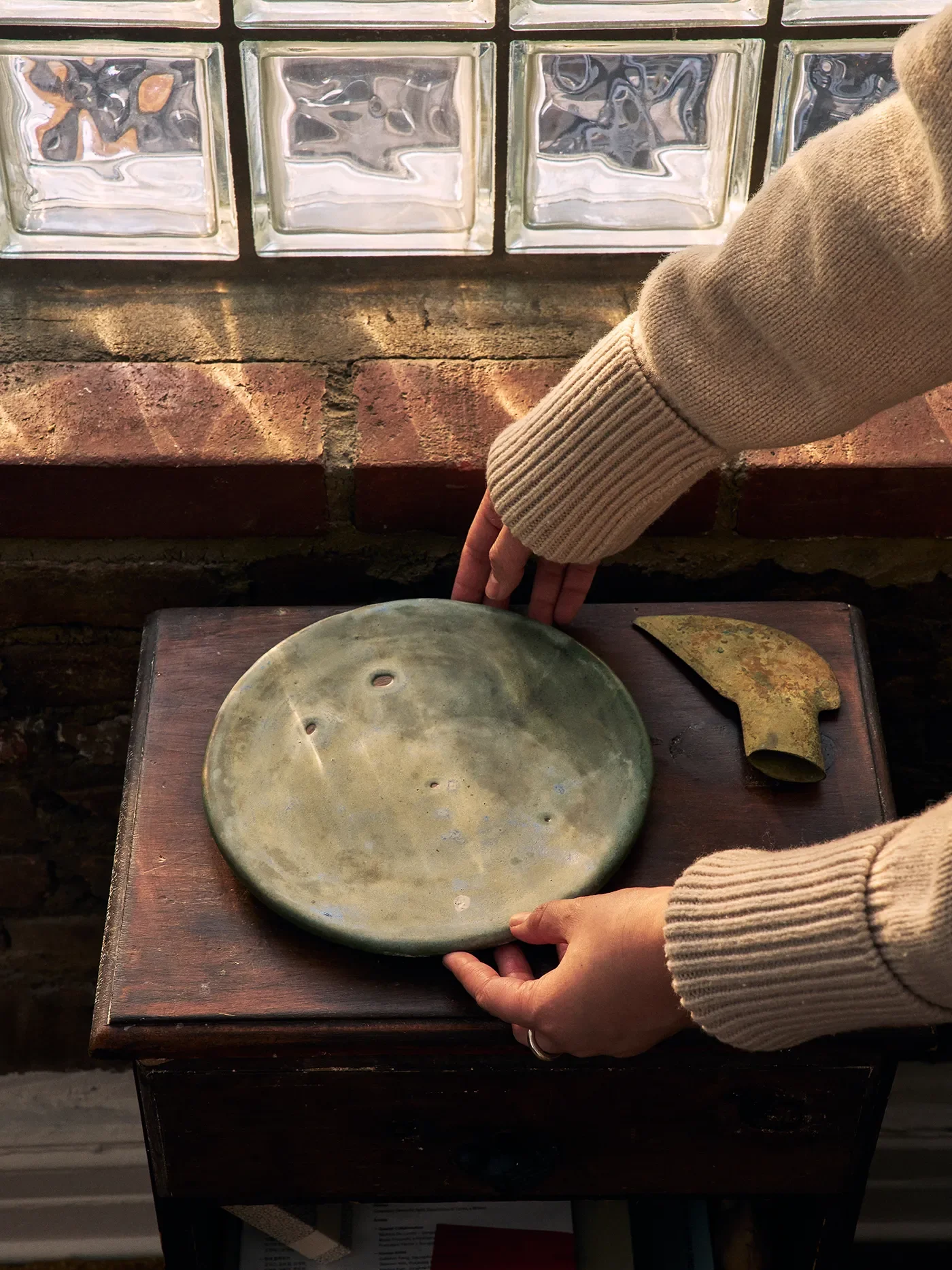
2026 年新春,Vy Voi 在曼哈頓 NoMad 街區正式成立了第一座實體展間。約 200 平方英尺的頂樓空間裡,運用了越南傳統起居哲學中的「Sáng(明亮、通透)」,也是一種讓光進入生活的狀態,並在黃銅、老木几與陶土表面映照出深淺層次。
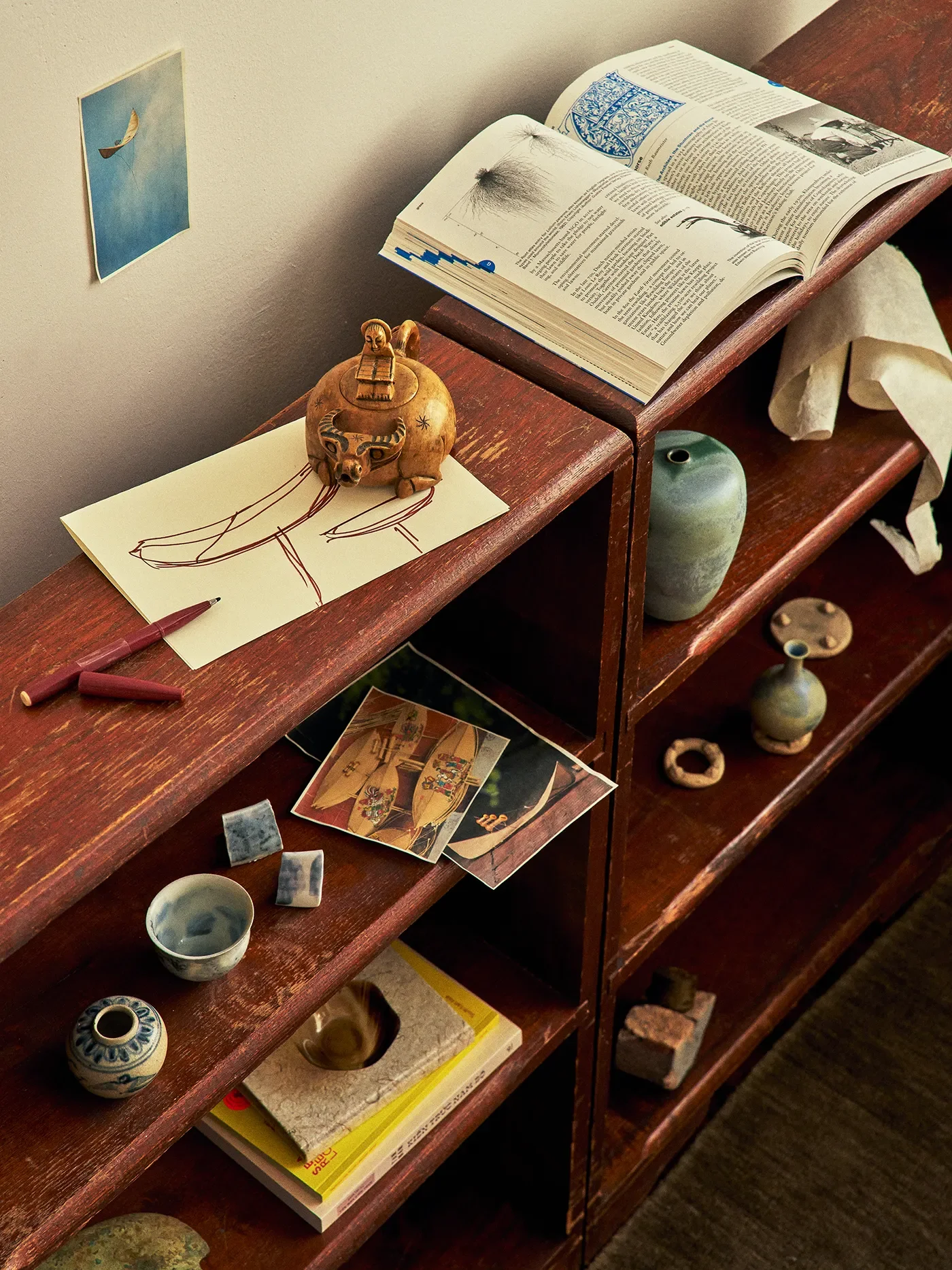
走進展間,這裡更像是一座小型的越南文化圖書館,木架上散放著東山文化時期(Đông Sơn)的古董青銅斧、革新開放前(pre-Đổi Mới)手工雕刻的皂石水牛、缽場陶瓷村(Bát Tràng)的歷史窯具墊柱,以及母親親手雕琢的佛像;案頭則擺放著傳奇雕塑家 Điềm Phùng Thị 的絕版專著與建築文獻。每當訪客推門而入,工作室總會遞上一杯熱茶與斑蘭蜂巢糕(bánh bò nướng),在如造訪老友客廳般的放鬆氛圍中,悄悄打破外界對越南工藝的單一想像。
我希望 Vy Voi 的作品,能成為人們願意長久珍藏並代代相傳的傳家之物,在漫長歲月裡安靜陪伴日常生活。
Vy Voi 所創造的是一條材料與記憶慢慢走進當代生活的路徑,它也將源自遠方土地的工藝記憶,以最質樸純粹的姿態,溫柔融入生活的光景之中。
-
In early 2026, Vy Voi opened its first physical showroom in Manhattan's NoMad neighbourhood. Across roughly 200 square feet of top-floor space, the studio works with Sáng, a concept in traditional Vietnamese domestic thinking meaning bright, or luminous — a state of letting light into daily life — casting it in layers of depth across brass, aged wood tables and clay.
Step inside and it feels more like a small library of Vietnamese culture. Wooden shelves hold an antique bronze axe from the Đông Sơn period, a soapstone water buffalo hand-carved before the Đổi Mới reforms, historic kiln props from the Bát Tràng ceramic village, and a Buddha statue carved by Steffany's own mother; a desk nearby carries out-of-print monographs and architectural writing by the legendary sculptor Điềm Phùng Thị. Every visitor is handed a cup of hot tea and a piece of bánh bò nướng, pandan honeycomb cake, and in the relaxed feel of an old friend's living room, whatever single idea the world had of Vietnamese craft quietly starts to come apart.
“I want what Vy Voi makes to be something people want to keep for a long time, and pass down — a quiet companion to daily life, year after year.” What Vy Voi has built is a slow path for material and memory to enter contemporary life — carrying the craft memory of a distant land, in its plainest, most honest form, gently, into the light of everyday living.
© Andrew Bui