
「身為設計師,我們真正相信什麼?」新加坡室內設計 Authors In Style 向內探索,打造下班後依然想留下的創作基地
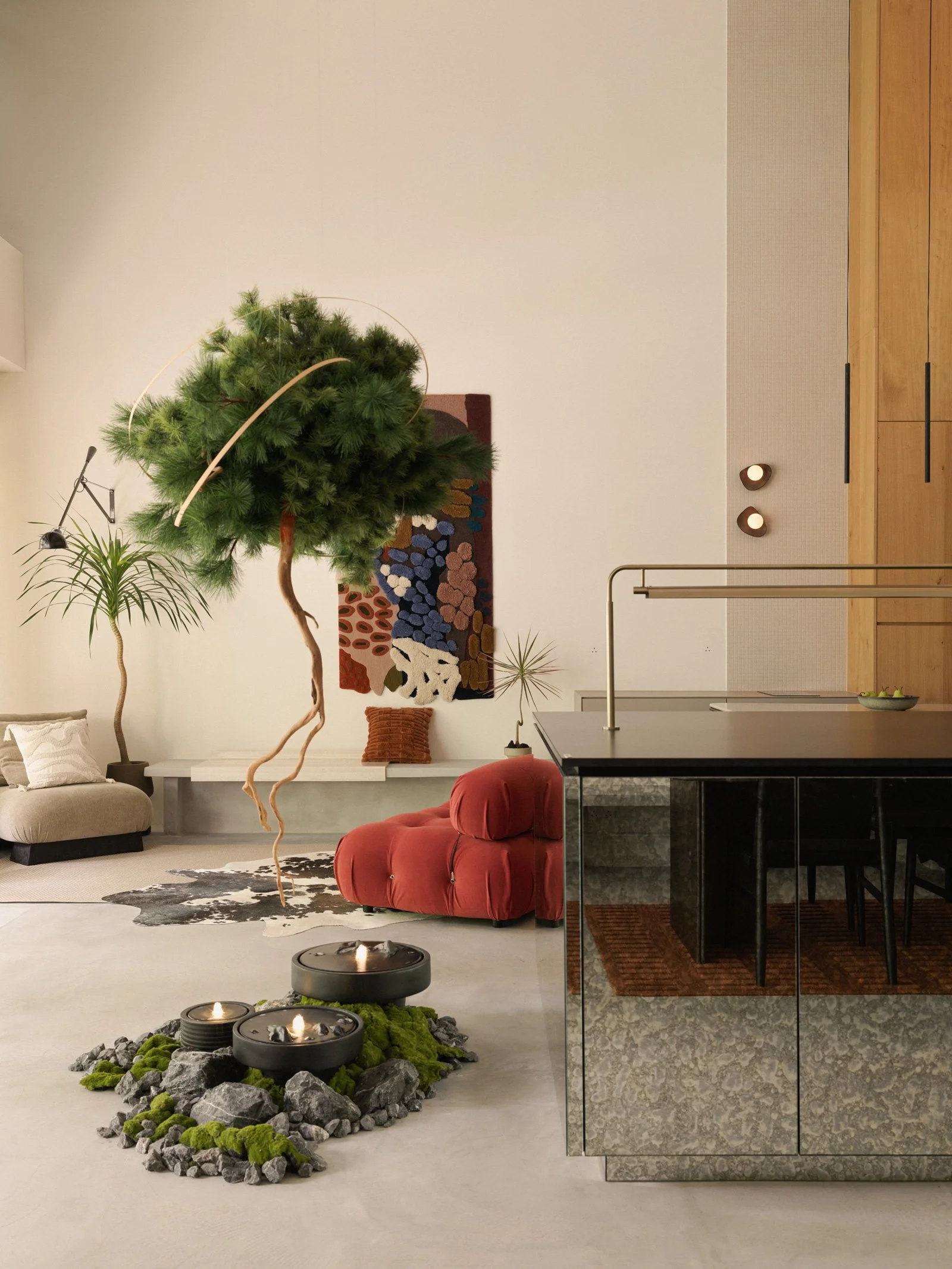
© Marcus Lim
身為室內設計師,我們不斷被持續改變的趨勢、社群媒體的影響與新的美學所包圍。這並沒有什麼不對,但到了某個時間點,我們開始問自己一個更根本的問題:我們自己的方向是什麼?我們真正相信什麼?
新加坡室內設計事務所 Authors In Style 日前因應團隊的成長,迎來了工作空間的全面改造。這個工作室標示著 Authors In Style 的新篇章,象徵著團隊對「我們是誰」以及「我們想如何設計」這件事,有了更鮮明的輪廓。
回想起新辦公室的設計旅程,創意總監 Tayllen Phoo 分享道,這次裝修成為一個內部反思的時刻。兼具設計師與客戶的雙重身分,讓他們決定不再向外追尋靈感,而是向內探索,挑戰創造一個不跟隨當前潮流趨勢,真實反映自我價值觀與信念的場域。「在這裡我們沒有想對外宣示什麼,只希望構建能讓人感受到真實性(Authenticity) 的所在。」
-
"As interior designers, we are constantly surrounded by changing trends, social media influences, and new aesthetics. While there is nothing wrong with that, there came a point where we started asking ourselves a more fundamental question: What is our own direction? What do we truly believe in as designers?"
In response to their growing team, the Singapore-based interior design firm Authors In Style recently underwent a complete transformation of their workspace. This studio marks a new chapter for Authors In Style, representing a clearer understanding of who they are and how they want to design.
Reflecting on the design journey of the new office, Creative Director Tayllen Phoo shared that the renovation became a moment of reflection. Taking on the dual roles of both designer and client, they decided that instead of looking outward, they would look inward, challenging themselves to create a space that genuinely reflects their values rather than current trends.
"It is less about creating a statement and more about creating a space that feels authentic to us."
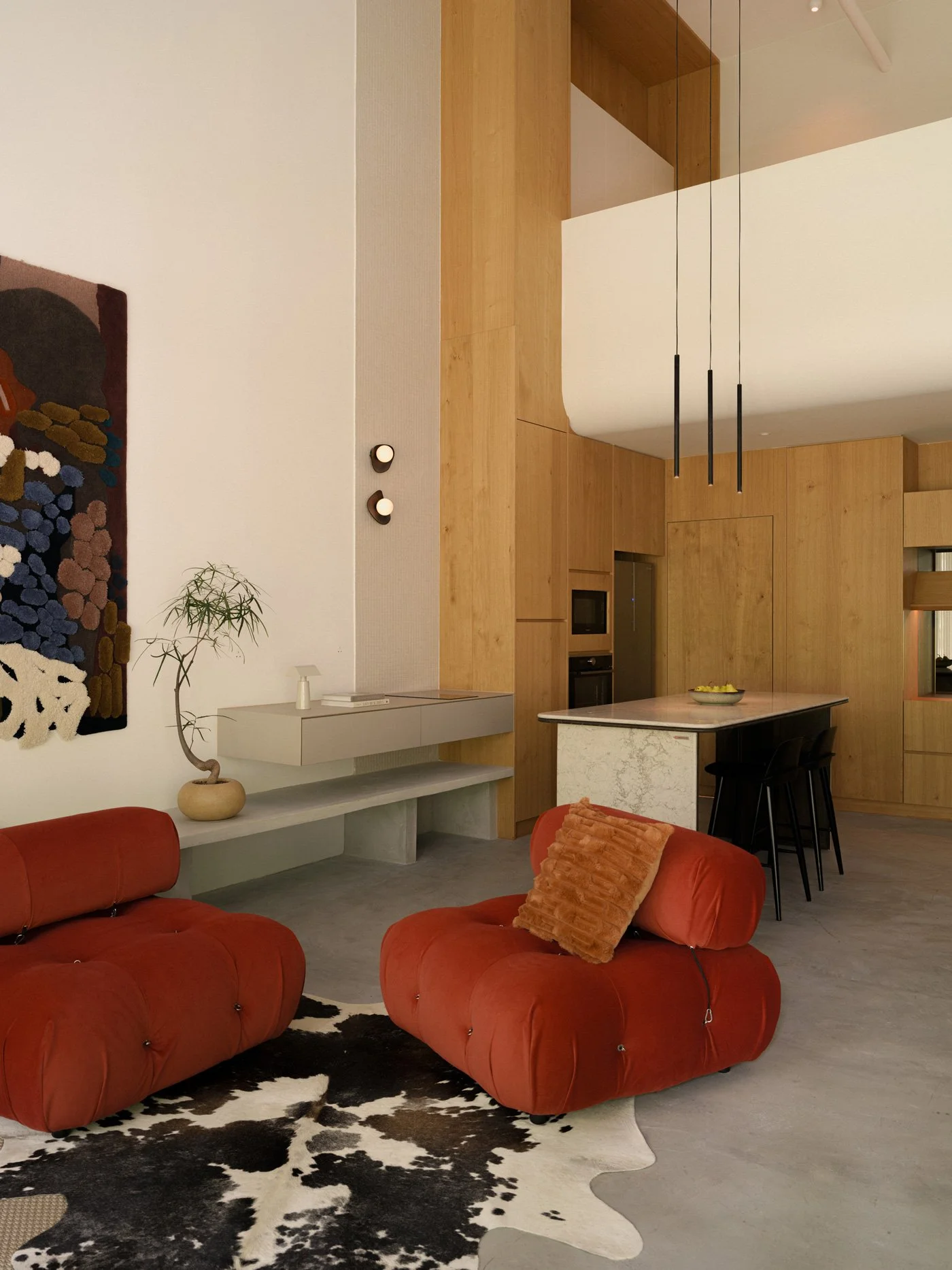
© Marcus Lim
抱持著追求純粹的初衷,他們不將辦公室看做一個展示空間(showroom),而是想藉由空間,反映出 Authors In Style 的原始本質。在他們眼中,有意義的設計始於同理心、節制的思考與真誠的態度,而這些無形的哲理,透過縝密思考的材質應用,結合直覺式的佈局及情境照明,一一在此被具體呈現。
-
Holding true to their original intentions, they approached the project not as a showroom, but as a reflection of their core identity. In their eyes, meaningful design begins with empathy, restraint, and authenticity. These intangible philosophies have been materialized here through thoughtful materiality, intuitive spatial planning, and atmospheric lighting.
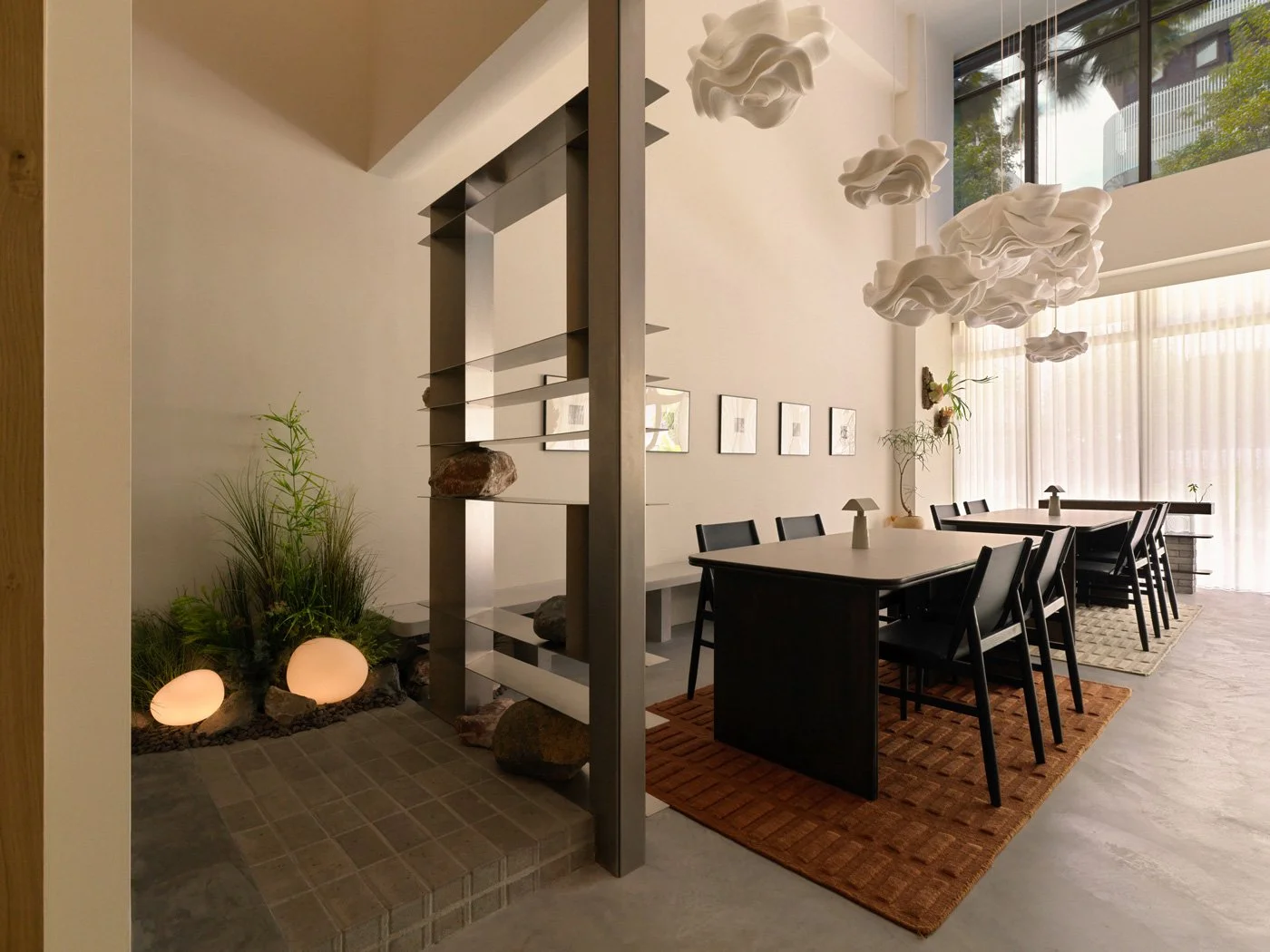
© Marcus Lim
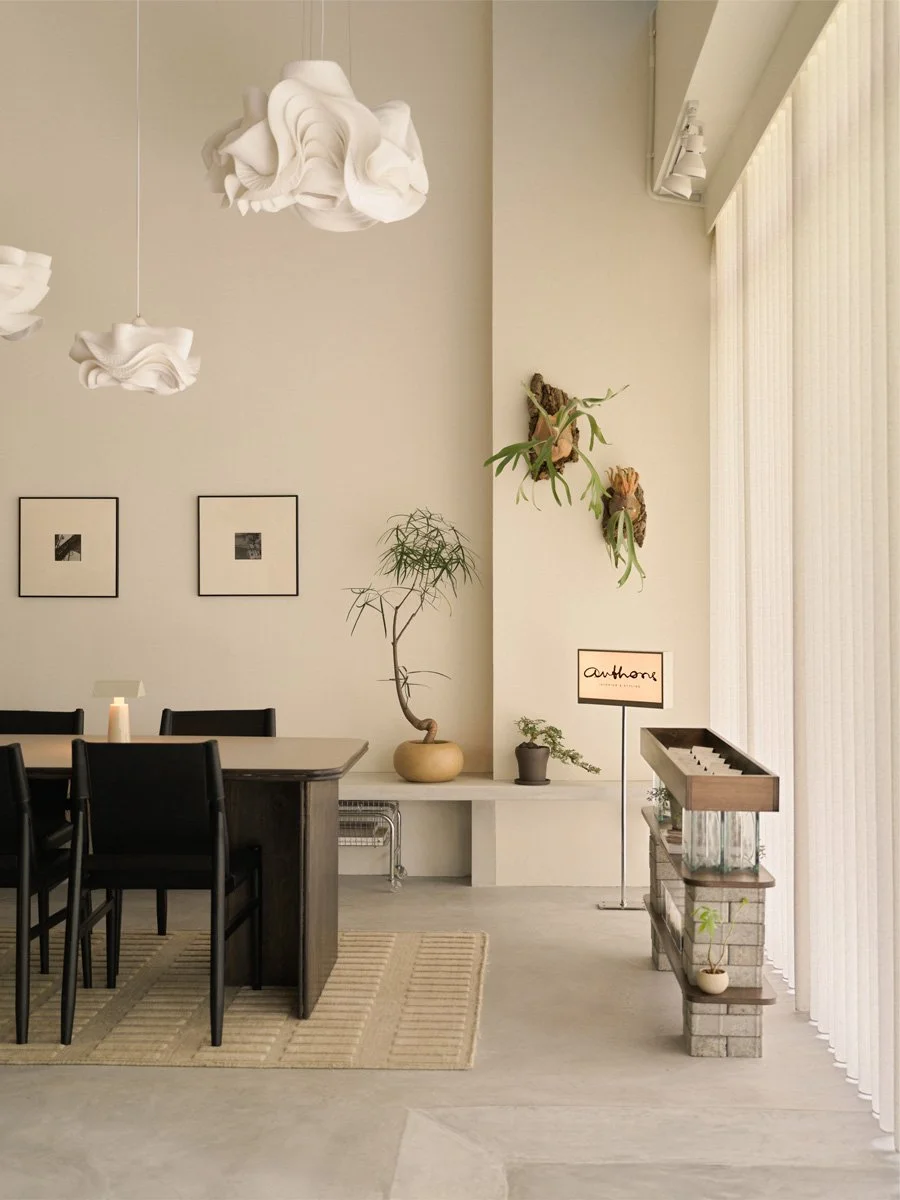
© Marcus Lim
© Marcus Lim
To be in love with design, and to design with love.
簡單卻寓意深遠的信念, 引導著整體空間的規劃。對 Tayllen 來說,這件事超越了設計美學。”To be in love with design”,意味著對所做的事情保持好奇、深思熟慮,並在情感上保持連結;”to design with love” 則代表無論他們的身份(客戶、訪客,或是自己的團隊成員),皆要深刻在乎人們將如何體驗一個空間。
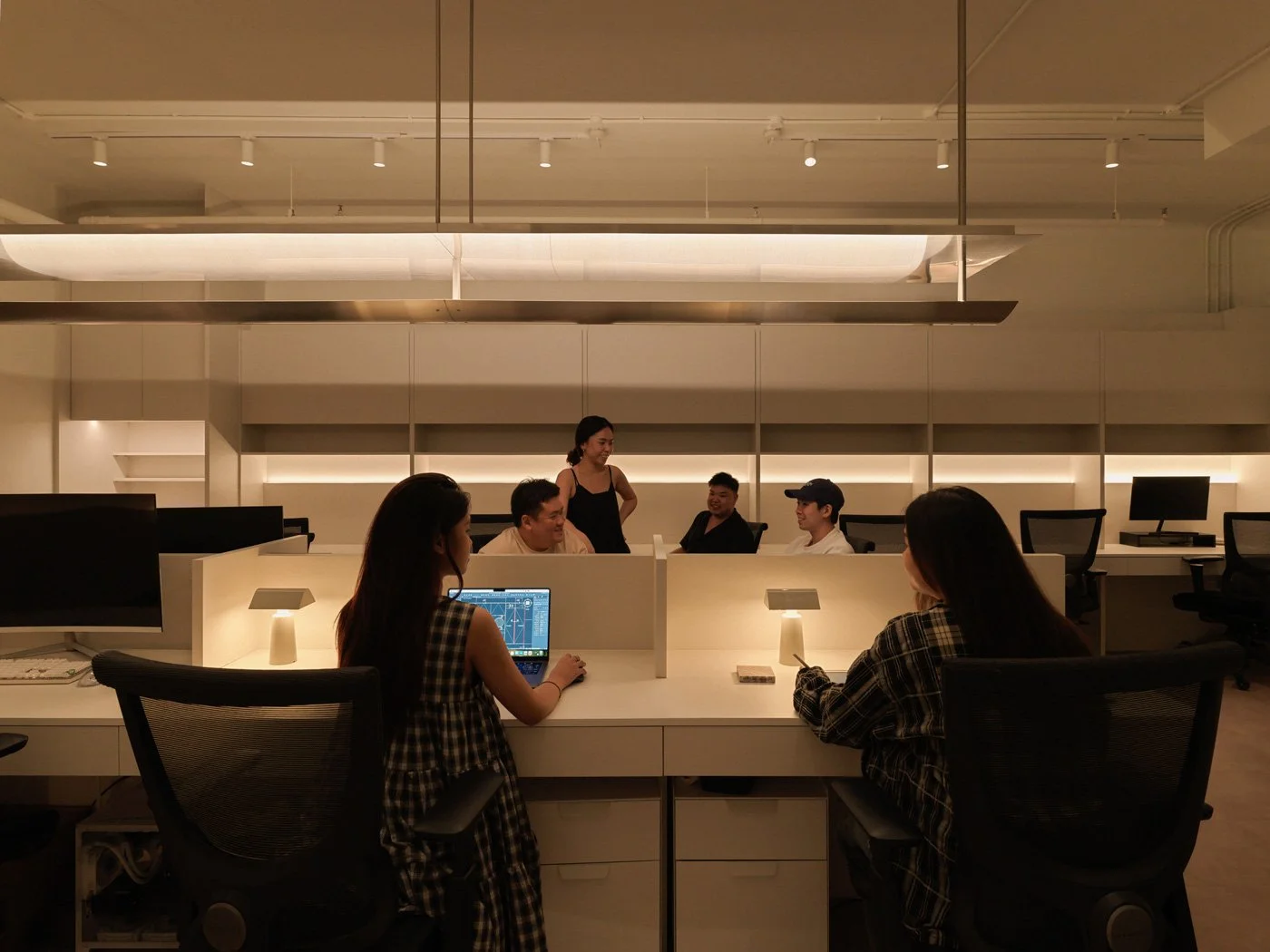
「如果我們是自己的客戶,這樣的感覺還是對的嗎?」整個設計過程中,他們時常捫心自問這一題。這樣的心態影響了各方面的決策,讓成果是作為一間圍繞著「人」,鼓勵合作、對話、思考,甚至是停頓休息時刻的工作空間。
這裡儼然是一份每日的提醒,提醒著我們當初為什麼成為設計師?不單單是創造美麗的環境,更是創造有意義的體驗。
-
"To be in love with design, and to design with love."
This simple yet profound belief guided the entire spatial planning process. For Authors In Style, this goes far beyond design aesthetics. Being in love with design means remaining curious, thoughtful, and emotionally connected to what they do. Designing with love means caring deeply about how people experience a space, whether they are clients, visitors, or their own team members.
"If we were our own client, would this still feel right?" Throughout the design process, the team frequently asked themselves this question. This mindset influenced decisions across the board, resulting in a studio designed around people—a workspace that encourages collaboration, conversation, reflection, and even moments of pause. "Ultimately, the space serves as a daily reminder of why we became designers in the first place—not simply to create beautiful environments, but to create meaningful experiences."
© Marcus Lim
跨越虛擬的實體連結
Tayllen 提到,設計是一門講究觸覺的專業。它發生在手指撫過材質的瞬間,在團隊並肩勾勒草圖的片刻,也發生在面對面檢視細節時,那些經常激發出意外靈光的自發性對話裡。而這些充滿人味與溫度的瞬間,難以在虛擬的網路上重現。
儘管科技讓我們幾乎能在任何地方工作,但我們相信創造力仍與實體感知有著深刻的連結。
因此工作室不僅僅是一個辦公場所,還是團隊探索靈感、凝聚彼此與共同經歷設計的實體容器。同樣地,當前來造訪的客戶親身在裡頭走動,觸摸、感受氛圍時,亦能最直接理解 Authors In Style 想傳遞的理念,並親身參與設計師的思考軌跡。
-
Physical Connections Beyond the Virtual Realm
Tayllen points out that design is a tactile profession. It happens in the moment your fingers brush across a material, in the shared experience of sketching ideas together, and in the spontaneous, face-to-face conversations that often lead to unexpected breakthroughs. These warm, human moments are difficult to recreate online.
"While technology allows us to work from almost anywhere, we believe creativity remains deeply connected to physical experience."
Therefore, the studio is much more than a workplace; it is a physical vessel where the team explores ideas, builds relationships, and experiences design collectively. Similarly, when clients walk through it, touch it, and feel the atmosphere, they can directly understand the firm's philosophy and experience exactly how they think as designers.
© Marcus Lim
© Marcus Lim
直覺式的場域規劃:讓靈感與互動自然流淌
我們希望合作與創造力能有機地發生,而不是被硬性規定的。因此目標之一,即是在不犧牲功能性的情況下,營造開闊感。
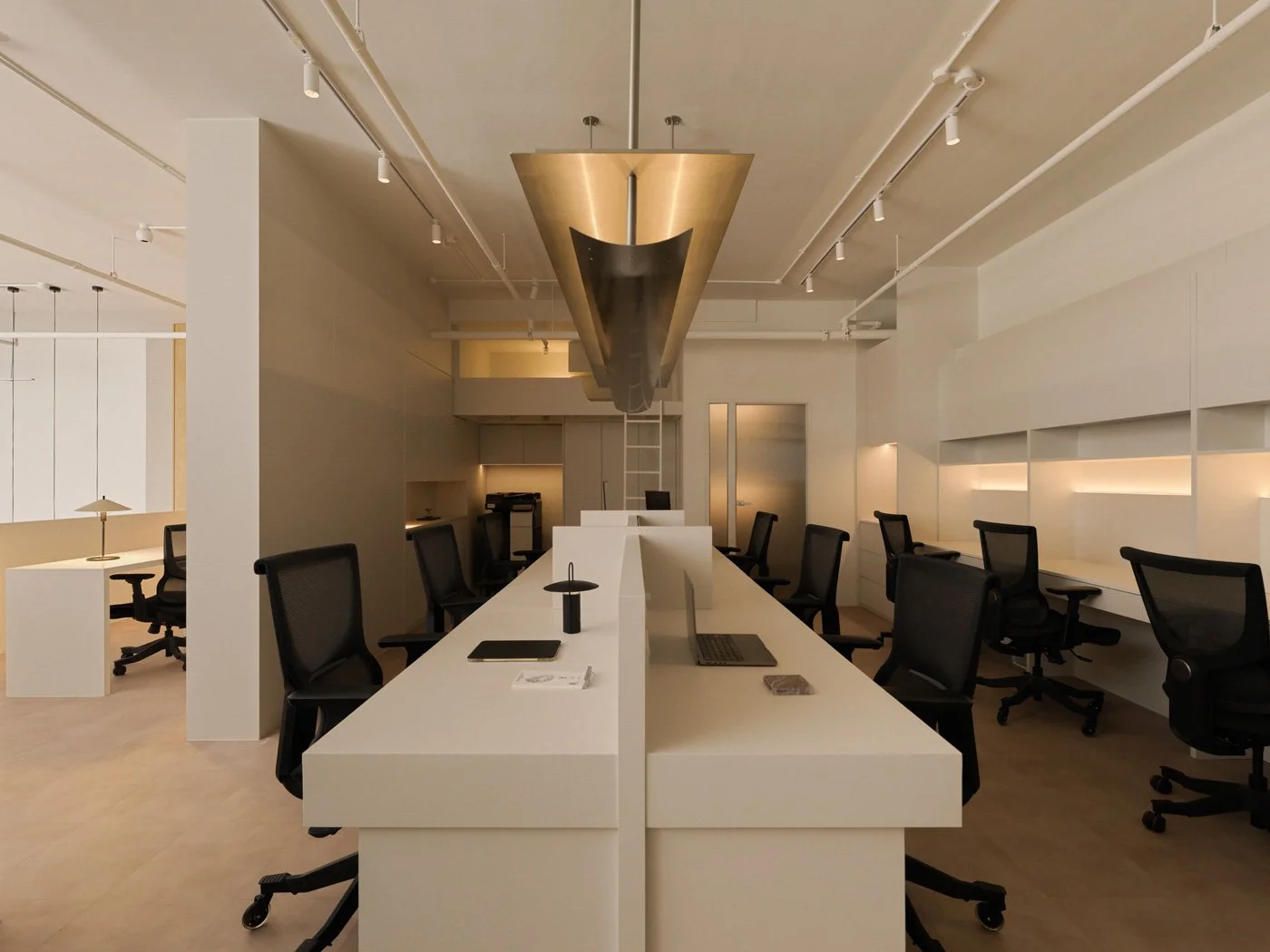
Authors In Style 的空間佈局,源自於細心觀察人們在一天之中,如何順暢地移動、工作與交流。空間的界線不以過多隔間來分割,而是透過材質的轉換、光影的明暗、傢俱的配置,溫柔地引導著行進的韻律,劃分出因應不同行為的彈性區域。
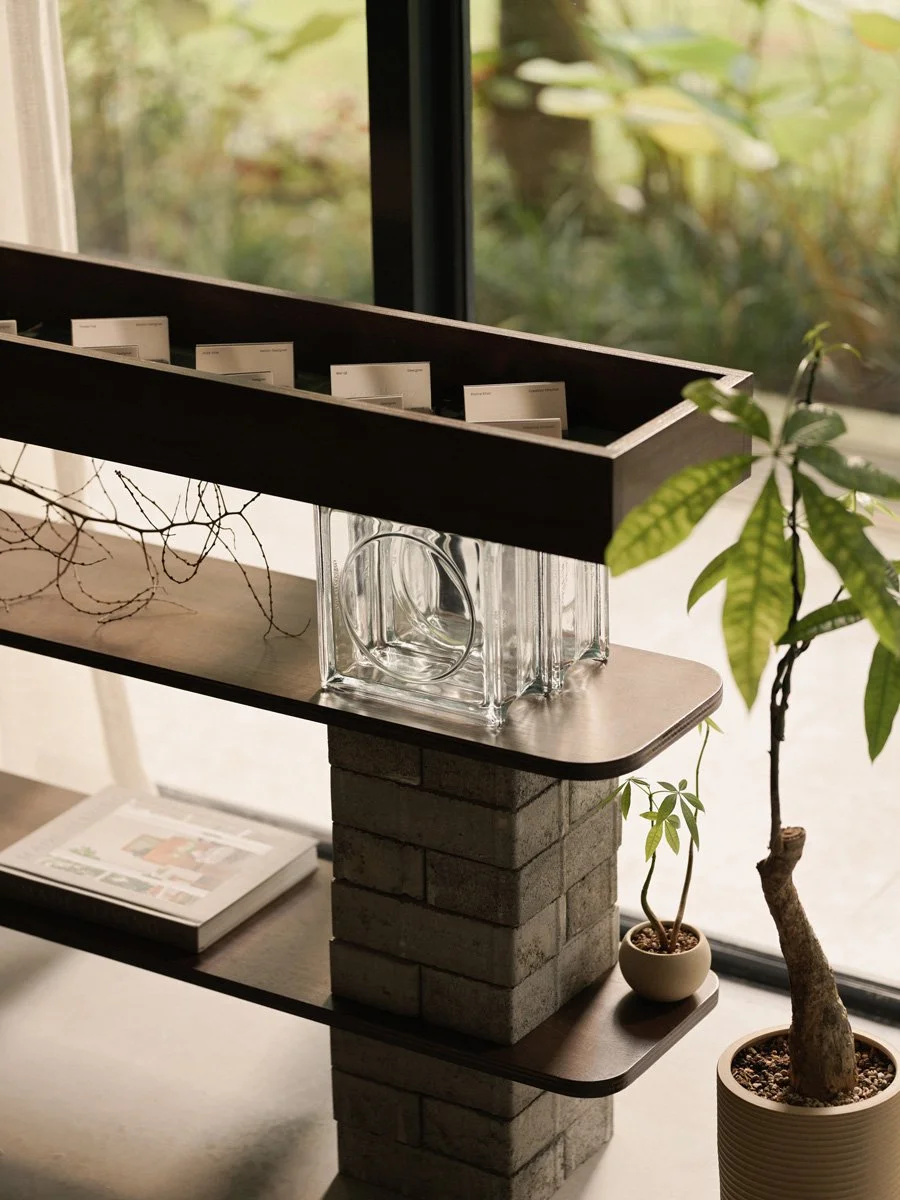
在這裡,每一個機能的轉換都發生得順其自然。例如,會議區的情境設定為鼓勵熱烈討論,卻又透過巧妙的佈局,與需要專注的個人工作區保持著不互擾的默契。而對設計師至關重要的「材質庫」,則被安放於最容易觸及的動線上;這份體貼,讓團隊在發想概念與探索材質時能毫無阻礙地流暢切換。
不被框架定義的平面佈局,不僅在視覺上保持通透的連結性,也完美支援了多變的工作模式。同時也讓前來的客戶自然融入其中,感覺自己不曾被排除在設計過程之外。
-
Intuitive Spatial Planning: Letting Inspiration and Interaction Flow
"One of our key objectives was to create openness without sacrificing functionality."
The spatial layout of Authors In Style stems from careful observation of how people naturally move, interact, and work throughout the day. Instead of relying heavily on walls and enclosed rooms to define boundaries, the space gently guides the rhythm of movement through material transitions, lighting variations, and furniture placement, creating flexible zones that support different modes of work.
Here, every functional transition happens naturally. For example, meeting areas are set up to encourage lively discussion, yet through clever layout, they maintain a quiet mutual understanding with focused work zones, ensuring neither disrupts the other. The "material library," crucial for the designers, is positioned along the most accessible flow path. This thoughtful placement allows the team to transition seamlessly between concept development and material exploration.
This unconstrained layout not only maintains a transparent visual connection but also perfectly supports diverse working styles. It allows visiting clients to naturally blend in, never feeling separated from the design process itself.
© Marcus Lim
以質材體現能被碰觸的理念
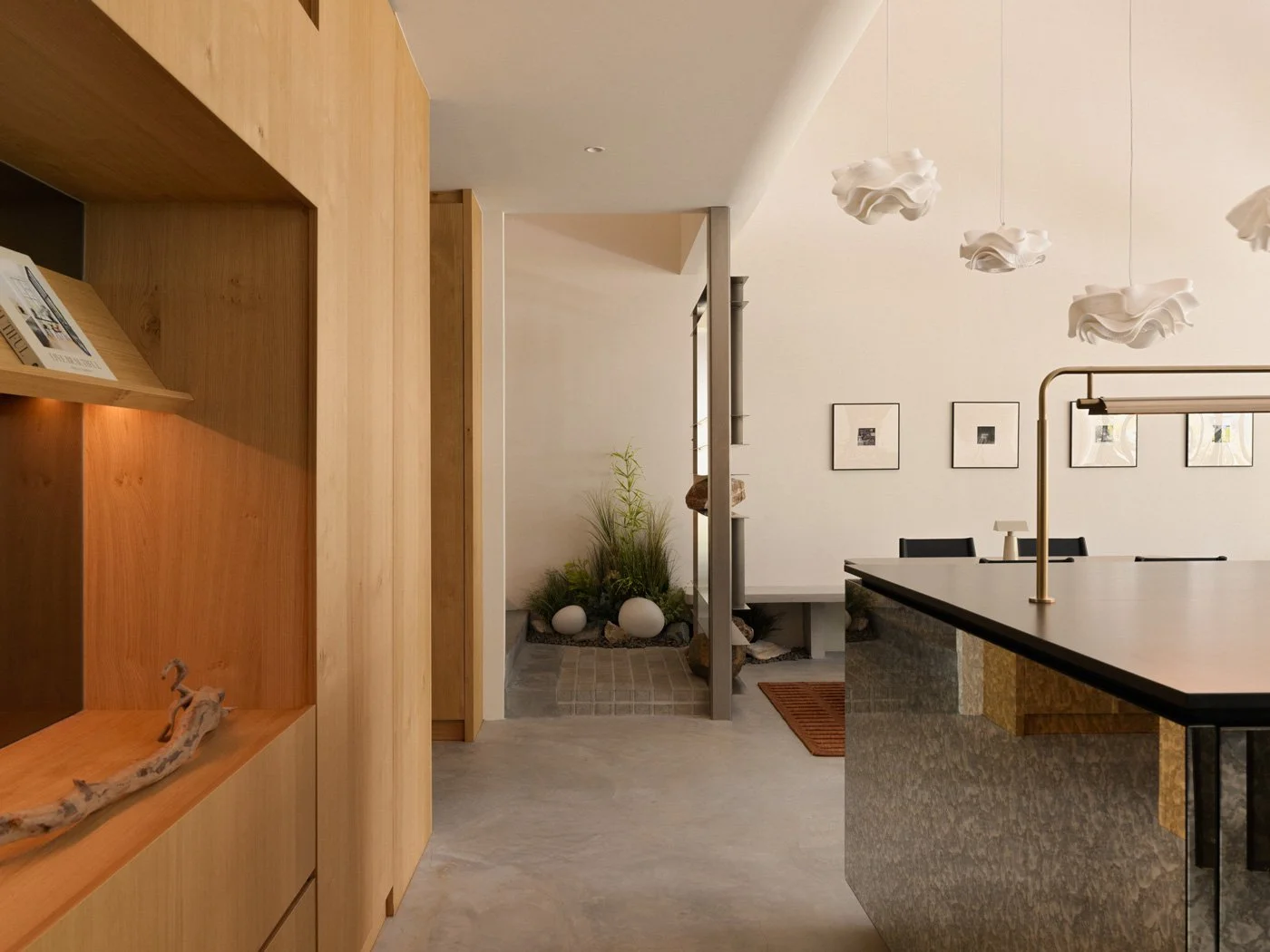
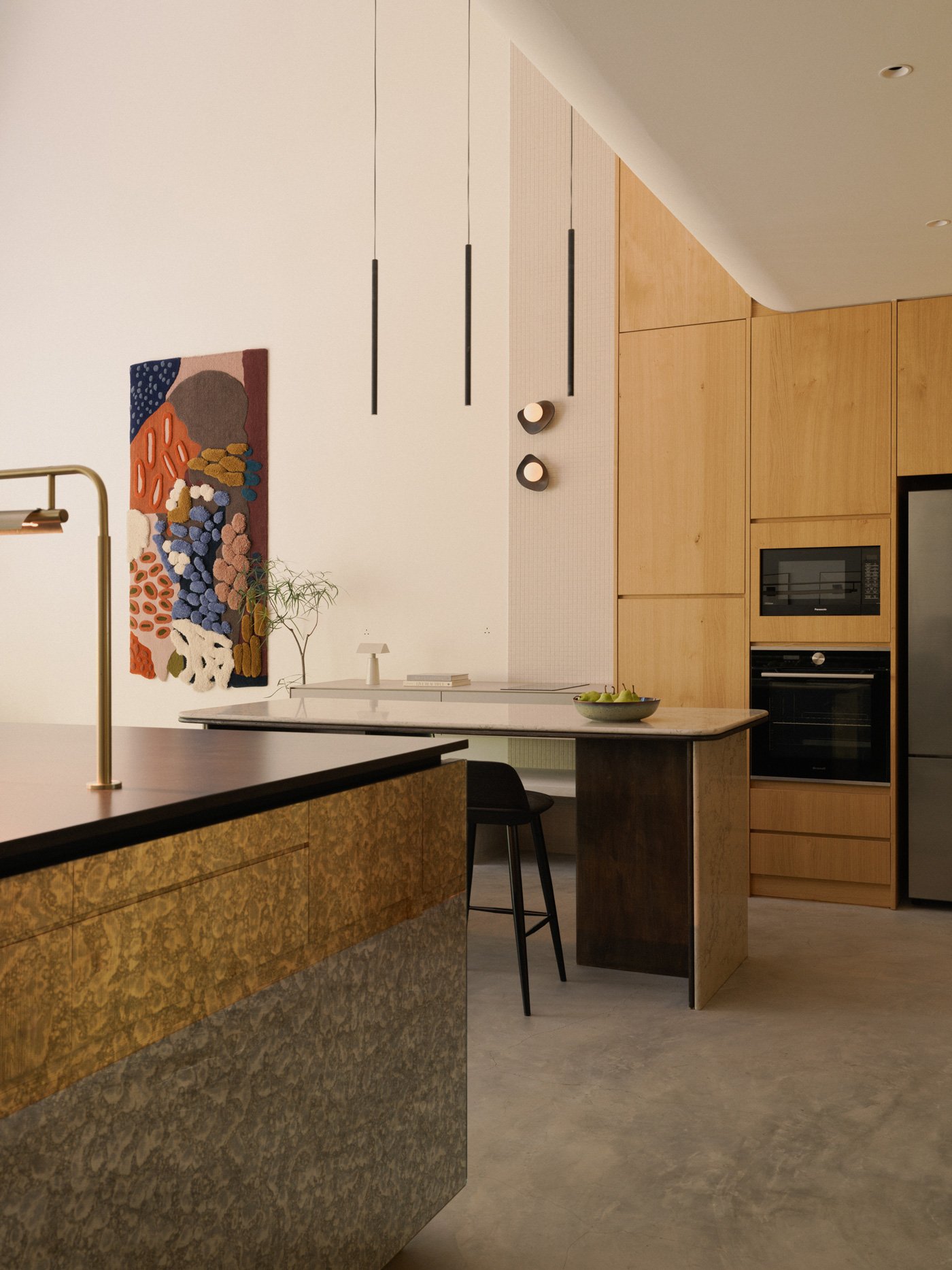
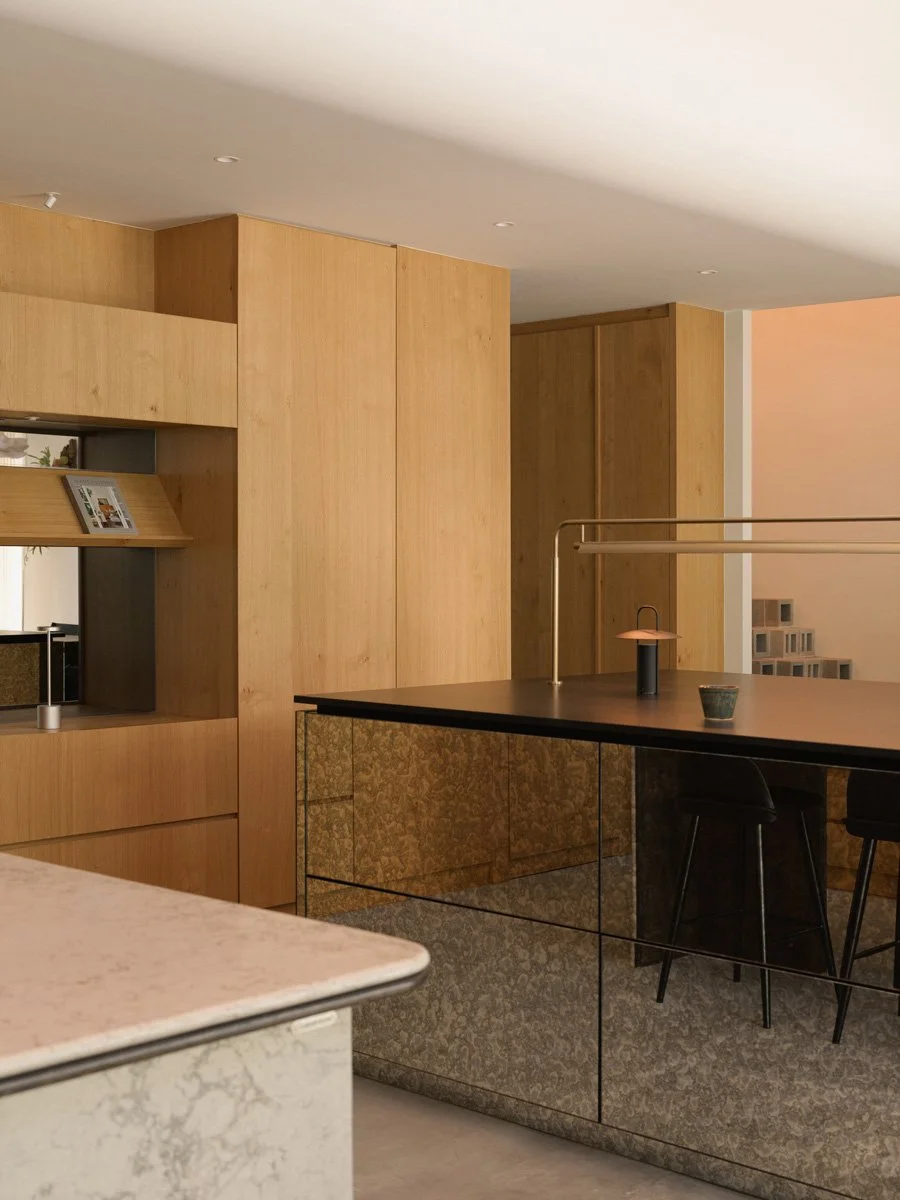
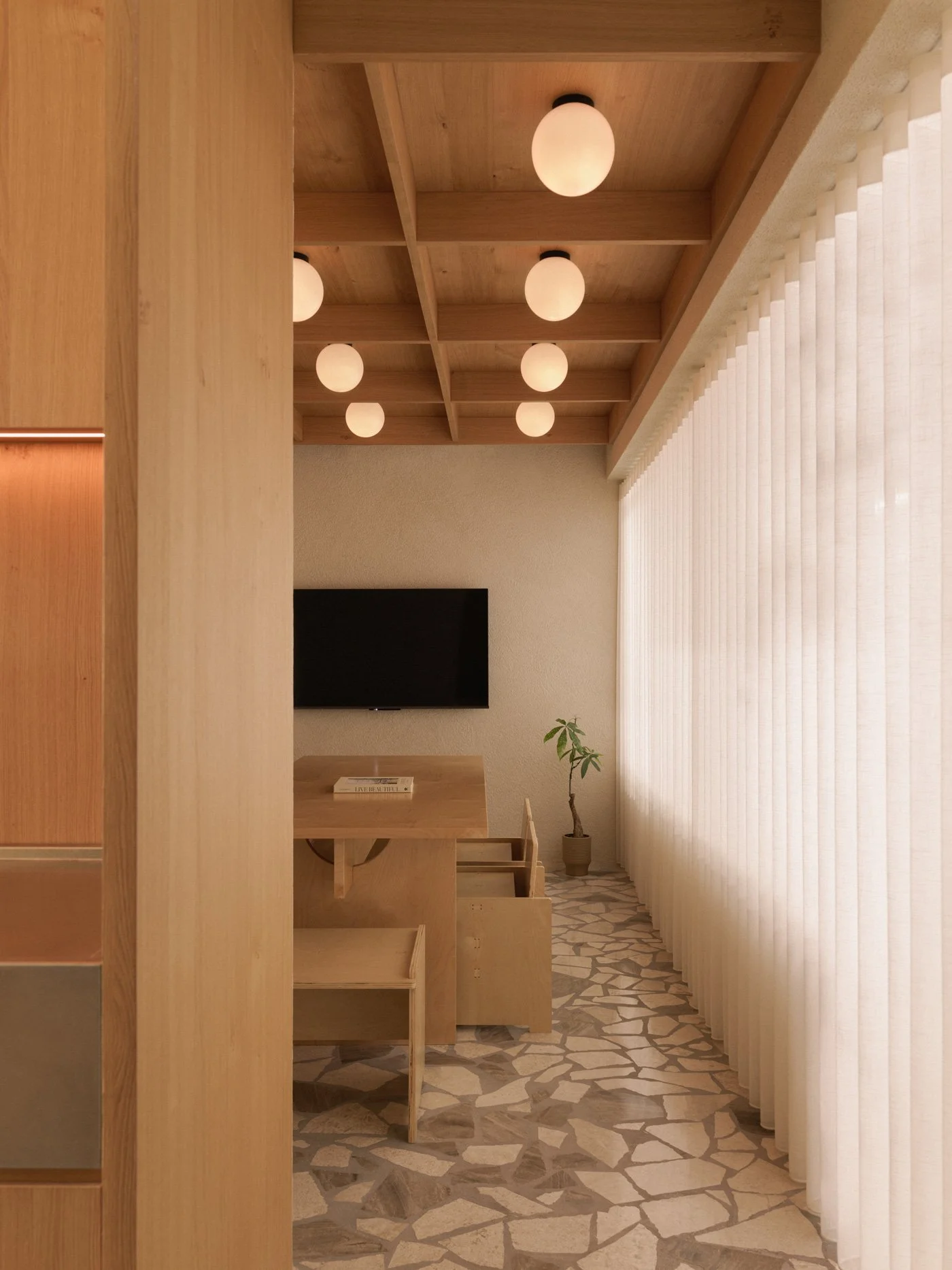
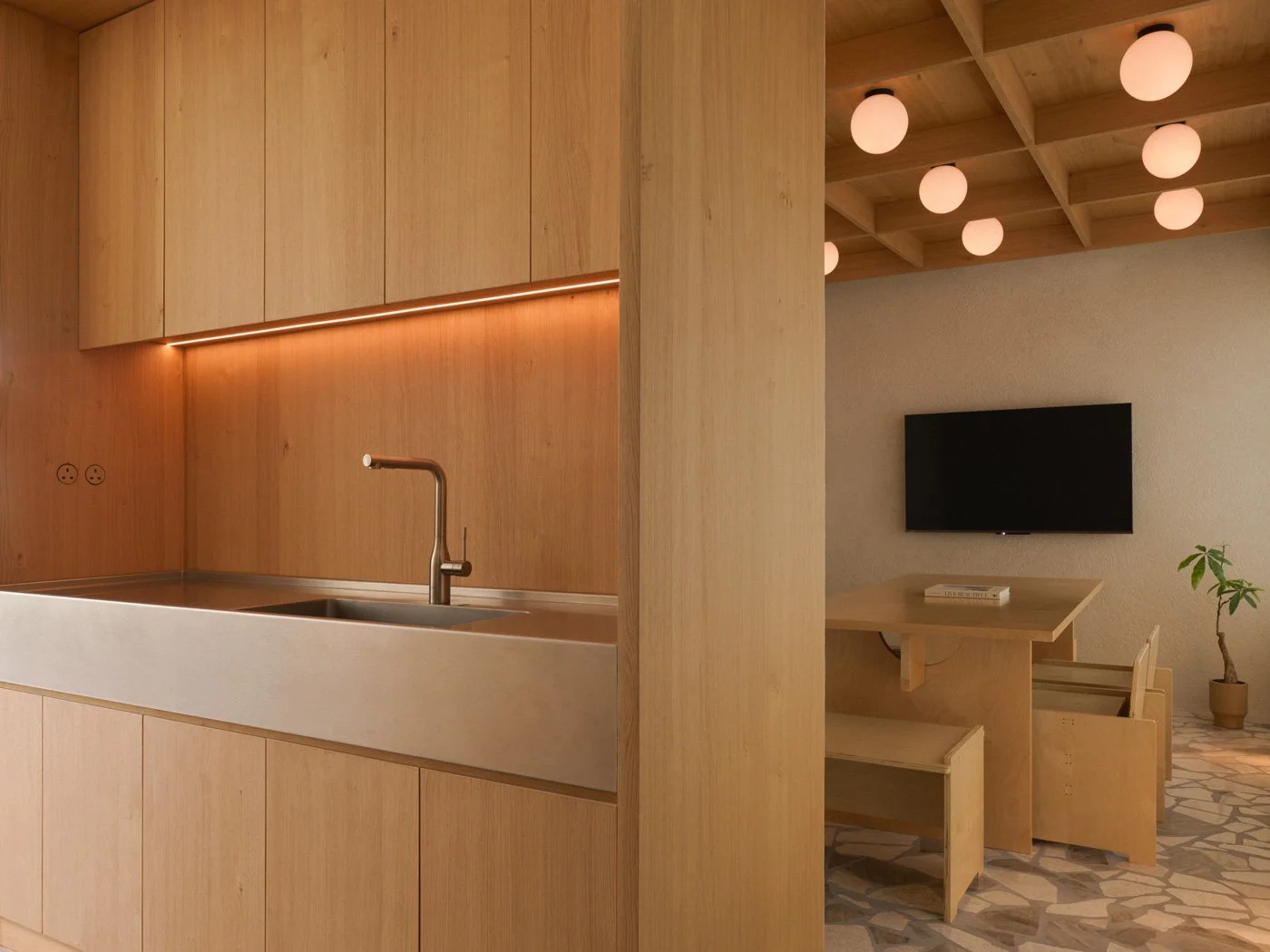
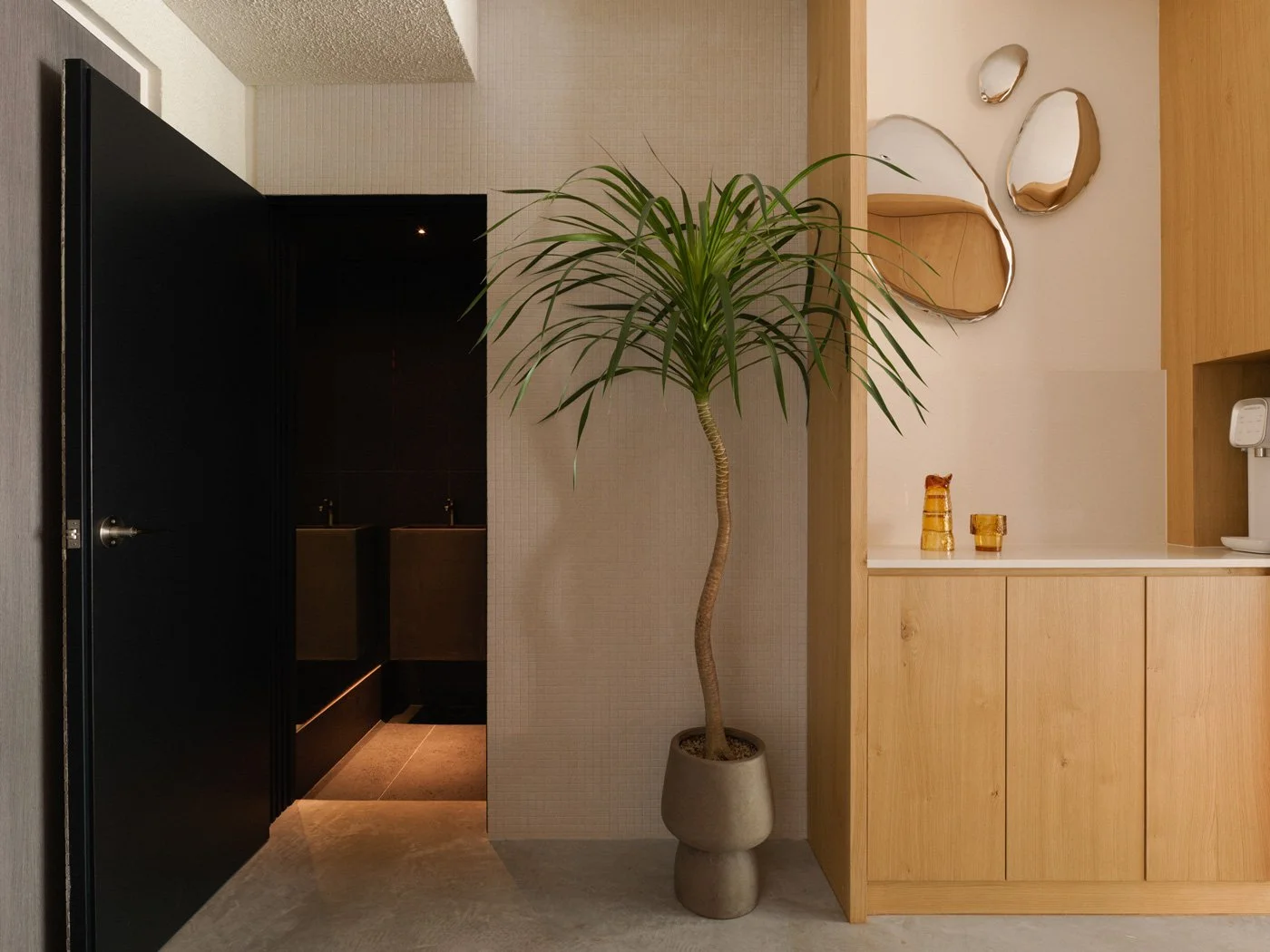
如果空間是溝通的媒介,「材質」便是表達 Authors In Style 設計身分的重要方式之一。團隊以橡木實木皮奠定整體的溫潤基調;在此之上,手刷塗料和大理石,隱隱覆上了沉靜的質地,外露的樺木夾板保留質材最原始的表情,仿古染色的鏡面映照出深邃的光影層次,最後再輔以俐落的不鏽鋼細節作為優雅的點綴。這些異材質一層層交織出能被深刻感受的立體維度,映照著團隊對於誠實本質、職人工藝與長久性的珍視。
Tayllen 回憶,團隊當時花了近兩個月的時間尋覓,探索了無數的選項,才終於遇見這塊定義了工作室靈魂、帶有歷史質感的橡木實木皮。「那真的是一見鍾情。看到它的那一刻,我們就知道它是對的。」她說道,尋找實木皮的過程完美說明了這趟設計旅程。橡木表面有機的紋理、自然不造作的色澤變化與溫潤手感,散發出一種極具親密感的共鳴。
在許多方面,它提醒了我們最初為何會愛上設計;不是因為某個東西很流行,而是因為它創造了情感上的串連。
-
Embodying Philosophy Through Tactile Materiality
If space is a medium for communication, "materiality" is one of the most important ways Authors In Style expresses its design identity. The team established a warm foundation with an oak veneer; layered over this are lime plaster and cracked marble that introduce a quiet texture. Exposed birch plywood retains its raw expression, while antique-stained mirrors reflect deep layers of light and shadow, all elegantly accented by sharp stainless-steel detailing. These contrasting materials weave together a profound sensory experience, reflecting the team’s appreciation for honesty, craftsmanship, and longevity.
Tayllen recalls that the team spent nearly two months exploring numerous options before discovering the historic oak veneer that ultimately became the defining material of the studio. "It was genuinely love at first sight. The moment we saw it, we knew it was right." She notes that the search for the oak veneer perfectly illustrates this journey. Its organic grain, natural color variations, and warm touch resonate with an intimate familiarity.
"In many ways, it reminded us why we fell in love with design in the first place—not because something is fashionable, but because it creates an emotional connection."
© Marcus Lim
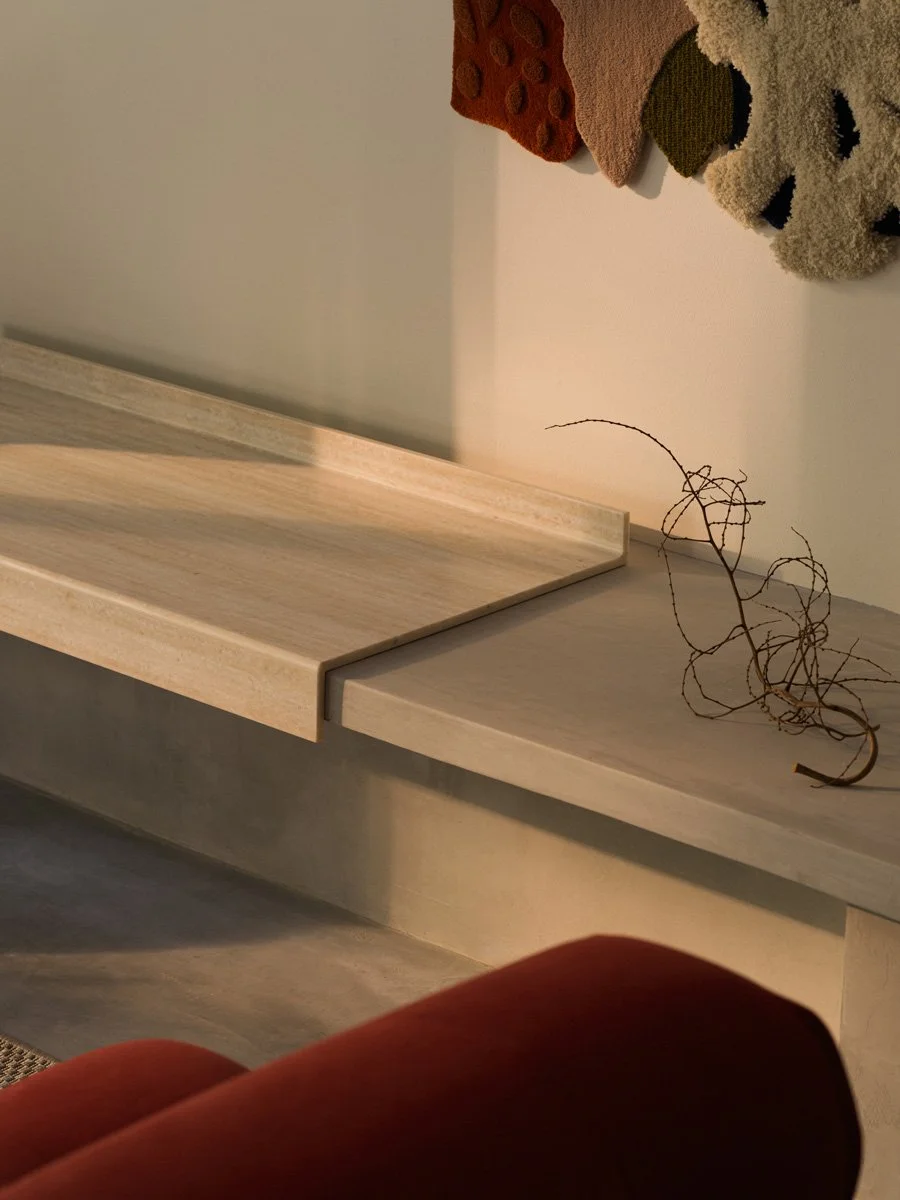
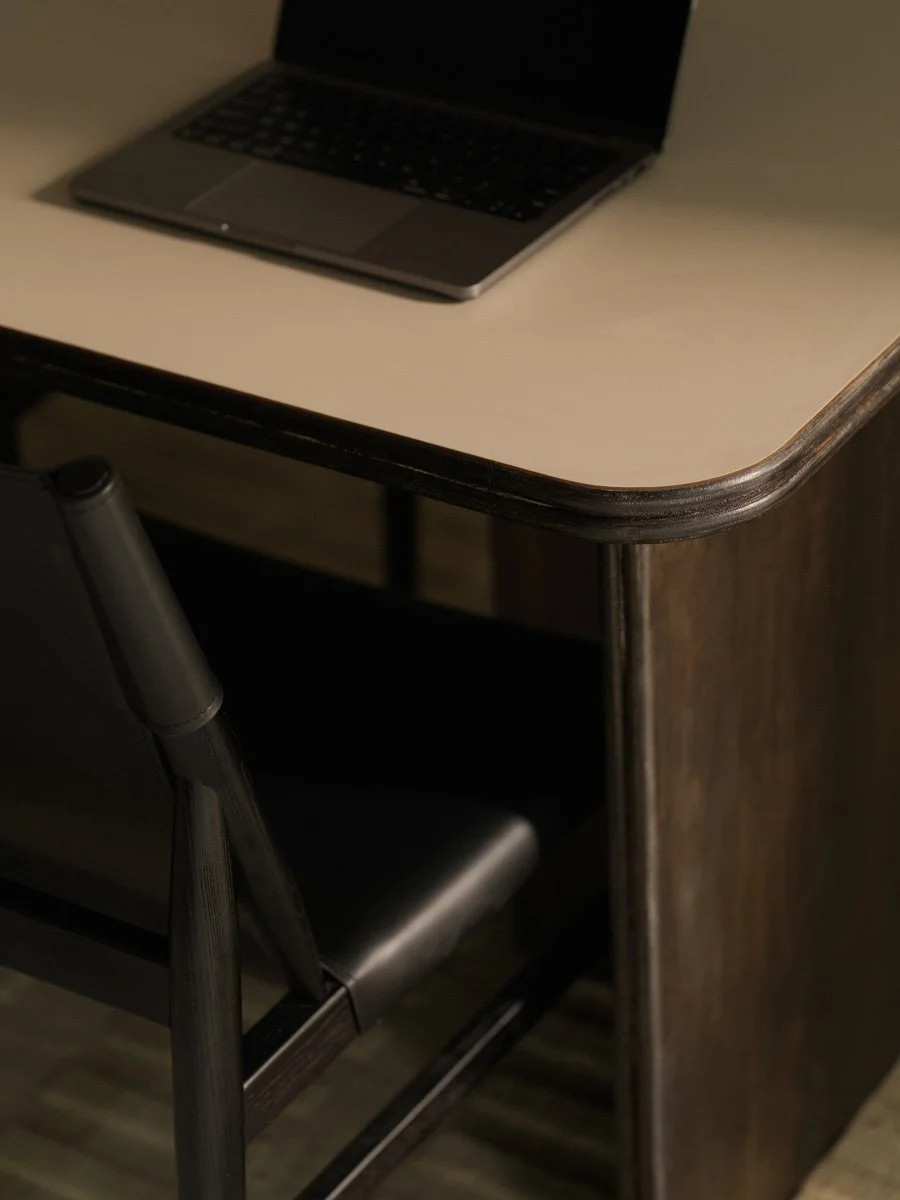
設計應該被體驗,而不是僅僅被觀看
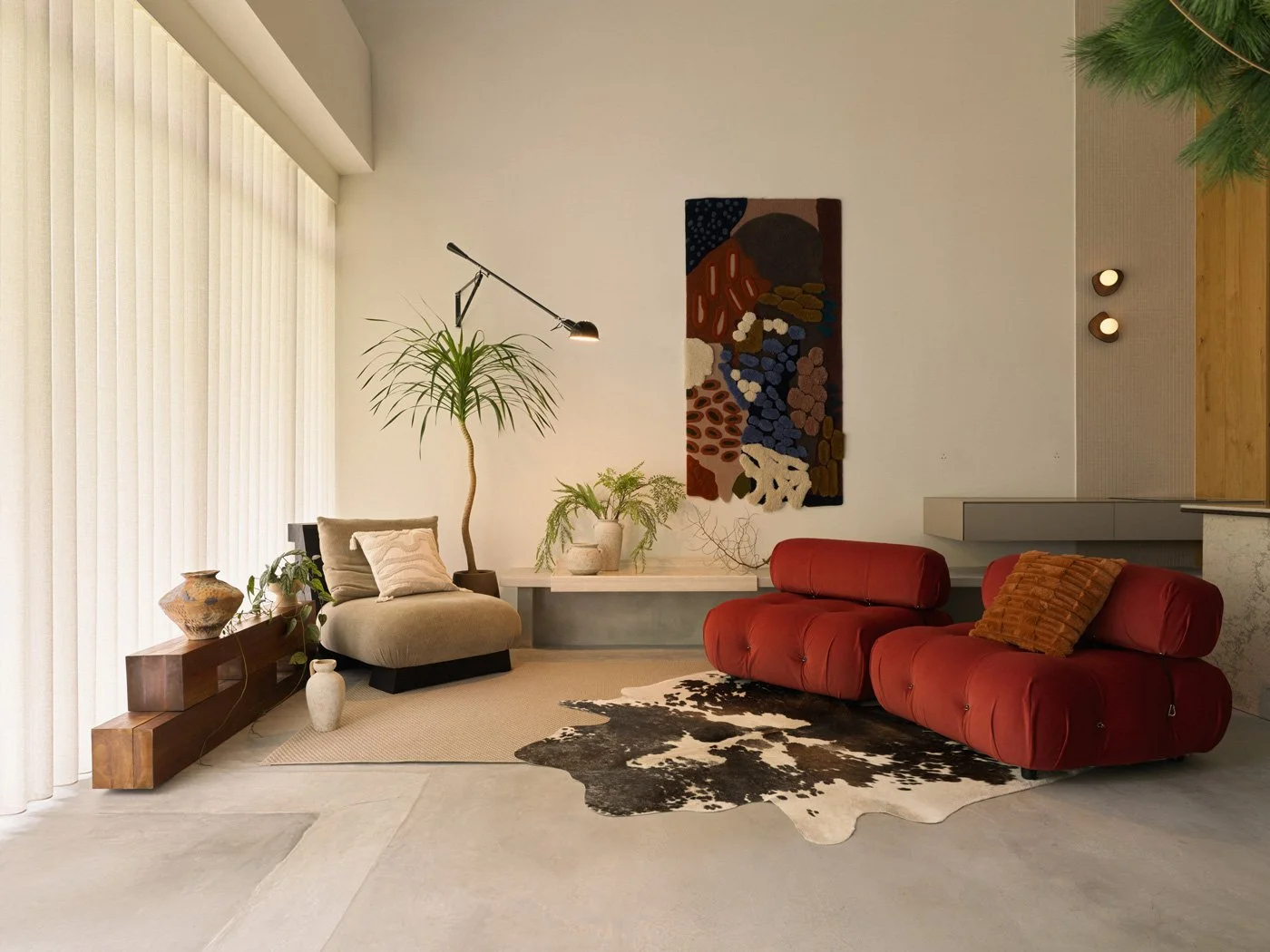
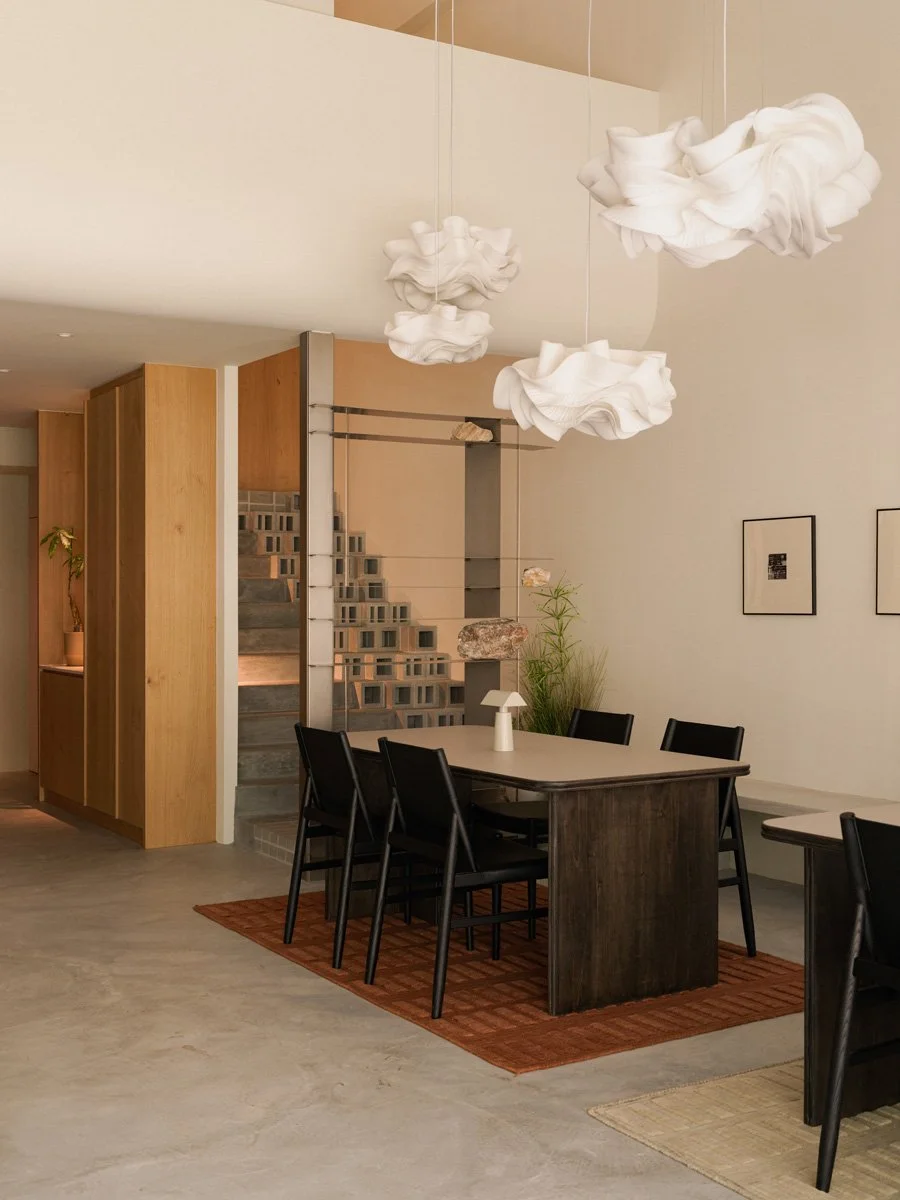
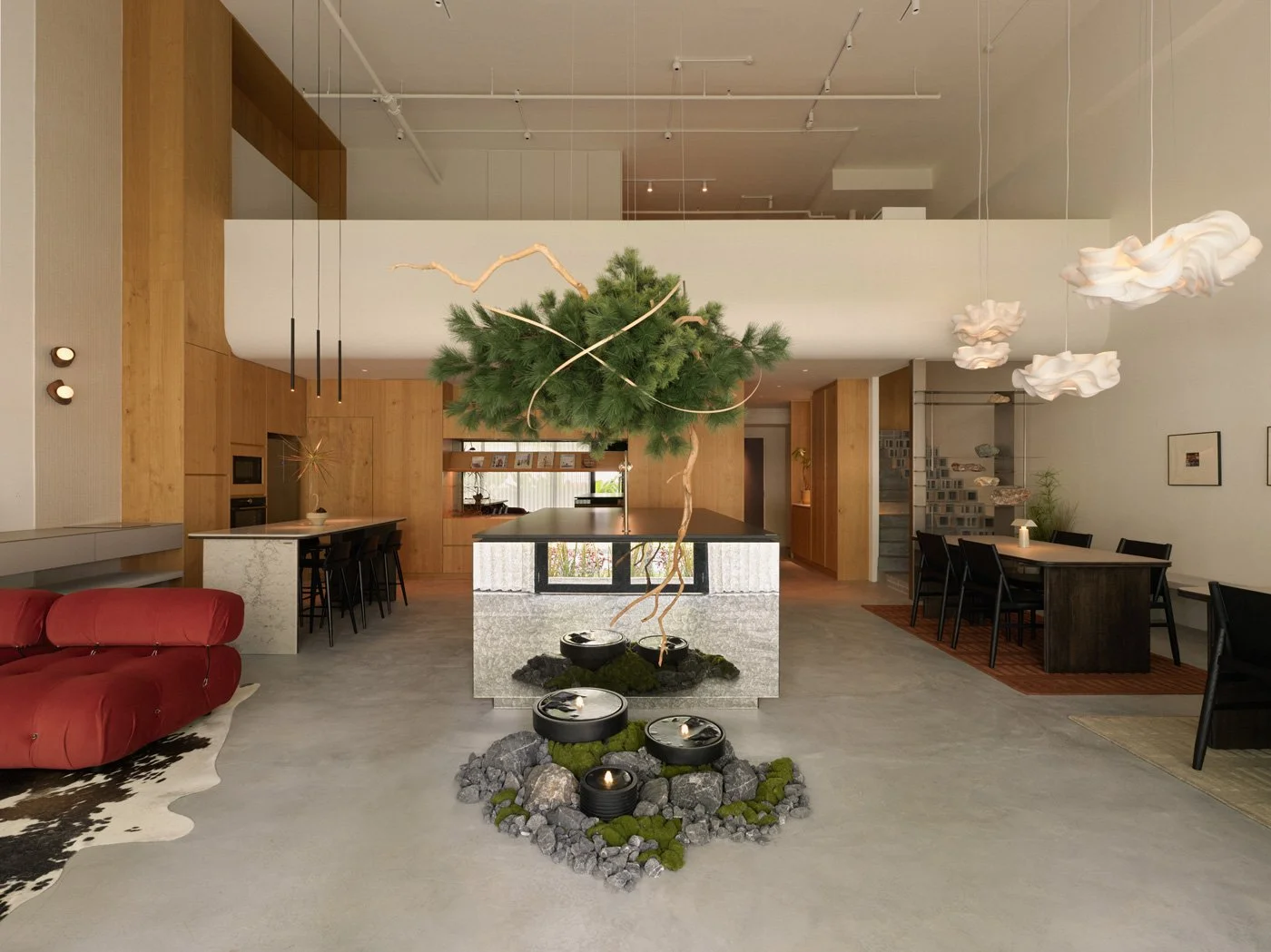
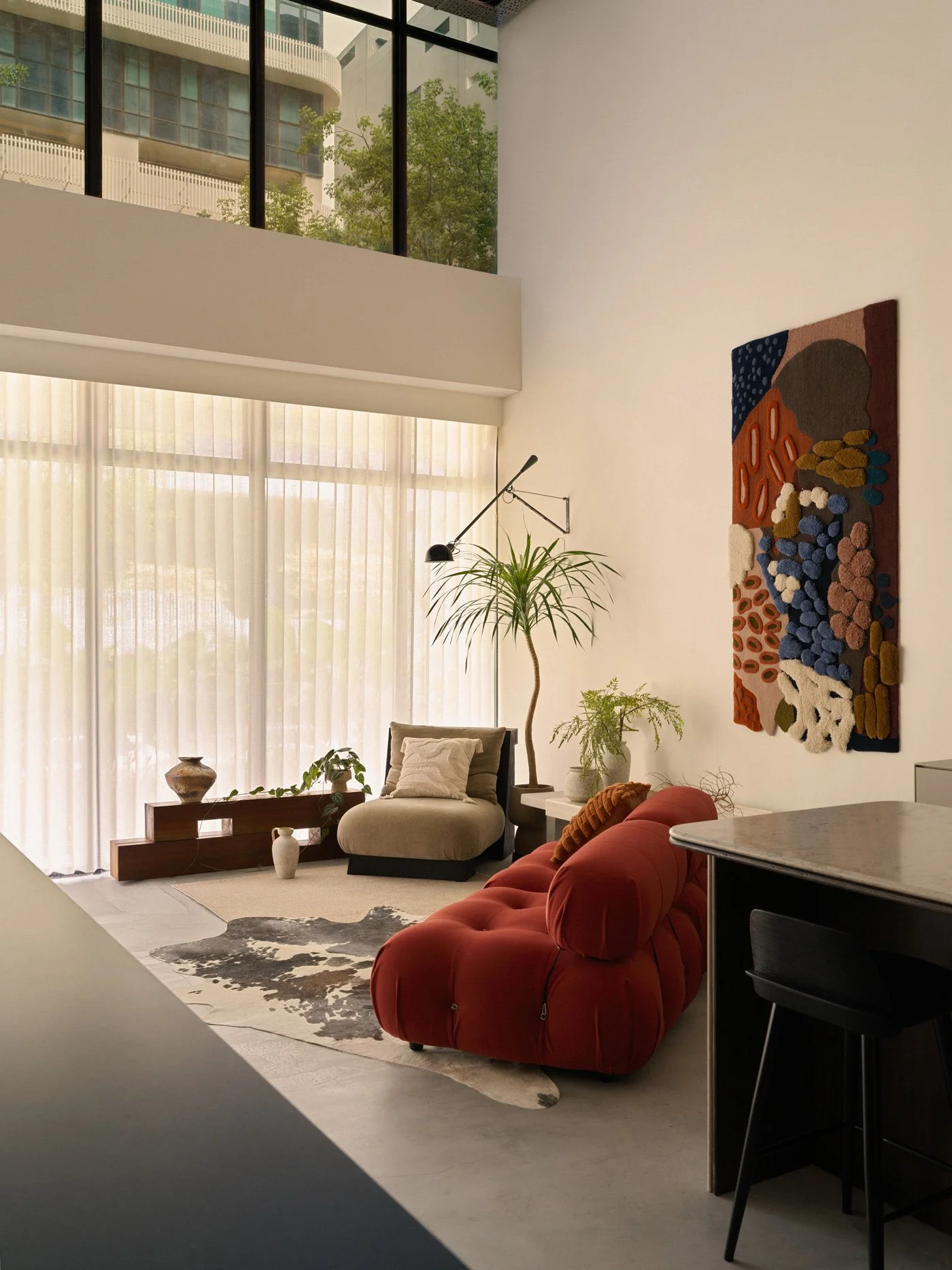
靠近入口處的 Cloud Forest 裝置對團隊來說格外有意義。它創造了令人難忘的第一印象,同時也為整個工作室定下基調。他們刻意避免將工作室當作傳統意義上的展示間,不希望家具家飾僅作為陳列品,而是憑藉「真正想如何生活與工作」的思維來策展。
從身體的舒適度、手感的回饋與物件的持久性著手,每一件單品的入駐,都是為了營造溫暖且自在的氛圍。他們期望訪客踏入的,是一個充滿生活軌跡的起居環境,而不是被刻意佈置好的漂亮場景。
-
Design Should Be Experienced, Not Just Observed
The Cloud Forest installation near the entrance holds special meaning for the team. It creates a memorable first impression while setting the tone for the entire studio. They deliberately avoided treating the studio as a showroom in the traditional sense, refusing to let furniture and decor act merely as display pieces. Instead, they curated the space based on how they genuinely wanted to live and work.
Prioritizing comfort, tactile feedback, and longevity, every piece was chosen to cultivate a warm and effortless atmosphere. They want visitors to feel as though they are stepping into a lived environment filled with the traces of daily life, rather than a staged setting
© Marcus Lim
© Marcus Lim
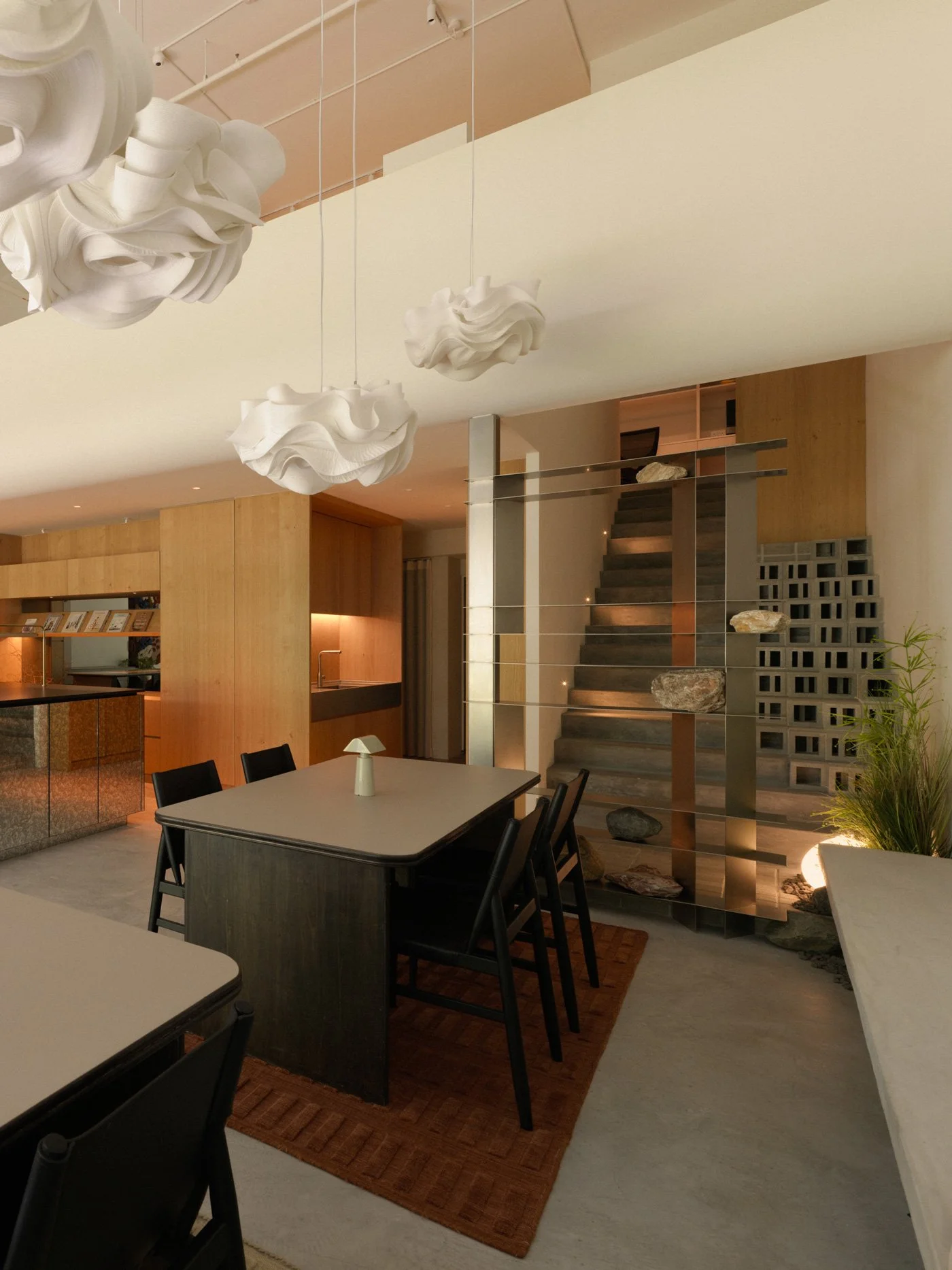
對於細節與溫度的講究,同樣延伸至照明設計。「氛圍」被置於首要考量,透過可調式的系統,室內的氣氛隨著一日的時間改變自然變化。「我們希望燈光不僅能支援功能,更能支撐情感,共同創造出一個讓人感到平靜、備受款待且充滿人情味的環境。」其中,客製化的 Kelopak 燈具不僅為俐落的佈局注入一抹柔軟度和雕塑感,更細膩體現了團隊所珍視的手工品質與情感敏銳度。
-
This dedication to detail and warmth extends to the lighting design. "Atmosphere" was placed at the forefront; through an adjustable system, the mood of the space naturally shifts throughout the day. "We wanted lighting to support not only function, but also emotion—creating an environment that feels calm, welcoming, and deeply human." The bespoke Kelopak lighting pieces not only introduce softness and sculptural character to the clean layout but also embody the handcrafted quality and emotional sensitivity the team values so deeply.
© Marcus Lim
© Marcus Lim
一個人們真心想在此花時間的地方
回望整個過程,Tayllen 透露,最大的挑戰之一是抗拒跟隨趨勢的衝動。
設計師每天都暴露在無數的想法與影響中。挑戰不在於決定要增加什麼,而在於決定什麼才真正屬於這裡。在整個過程中,我們必須保持紀律並相信自己的直覺。
這份堅持直覺的結果,帶來了美好發酵。問及團隊最喜歡的角落時,答案竟是原本設定用來與客戶開會、提案的簡報會議區。即使最初的機能是為了工作而設,它卻成為團隊真心喜愛、甚至在下班後最愛駐足的所在。大家經常聚集在那裡閒聊、喝杯小酒,享受純粹的放鬆時光;一個原本為工作而設的空間,不知不覺成了人們下班後依然想留下來的地方 ——「對我們來說,那也許是這個專案最大的成就。」
-
A Place People Genuinely Want to Spend Time
Looking back at the entire process, Tayllen reveals that the biggest hurdle was resisting the urge to follow trends. "As designers, we are exposed to countless ideas and influences every day. The challenge was not deciding what to add, but deciding what truly belonged. We had to remain disciplined and trust our own instincts throughout the process."
This commitment to their instincts yielded beautiful results. When asked about their favorite corner, the surprising answer is the showroom/presentation area originally designed for client meetings. Even though its initial function was work-oriented, it has become the team's genuinely favorite spot, especially after hours. The team often gathers there for casual conversations, a drink, or simply to unwind together. A space originally built for work has unknowingly become somewhere people still want to stay after they clock out.
"To us, that is perhaps the greatest achievement of the project," they conclude. "It is not just a showroom. It has become a place where people genuinely want to spend time."
© Marcus Lim
© Marcus Lim