
揉合工作、展示與樣品屋體驗!印度建築團隊 Billboards 以房地產辦公空間 Landforms,重新詮釋土地的意義
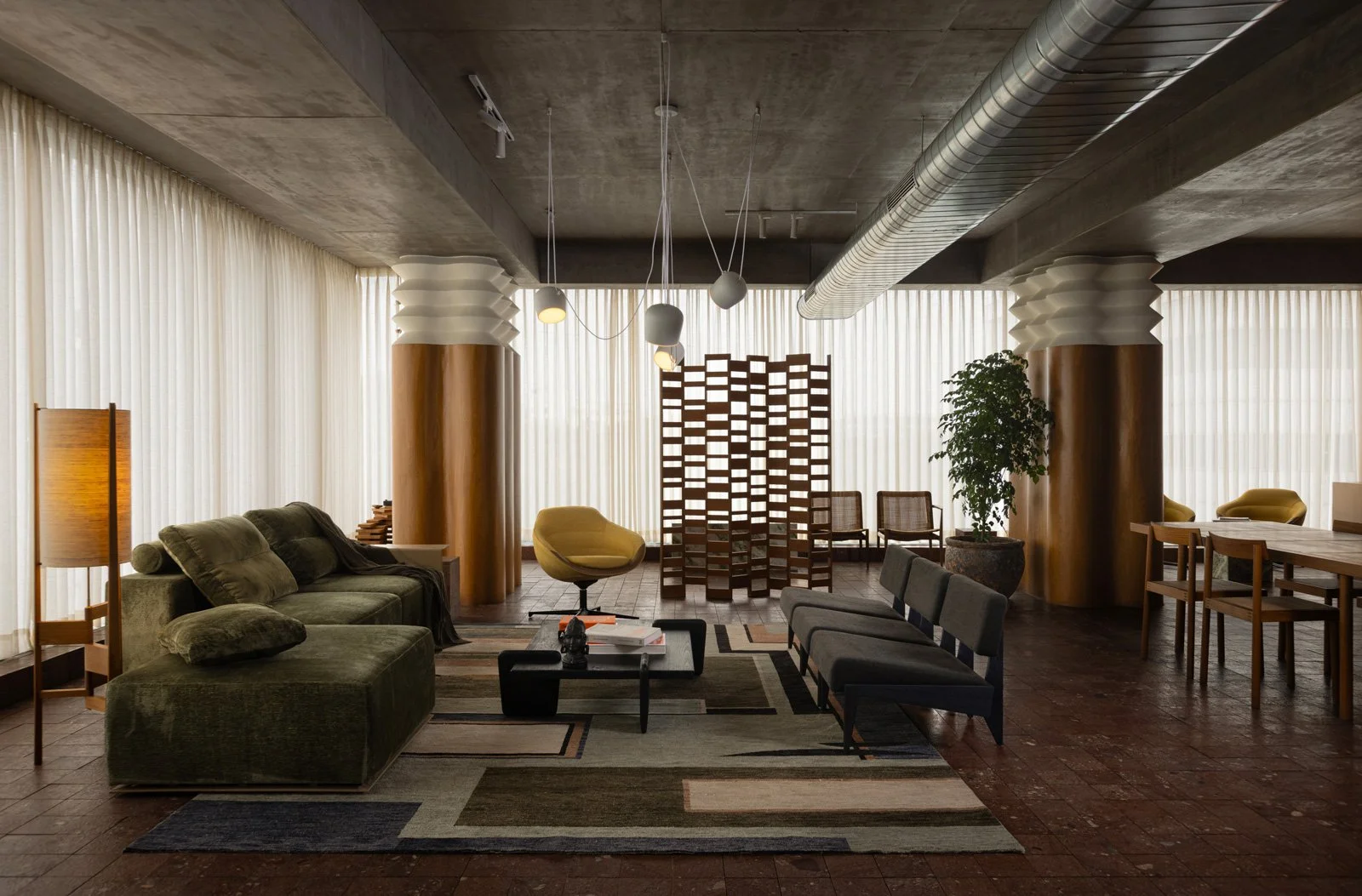
Photo Credit: Phosart Studio
-
What does "land" truly signify in our modern world? For most, it is merely an asset—a coordinate on a map or a static figure on a title deed. Within the real estate industry, this perception is even more reductive: land is measured, priced, and partitioned into tradable units, its entire existence distilled into the singular concept of "value."
Yet, land is far more than a commodity. It is a vessel for life, bearing the traces of all who have tread upon it. It possesses undulations and ridges, the scent of fertile soil, the warmth of sunlight hitting the surface, and a temperament shaped by the elements. We walk upon it daily, yet we rarely pause to truly feel its presence.
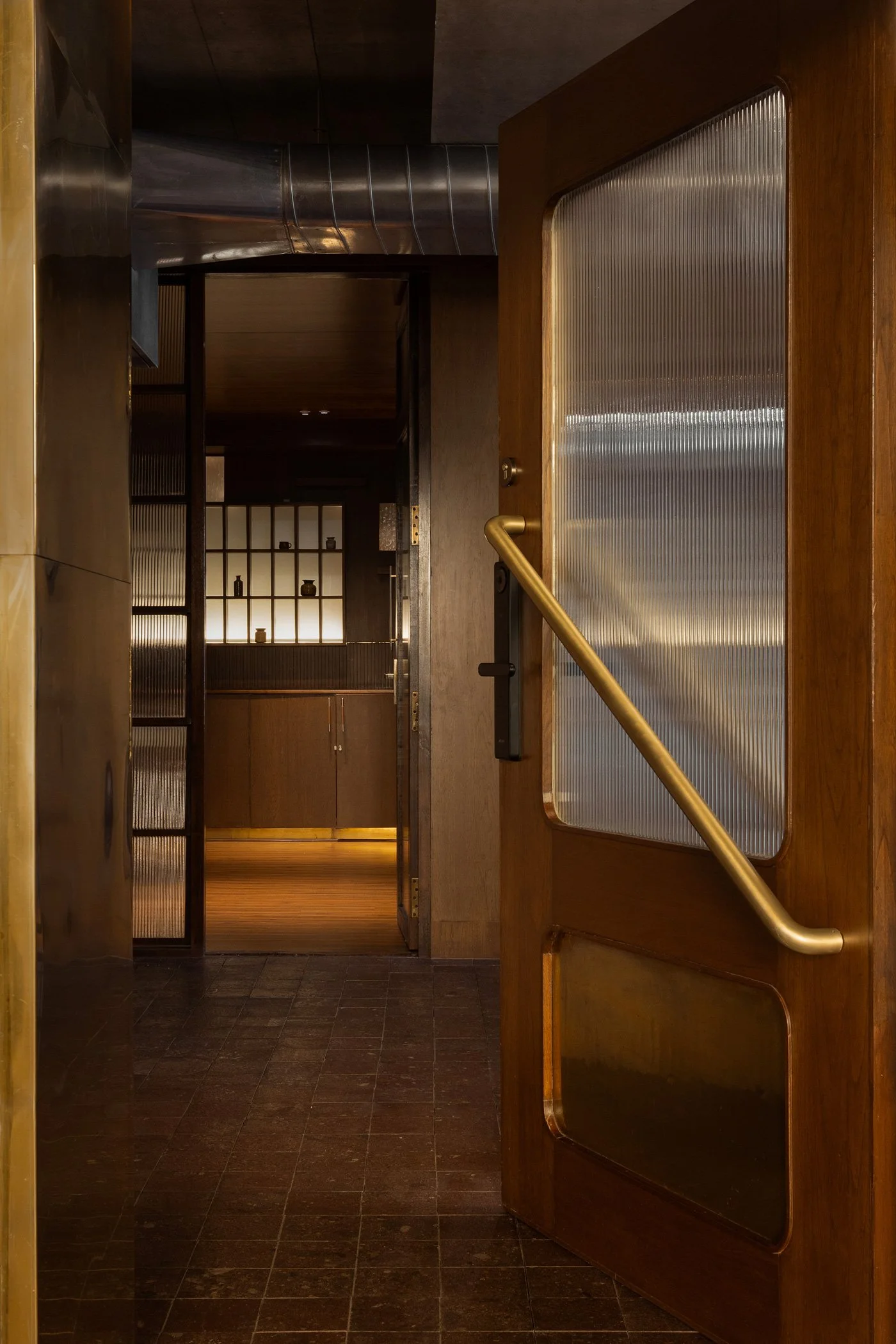
Photo Credit: Phosart Studio
-
Reimagining the Human-Land Connection
Billboards, an Indian multidisciplinary architecture and design firm, seeks to challenge this detachment through their project, Landforms, completed in Bangalore. In designing this real estate office, the team posed a fundamental question: If a company’s core business is land, shouldn't its physical workspace be more than just a sales gallery? Could it instead be an immersive manifesto—a place where visitors immediately grasp the firm’s philosophy and their vision for the relationship between people and the earth?
Lead architect Arun Prabhu and his team sought to liberate the concepts of land and planning from the confines of 2D drawings and static models. Their goal was to demonstrate how land can be shaped, read, and inhabited, transforming it into a tactile, spatial experience that can be navigated and felt by the body.
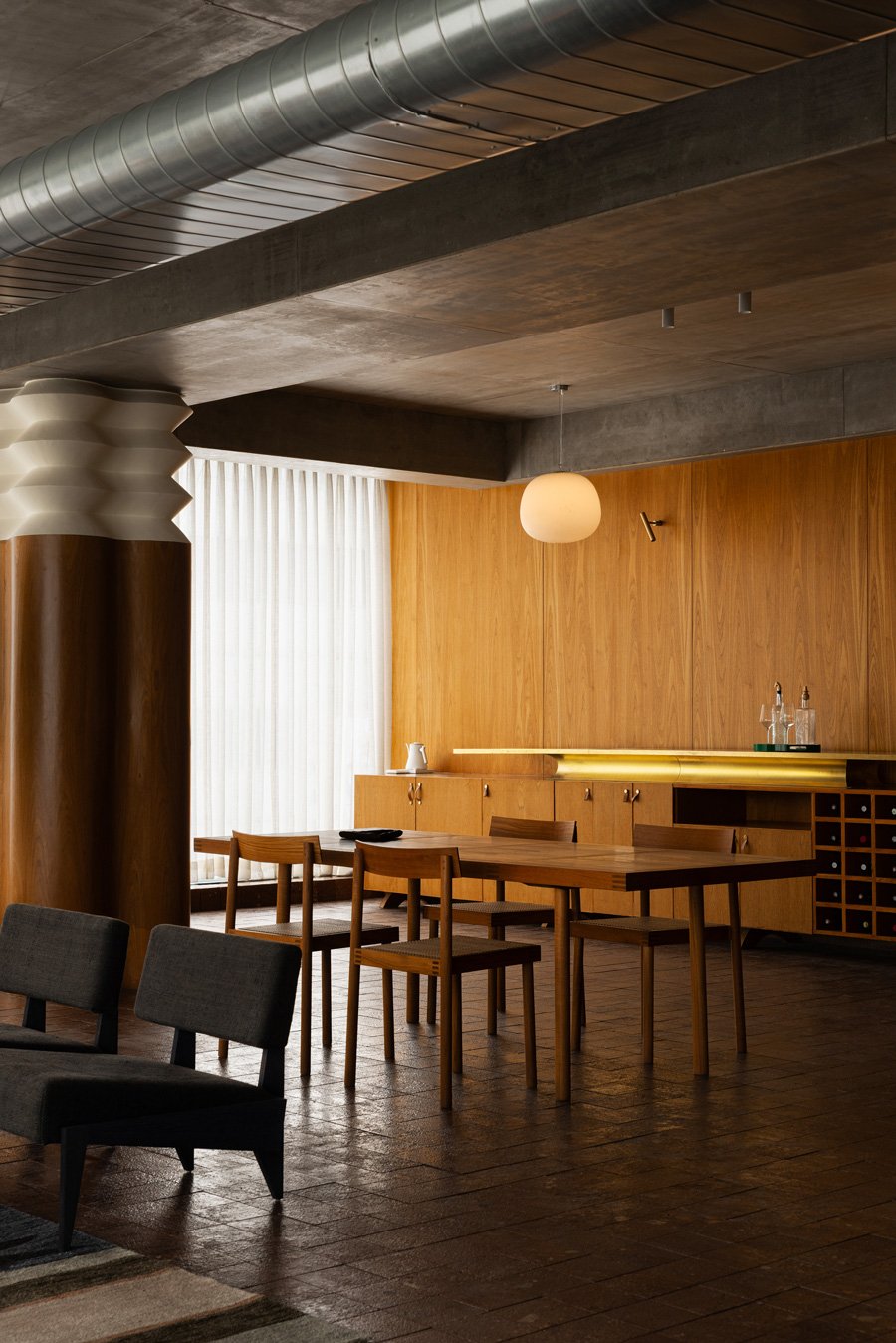
Photo Credit: Phosart Studio
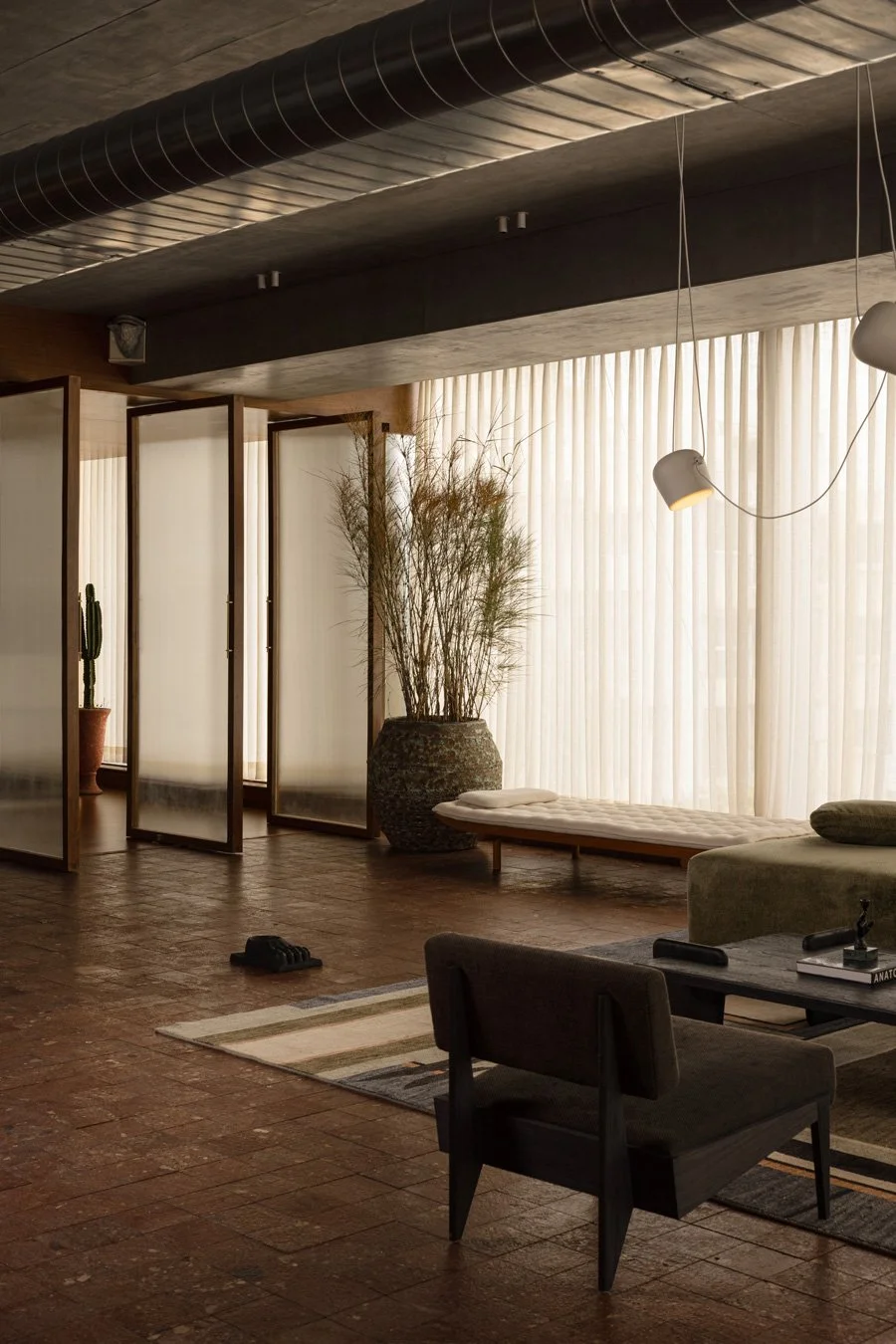
Photo Credit: Phosart Studio
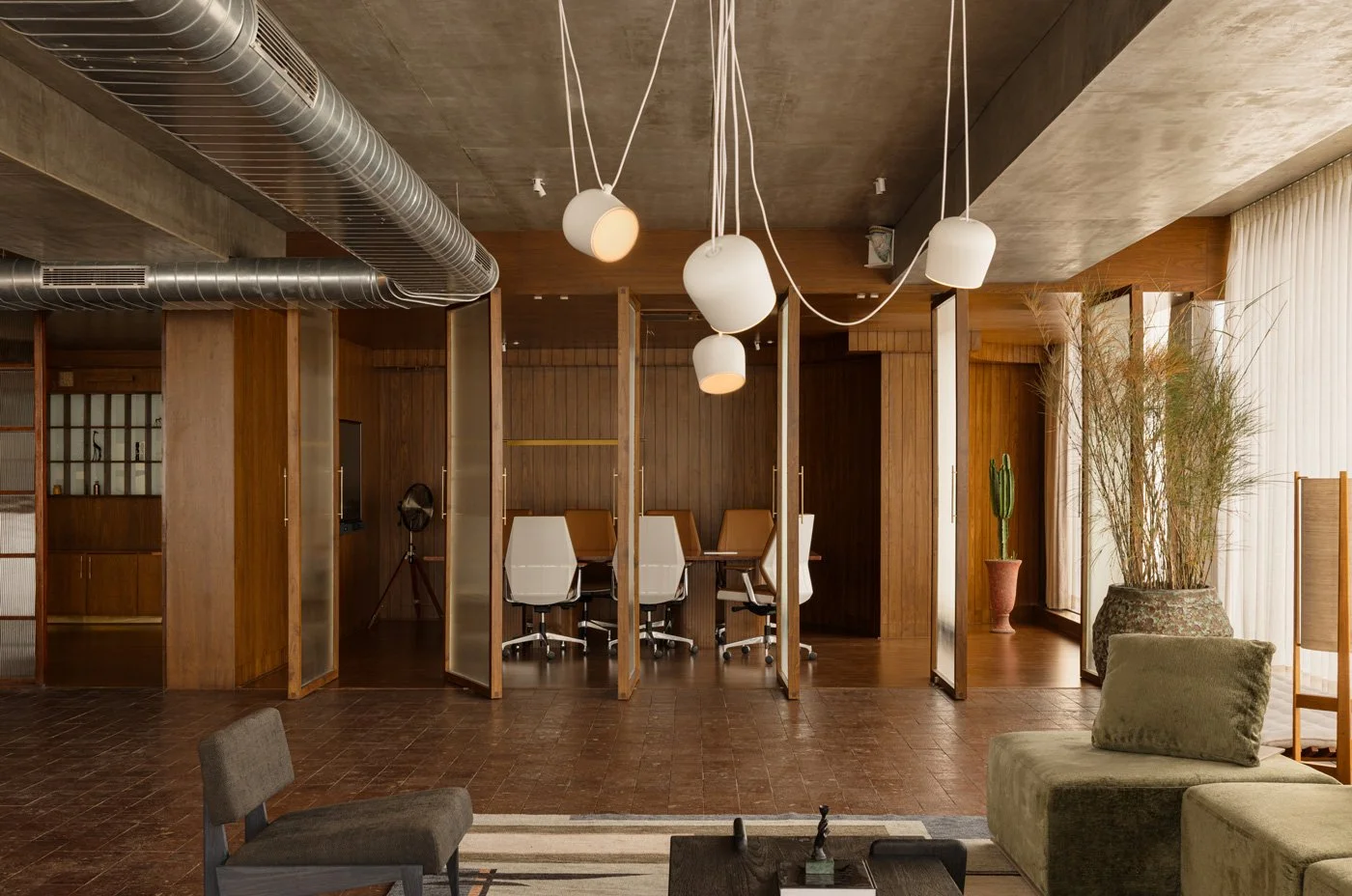
Photo Credit: Phosart Studio
-
Fluid Boundaries: Defining Space Through Materiality
To achieve this, the conventional logic of spatial organization had to be dismantled. In planning Landforms, Billboards intentionally avoided the rigid functional zoning typical of commercial interiors. To them, if every area is cordoned off by walls, the space merely serves a process rather than communicating a profound understanding of the land. They envisioned a continuous field instead, where transitions between zones are subtly suggested through shifts in material.
These materials serve as the "anchors" that ground the project, each choice corresponding to a specific spatial mission. While exposed concrete ceilings provide a raw, structural tension, expansive wood surfaces—from column wraps to wall extensions and integrated cabinetry—soften the industrial chill, enveloping the space in a warm, protective layer.
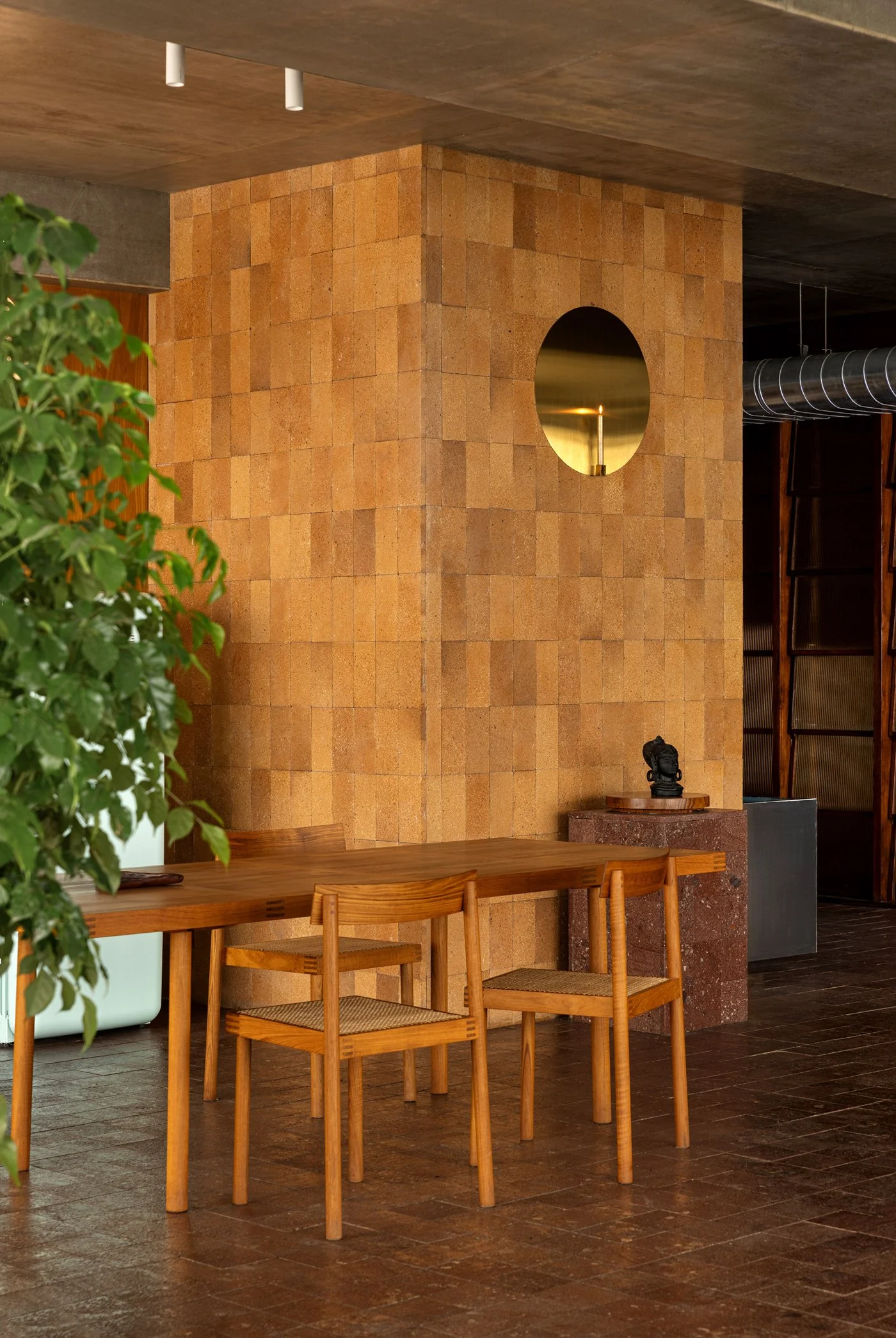
Photo Credit: Phosart Studio
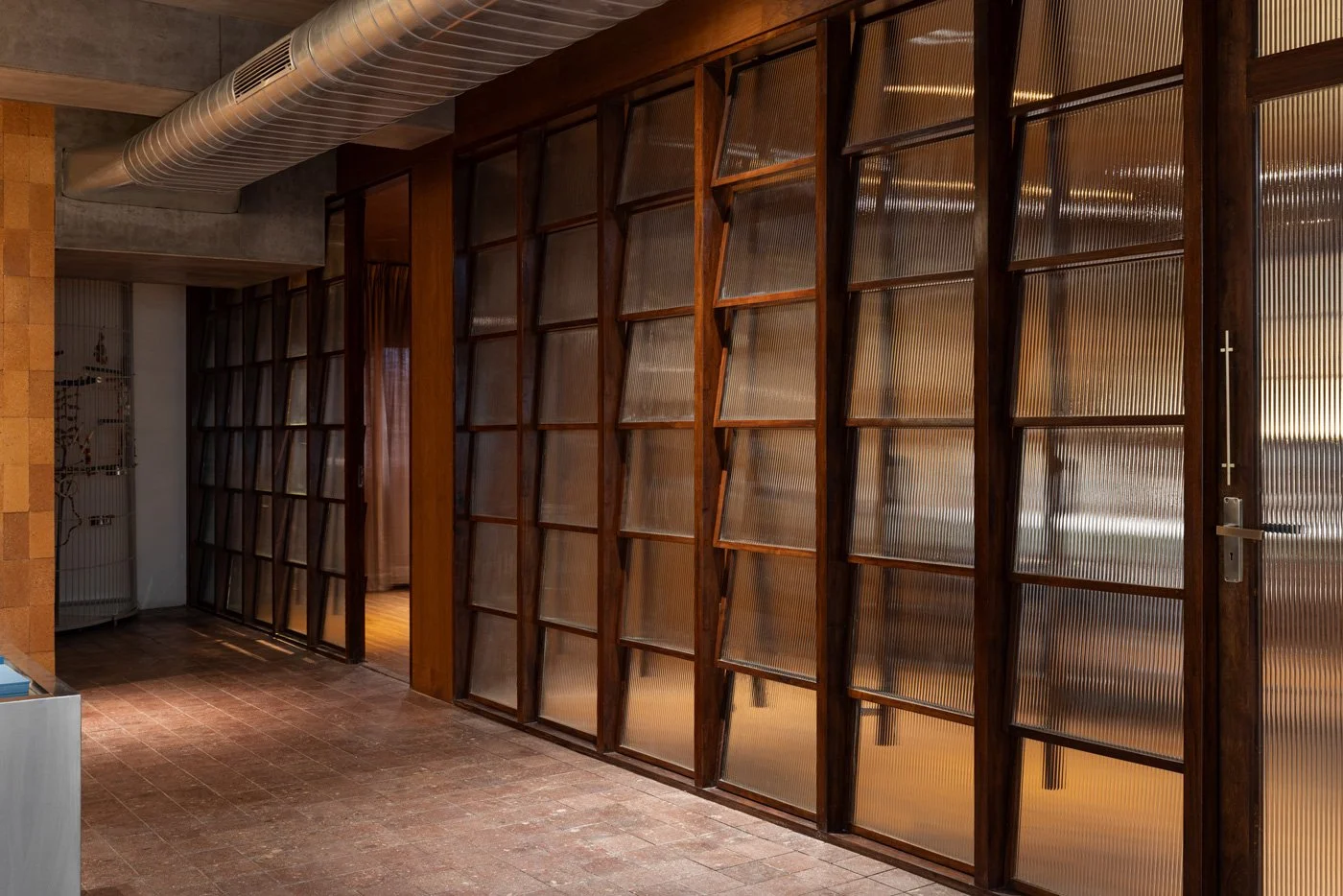
Photo Credit: Phosart Studio
-
Fluted glass appears at partitions and doorways to filter light into a soft, ethereal glow, allowing the office to breathe while maintaining a sense of privacy and continuity. Terracotta bricks introduce a visceral earthiness; with a warmth akin to wood but a rugged, handcrafted texture, they add a layer of physical depth to the interior, while brass accents provide a precise, sophisticated luster that balances the more organic elements.
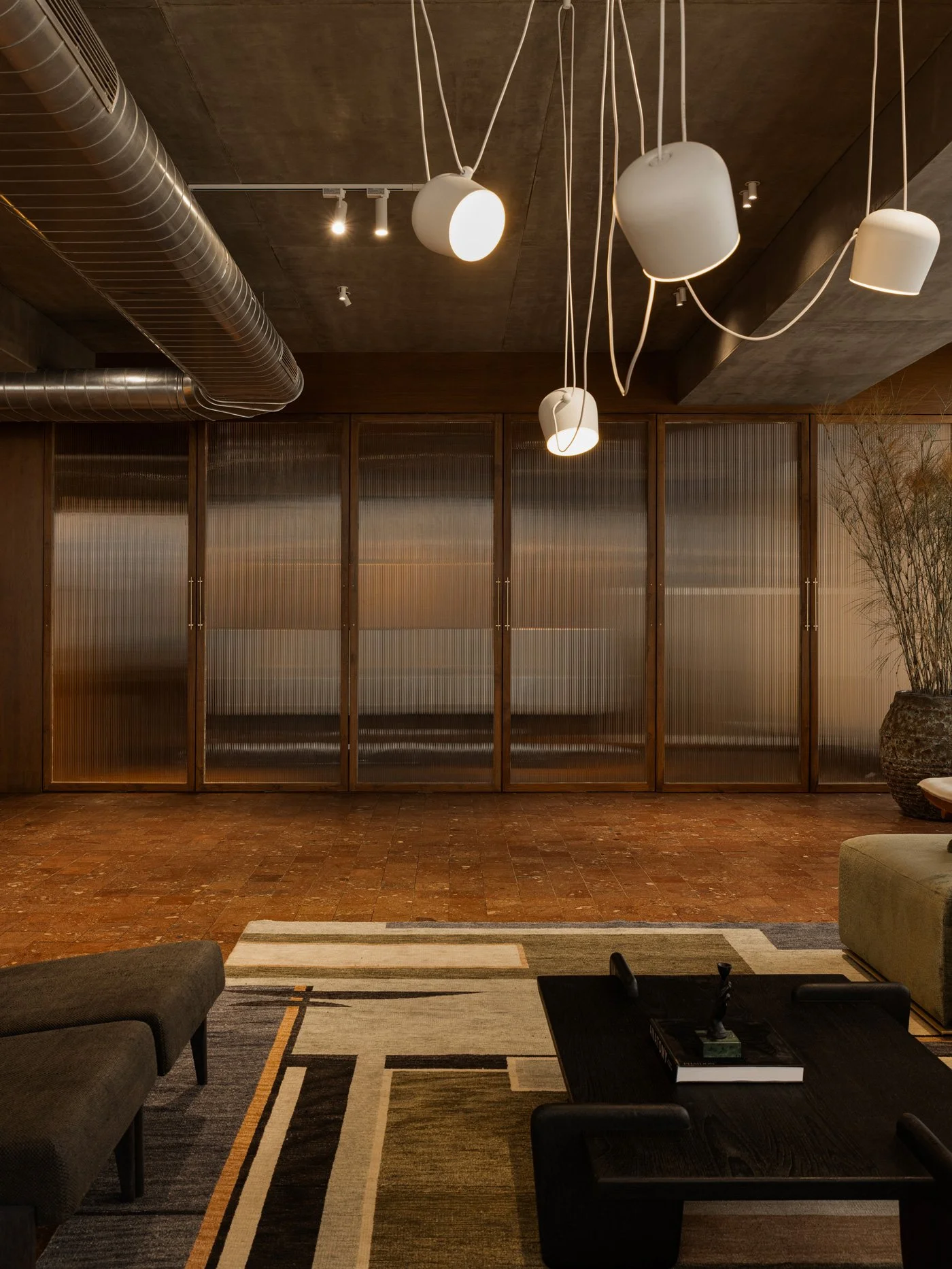
Photo Credit: Phosart Studio
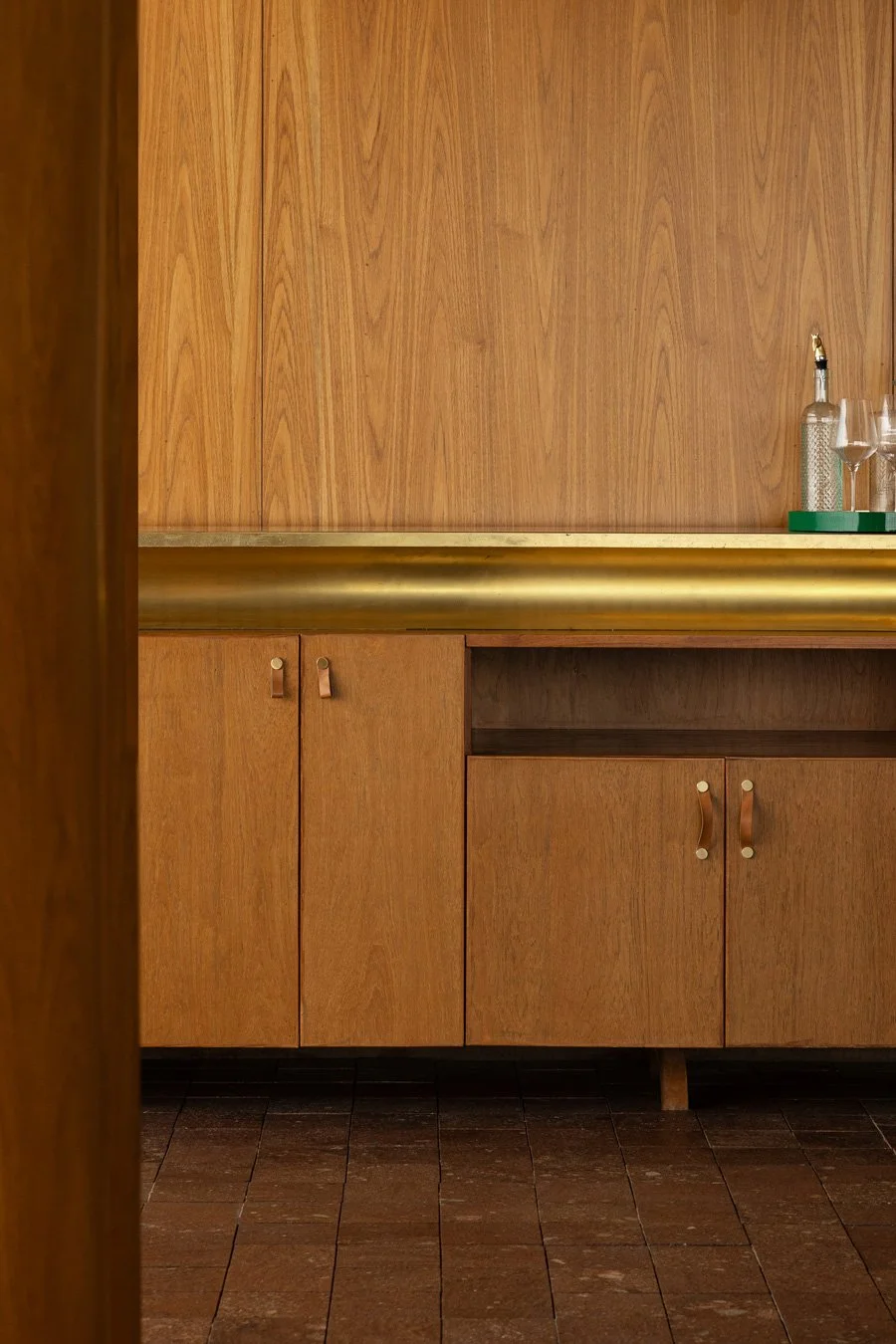
Photo Credit: Phosart Studio
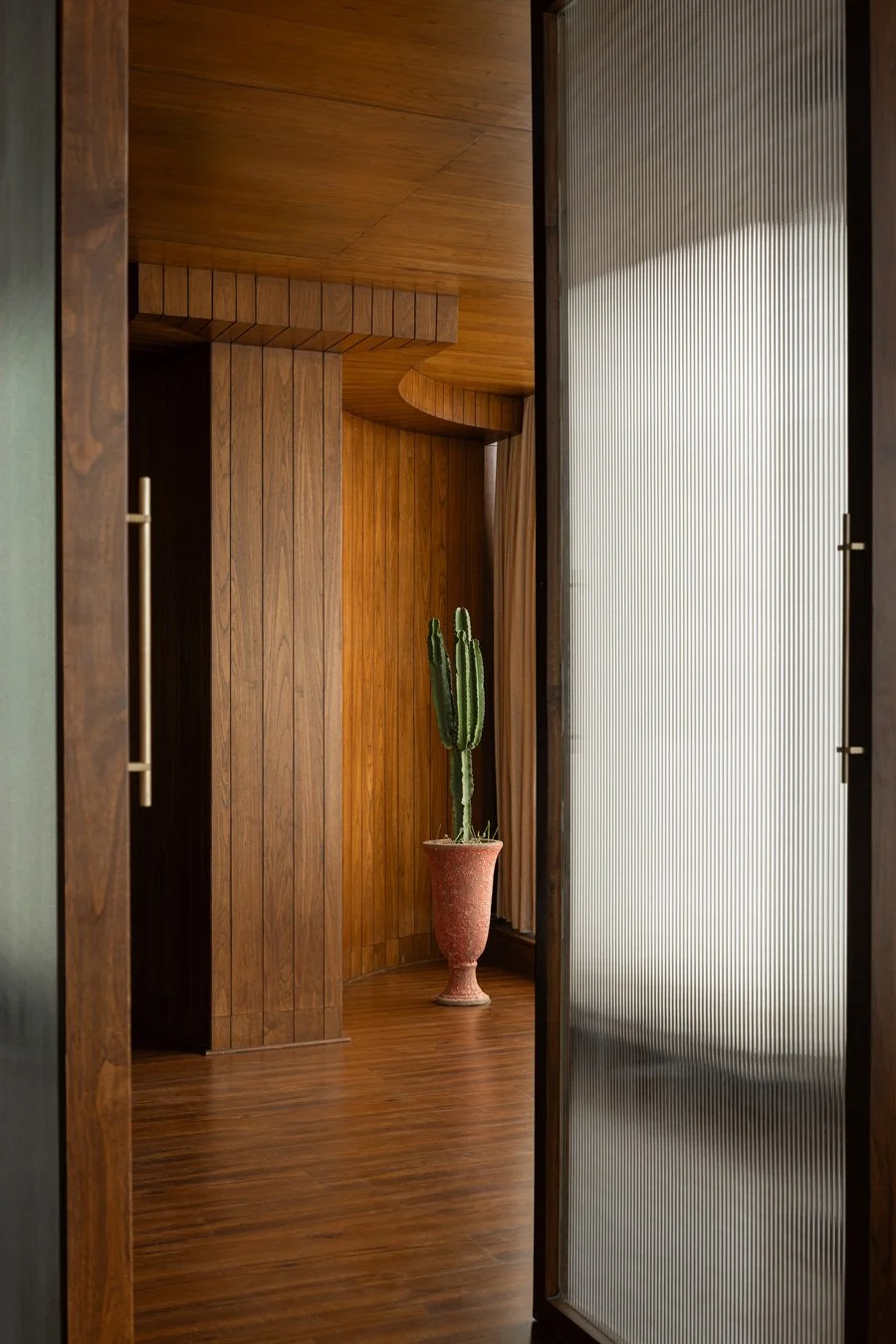
Photo Credit: Phosart Studio
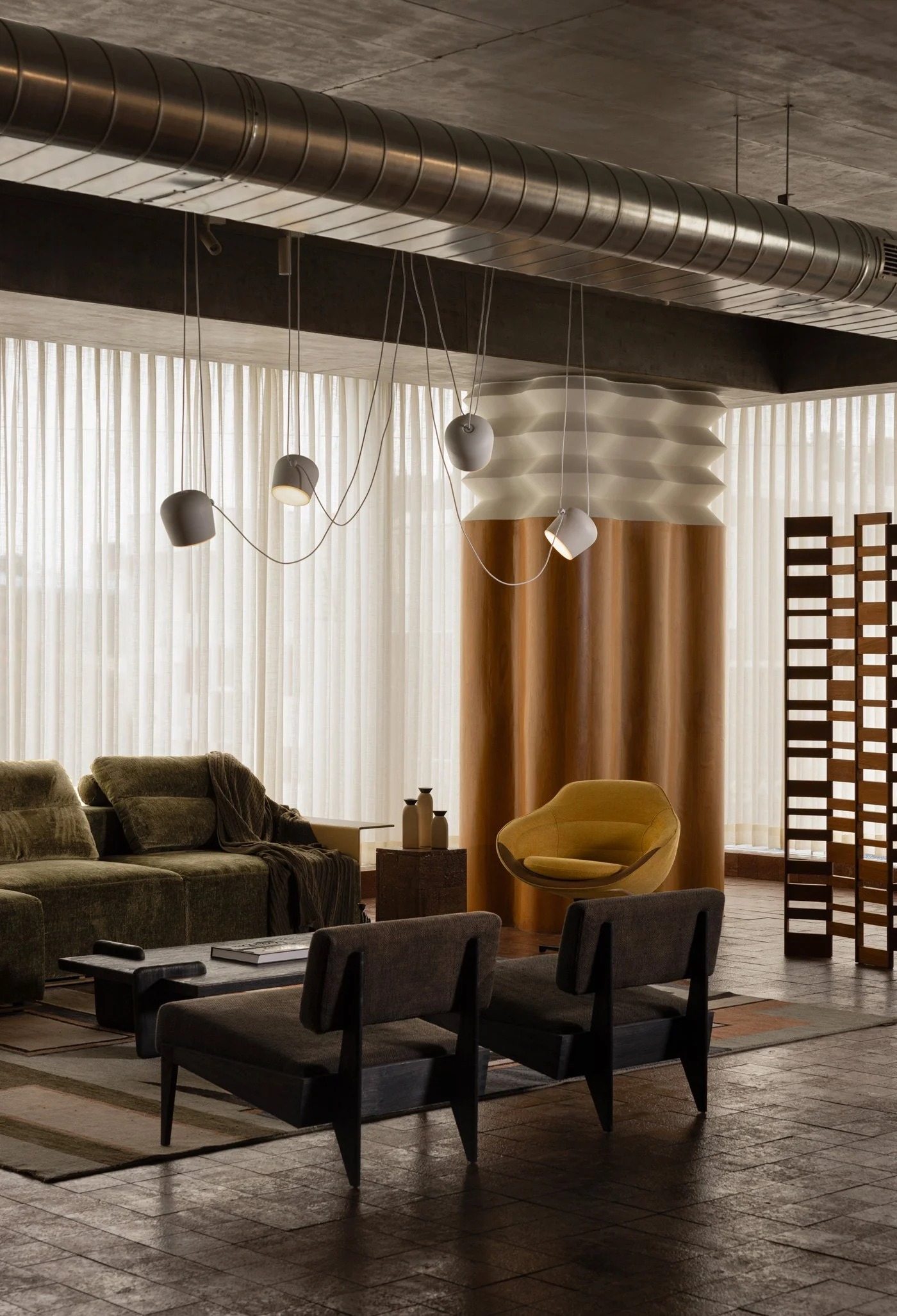
Photo Credit: Phosart Studio
-
A Synthesis of Work, Showroom, and Modelhome
The presentation of architectural models and master plans follows this same philosophy. Prabhu emphasizes that they didn't want the models to feel like "objects in a showroom." Consequently, they aren't isolated in a separate gallery but instead "grow" out of the architectural language itself. By utilizing half-height pedestals and recessed wall niches that share the same textures and construction methods as the surrounding surfaces, the distinction between "exhibit" and "environment" vanishes. Visitors don't just sit through a sales pitch; they experience the tactile quality of the space, where work, dialogue, and display are seamlessly interwoven. Prabhu notes that because the textures are so inherently rich, the space requires no superfluous decoration. They have allowed time to provide the final finish, keeping furniture and lighting understated and functional.
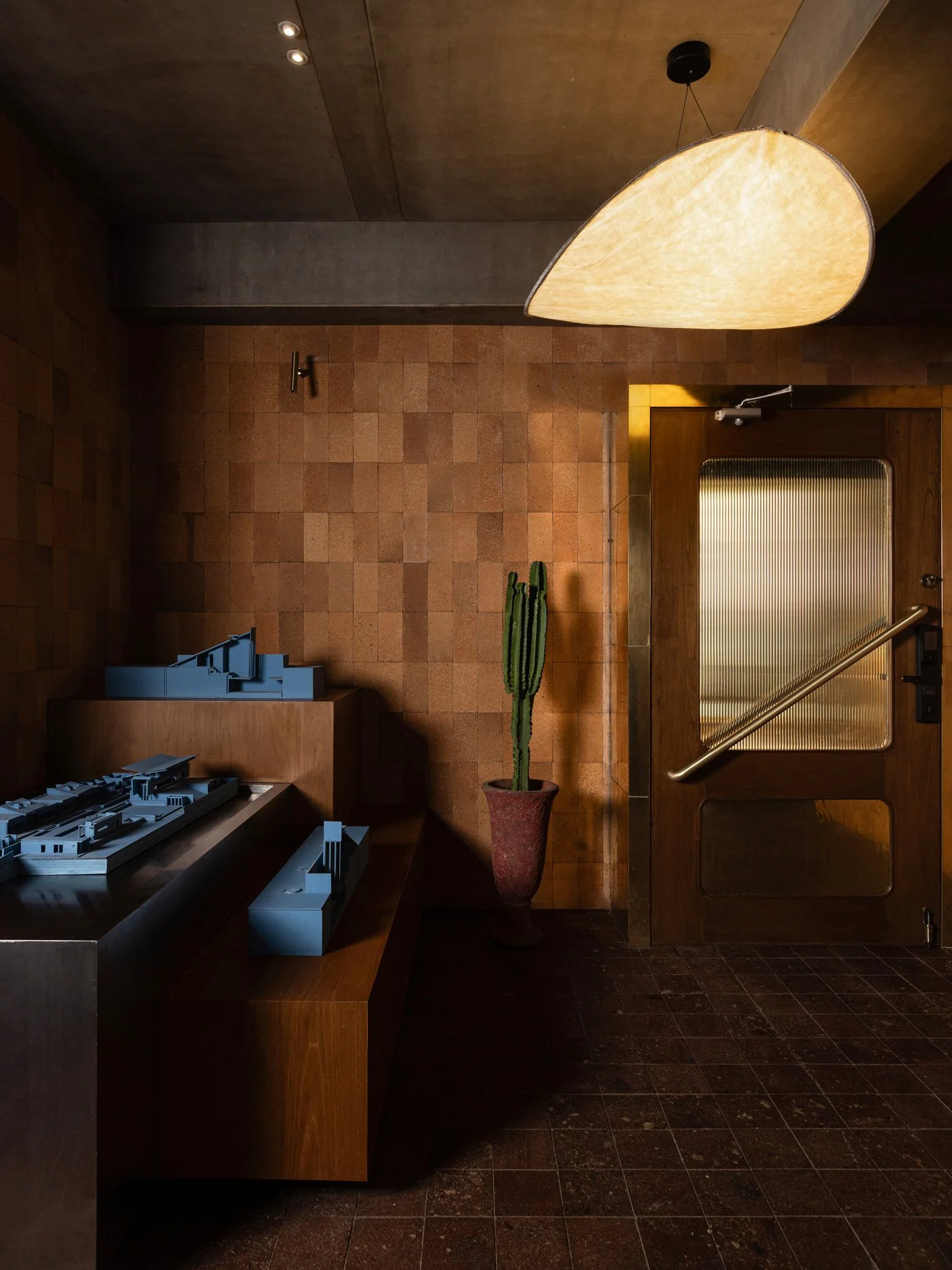
Photo Credit: Phosart Studio
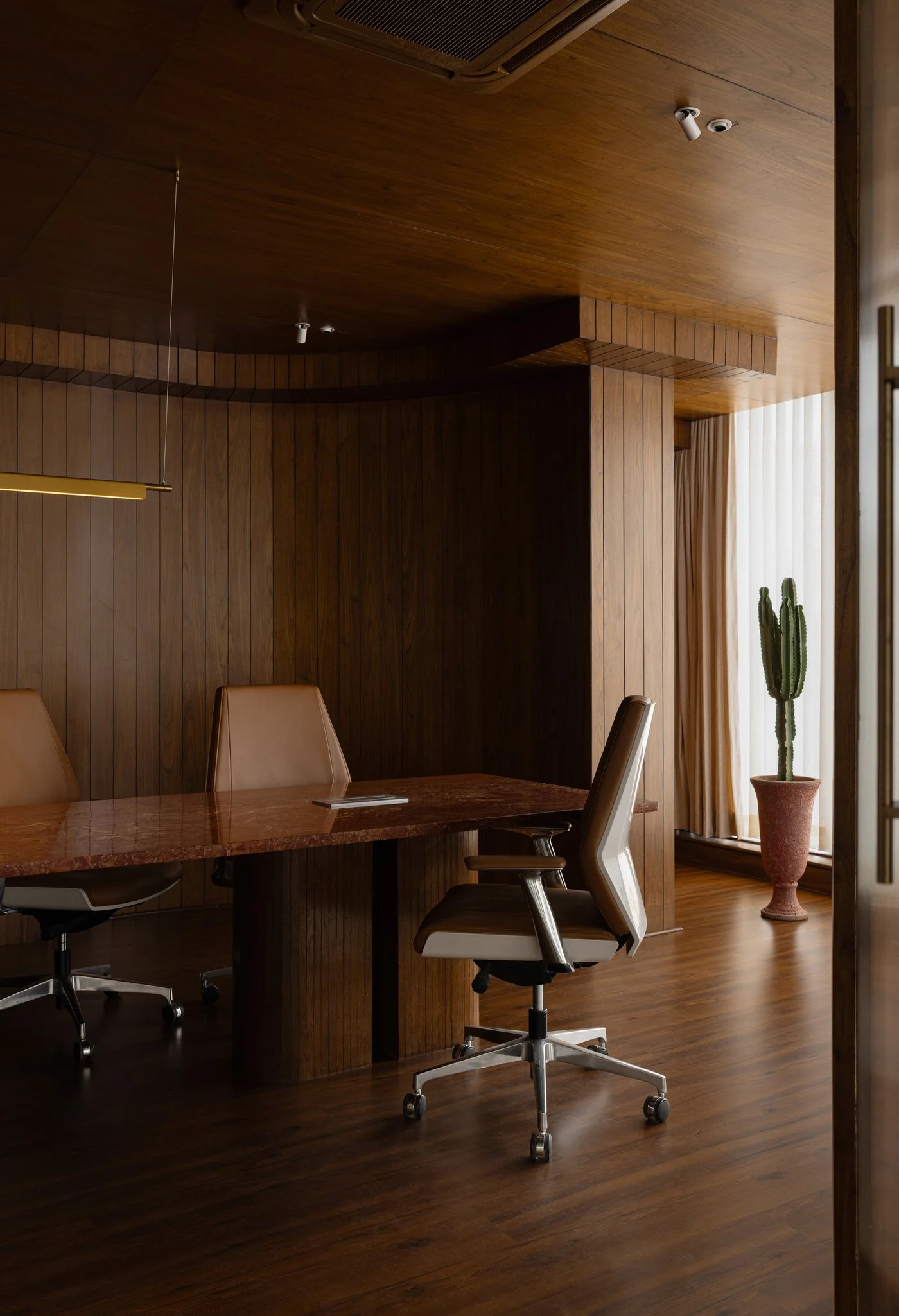
Photo Credit: Phosart Studio
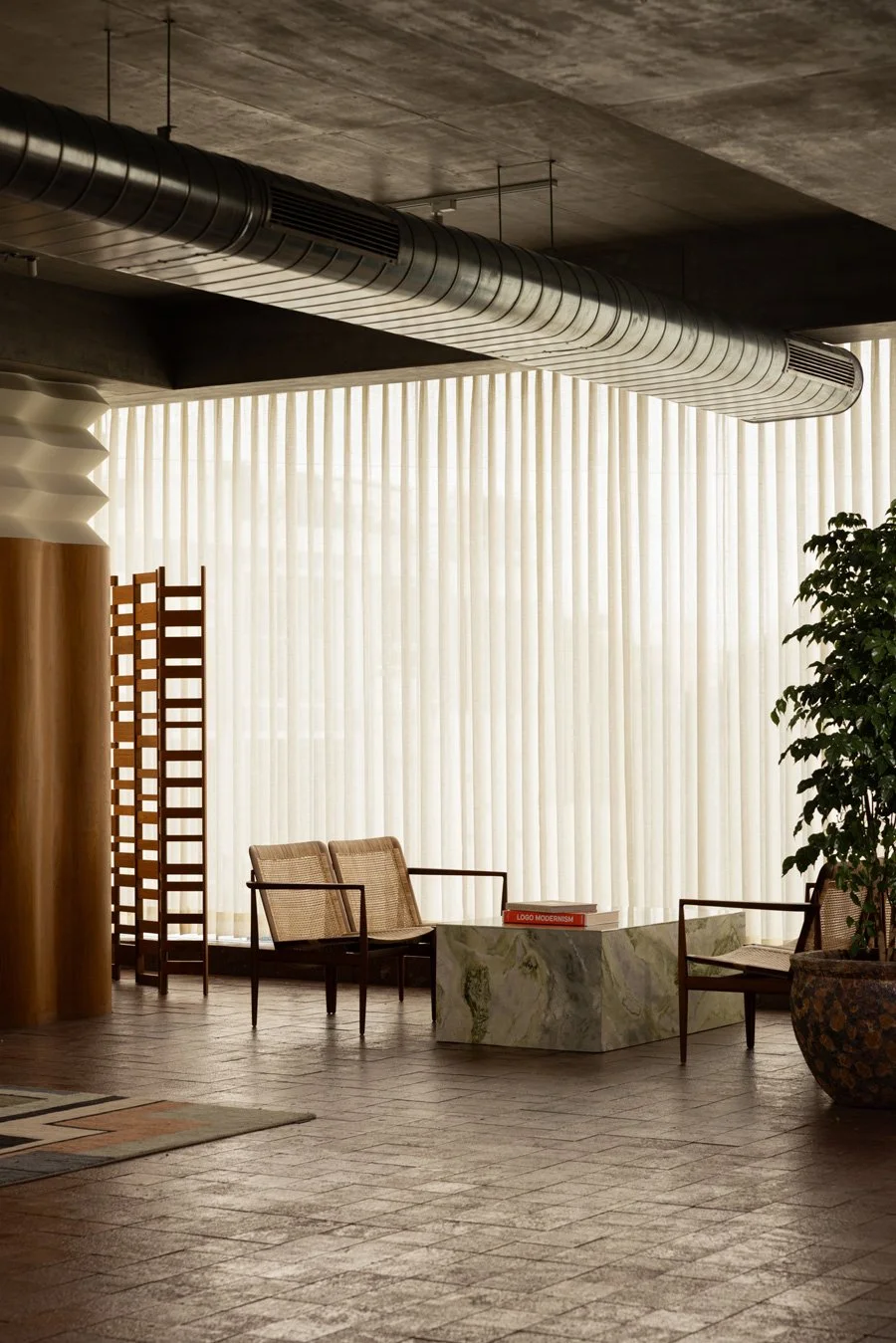
Photo Credit: Phosart Studio
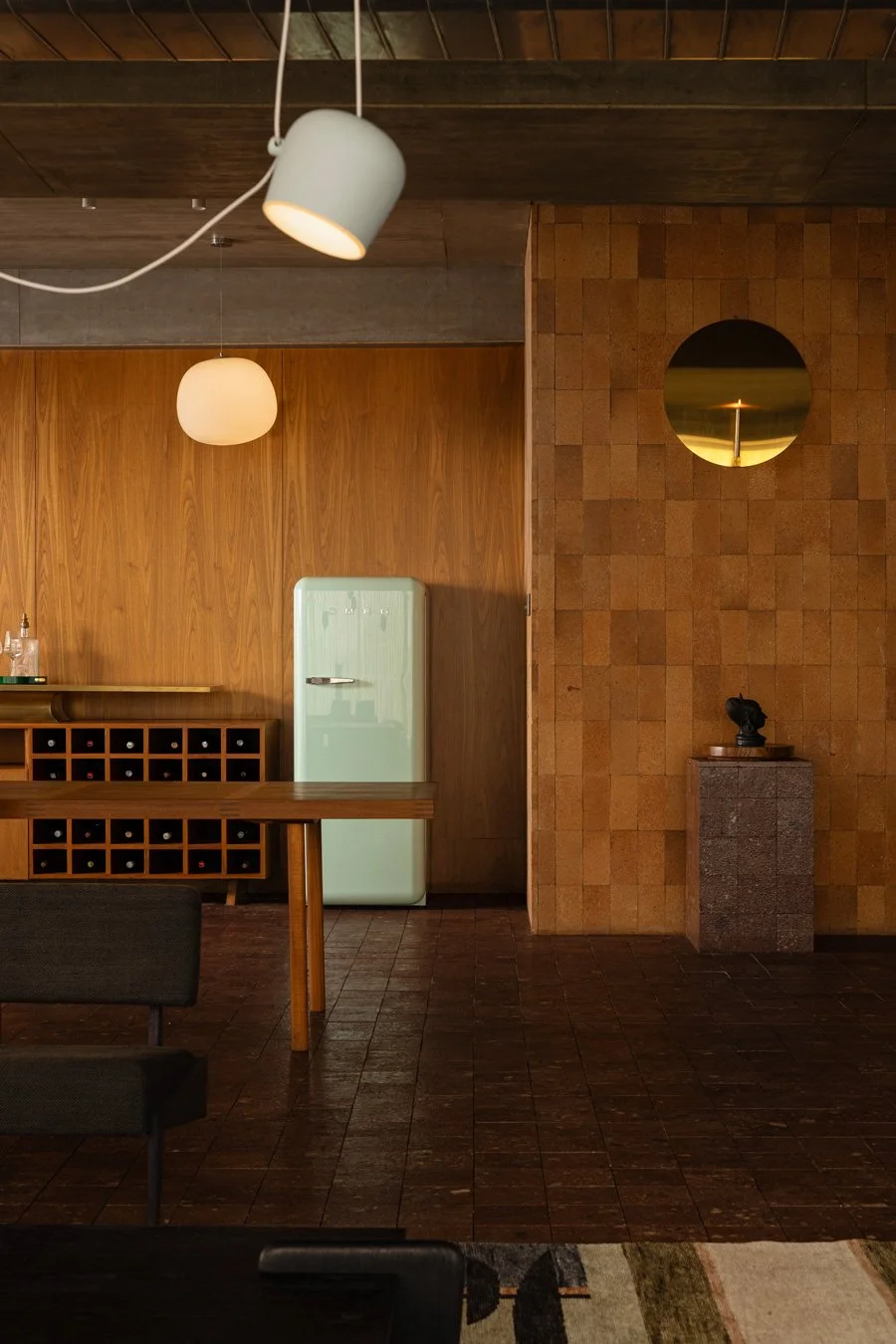
Photo Credit: Phosart Studio
-
Weaving Local Craft into a Contemporary Narrative
Within Landforms, several moments invite a slower pace. Near a window, terracotta bricks are stacked to form a small plinth, with intentional gaps that evoke an ancient masonry ritual frozen in time. Above it, a chain of forged brass lotus bells hangs silently—a spiritual hint that avoids overt declaration. This approach reflects Billboards’ project-specific take on vernacular design. In contemporary design, "locality" often descends into superficial cultural symbols, yet Billboards avoided obvious "Indian-style" motifs. Instead, they used fundamental architectural gestures—stacking, gravity, and the manipulation of light—to evoke the spirit of the land. The terracotta speaks of local clay and fire; the brass honors a millennium-old tradition of metalwork. These elements are simply there, waiting for those willing to pause and feel them.
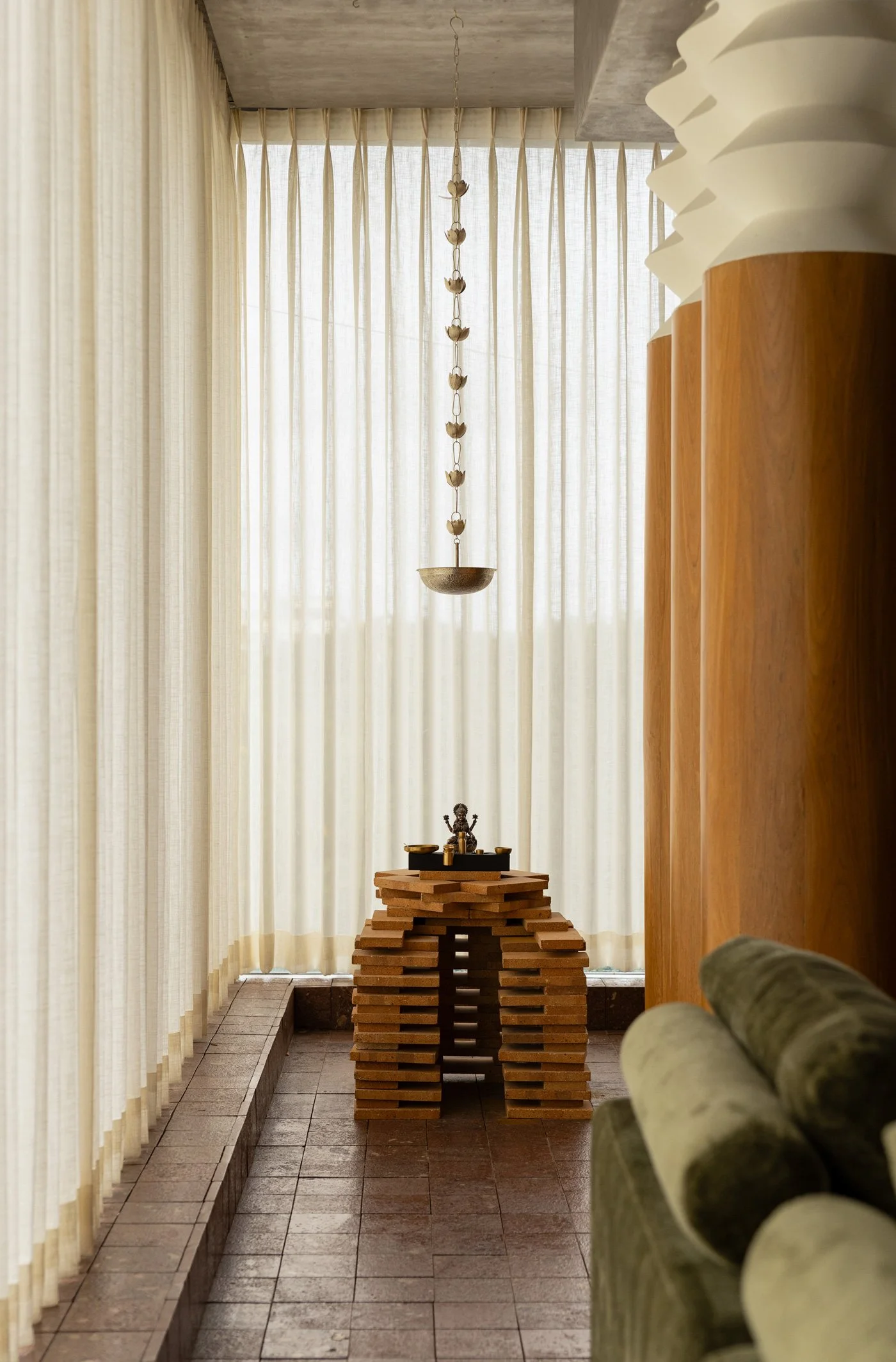
Photo Credit: Phosart Studio
-
Even the restrooms—with deep burgundy walls and green terrazzo washbasins—draw from the collective memory of Indian life: the red of temple exteriors and the green of riverside stones. These colors are distilled into a sophisticated, modern palette, proving that "place" can be woven into the very fabric of a design.
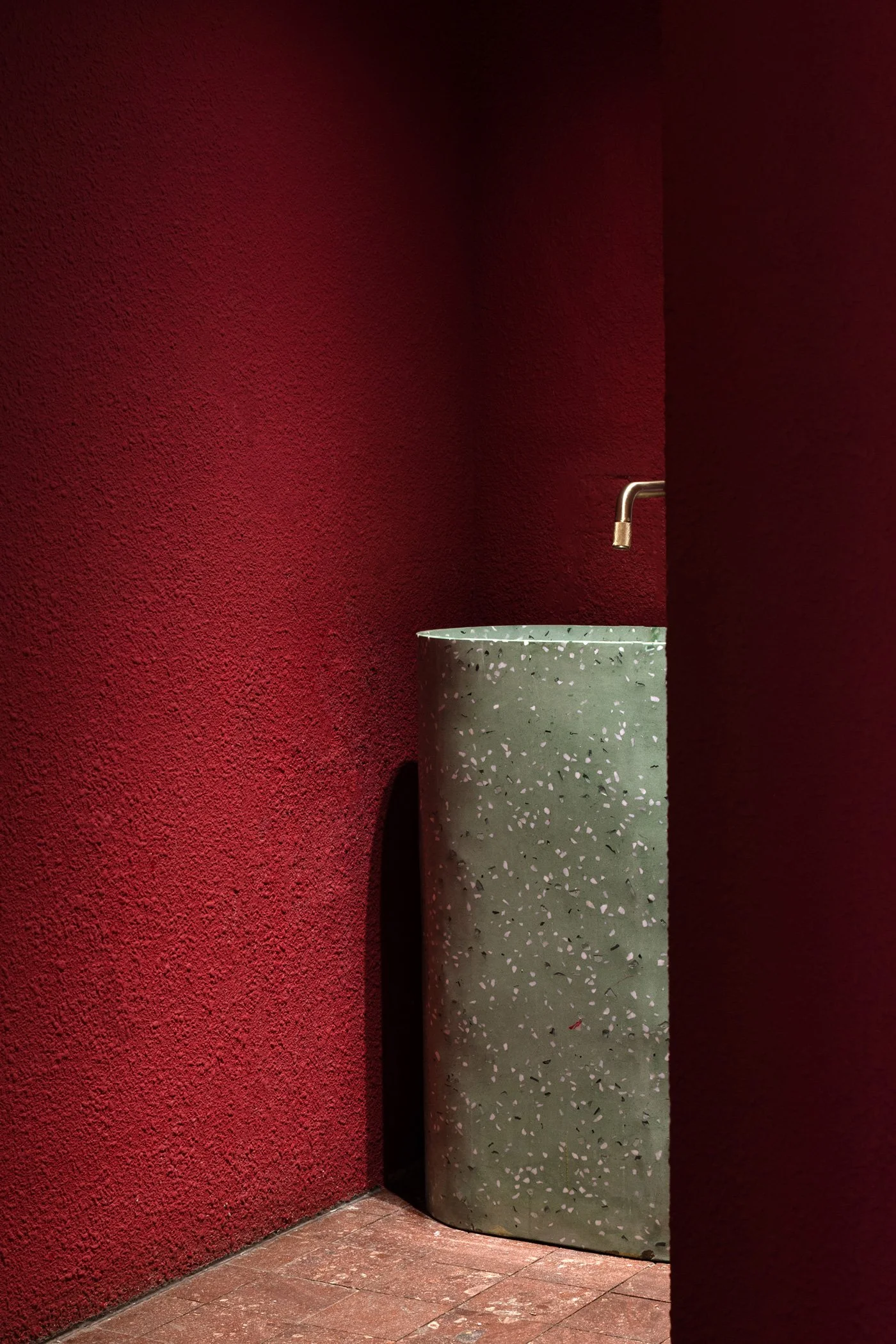
Photo Credit: Phosart Studio
-
As Arun Prabhu puts it: "If people leave with a clearer sense of how land can be understood through space, then the architecture has done its job."
At Landforms, the architecture has indeed succeeded. Through the warmth of the bricks underfoot, the grain of the wood at one’s fingertips, and the soft light washing over the walls, it weaves a compelling narrative of the land we inhabit.
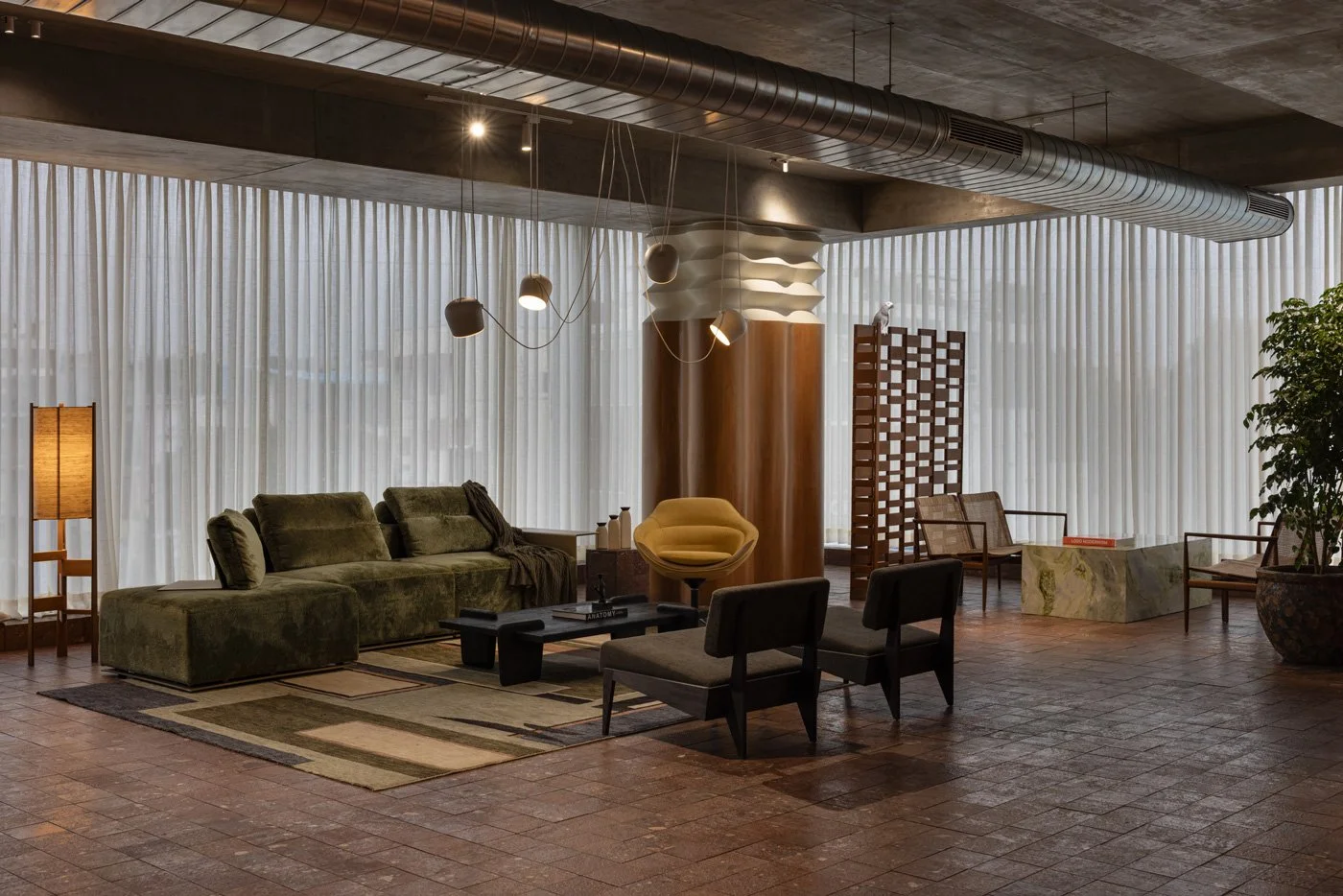
Photo Credit: Phosart Studio
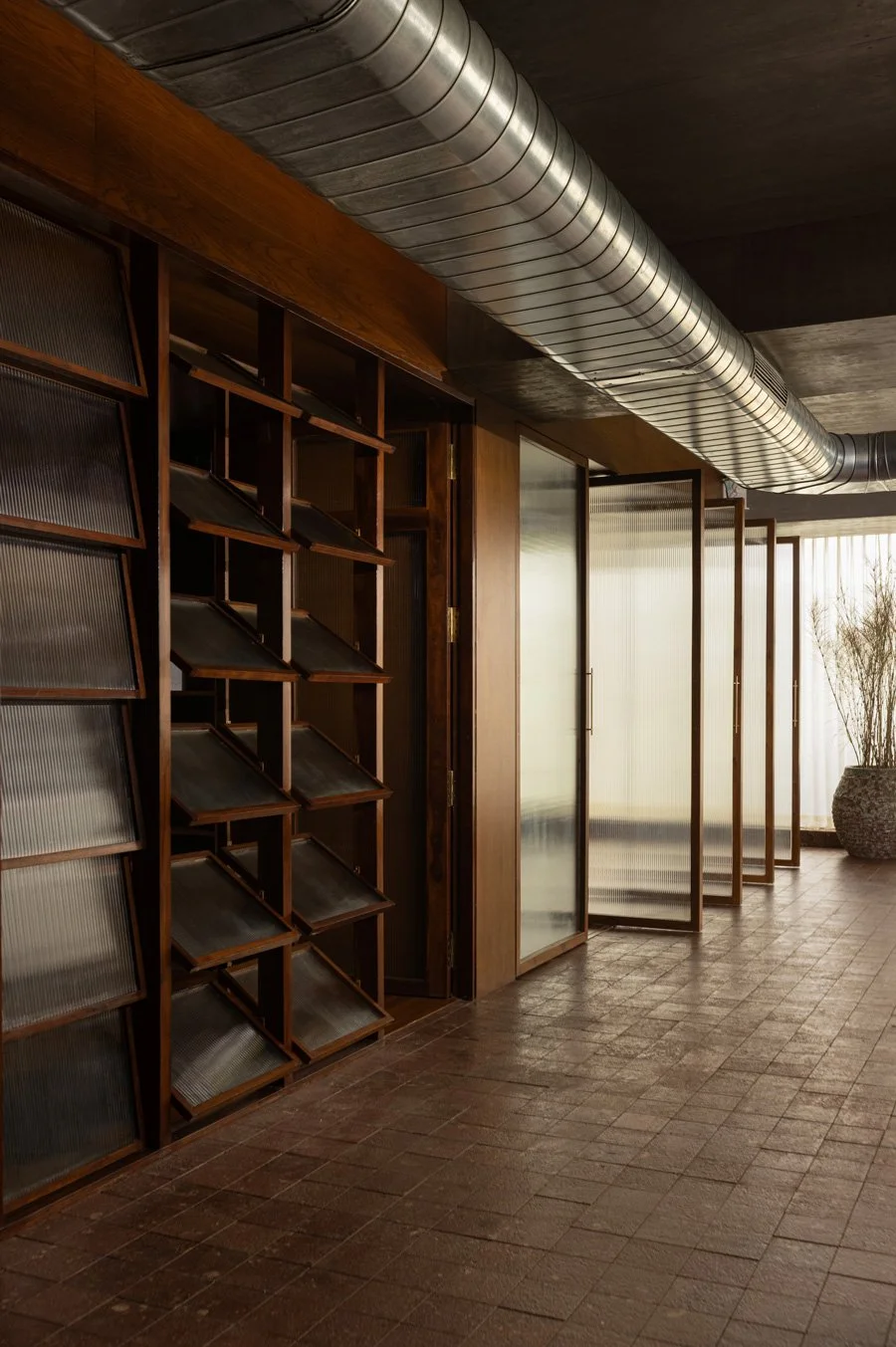
Photo Credit: Phosart Studio
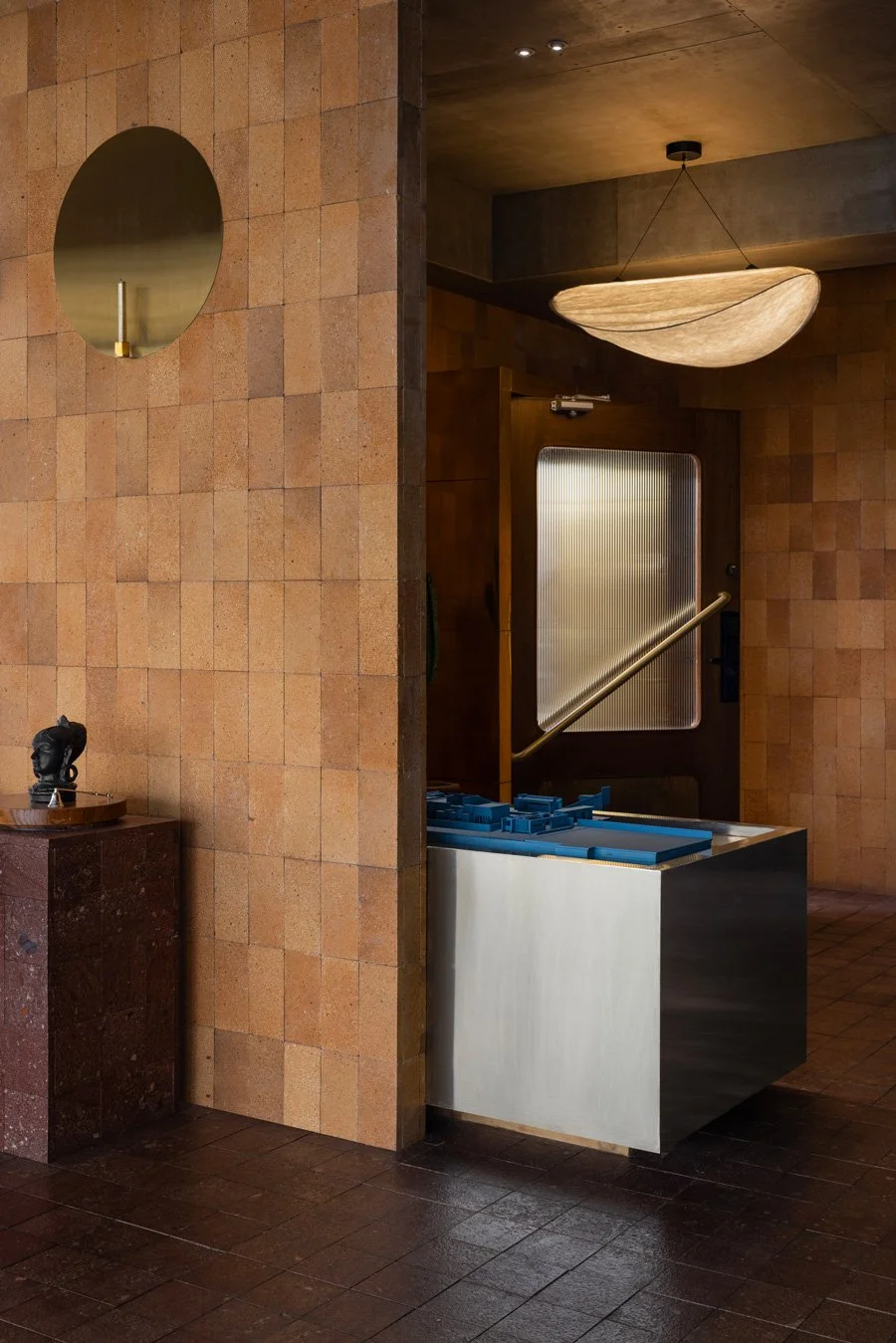
Photo Credit: Phosart Studio