
留給時間磨潤家居表情 — 宛如器物般承載日常的吉隆坡住宅《Everyday Island》
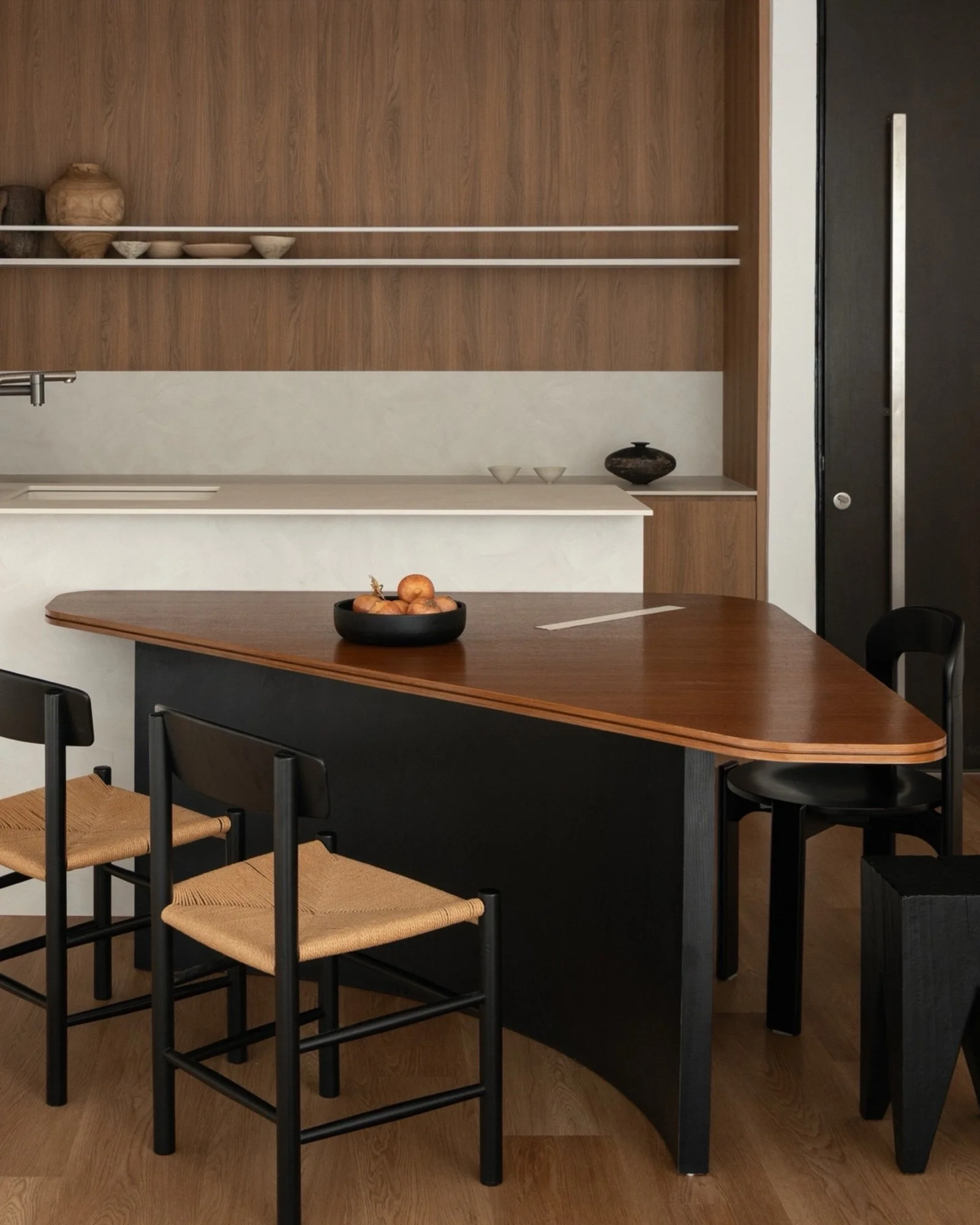
Photo Credit: TWJPTO
-
"Measured not by style but by time, the project offers a steady framework for living. The space functions more like an artifact polished by the years, quietly carrying daily routines as life naturally takes shape." — This is the guiding philosophy set by Malaysian design firm J Hous Studio for Everyday Island, a residential project in Kuala Lumpur.
When a home possesses the serene presence of a well-crafted vessel, every design decision—from the interior material palette to the choreography of natural light and the placement of furniture—comes together to paint a dynamic narrative. As the homeowners settle into their routines, the materials will slowly shift in hue through repeated touch. Light will trace across walls and floors, changing with the hours. Meanwhile, personal objects that reflect the residents' character will gradually find their perfect resting places through everyday use and handling.
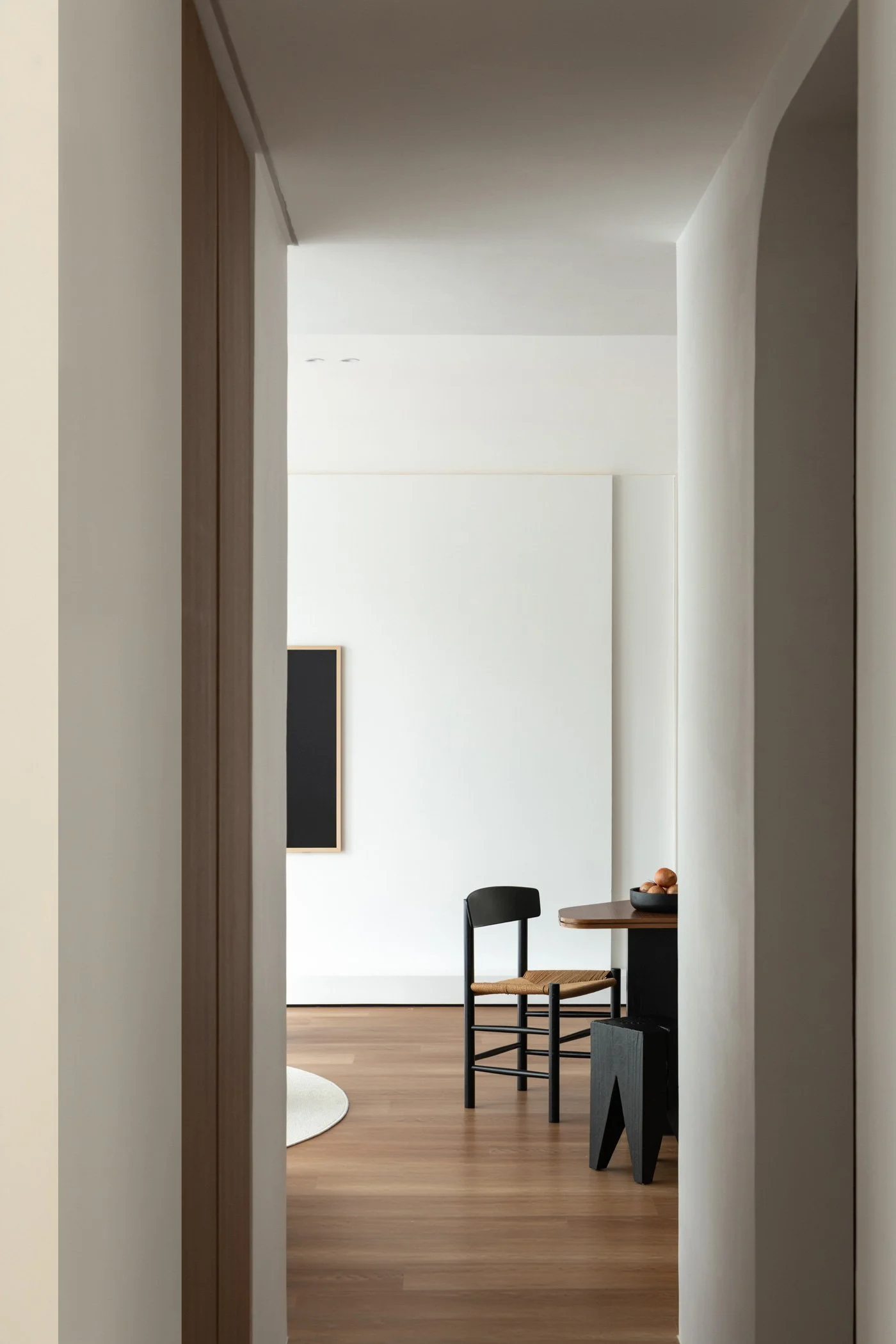
Photo Credit: TWJPTO
-
Redefining the Core of the Home
What truly defines the core of a home?
In most residential designs, the living room occupies the largest footprint. However, J Hous Studio rethinks the center of the home based on the density of occupant behavior. Where do people actually spend the most time and interact most naturally?
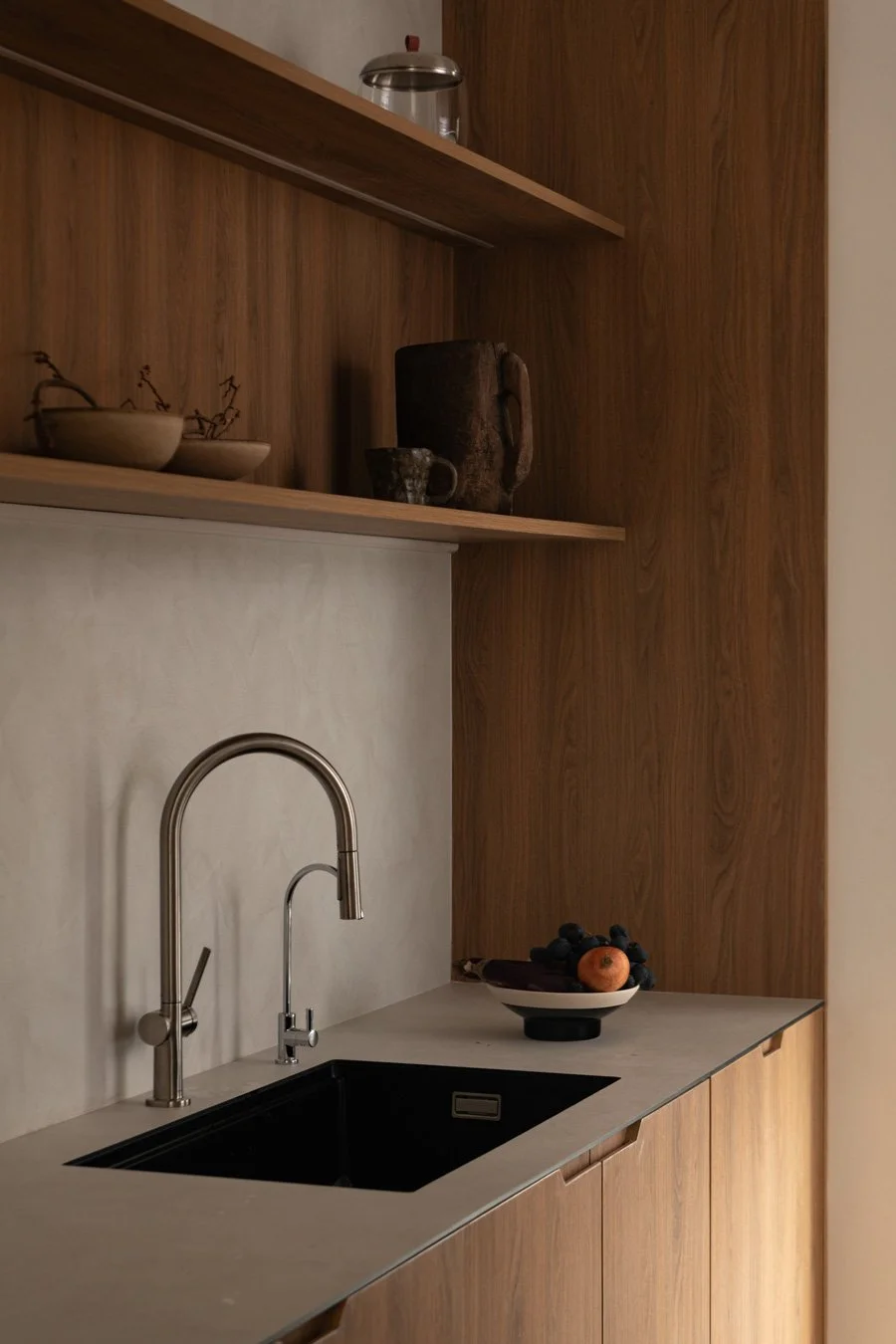
Designer Joyce Wong’s answer is the kitchen island and the custom triangular dining table. Boiling water, slicing fruit, chatting casually across the counter, or sitting down for a snack—these seemingly trivial routines are, in fact, the essential moments that anchor family connection. Recognizing this, Joyce positioned these two nodes at the intersection of all circulation paths, allowing daily life to unfold effortlessly in sync with the inhabitants' natural rhythms.

Photo Credit: TWJPTO
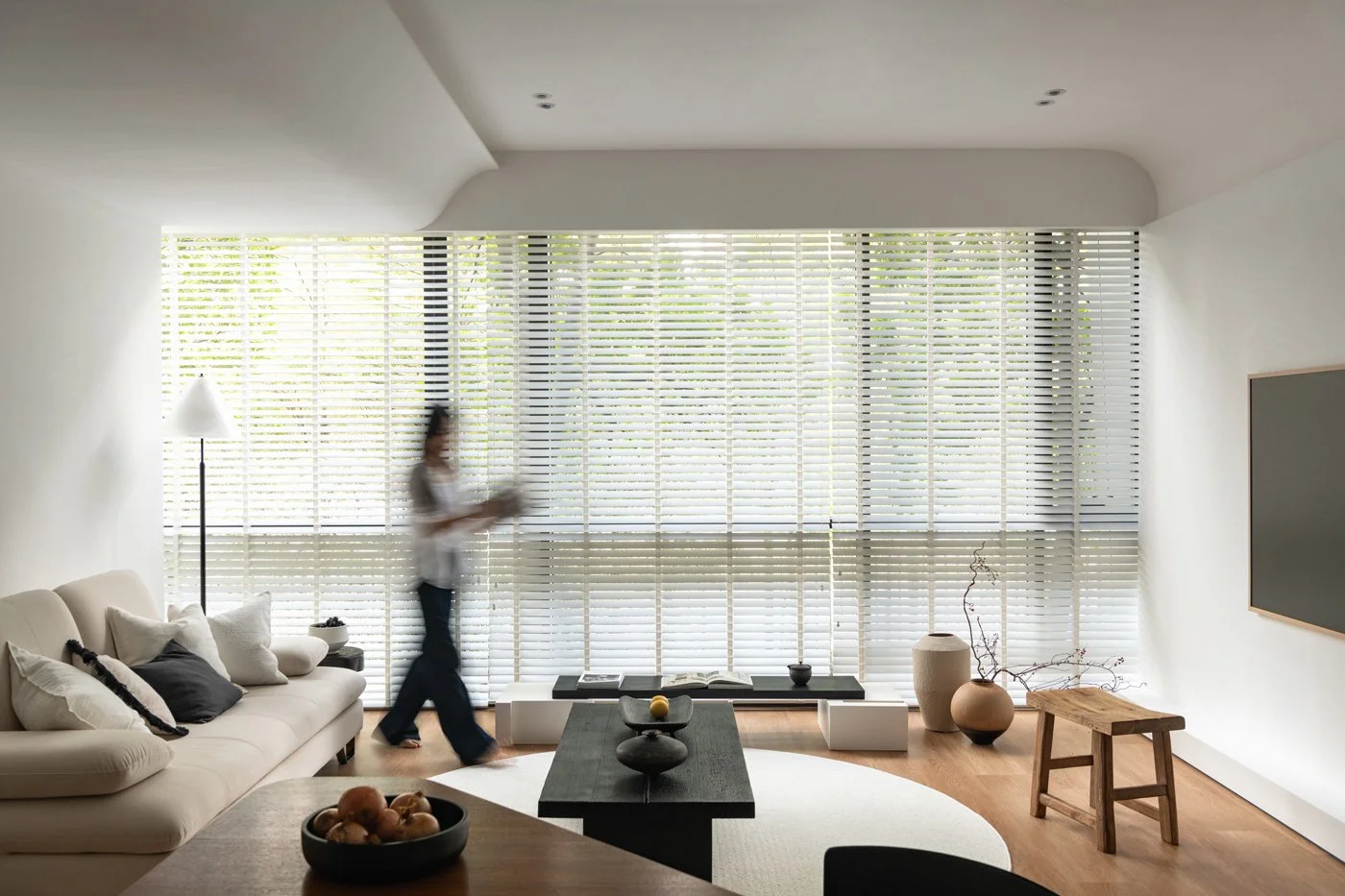
Photo Credit: TWJPTO
-
A Fluidity Rooted in Physical Comfort
Having established the island and dining table as the spatial core, the layout of the communal areas unfolds around them. The designer injected a continuous sense of fluidity into the open-plan space while maintaining soft boundaries between different zones. From the moment one enters through the foyer, an immediate physical ease creates a sense of spaciousness that far exceeds the actual square footage.
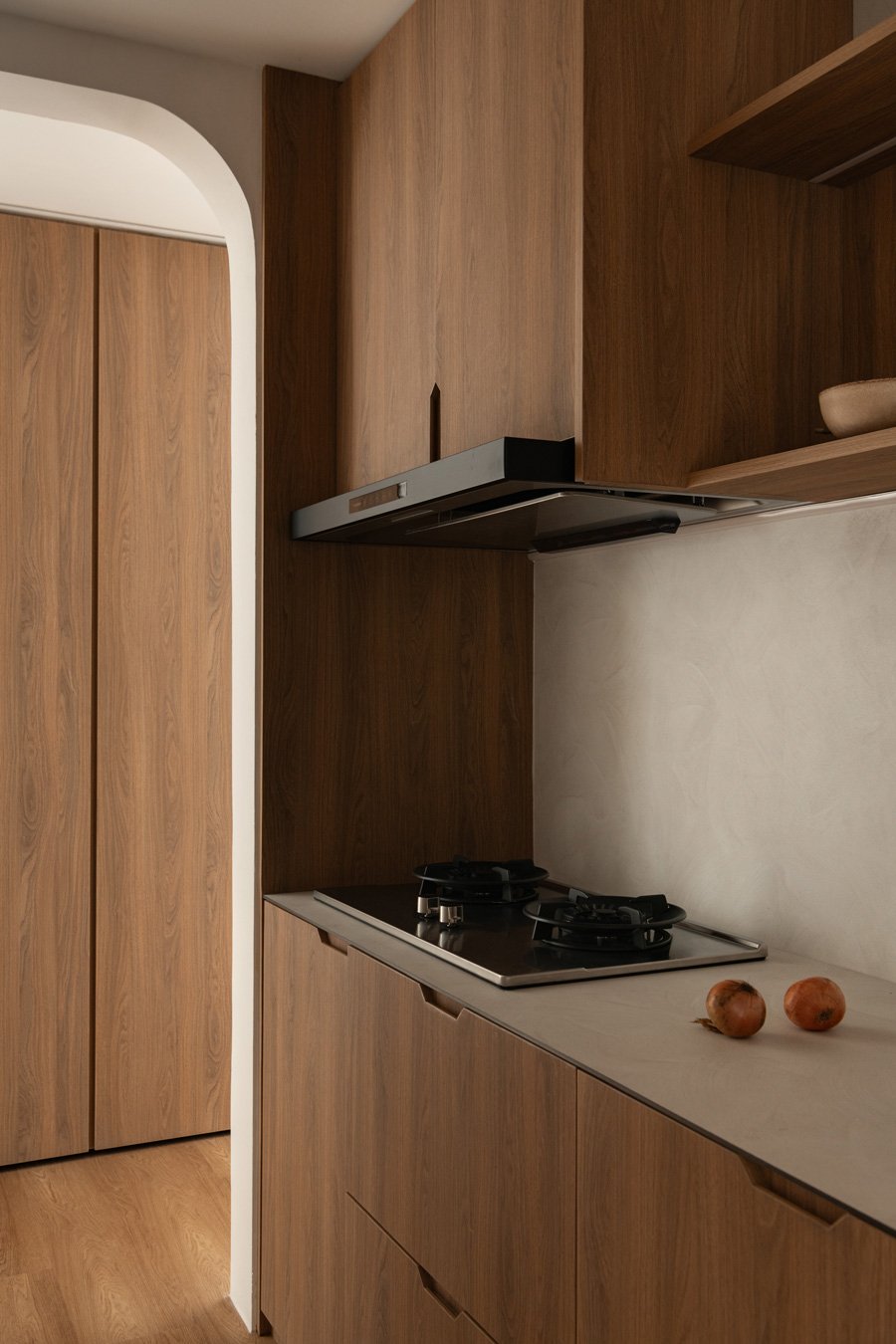
Notably, the "fluidity" Joyce pursues isn't a completely borderless open plan. She draws invisible boundaries for each area through furniture arrangements, material transitions, and subtle shifts in atmosphere. The living room remains a place for absolute relaxation; the area around the island carries an air of active, focused engagement; while the dining table invites people to sit and linger. Heavier domestic tasks, like cooking and washing, are tucked away in an enclosed wet kitchen behind sliding doors—ready to be opened when needed and completely hidden otherwise, maintaining an elegant and unhurried ambiance.
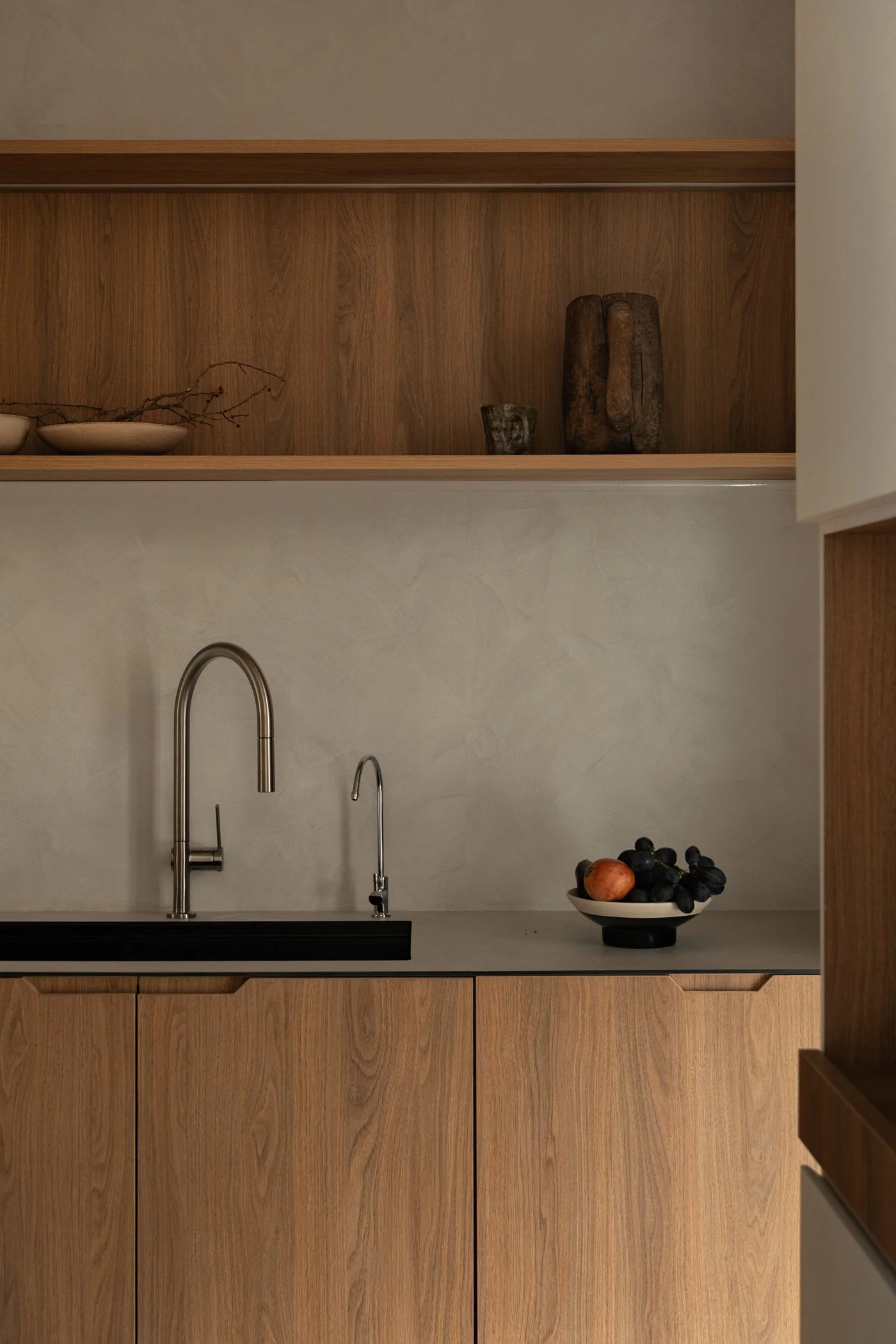
Photo Credit: TWJPTO
-
Simultaneously, the furniture was deliberately chosen for its low-slung proportions and grounded volumes. This makes walking, sitting, and lingering within the space feel effortless, while keeping sightlines clear and unobstructed. Light filters through a full wall of louvered blinds, spilling from the window all the way to the island countertop, allowing anyone standing anywhere in the space to sense the entirety of the home. The horizontal slats cut the sunlight into directional beams, casting ever-shifting patterns of light and shadow. Consequently, the space never wears a fixed expression; it continuously transforms throughout the day, quietly recording the passage of time.
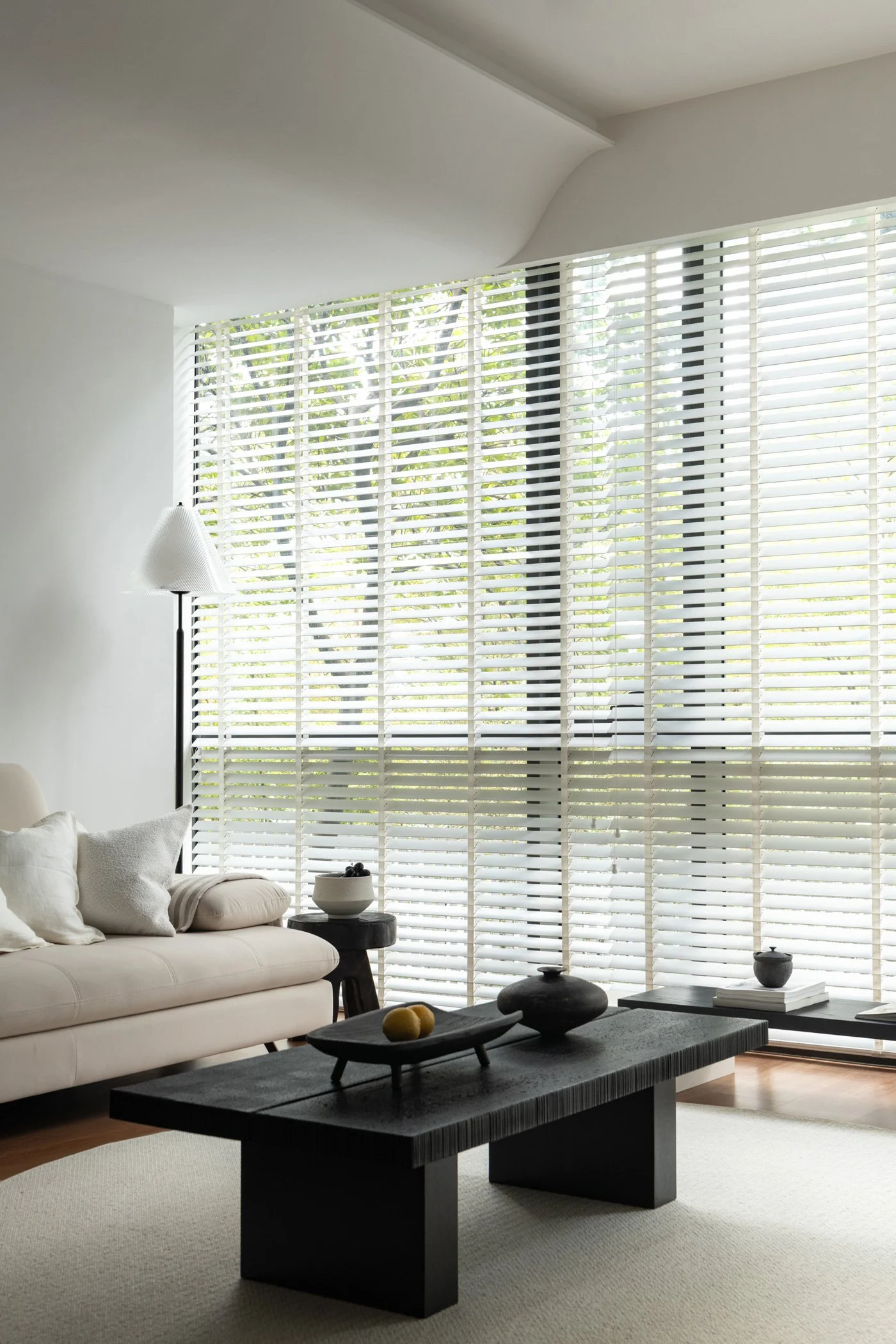
Photo Credit: TWJPTO
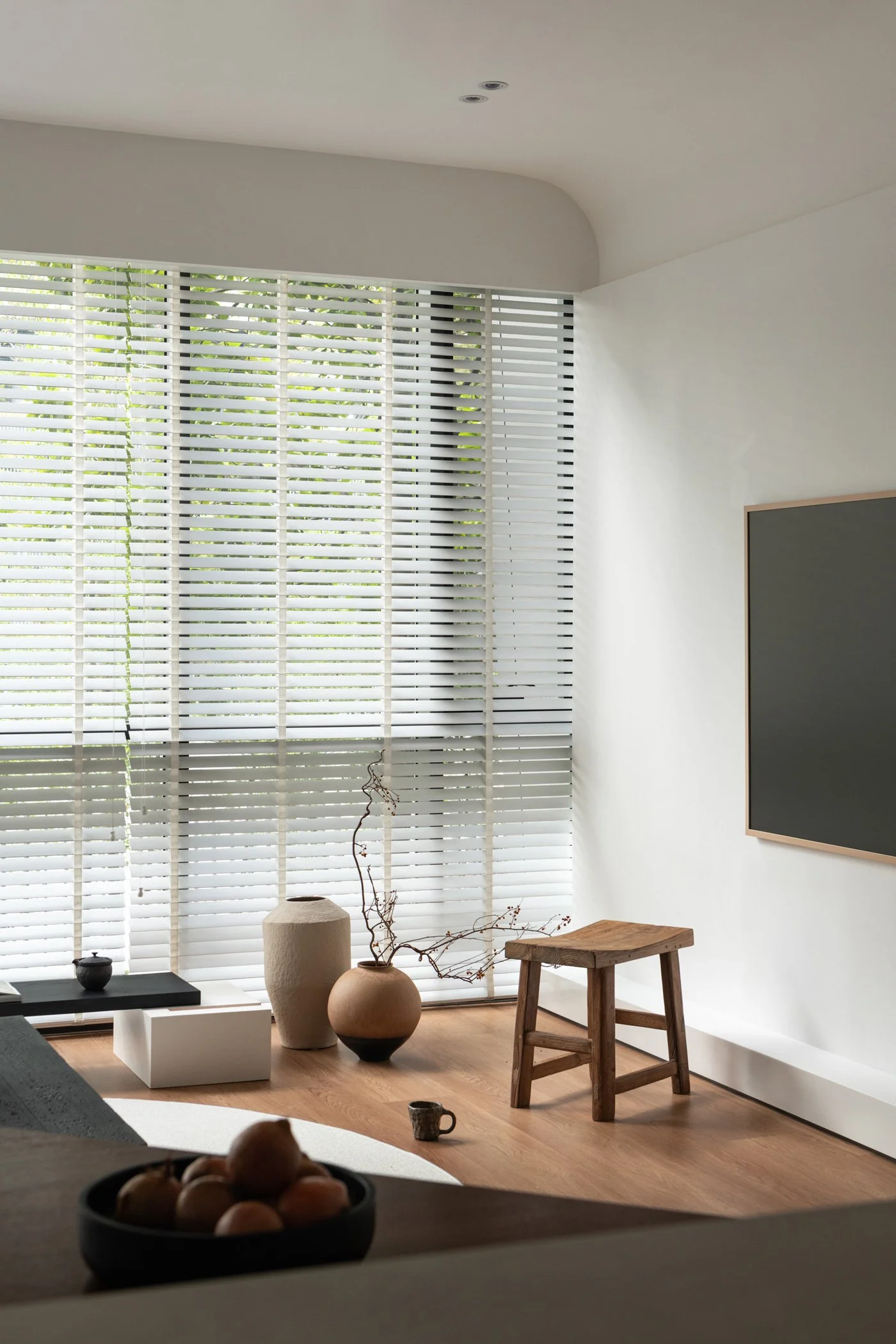
Photo Credit: TWJPTO
-
Manifesting Time Through Material Textures
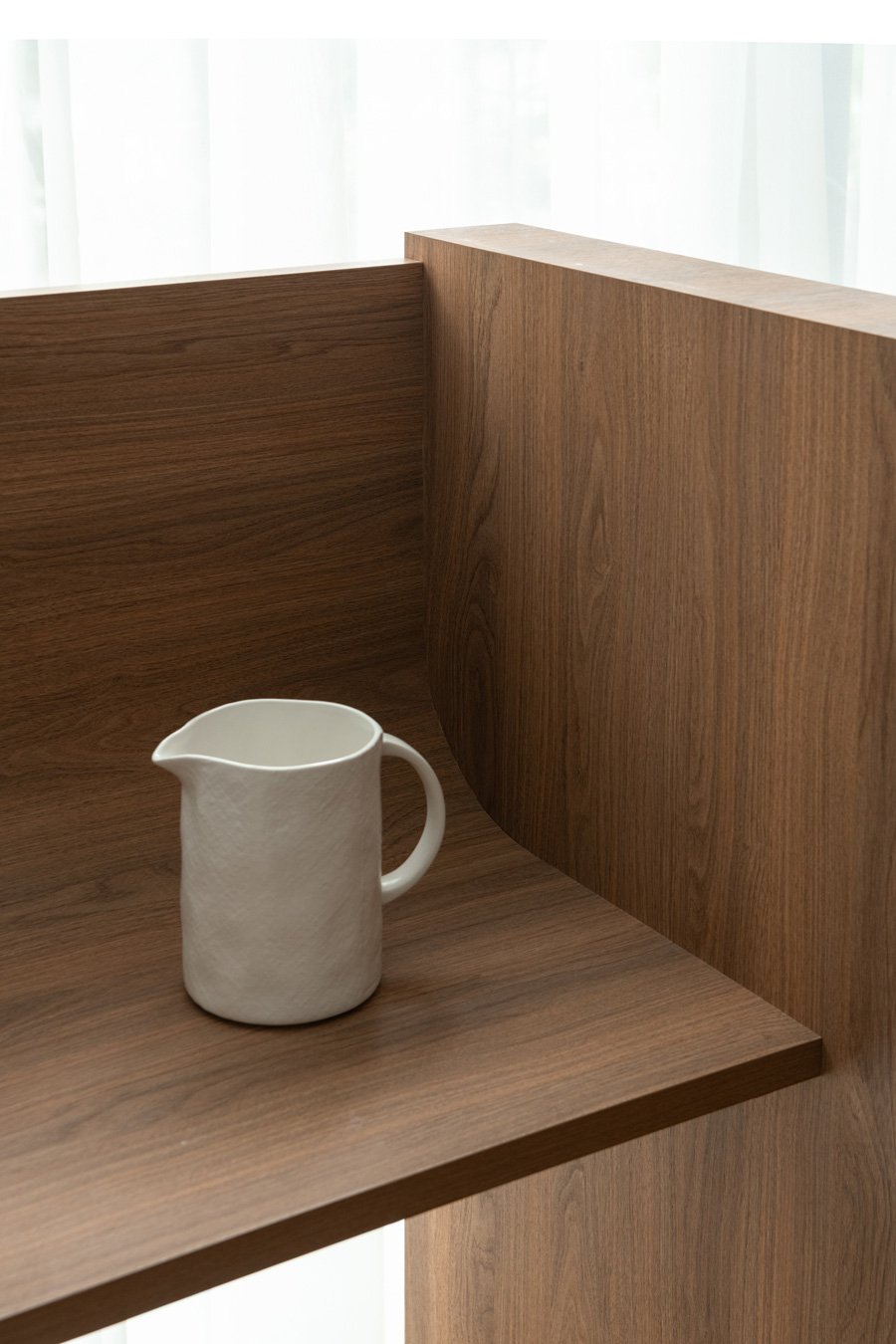
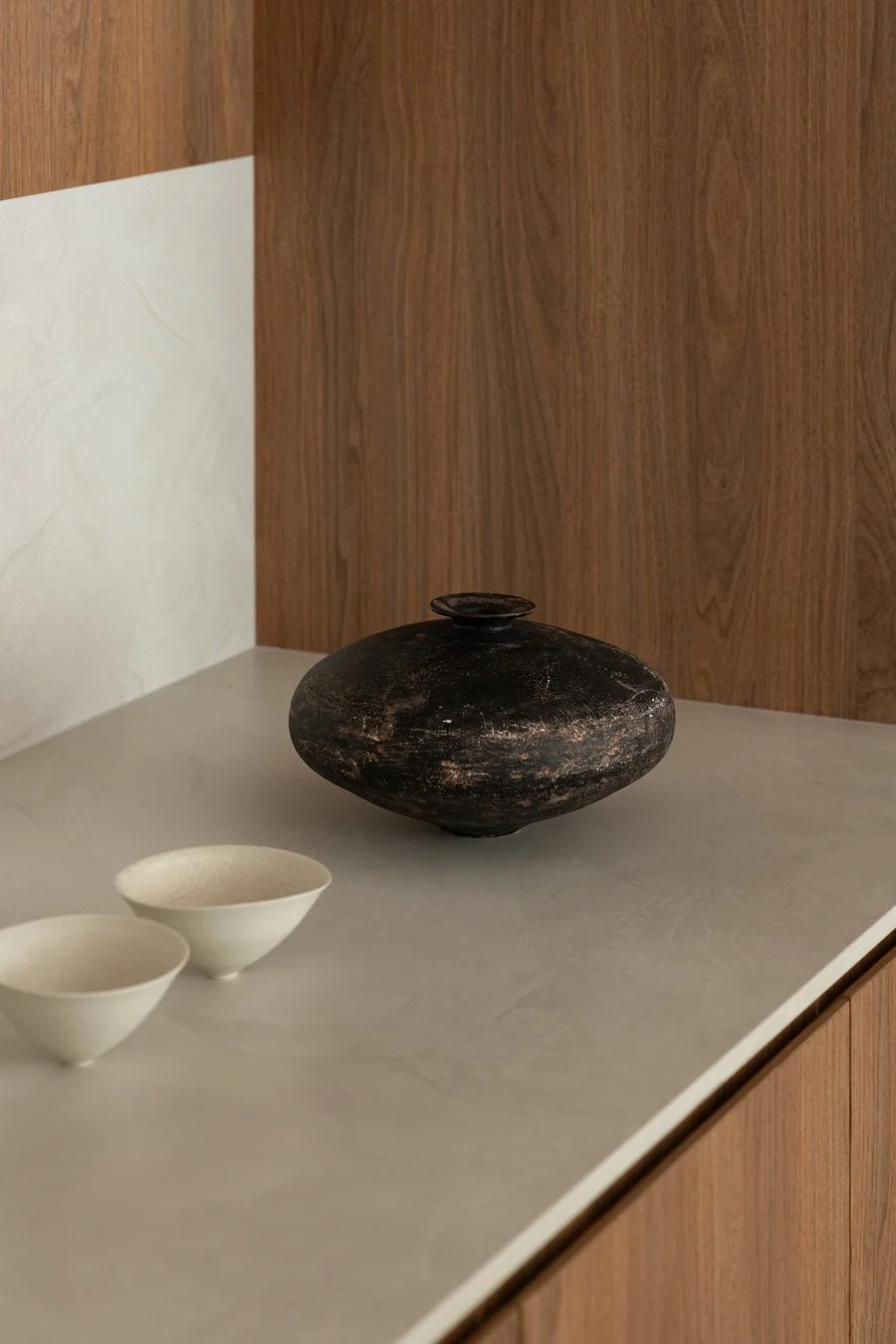
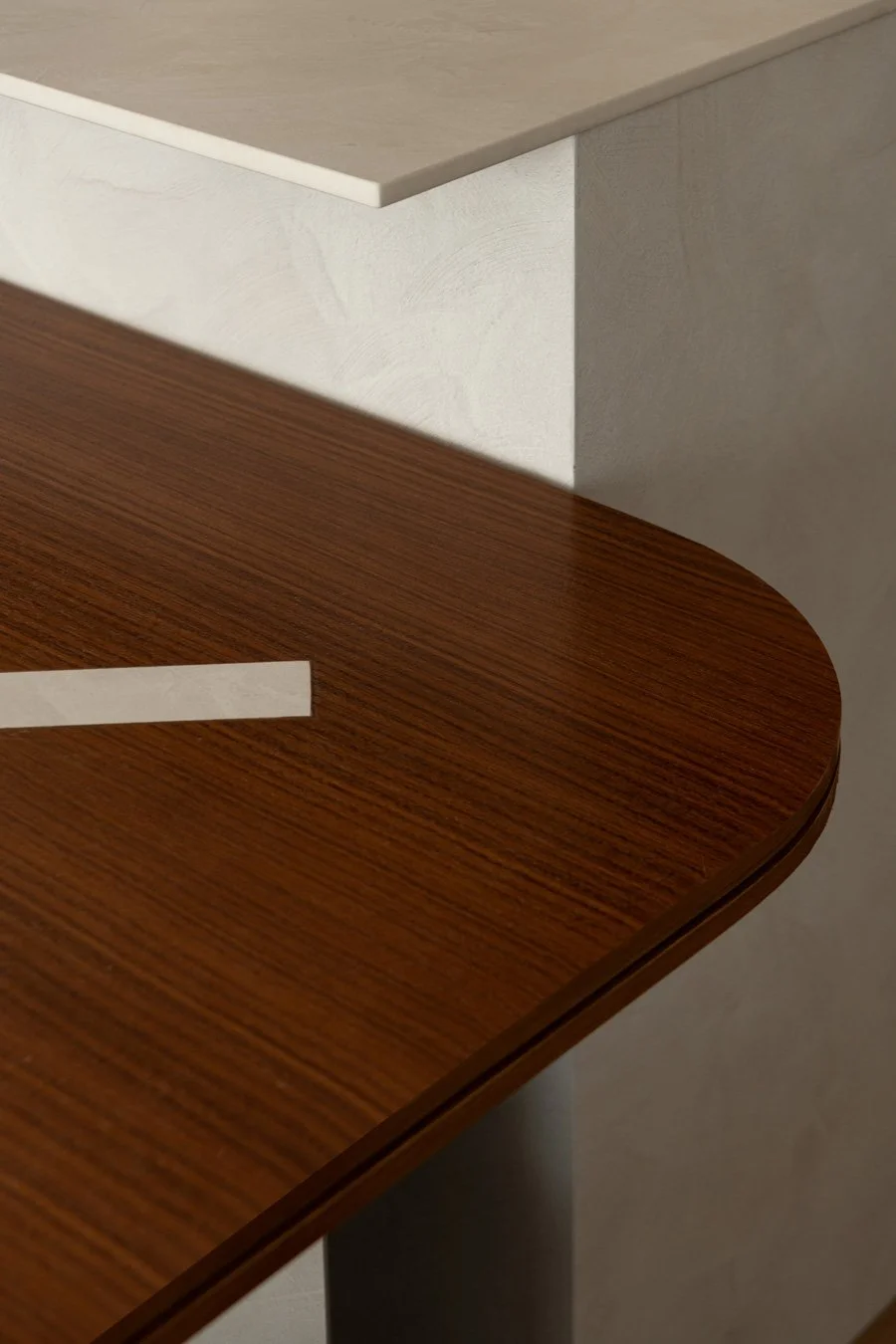
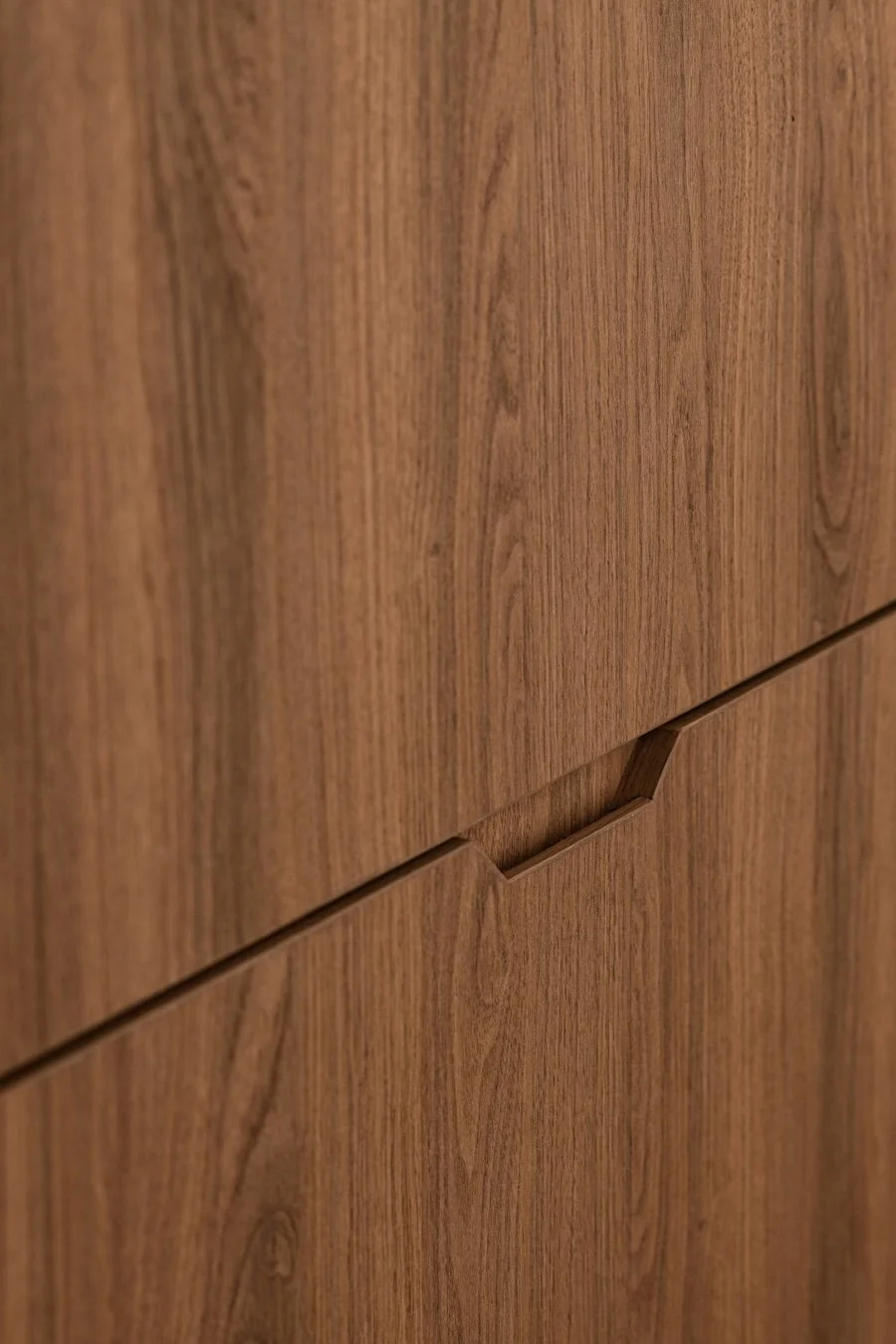
This sense of fluidity also creates opportunities for the objects within the space to be deeply appreciated, drawing out the essence of time. Richly glazed ceramics by the window, an antique wooden stool, a rustic clay cup casually resting on a dark shallow tray—all echo the home’s capacity to withstand the test of time. Joyce follows a clear logic in her material selection: warm and grounded wood tones, matte stone countertops, and handmade ceramics. The surfaces of these materials are designed to breathe, absorb, and gently evolve through daily contact. Under the warmth of the hand, the wood will slowly deepen in tone; the micro-scratches left on the stone counter from meal prep and wiping will eventually merge into a patina unique to this family alone. These changes can only be born through years of accumulation, and the designer's role was simply to reserve a place for them from the very beginning.
-
Extending the "Island" Concept to the Bedroom
As the materials in the communal areas slowly breathe over time, this tranquil fluidity seamlessly slips into the private quarters. Extending the island motif, the bed is pulled back into the center of the room, becoming a secluded island dedicated to rest. The warm wood paneling at the head of the bed stretches outward, ensuring sightlines are not abruptly cut off. Instead, it naturally integrates the vanity and wardrobe into a continuous elevation, using the embrace of materials to create a reassuring sanctuary for deep sleep.
The partition's height is perfectly proportioned: when lying down, one feels gently enveloped and secure; upon standing, the gaze can easily travel over the wall, reconnecting with the entire room. A slatted sliding door leading to the bathroom quietly masquerades as part of the wall when closed. When drawn open, the light filtering through the wooden slats hints at the space beyond. Inside the bathroom, grey-green stone and the soft glow of a paper lantern adopt an entirely different material vocabulary, perfectly capturing the bedroom’s serene warmth.
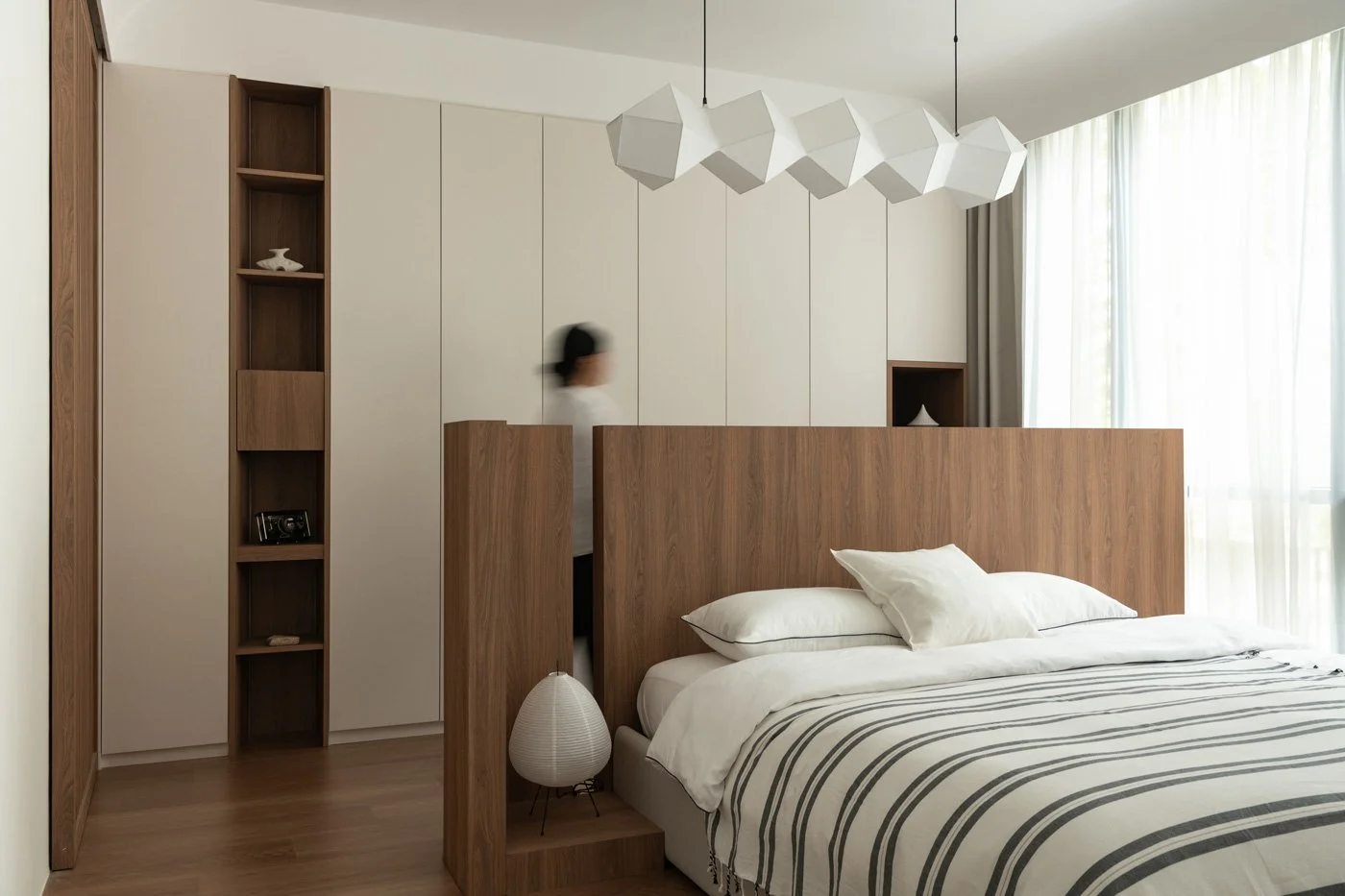
Photo Credit: TWJPTO
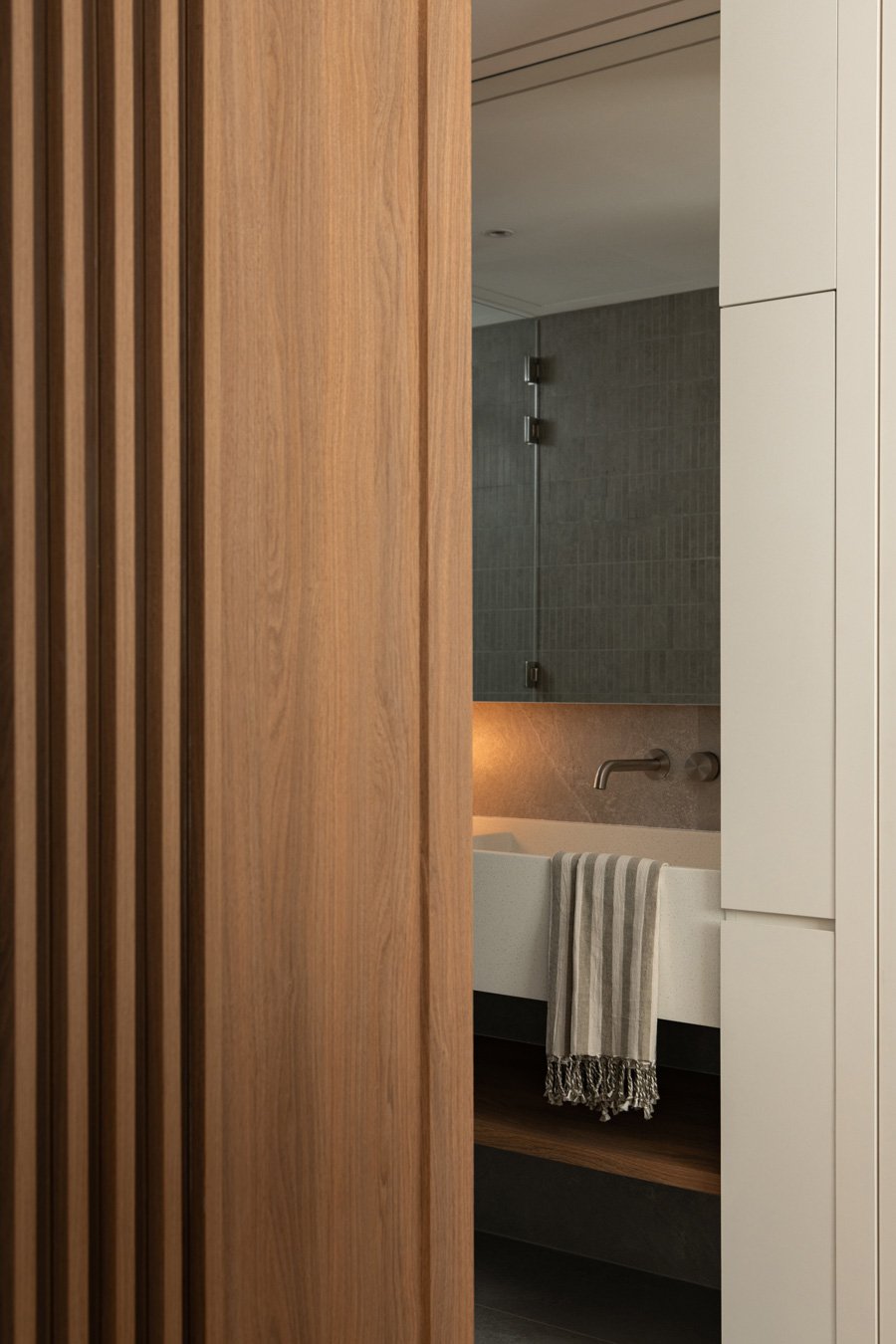
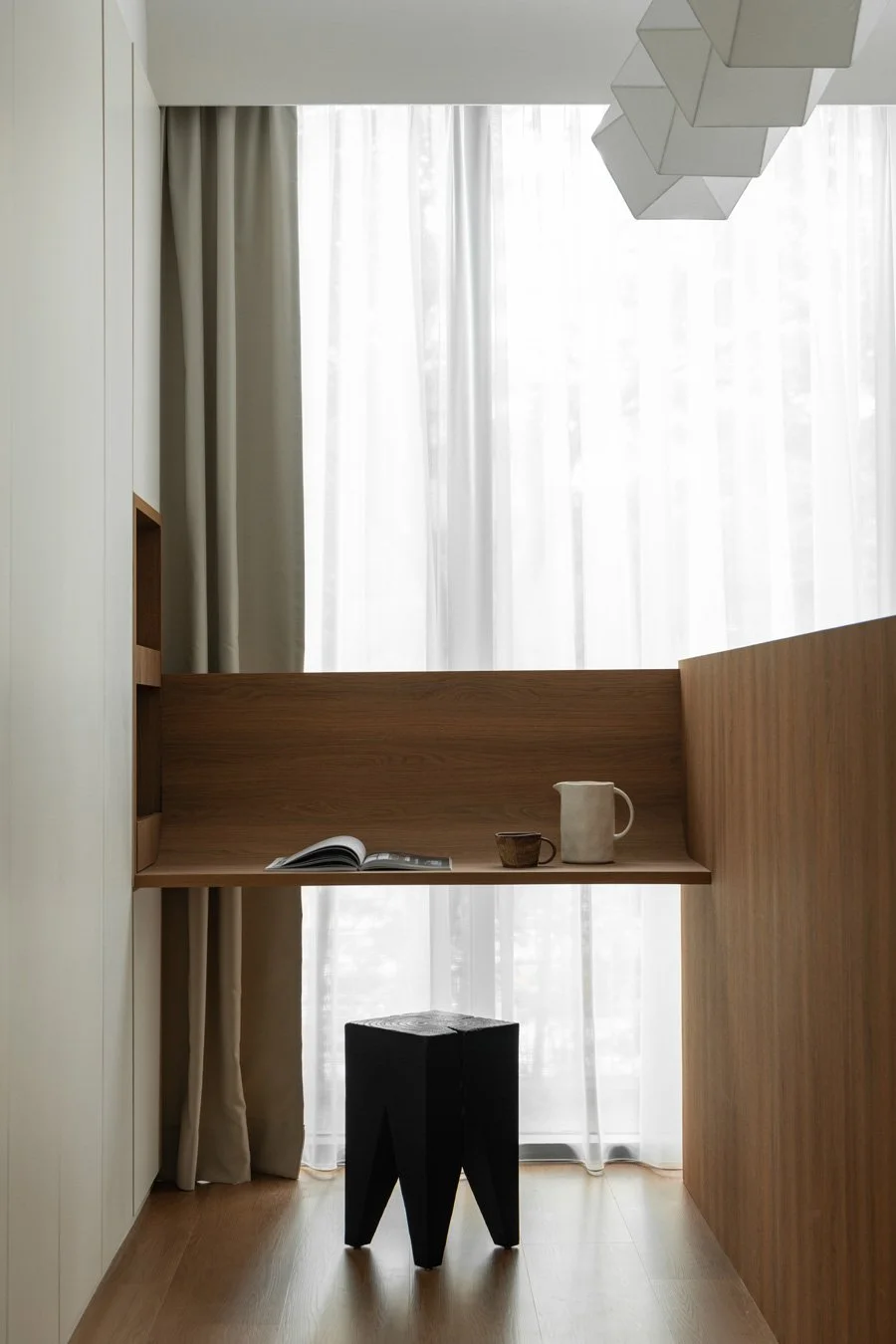
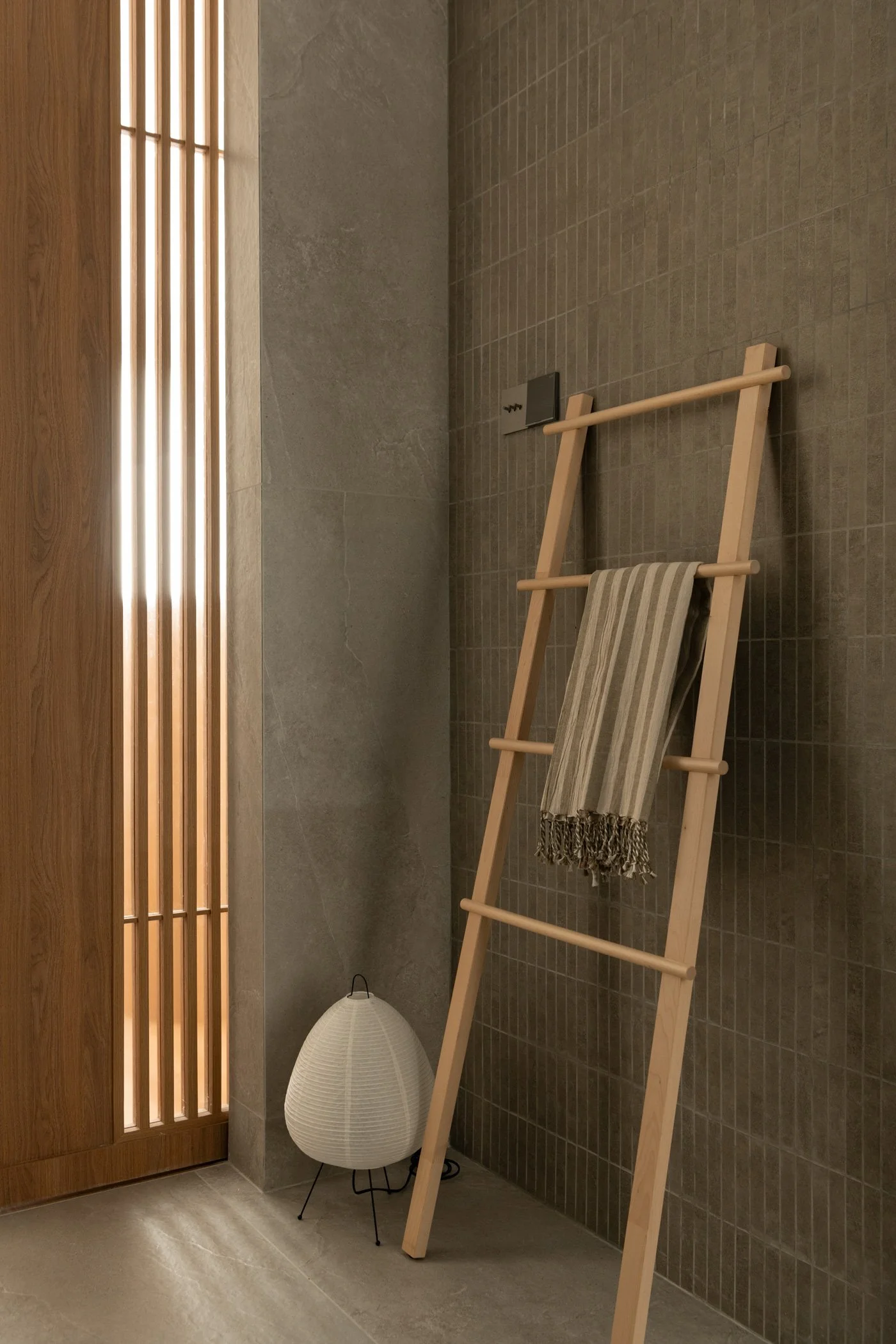
Photo Credit: TWJPTO
-
Throughout this home, J Hous Studio repeatedly practices the same philosophy: allowing each "island" to find its own grounding while responding to the true essence of living. There are no gimmicks or ostentatious features meant purely to dazzle. Instead, the designer has consistently made choices that are enduring and harmonious with time.
It is precisely this unhurried grace that allows the inhabitants to live at their own pace, shaping the space into their own image day by day—an Everyday Island where every single day feels anchored, stable, and profoundly real.
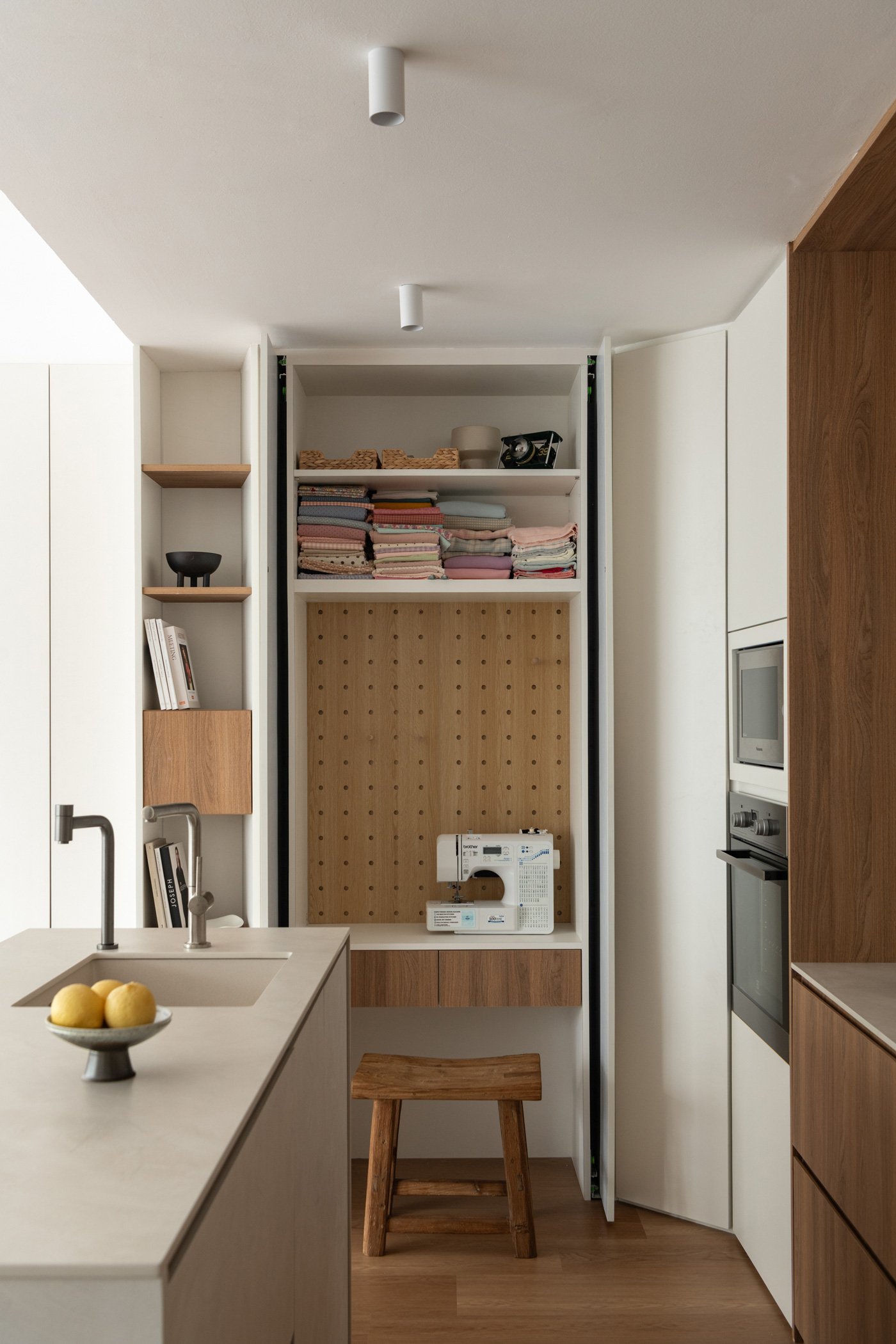
Photo Credit: TWJPTO
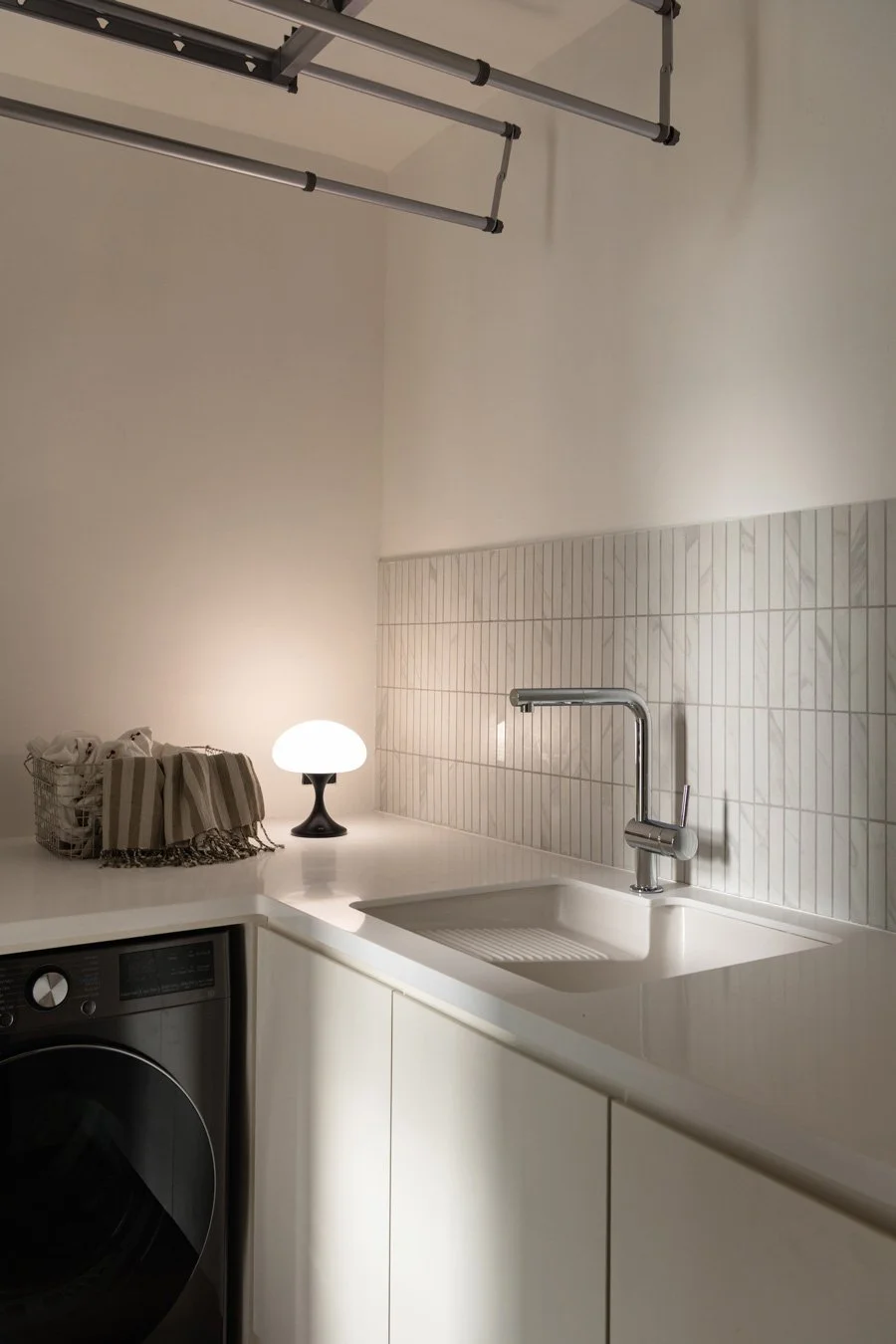
Photo Credit: TWJPTO