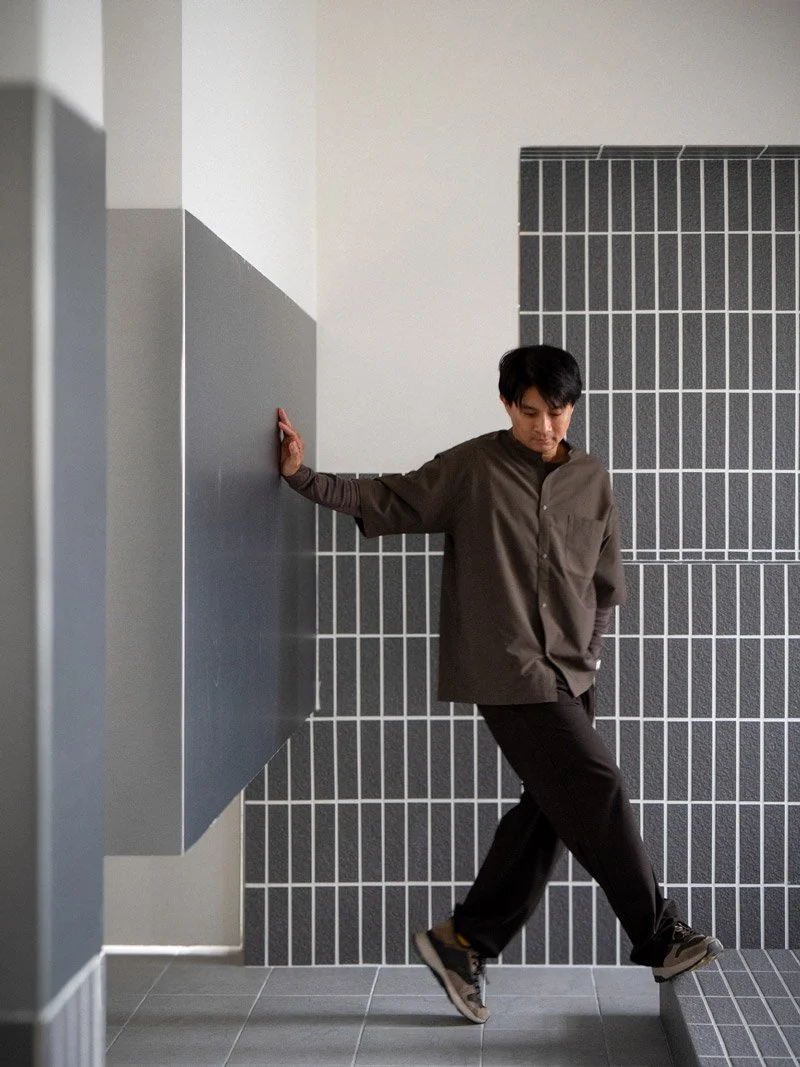
Jamie 專欄 #155|減法的視角:攝影師眼中的空間呈現與軟裝佈置
空間/ 灰色大門
日前我受邀進行一場講座,分享攝影與軟裝佈置之間的思維看法。趁著這次機會,我也好好重新梳理了一次過去累積的實務經驗,試著把那些在拍攝現場的觀察,轉化為具體視角,探討當攝影師走進一個已被精心打理過的空間時,我們的判斷與設計端會有哪些不同。
在討論差異之前,我們得先從「物件」本身談起。物件是圍繞在日常、承載個人喜好的器物,大至家具、藝術品,小至桌上的水杯、餐盤或一本翻開的書。形式各異的物件,對每個人而言都代表一種獨特的符號與生活訊息。在拍攝前,設計師會自行或委由軟裝師進行現場陳列,他們的任務是「建構與填滿」,藉由讓物件合理且優雅地存在,為空間注入生命力,進而勾勒出該場域最理想的居住樣貌。
-
Recently, I was invited to give a talk sharing my perspectives on the intersection of space photography and interior styling. I took this opportunity to thoroughly reorganize my past practical experience, attempting to translate on-site observations into specific viewpoints. We explored how a photographer's judgment differs from the design side when walking into a meticulously curated space.
Before discussing these differences, we must first talk about "objects." Objects are the everyday vessels that carry our personal preferences—ranging from large pieces like furniture and artwork to small items like a water glass, a plate, or an open book on a table. For everyone, these variously shaped objects represent unique symbols and life messages. Before a shoot, the designer will arrange the space themselves or commission a stylist. Their mission is to "construct and fill"—breathing life into the space by allowing objects to exist logically and elegantly, thereby outlining the ideal living scenario for that environment.
空間/ 開物設計
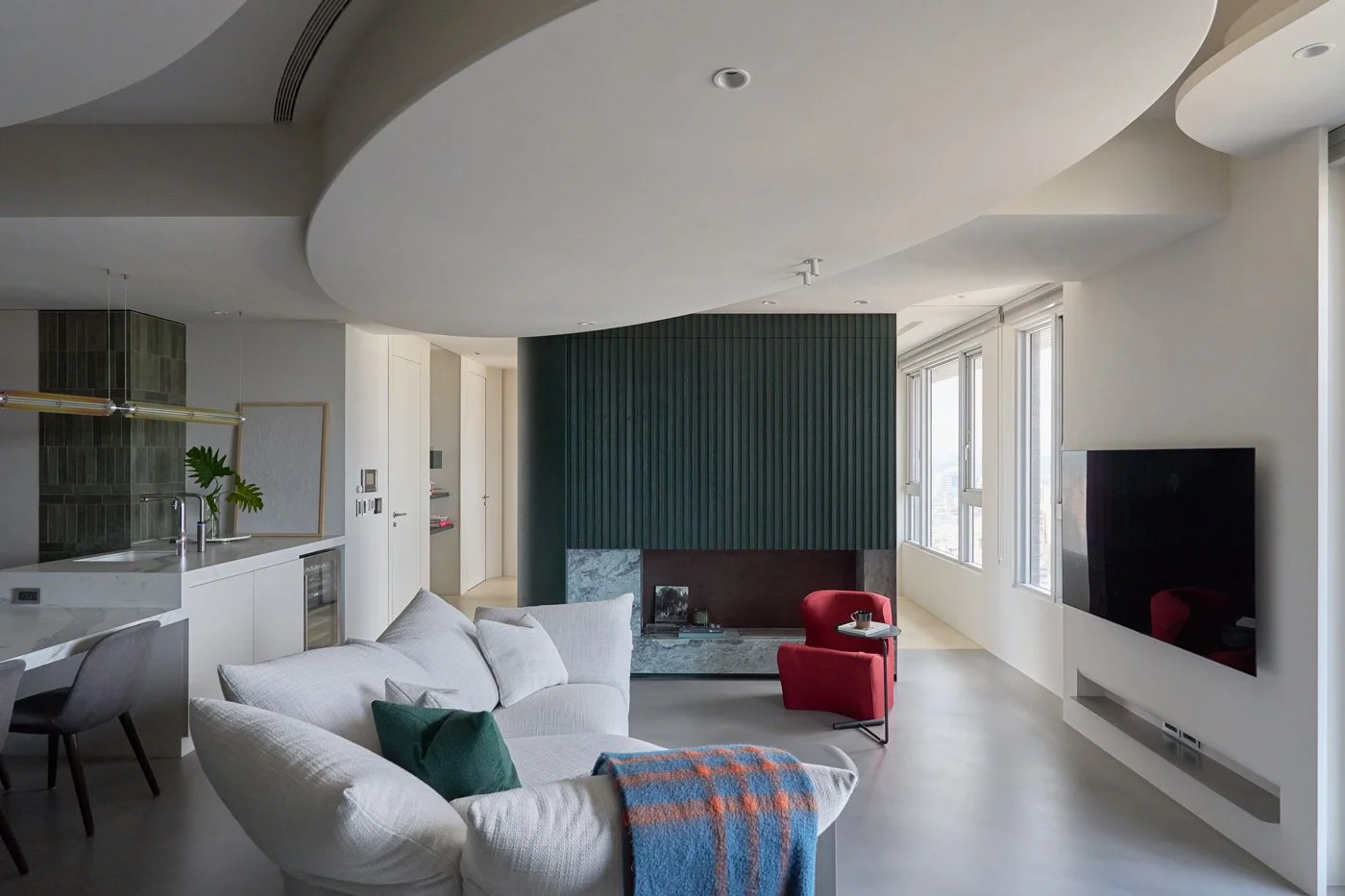
攝影師則通常在開拍前幾天,和設計師通過電話,手邊的事前資料多是平面圖、3D 渲染圖與現場照或影片輔佐。直到拍攝當天早上抵達,我們才會知道空間的真實現況。由於現場的硬體與軟裝皆已底定,攝影師的工作很大一部分,是在視覺呈現的當下,運用現成的資源,去塑造最好看的視覺呈現。
所以一場拍攝案,軟裝決定「裡面有什麼」,而攝影則決定「畫面裡要留下什麼」。「畫面裡留下什麼」,不是指畫面的裁切與縮放,是留下什麼樣的感情與故事。
-
Photographers, on the other hand, usually speak with the designer over the phone a few days before the shoot. The preliminary materials on hand are mostly floor plans, 3D renderings, and supplementary site photos or videos. It isn't until we arrive on the morning of the shoot that we see the true state of the space. Because the site's hardware and soft furnishings are already set in stone, a massive part of a photographer's job is to use readily available resources to orchestrate the most dynamic and narrative-rich frames right at the moment of visual presentation.
Therefore, in a photography project, the designer decides what soft furnishings are in the space, while the photographer decides what is left in the frame. This "leaving behind" means using the camera lens as a filter to find and preserve the stories that truly belong to the space.
空間/ 灰色大門
拍攝之前,從聆聽開始
Robert Frank 曾說過:「眼睛在看之前,應先學會聆聽。(The eye should learn to listen before it looks.)」
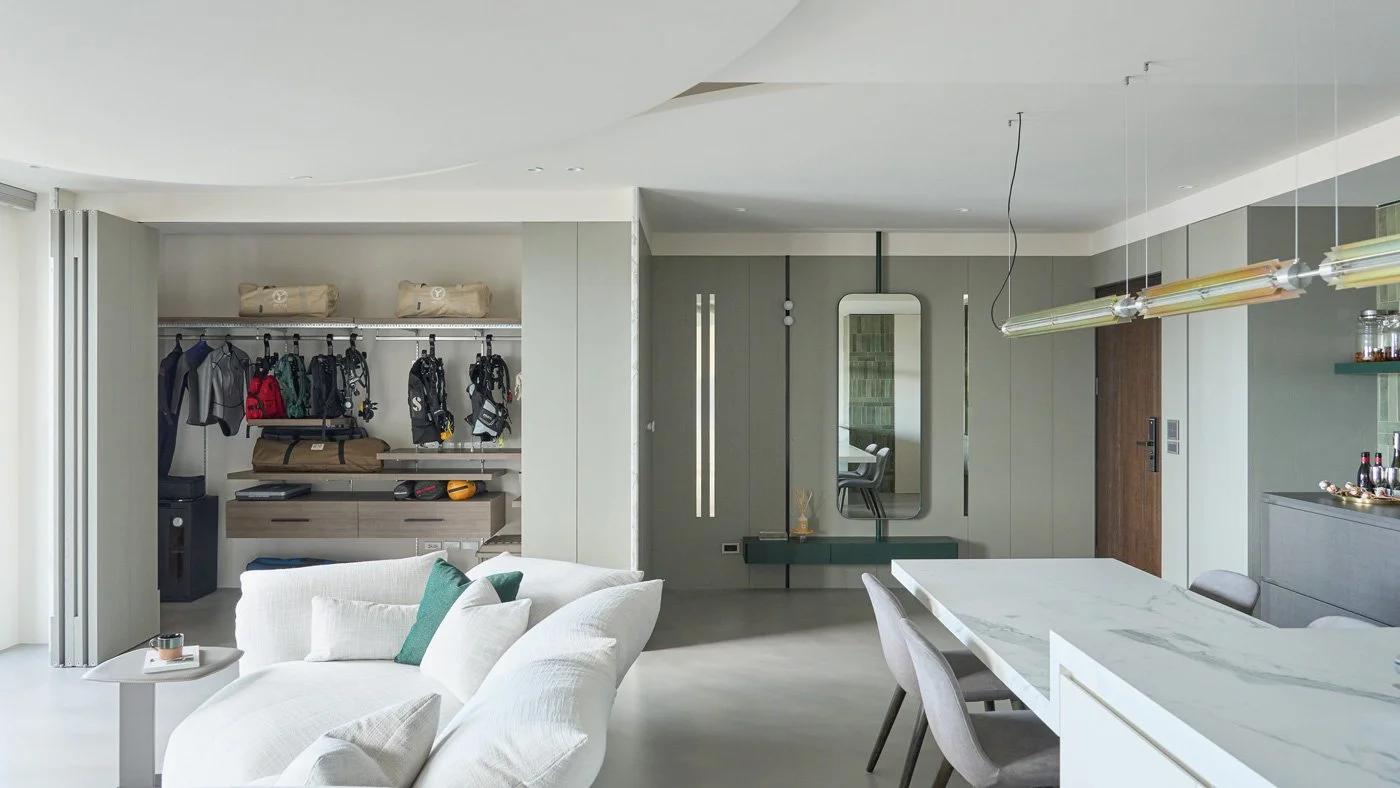
每到一個新現場,我會請設計師或屋主帶我走一圈。設計師介紹時會解釋空間背後的考量,例如玄關的落塵區與洗手台,是為了方便小朋友回家後能立刻完成基本清潔;或者某個大型的收納櫃,是為了妥善存放全家熱愛的滑板與戶外器材。聆聽這些細節時,我的大腦便會開始拼湊這個家庭的生活型態。當收納櫃一打開,看見裡頭的家務用品排列得整齊劃一,我們就能進一步推測出屋主的性格。這些獲取的細節,填補了原本未知的資訊,也成為我們後續決定畫面視角的重要依據。
-
It Starts with Listening
Robert Frank once said, "The eye should learn to listen before it looks."
Whenever I arrive at a new location, I ask the designer or the homeowner to walk me through it. During the tour, the designer explains the rationale behind the space. For example, a mudroom area and sink at the entryway are designed so kids can immediately wash up when they get home; or a large storage cabinet is built to properly house the family's beloved skateboards and outdoor gear. As I listen to these details, my brain starts piecing together the family's lifestyle. When the cabinet is opened and the household supplies are lined up perfectly, we can further deduce the homeowner's personality. These gathered details fill in the blanks of previously unknown information and become the crucial basis for how we determine our visual perspectives later on.
空間/ 開物設計
在極簡與生活感的拉鋸中尋找平衡
通常我看一個畫面,會從光影(光從哪裡來)、好的單品(視覺重心在哪)、生動互動(有沒有正在發生的事),以及顏色與構圖(色塊與線條怎麼戴眼睛),這四件事情來判斷。
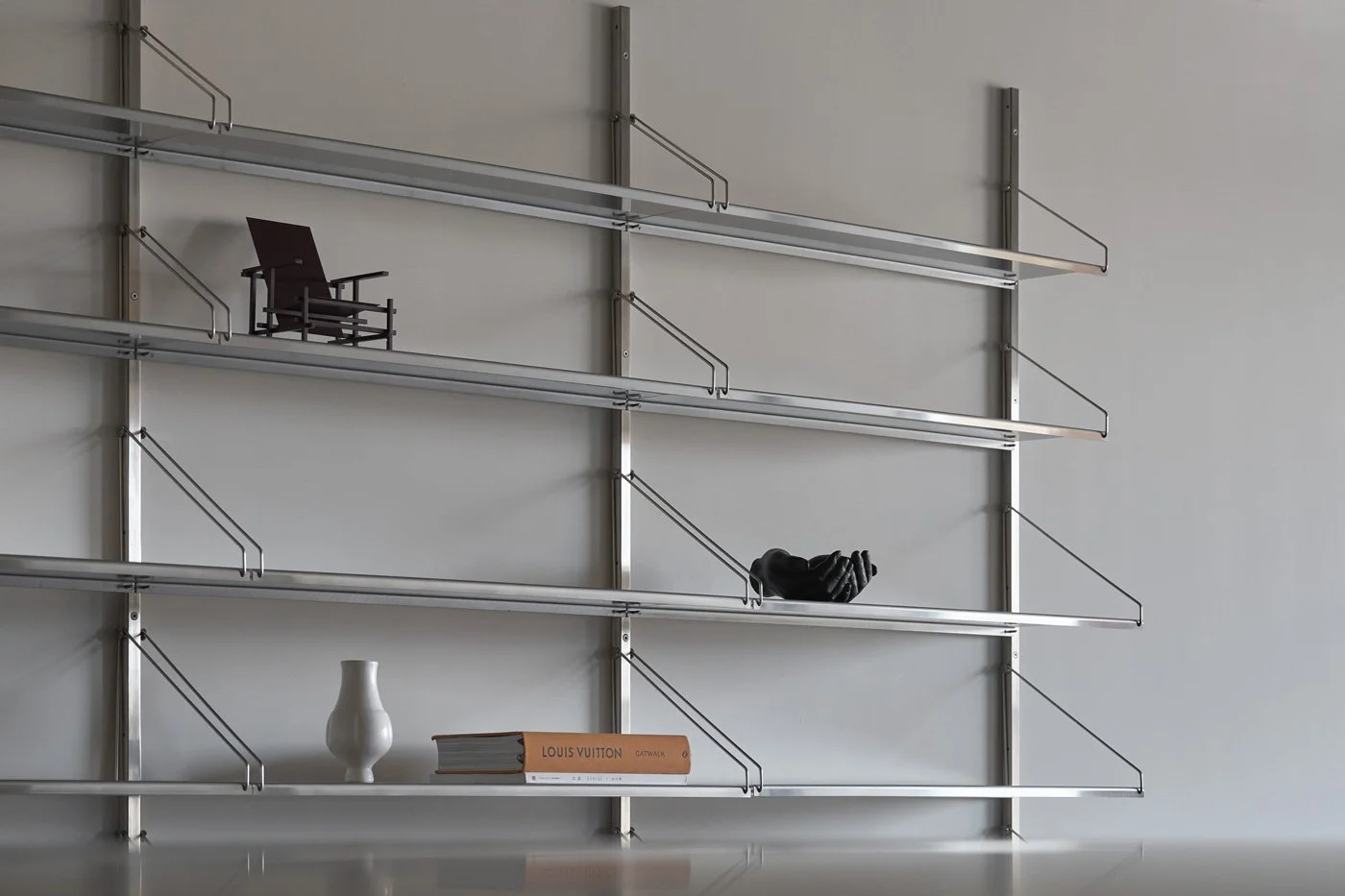
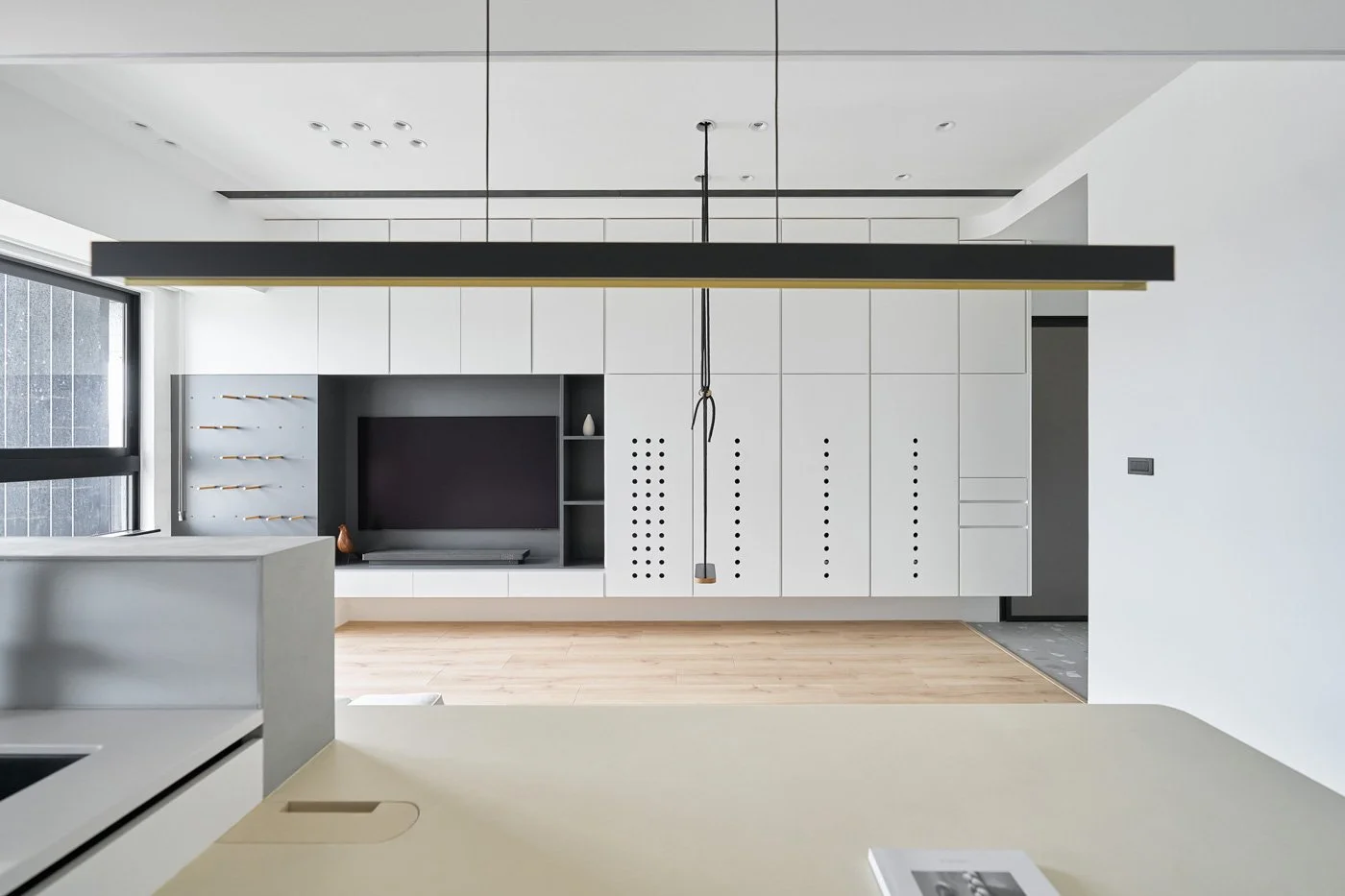
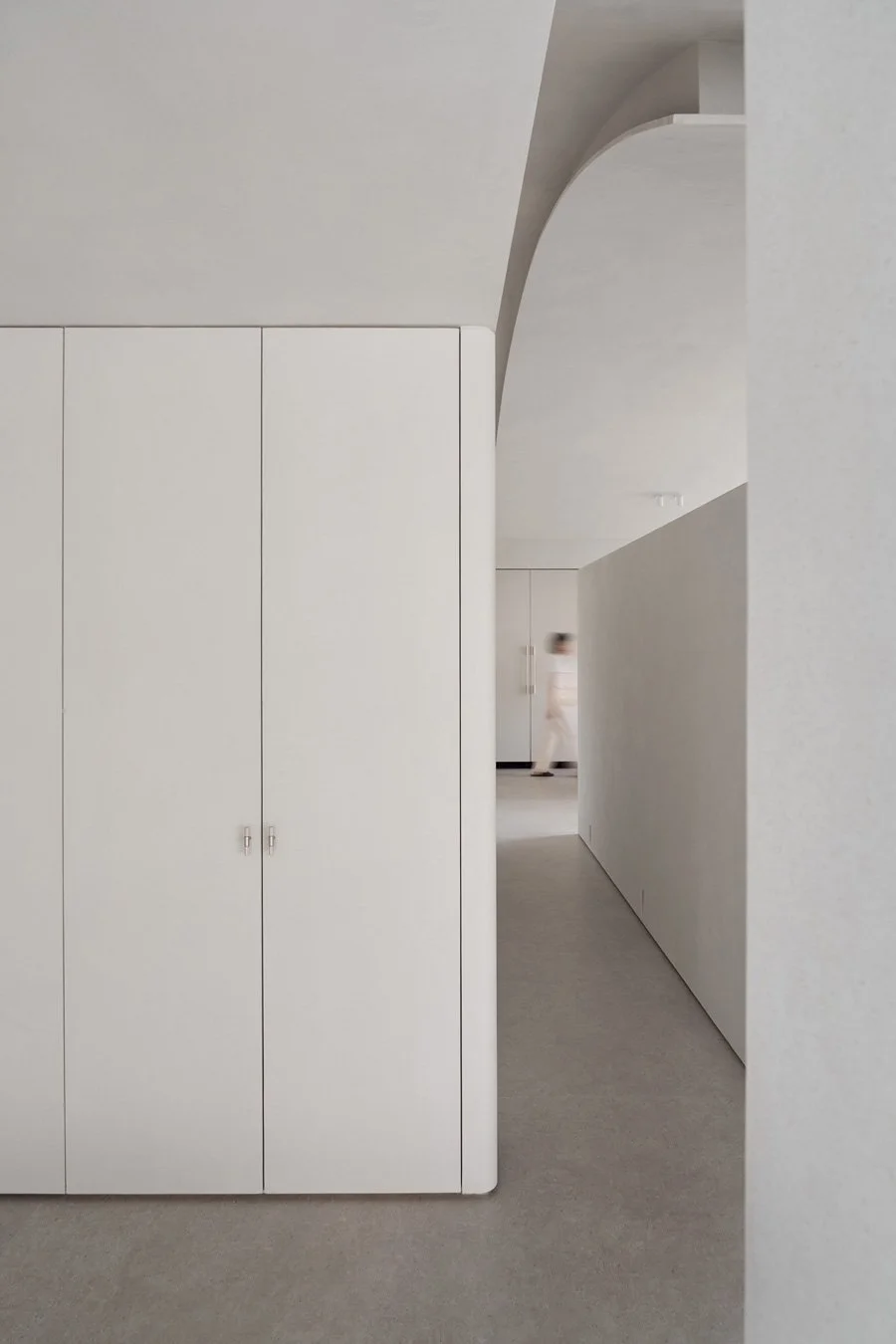
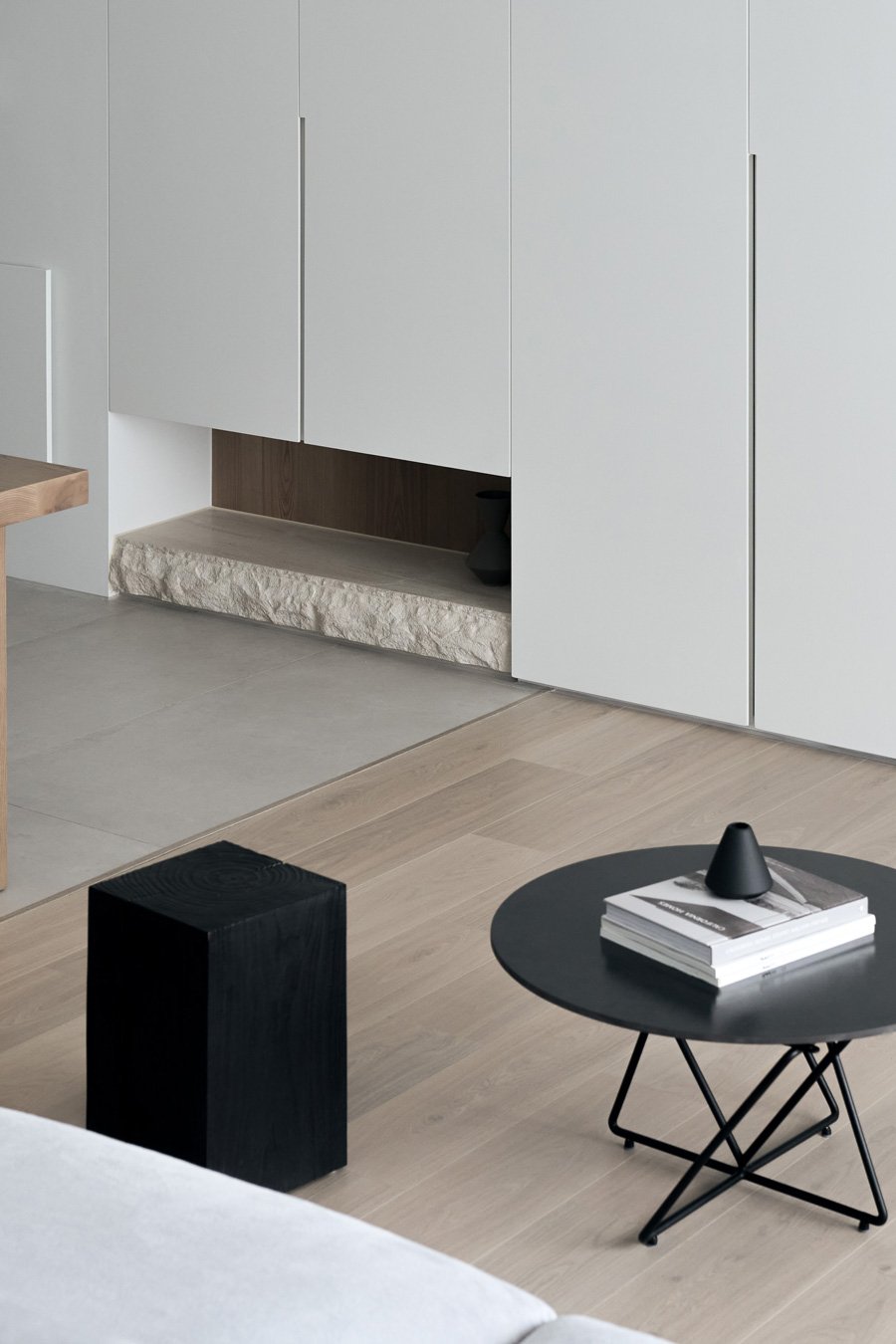
拍攝時,大家苦惱的事情不外乎是要不要放這些東西、要放多少?這完全取決於空間本身的調性與尺度。第一種情況,是初始設定乾淨單純的極簡空間。當空間已經收斂得非常純粹,再放任何物件進去都是多餘,最好的處理就是「減法」,只留下基本的元素來呈現幾何結構。設計師有時會擔心空間顯得單調,試圖放進陳列品;這時攝影師必須客觀地提出討論:照片的目的是呈現空間氛圍,而非販售單品,因此要勇敢地把東西拿掉。
-
Finding the Balance Between Minimalism and a Lived-in Feel
Typically, when I evaluate a frame, I break it down into four key elements: light and shadow (where the light originates), standout pieces (where the visual anchor lies), dynamic interactions (whether a story is actively unfolding), and color and composition (how color blocks and lines guide the eye).
During a shoot, the most common dilemma is whether to include certain items and how many to keep. This entirely depends on the tone and scale of the space itself.
The first scenario is a space initially set up to be a clean, simple, and minimalist environment. When a space is distilled to its purest form, adding any object becomes superfluous. The best approach here is "subtraction"—leaving only the basic elements to showcase the geometric structure. Sometimes, designers worry the space might look too monotonous and attempt to bring in props; this is when the photographer must objectively step in: the goal of the photo is to present the spatial atmosphere, not to sell a single product. Therefore, we must be brave enough to take things away.
空間/ 蟲點子創意設計
空間/ 拾號空間製作所
空間/ 天沐設計
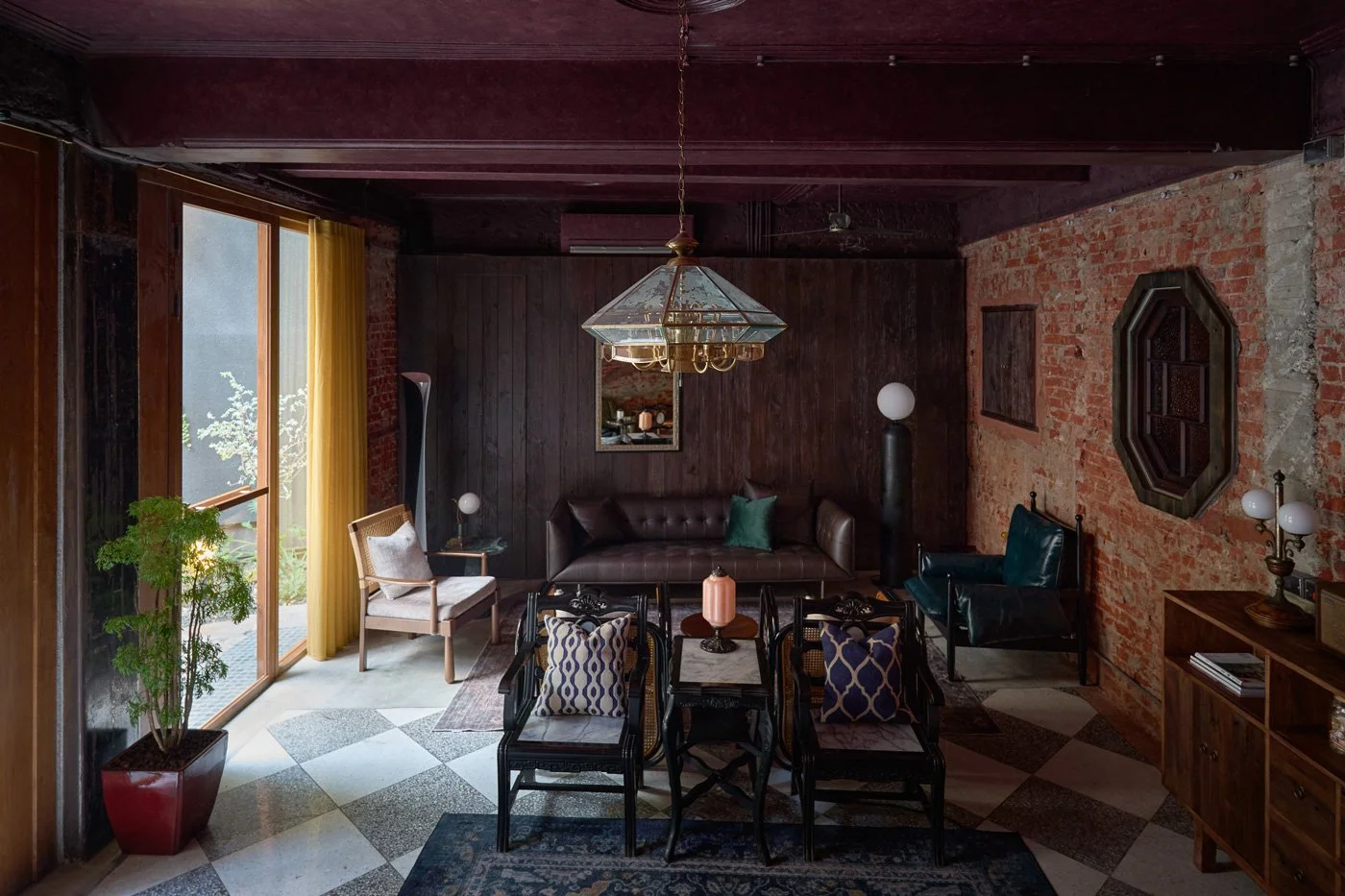
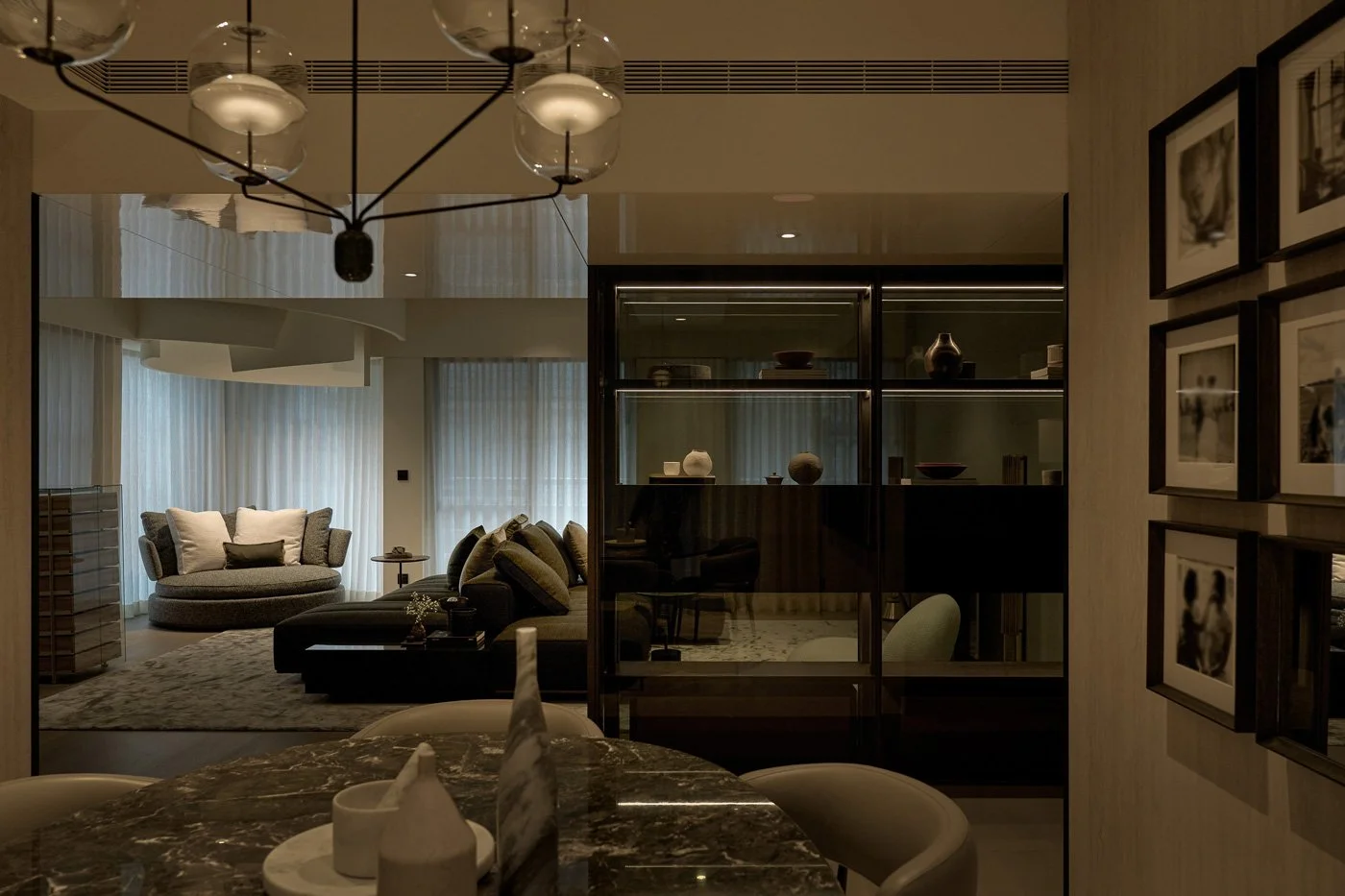
第二種情況則完全相反,以我們拍攝台南的蔚南裏民宿為例,這是由店主老家改建的空間,深具時光的痕跡和風貌。在這樣的場域裡,現場堆疊的私人收藏,與各式風格的沙發、燈具擺放在一起,非但不突兀,反而合理且有味道。面對如此龐雜的元素,有時設計師會擔心畫面是否過於擁擠或雜亂,這時我們可以給予他們信心,保留這些飽滿的養分。攝影師要做的是利用光線與色調的表現,讓多元的線索在鏡頭下沉澱為一種和諧。
-
The second scenario is the exact opposite. Take our shoot at the WAYNAN MANSION in Tainan, for example. This is a space renovated from the owner's old family home, deeply imbued with the marks and charm of time. In such an environment, piled-up personal collections, placed alongside sofas and lamps of various styles, don't feel abrupt; instead, they make sense and exude character. Faced with such a complex array of elements, designers sometimes worry the frame will look too crowded or cluttered. Here, we can give them the confidence to retain these rich, nourishing details. The photographer's job is to use light and color tones to let these diverse clues settle into a sense of harmony beneath the lens.
空間/ 蔚南裏民宿.執見設計
空間/ 寬玠設計
當空間尺度放大,用「無形」與「行為」取代實體
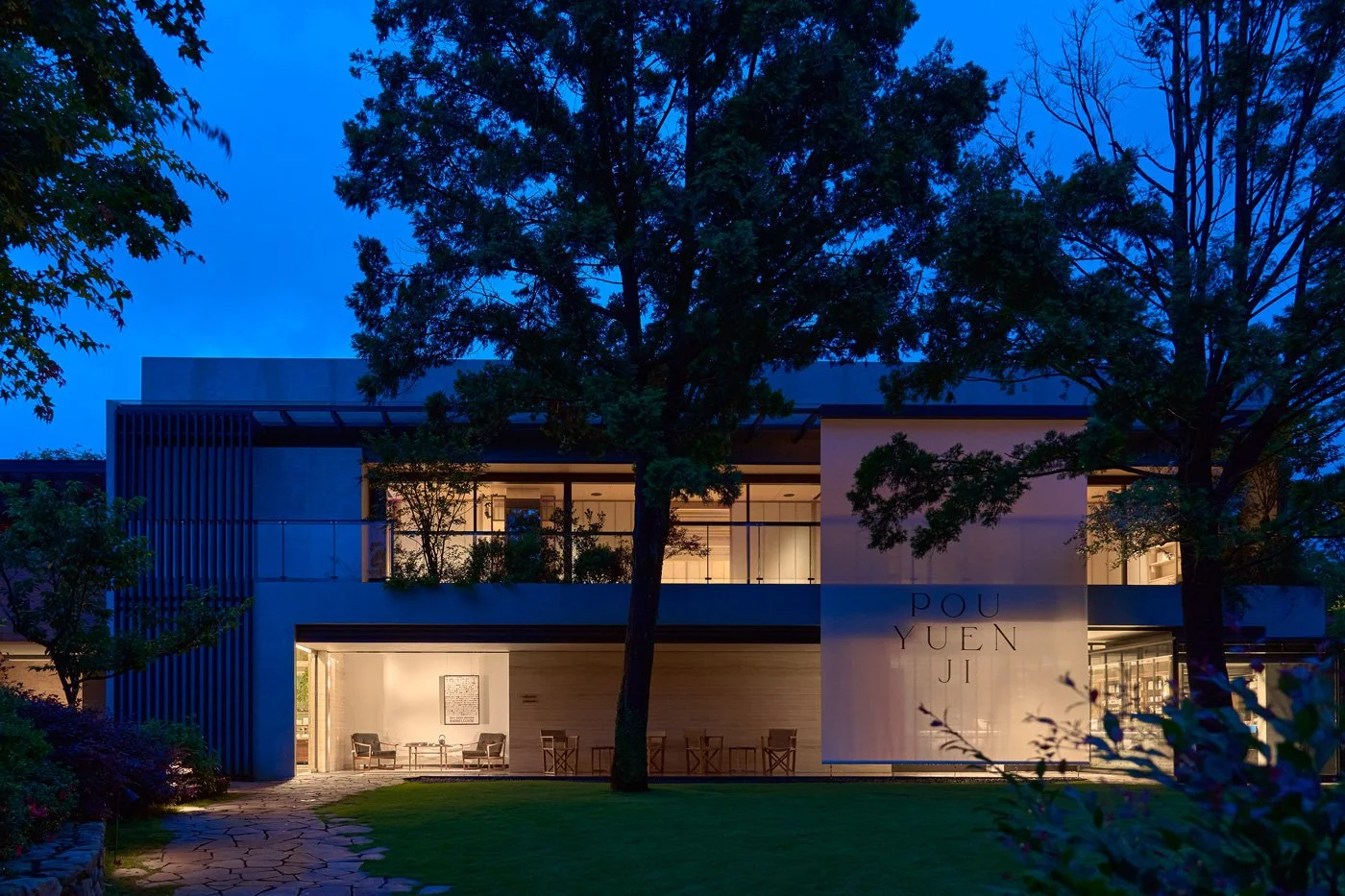
我們面對到坪數極大的寬敞空間時,物件的佈置邏輯又會面臨另一種考驗。許多設計師在處理大型住宅時,常會陷入一個狀況:他們將大量物品搬進現場,擺置進去後,卻發現空間看起來依然空曠。面對大到無法用實體物件堆疊的空間,我們必須轉換思維,改用「虛化」的元素與「人的行為」來填滿。
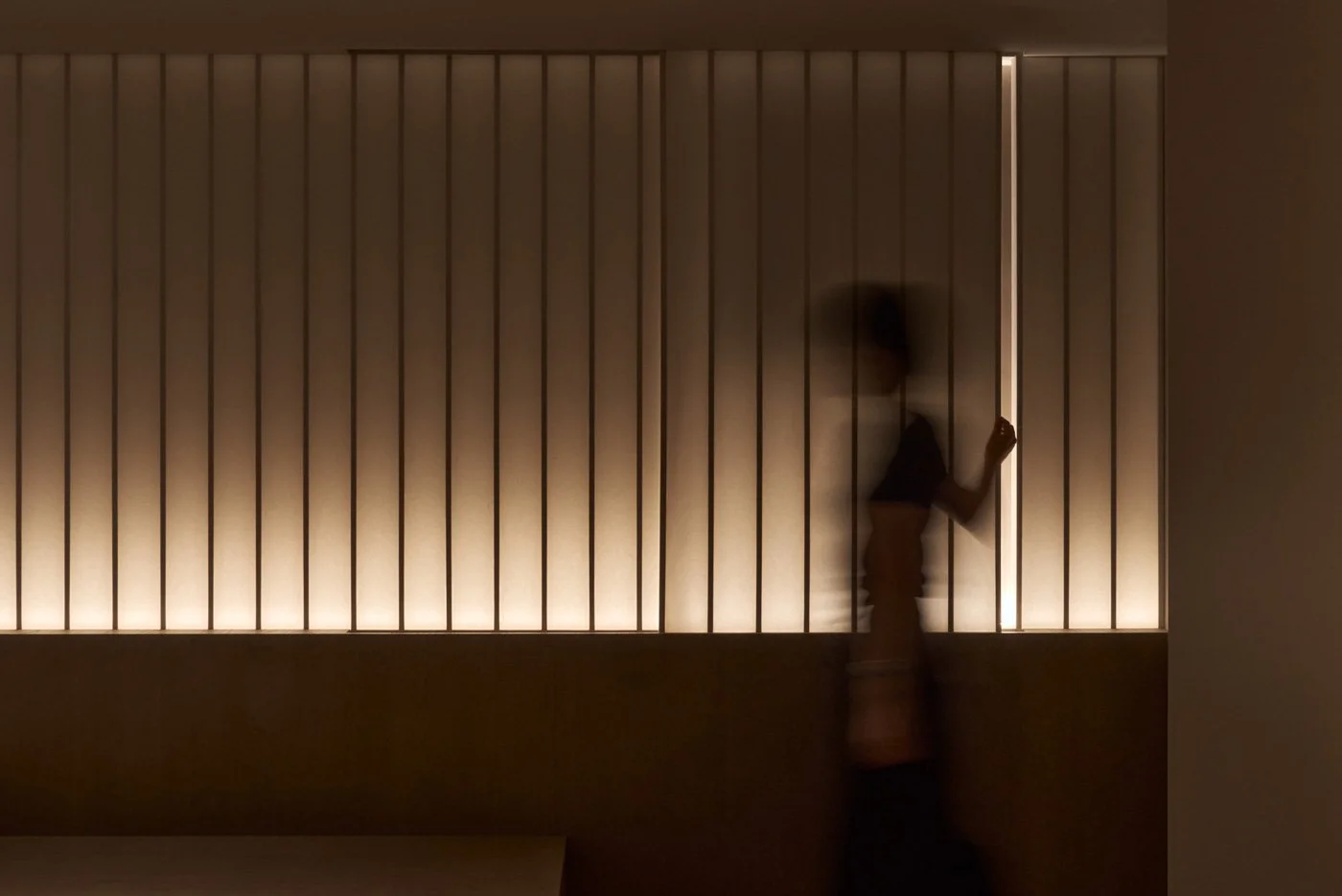
空氣與光線,本身就是能填滿整個場域的介質。在拍攝現場,攝影師可能是捕捉斜射進來的光線,或是定格窗外樹葉的飄逸律動,就會引導觀眾的感官穿透鏡頭,隱約感覺到風的流動,彷彿聞得見空氣中微濕的氣息。此時,即便沒有堆積如山的軟裝,畫面在視覺與情感的張力上,依然是極為豐富的。
-
When the Spatial Scale Expands: Replacing the Physical with the "Intangible" and "Behavior"
When dealing with extremely spacious areas, the logic of placing objects faces a different kind of test. Many designers run into a specific problem when styling large residences: they bring a massive amount of items on set, only to find the space still looks empty after everything is placed. Faced with a space too large to be filled with physical objects, we have to shift our mindset and use "intangible" elements and "human behavior" to fill the void.
Air and light themselves are mediums capable of filling an entire space. On set, a photographer might capture the slanted rays of light or freeze the graceful sway of leaves outside the window. This guides the viewer's senses through the lens, allowing them to faintly feel the flow of the wind and almost smell the slight moisture in the air. At this moment, even without mountains of soft furnishings, the frame remains incredibly rich in its visual and emotional tension.
從建築量體打開氣勢。空間/ 寶元紀之丘
空間/ 拾號空間製作所
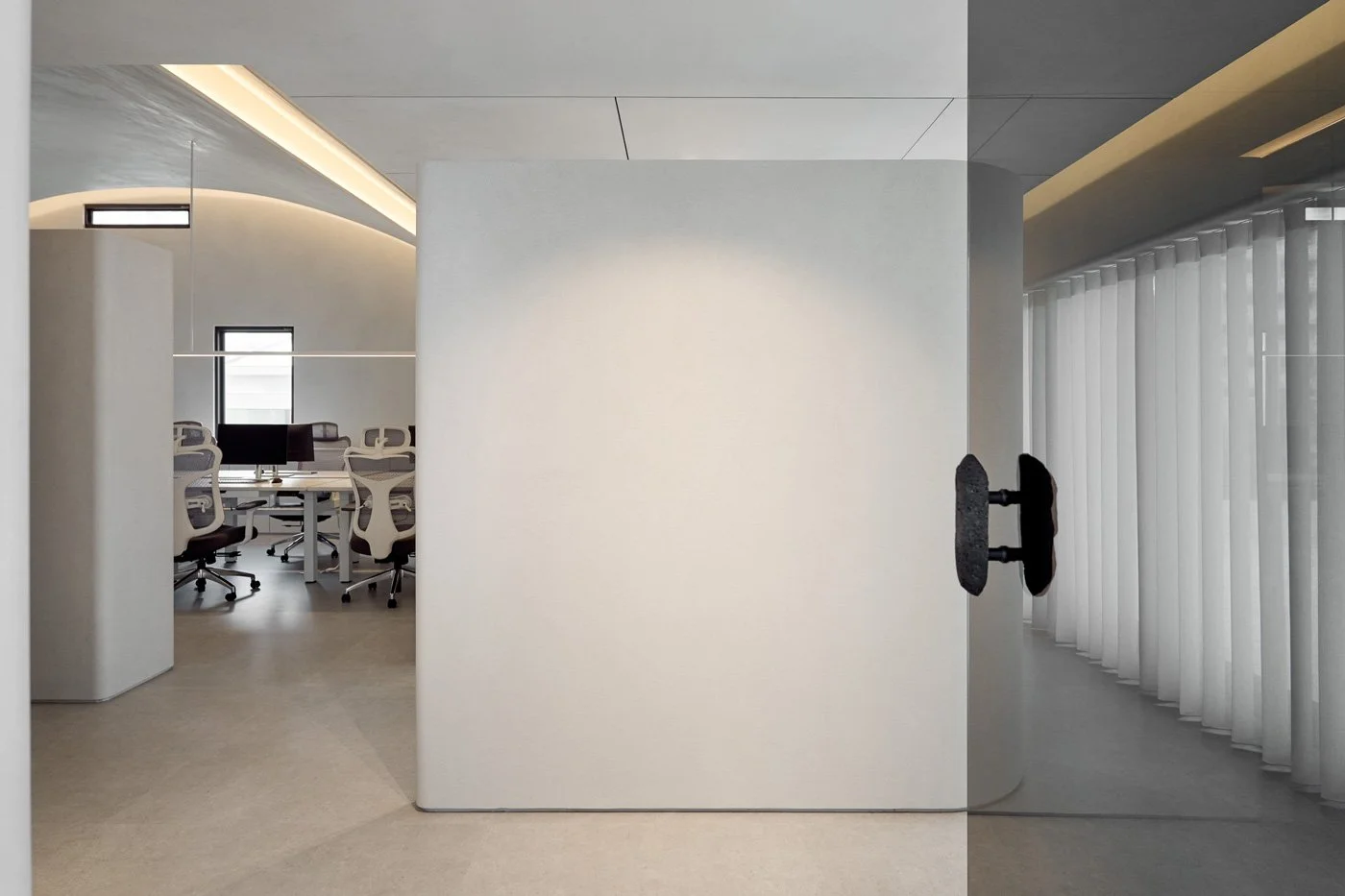
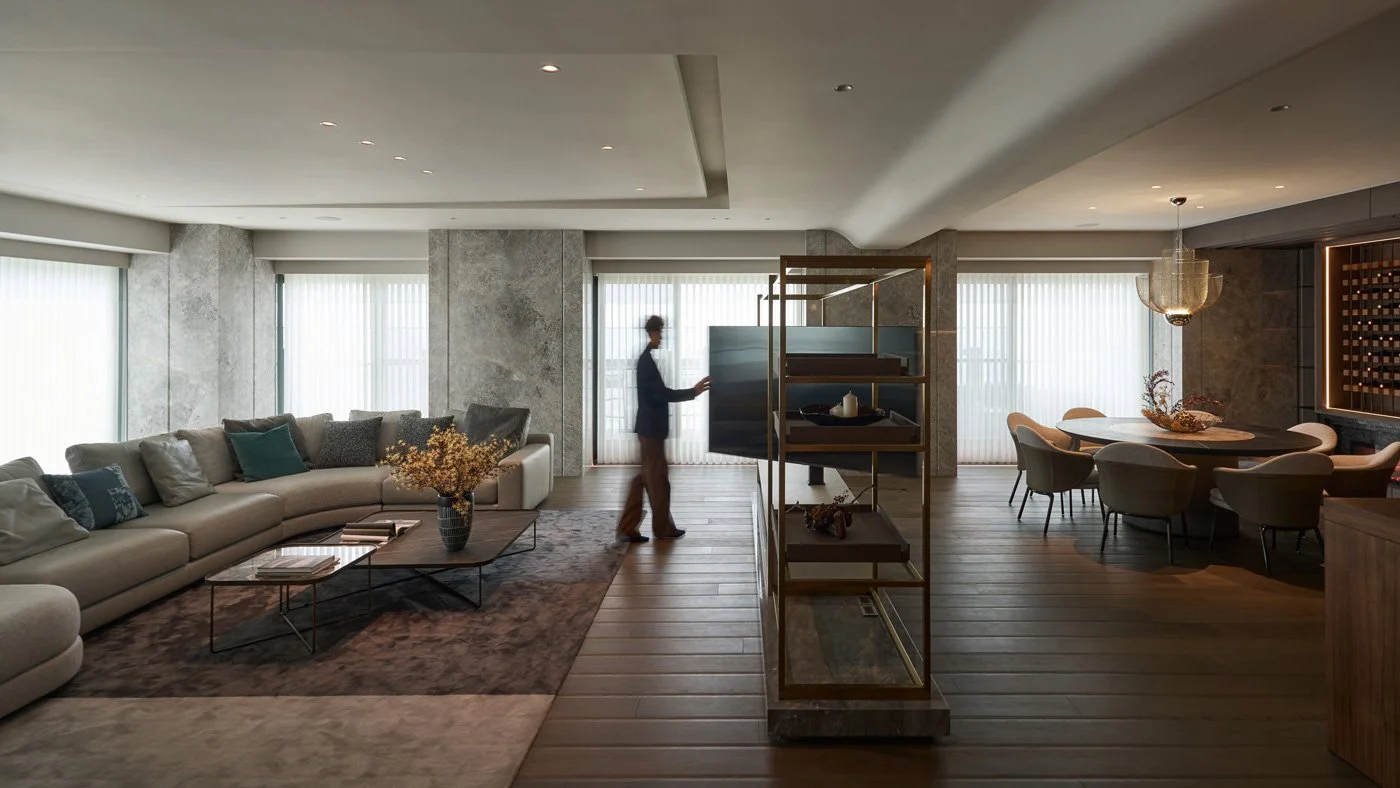
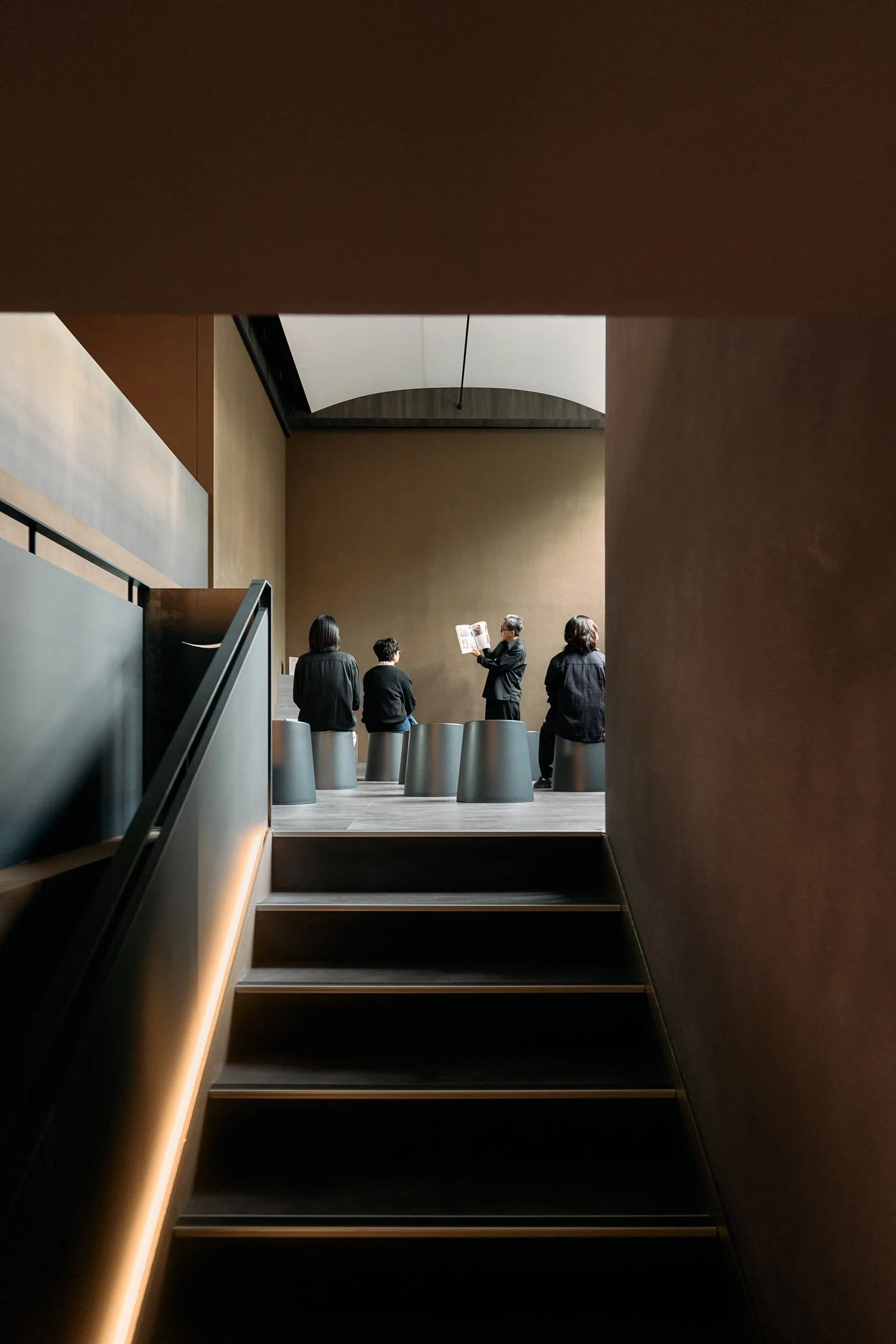
除了無形的光與空氣,「人」是大型空間裡最好的比例尺。大型量體若缺乏人的存在,真實尺度難以被具體感受。人一旦進入畫面,空間的挑高與實體比例,瞬間就被合理建立。
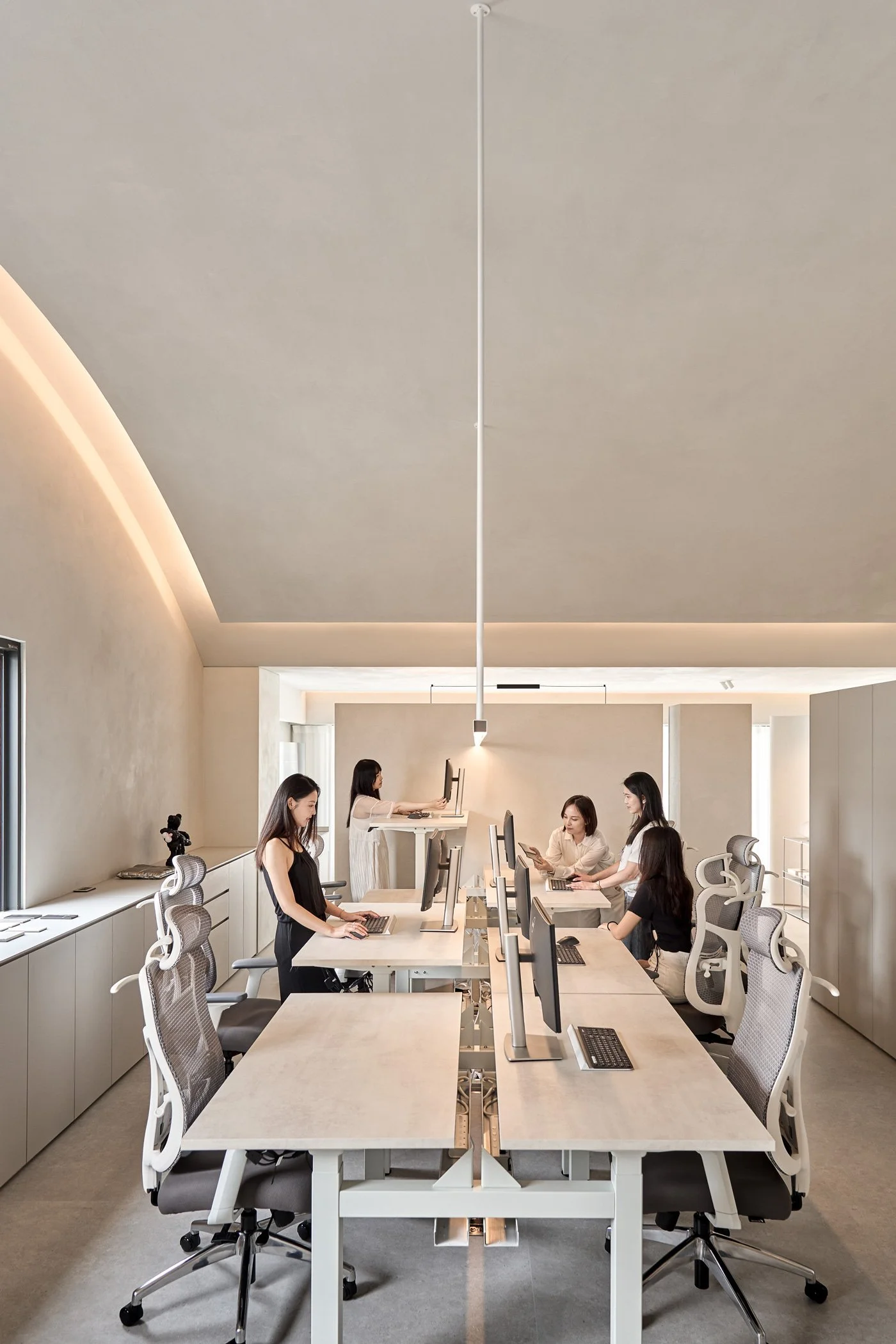
這樣的比例解套方式,同樣適用於簡約的辦公空間。例如在一個規劃了會議桌與八張升降桌的場域裡,如果所有桌子高度相同且空無一人,畫面容易讓人產生尚未完工的錯覺。這時,我們選擇請不同人或坐或站地使用電腦、聚在一起討論。當人的行為意義填補了空間的留白,不僅展現桌子具有升降機能的特質,也能在靜態畫面裡創造出鮮活的動態感。
-
Besides intangible light and air, "people" are the best scale references in a large space. Without human presence, the true scale of a large volume is hard to physically grasp. Once a person enters the frame, the high ceilings and physical proportions of the space are instantly and logically established.
This solution for scale applies equally to minimalist office spaces. For instance, in an area designed with a conference table and eight height-adjustable desks, if all the desks are at the same height and completely empty, the image can easily give the illusion of an unfinished project. At this point, we choose to have different people using computers or gathering for discussions, either sitting or standing. When the meaning behind human behavior fills the negative space, it not only showcases the desks' height-adjustable features but also creates a vibrant sense of dynamics within a static image.
空間/ 拾號空間製作所
空間/ 長景設計
空間/ 金鳳書苑.映泰空間製造所
在小型空間,從微觀的視角尋找氛圍
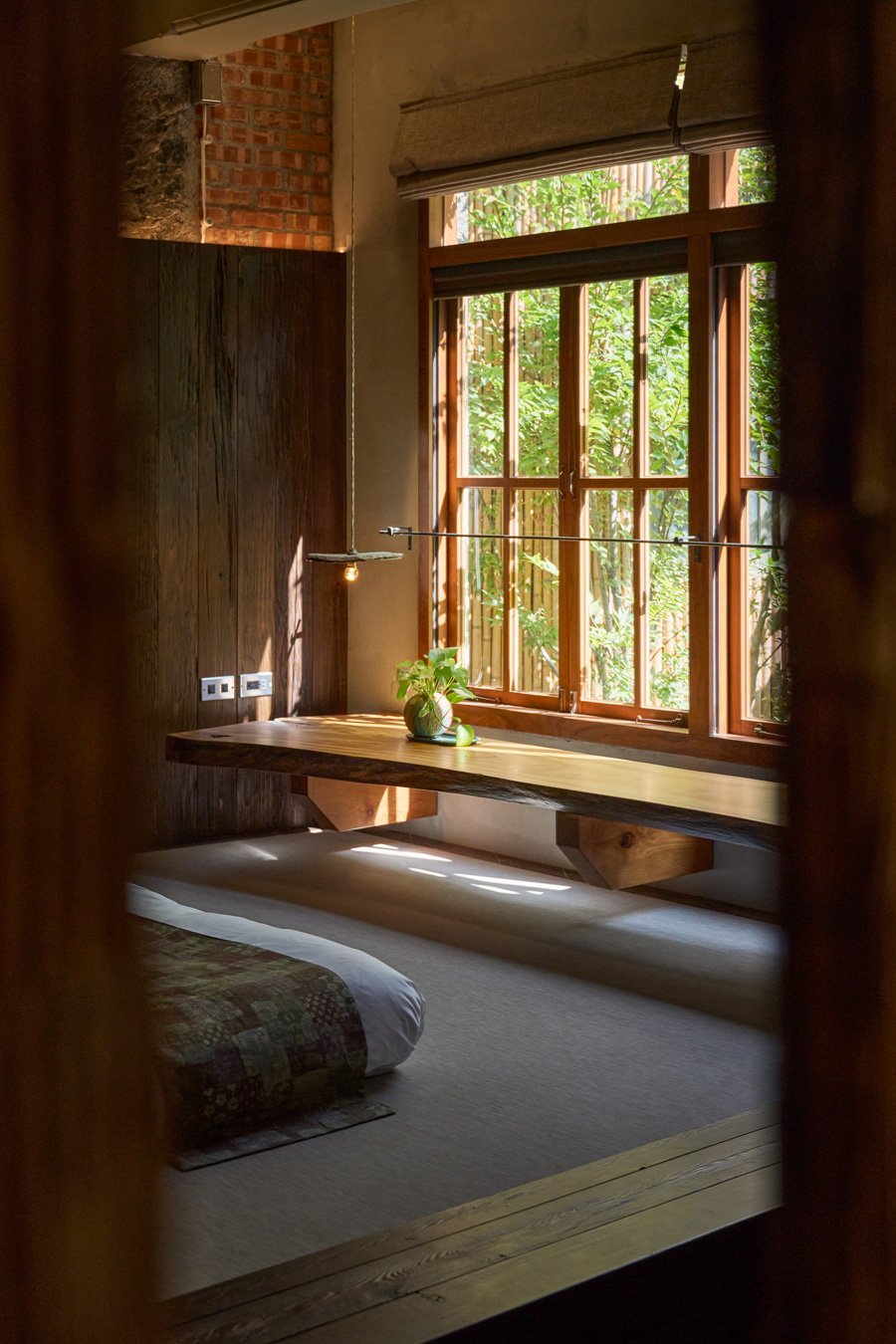
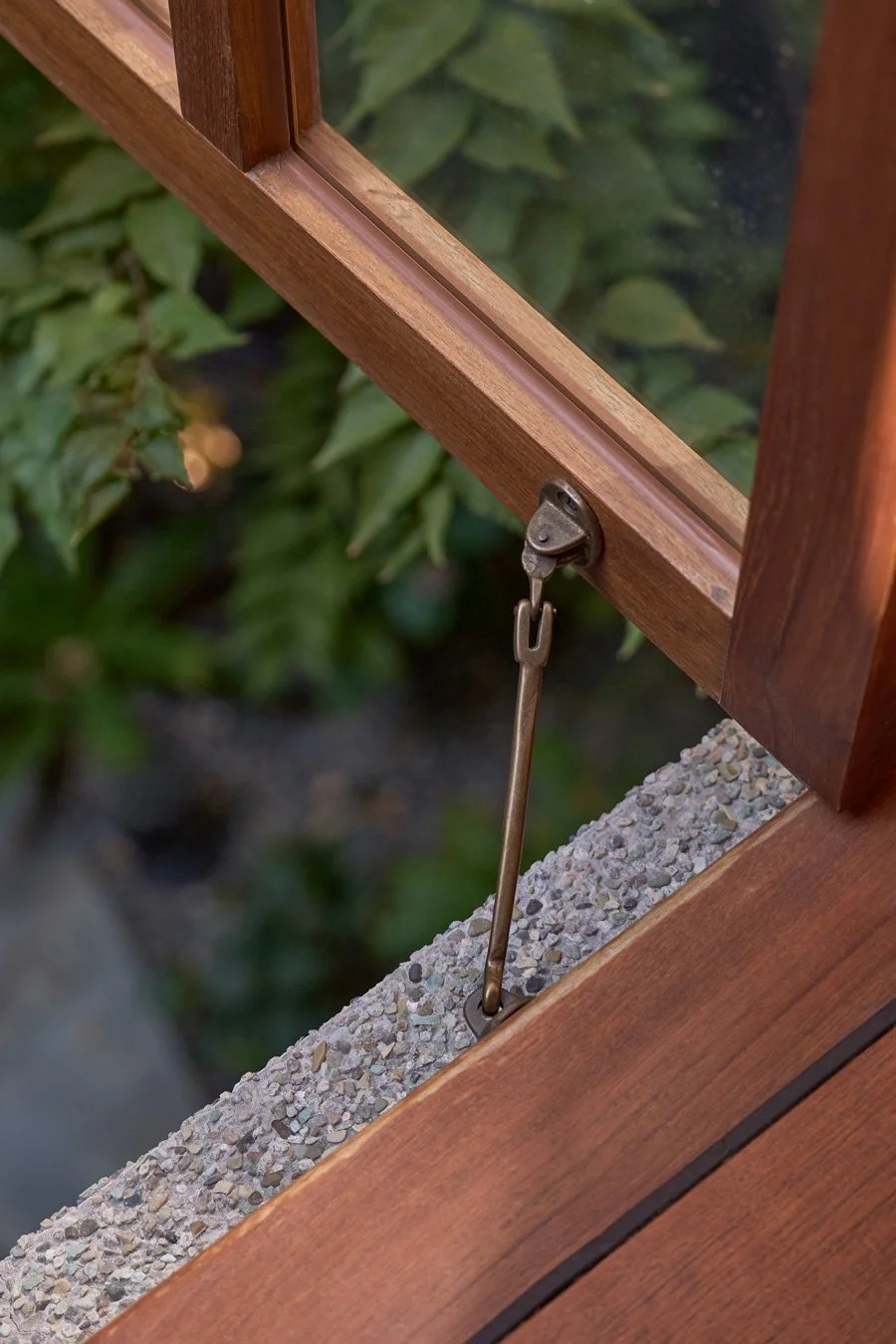
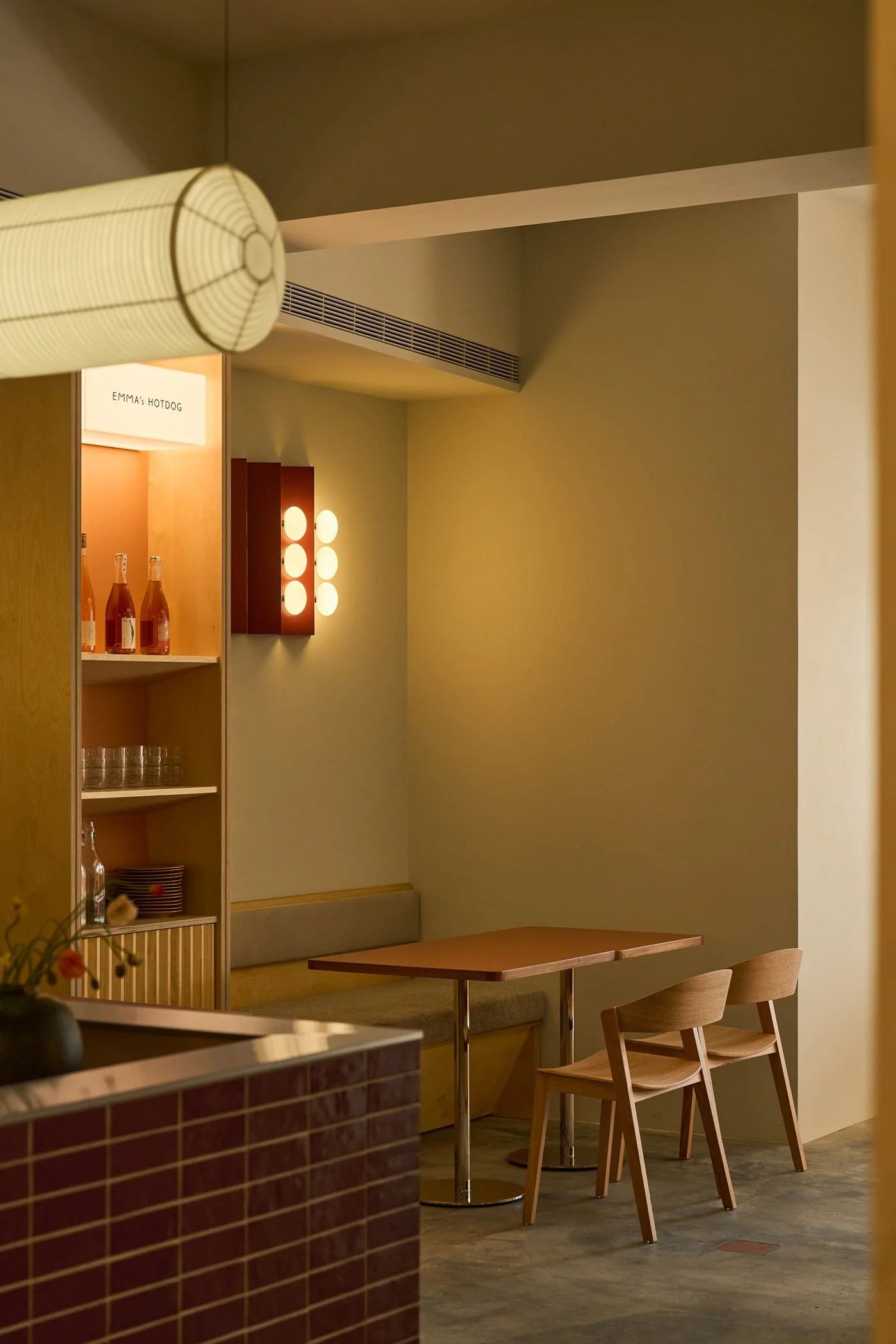
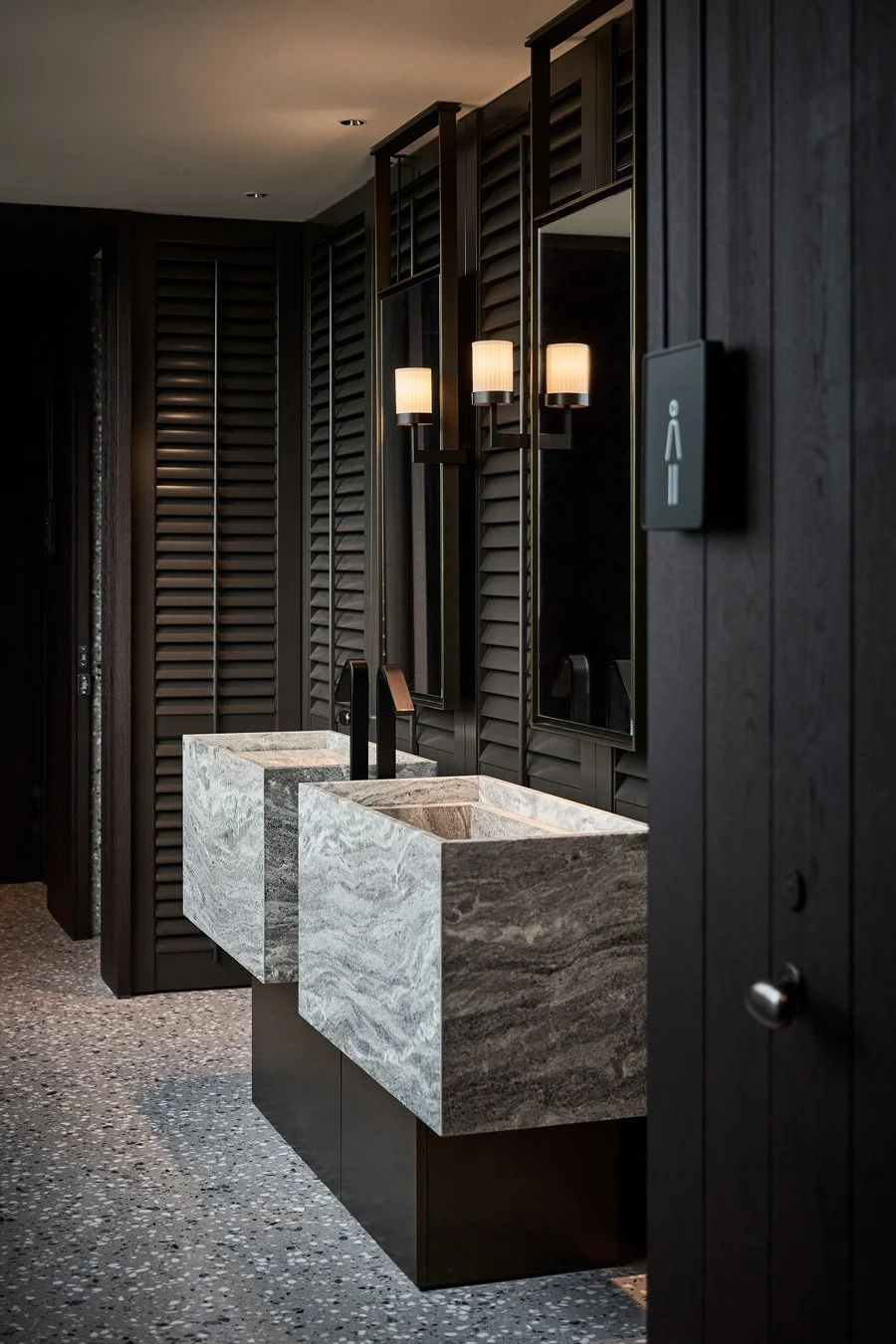
針對小型空間的拍攝,思考方式必須完全反轉 。實務上,我並不建議在小空間裡一味依賴超廣角鏡頭,企圖將小空間硬拍大,就算能將所有硬體細節全部塞進畫面,也很容易會變形,失去空間原有的氛圍與記憶點。在空間已經很小的時候,攝影師反而要懂得將鏡頭推進,深入去挖掘局部的材質、光線與層次。
鏡頭的語言裡,只要你拉得夠近或退得夠遠,任何地方都是另外一個完全獨立的世界。所以面對受限的空間,透過近距離拍攝的思維去呈現材質的紋理與光影細節,非但不會暴露實體坪數的侷限,反而能賦予影像截然不同的豐富度與故事感。
-
In Small Spaces: Finding Atmosphere Through a Microscopic Perspective
For photographing small spaces, the thought process must be completely reversed. In practice, I do not recommend relying blindly on ultra-wide-angle lenses to forcefully make a small space look big. Even if you manage to cram every architectural detail into the frame, it is highly prone to distortion, losing the space's original atmosphere and memorable qualities. When a space is already tight, the photographer instead needs to know how to push the lens in, digging deep into localized textures, light, and layered details.
In the language of the lens, as long as you zoom in close enough or pull back far enough, anywhere becomes a completely independent world. Therefore, when facing constrained spaces, using a close-up mindset to present material textures and light-and-shadow details won't expose the limitations of the physical square footage. On the contrary, it grants the image a completely different level of richness and narrative depth.
空間/ 蔚南裏民宿.執見設計
空間/ 蔚南裏民宿.執見設計
空間/ EMMA’S HOT DOG.懷特設計
光是最便宜的材質。空間/ 開物設計
不拍空間,拍質感。空間/ 寶元紀之丘
掌握軟裝的視覺重量
處理完空間尺度的考量,我們將視角重新拉回「物件」的抉擇。判斷一個軟裝物件該不該留在鏡頭前,或是該在不同畫面中重複出現幾次,有一個核心的評估標準:「視覺重量」。我們把物件分為強單品與弱單品。
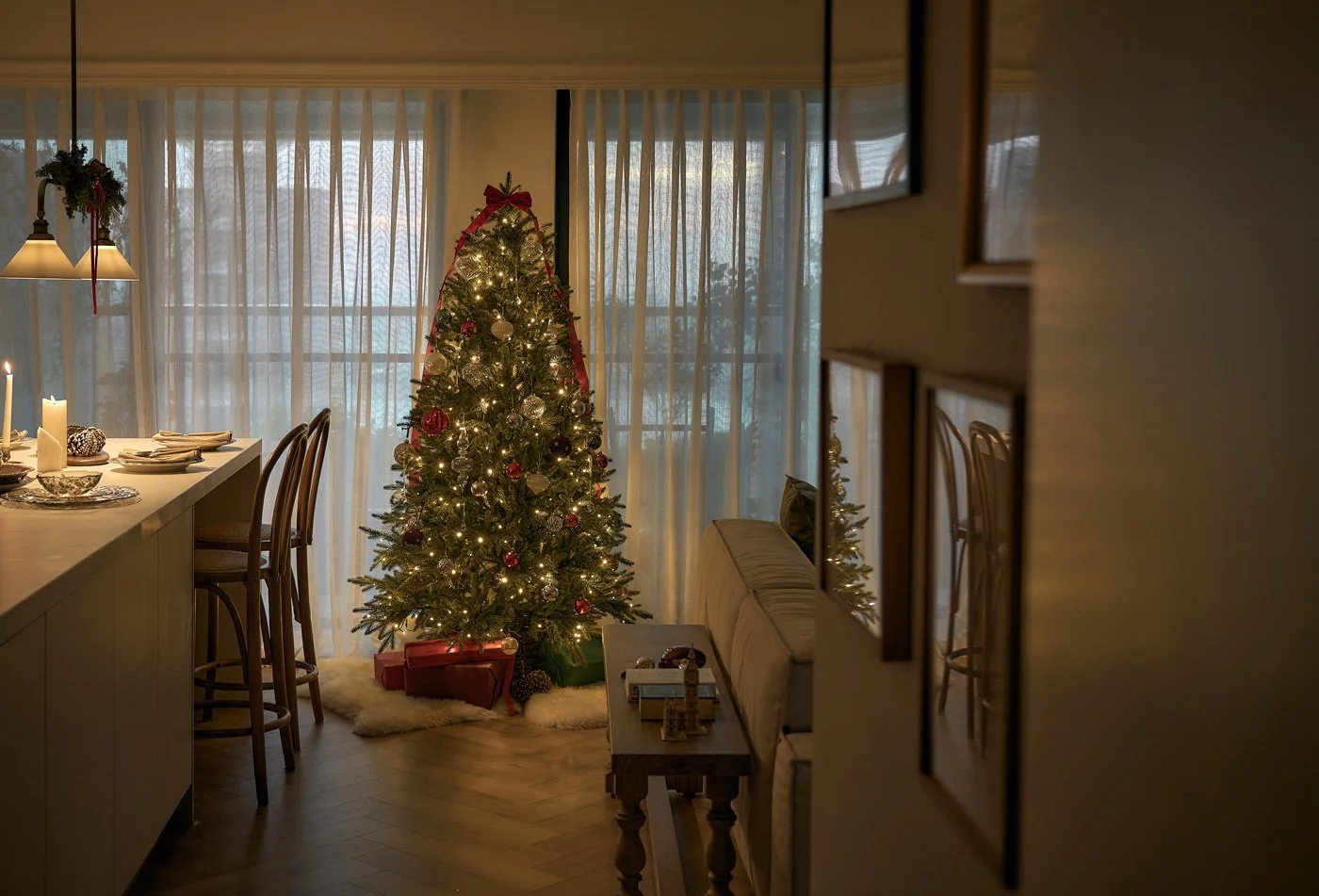
「強單品」指的是辨識度高、個性強烈,容易在觀者腦中留下深刻印象的物件,例如一棵掛滿燈飾的聖誕樹,或是一件幾何造型搶眼的大型傢俱。這類擁有強烈視覺份量的單品,就必須控制出現的頻率,避免在每一張照片反覆入鏡,不然整體視覺容易感到單一。我們在取景時必須技巧性地置入和避掉,有些放在主畫面,出現過後,後續的構圖就要有意識地讓這些強單品離開畫面。不過,強單品並非絕對不能共存,強單品也能多,只要確保每個有自己的舞台,繁雜的元素不僅不凌亂,還能交織出張力。
相反地,「弱單品」即是偏向中性的生活細節,例如隨手擱置的包包、報紙、一疊書,或是透明的玻璃水杯等等。這些物件的視覺重量較輕,即使不斷重複入鏡,也能相互融合,不會喧賓奪主。
-
Mastering the Visual Weight of Soft Furnishings
After addressing the considerations of spatial scale, we pull our perspective back to the choice of "objects." Judging whether a decor item should remain in front of the lens, or how many times it should reappear across different frames, relies on a core evaluation standard: "visual weight." We divide objects into strong pieces and weak pieces.
"Strong pieces" refer to objects with high recognizability and a strong personality that easily leave a deep impression on the viewer—such as a heavily decorated Christmas tree or a large piece of furniture with an eye-catching geometric shape. For these items carrying intense visual weight, we must control their frequency of appearance to avoid having them constantly photobomb every picture, which would make the overall visual feel repetitive. We have to strategically include and exclude them when framing; once they've appeared in the main shots, subsequent compositions must consciously allow these strong pieces to exit the frame.
(Of course, there are exceptions to this in aesthetics. Strong pieces are not absolutely forbidden from coexisting. As long as you ensure each object plays its proper role at a specific layer, establishing a primary and secondary sequence, complex elements won't look messy but will weave together a compelling tension.)
Conversely, "weak pieces" lean toward neutral lifestyle details, like a casually placed bag, a newspaper, a stack of books, or a clear glass of water. The visual weight of these objects is lighter; even if they repeatedly enter the frame, they blend seamlessly with one another without stealing the spotlight.
容易記住的單品不要一直出現。空間/ 覺引設計
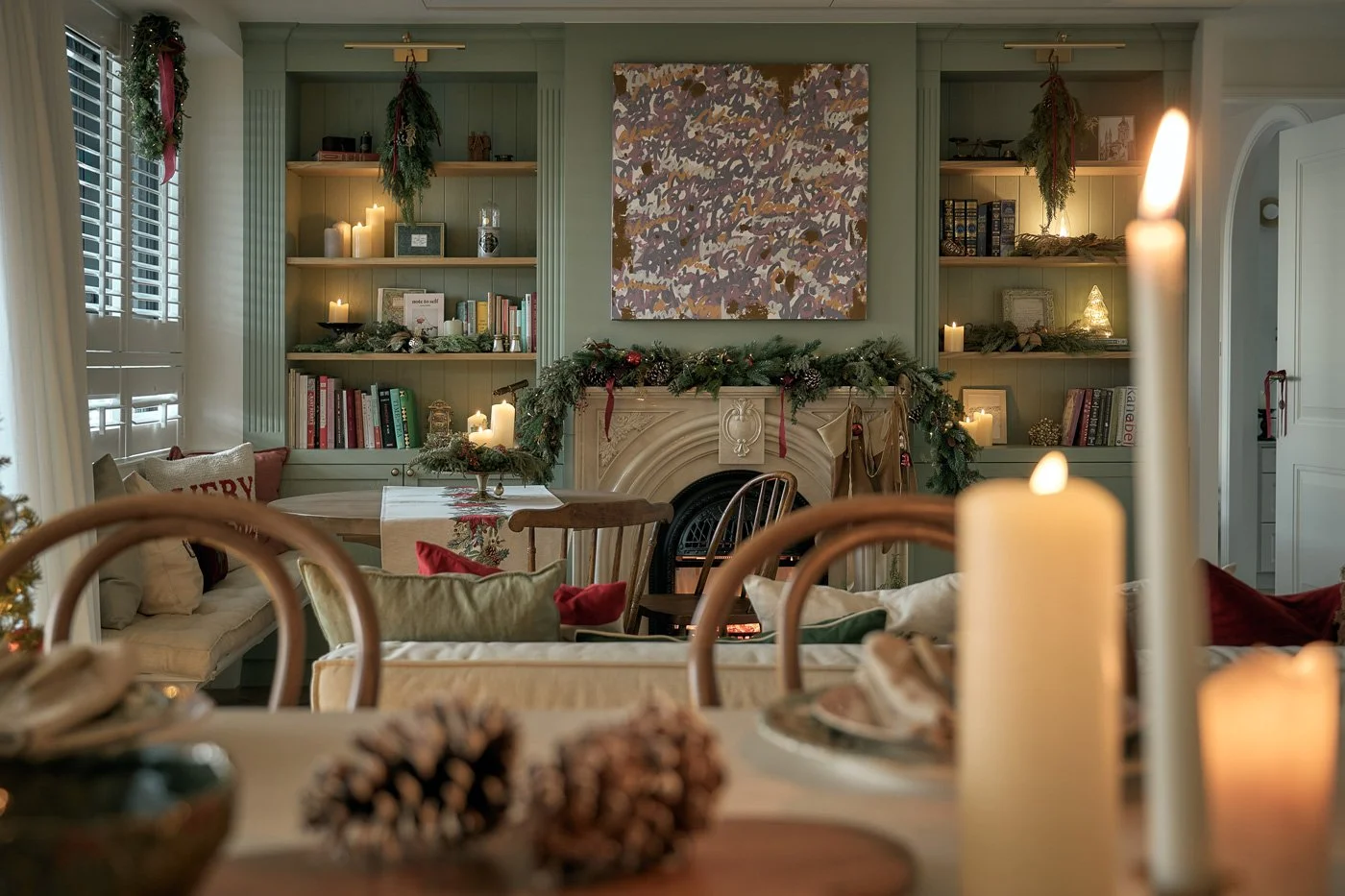
利用中性物品,創造多而和諧的氛圍。空間/ 覺引設計
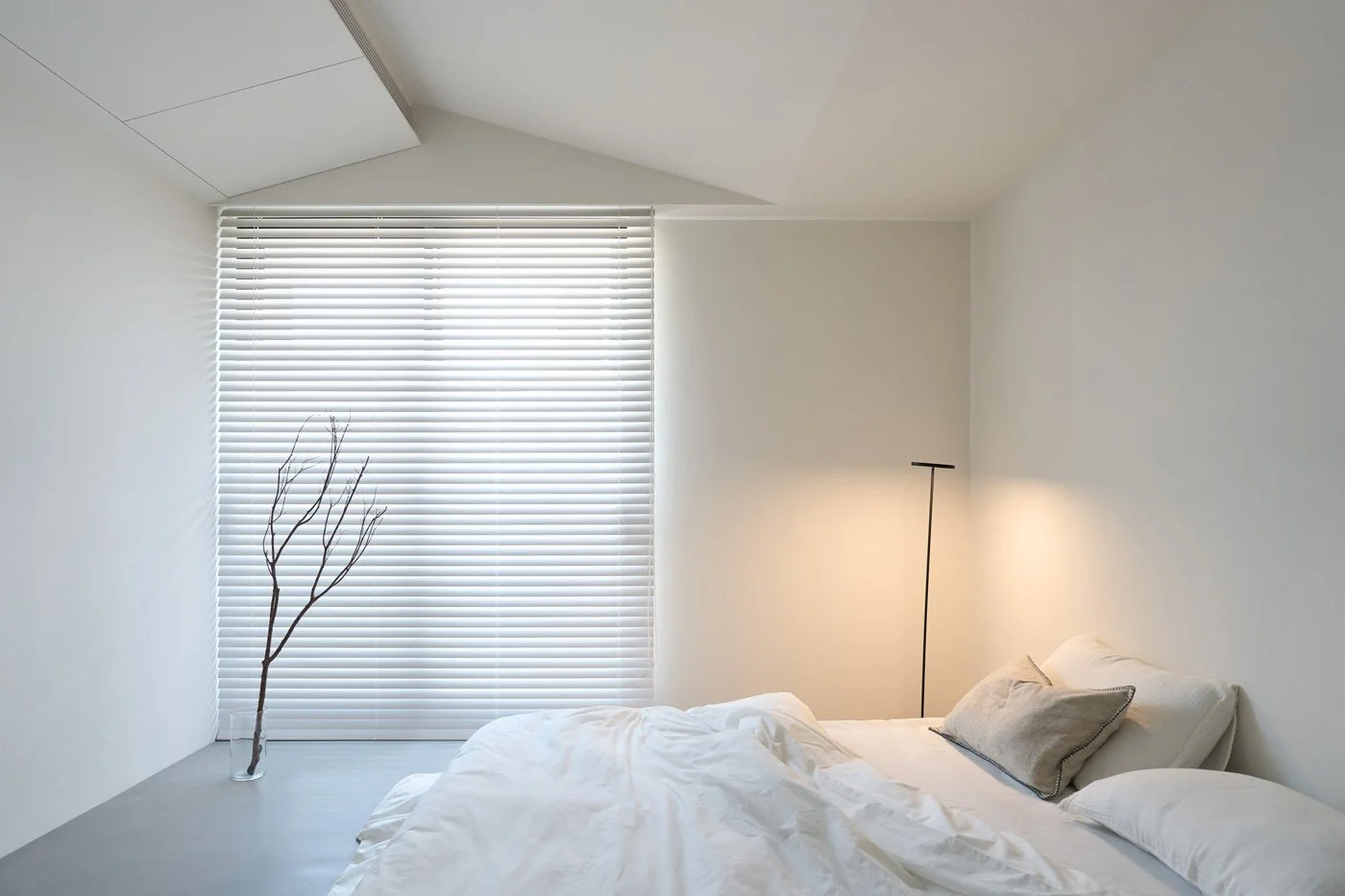
強單品,少而精。空間/ 灰色大門
強單品也能多,只要每個有自己的舞台。空間/ 好室設計
為空間注入生命體
在影像的心理學裡,意義永遠凌駕於純視覺之上。在我們眼中,畫面裡最棒的軟裝佈置,其實是人、植物跟動物等「生命體」。只要空間出現這些有機元素,基本上能為畫面加不少分。
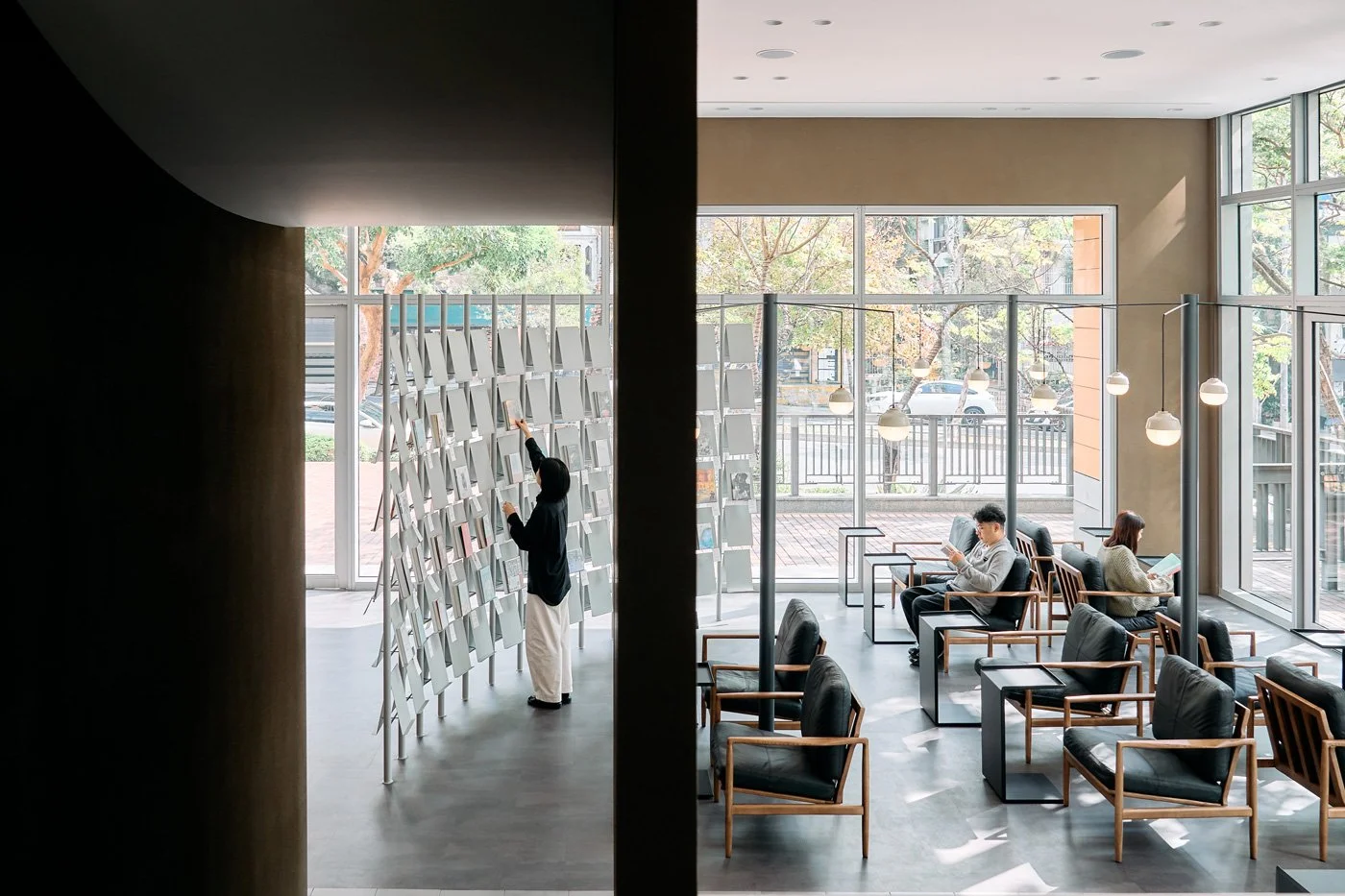
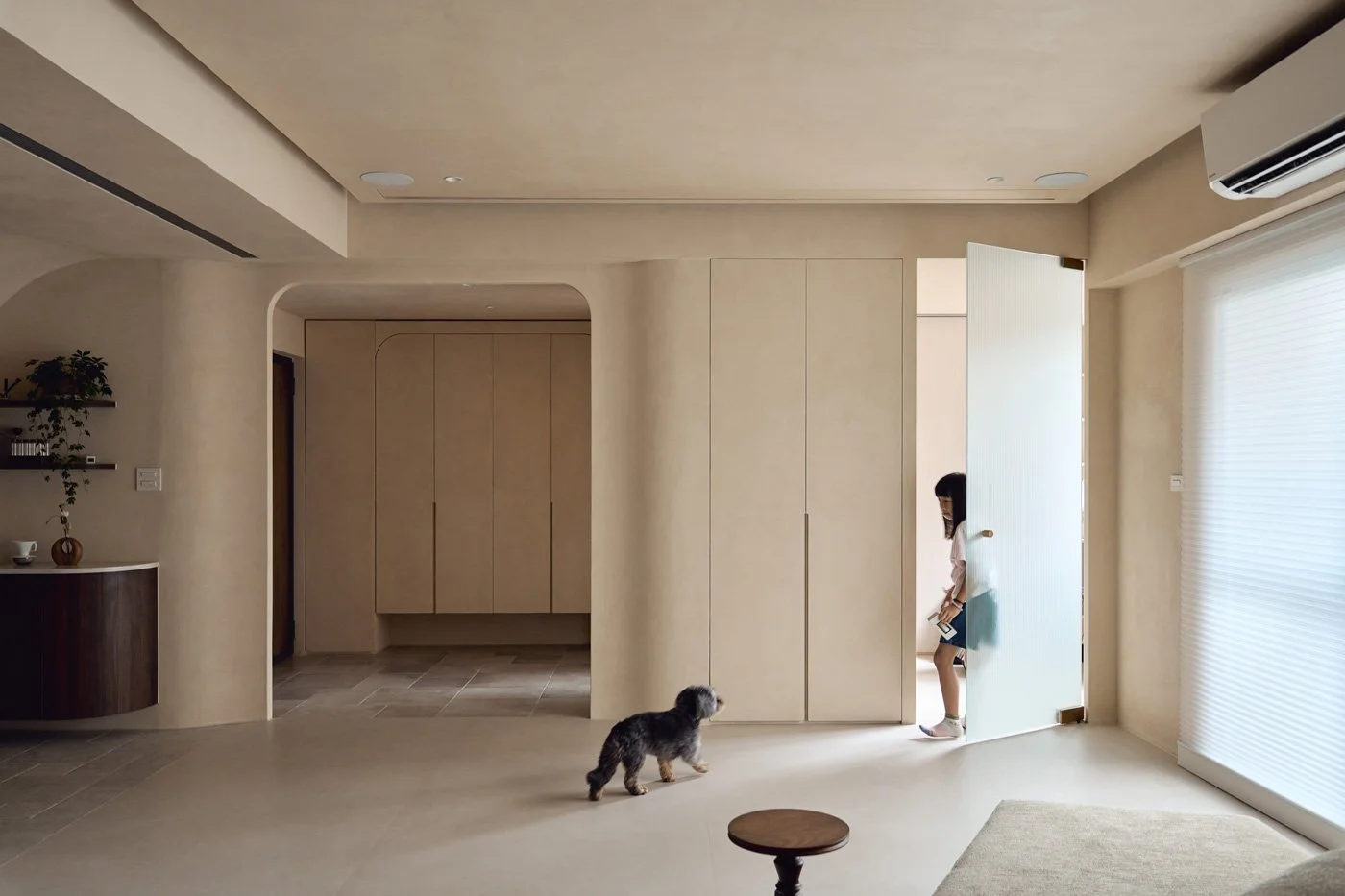
人物的存在擁有極強的視覺引導力。當觀者看著一個空景時,第一眼注意到的一定是設計感;但如果空間裡有人,我們第一時間想的會是「他們在裡面幹嘛?他們是什麼關係?」空間的情境瞬間被拆解成各種人際關係的連結,包含伴侶的互動、親子的陪伴,或是人與寵物的默契。只要將這些互動放入靜態的空間,它就成了一個有溫度的故事。這時,觀者的注意力被轉移,前述所講的硬裝設計或物件細節,反而都會退居二線。
-
Injecting Life into the Space
In the psychology of imagery, meaning always supersedes pure aesthetics. In our eyes, the absolute best soft furnishings in a frame are actually "living entities" like people, plants, and animals. As long as these organic elements appear in a space, they fundamentally add massive value to the image.
The presence of figures possesses an incredibly strong visual guiding force. When viewers look at an empty scene, the first thing they notice is inevitably the design. But if there are people in the space, our immediate thought becomes: "What are they doing in there? What is their relationship?" The spatial context is instantly deconstructed into various human connections, including the interaction of a couple, the companionship of a parent and child, or the unspoken bond between a person and a pet. Once you place these interactions into a static space, it becomes a story with warmth. At this point, the viewer's attention shifts, and the previously mentioned architectural designs or object details naturally take a backseat.
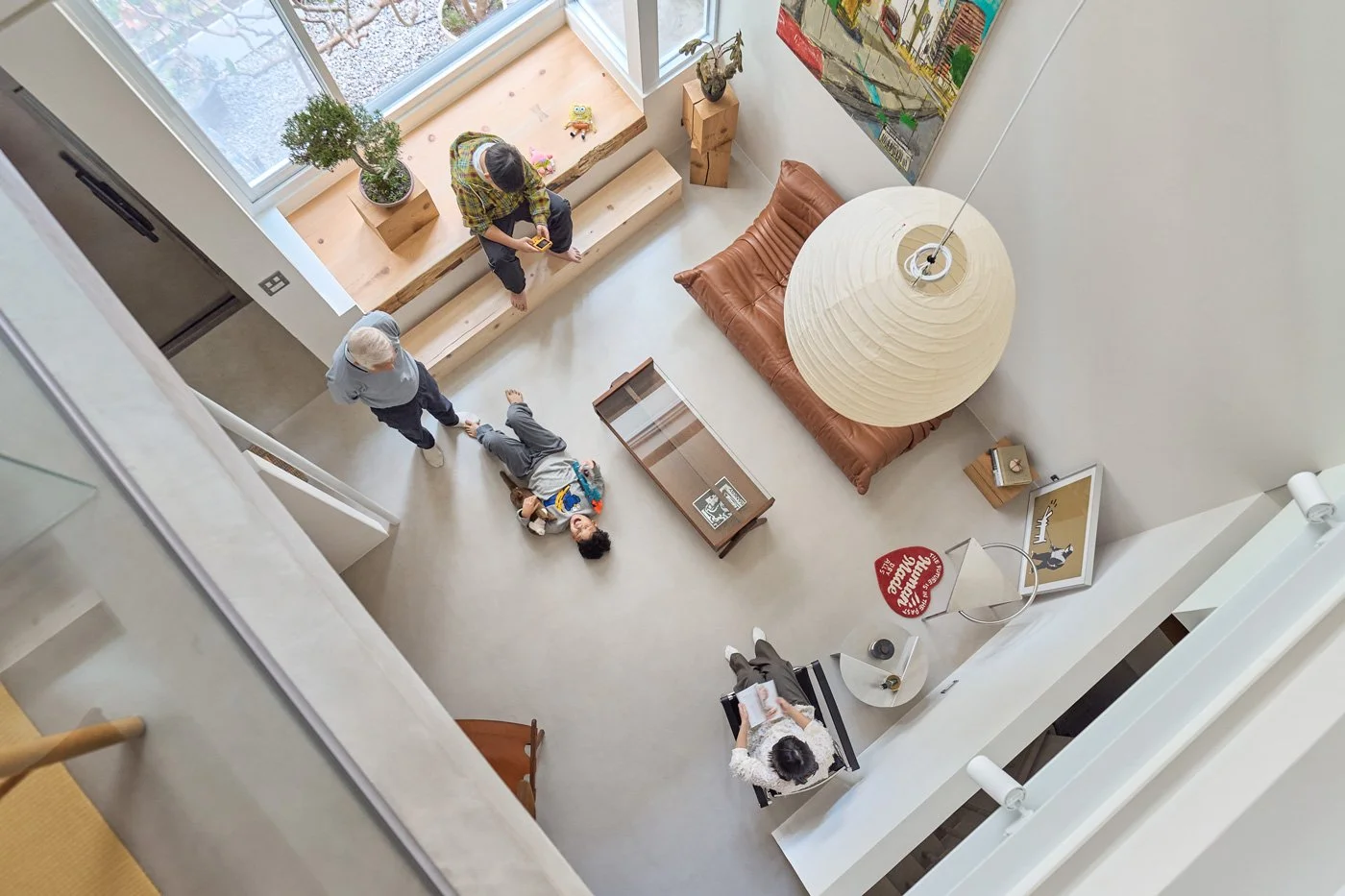
空間/ 合風蒼飛設計× 張育睿建築師事務所
這類「意義的轉移」方式,也是攝影師在現場用來合理化真實居住空間最好的解套方式。假使我們走進一個真實生活的房子,書架上不可能像蔦屋書店那樣全是精裝的設計年鑑,裡頭勢必混雜著尺寸不一的漫畫與鮮豔的私人物品。遇到這種情況,設計師的第一直覺通常會焦慮地問:「書架要怎麼整理?要把鮮豔的書都收掉嗎?」但與其費心去除不要的東西,不如放入能讓畫面成立的元素。
畫面出現大人與小孩的自然互動時,觀者的大腦就會將那些漫畫與童書視為理所當然的生活軌跡。生命體強大的存在感,能讓原本看似雜亂的元素被自動合理化。
除了人類,觀者對於動植物、甚至昆蟲等活體,同樣有著天然的情感連結。將這些有機體放入空間,能讓原本靜態的場域瞬間產生強大的說服力,成功將單純的空間美學,拉升至凌駕於實體物件之上的情感層次。
-
This "transfer of meaning" is also the best workaround photographers use on set to contextualize real, lived-in homes. If we walk into a house where real life happens, the bookshelf won't look like a curated bookstore, filled entirely with hardcover design annuals; it will inevitably be a mix of variously sized comic books and brightly colored personal items. Faced with this, a designer's first instinct is usually to ask anxiously: "How should we organize the bookshelf? Should we hide all the colorful books?" But rather than exhausting yourself trying to remove unwanted things, it's better to introduce elements that legitimize the frame.
When natural interactions between adults and children appear in the frame, the viewer's brain automatically processes those comic books and children's books as natural traces of life. The powerful presence of living beings allows seemingly cluttered elements to be automatically justified.
Beyond humans, viewers have a natural emotional connection to plants, animals, and even insects. Placing these organic entities into a space can instantly give a static environment a powerful persuasiveness, successfully elevating pure spatial aesthetics to an emotional level that transcends physical objects.
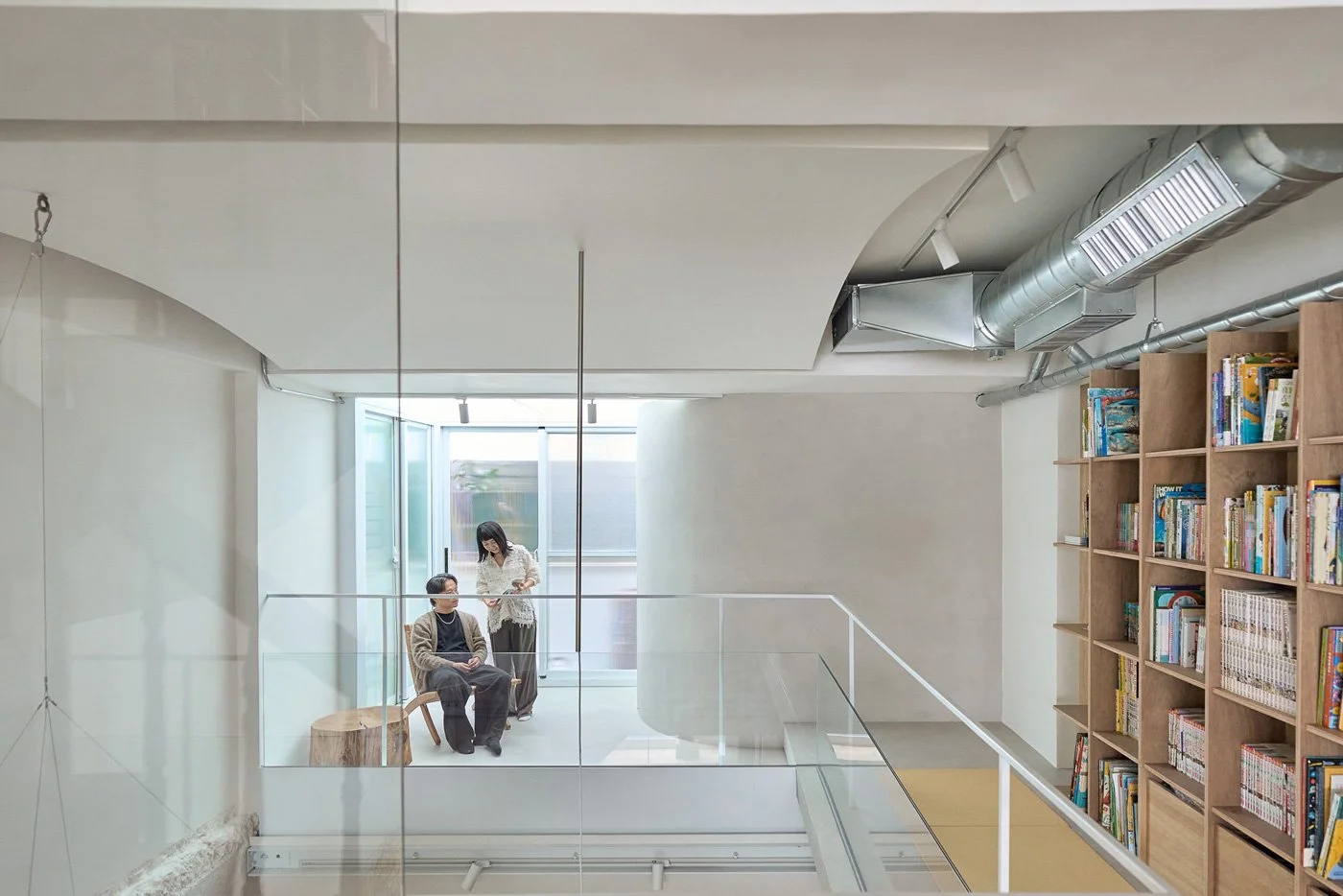
空間/ 合風蒼飛設計× 張育睿建築師事務所
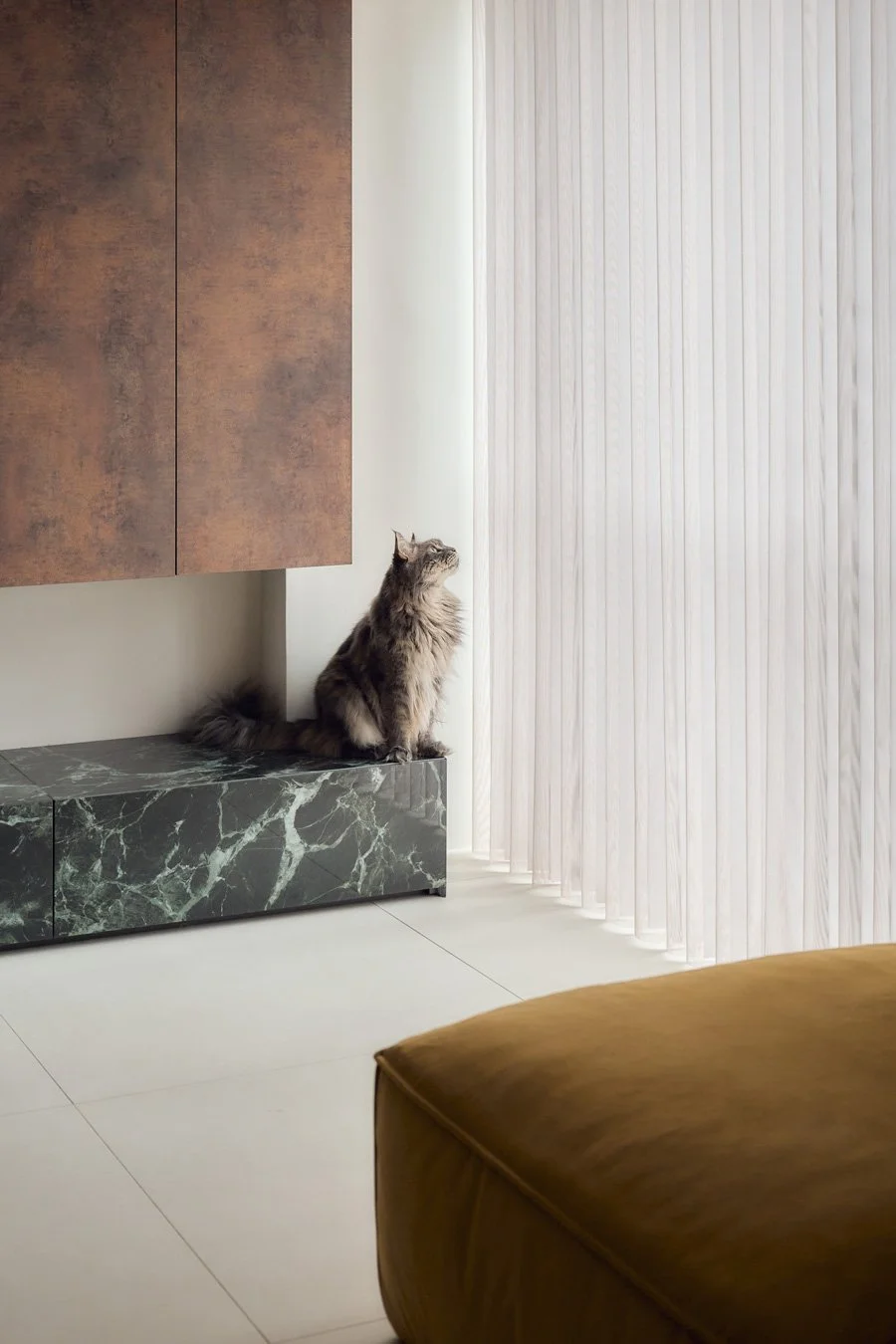
空間/ 恆域設計
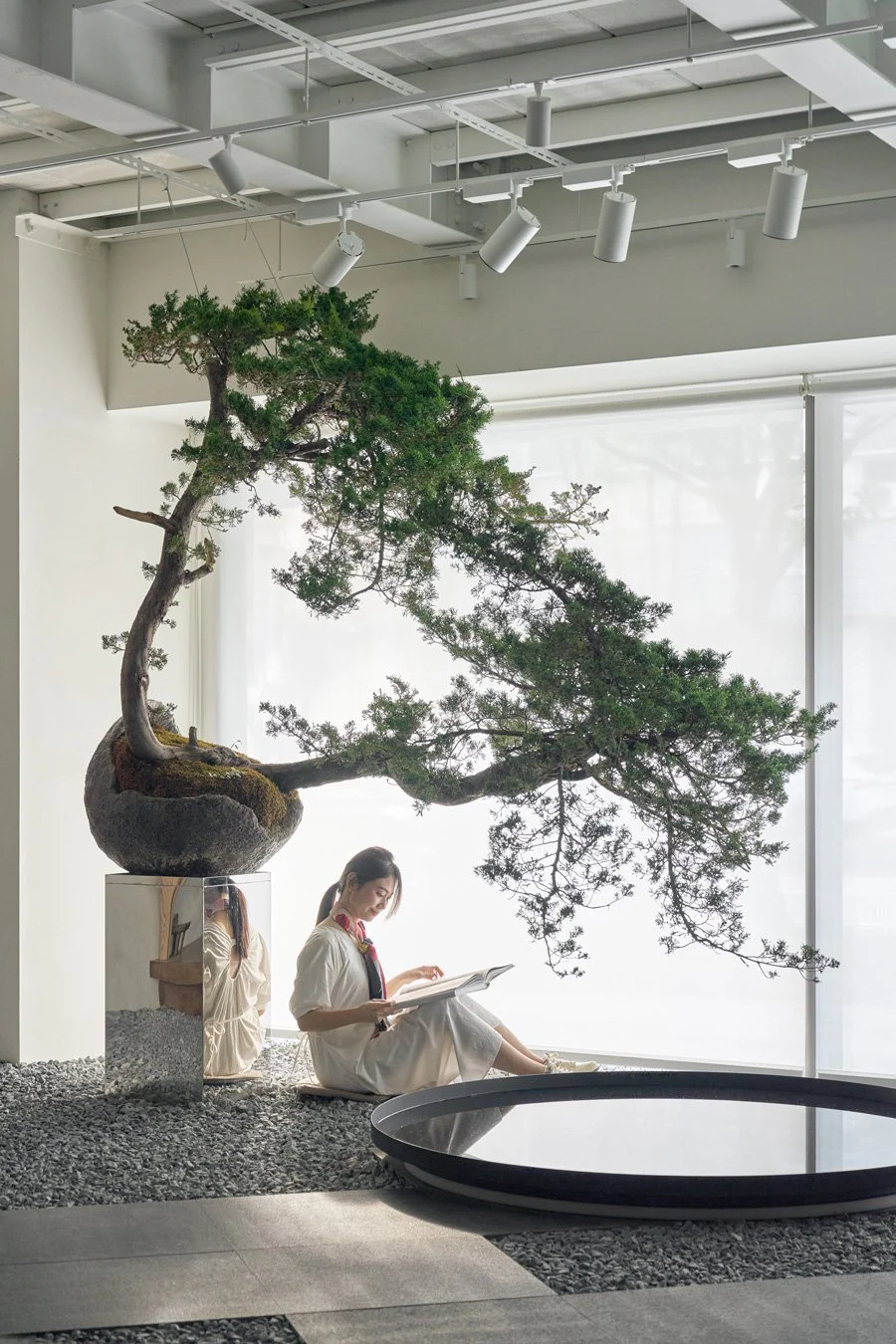
空間/ 文域設計
在不完美的框架裡創造真實
實際的商業拍攝中,我們經常會遇到現場落實與預期進度產生落差的突發狀況。若硬體或軟裝尚未完全到位,攝影師就必須發揮現場的調度機制,進行視覺解套。
有時,解法是用光線重塑氛圍。以餐酒館「Local Local Park」為例,拍攝當天恰逢公休,吧台已收拾淨空。為了在白天製造出夜晚的霓虹反差,我們調整了可變色 LED 燈,利用紅、紫光與廚房的黃色燈火形成對比。面對空蕩的桌面,我們靈活運用鏡面與玻璃的反射,在鏡頭前重新疊加豐富的視覺元素,填補了實體物件的空缺。
-
Creating Reality Within an Imperfect Frame
In actual commercial shoots, we frequently encounter unexpected situations where the on-site execution falls short of the expected progress. If the hardware or soft furnishings are not yet fully in place, the photographer must unleash their on-site orchestration skills to provide a visual creative solution.
Sometimes, the solution is reshaping the atmosphere with light. Take the bistro "Local Local Park," for example. The shoot happened to fall on their day off, and the bar counter was cleared out completely. To create the neon contrast of nighttime during the day, we adjusted the color-changing LED lights, using red and purple hues to contrast against the yellow light emanating from the kitchen. Faced with empty tables, we flexibly utilized the reflections of mirrors and glass to restack rich visual elements in front of the lens, effectively filling the void left by the absent physical objects.
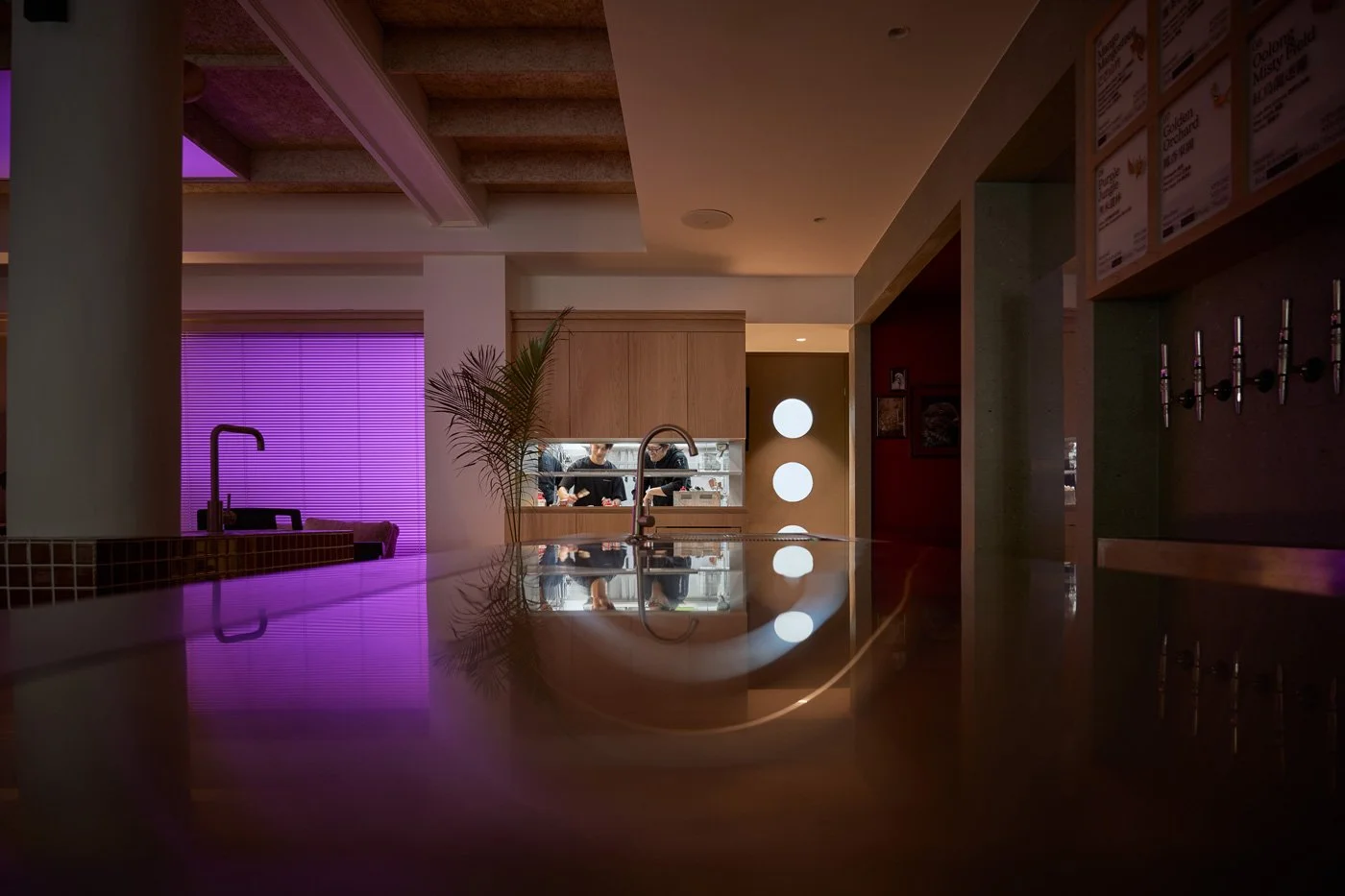
空間/ Local Local Park.十幸制作
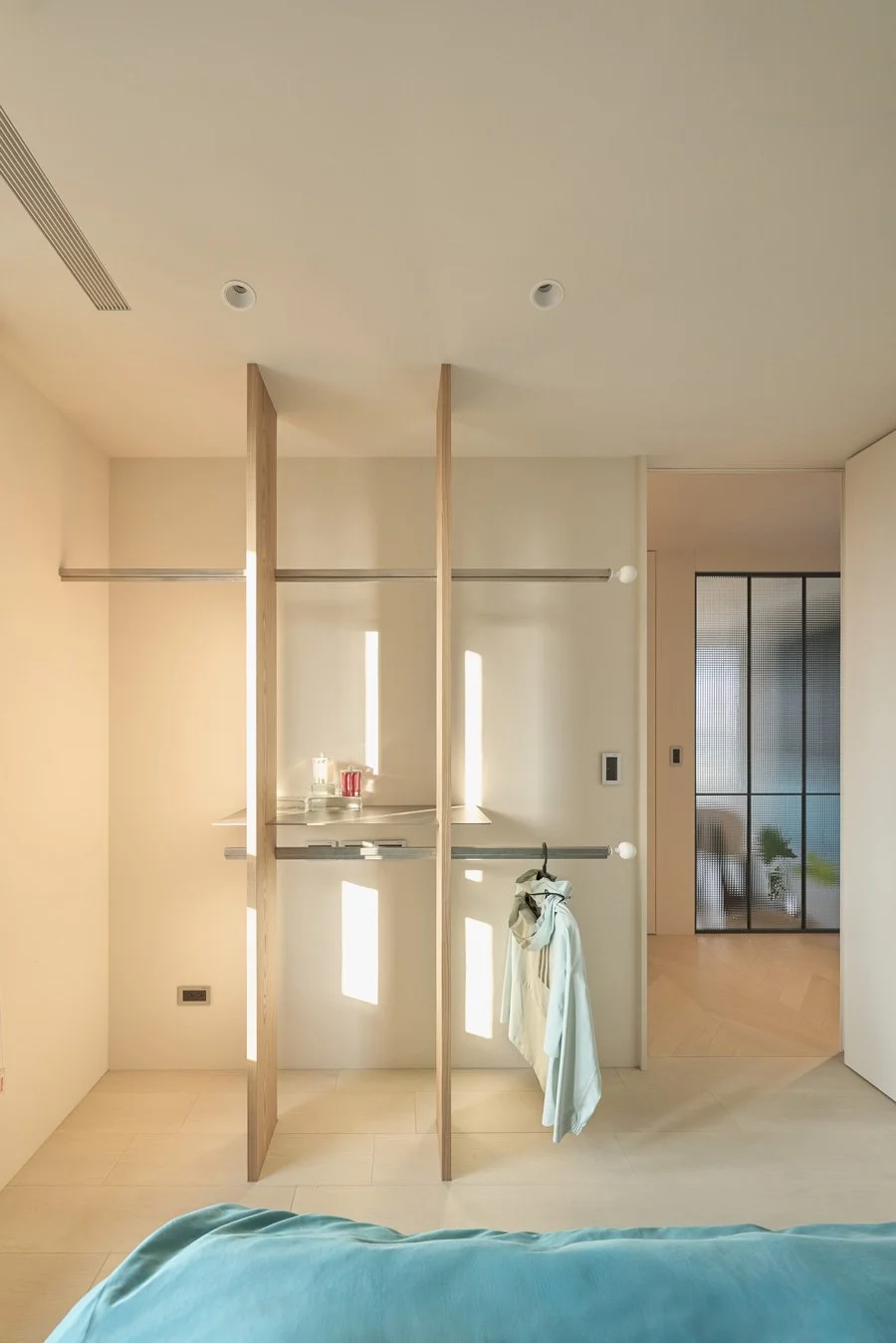
另外一種是「無中生有的創造」。有一次拍攝三房兩廳的住宅案。當時兩個房間內部完全是空的。為了不讓畫面呈現出空洞感,我們在現場集思廣益,找來廢棄的家電大紙箱放置在原本預設床鋪的位置。
構圖上我們決定只抓局部的角落特寫,因此在紙箱上鋪了拆下來的窗簾,接著覆蓋上一件設計師朋友的風衣來模擬床組的被褥,最後在一旁擱放茶几作為陳列。最後拍出來的局部畫面,在光影與氛圍的襯托下極具質感,沒有任何人去質疑過那張床的真實性。
-
The ultimate workaround is "creating something out of nothing." Once, we were shooting a three-bedroom, two-living-room residential project. At the time, two of the bedrooms were completely empty. To prevent the frame from looking hollow, we brainstormed on the spot and found discarded large cardboard appliance boxes, placing them where the bed was supposed to be.
In terms of composition, we decided to only capture a close-up of a specific corner. We draped a taken-down curtain over the cardboard boxes, then covered it with a designer friend's trench coat to simulate the bedding, and finally placed a coffee table on the side as a prop. Supported by light, shadow, and atmosphere, the final localized shot looked incredibly textured. No one ever questioned the authenticity of that bed.
空間/ 金鳳書苑.映泰空間製造所
畢卡索曾說過:「你能想像的一切都是真的(Everything you can imagine is real.)」。作為攝影師,我們不是單純且客觀地記錄空間完工後的物理現狀;空間攝影最迷人的地方,在於我們跳脫單純的物件表象,以新的方式去看見舊的事物,並塑造能與觀者產生連結的情感共鳴。當我們懂得在看似受限或不完美的框架中切換視角,讓意義凌駕於純視覺之上,鏡頭裡捕捉到的,就會是一個充滿生命力,觸動人心的世界。
-
Picasso once said, "Everything you can imagine is real." As photographers, we are not simply and objectively recording the physical reality of a space after its completion. The most fascinating part of space photography lies in our ability to break free from the mere surface of objects, looking at old things in new ways, and shaping an emotional resonance that connects with the viewer. When we know how to shift our perspective within seemingly restricted or imperfect frames, allowing meaning to supersede pure visuals, what your lens captures will be a vibrant, deeply touching, and real world.
空間/ 森之國際