
[ 專訪 ]用一個動詞,蓋一座城市:清邁生活品牌 KLĀY 的感官建築學
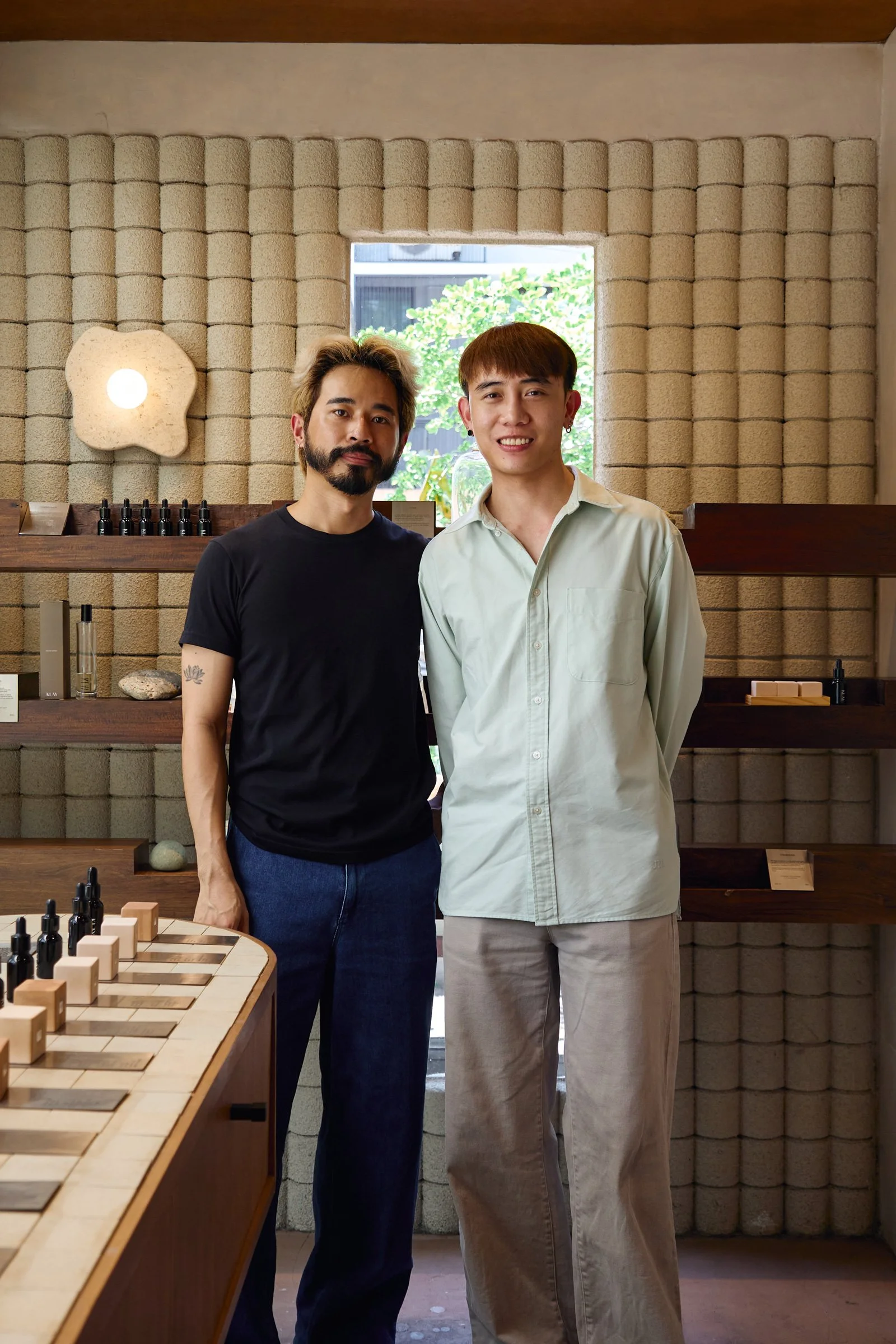
KLĀY 創辦人,攝於旗艦店香氛陳列室。© DEARMUN
-
Chiang Mai, May. I visited KLĀY for the second time — this time for a scent-blending workshop. A few hours later, the class over, the fragrance still on my wrists, I stayed and sat down with the brand founders at a wooden table outside. We ordered drinks and talked through the afternoon.
Scent has never been a commodity. It operates more like a verb — something that happens at the edge of consciousness, quietly opening a door to memory before you have noticed it moving.
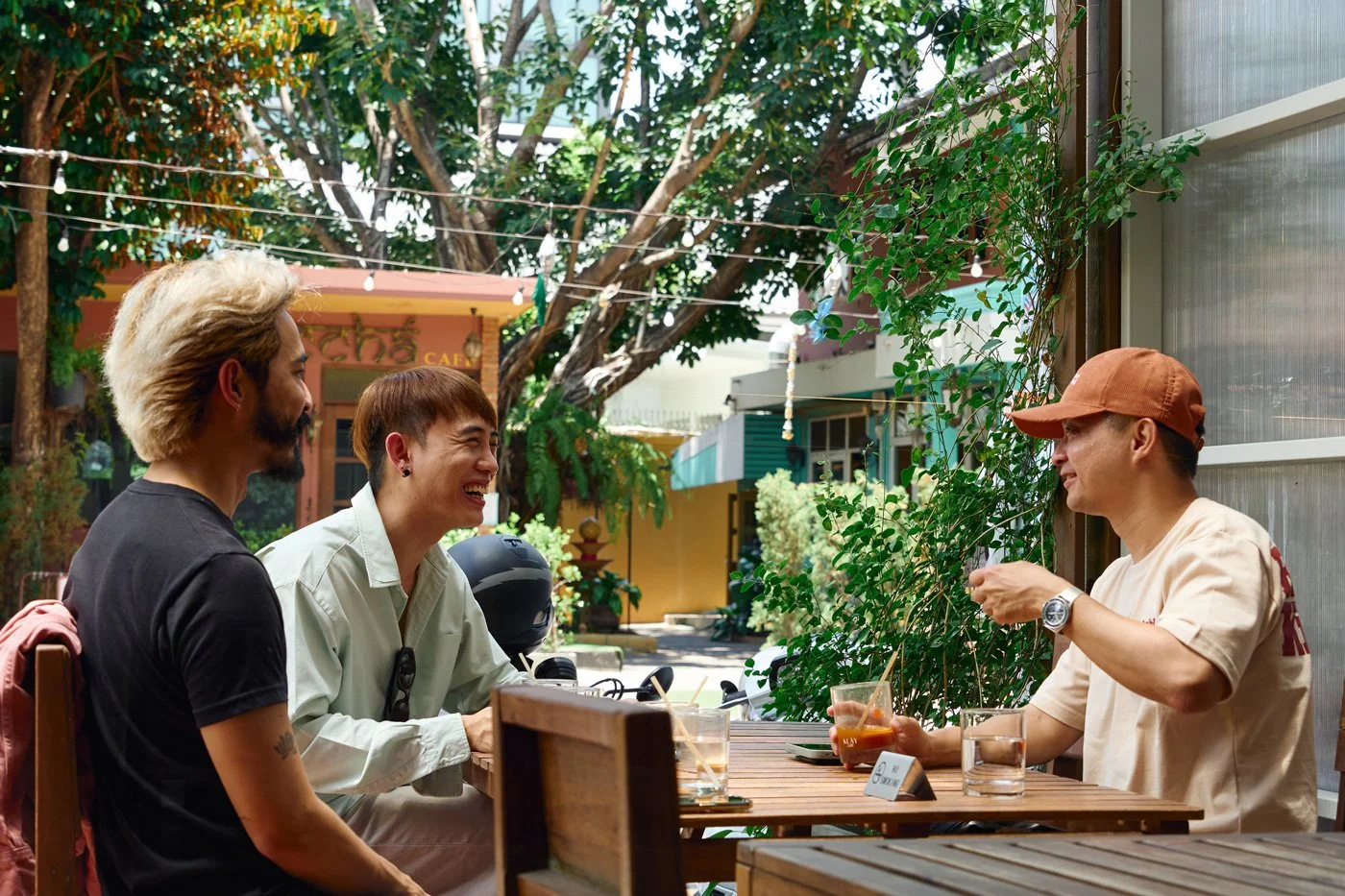
訪談現場。KLĀY 旗艦店旁的戶外座位,五月清邁的午後。© DEARMUN
-
In 2020, Chiang Mai. The year the world pressed pause. For some, the pandemic became an unexpected reason to begin. In that stillness, some people found their way back to where they were meant to be. KLĀY was born in exactly that kind of gap: not as a planned venture, but as the right moment meeting the right people on the right patch of Chiang Mai earth.
KLĀY is the romanisation of the Thai verb to loosen, to release, to let what is taut return to softness. In English, it reads as clay, the material at the core of every product the brand makes. Half philosophy, half material — both converge at the corner of Nimman Soi 5, in the form of a curved brick facade.
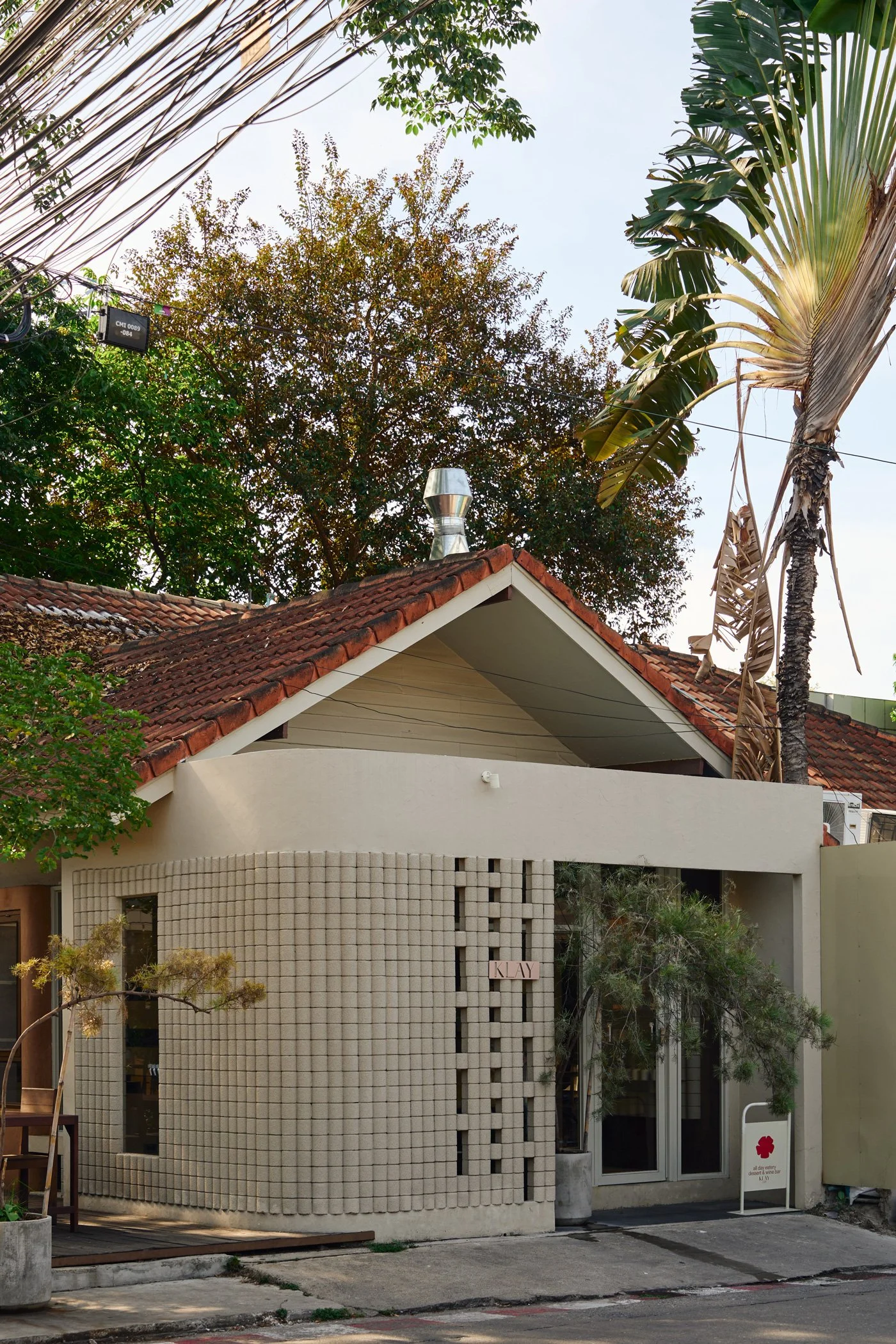
KLĀY 旗艦店弧形磚牆外觀。Nimman Soi 5,清邁。© jamieyelo / HCS
-
One of the founders spent the years before the pandemic in Sydney, Australia — studying hospitality, hotel management, culinary arts, working in cafes. Australia gave him a perspective rarely available in Asia: watching local produce be treated with genuine pride.
In Australia, you walk into any cafe and the owner tells you which farm the milk came from, who grew the coffee beans. That pride in local — it is not marketing. It is actual belief. Growing up in Asia, we were taught that European things are better. That is a deeply rooted bias. What I wanted to do, really, was overturn it.
The return to Chiang Mai came with the pandemic — a signal from the universe, the founders say. KLĀY launched in 2020 entirely online: no physical space, no showroom. Only an Instagram page, ceramic diffuser stones, and an intention to make Chiang Mai local materials visible to the world.
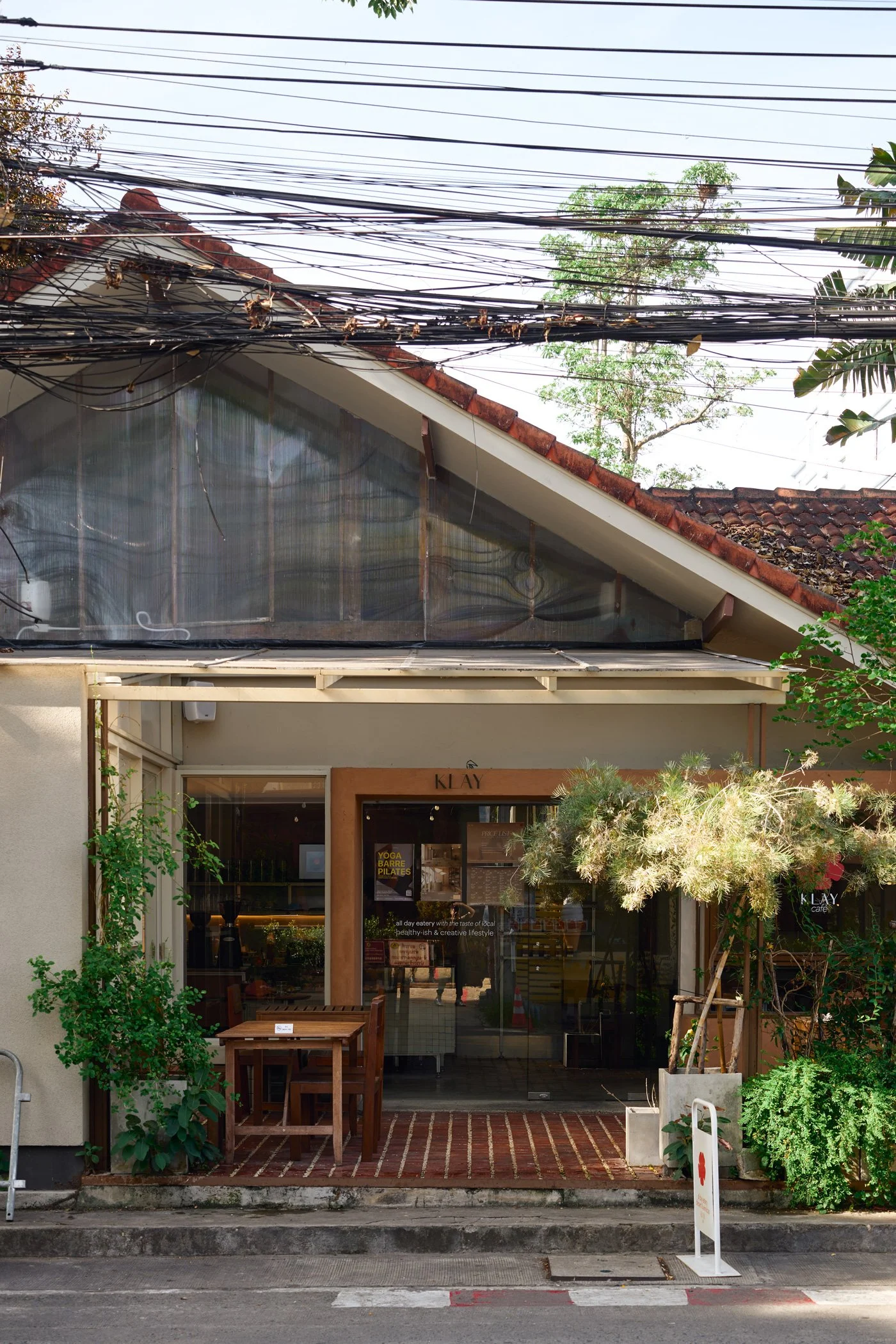
KLĀY 旗艦店外觀。Nimman Soi 5,清邁。© jamieyelo / HCS
© jamieyelo / HCS
-
How do you sell a product that needs to be understood through the nose — online, without any physical encounter? Five co-founders, two of whom are artists, built a curated Spotify playlist for every single scent. Not casual — each track corresponds emotionally to the personality of the fragrance: warm or cool, hushed or weightless.
This is how I approach every creative project. I build a playlist first — to establish the direction, the atmosphere — before I start making anything. Music is the fastest emotional positioning tool I know.
A scent called Forest comes with a playlist that evokes pine needles, moss, and the stillness after rain. You do not need to open the bottle to know what it feels like.
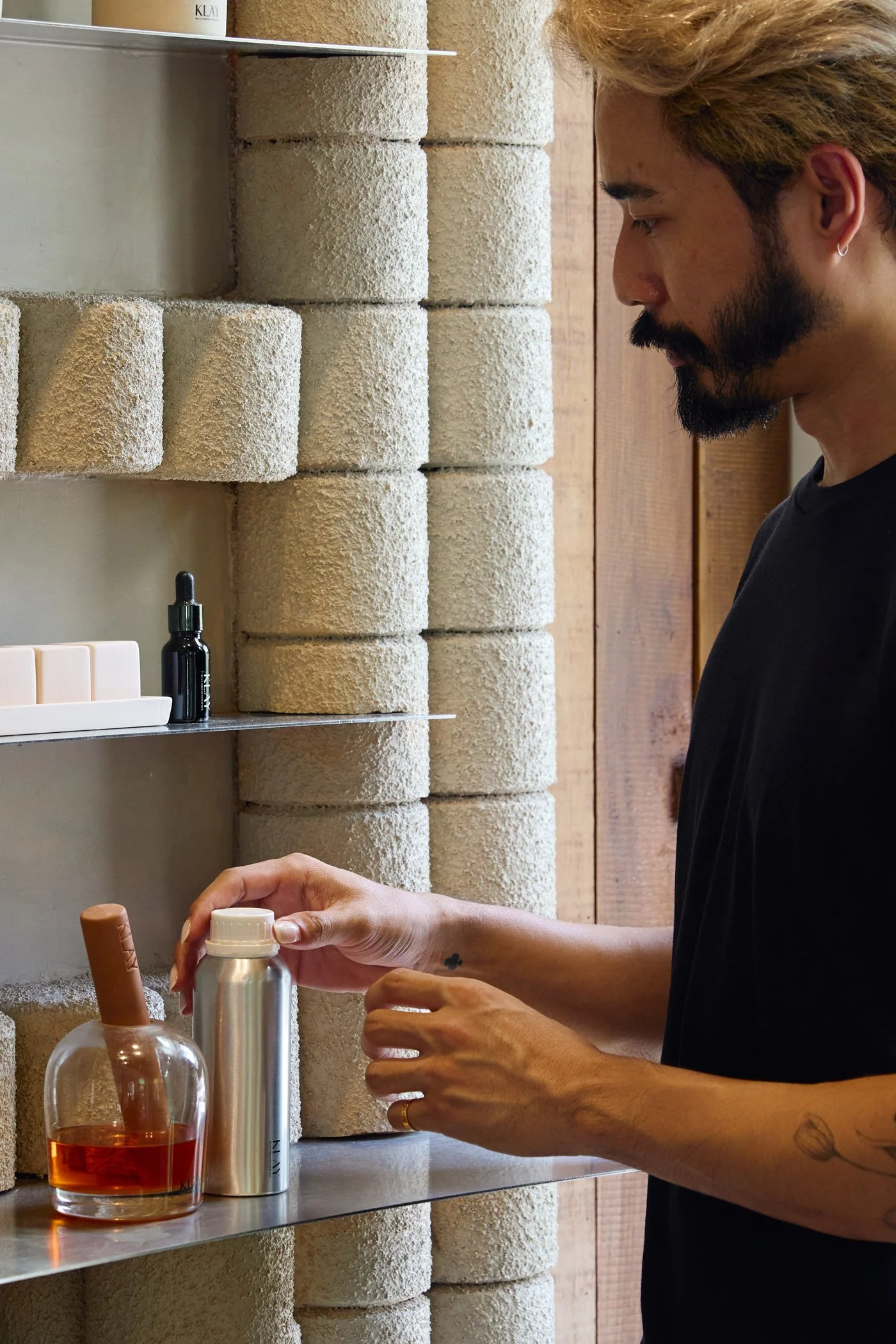
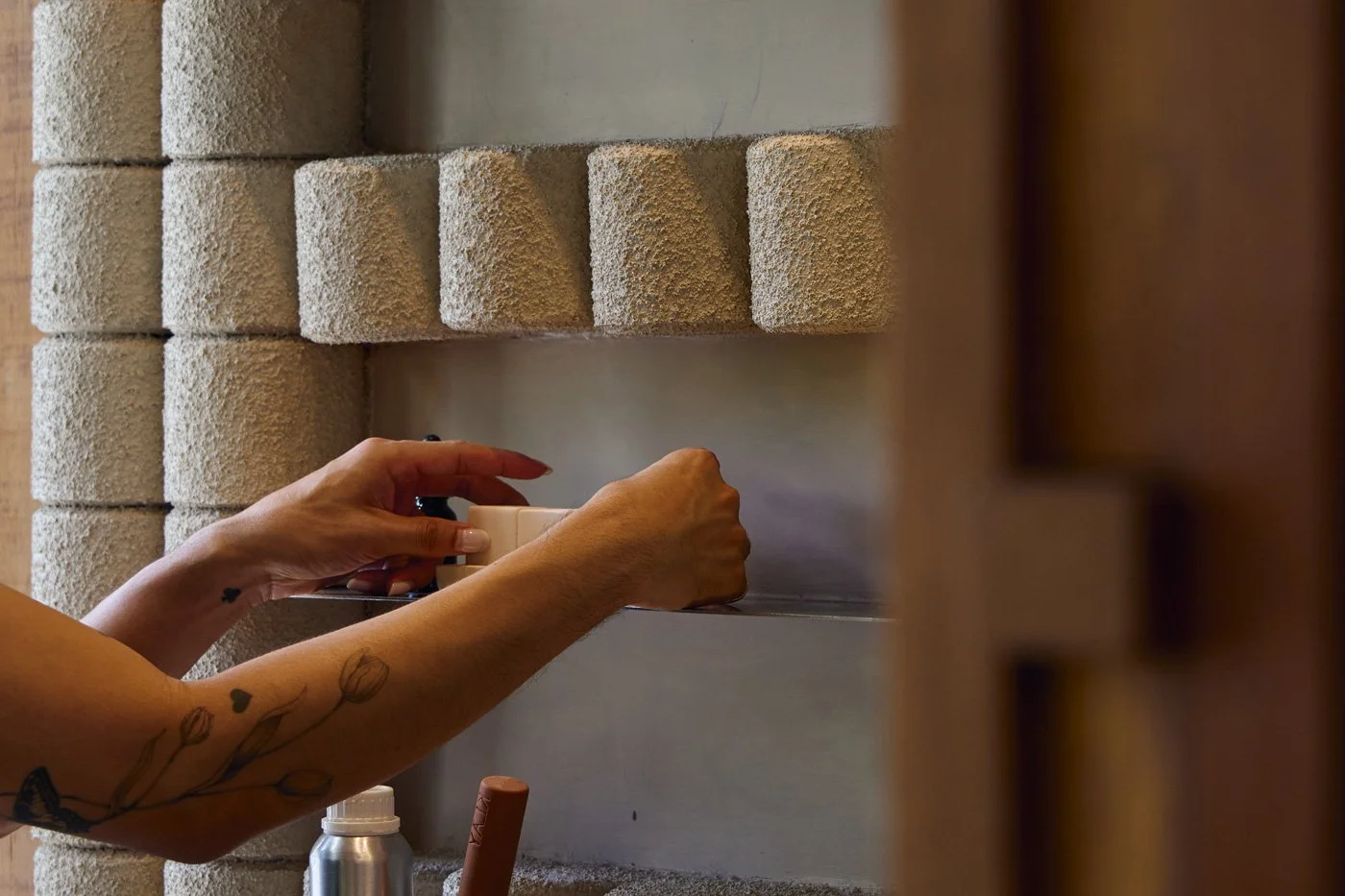
創辦人介紹 KLĀY 香氛產品線。© jamieyelo / HCS
© jamieyelo / HCS
-
KLĀY flagship occupies what was once an unremarkable old building at the corner of Nimman Soi 5. Designer Beat of STUDIO WOM took on the project as an existing KLĀY customer. The founders considered a well-known architect for the marketing cachet, but ultimately chose someone who genuinely understood the brand.
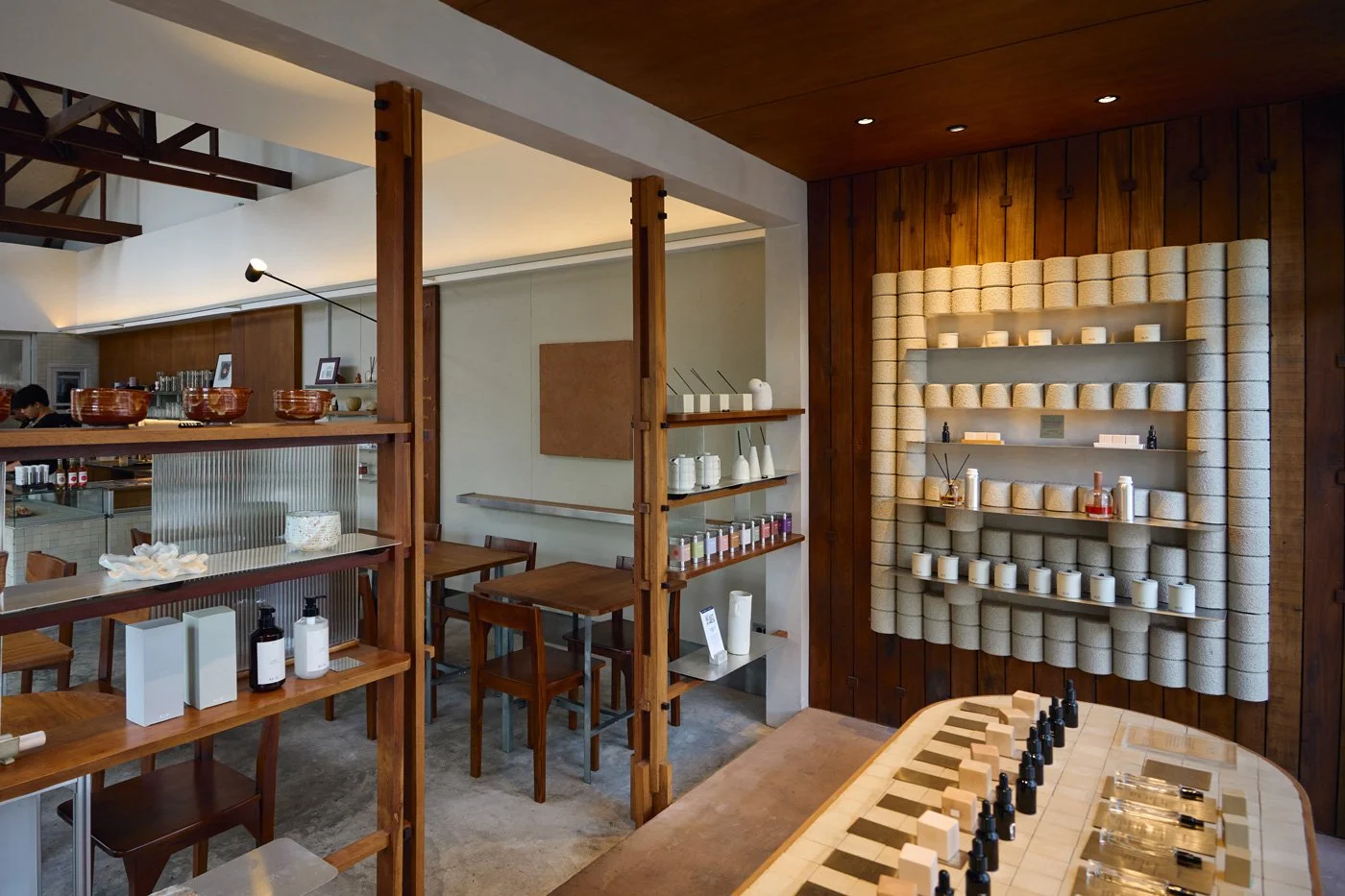
The architectural language grows directly from the product language. The KLĀY Cube — an unglazed ceramic diffuser block fired at 800C — is the brand central object. The designer scaled it up: the facade is a curved wall of interlocking cylindrical concrete bricks, in complete formal dialogue with the product. The original Lanna-style red-tile roof was preserved. The old timber trusses kept. Honest materials — the operating principle of the whole building.
We did not want the space to become a backdrop for photos. We wanted people to walk in and feel the loosening before they were even aware of it. That is what klāy actually means.
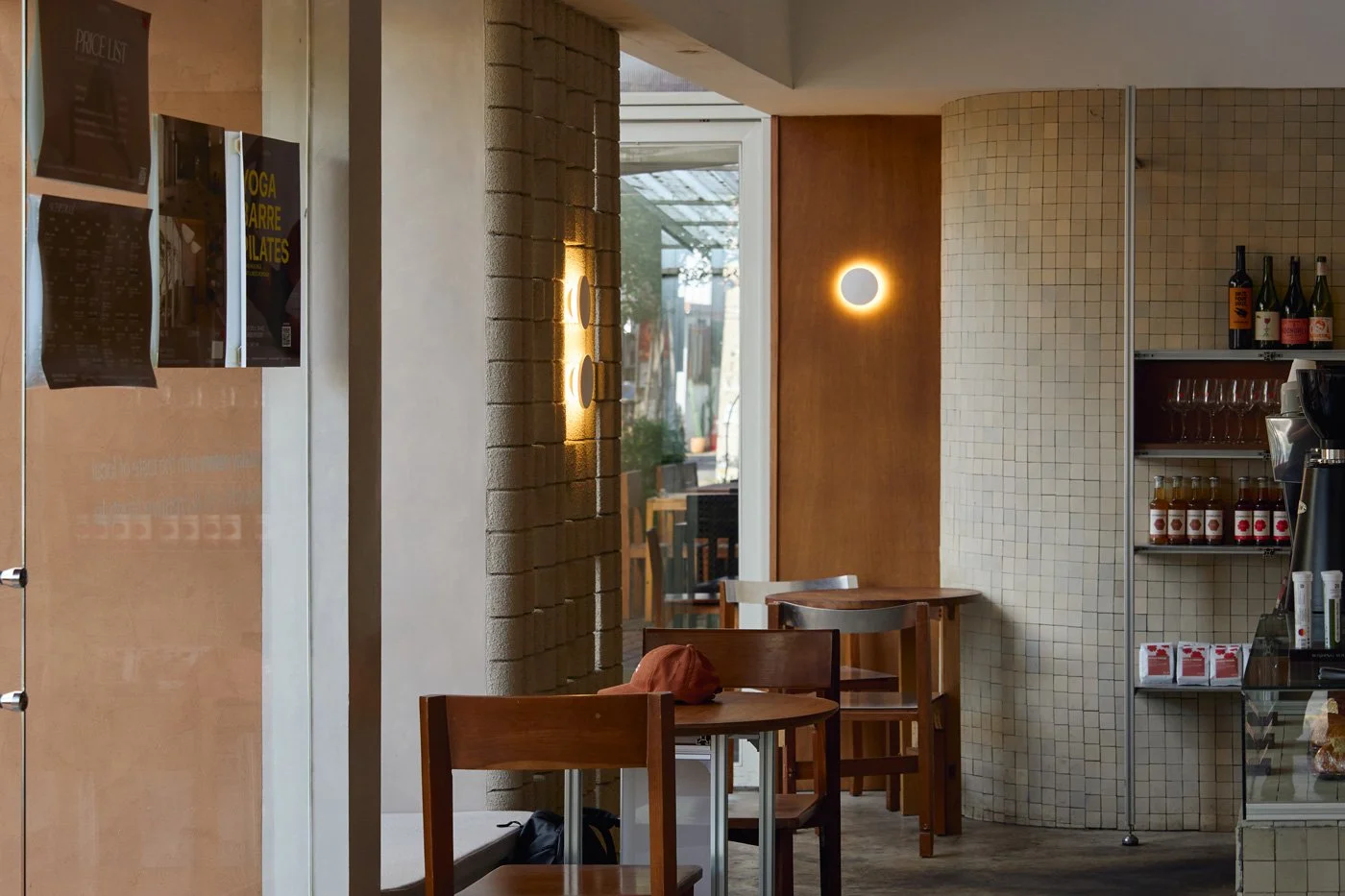
複合式咖啡店內。© jamieyelo / HCS
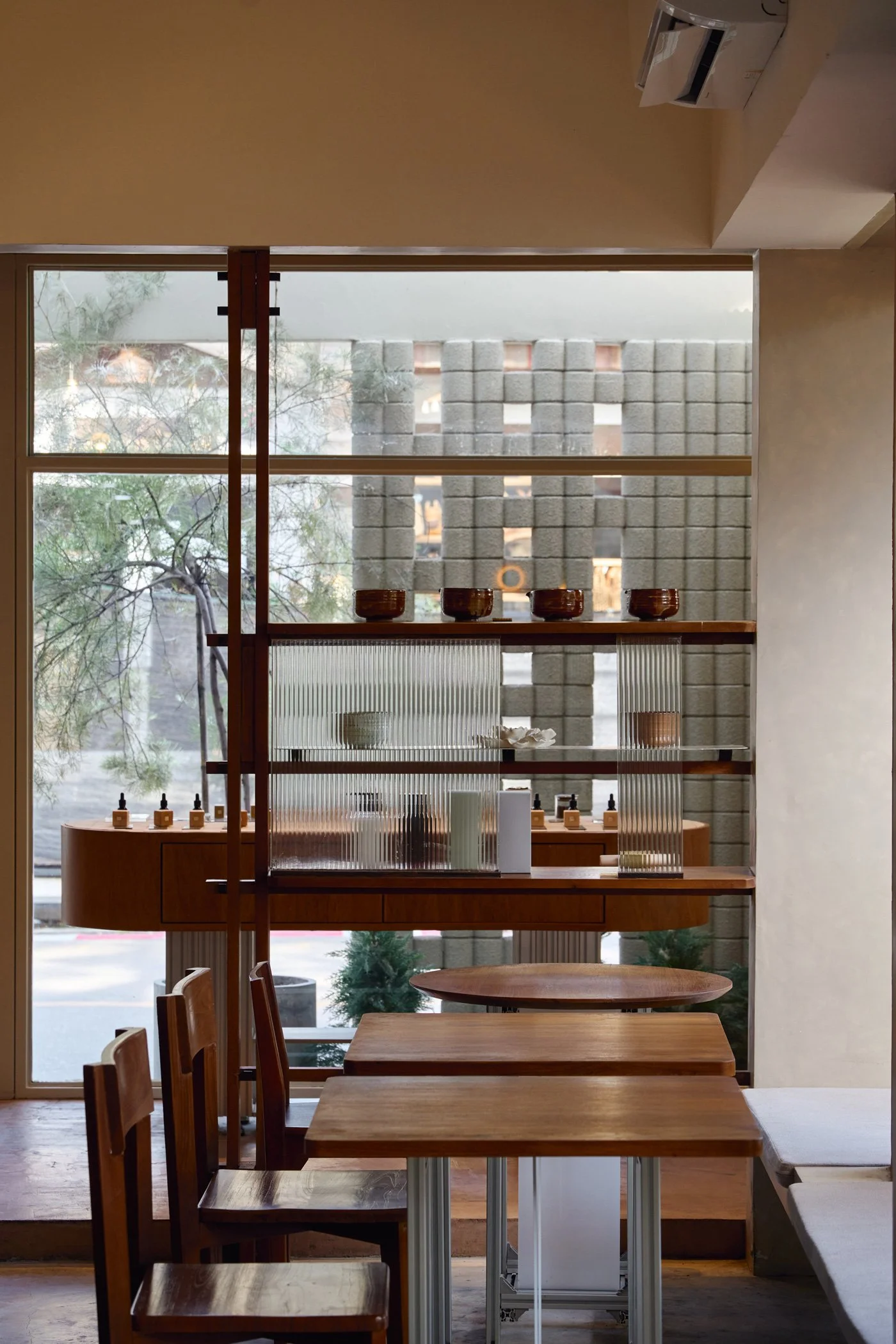
旗艦店室內——陳列架、香氛產品,窗外透出模組磚牆。© jamieyelo / HCS
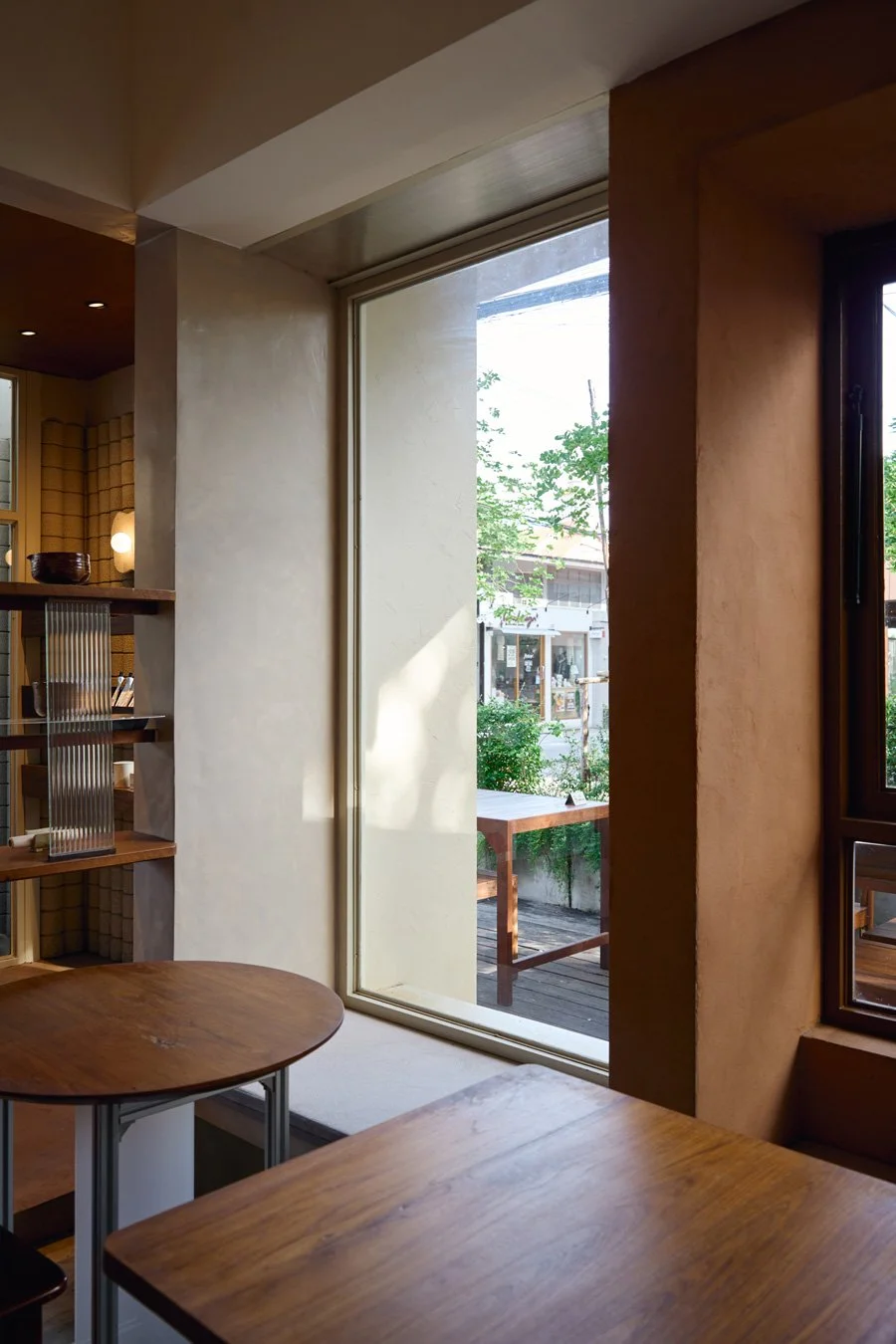
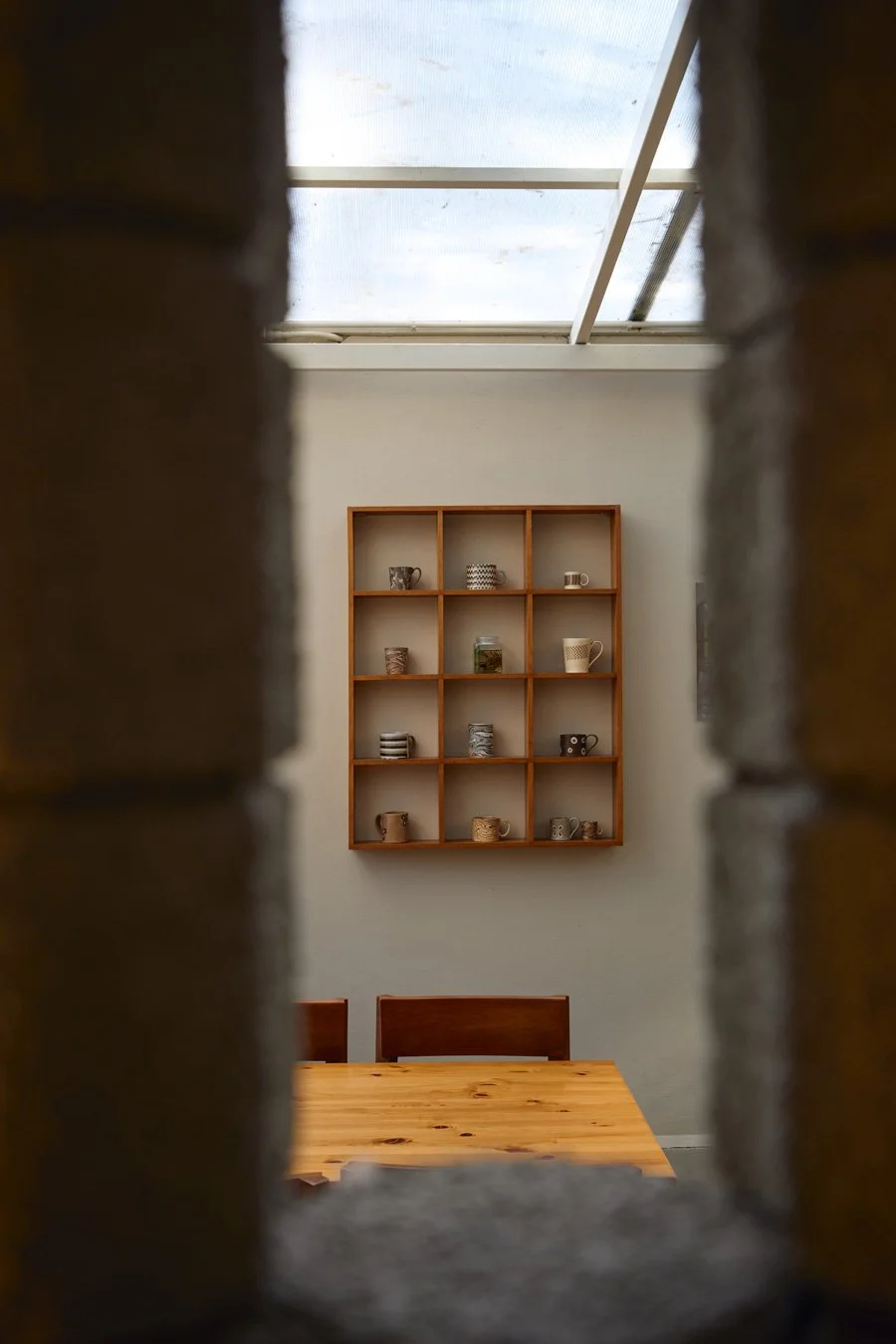
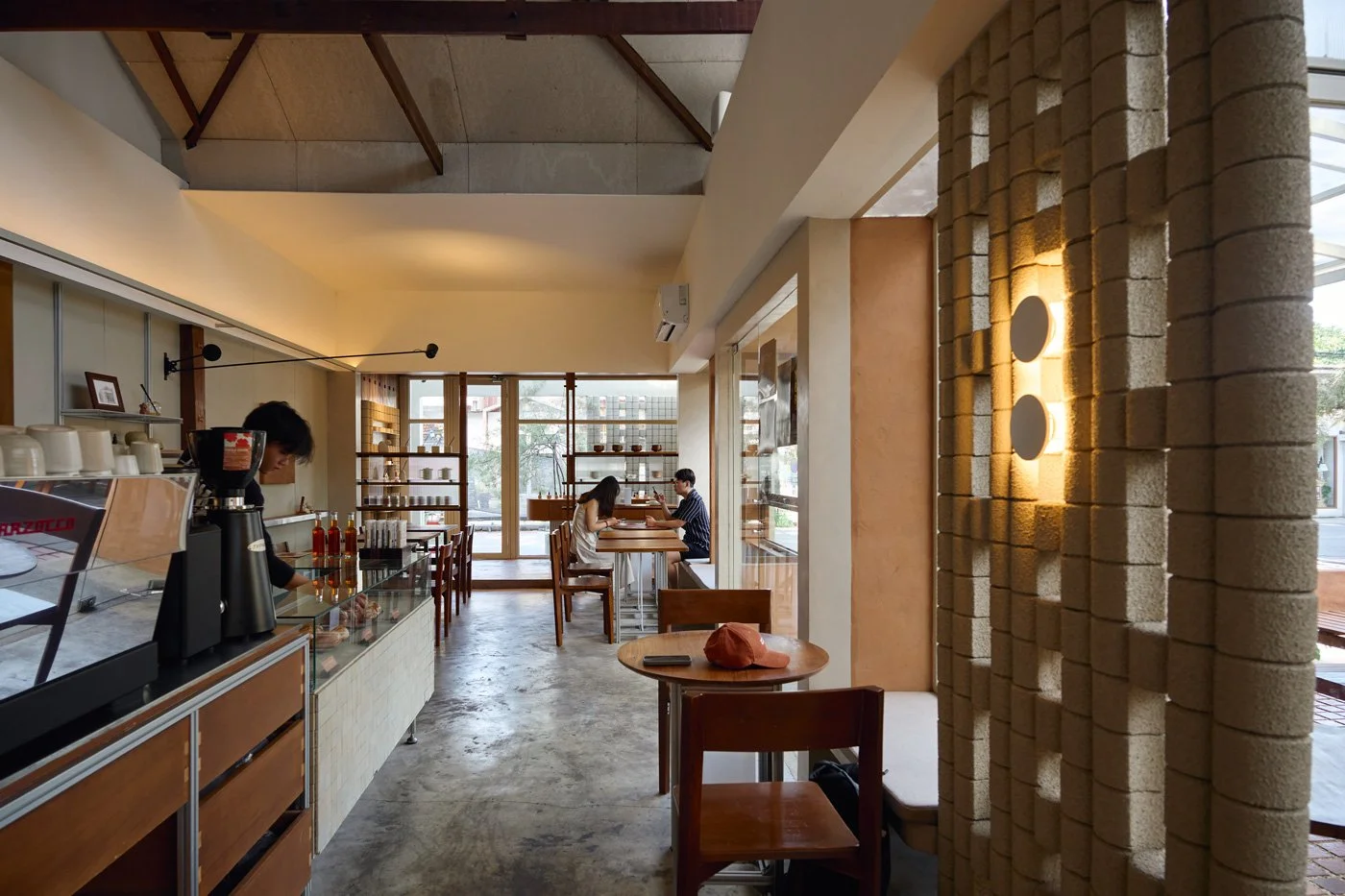
複合式咖啡店內。© jamieyelo / HCS
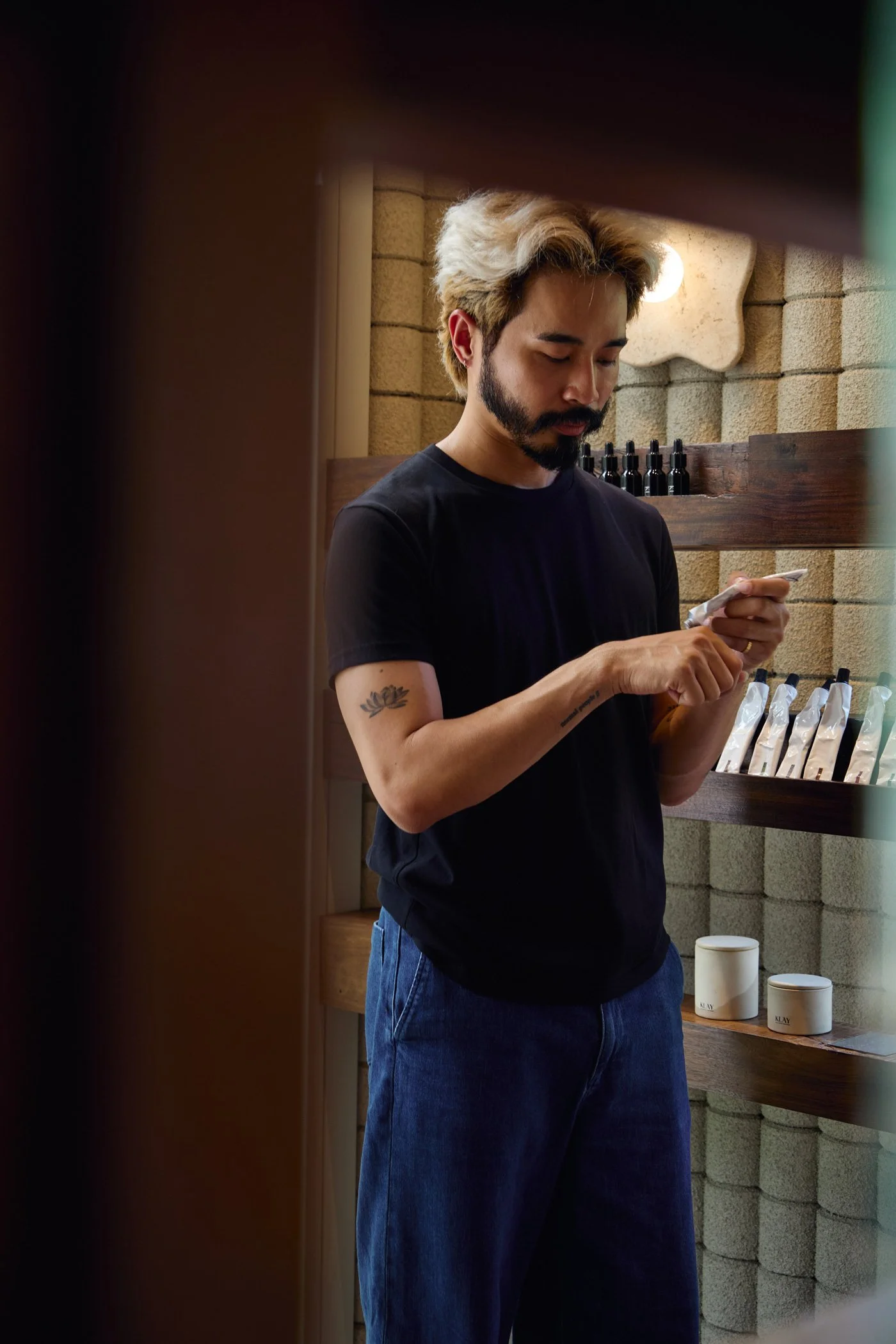
創辦人站在旗艦店內。© jamieyelo / HCS
-
Every KLĀY product can account for its materials. Ceramics from Dungjai Studio in Mae Jo. Packaging from Ton Pao village, made from traditional sa mulberry bark paper. The tea range uses forest-friendly leaves from Monsoon Tea. Zero plastic. A deliberate choice to stay in place.
But that choice requires ongoing patience. Growing alongside local small-scale producers is a long lesson. Every artisan has their own rhythm and philosophy — for them, stability is itself a value, not something to be changed. KLĀY has learned that the brand's pace of growth must learn to respect its partners as they are.
It is a challenge common across independent Asian brands but rarely spoken aloud. KLĀY does not pretend the friction doesn't exist. Finding partners willing to grow together is named as one of the most essential tasks ahead.
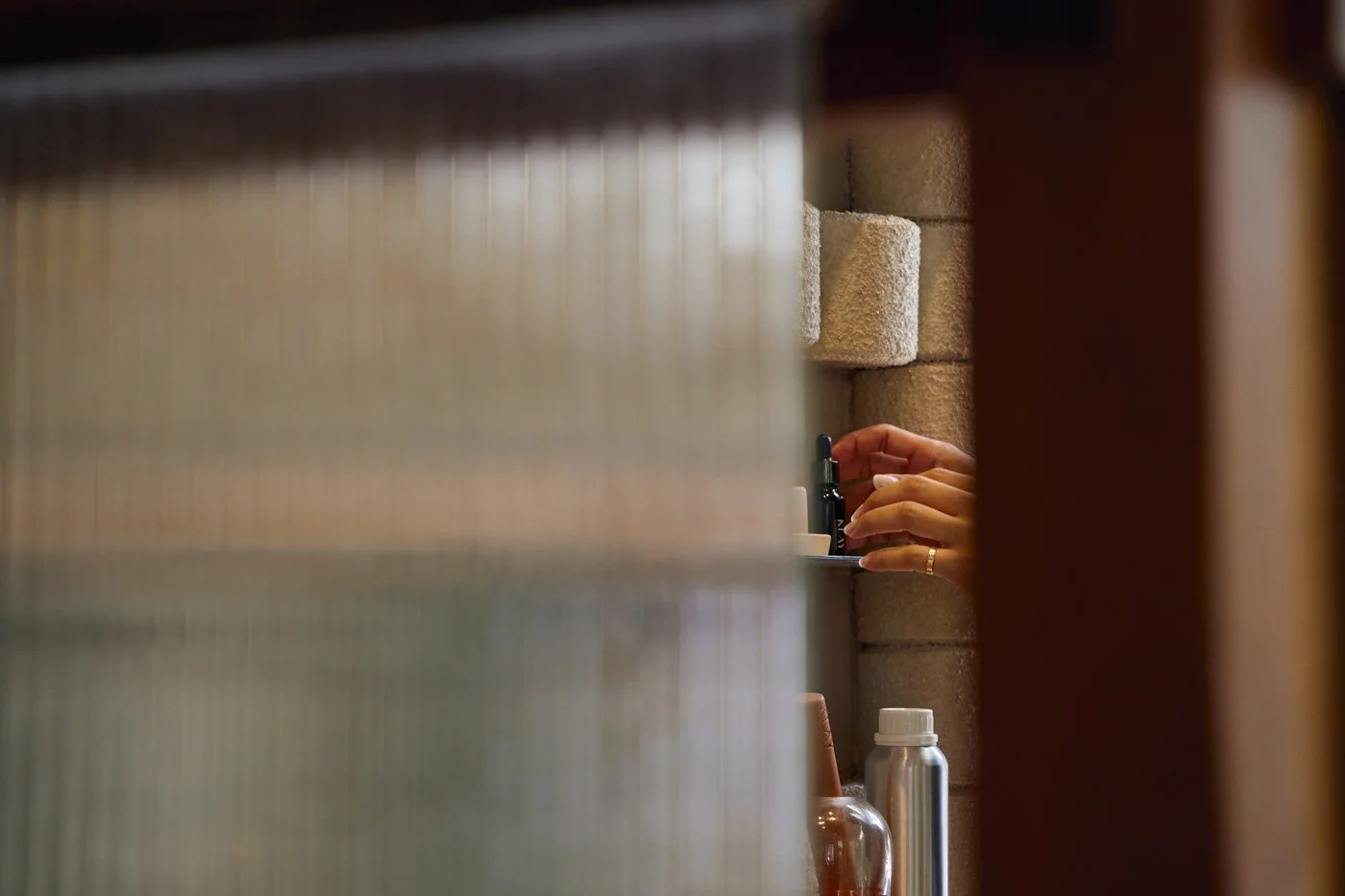
© jamieyelo / HCS
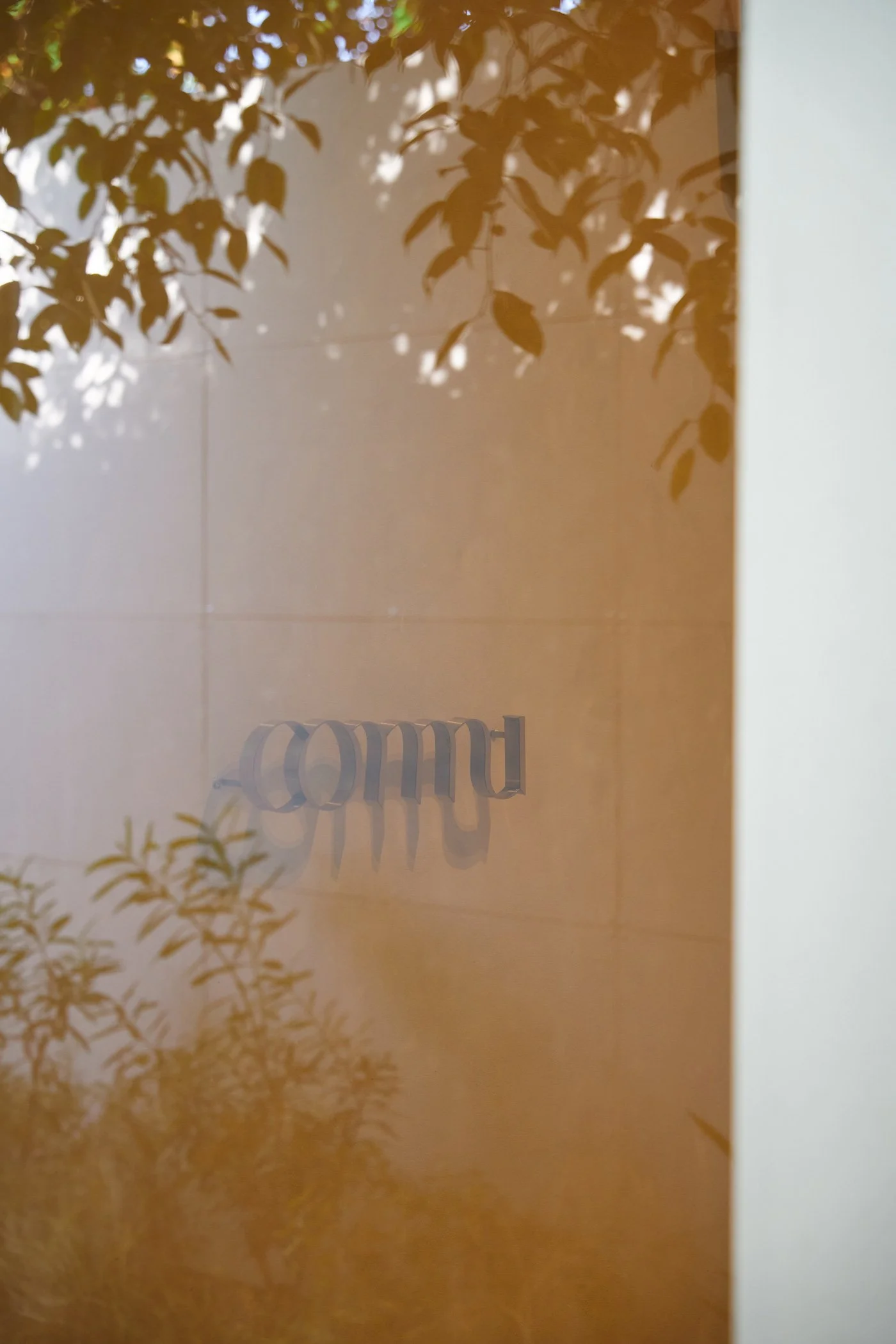
「commu」字樣透過霧面玻璃映出。© jamieyelo / HCS
-
Two minutes walk from the flagship along Nimman Soi 5 is klaycommu — a compound space that opened in early 2026. Its official description is wellness studio. Walk in, and you will find that definition insufficient.
KLĀY rented a plot of land and subdivided it, sub-letting units to independent brands and creators: Longkai, a Chiang Mai textile label; a leathercraft maker from Lamphun; an illustrator; and Goofy Juice Bar. Different makers, one address, one shared pool of visitors.
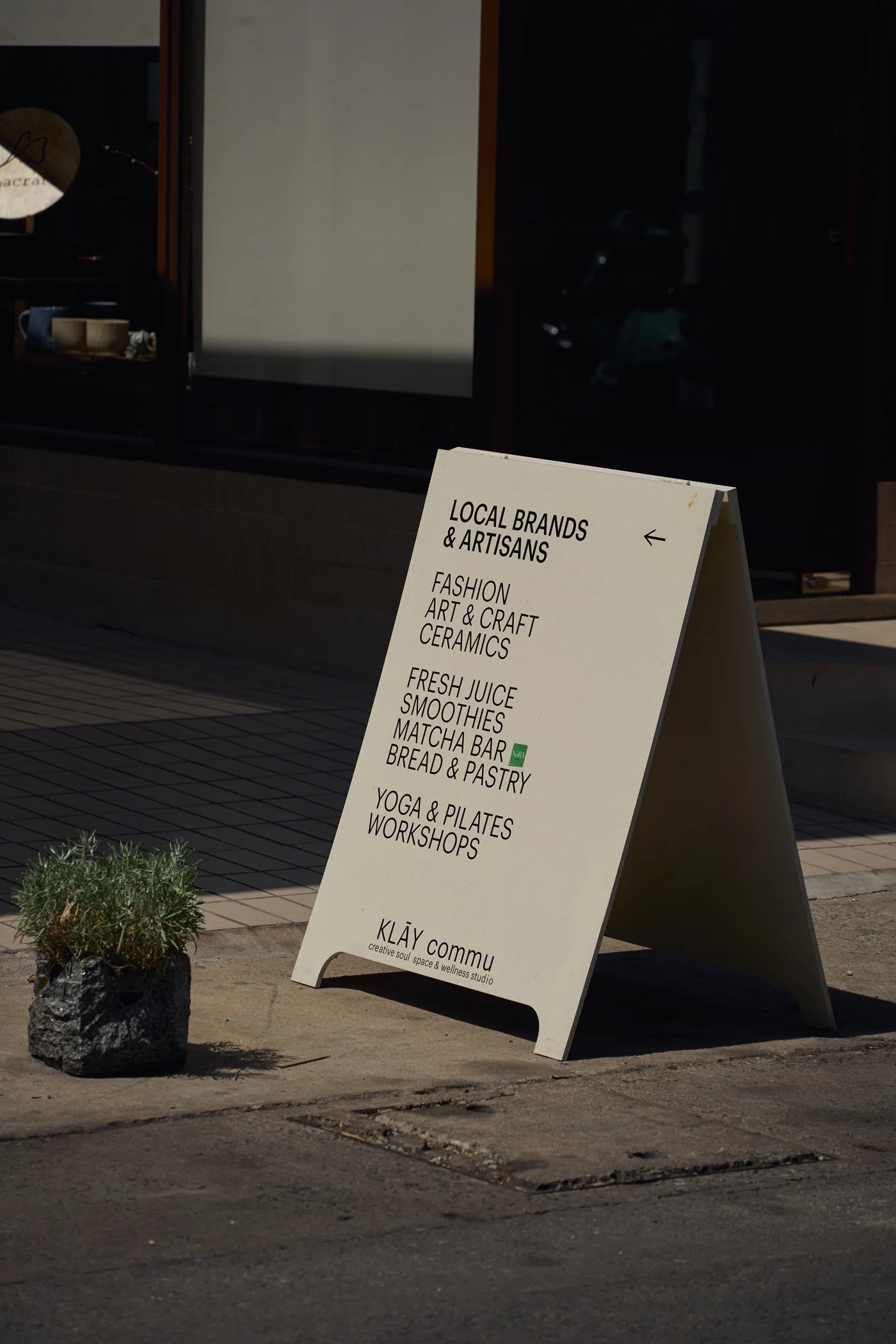
klaycommu 門口立牌:Local Brands & Artisans, Fashion, Art & Craft, Yoga & Pilates。© jamieyelo / HCS
-
We did not want just a place to take classes. We wanted a place where creators could be seen. If your yoga class ends and you look up and someone next to you is making leather goods, someone else is drawing — that is the feeling we were after.
The model is closer to the logic of a Copenhagen or Portland maker-collective than a typical wellness studio.
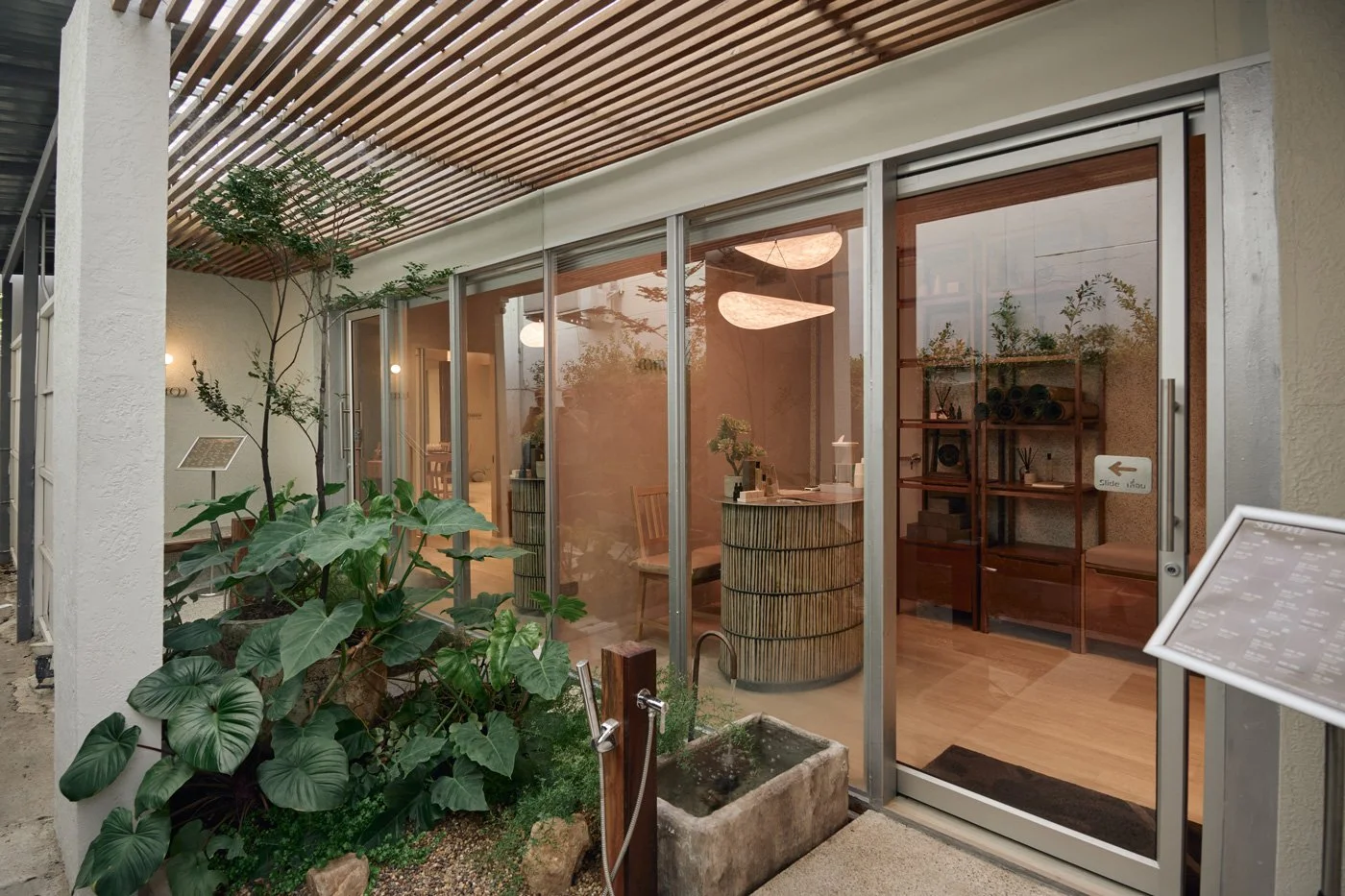
klaycommu 入口。© jamieyelo / HCS
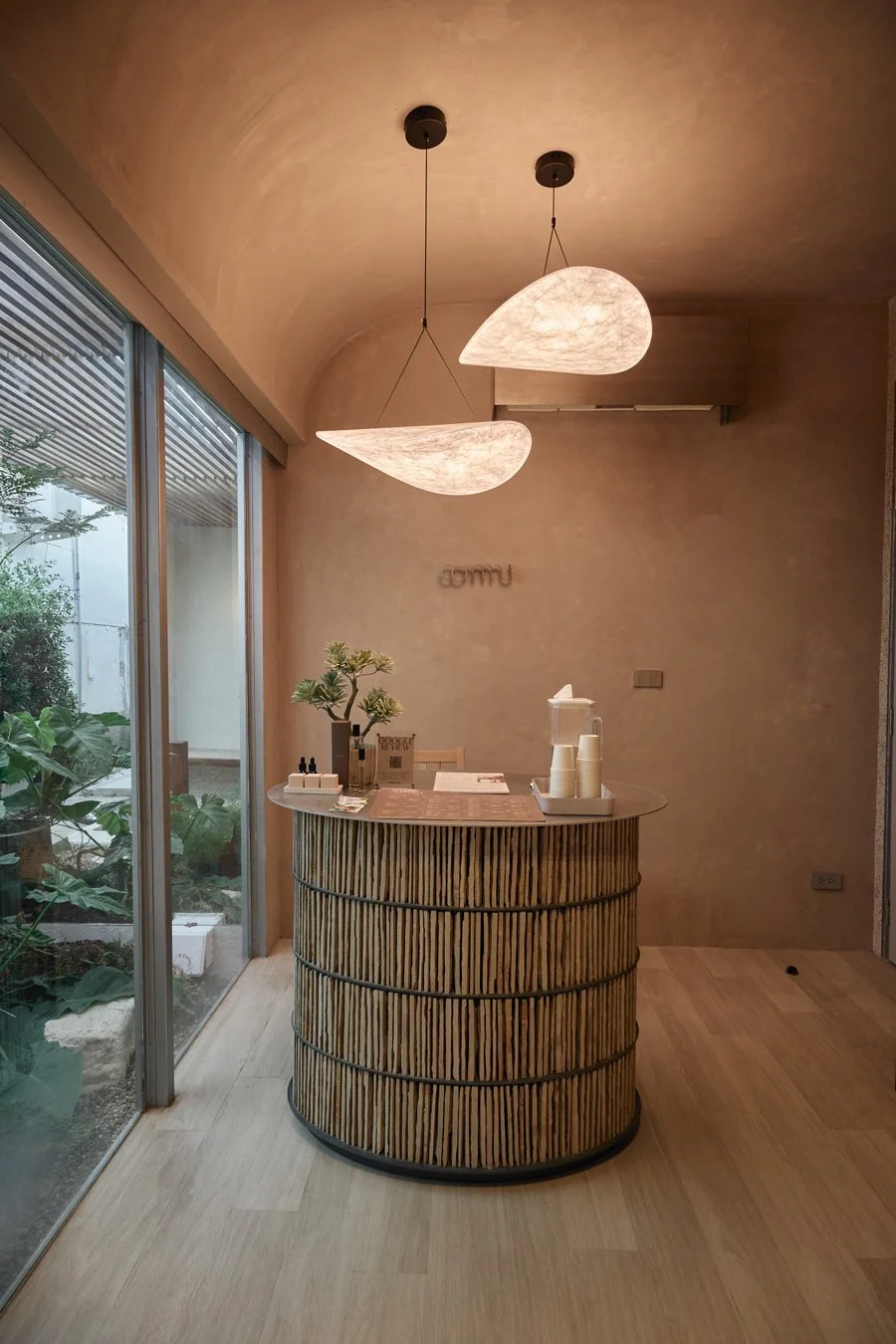
klaycommu 接待台。竹編圓吧台、雲形吊燈、庭院。© jamieyelo / HCS
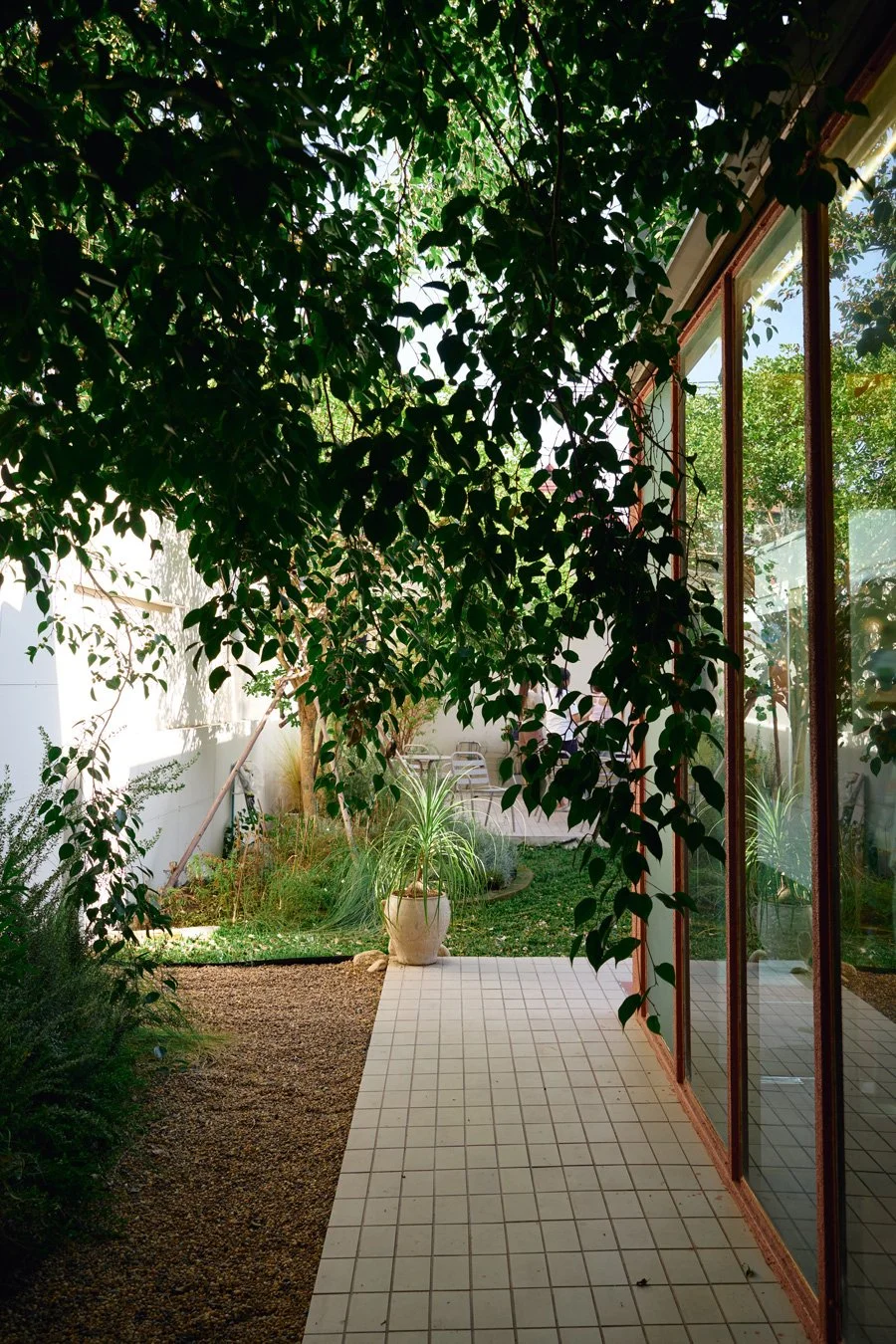
© jamieyelo / HCS
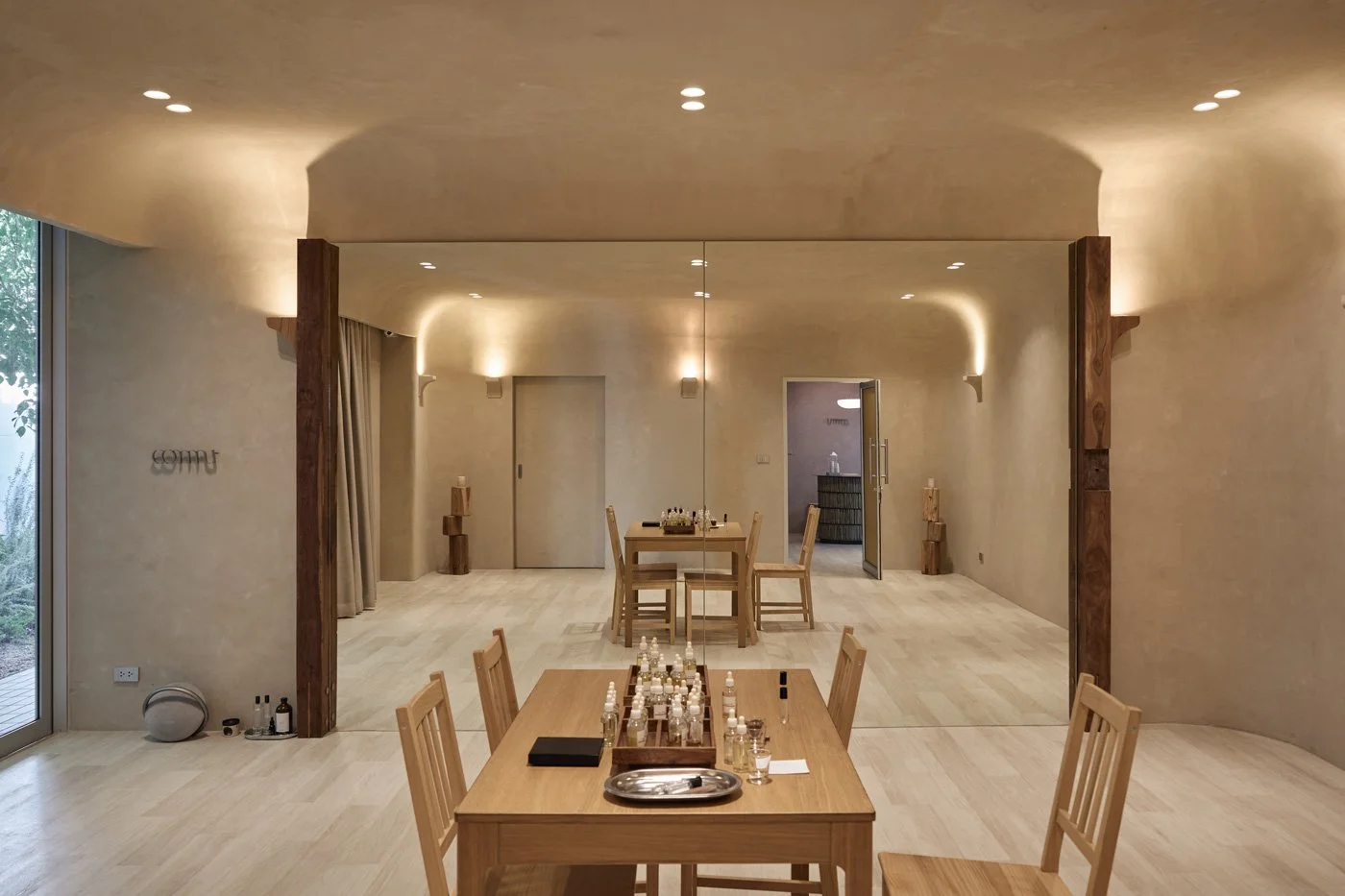
教室一隅。© jamieyelo / HCS
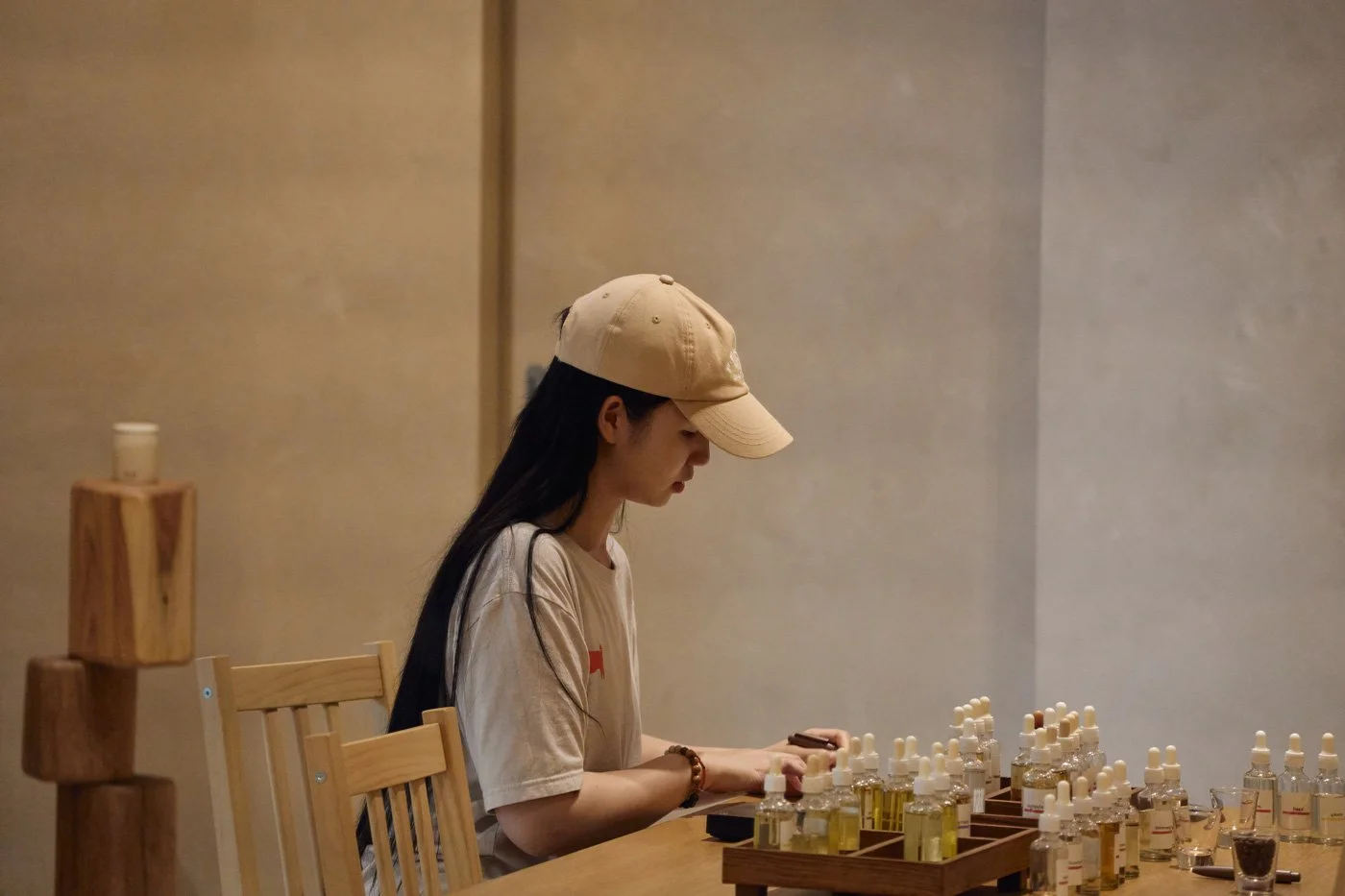
調香老師。© jamieyelo / HCS
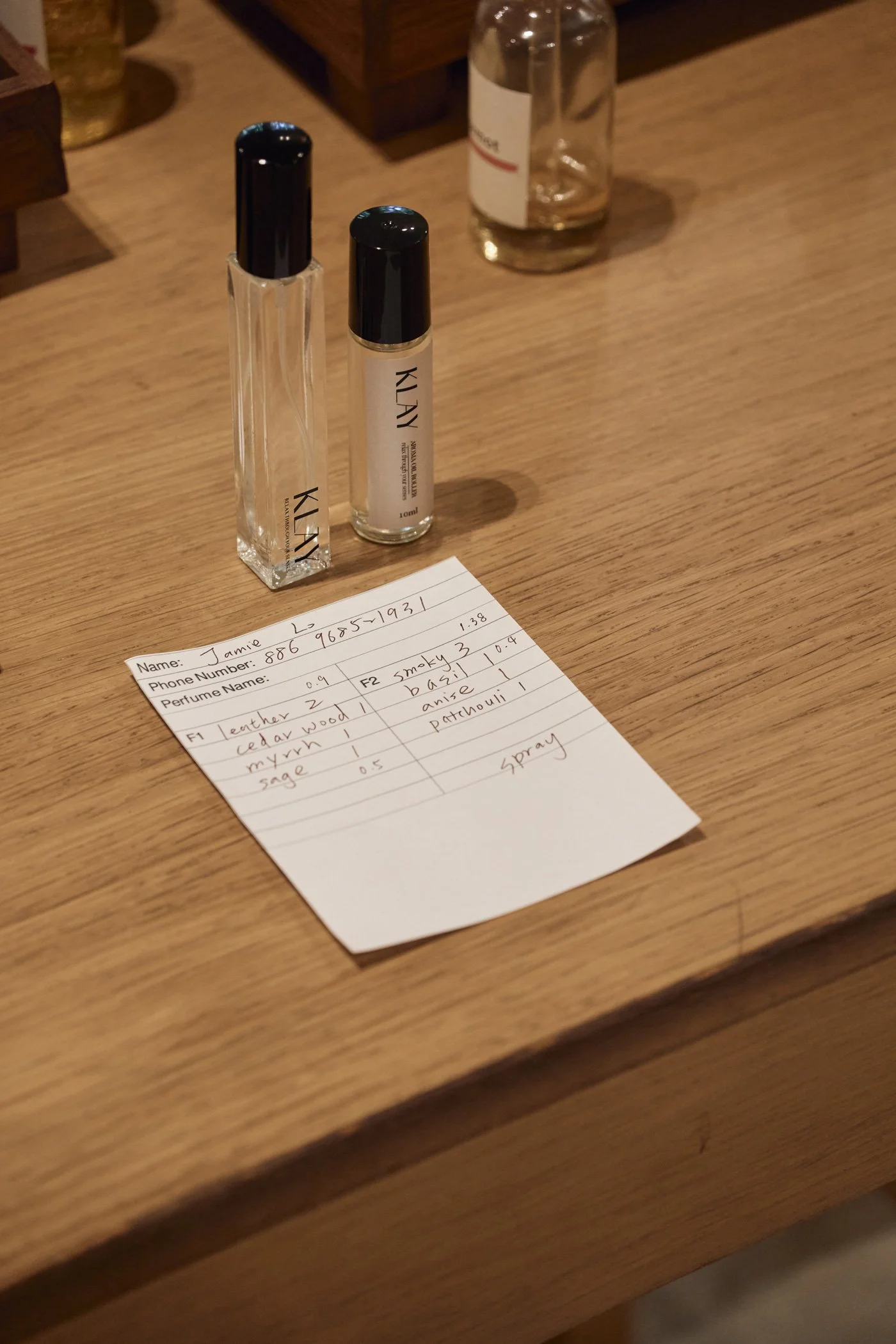
© jamieyelo / HCS
-
Chiang Mai is a peculiar city in which to talk about business. The commercial community is small, interconnected, and largely non-competitive. Living in Chiang Mai almost inevitably leads to entrepreneurship: corporate salaries here cannot support the kind of life the city itself inspires.
You either open a shop or you leave. Most people in Chiang Mai eventually choose one or the other.
The city also faces smoke season each year. Around February, agricultural burning traps smoke against the surrounding mountains. PM2.5 spikes. Residents stay indoors. The last four years have been bad. You just wait for the rainy season to come and wash everything clean. Even so, leaving is not something they have considered. The rhythm of Chiang Mai, the smell of its earth — these things are encoded in the brand DNA.
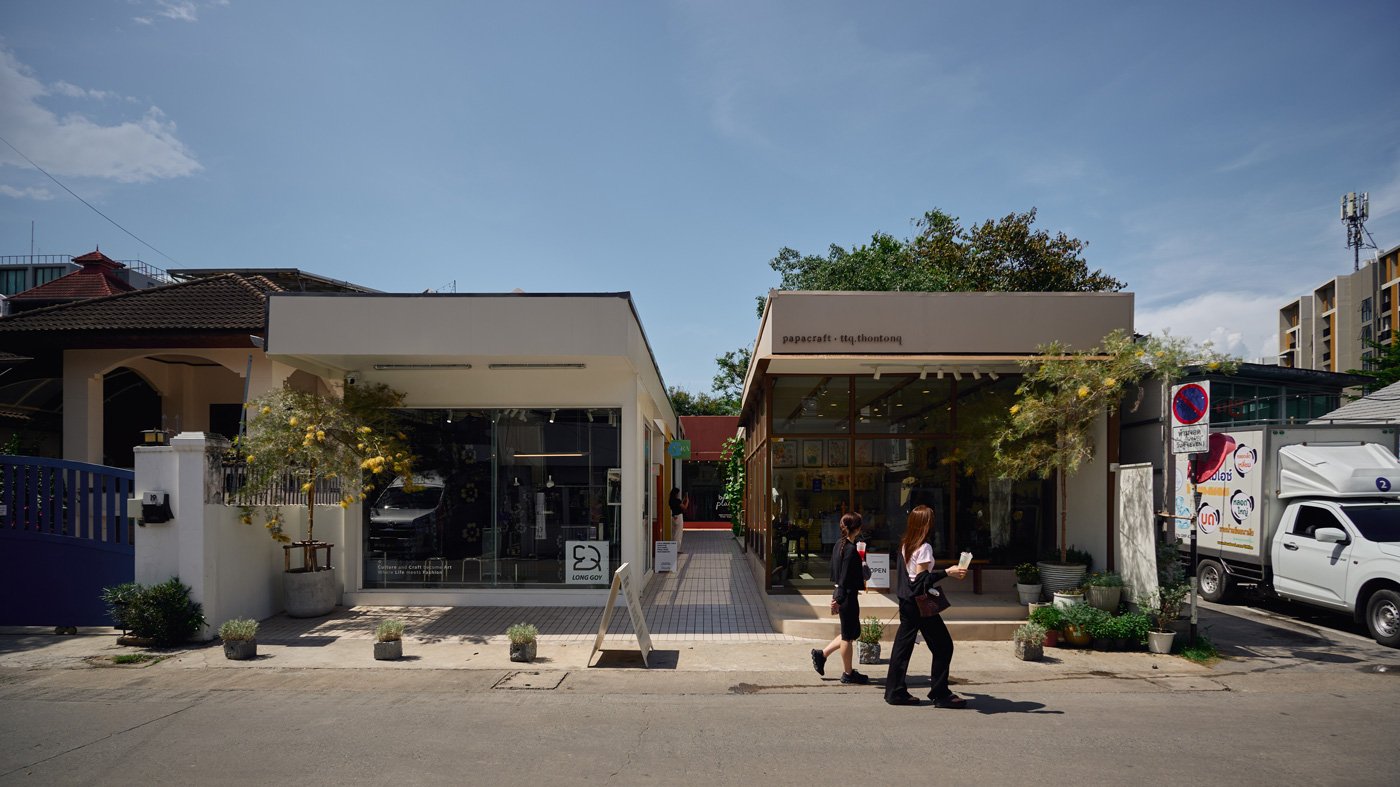
klaycommu 街廓——Long Goi 與 papacraft 兩個進駐品牌的店面。© jamieyelo / HCS
-
This year, KLĀY opened klayconcept at Lannatique — a major commercial development in Chiang Mai. The new format centres on products and home-living experience: fragrances displayed within real domestic settings. It is the brand first step into a space shaped by larger commercial forces.
Taiwan is also in the plan. By late 2024, KLĀY had already appeared in Kaohsiung and Taipei, testing the market while working through the challenge of getting ceramic products across borders without breakage.
We always knew Taiwan would be a place we would want to invest in seriously. Taiwanese consumers have an extremely high sensitivity to design, to materials, to lifestyle brands. We feel that KLĀY can genuinely be understood there.
If KLĀY were to exist in another city someday, what they resist is replication. What they want is another version of themselves — one that grows from local earth and arrives at the same root through a different path.
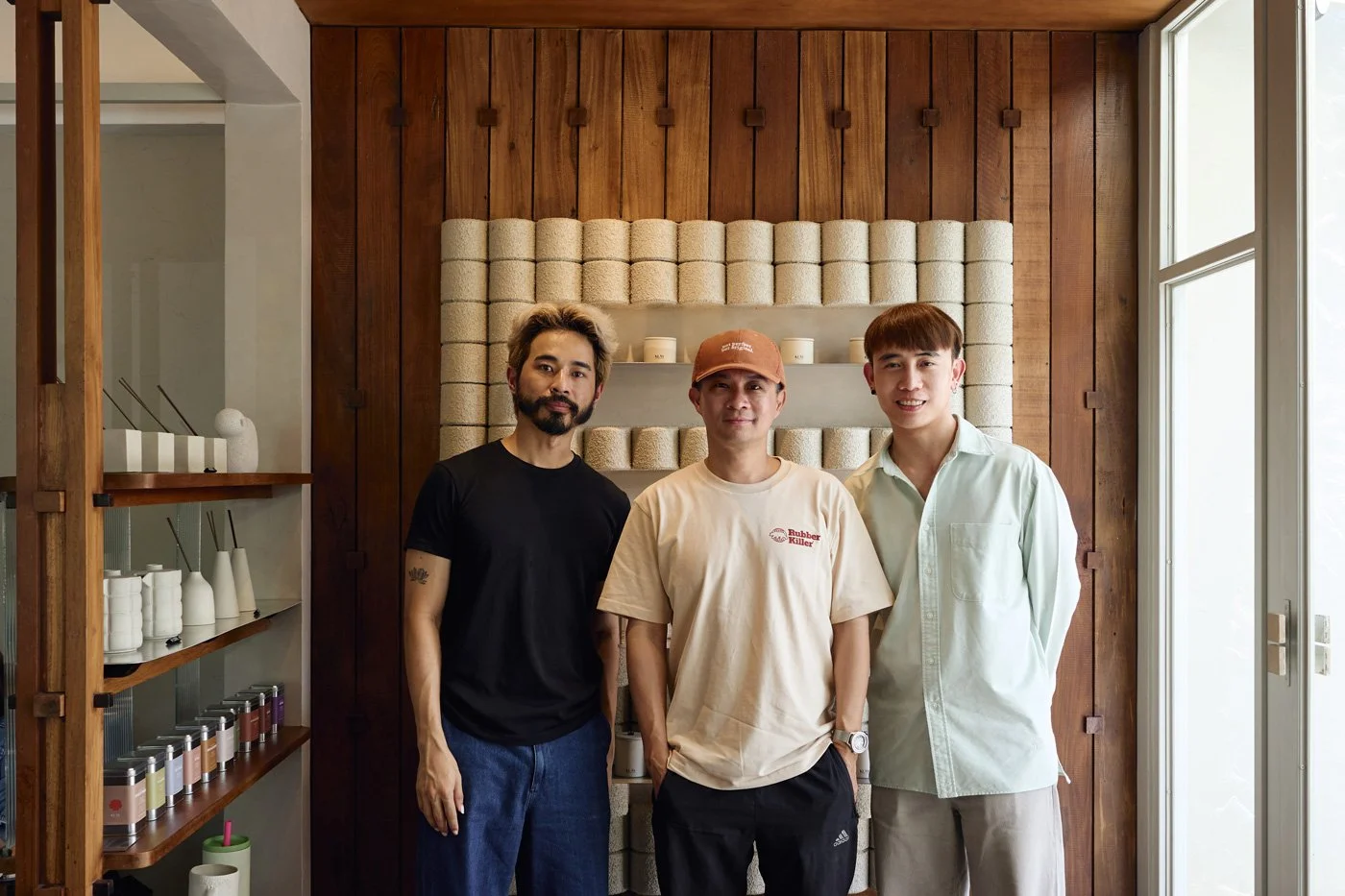
KLĀY 創辦人與 Jamie,攝於旗艦店。© DEARMUN
-
The verb klāy — to loosen, to let what is taut return to softness — has, from a corner of Chiang Mai, become a building, a cup of coffee, a ceramic block, a fragrance, a yoga class, a piece of leather, a playlist. It is becoming more.
Not because the brand is reaching for expansion, but because the verb itself carries that kind of force. Place it in the right ground, let it fall quietly, and it will grow on its own.