
感知萬物細緻循環,擁抱自然流動的餘裕:專訪織物藝術家 Mona Sugata
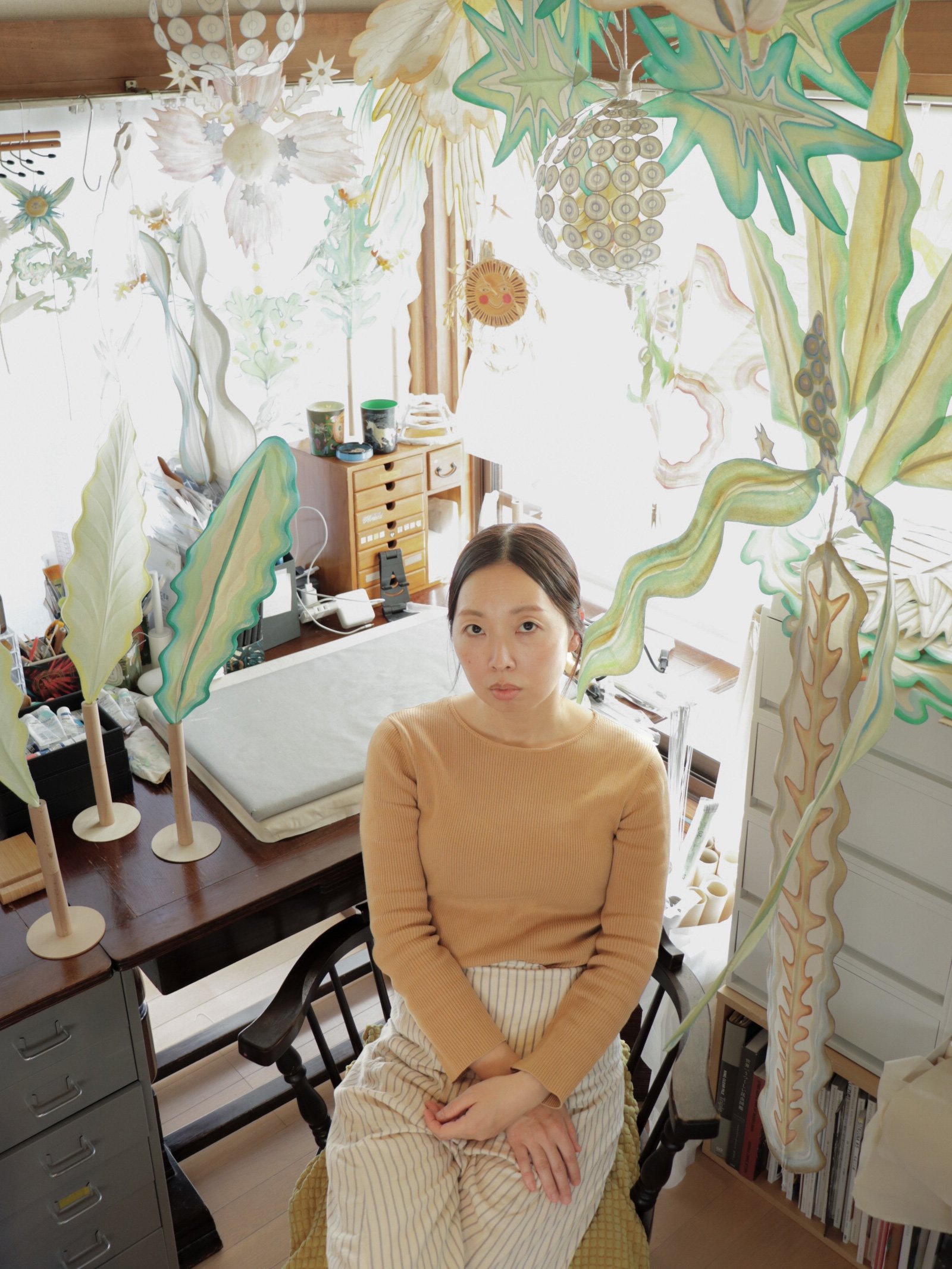
Mona Sugata (Photo Credit: Mona Sugata )
-
At first glance, Mona Sugata’s three-dimensional textile works captivate with their layered forms. They are not literal reproductions of botany, but rather reassembled memories of nature: dyes bleeding along cut edges, leaves curving gently over iron armatures, and flowers frozen in the moment of unfurling. They present the mysteries of the natural world through a distinct, surreal lens.
Sugata’s tactile sensitivity stems from her previous decade-long career as a jewelry engraver at Tiffany & Co. Engraving letters required intense focus; the slightest tremor in her fingertips would alter the metal, requiring her to slow her breathing to stabilize her lines. This experience with rigid control sparked a curiosity about how different materials interact, eventually leading her away from the unforgiving nature of metal.
She found her answer in fabric. The softness, mutability, and natural wrinkling of cotton offered qualities metal could not—a shift that guided her into the world of fiber art.
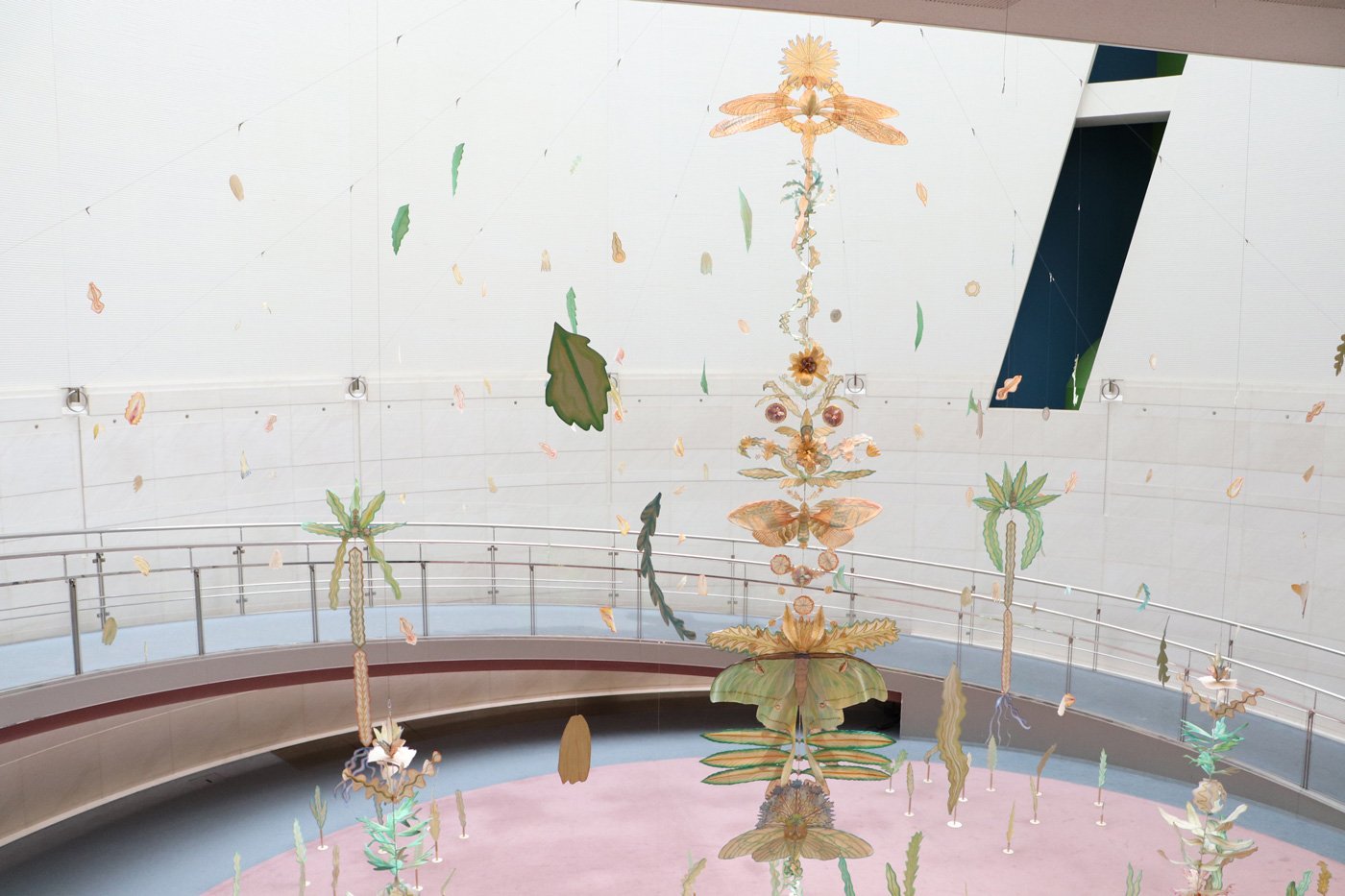
Photo Credit: Mona Sugata
-
From Rigid Metal to Soft Textile
Q: You spent ten years as a jewelry engraver at Tiffany & Co. How did you transition from metal to textile and appliqué art?Mona:
Engraving letters onto jewelry demands extreme concentration. If my fingertips trembled even slightly, that mark was permanent. Over a decade, my body developed a reflex to hyper-focus on the tiniest point, even controlling my breathing to remain steady.Eventually, I realized I wanted to leave that state of absolute control. I began craving a material that could breathe in rhythm with my body. That is when fabric entered my life. It is light, breathable, and mutable. That inherent instability felt natural and comforting to me.
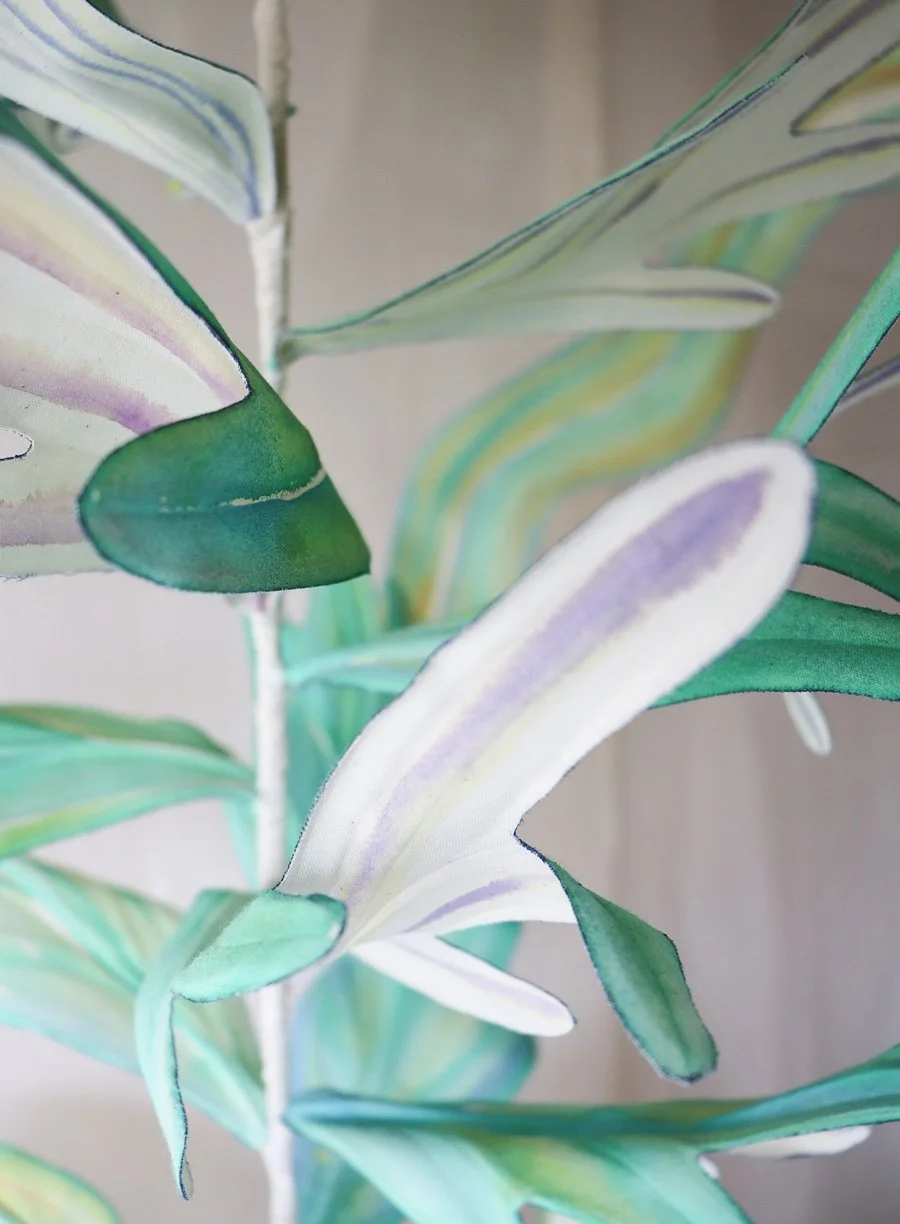
Photo Credit: Mona Sugata
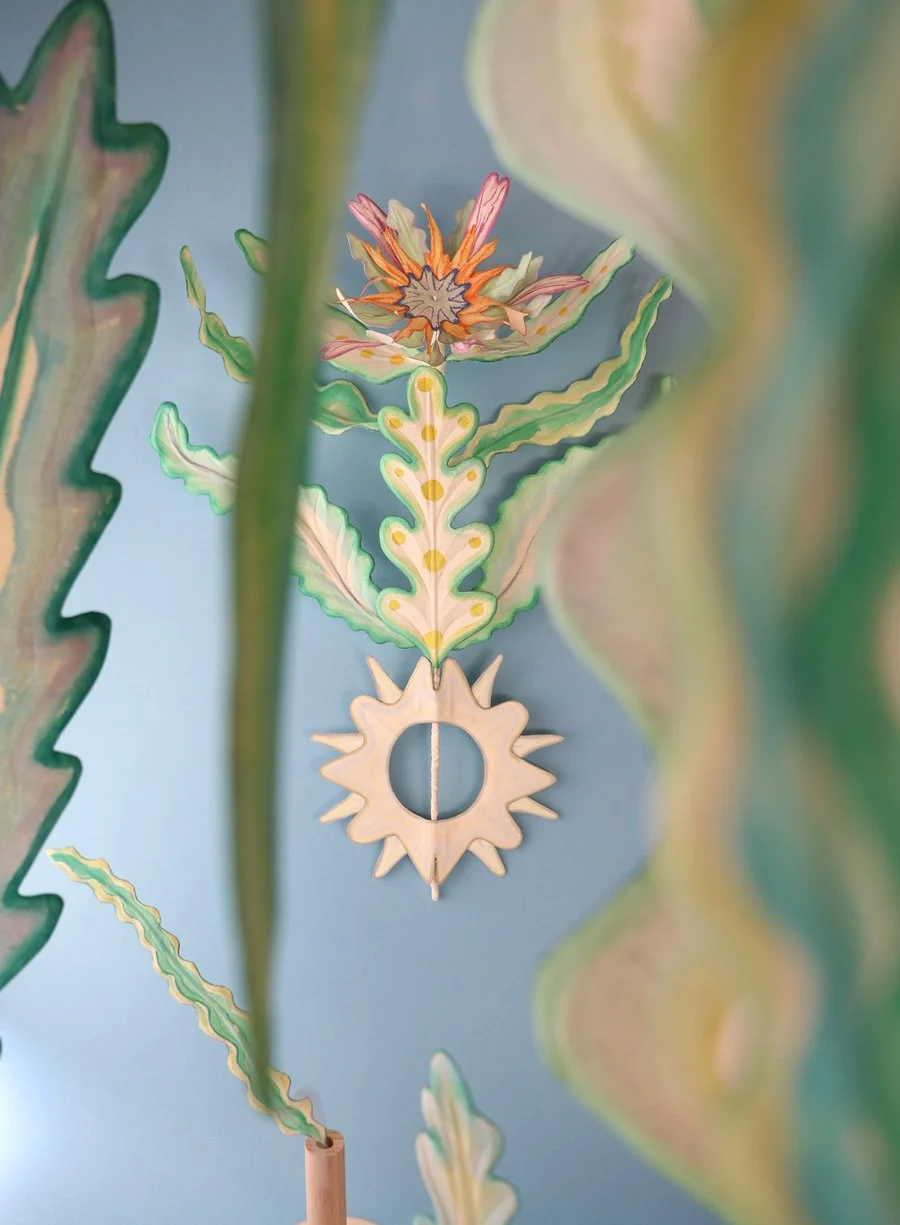
Photo Credit: Mona Sugata
-
Q: Appliqué implies attachment, connection, and layering. What does this term signify in your work?
Mona:
To me, sewing is fundamentally about connecting different elements. When two pieces of cloth are stitched together, they form a new appearance and begin to influence one another; shades of color interact, the grain of the fabric guides the eye, and the thread becomes a subtle vein connecting them into a new state.The world itself is composed of infinite layers. I simply hope my work can become one of those layers.
Q: Why do you choose raw cotton as your primary medium?
Mona:
I have always been drawn to unrefined cotton. It softens and wrinkles when it absorbs moisture, then returns to a tighter texture when dry. I find this material shift very similar to the biological rhythms of plants.I also love its texture. It doesn’t reflect light harshly; instead, the fibers absorb it, producing a gentle, quiet luminosity. This allows the floral forms to blend naturally into a space without being obtrusive.
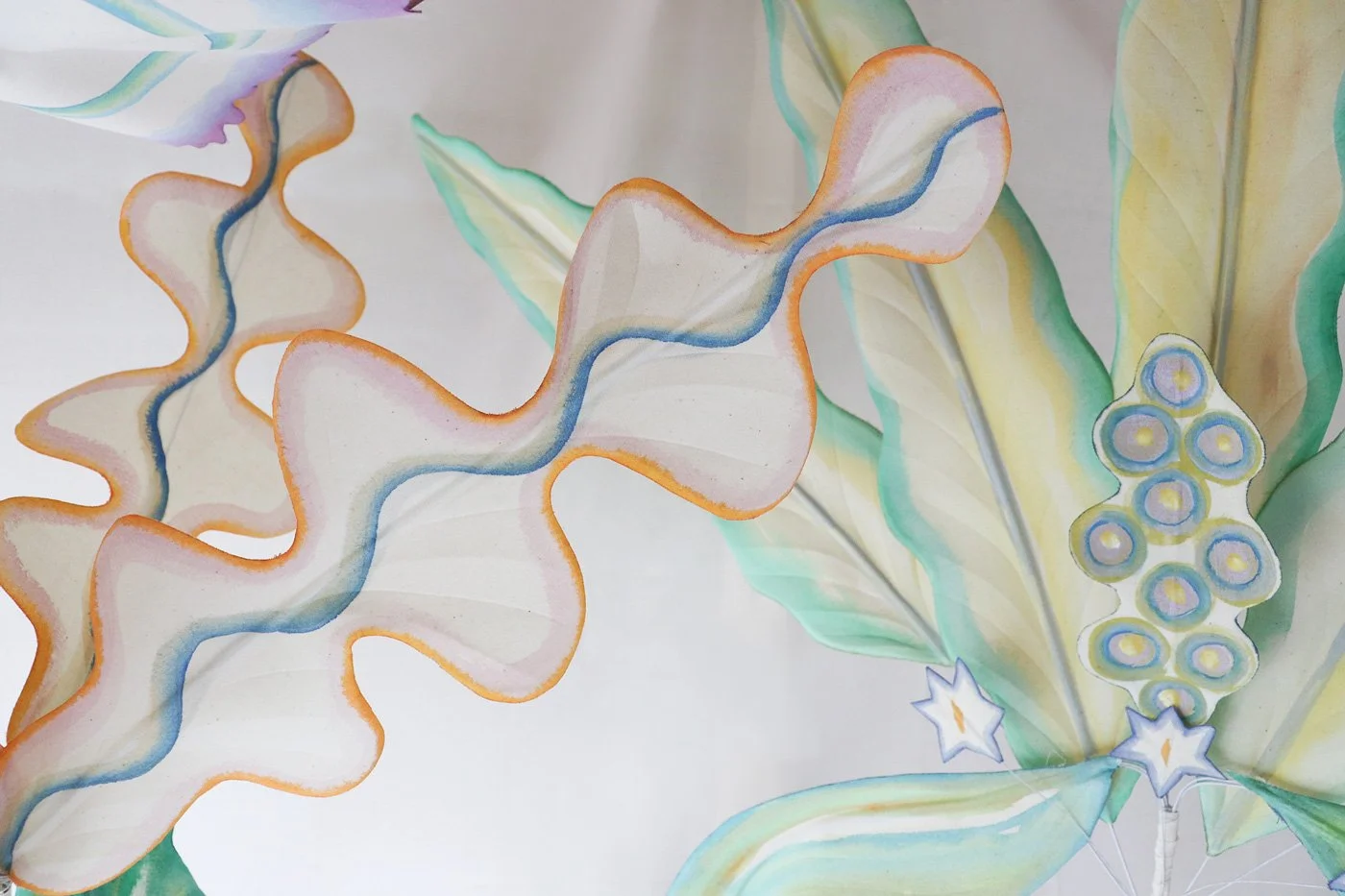
Photo Credit: Mona Sugata
-
Q: Your works are not direct imitations of real plants; they feel more abstract and symbolic. How do you observe and reinterpret natural forms?
Mona:
Rather than trying to capture nature realistically, I use my hands to collect the "signals" flowing through it—the moment a plant sways in the wind, the lightness of withering, or the tension stored inside a bud. The forms aren't realistic, but they are perhaps closer to the sensory memory of what I perceive.
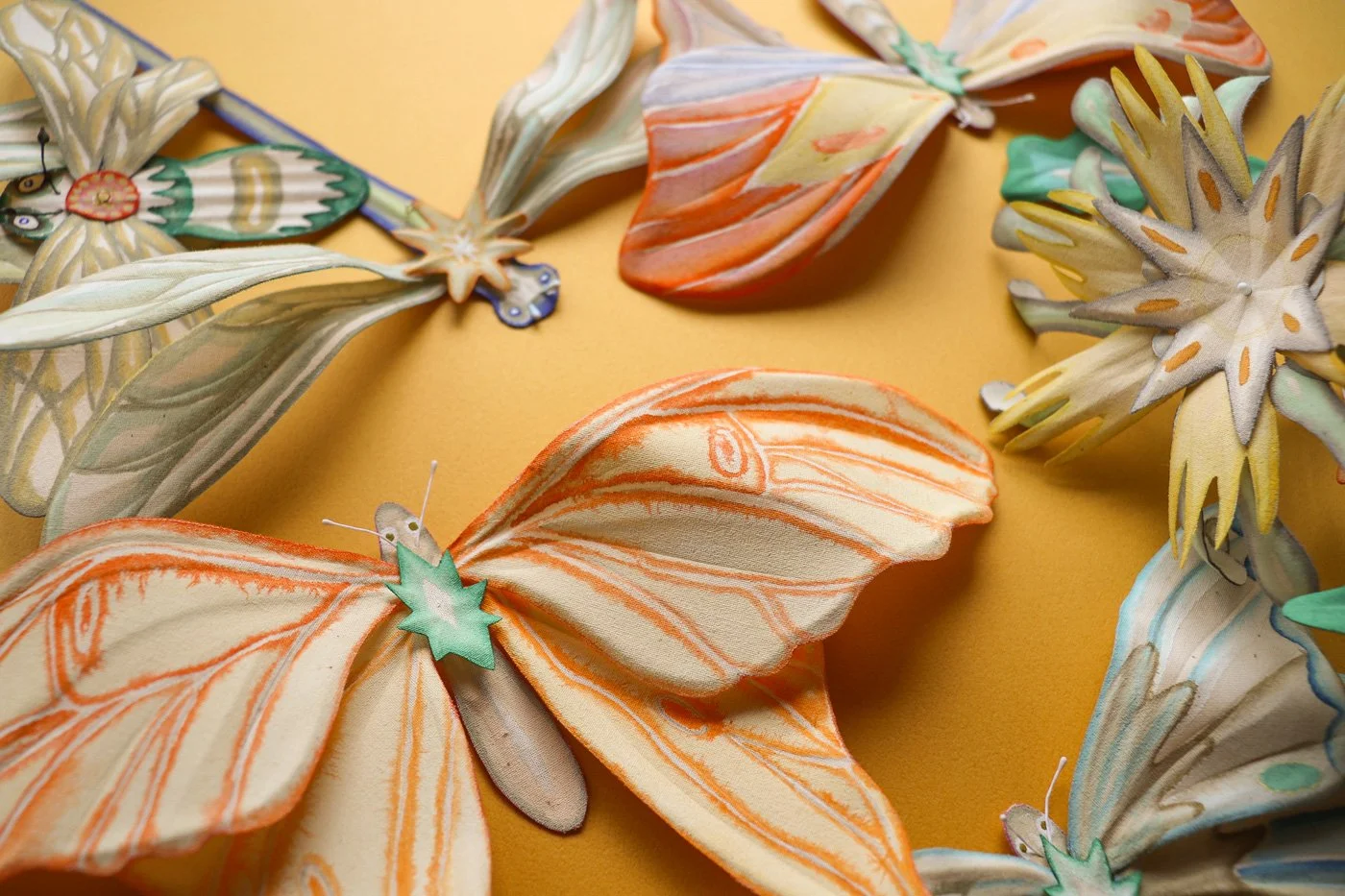
Photo Credit: Mona Sugata
-
A Dialogue Between Hand and Material
Q: How do you view the role of your "hands" in creation? Are they tools of technique, intuition, or an extension of emotion?Mona:
I don’t see my hands merely as tools for technique, nor do they operate solely on feeling. First, I clearly conceptualize the piece. Then, the right tools, colors, and shapes naturally surface, and my hands serve as the bridge to turn that imagination into reality. My hands connect my consciousness to the physical world.
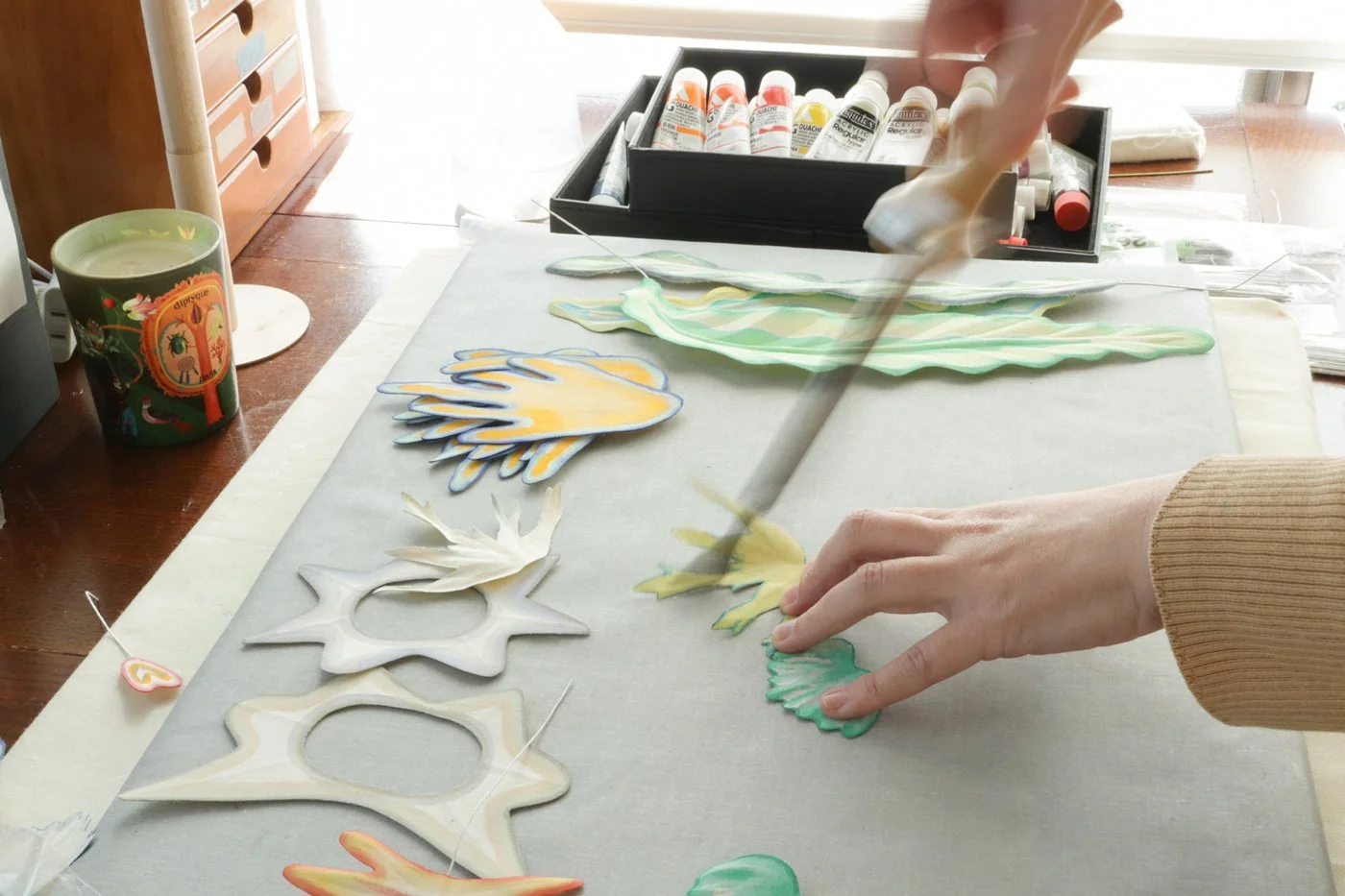
Photo Credit: Mona Sugata
-
Q: You describe the process as a "dialogue with the fabric." What is the nature of this conversation?
Mona:
Fabric often reacts in ways I don't anticipate. Dyes bleed and spread faster or in different directions than expected. I don’t try to dominate these moments. Instead, I ask: "How can I utilize this natural change? How can I work with this to make it more beautiful?" That is the dialogue. Accepting unpredictability is the core of my work. When a piece retains traces of these natural occurrences, it possesses more vitality.Q: What is the importance of irregularity or imperfection in craftsmanship?
Mona:
Perfect forms seem to hold too much pressure, as if the object is holding its breath. Slight deviations and inconsistent lines allow the work to feel alive. They create a space for the viewer to enter.
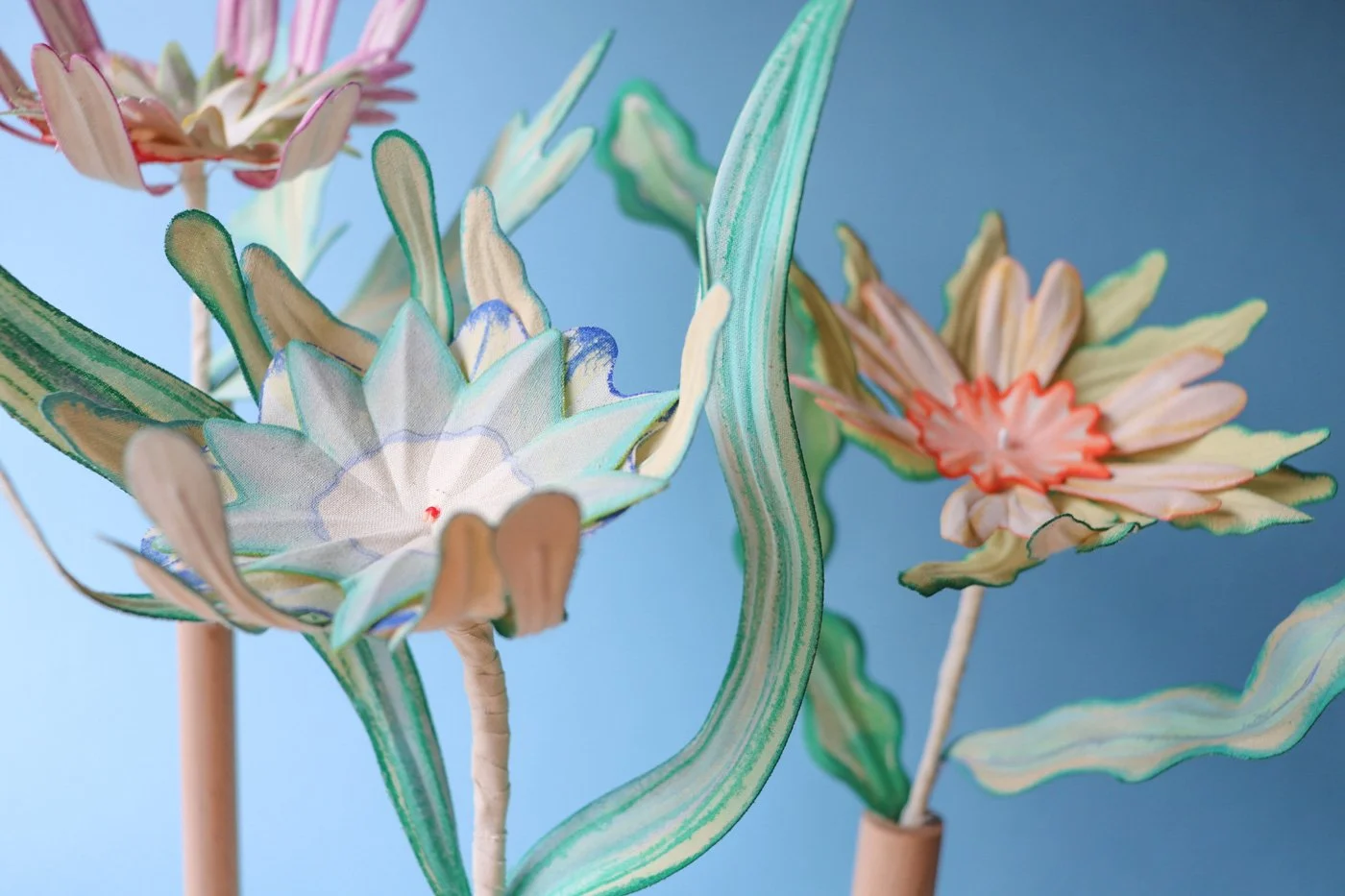
Photo Credit: Mona Sugata
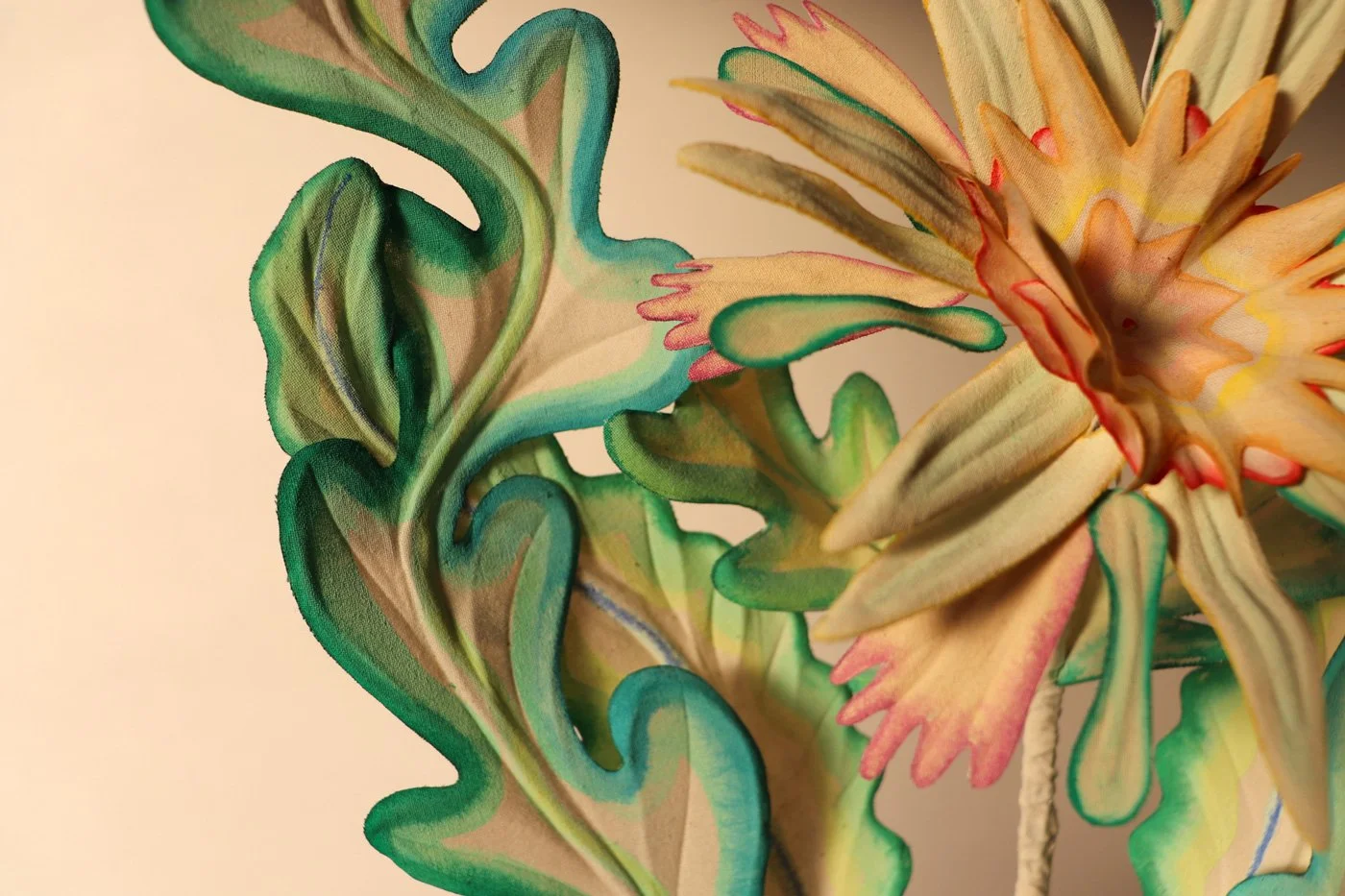
Photo Credit: Mona Sugata
-
Meeting the Inner Self Through Appliqué
Q: How do you find "inner life" within the petals, folds, and stems?
Mona:
The flow of leaf veins, the layering of petals, the slight curve of a stem—these elements resonate with the energy flow within the human body. This allows the viewer to sense a peculiar, lifelike quality in the work, almost as if they are gazing at a living being.Under strong light, the silhouette is sharp; in soft light, it seems to merge with the air. To me, the work is not a fixed object, but a "current state"—an existence that shifts with light, air, and time.
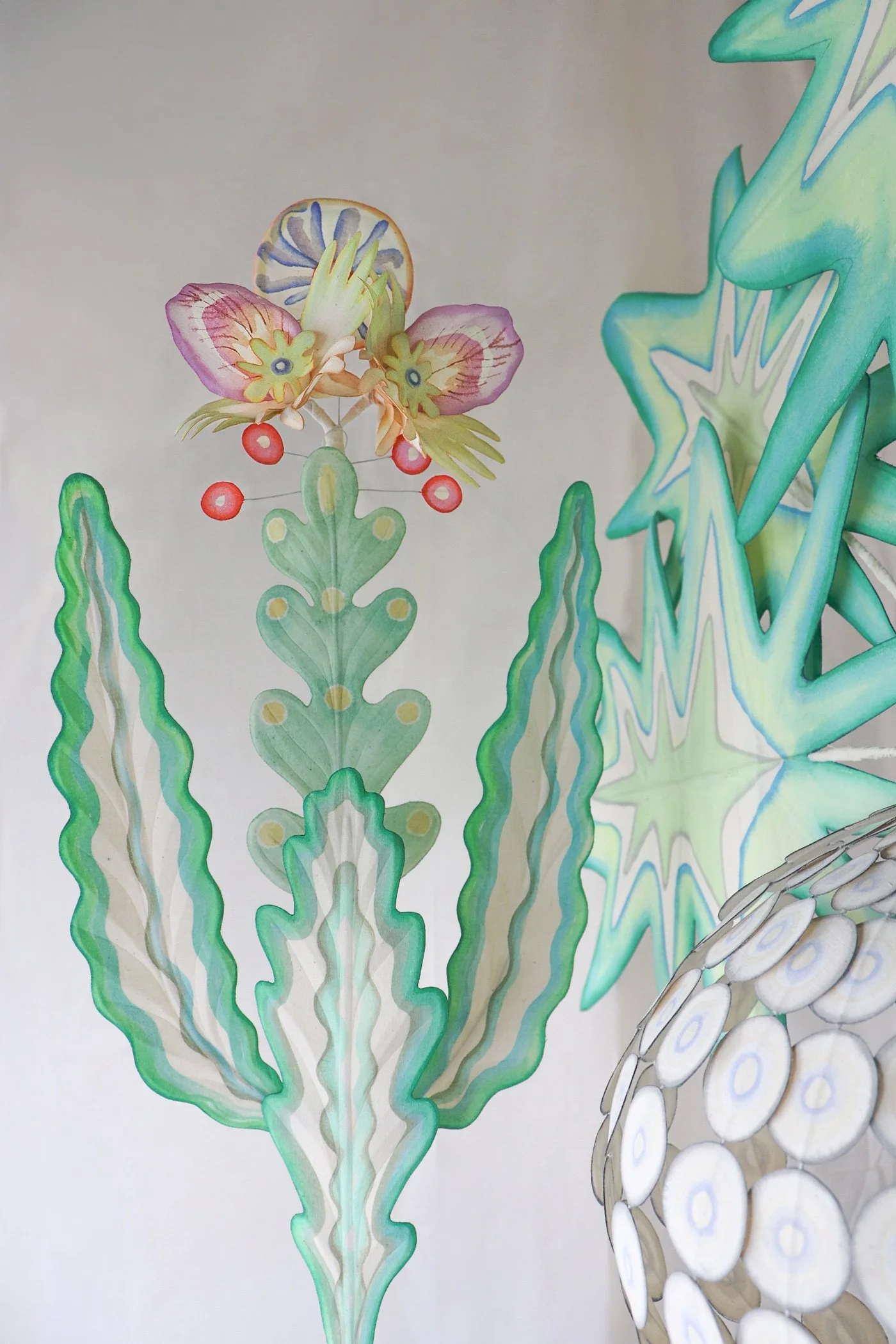
Photo Credit: Mona Sugata
-
Q: If you had to describe your work using a non-visual sense, which would you choose?
Mona:
The smell of soil after rain, or the crispness of morning air—scents that cleanse the mind. While the textile flowers are visual, I want the viewer to remember the sensation of breathing.Q: Your work appears in galleries, boutiques, and private homes. How do you hope people approach or view your art?
Mona:
If possible, I’d ask them to keep a little distance. I want them to feel the air and light of the space, perceiving the work’s existence within that atmosphere, allowing themselves to dissolve into it. I want them to feel the presence of the flower, not just see its shape.
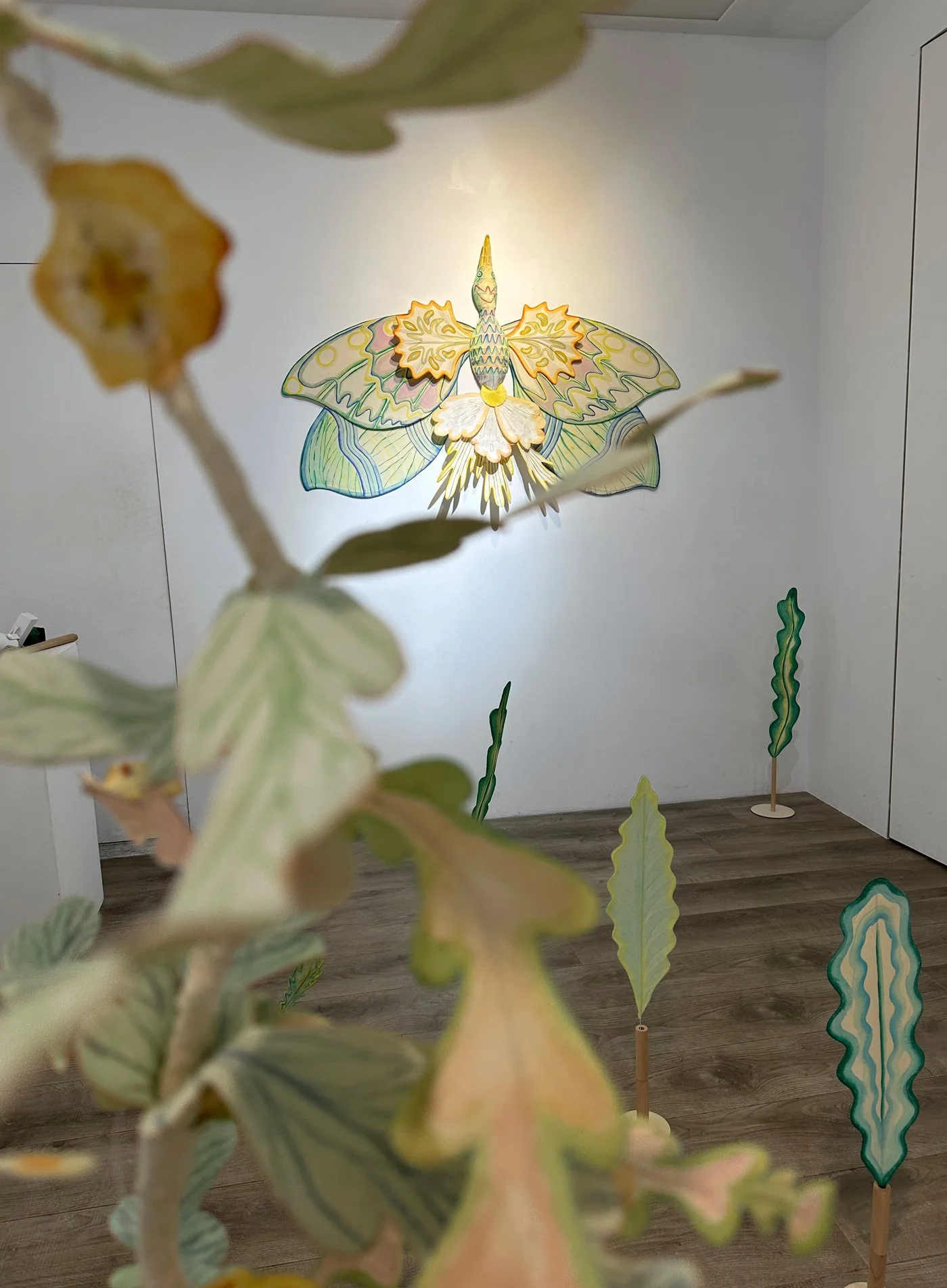
Photo Credit: Mona Sugata
-
Q: You’ve mentioned that works can be repaired and continued. Does this relate to sustainability or an ethos of craft?
Mona:
To be "repaired" means the work is never truly finished. Textiles, plants, and people are constantly being reborn. The very concept of repair embodies the significance of this natural cycle.For me, a flower is "a small prayer, a reminder of this beautiful world." It shifts my attention from the outside world back to myself, allowing me to take a deep breath. If a viewer can feel that same quiet warmth and satisfaction deep within, I am content.
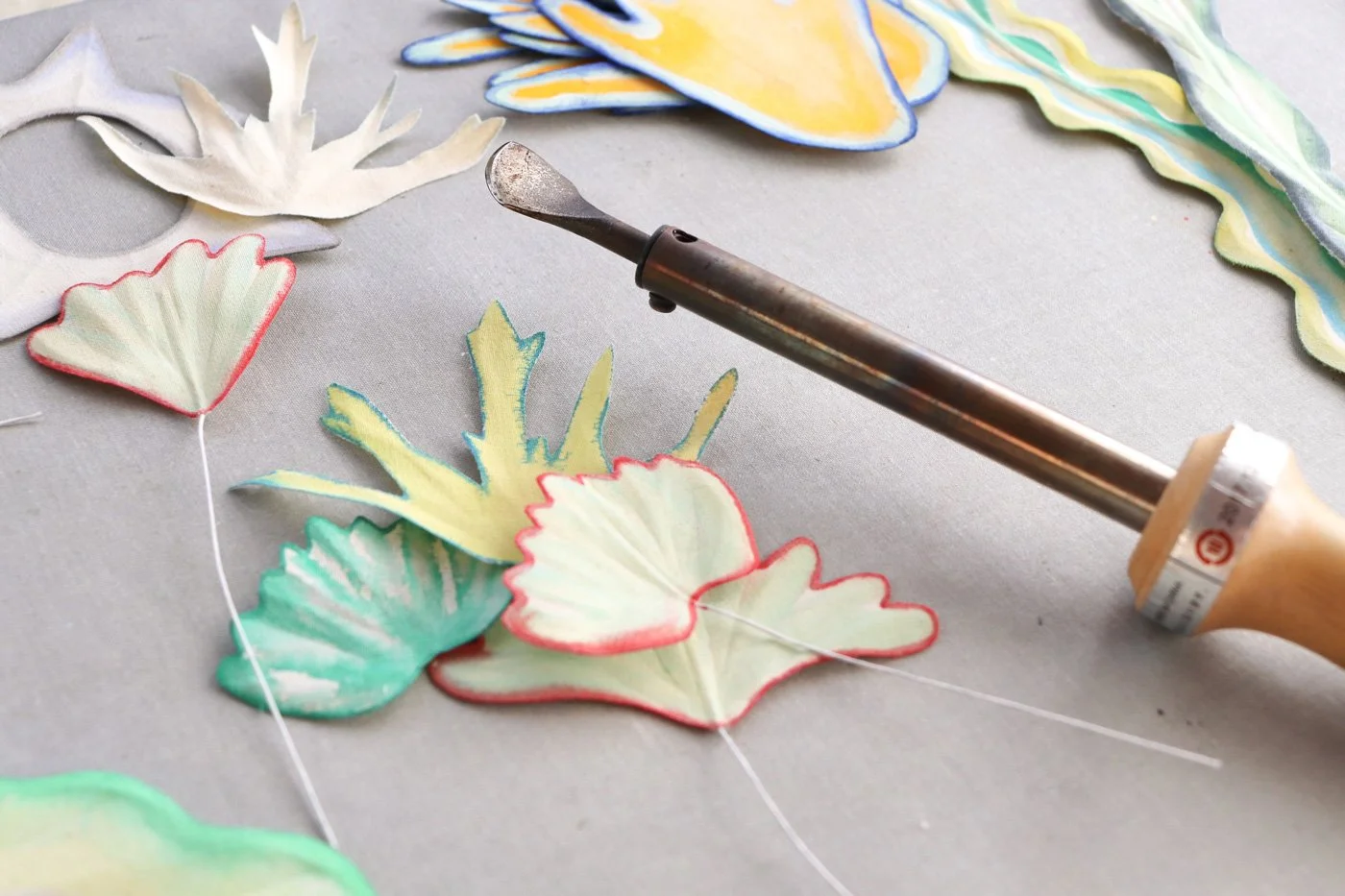
Photo Credit: Mona Sugata
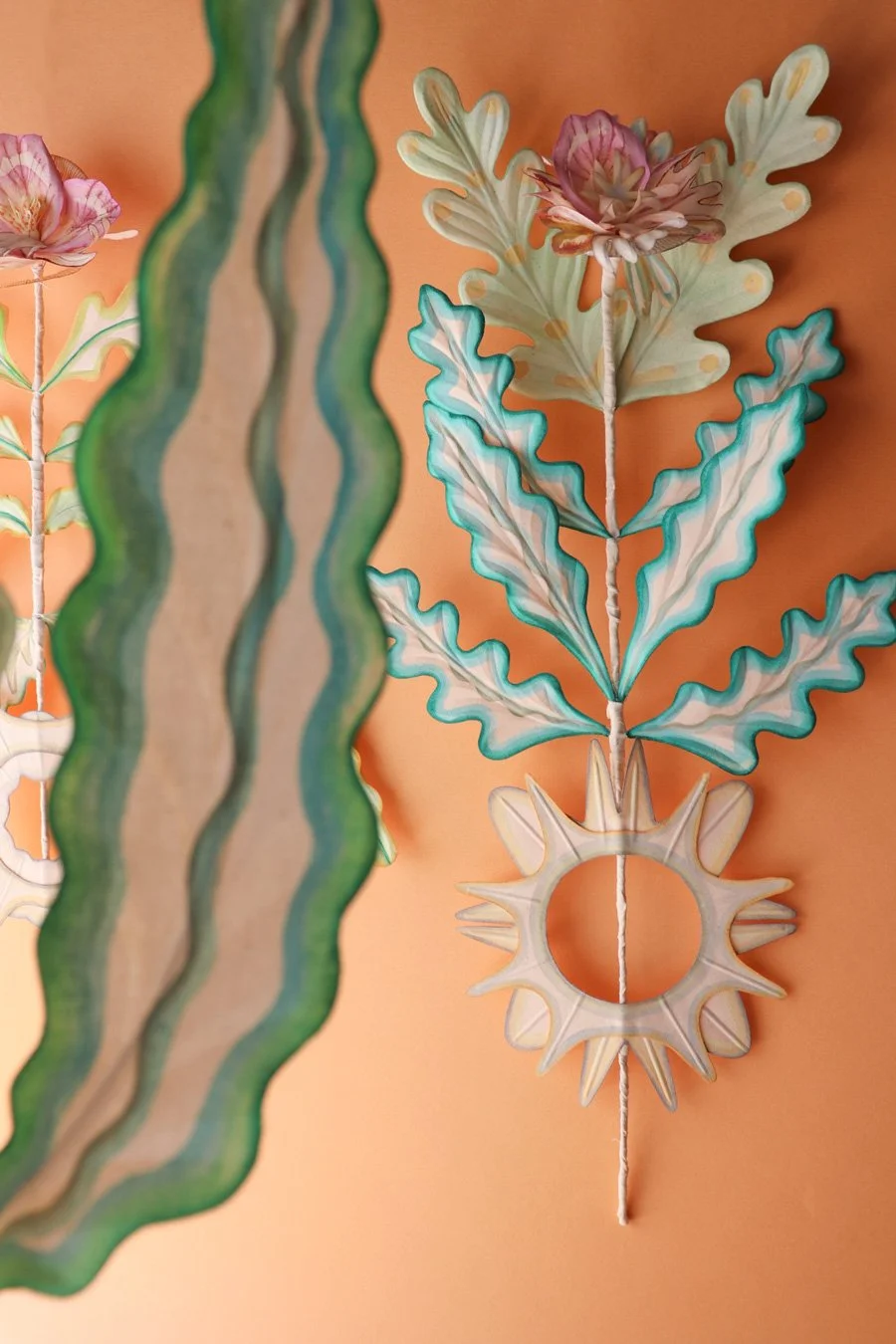
Photo Credit: Mona Sugata
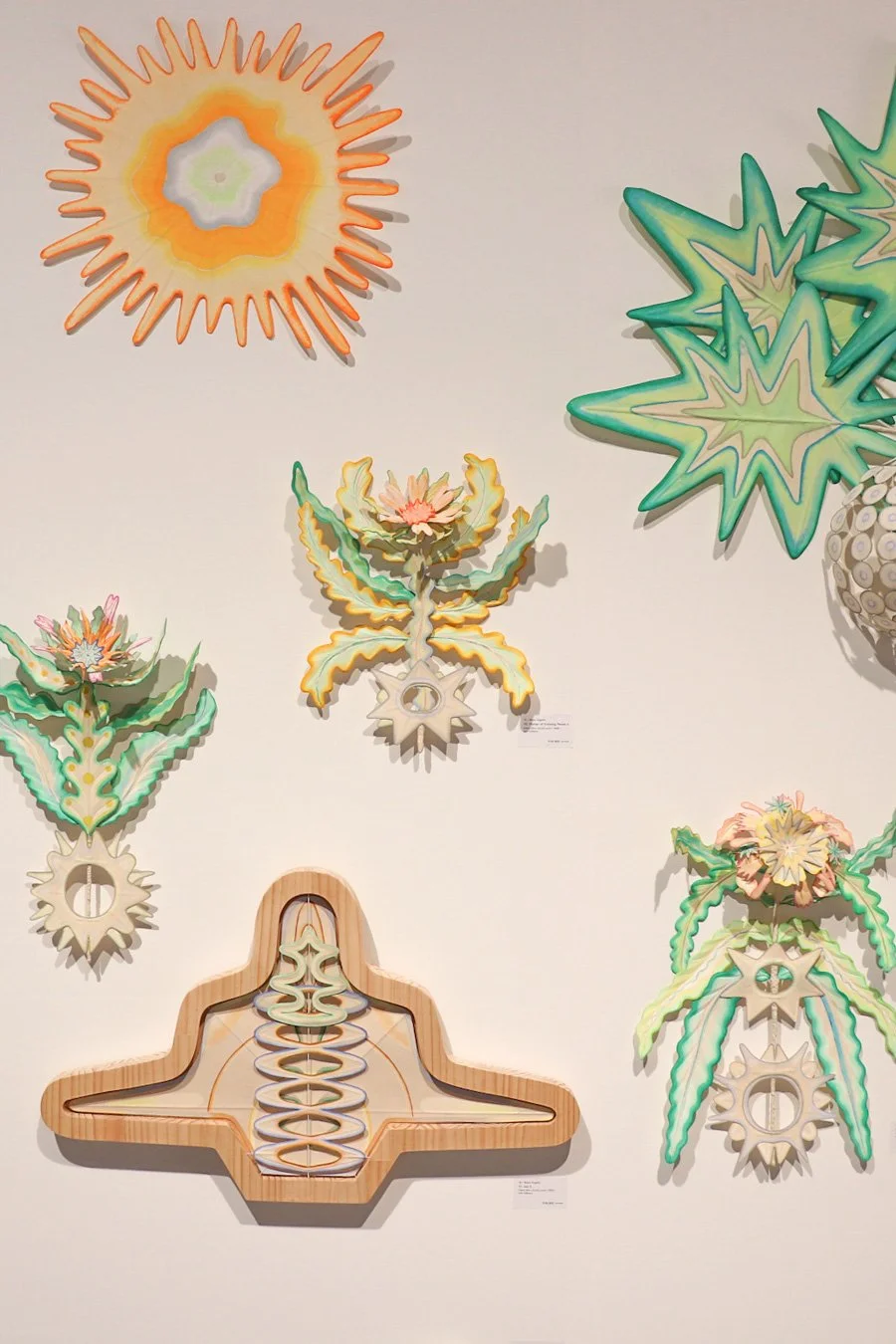
Photo Credit: Mona Sugata
-
Mona Sugata’s creative journey has moved from a pursuit of absolute control to an acceptance of natural cycles. Through the softness and mutability of raw cotton, she captures an atmosphere that is abstract yet unmistakably alive. Her textile art waits quietly, inviting viewers to slow their pace, sync with their internal rhythm, and find a warm stillness within.
Ambiguous and shifting with the light, these works remind us of the transience of life and the constant rebirth of all things. They act as small prayers for a slower, more focused way of living, guiding us to reconnect with the world through a single flower, a leaf, or the landscape that surrounds us.
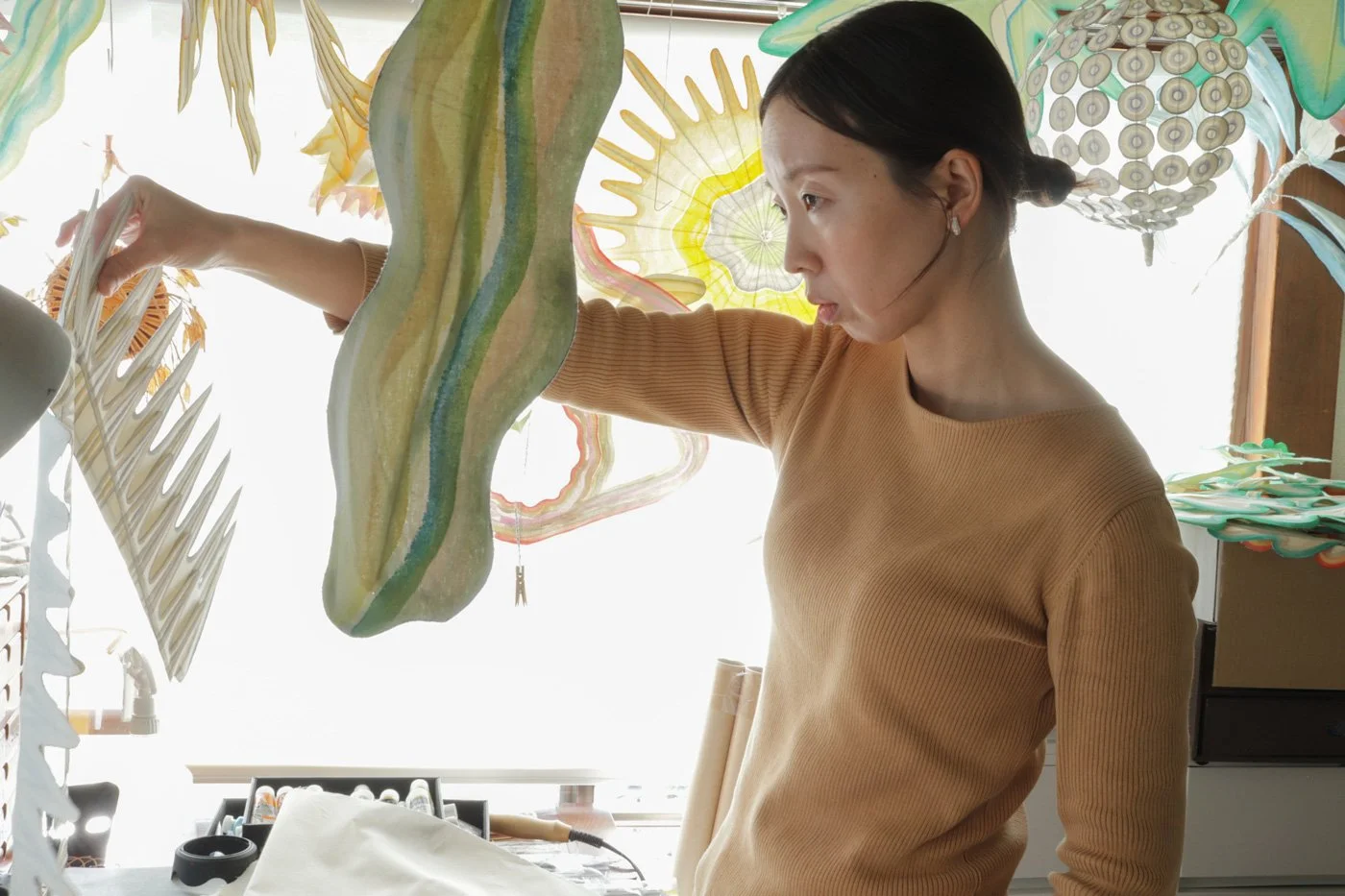
Photo Credit: Mona Sugata