
在針尖與織物裡,繪製一場日常的幻象:專訪 Œuvres Sensibles 織物藝術家 Sarah Espeute
-
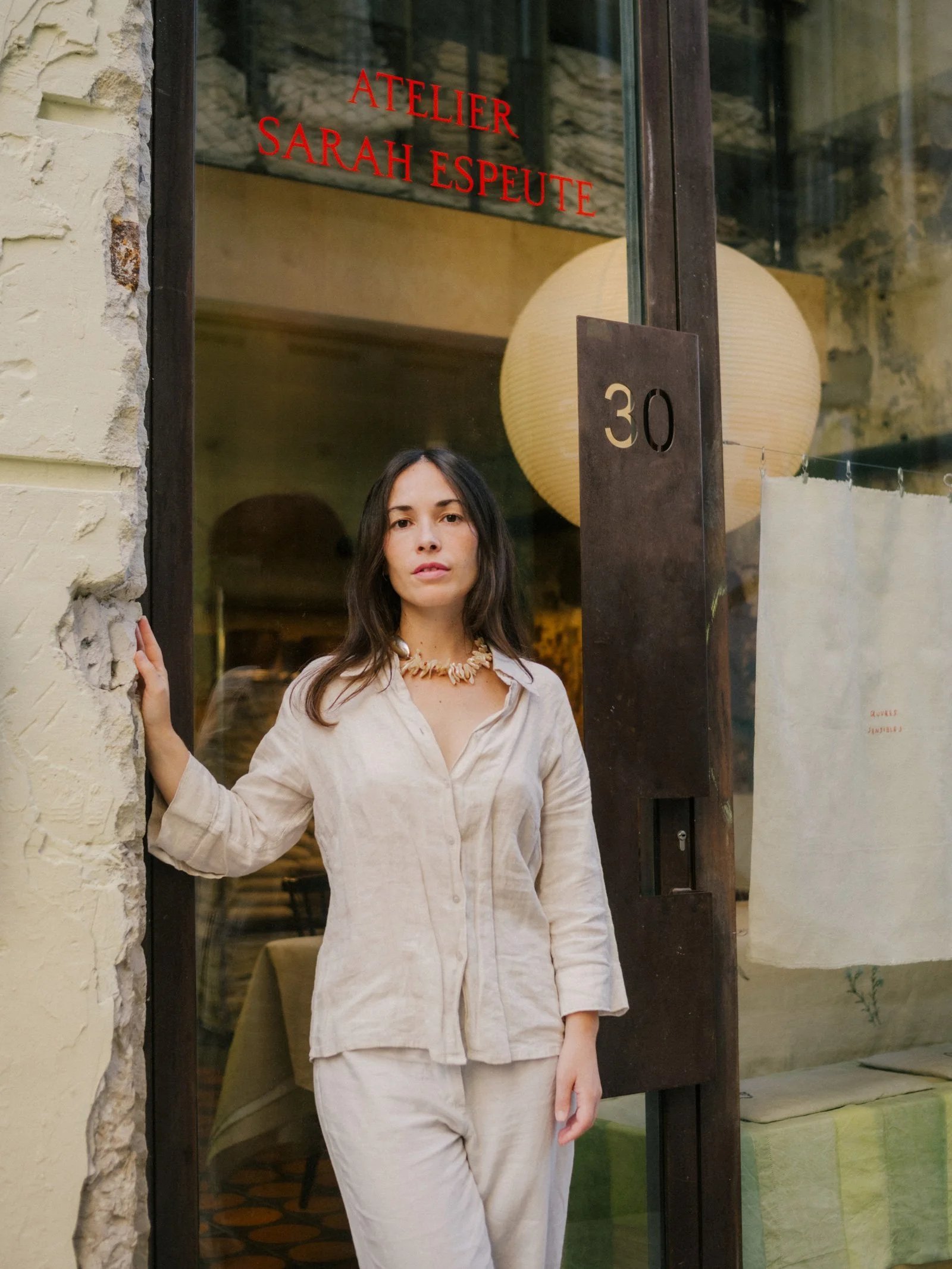
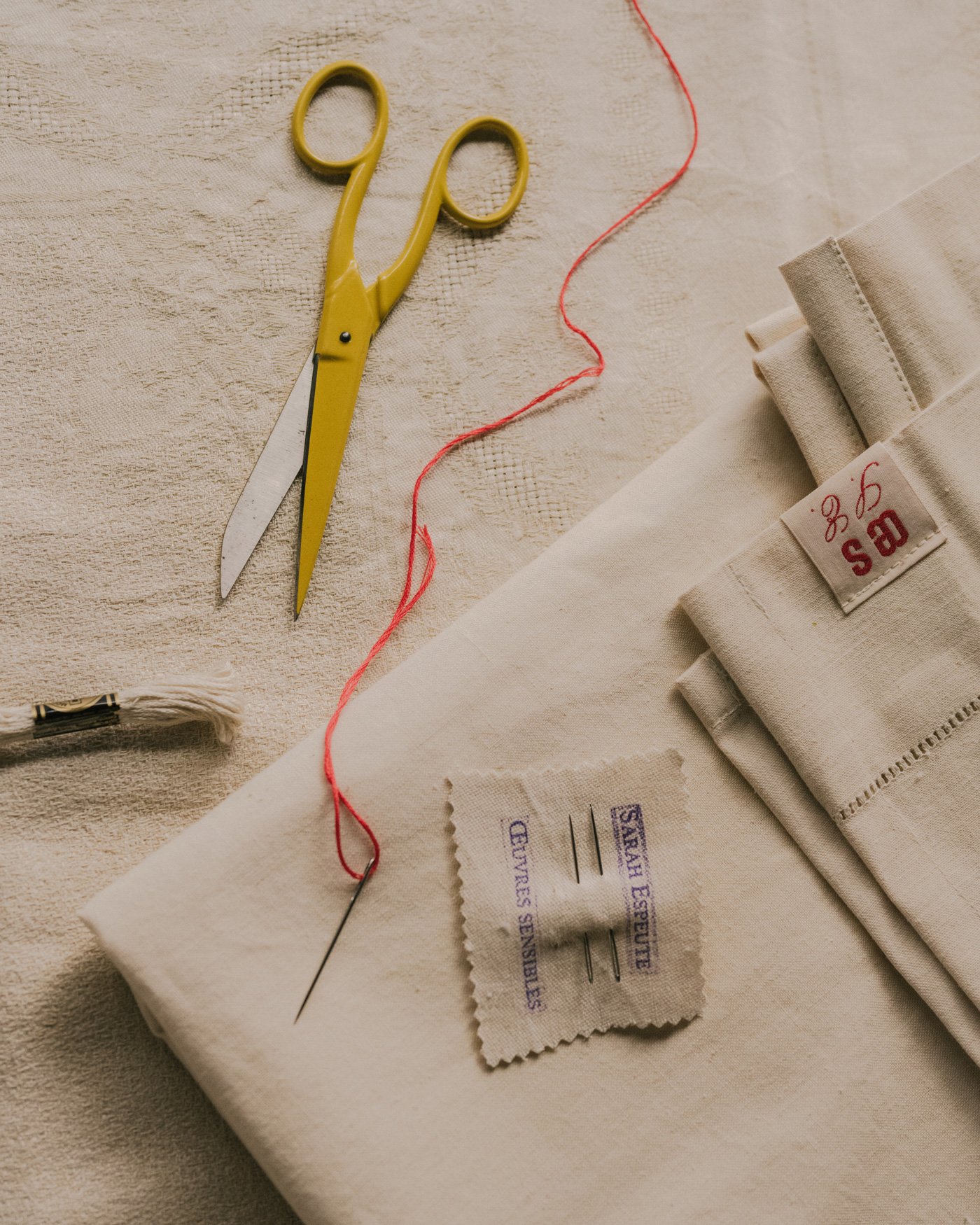
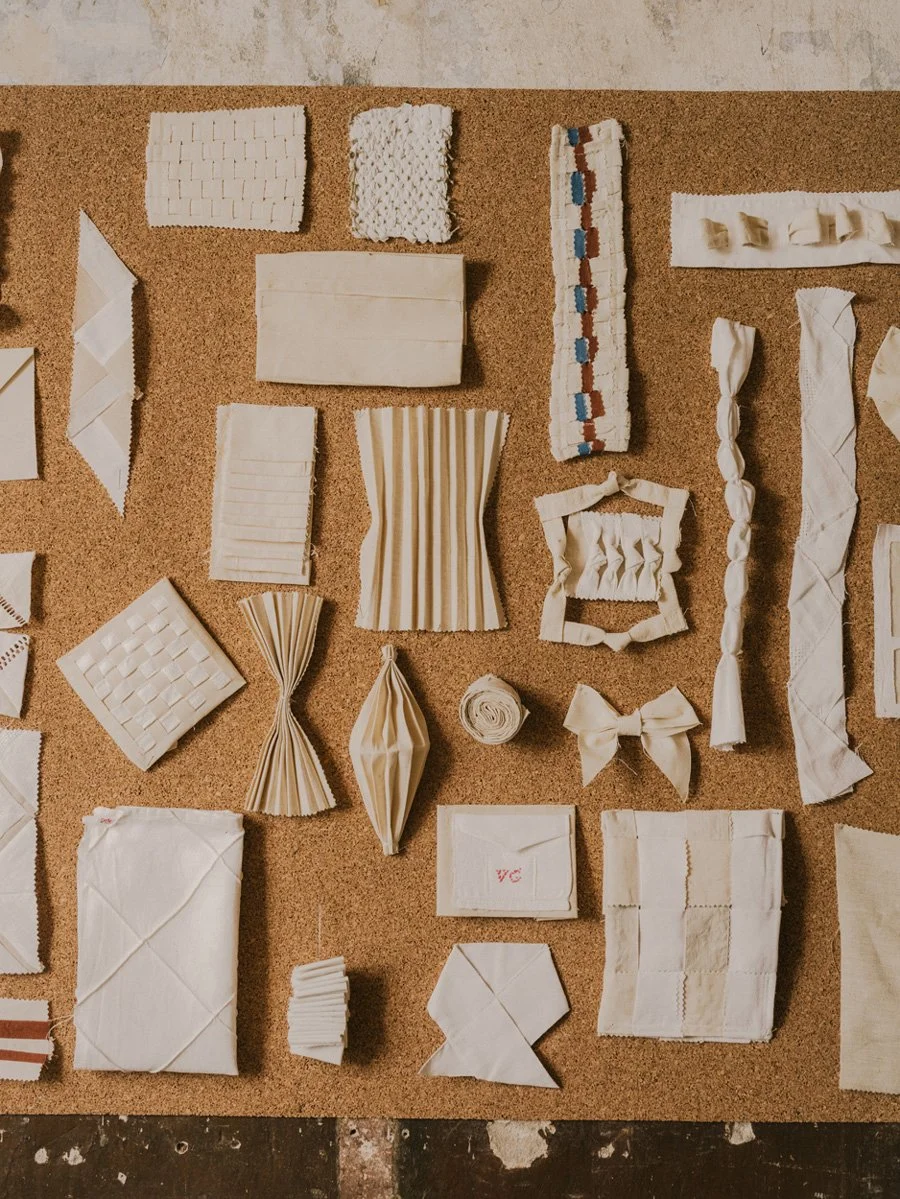
In the soft half-light of her Marseille studio, antique textiles rest quietly. These fabrics, laden with family histories, undergo an elegant sensory reshaping beneath her fingertips. As the soul of Œuvres Sensibles, Sarah Espeute masters the art of translating the mundane into a stirring theater of life. In her hands, everyday objects transcend their functional frameworks; through trompe-l'œil, she engages the user’s intuition, sketching a compelling sensory dialogue poised between utility and illusion.
In this conversation, we step into her project, "The Apartment Gets Dressed." We explore how she delicately weaves the vocabulary of fashion into the warp and weft of curtains and bedding, redefining our sensory perception of "home" with every rise and fall of the needle.
© Maxime Verret
-
Weaving Sartorial Silhouettes into the Home
For Sarah, the creative process is always rooted in functionality. She believes meaning must originate from the object itself to achieve a modern, subtly fresh perspective shift within a minimalist aesthetic.
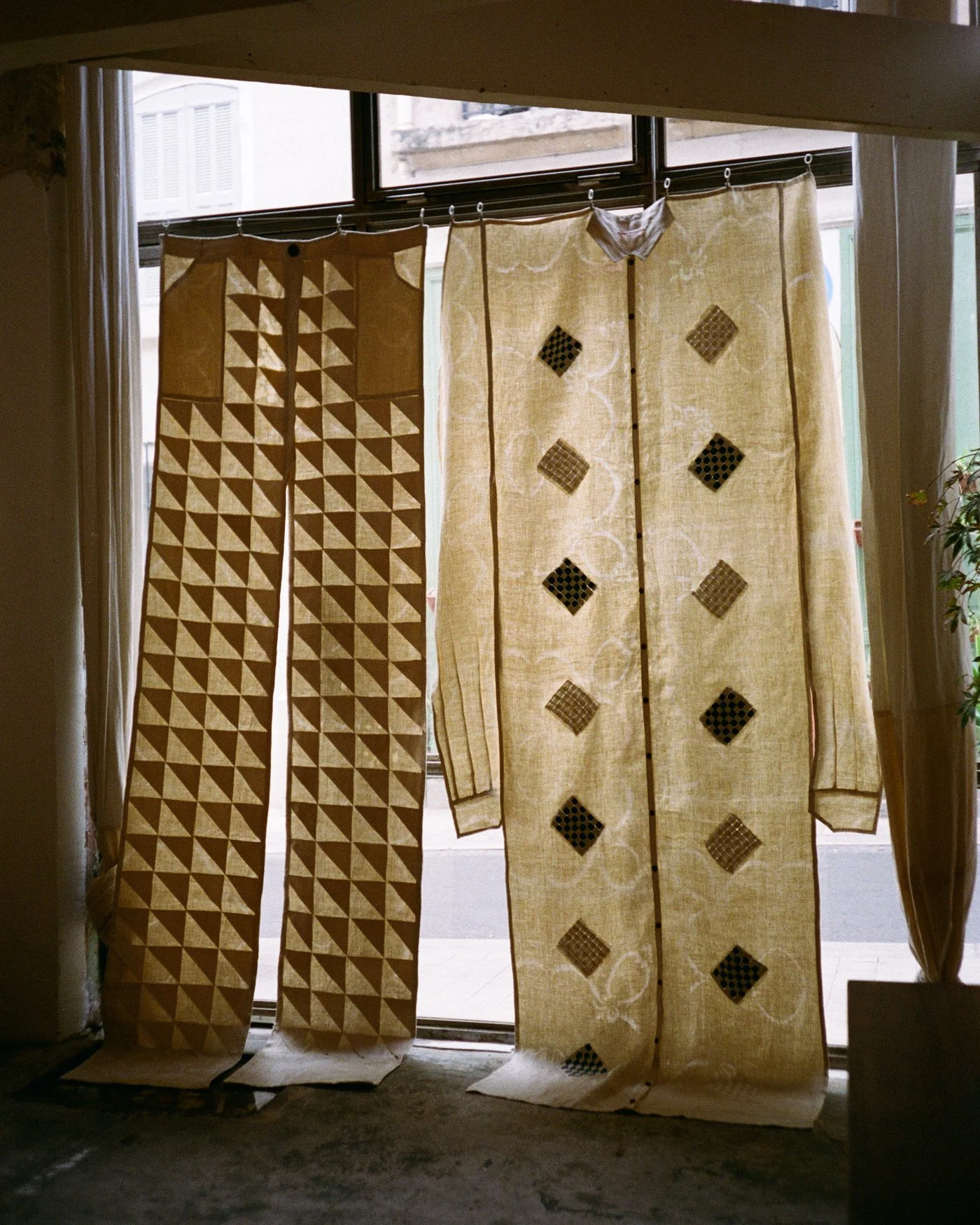
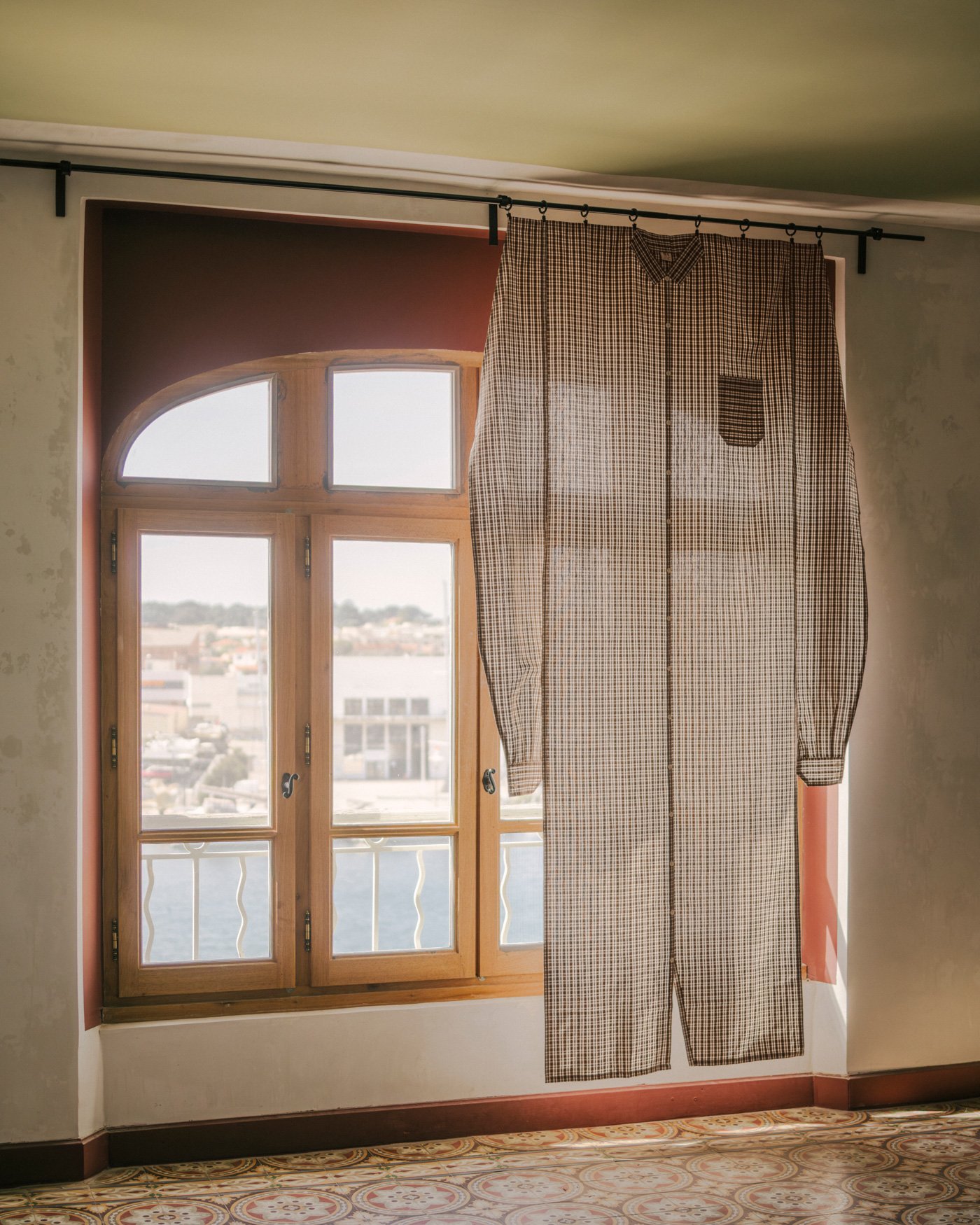
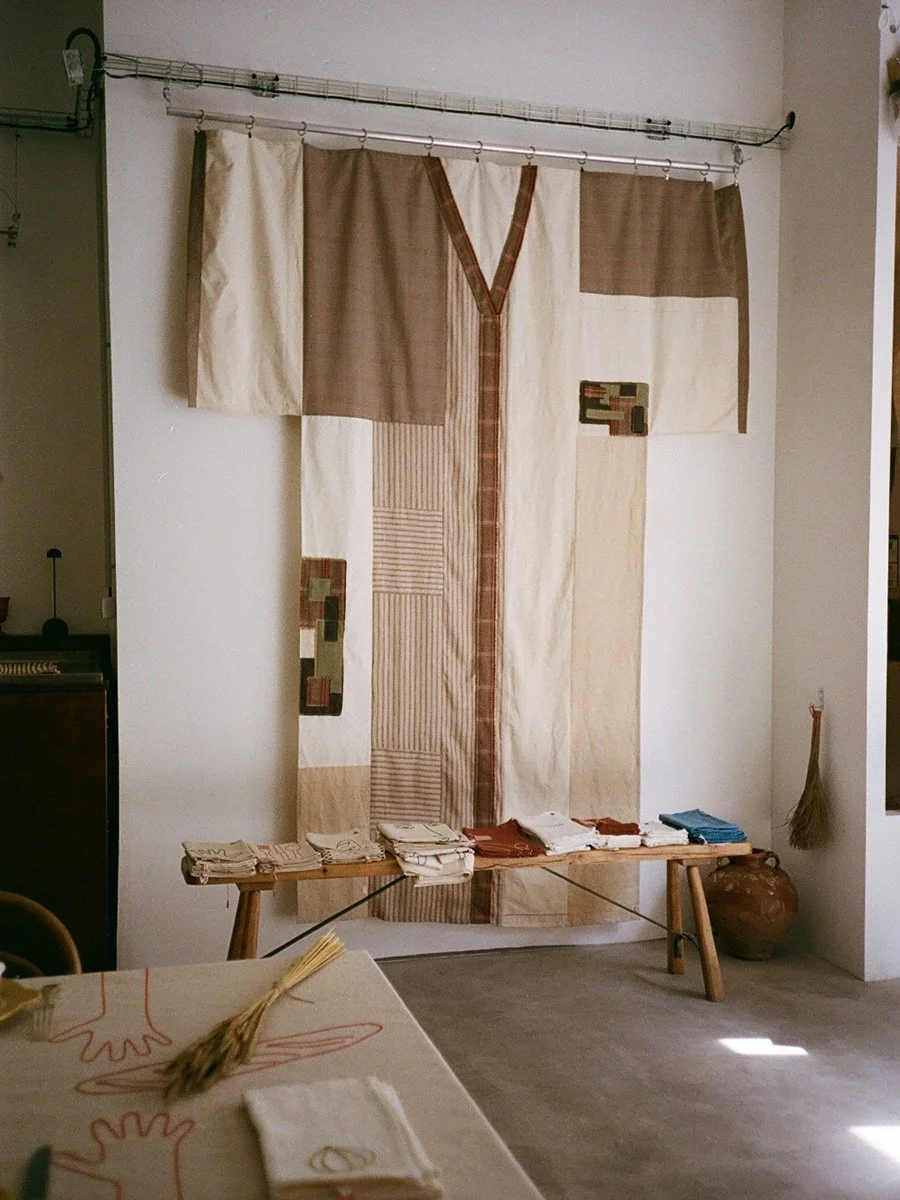
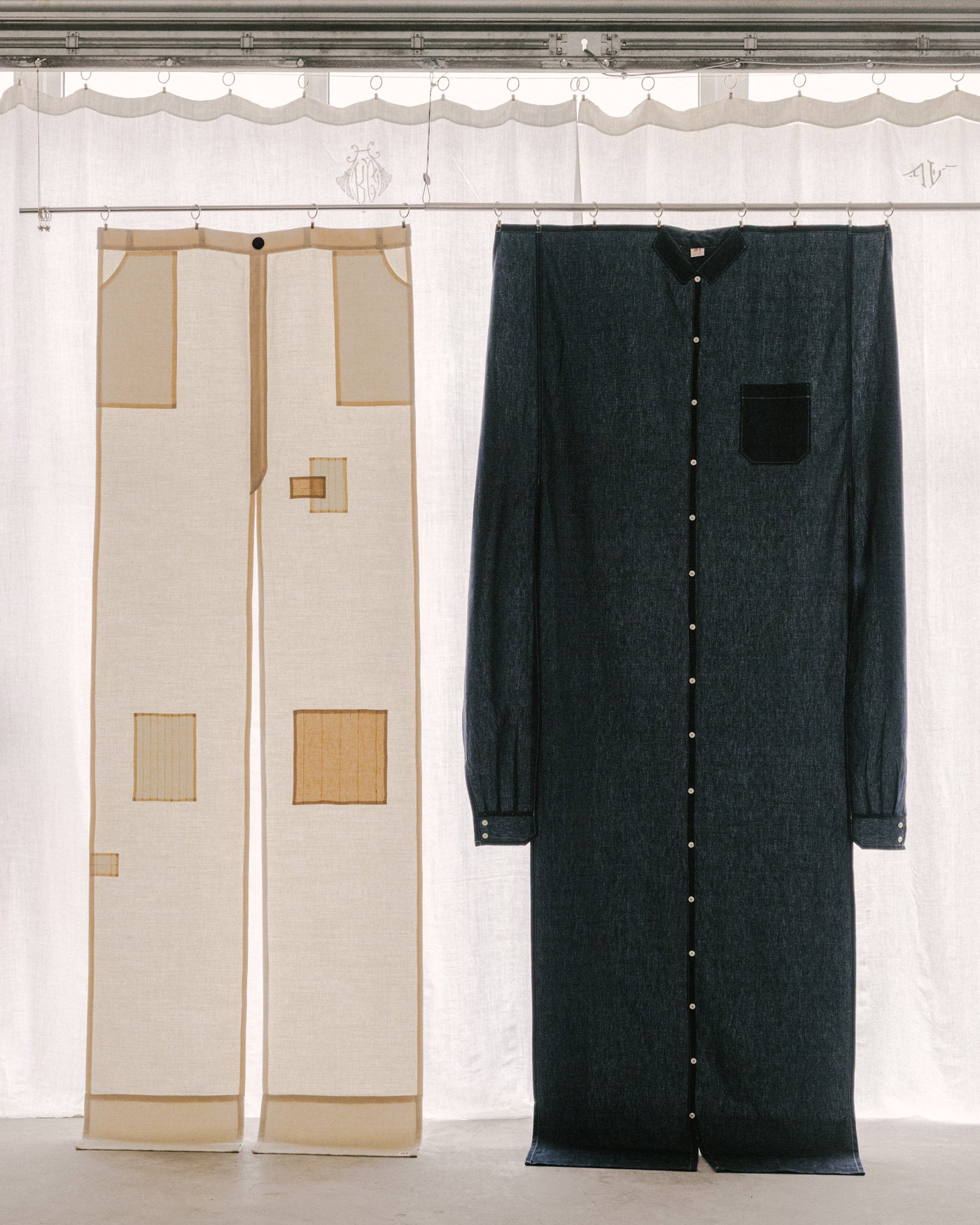
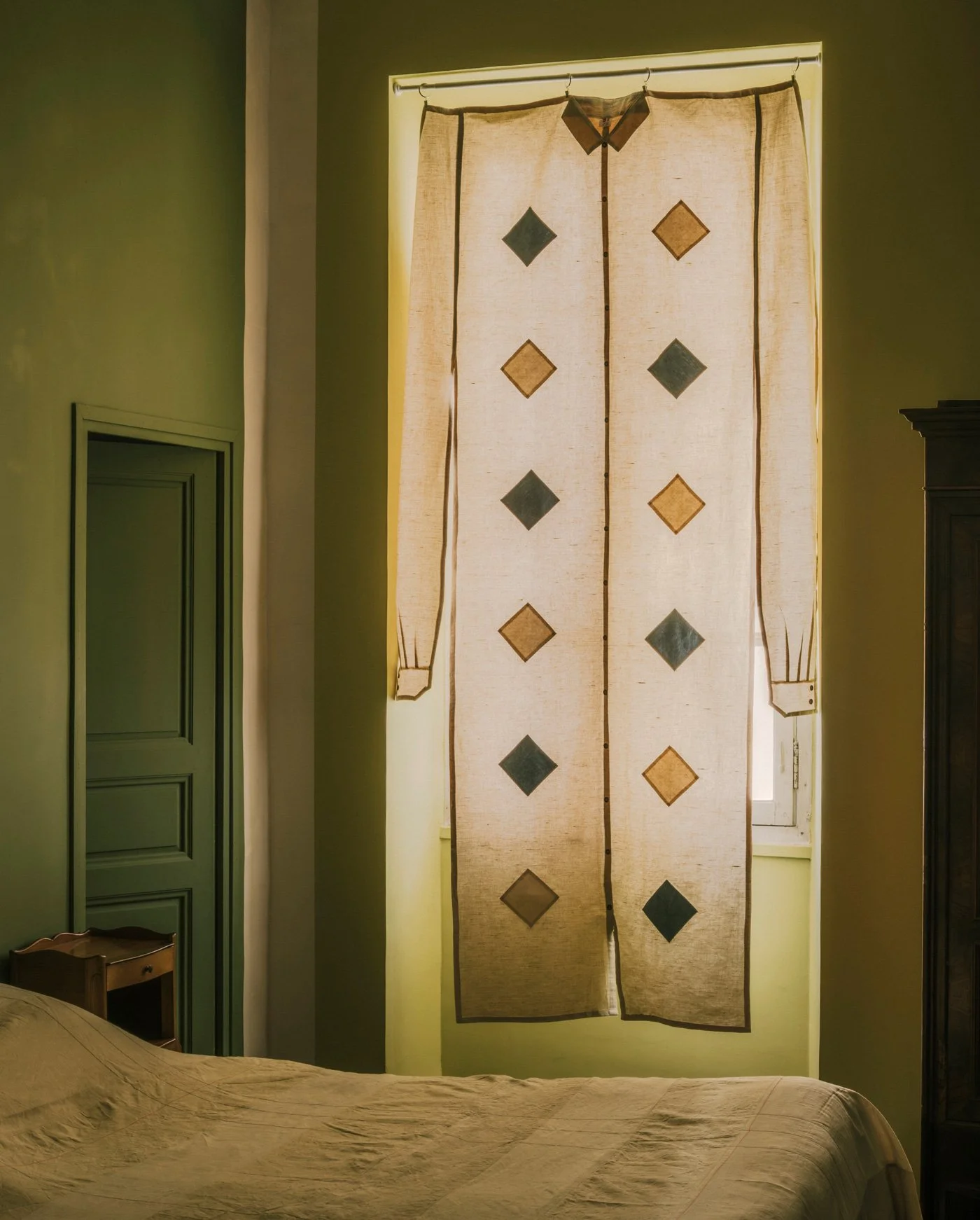
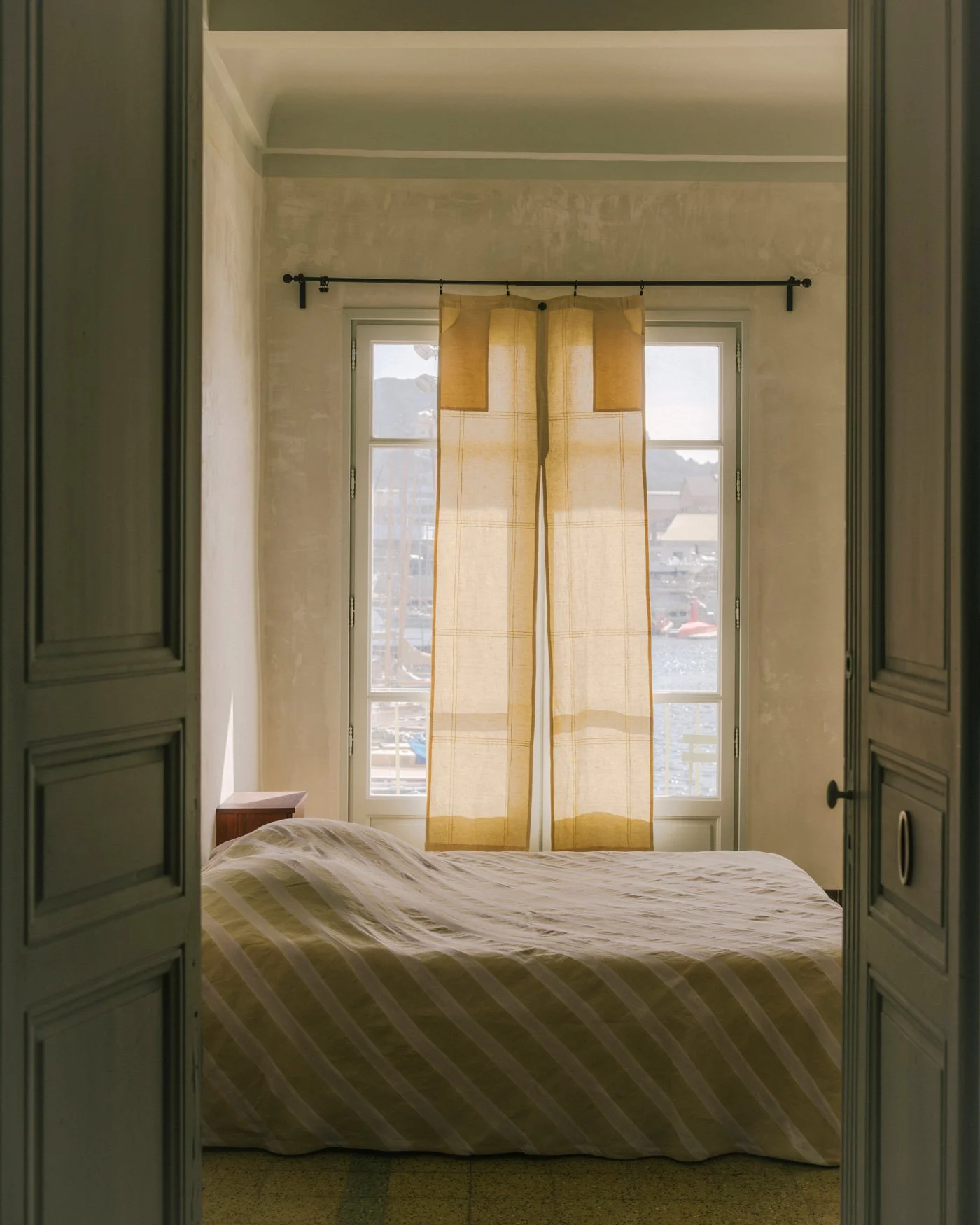
In her "The Apartment Gets Dressed" series, Sarah challenges the boundaries of traditional soft furnishings by integrating distinct sartorial features, such as shirts and trousers, into her curtain designs. These pieces retain the silhouette of the garments and preserve the curtain's light-filtering function while presenting a surprising artistic form.
© Œuvres Sensibles
-
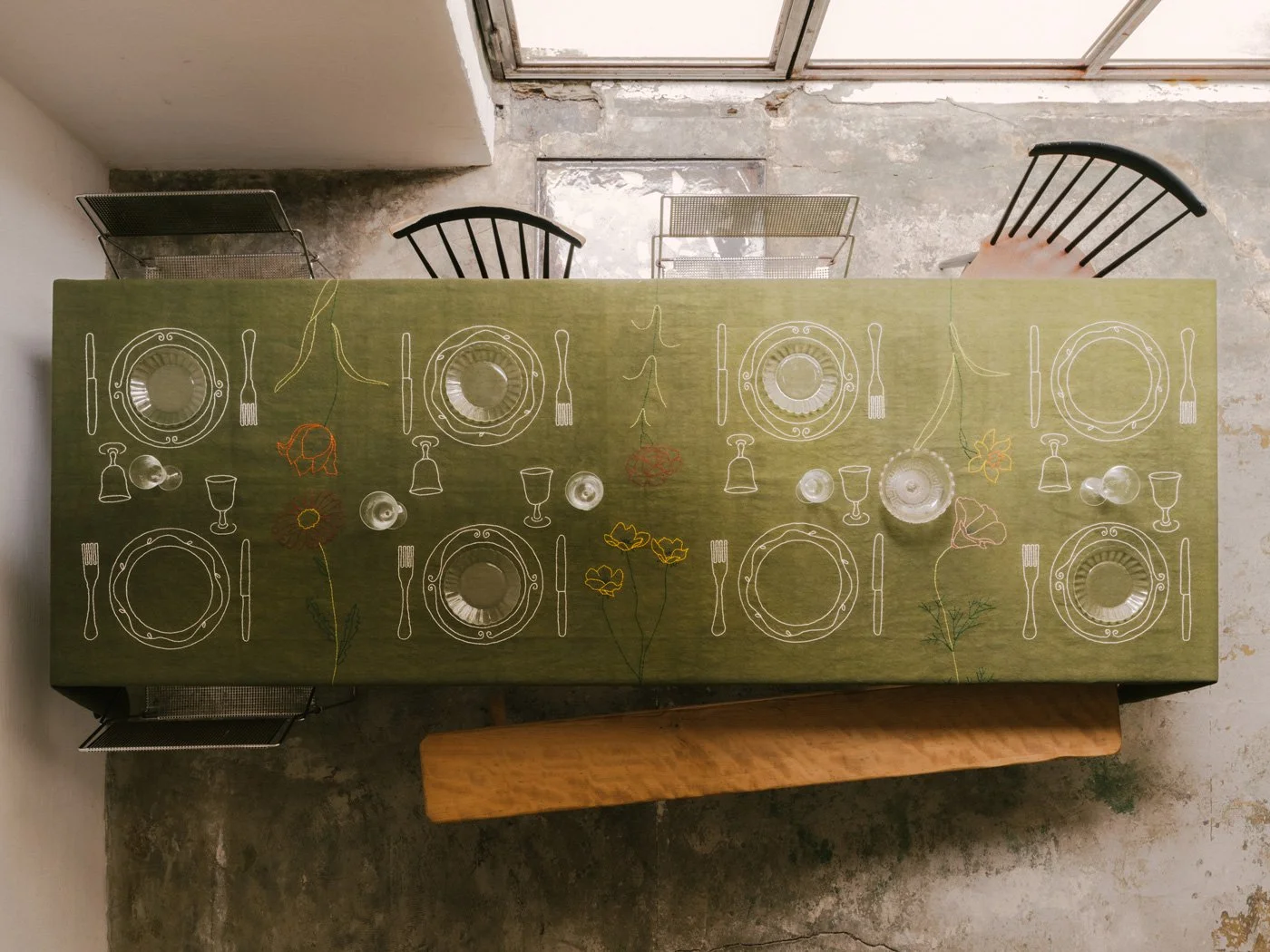
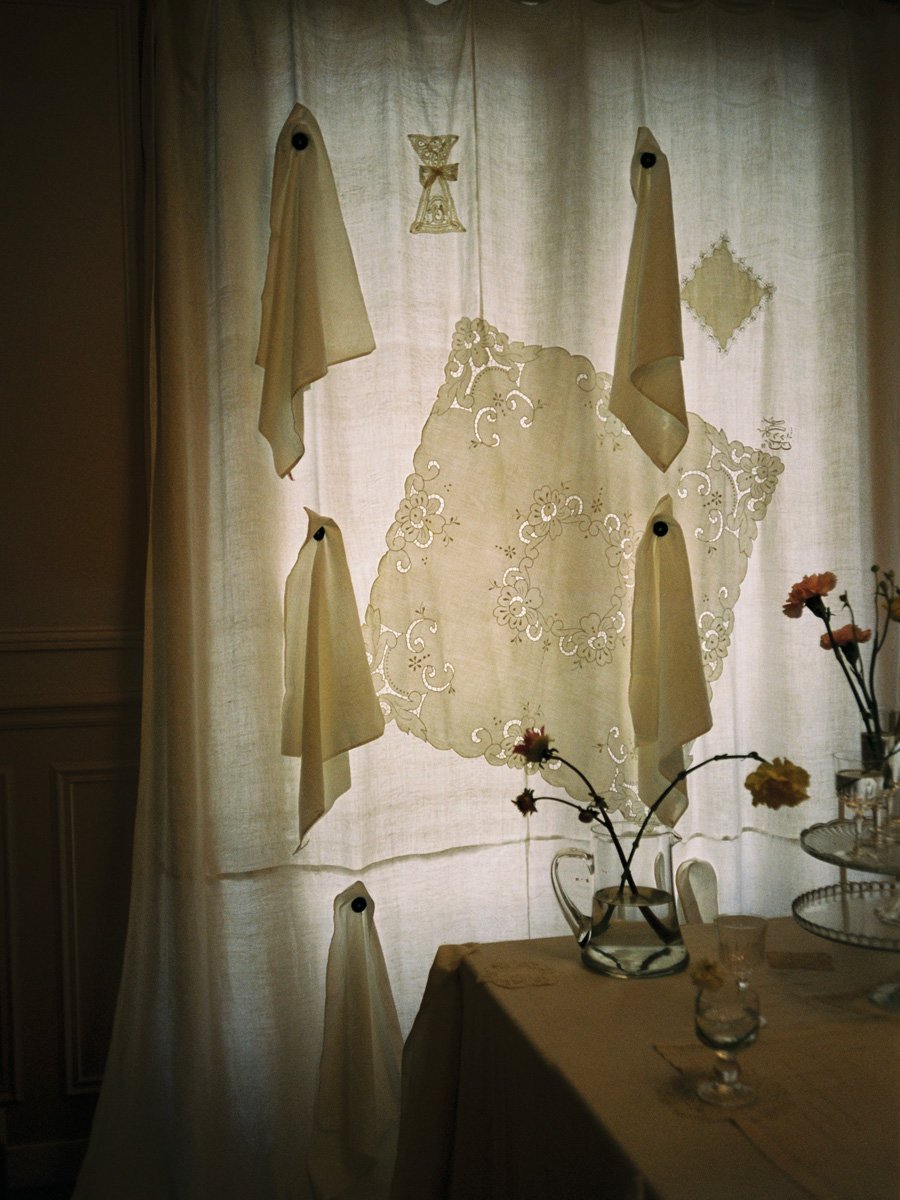
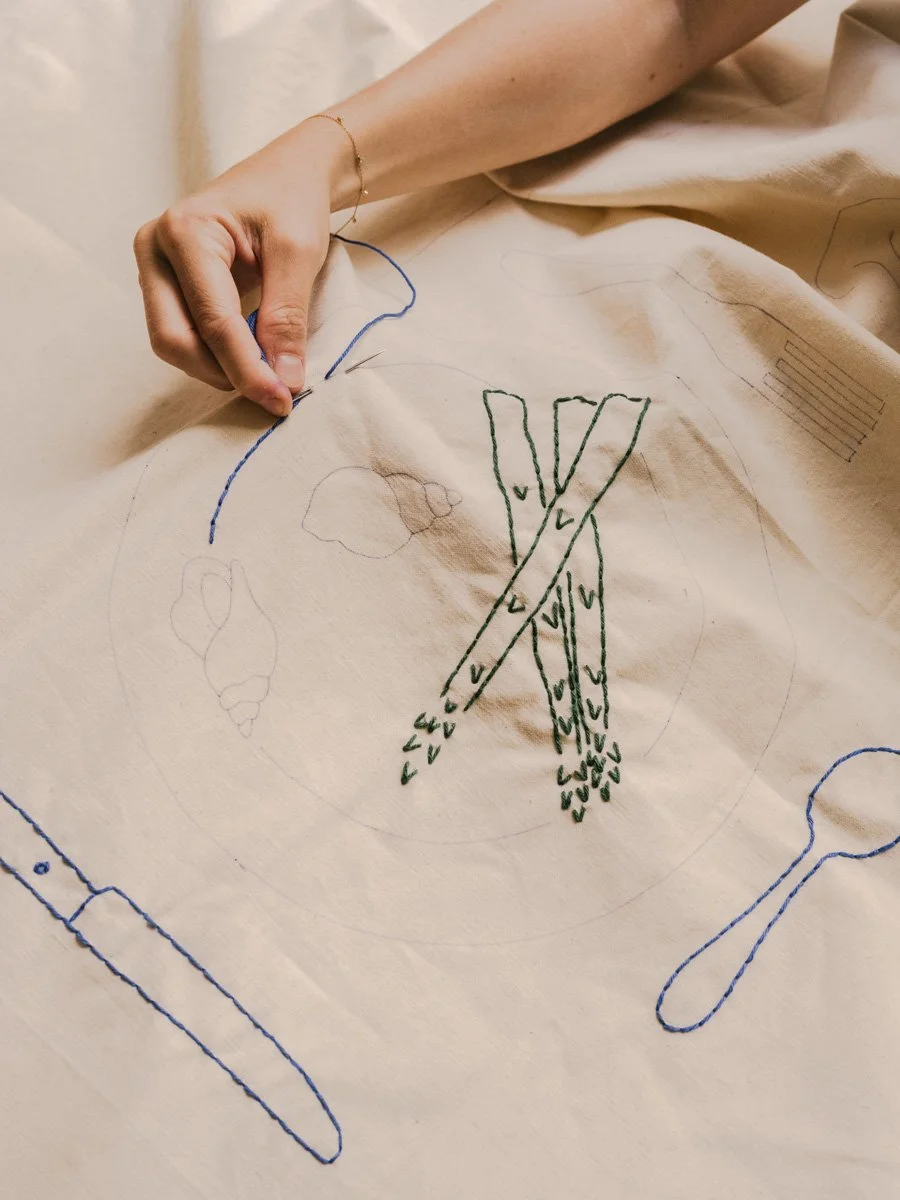
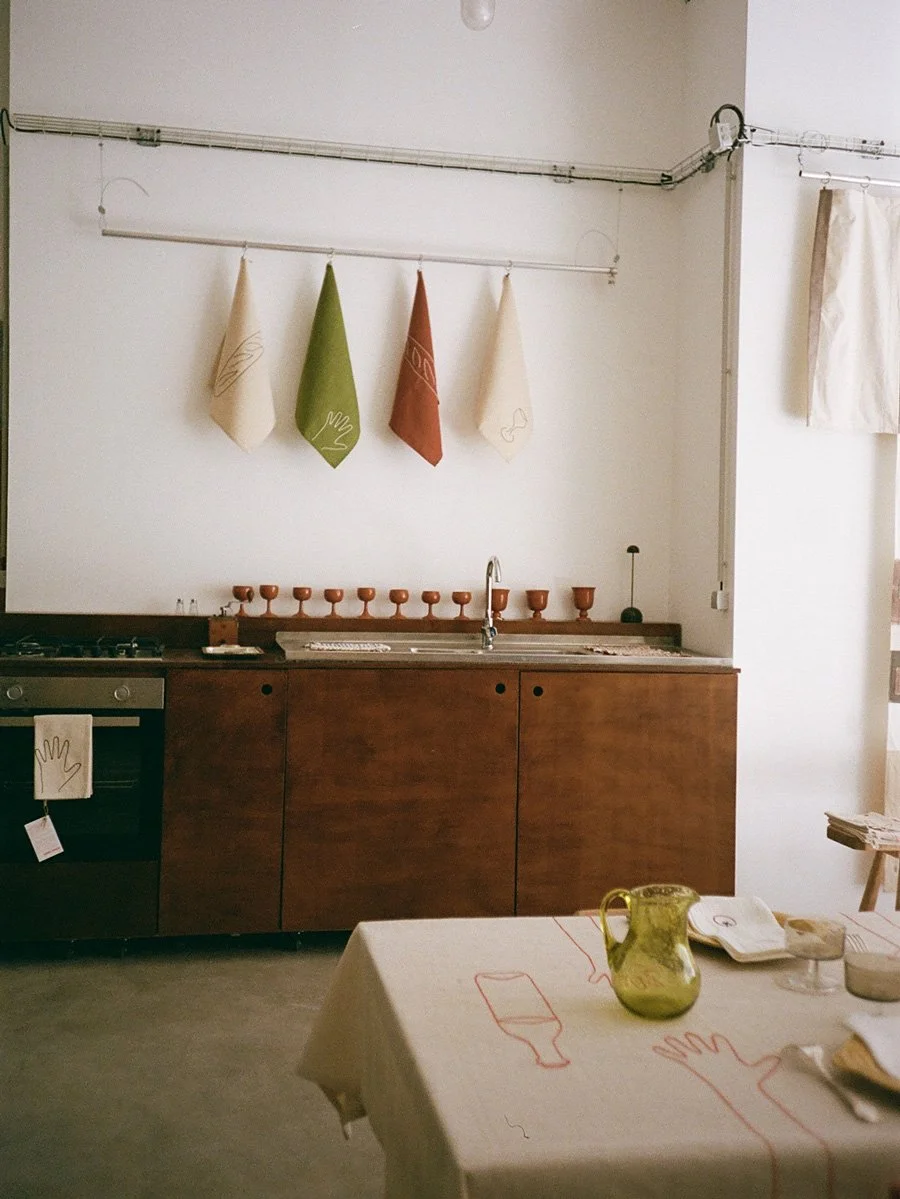
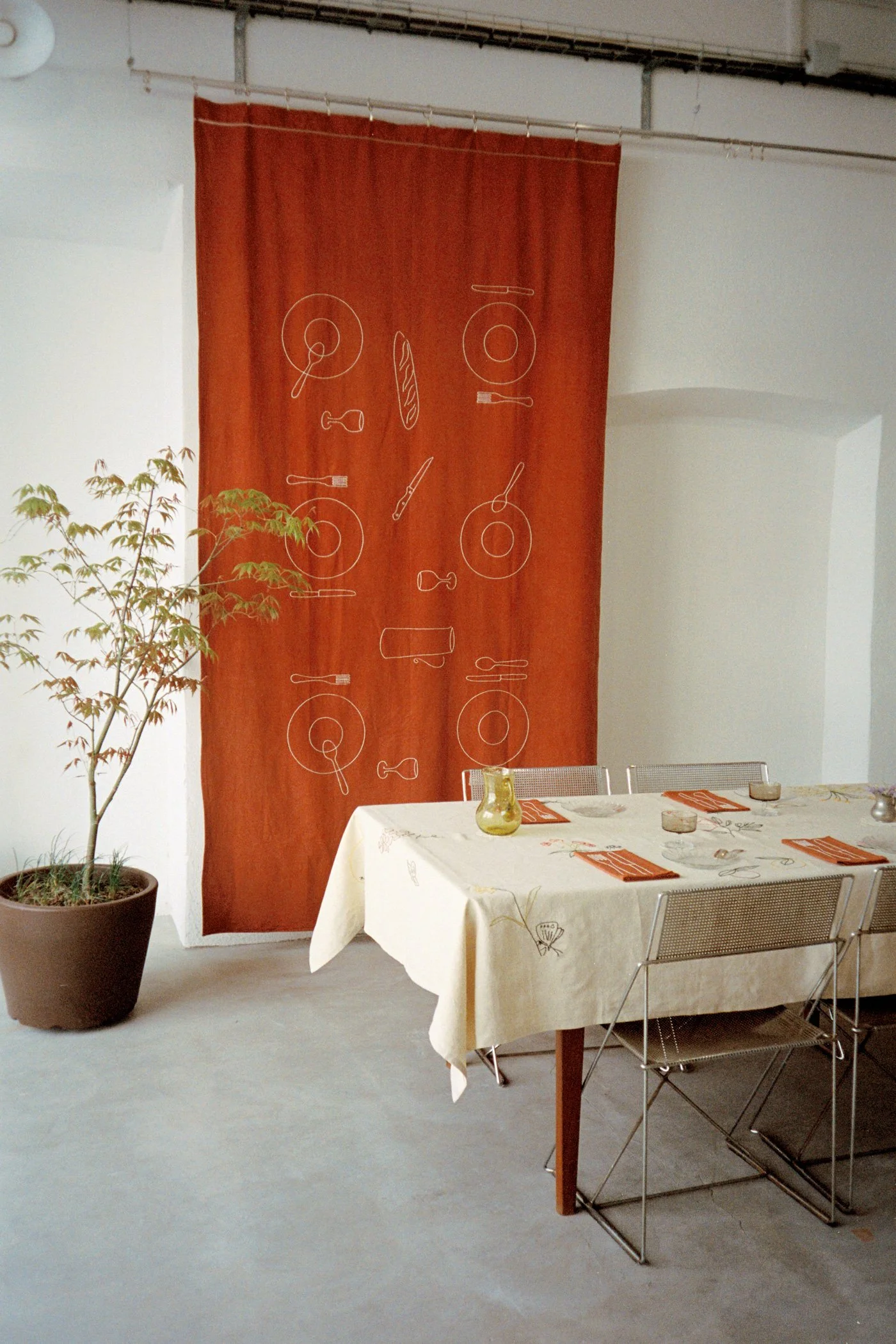
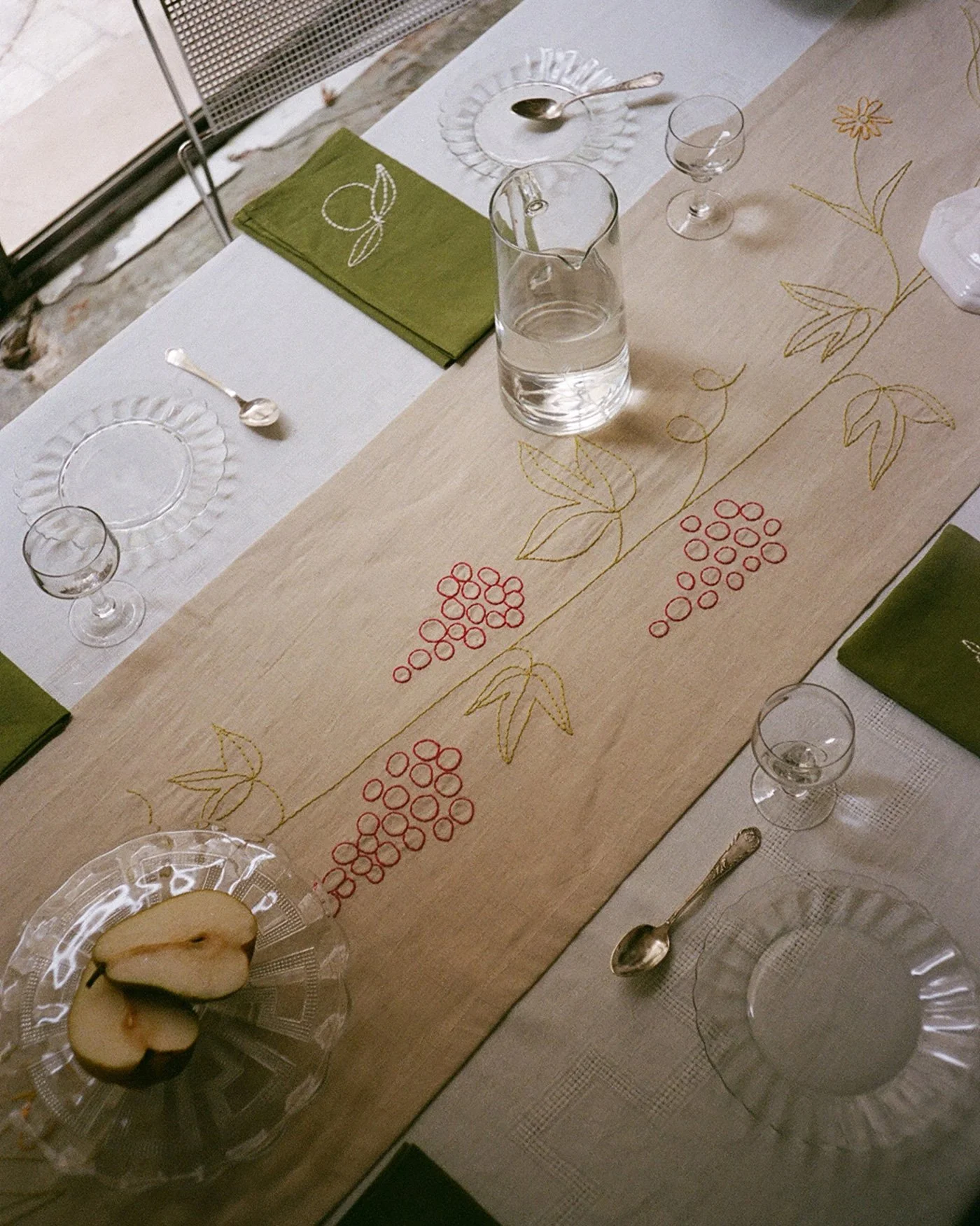
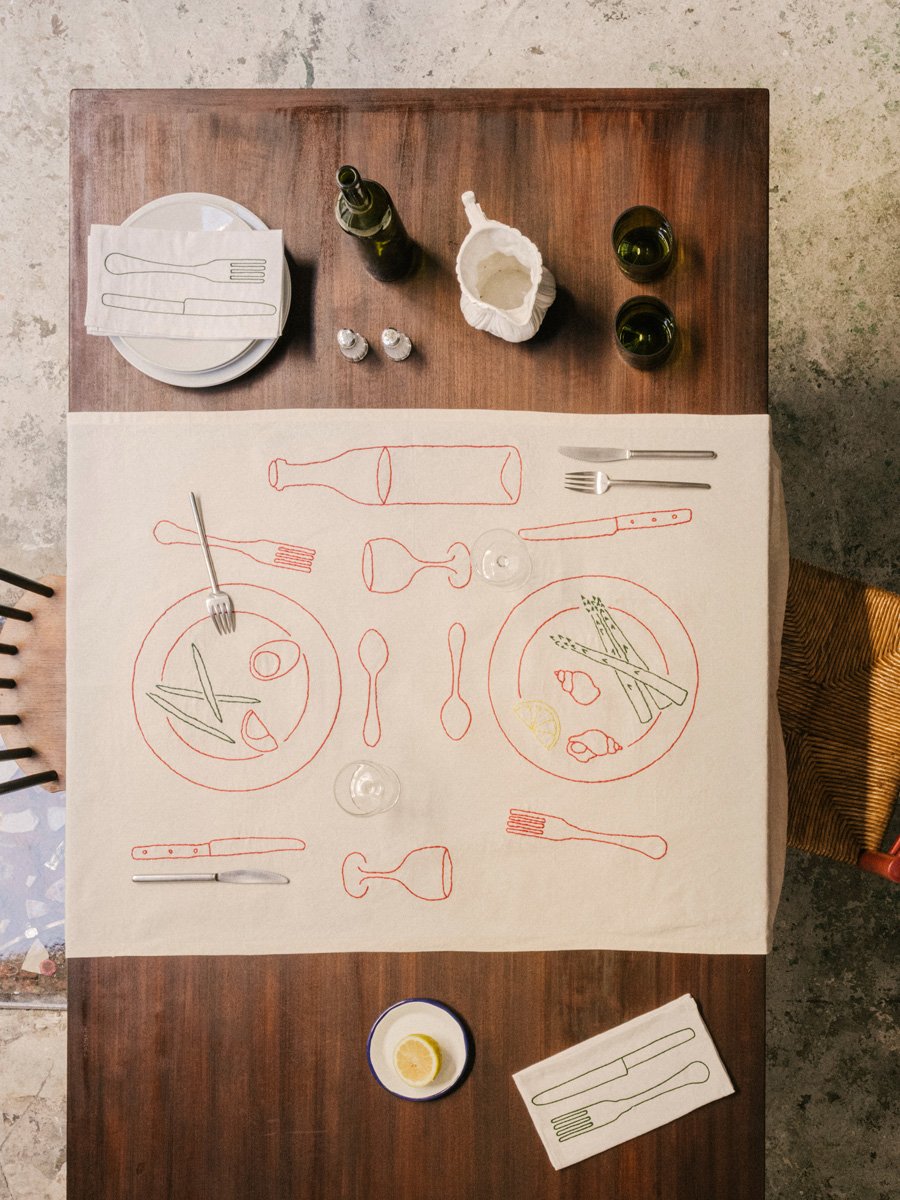
This reimagining extends to the dining table where she views embroidery as "drawing in space." Her work infuses everyday tablecloths with human warmth and social vitality.
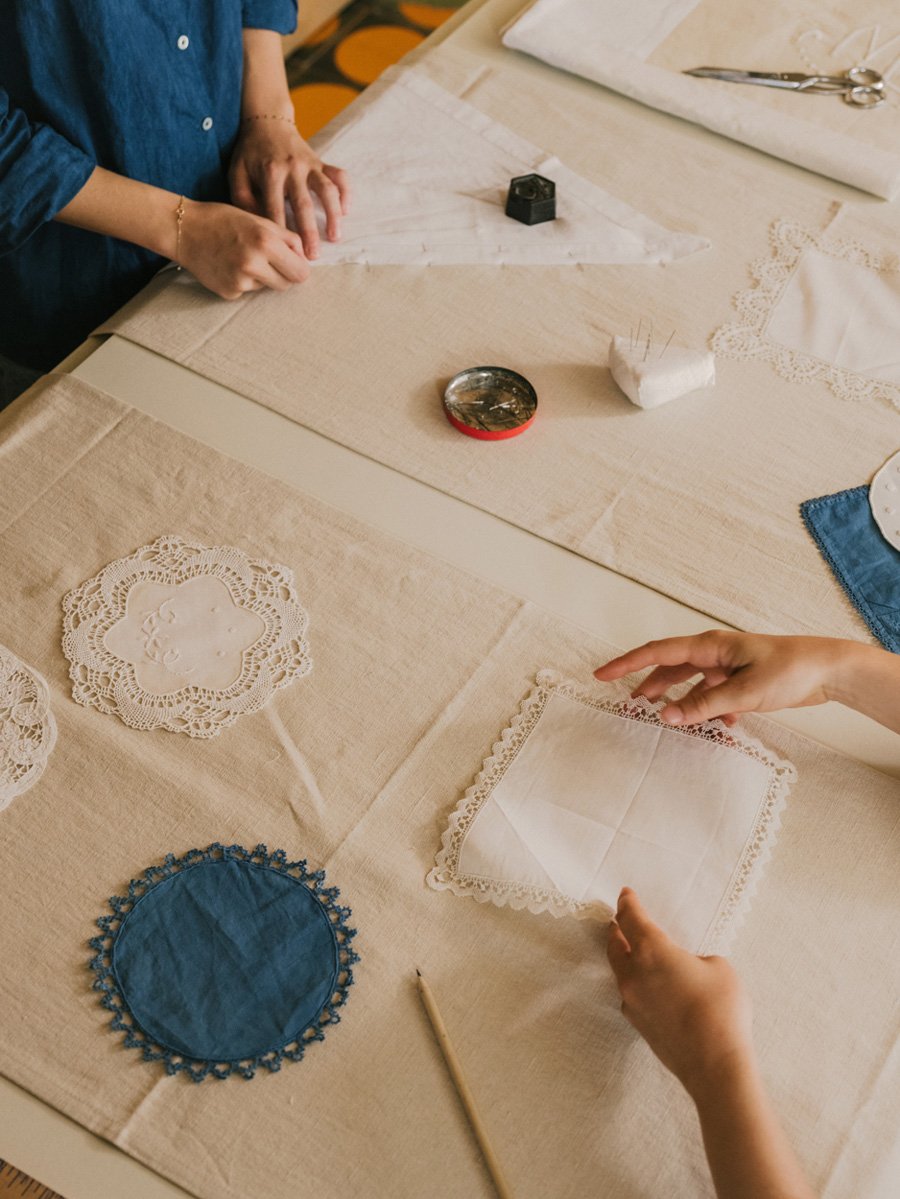
A profound respect for materials and time lies at the core of Sarah’s design philosophy. She selects high-quality antique linens and cottons rich in history to embody a unique texture. To her, the stains and wear of daily use are not defects but natural imprints of time that serve as authentic proofs of life. She envisions her pieces developing a rich patina through use to become enduring heirlooms passed down through generations.
© Maxime Verret
© Maxime Verret
© Œuvres Sensibles
© Maxime Verret
-
Tracing the Sensory Memory of Home
Q: From curtains and tablecloths to bedding, you introduce garment details into the domestic sphere. Do these objects share a common design vocabulary, or does each demand a distinct conceptual logic?Sarah:
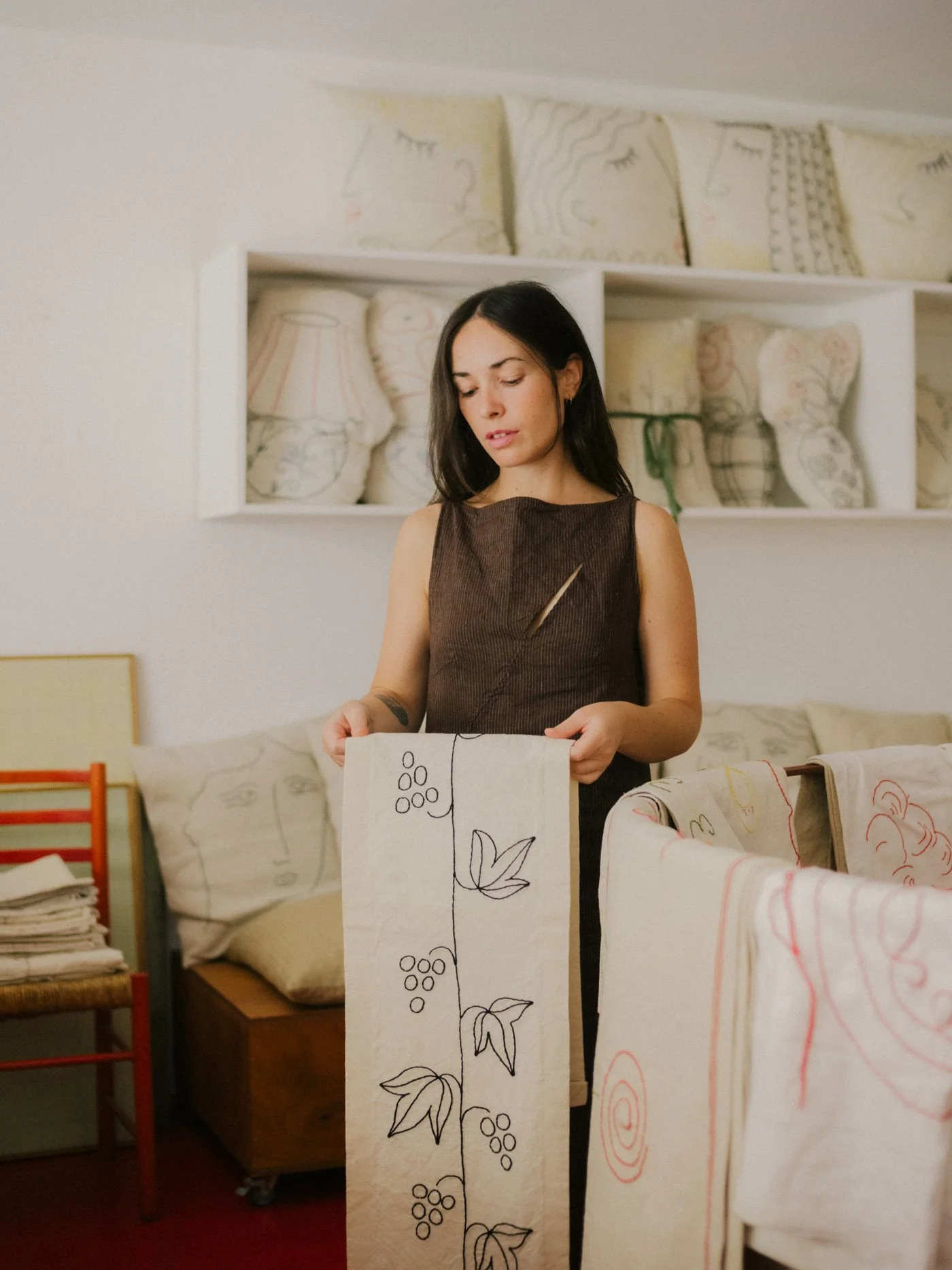
Every project tells a different story, yet all are rooted in the same interplay of trompe-l'œil and illusion. This imbues my ideas with a poetic dimension. I deeply enjoy forging intersections between everyday objects and art, the two-dimensional and the three-dimensional, or between clothing and interior design.
© Maxime Verret
-
Q: When developing a new piece, do you typically begin with functionality, or is the process driven by a visual concept?
Sarah:
I favor utilitarian objects as they serve as my creative starting point. From there, I construct a framework through a shifted perspective. For me, meaning must emerge from the object itself so the resulting transformation feels pertinent, modern, and subtle. Once the core meaning is established, I apply my aesthetic vocabulary. It is a language that blends nostalgia and poetry within a sense of understated elegance. I dislike excessive ornamentation.
© Maxime Verret
© Œuvres Sensibles
-
Q: In the "Clothing-Curtains" series, the garment silhouettes are distinct. At what specific moment does the design transition from clothing to curtain for you?
Sarah:
The original intent was for the two to coexist as both curtain and garment. They are not merely enlarged clothes. To remain faithful to the essence of a curtain, I retained only specific sartorial details. I enjoy how the pieces adopt this unusual form while fully maintaining their functionality as curtains.
© Maxime Verret
-
Q: Curtains are intrinsically linked to light and rhythm. How do you ensure the pieces maintain their ideal visual impact across changing light conditions throughout the day?
Sarah:
I dislike heavy curtains that completely block out light. I prefer materials that are light and translucent. To me, it is acceptable even if the curtain does not cover the entire window. We spend considerable time testing fabric transparency. Through the layering of patterns, we create subtle tonal shifts that allow the pieces to reveal different expressions between day and night.Fundamentally, all my works are designed to be viewed from a distance as I prefer to perceive them as a unified whole. For instance, the trompe-l'œil tablecloths are conceived like paintings to be appreciated from afar. With the curtains, I focus on the overall silhouette and sense of scale while simultaneously attending to details such as the use of real shirt buttons.
© Maxime Verret
© Maxime Verret
-
Q: Your tablecloths feature extensive embroidery. What role does this technique play in your design narrative?
Sarah:
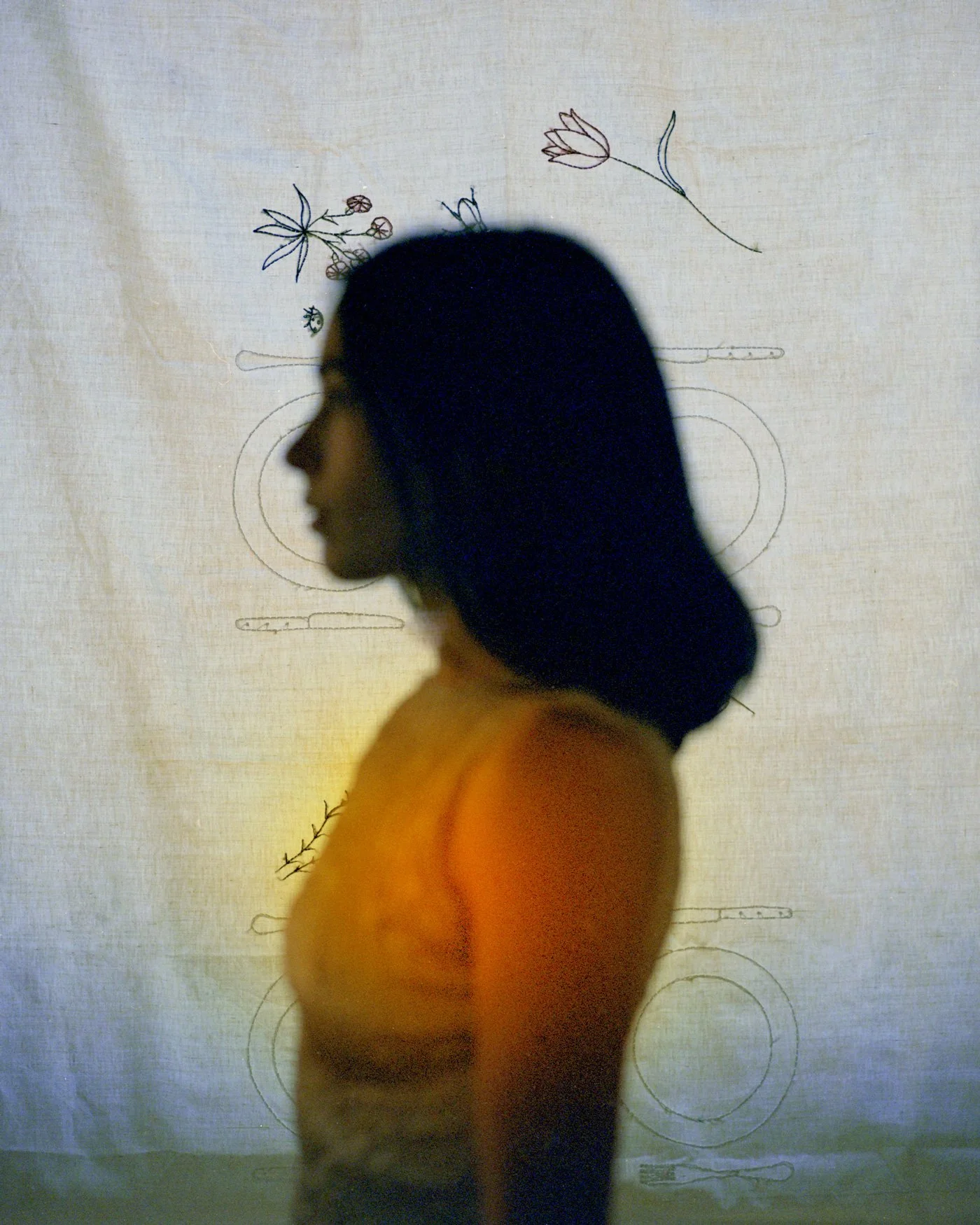
Embroidery is a way of painting in space. I apply it not only to table linens but across other categories of my work. Tablecloths are often perceived as humble objects. Adding embroidery imbues the table with an intimate and human quality to foster conviviality and emotional connection.
Q: Dining inevitably brings spills. How do you reconcile the need for maintenance with longevity in your table and napkin designs?Sarah:
My pieces are machine washable on a delicate cycle with a low spin speed. I select fabrics of exceptional quality to ensure durability. I want my work to be fully integrated into daily life and believe that accidental stains can actually enhance its beauty. When I use antique fabrics that often bear marks from the past, I view them as symbols of the passage of time. It is not about pursuing perfection but rather embracing the existence of imperfection.
© Maxime Verret
© Œuvres Sensibles
© Œuvres Sensibles
-
Q: Bedding represents the most intimate textile within the home. Does this sense of intimacy influence how you approach the material?
Sarah:
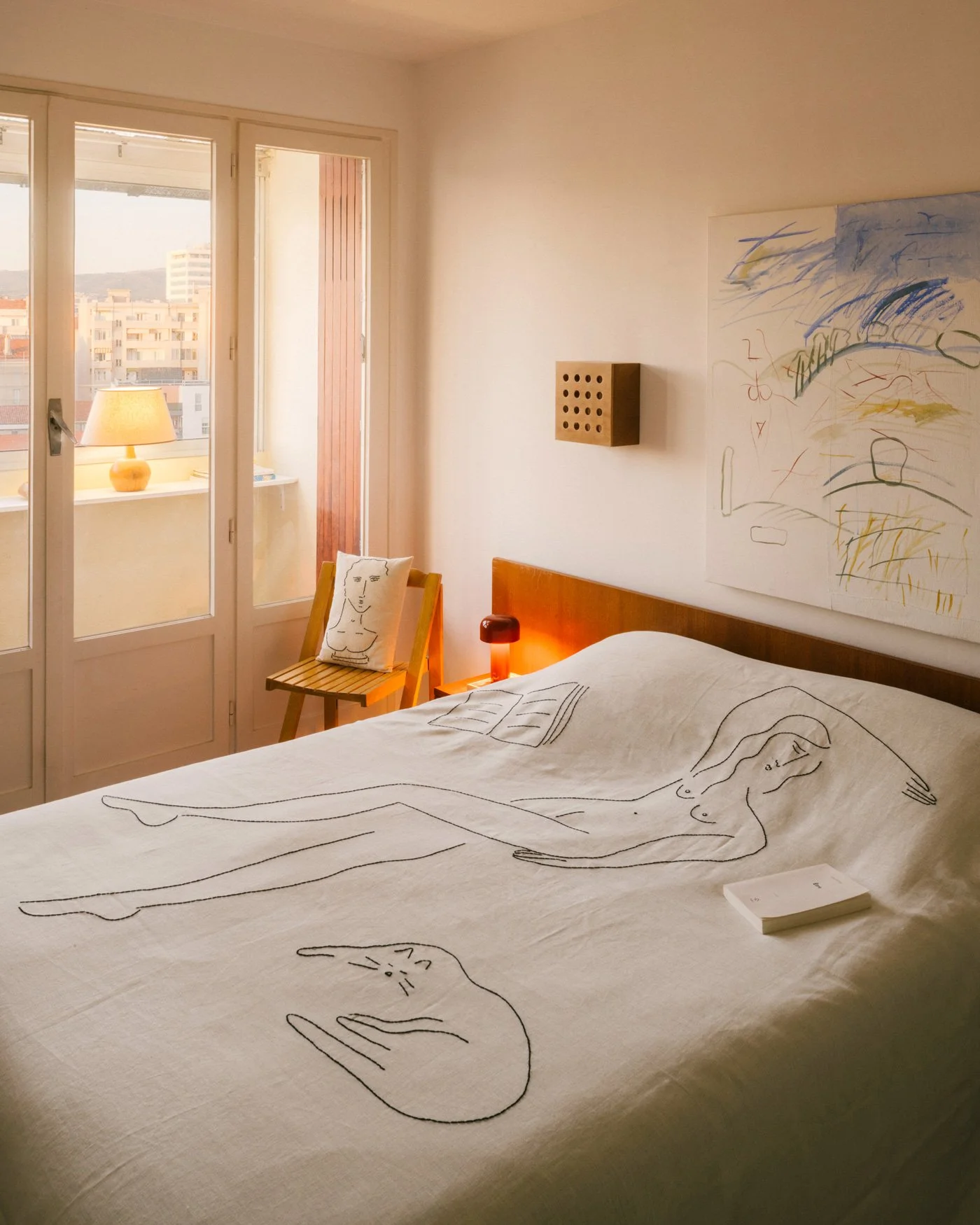
For bedding, I favor substantial linens and antique textiles. I repurpose many vintage linen and cotton sheets and deeply cherish the tactile sensation of sleeping in them. I even crafted an antique linen duvet for myself and I sleep wonderfully.For tablecloths, I utilize the same materials but opt for a slightly heavier weight in the cotton and linen fibers. As for napkins, I prefer using linen that is very similar to bedding since the tactile experience is equally close to the skin.
© Maxime Verret
© Jade Deshayes
-
Q: Over time, bedding inevitably accumulates signs of use. How do you view the importance of this "aged quality" in a successful piece?
Sarah:
Mass-produced bedding is often woven too thinly for the sake of efficiency which renders the fabric fragile and prone to tearing. While I love the idea of a piece developing a beautiful patina over time, I do not want it to deteriorate prematurely. I intend for my work to be durable and capable of being passed down.
© Maxime Verret
-
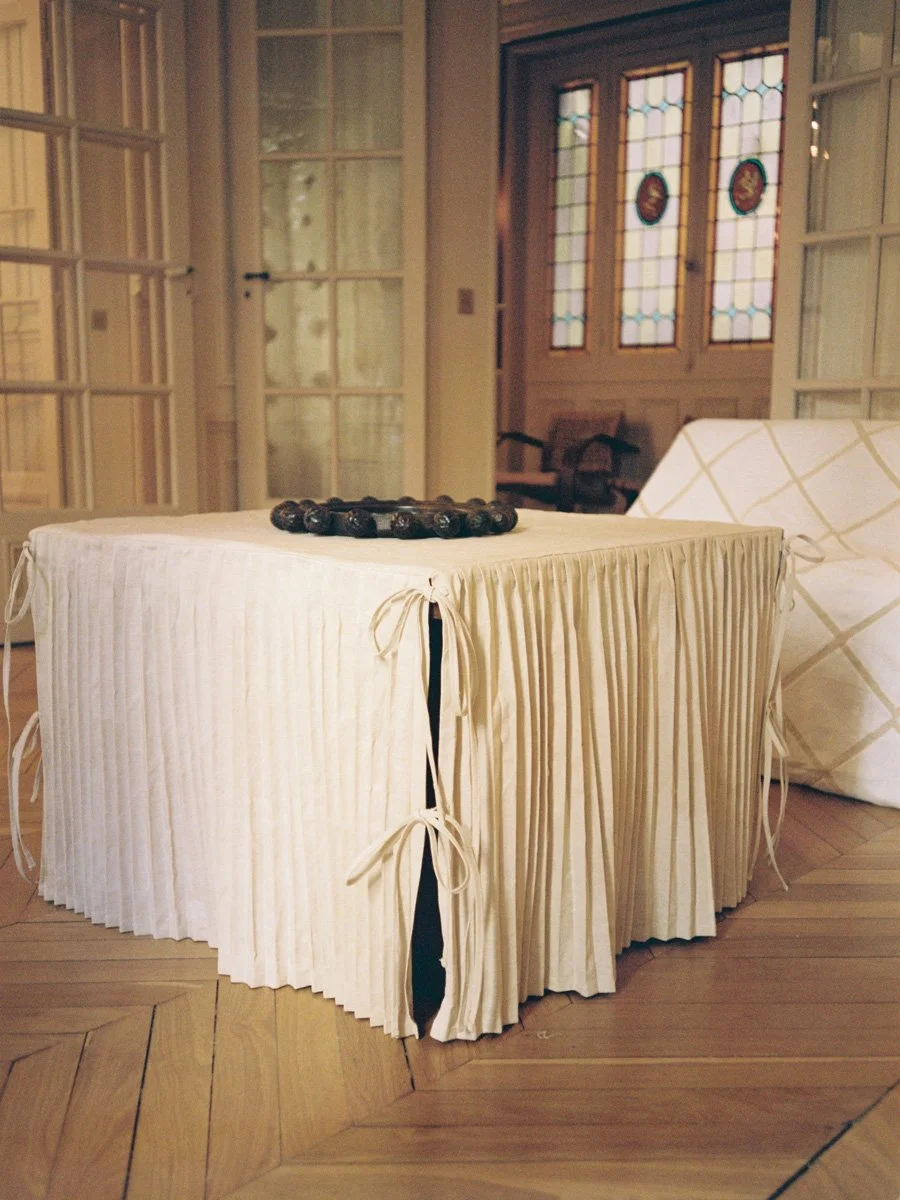
In the textile realm of Œuvres Sensibles, beauty stems not from immaculate precision but from an authentic embrace of life. From curtains donning shirt silhouettes to painterly table linens and bedding, each piece chronicles the ordinary yet precious moments of the everyday. This dedication to "sensibility" and daily life imbues the designs with an elegance that remains indifferent to fleeting trends.
When we cease striving to erase the marks of time, the home reveals its warmest and most vital character.
© Œuvres Sensibles
© Œuvres Sensibles
© Maxime Verret