「夾縫之間的溫柔微光」在窄長透天厝裡,思維設計撐起一方最自在的小宇宙
-
In the cold alienation of the urban concrete jungle, architecture often acts as a hardened shell separating inside from out. Yet, the concept of "home" demands soft, grounded acceptance. As Bachelard noted, a house is not merely geometric space; it is a state of mind—a sanctuary that allows us to dream and embrace our vulnerability.
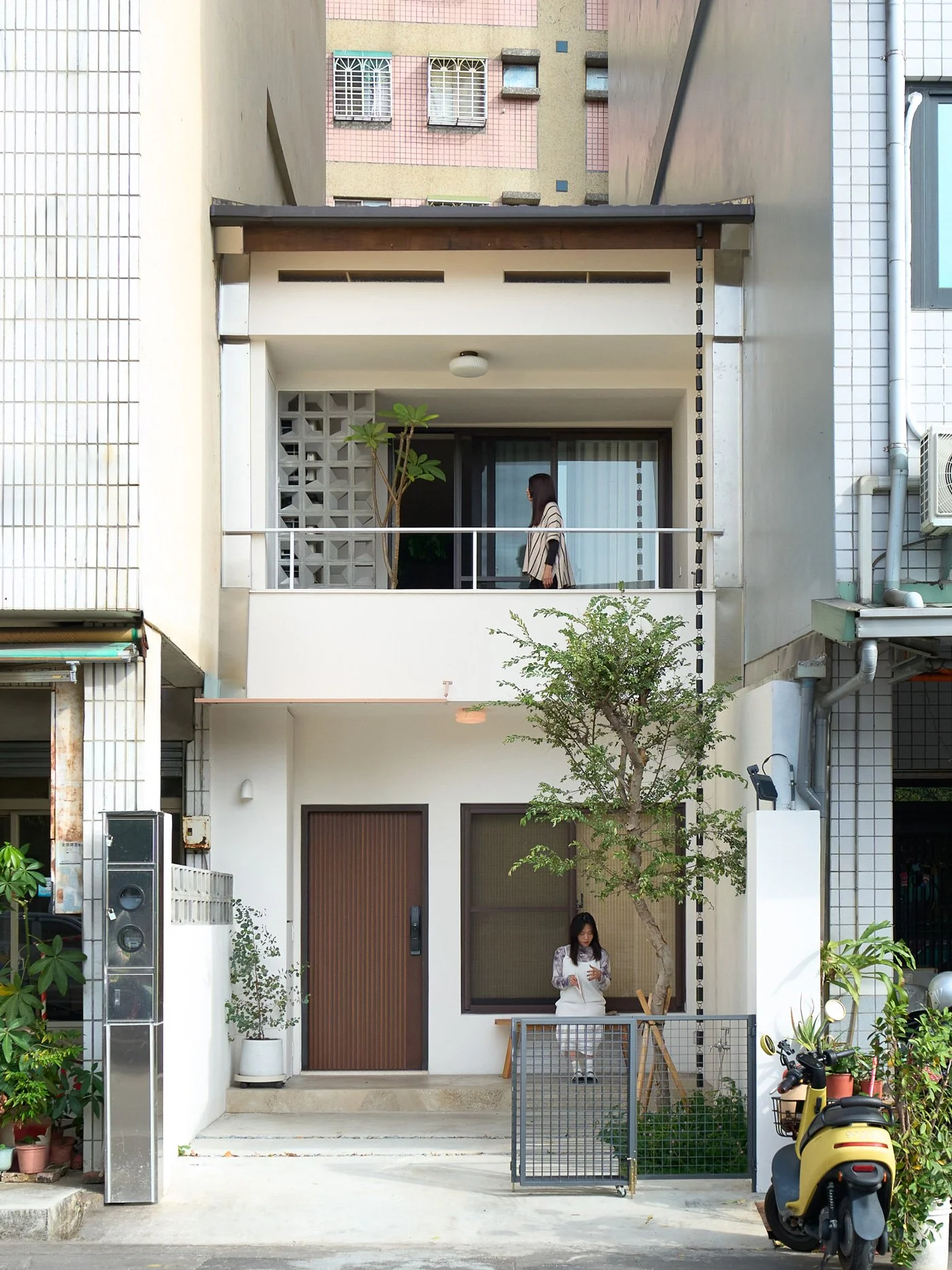
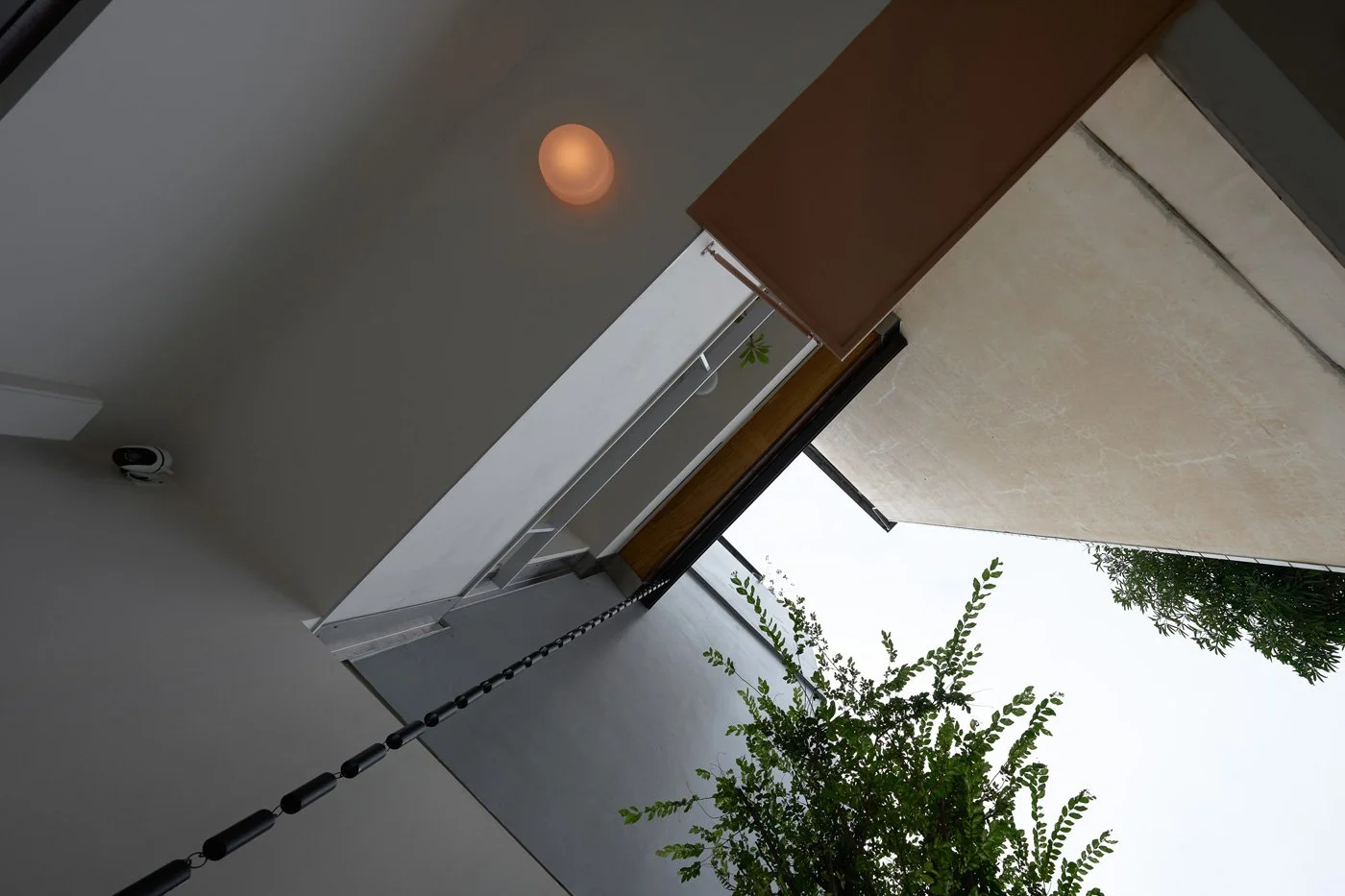
Nestled in a narrow gap between structures, this older townhouse stands with humble resolve. Rather than competing with its massive surroundings, it looks inward, mining infinite emotional depth from a limited physical footprint. For the resident family of three, this is more than shelter; it is a vessel for intimacy. With walls dismantled and floors visually permeable, the home becomes a vertically flowing settlement where love and dialogue traverse freely through the interplay of light and shadow.
-
The Scent of Rush Grass: Embracing Grounded Relaxation
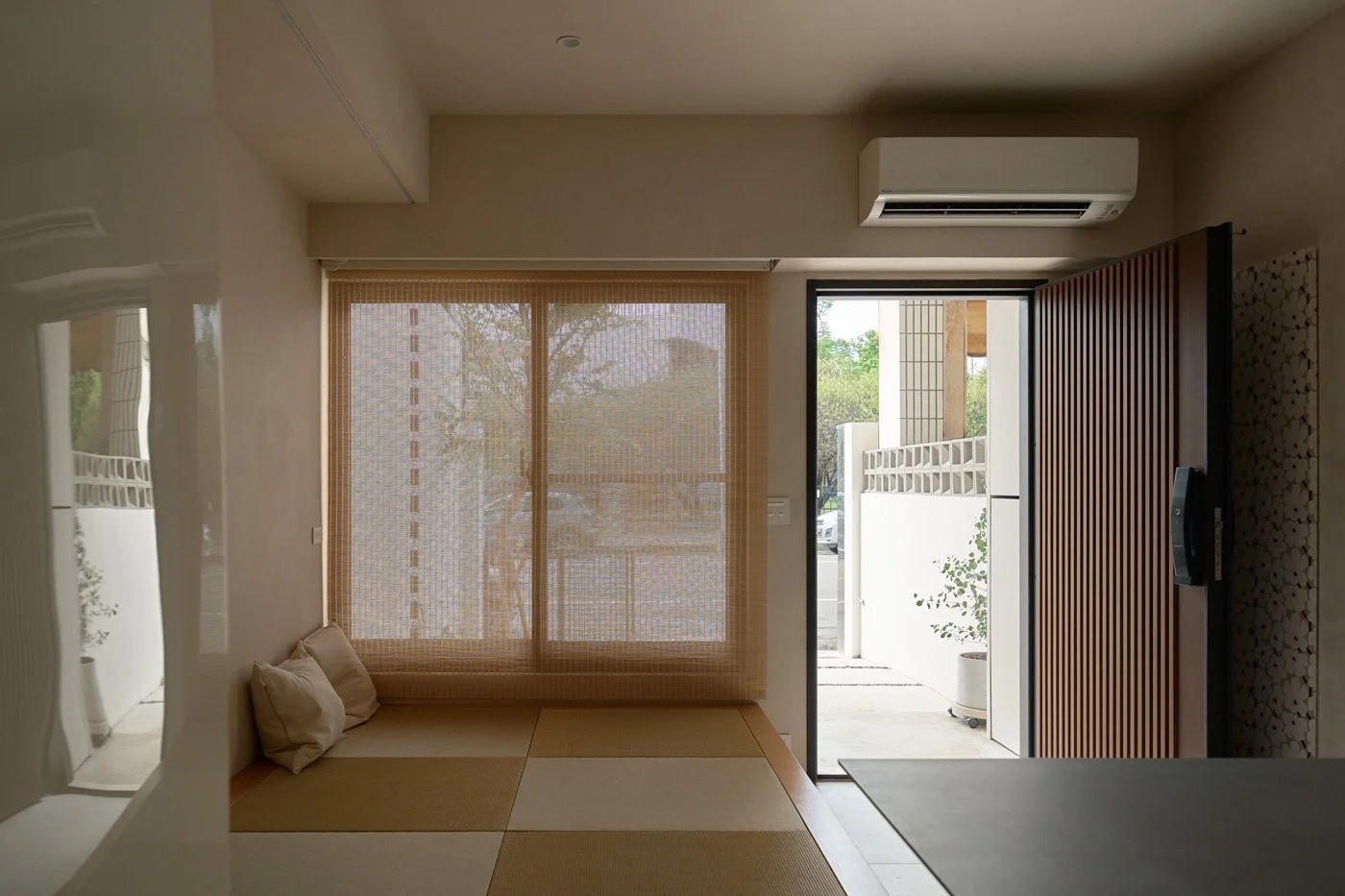
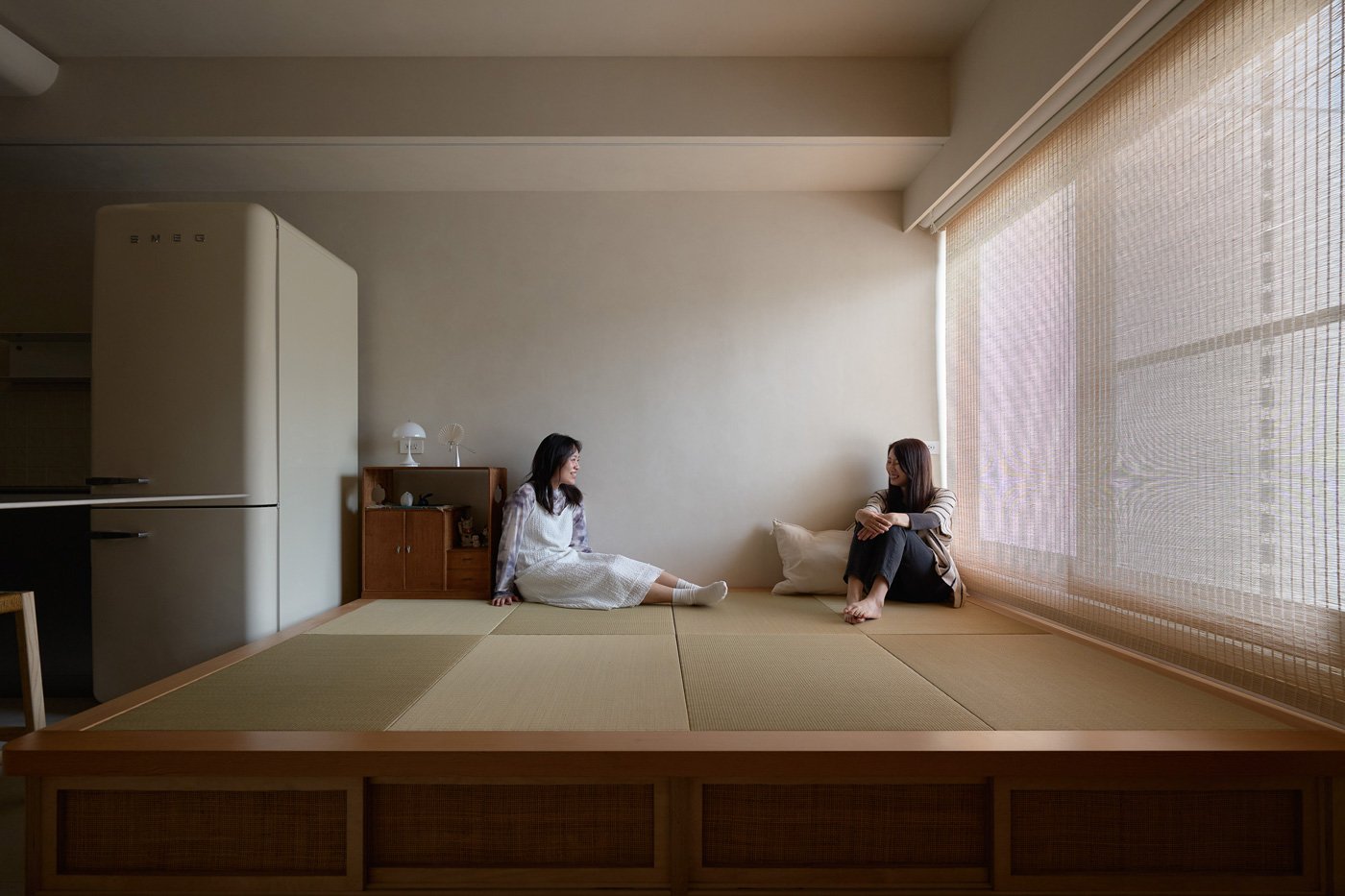
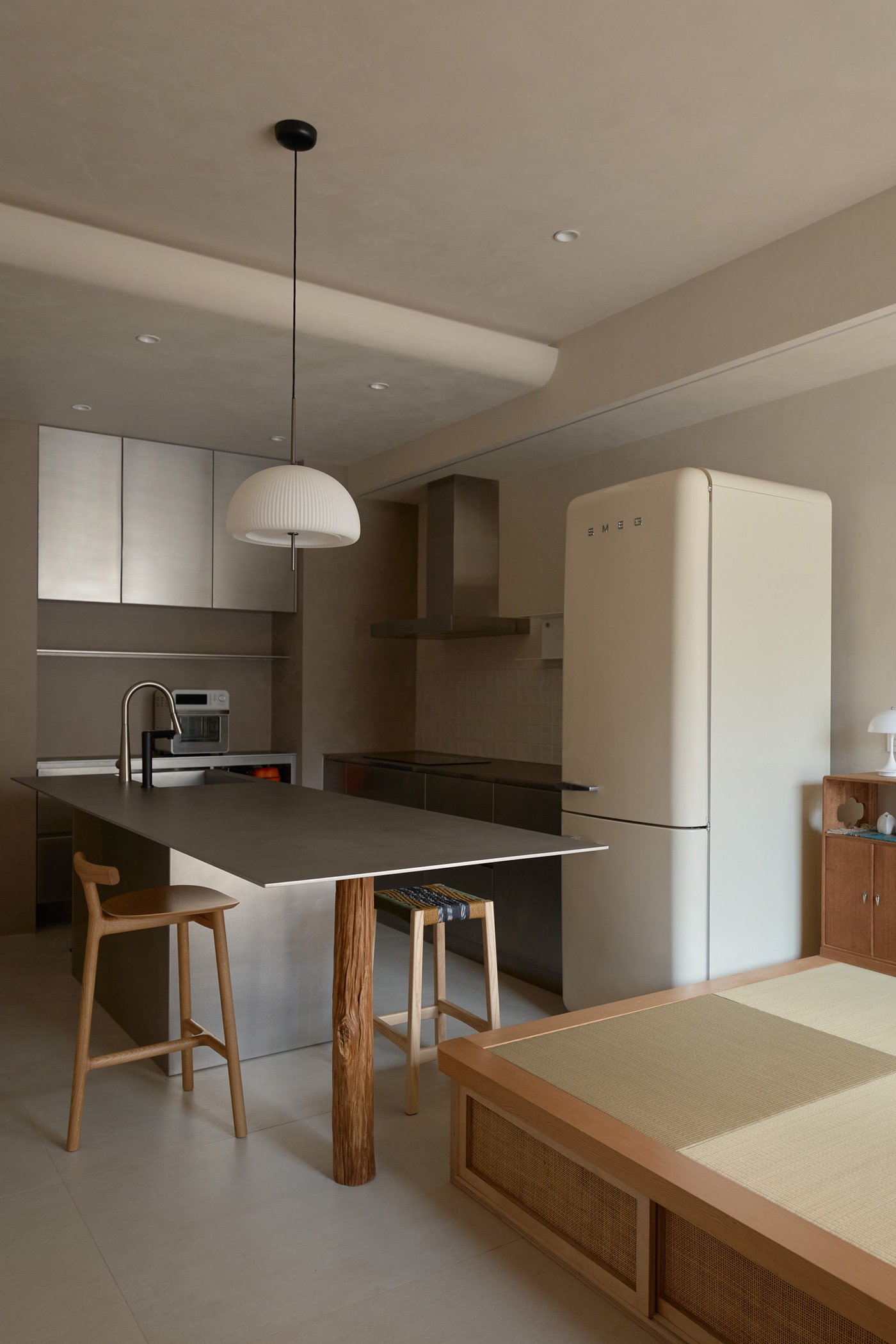
Pushing open the front door reveals not a conventional living room, but a grounded sanctuary—a tatami platform raised 40 centimeters. Responding to the owner’s intuitive desire for relaxation, Thinking Design eschewed the standard sofa and TV wall arrangement. Instead, this platform serves as the gravity center of the home, concealing storage below to restore visual purity.
Sunlight filters through bamboo blinds, casting dappled shadows across the rush grass mats. The air carries a faint, grassy scent, inviting one to sit or lie down at will—fulfilling the owner's wish to "lie down and watch TV anywhere."
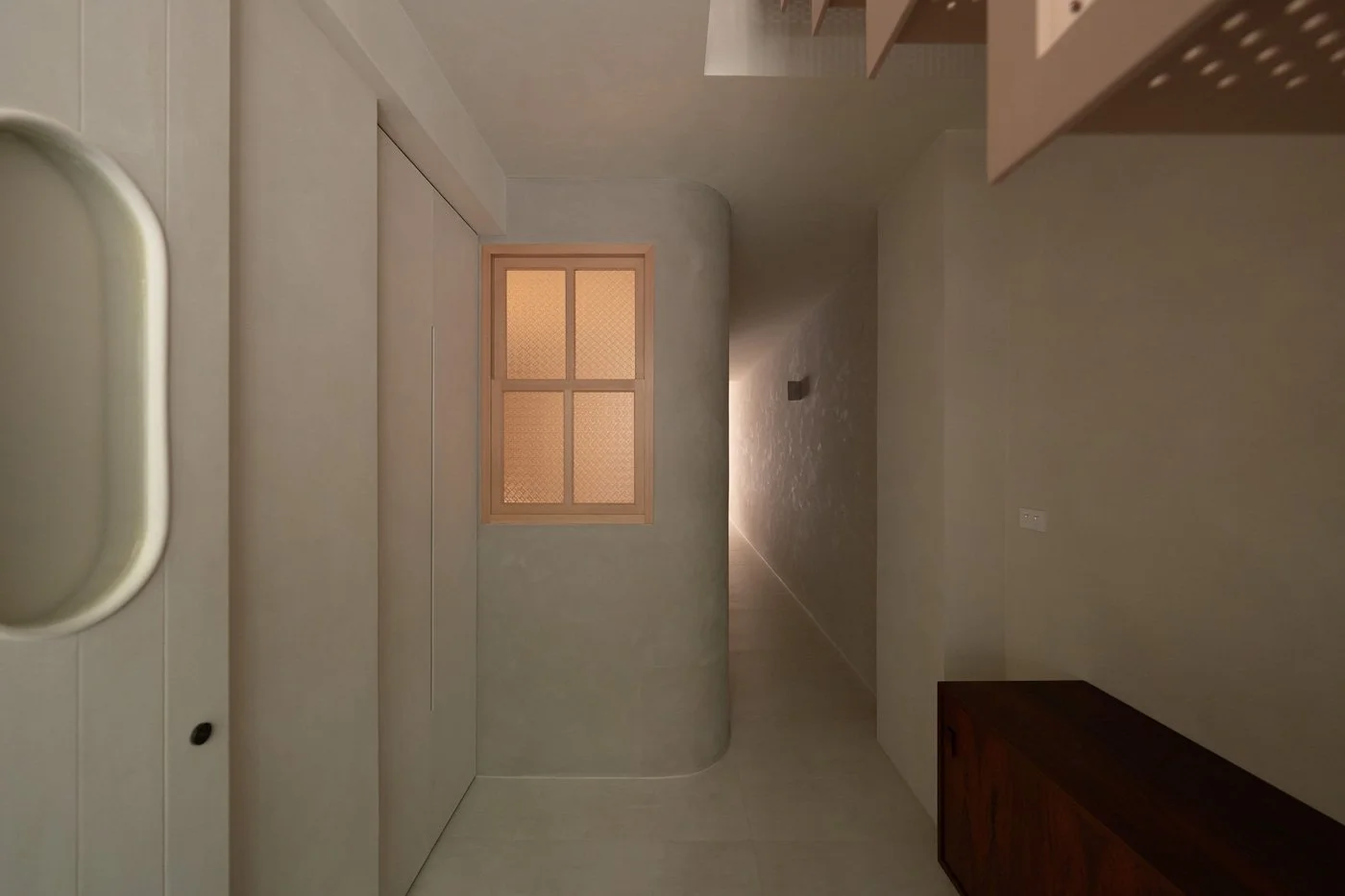
Beyond the tatami, a stainless steel kitchen defines the boundary of rationality with cool, precise lines. The raw metal contrasts with the warm, hand-applied texture of the walls, blending modern sharpness with rustic simplicity. The ground floor also houses a senior’s bedroom, ensuring future accessibility. Here, unobstructed sightlines mirror the family’s close bond—interaction happens effortlessly, without barriers.
-
Vertical Rhythm in Blush: Blurring Spatial Boundaries
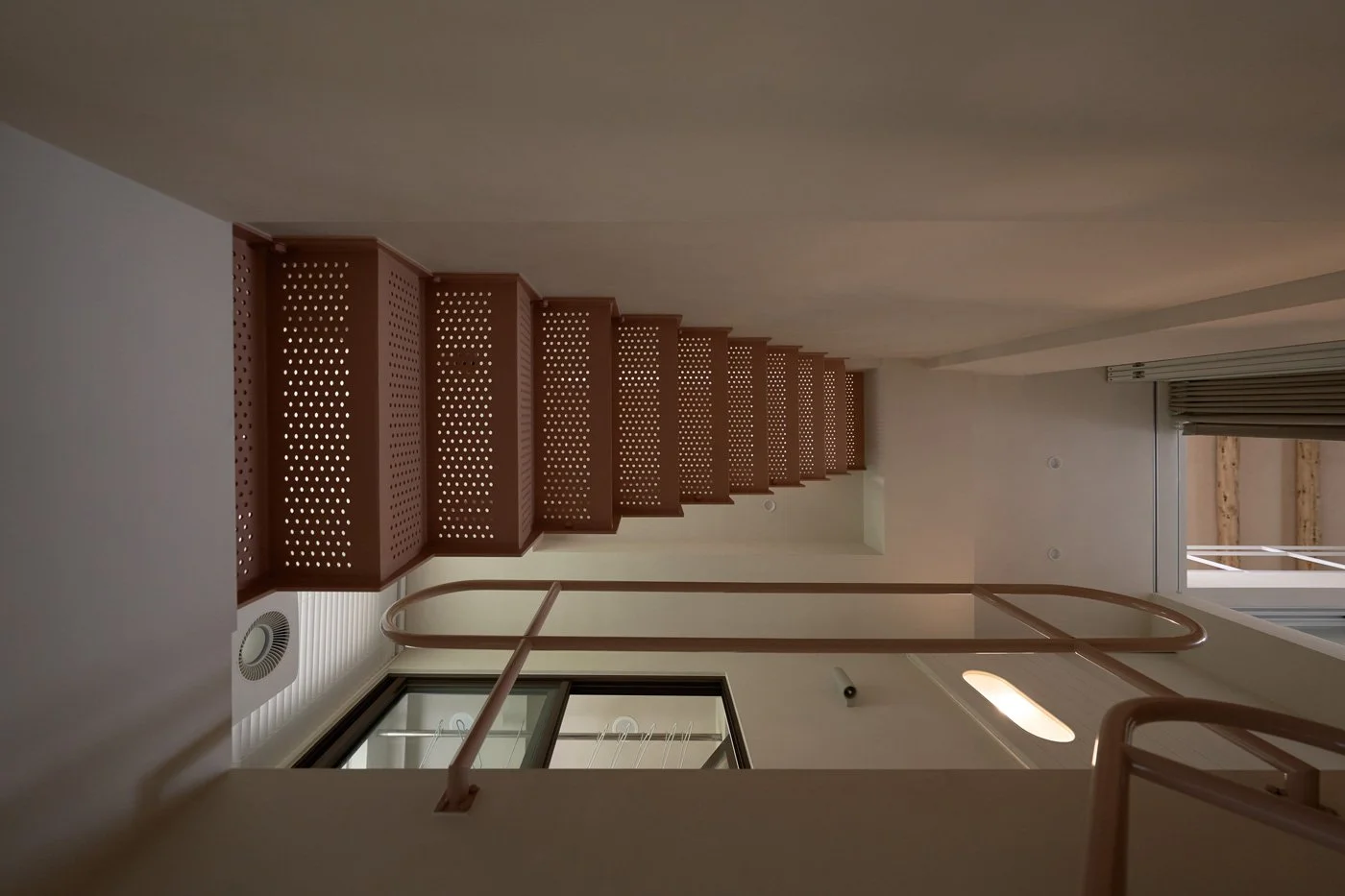
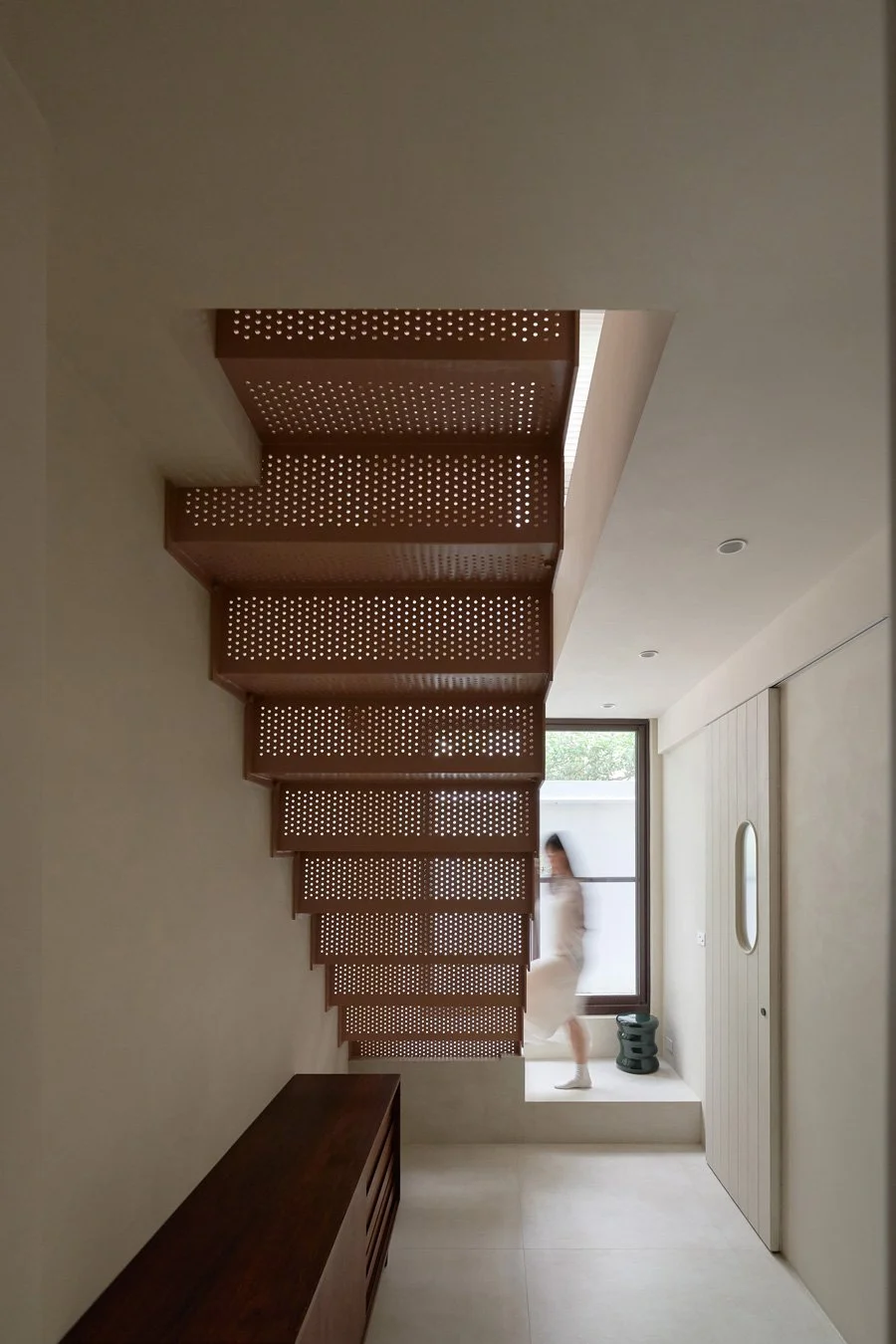
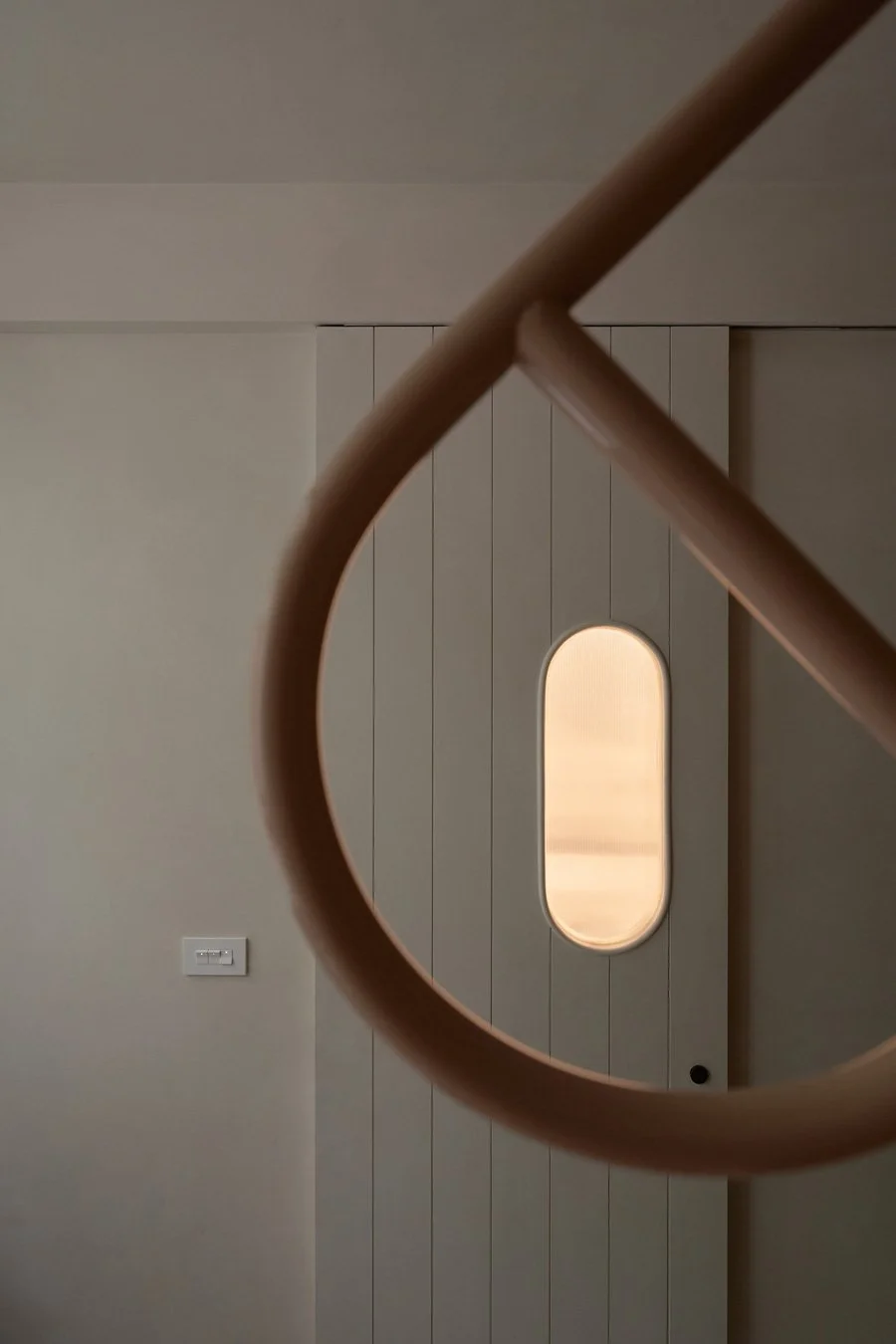
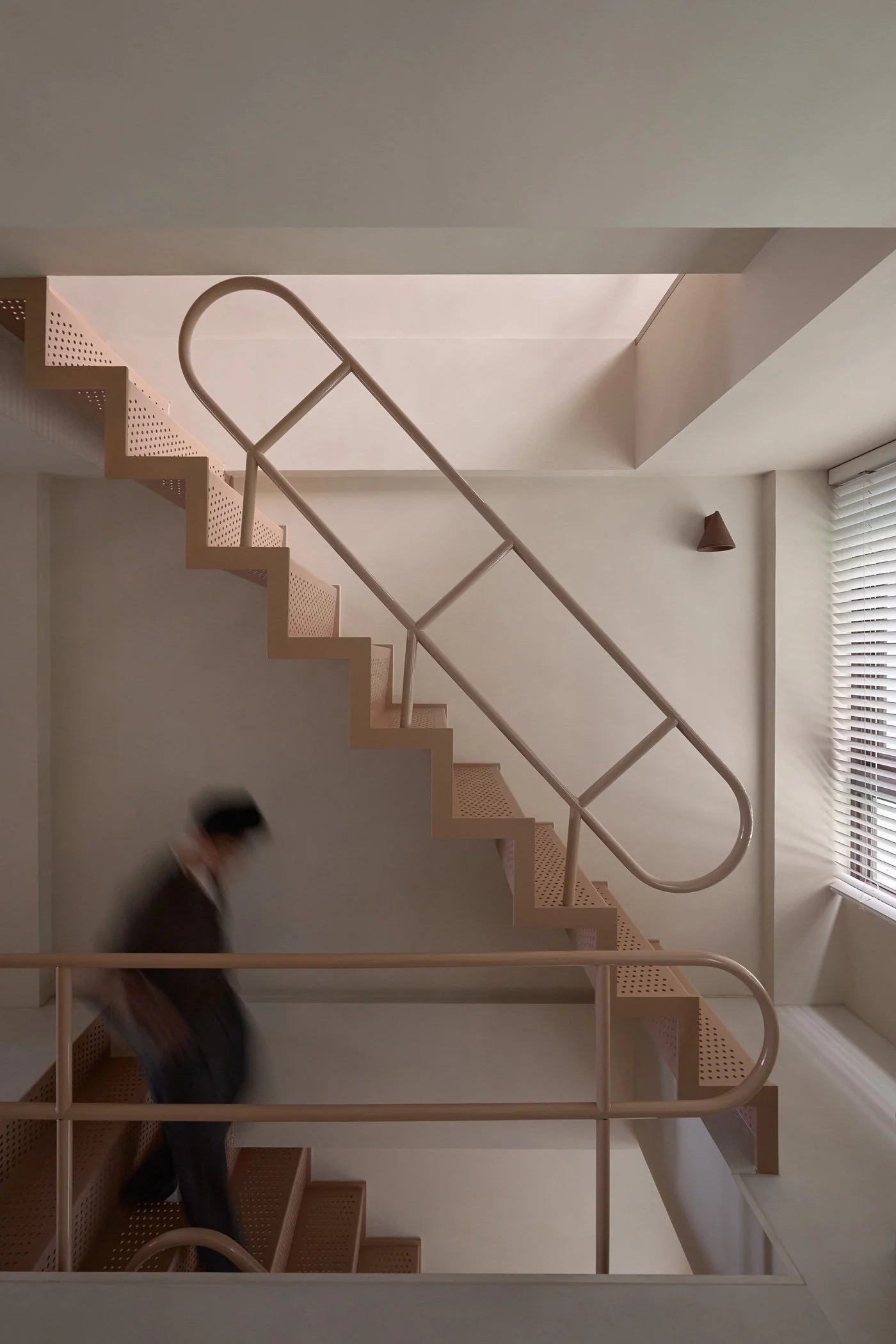
Moving inward, a blush-toned staircase spirals upward like a gentle ribbon against earth-toned finishes. Constructed of iron and perforated metal, this sculptural volume acts as a light filter. As skylight penetrates the mesh, it scatters rain-like patterns of light that shift slowly with the hours, turning movement through the house into a rhythmic play of shadows.
-
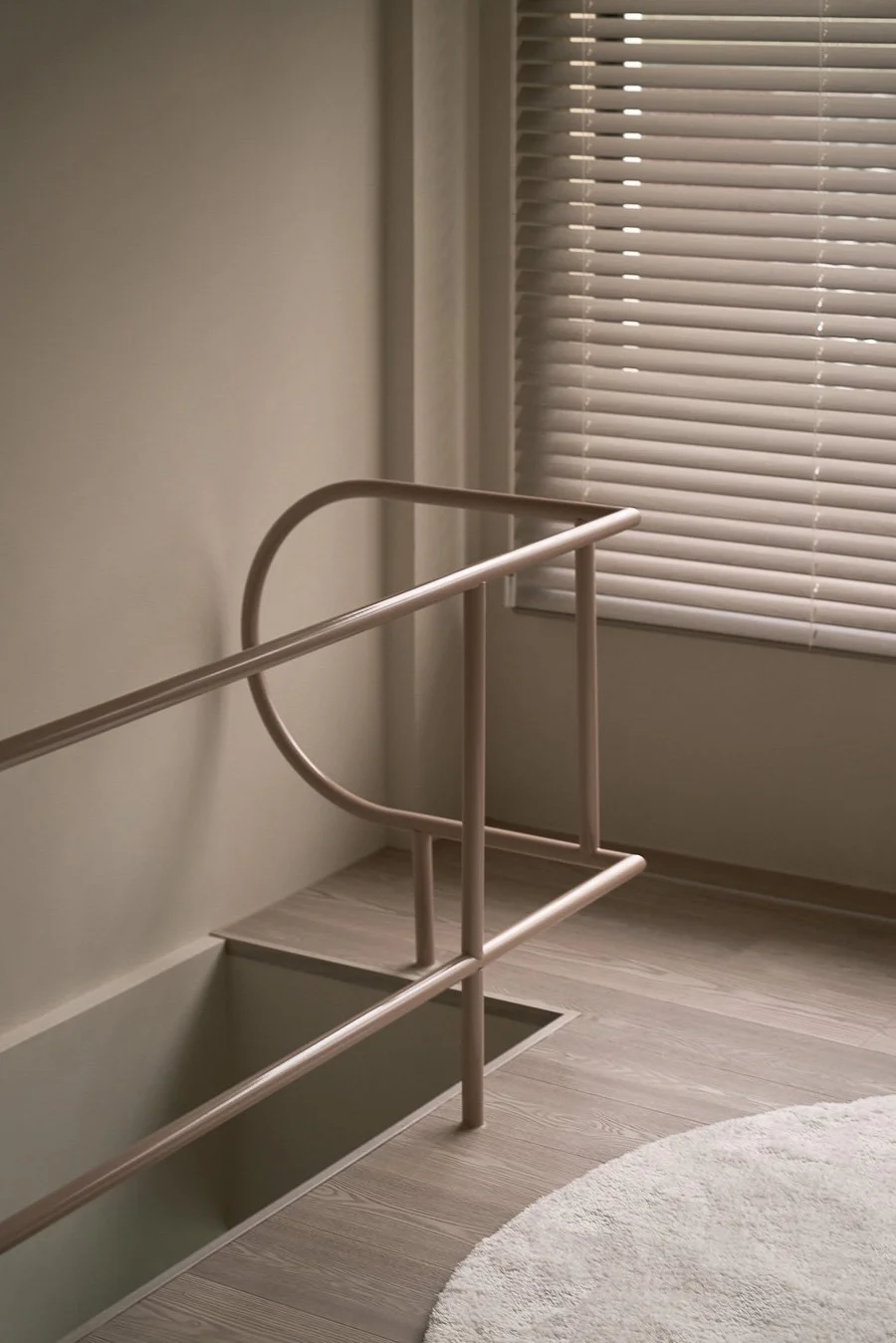
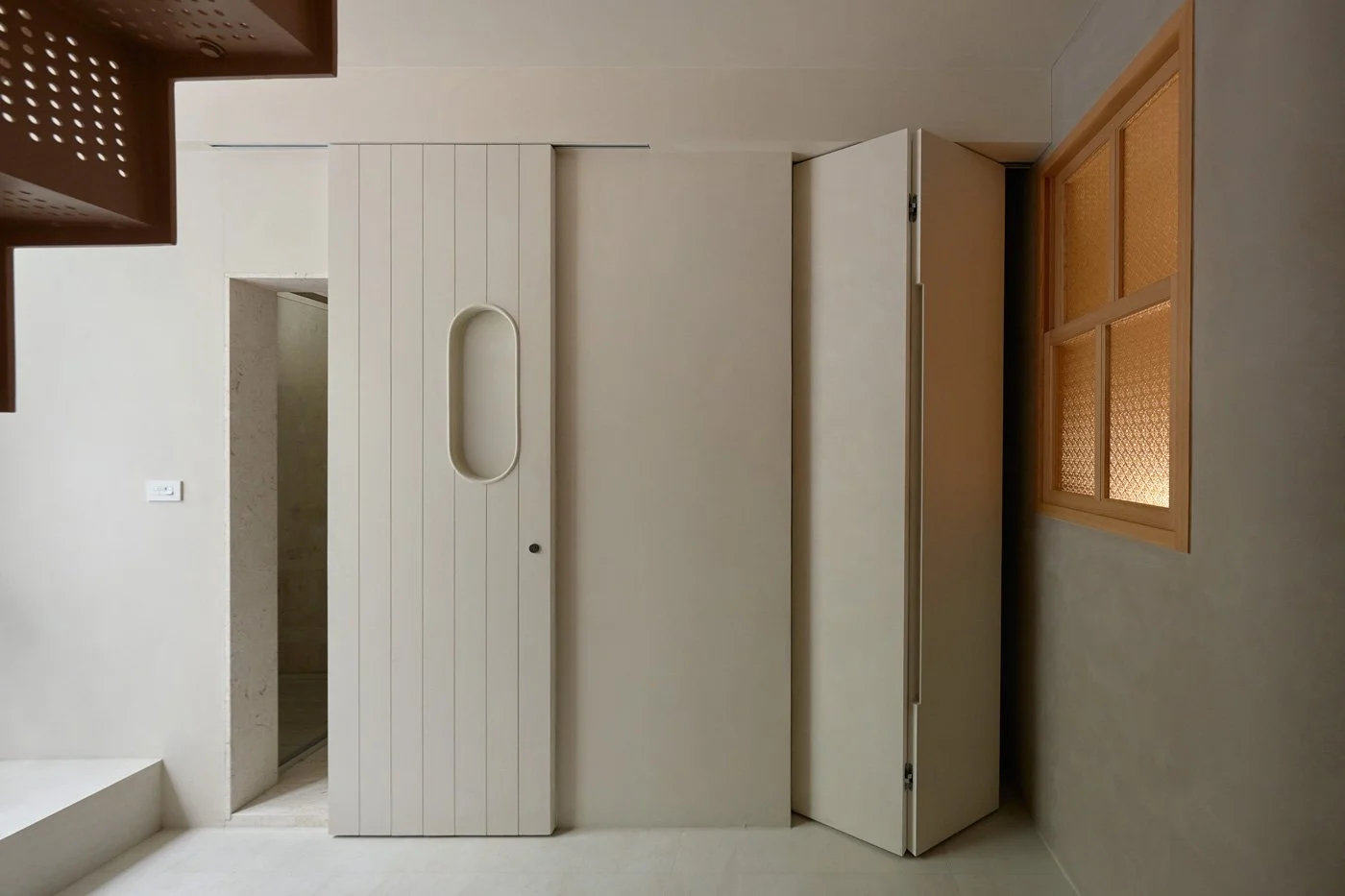
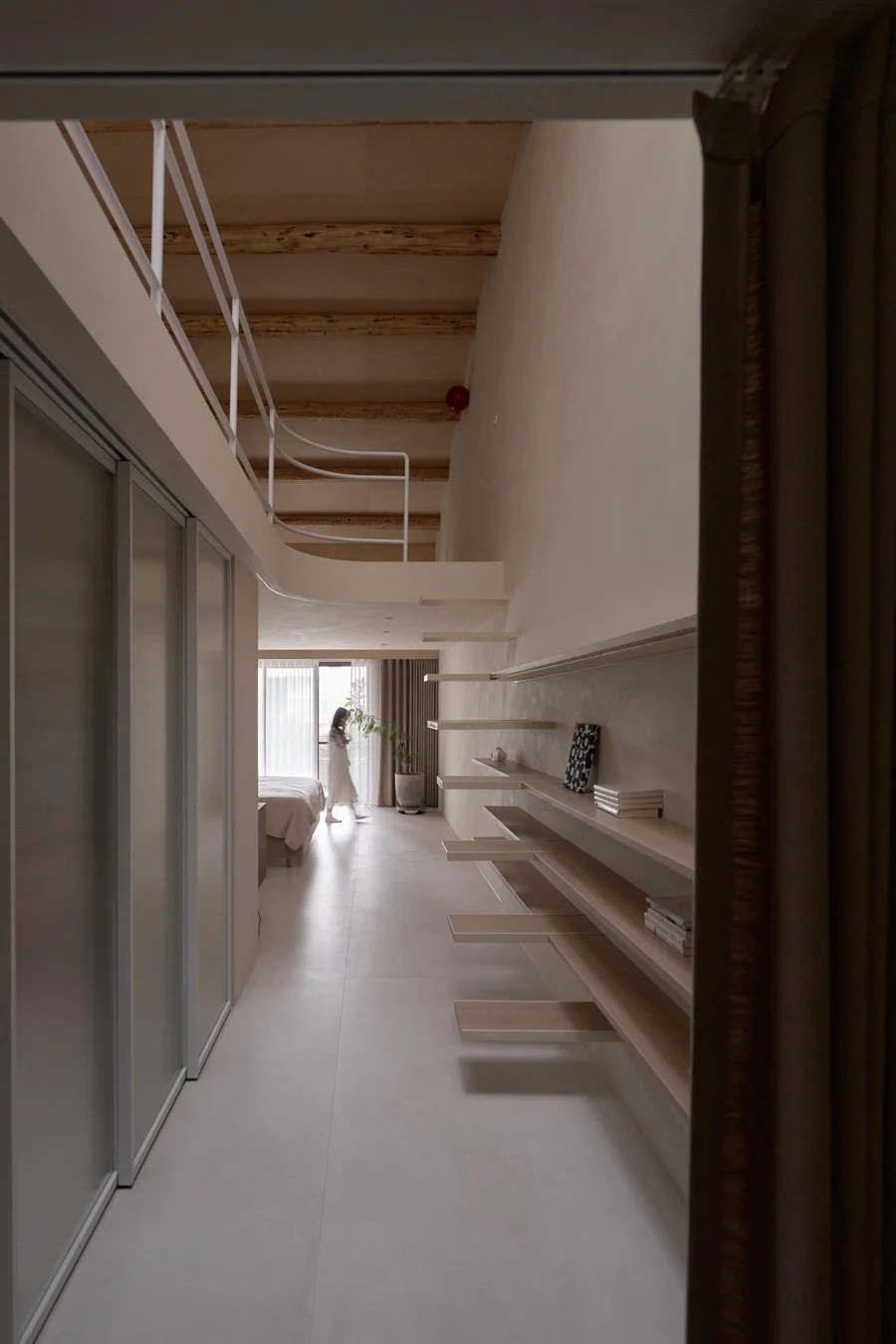
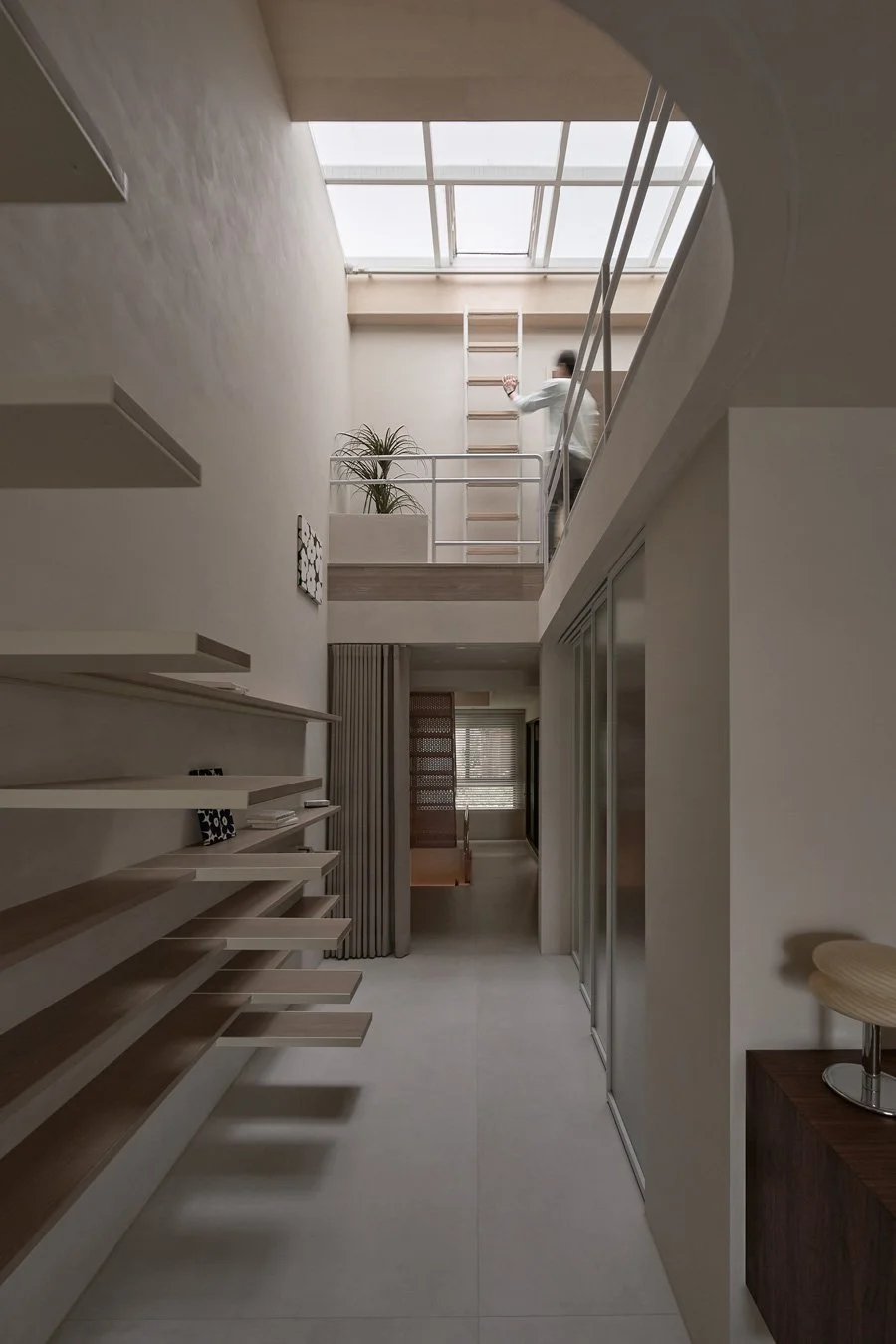
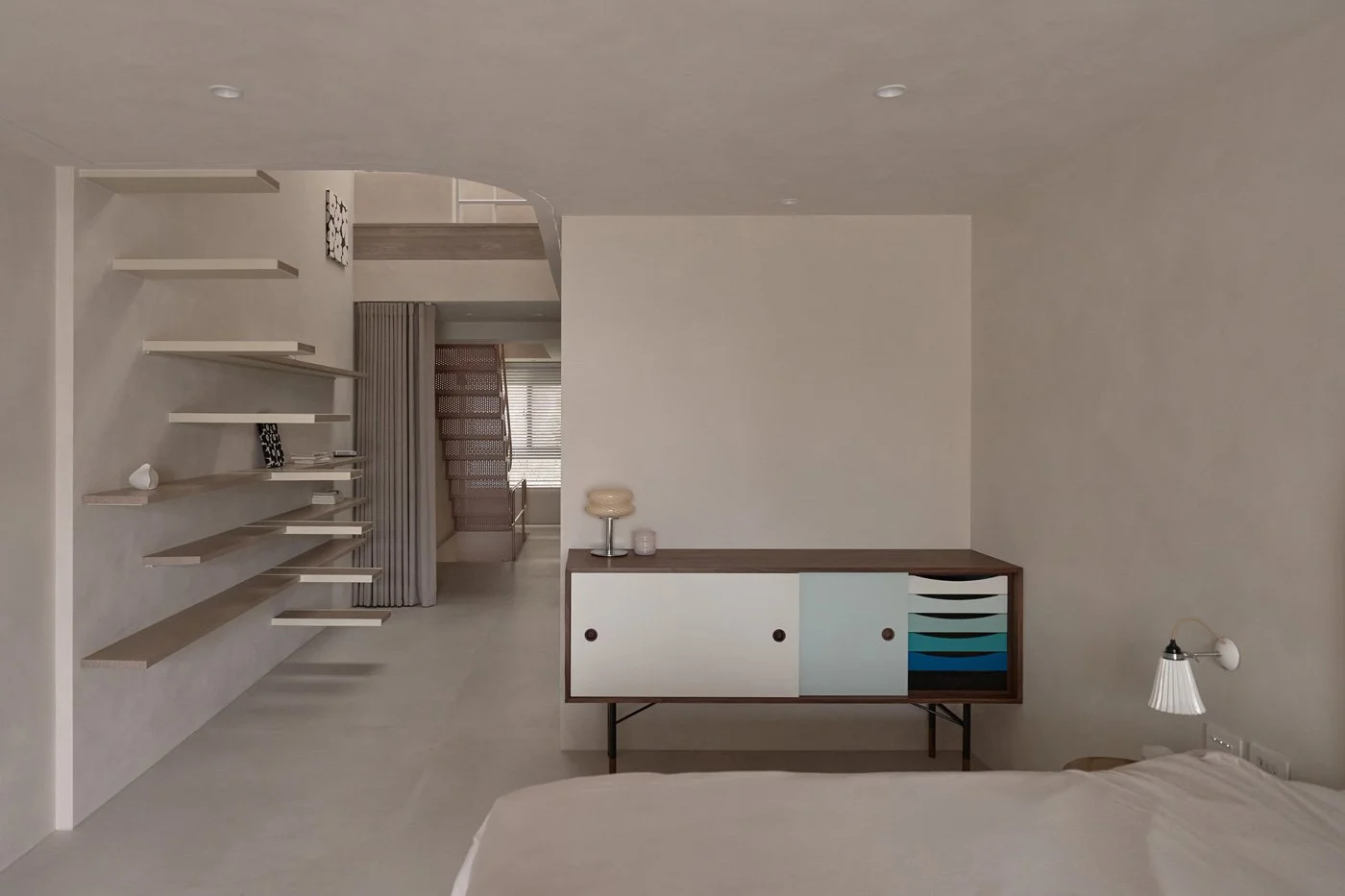
Ascending the stairs, the design redefines territorial limits. Fully retractable folding doors and soft curtains replace rigid walls. When open, the second-floor daughter’s room merges with the airflow and light of the ground level, creating a shared vertical canyon. When closed, it returns to the quietude of a private bedroom. This "ambiguous" zoning is made possible only by the family's deep mutual trust, allowing their lives to overlap naturally.
-
Suspended Poetry: A Stairway to the Clouds
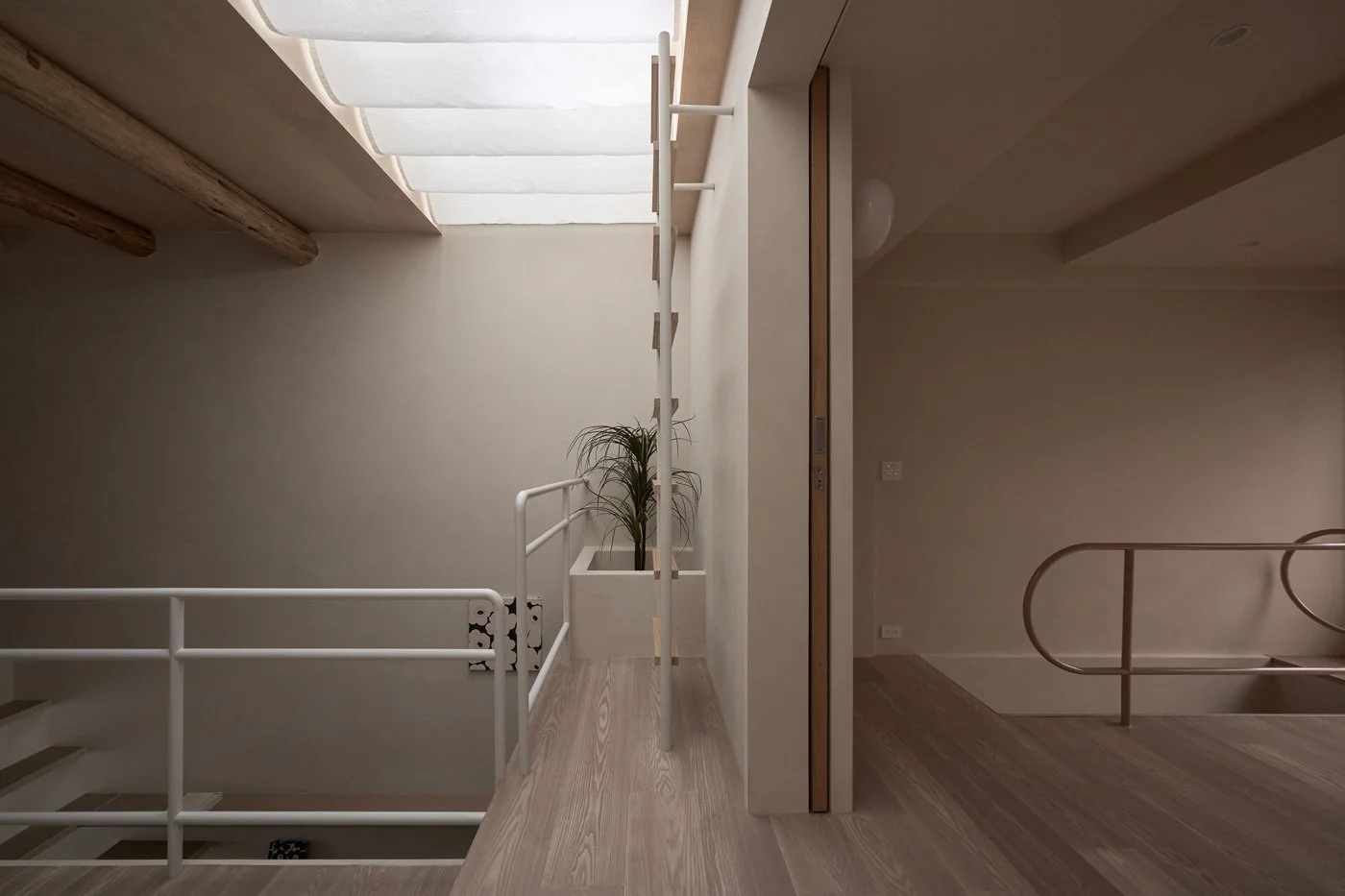
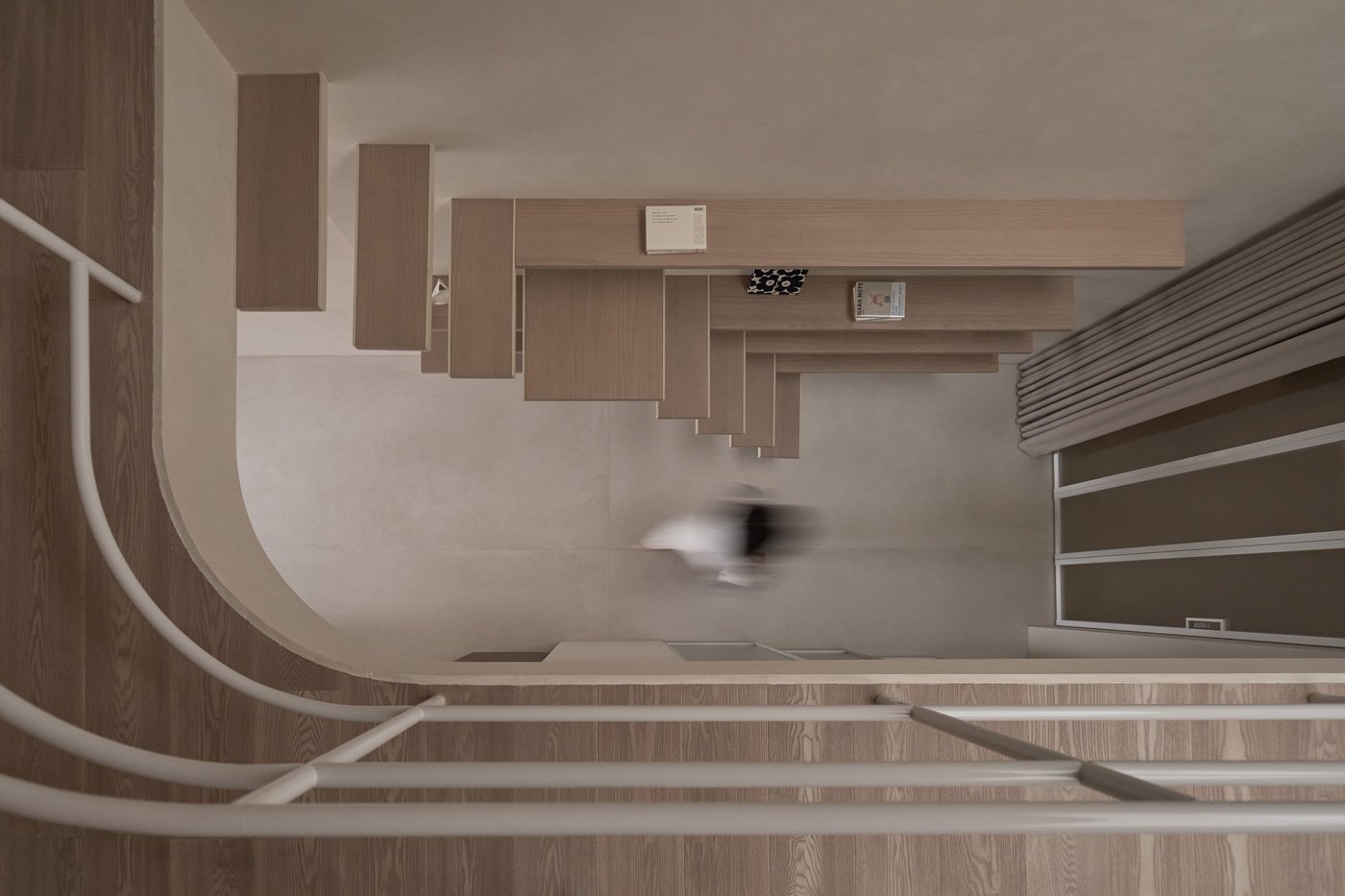
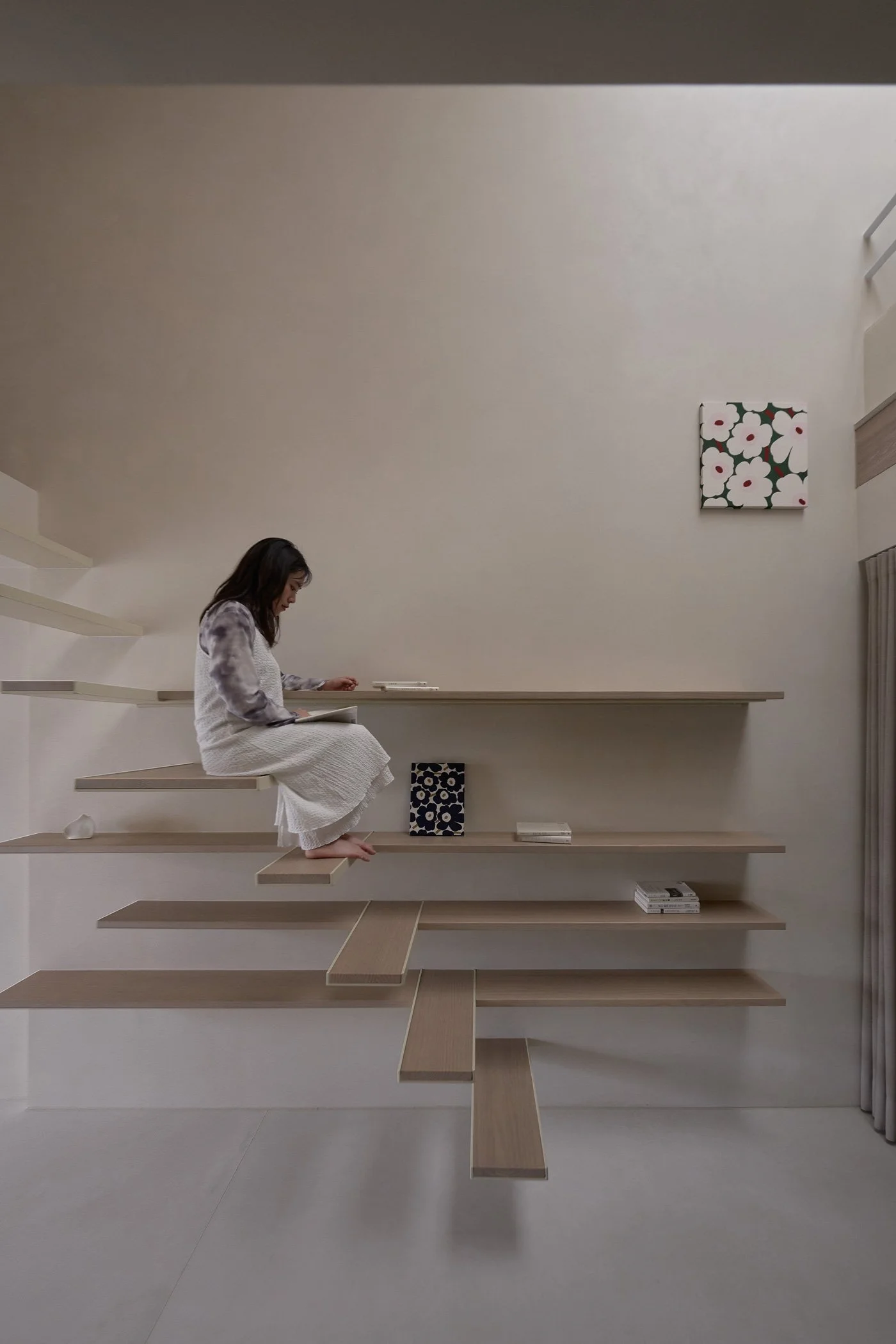
The path to the attic features a suspended "book-stair"—staggered wooden planks serving simultaneously as steps, shelves, and seating. This design encourages pausing amidst movement, merging the act of climbing with the stillness of reading.
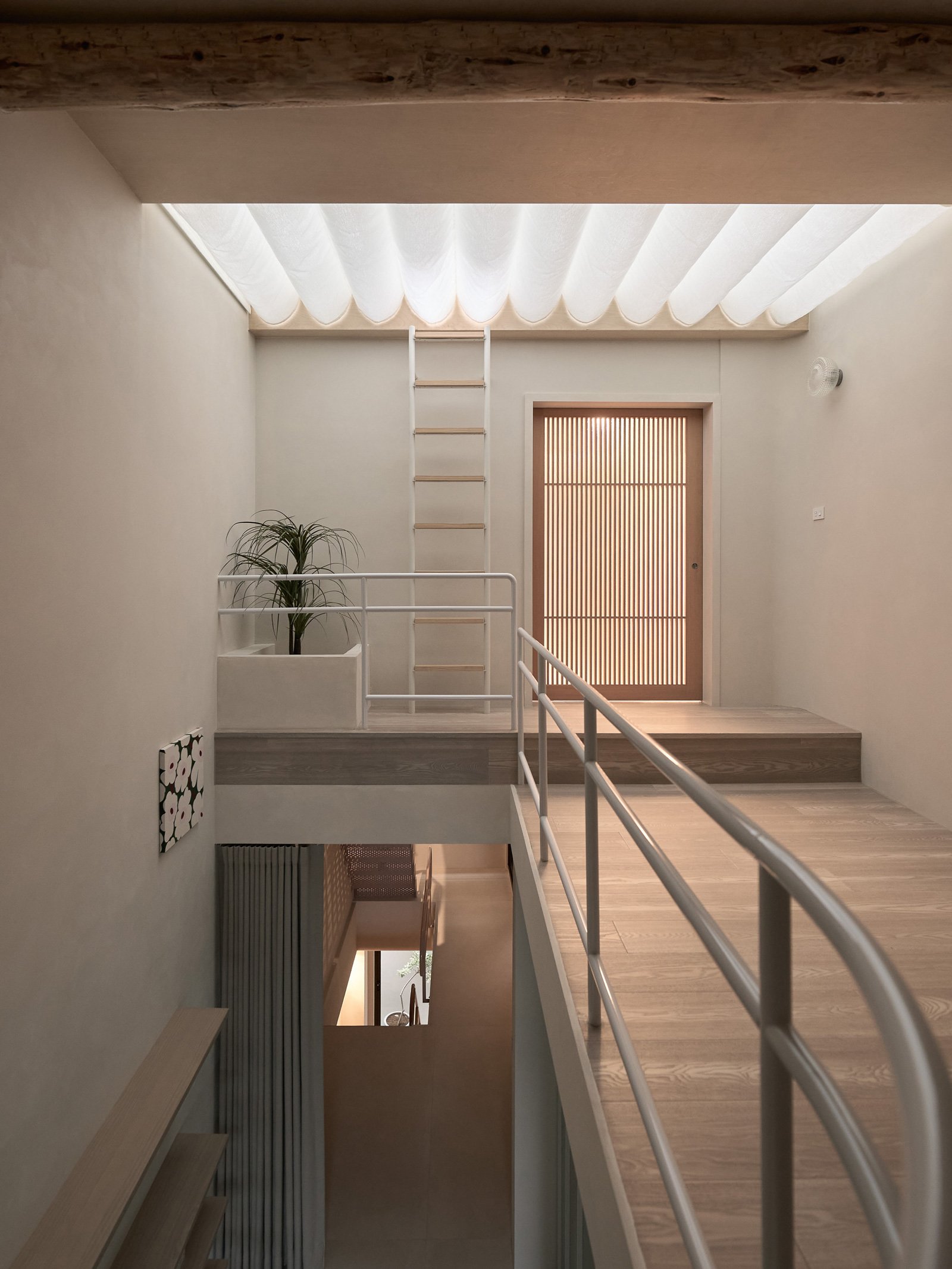
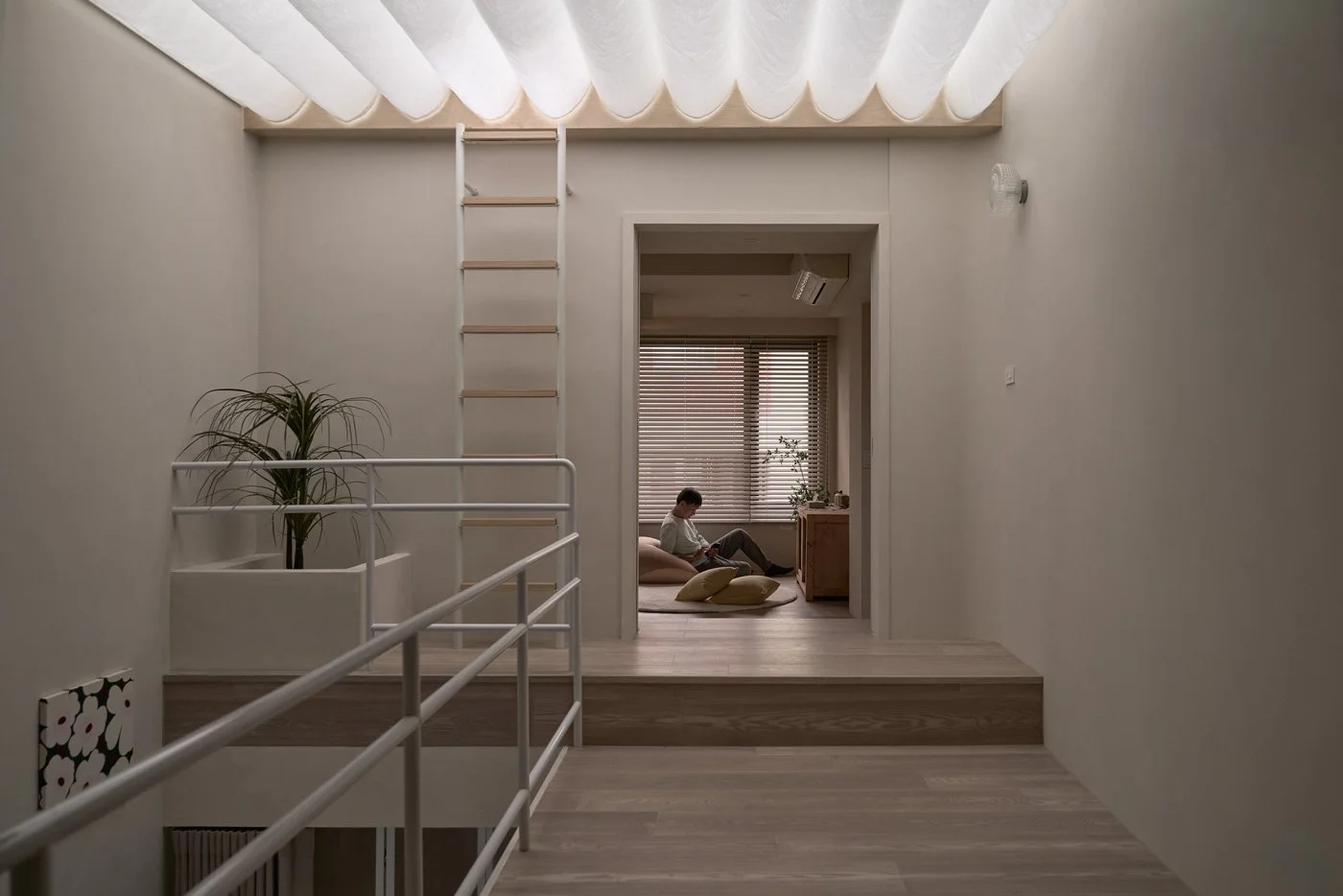
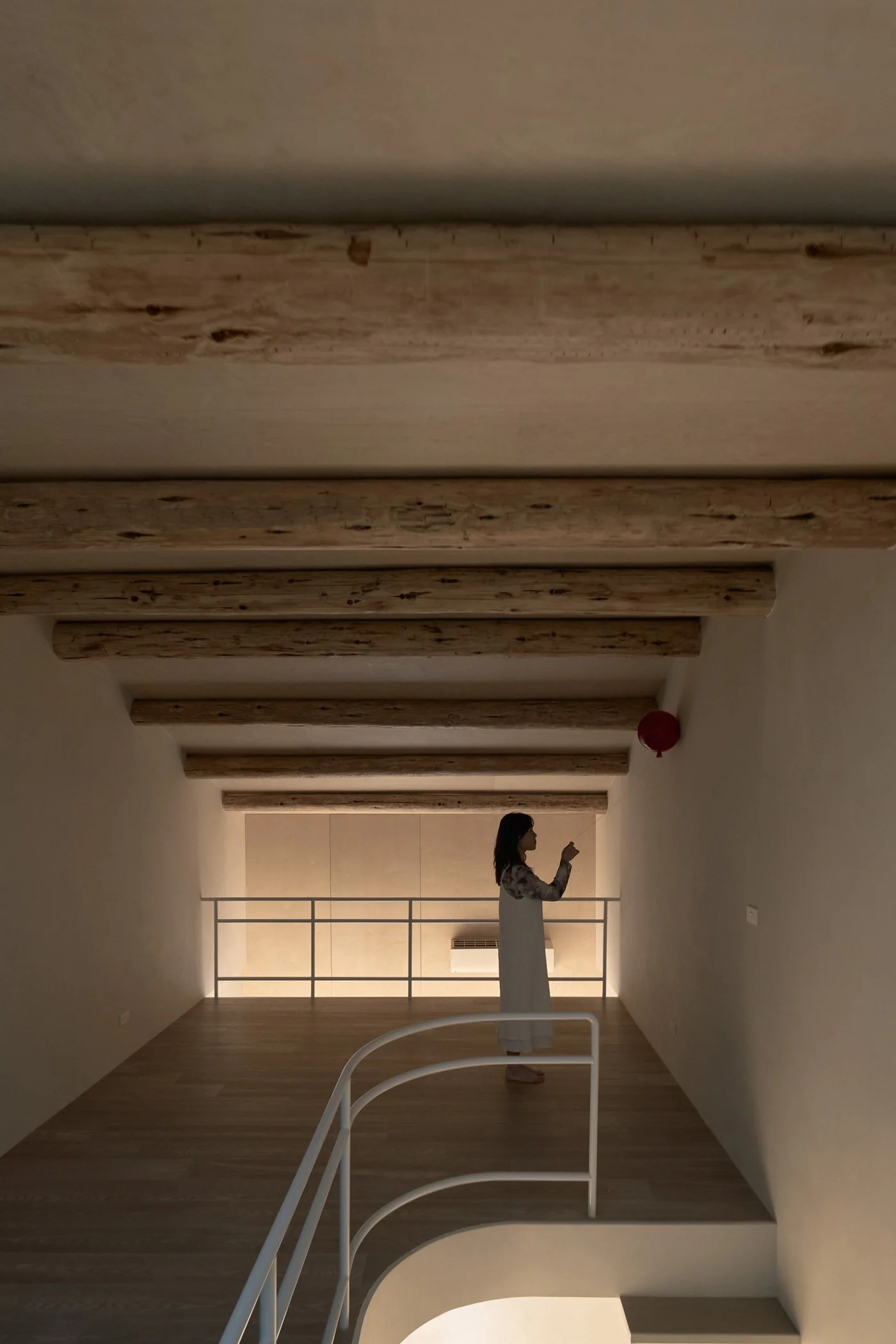
At the apex, an undulating fabric ceiling mimics clouds, diffusing light against rough wooden beams to create a secluded, otherworldly sanctuary. This flexible space serves as the daughter’s private loft—a secret base extending vertically—but can connect to the adjacent guest room via side doors, fluidly defining the line between the private and the shared.
-
The Resonance of a Wall-less Home
True luxury lies in the fluidity of emotional connection, not the square footage of a space.
By dismantling walls, the design transforms physical barriers into extensions of sight and dialogue. From the grounded informality of the tatami to the ambiguous boundaries of the second floor, and finally to the ethereal openness of the attic, the home is a bottom-up narrative of connection.
When architecture transcends the limits of scale, life cultivates infinite breadth within the finite. In the clamor of the city, this home sustains a free and intimate universe for its inhabitants.