
帶入手作印記,以再生紅磚牆過濾光影與通風的新加坡住宅:《A Medi-roccan Canvas》
© Mésa Haús
長年生活於燠熱的城市裡,人們對高溫的直覺防禦,通常是關上窗、把室內溫度全權交給空調。但將室內外完全隔絕的模式,除了付出高昂的能源代價,也切斷了住宅與外部環境的互動。與其單向依賴機械設備對抗高溫,更長遠的解方,在於思索如何藉由格局的釋放,讓自然風在室內形成整體循環,透過材質特性去過濾光熱、引導動線促成通風,將空間打造為能夠自我調節的系統,進而讓住宅在低耗能的狀態下,與外部環境健康共生。
由 Intheory Design 操刀、帶有時間感與手感溫度外觀的新加坡住宅《A Medi-roccan Canvas》,便將這份思維納入設計考量。設計團隊挹注一份「不過度修飾」的理念,以帶有天然孔洞的再生磚牆與低度加工的礦物塗料,作為構築空間的基礎。背後的原因,一方面是因為材質與生俱來的透氣性,提供篩濾光照和引導氣流的良好介面;另一方面則來自使用者的美學偏好。
-
Living in a city of perpetual heat, the instinctive defense against the humidity is often to shut the windows and surrender the interior to air conditioning. However, this hermetic mode of living not only exacts a high energy cost but also severs the essential connection between a home and its environment. Instead of relying solely on mechanical systems to combat the heat, a more enduring solution lies in the liberation of the floor plan—allowing natural breezes to circulate, employing material properties to filter light and heat, and guiding airflow through the home’s layout. By crafting a space that functions as a self-regulating system, a residence can coexist healthily with its environment, all while minimizing energy consumption.
Intheory Design’s latest project, A Medi-roccan Canvas, embodies this environmental philosophy. With an aesthetic defined by timelessness and tactility, the design team chose to build the space upon a foundation of naturally porous, reclaimed brick and minimally processed mineral plaster. These material choices serve a dual purpose: their inherent breathability provides an ideal interface for filtering light and channeling airflow, while also aligning with the owners' aesthetic inclinations.
The homeowners, drawn to the rugged atmosphere of Spanish and Moroccan dwellings, were captivated by the beauty of "imperfect" surfaces that bear the mark of time. They envisioned a home that would act as a pure, receptive backdrop—a canvas for their curated collection of travel artifacts and burgeoning greenery. Here, the owners’ emotional resonance with materials and the designer’s physics-based climatic strategy achieve a seamless synthesis.
© Mésa Haús
屋主深受西班牙和摩洛哥住宅的粗獷氛圍,以及恰到好處的不完美、能承載時間感的材質表面所吸引,期盼自己的住家,成為一塊純粹、包容多年來收集的旅行舊物與植栽的底景。於是,人們對材質的感性共鳴和因應氣候採取的物理編制,在這間屋子達成緊密的疊合。
從一面孔洞牆開始,讓光影與對話自由流動
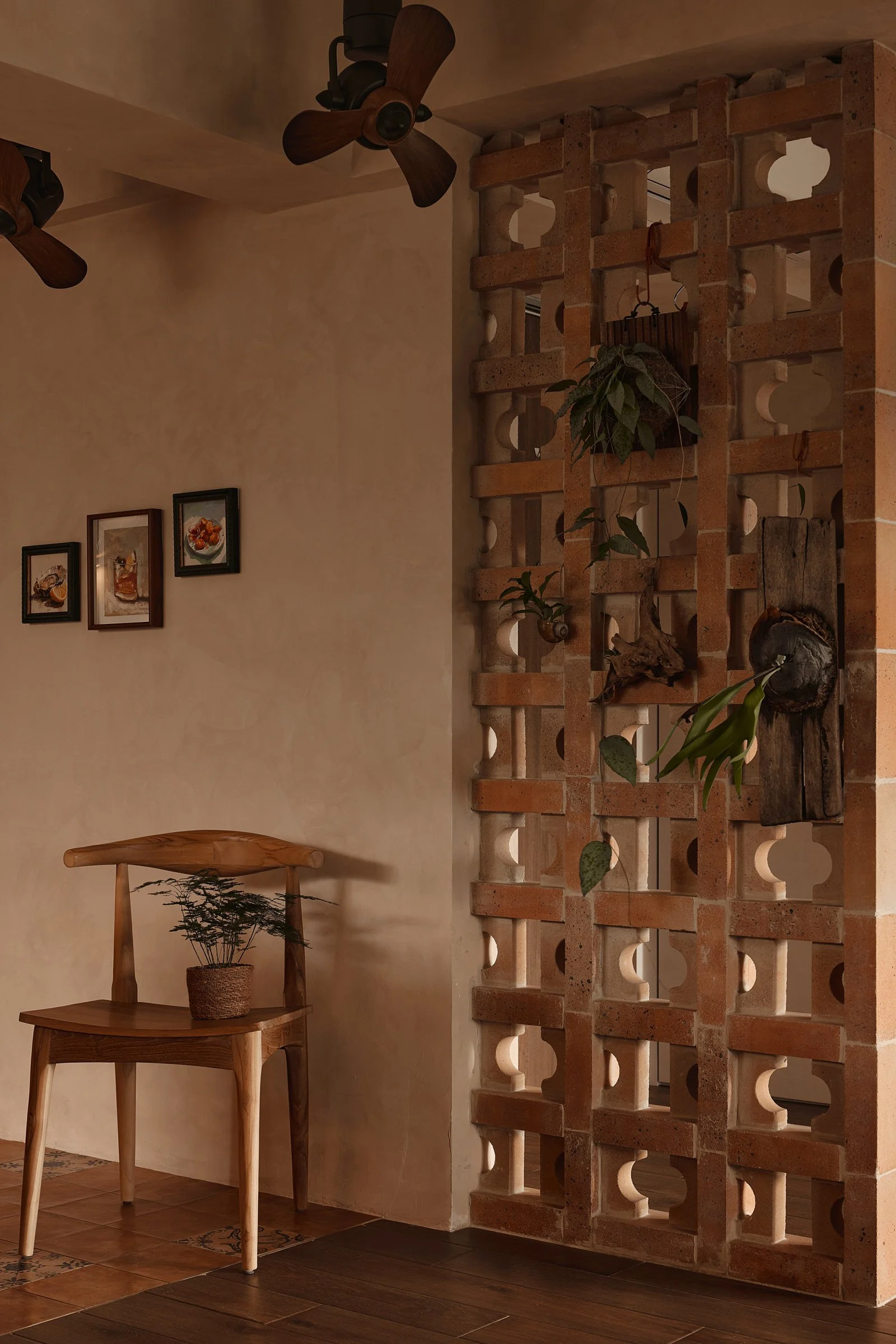
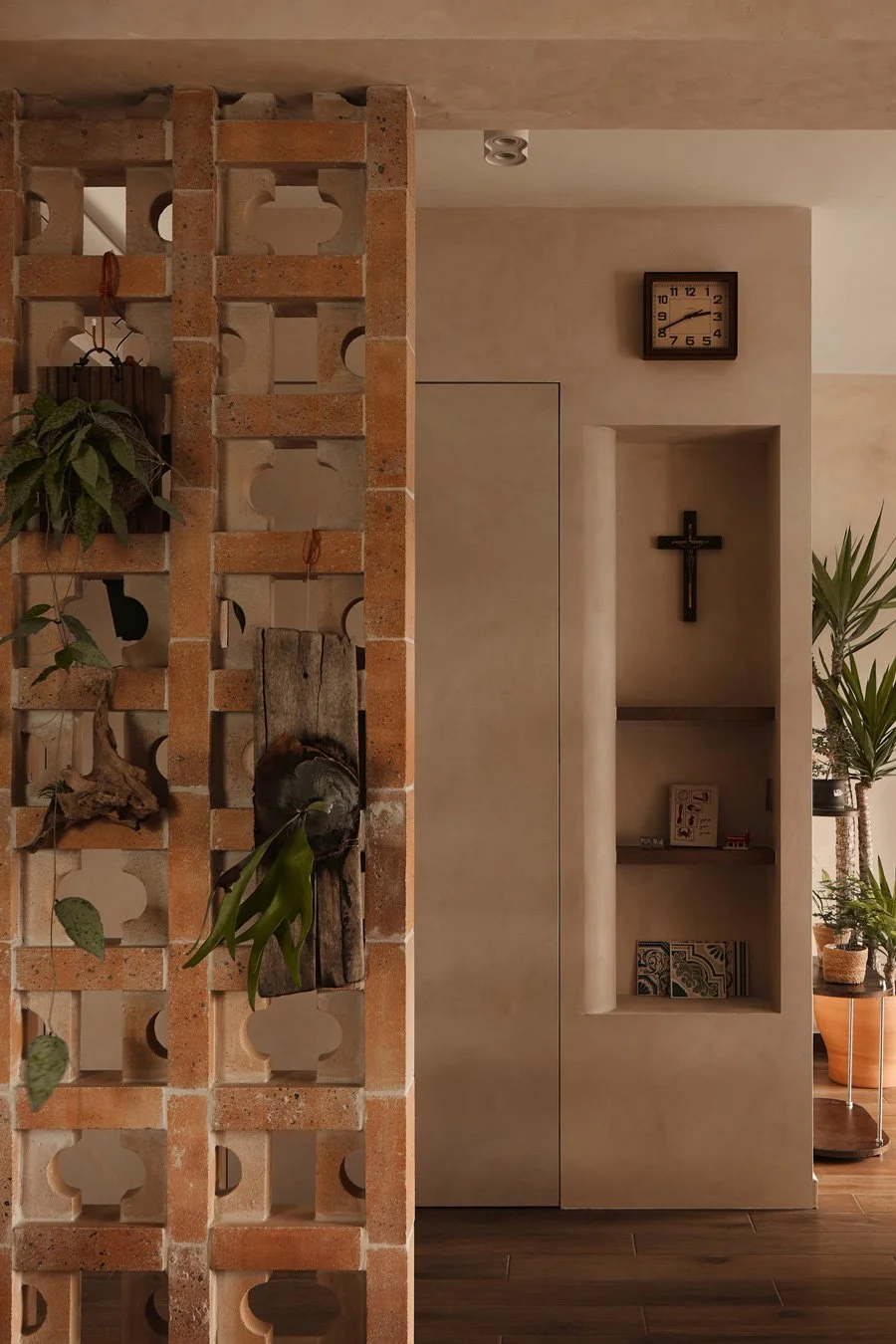
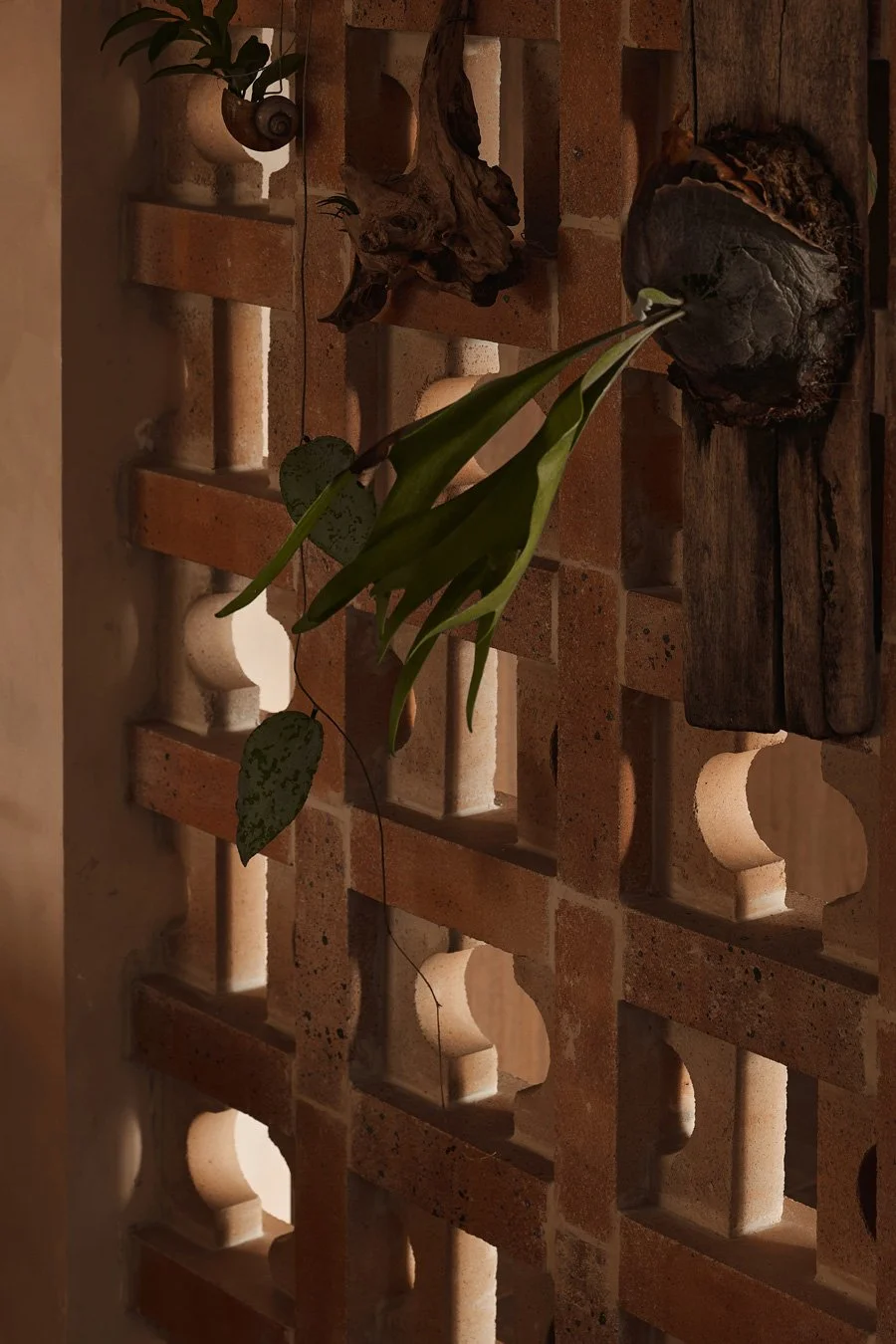
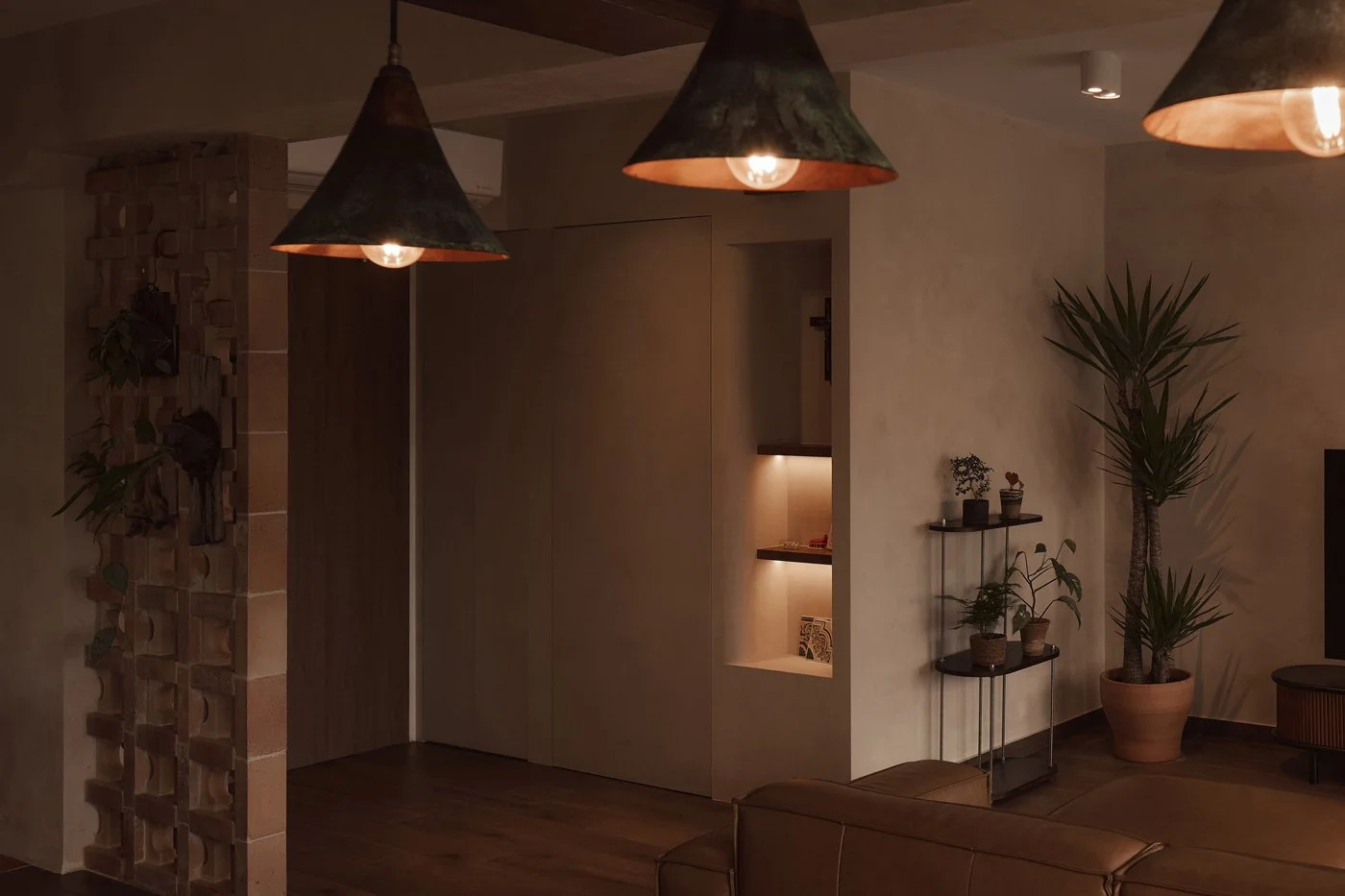
玄關選用循環材質工作室 Loqa 打造的磚材,砌築一面會呼吸的孔洞牆來界定內外邊界。這面帶有窯燒質地的牆體,在發揮實質的通透機能之餘,也任鹿角蕨與藤蔓植物隨性地懸置、攀附於磚孔之間。植物生長的有機軌跡、原始的磚紅肌理,連同光線透過孔洞投射而出的錯落陰影自然融合,成為家中第一道充滿時間感的生活端景。
-
Starting with a Porous Wall: Letting Light and Dialogue Flow
The entrance features a breathable brick screen, crafted by the circular material studio Loqa, which defines the boundary between the interior and the outside world. Beyond its functional role in ventilation, this kiln-fired wall serves as a living canvas; staghorn ferns and creeping vines are suspended or woven through its apertures. The organic growth of the plants and the raw, earthy texture of the bricks merge with the shifting shadows cast by the sun, creating the home’s first living vignette—one that breathes with the rhythm of the day.
© Mésa Haús
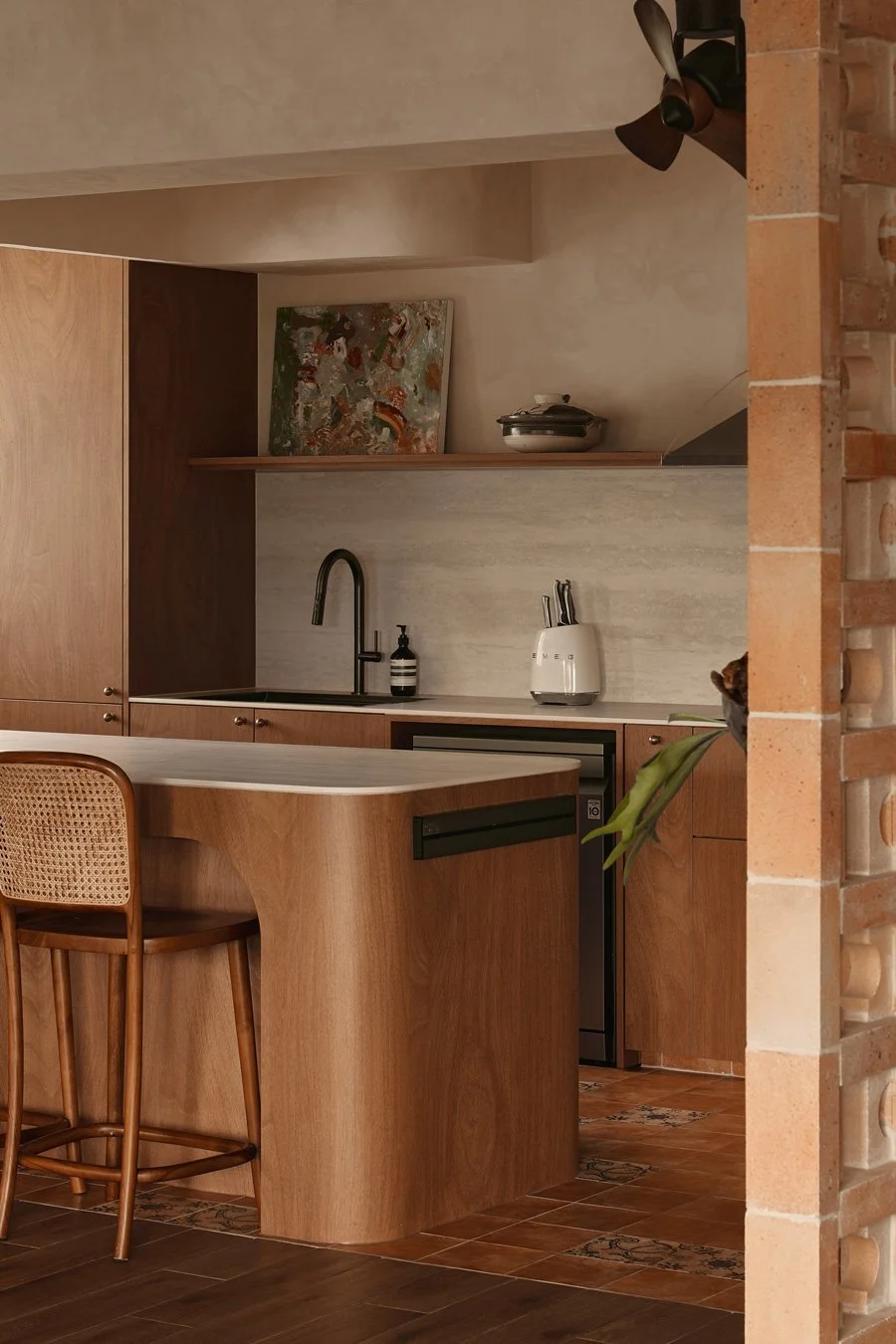
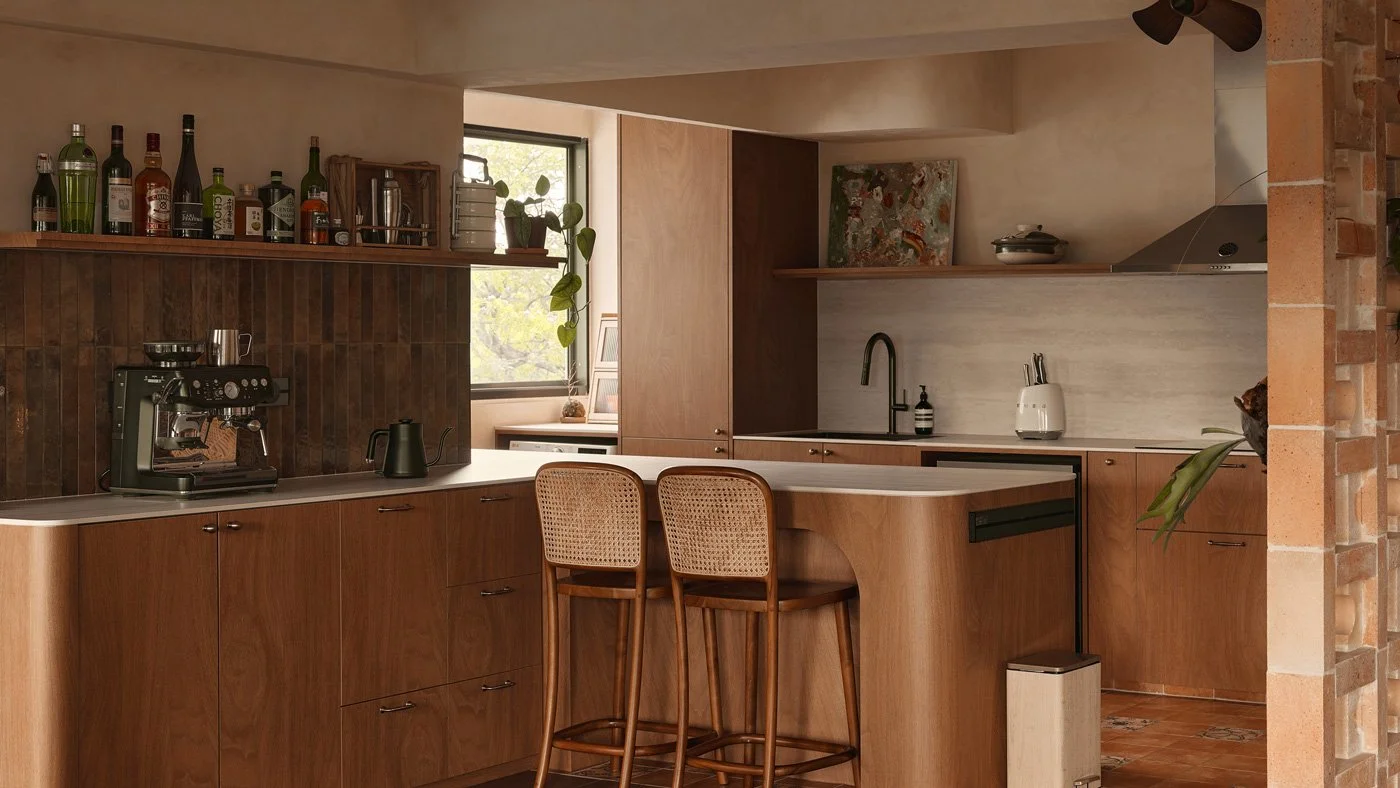
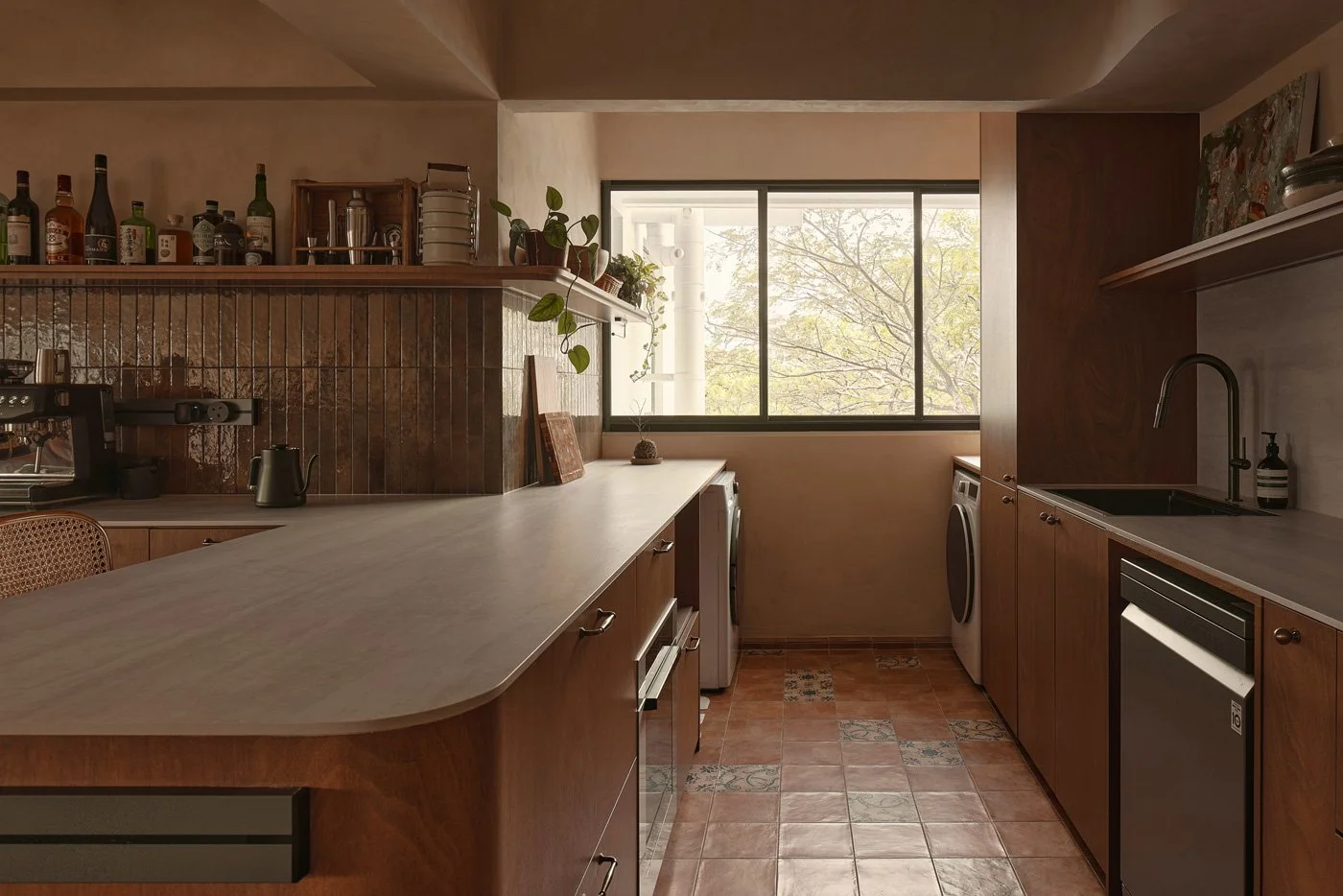
為了使流動的生命力不只停留在材質表面,設計團隊進一步釋放內部的格局界限。他們根據屋主的行為模式來發展動線,拆除客廳與廚房之間的實體隔牆,延伸一座寬敞的廚房中島,以回應屋主「不該為了煮咖啡而被迫中斷對話」的起居嚮往。開闊的視角與無礙的動線,讓人在步伐移動、視線的交會與對話,都能以最不費力的方式日復一日地流動。
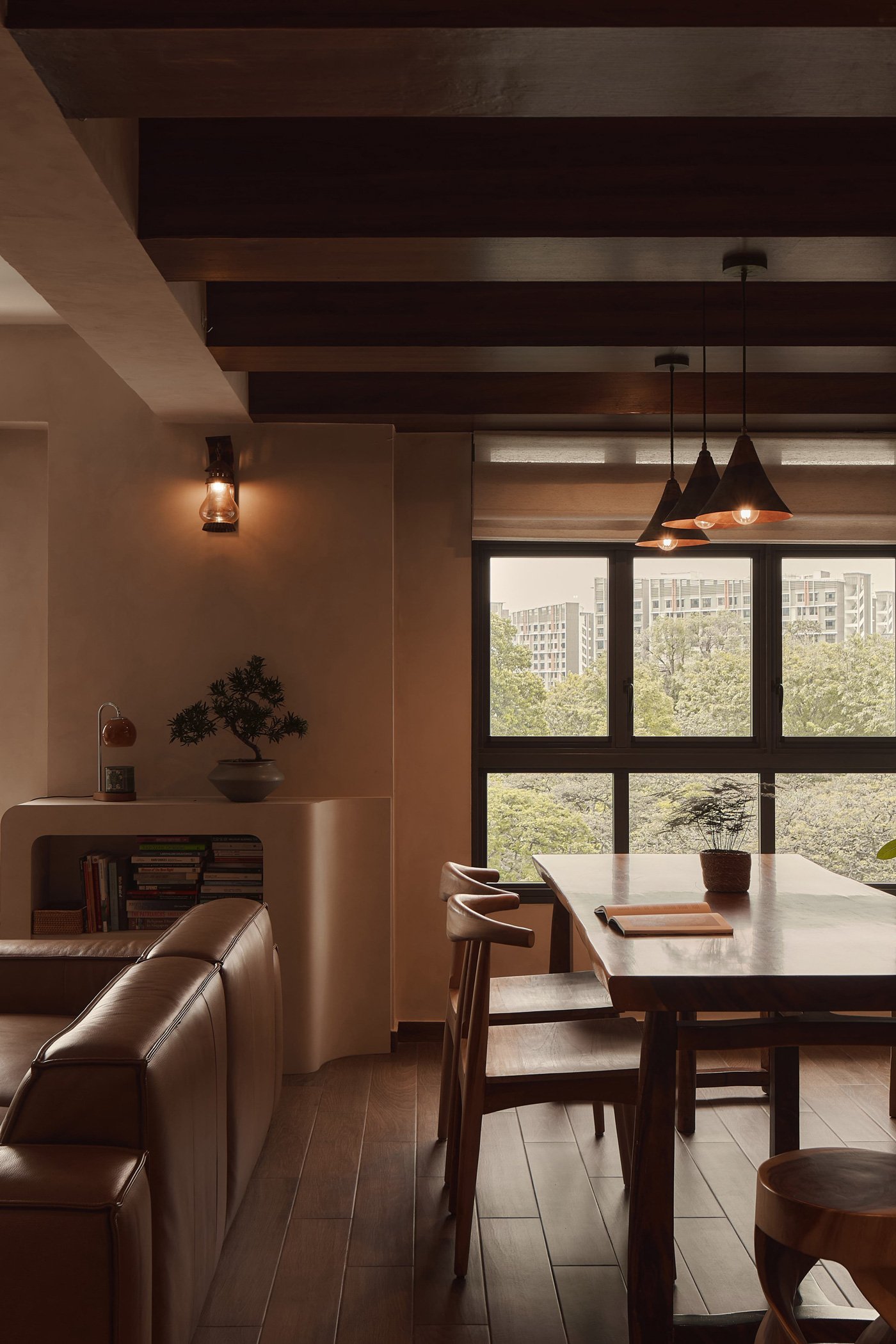
面對客餐廳之間一根無法移除的原始結構柱,設計師捨棄傳統將樑柱包覆隱藏的作法,順應既有框架將其外露,轉化為一座嵌入式的書架。原本的視覺阻礙,搖身一變成屋主收納隨機物件的機能節點,同時也是一道最具生活感的造型立面。
-
To extend this vitality beyond the threshold, the design team further liberated the interior layout. Guided by the owners’ behavioral patterns, they demolished the wall separating the living room and kitchen, extending a spacious kitchen island that addresses the owners' desire to "never have to interrupt a conversation while brewing coffee." This openness allows for seamless movement, spontaneous visual connections, and fluid dialogue, making everyday life feel effortless.
Where an immovable structural column stood between the living and dining areas, the designers eschewed the conventional approach of concealing it. Instead, they embraced the existing frame, transforming the pillar into an integrated bookshelf. The former visual obstacle has been repurposed into a functional hub for the owners' eclectic collection, evolving into a character-filled facade that anchors the home's lived-in aesthetic.
© Mésa Haús
© Mésa Haús
喚醒觸覺感知,讓屋主接力完成的居家畫布
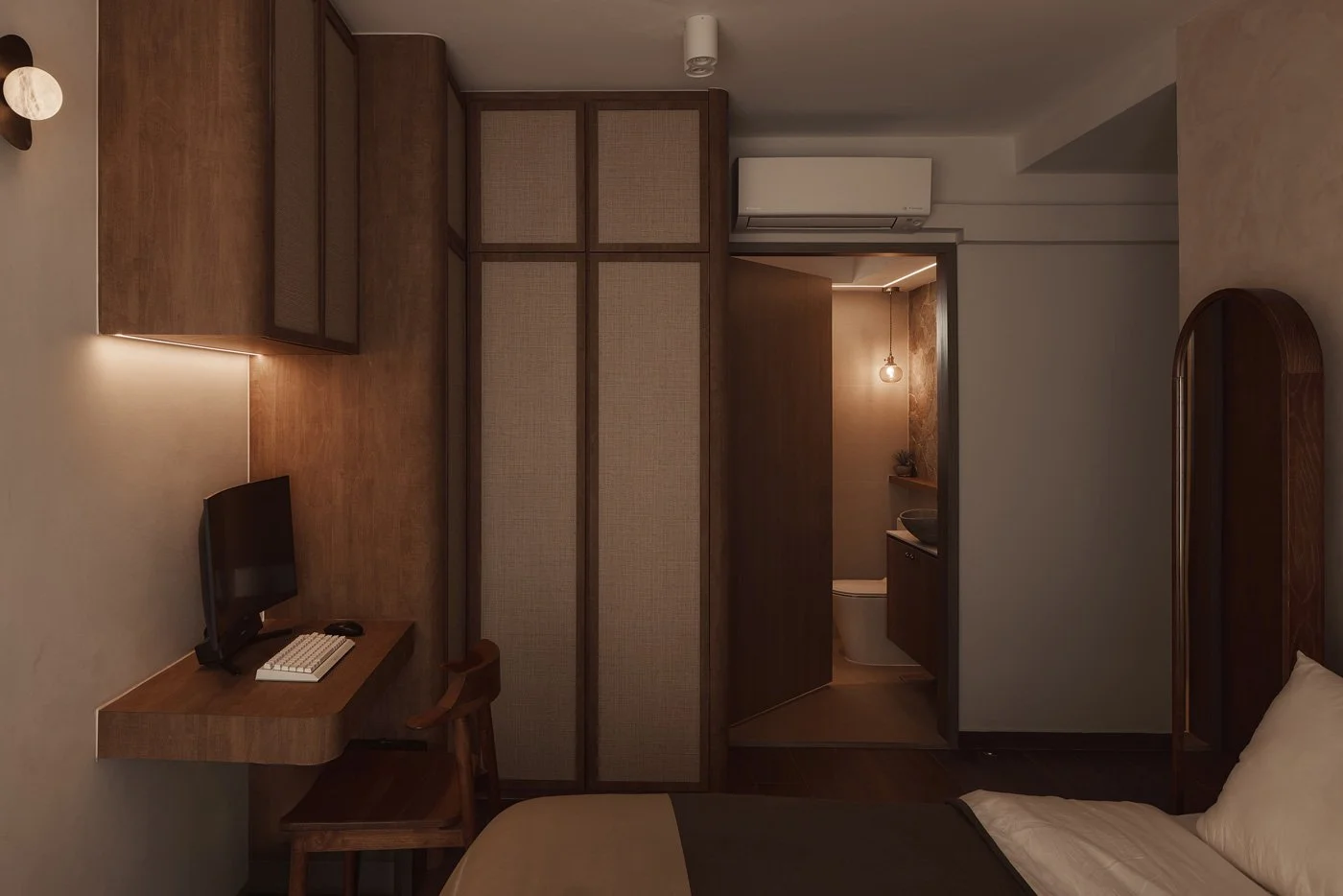
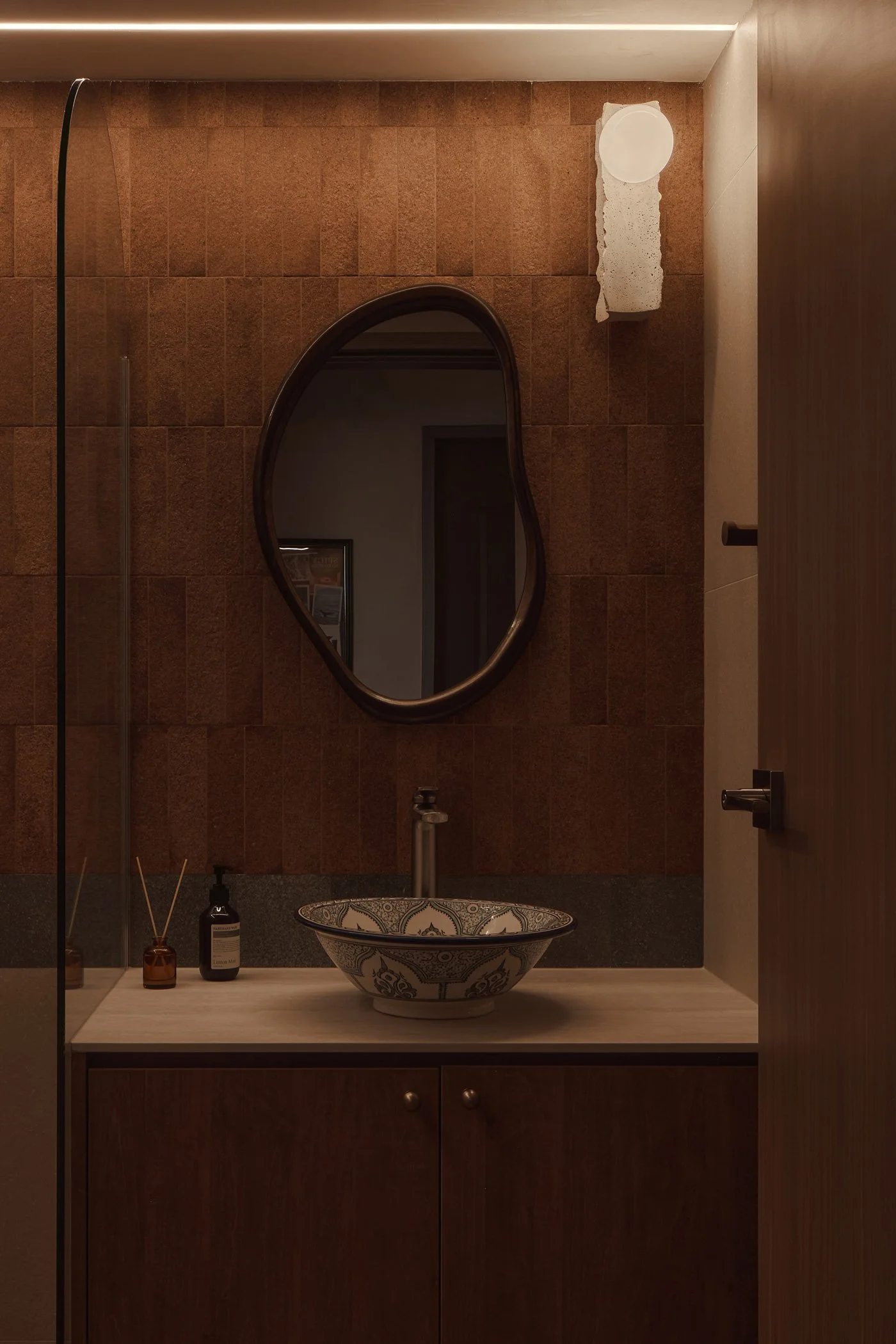
除了格局與動線的流動,周遭細節也扣合屋主對「觸覺感知」的重視而展開。從玄關磚牆、臥室保有透氣性的藤編衣櫃,再到屋主初見便毫不猶豫決定的衛浴石材磚,鮮明的材質觸感,不僅延續了不過度修飾的設計主軸,更以不規則的粗獷質地注入沉穩的份量感,平衡居所中的輕盈元素。這樣的安排,成功將居住體驗從單一的視覺觀看,深化為身體與場域的實質接觸。一次次的觸碰與使用,都在無形中拉近人與空間本體的連結。
-
Awakening Tactility: A Home Completed by Hand
Beyond the flow of movement, the spatial details are curated to honor the owners' tactile sensibilities. From the brickwork at the entrance and the breathable rattan wardrobes in the bedrooms to the stone tiles in the bathroom—chosen by the owners without hesitation upon first sight—the vivid textures not only maintain the design’s "honest" ethos but also provide a grounded sense of weight that balances the home's lighter, airy elements. This approach elevates the living experience from a purely visual one to a physical, immersive engagement with the space, where each touch and daily interaction deepens the connection between the inhabitant and the home.
© Mésa Haús
© Mésa Haús
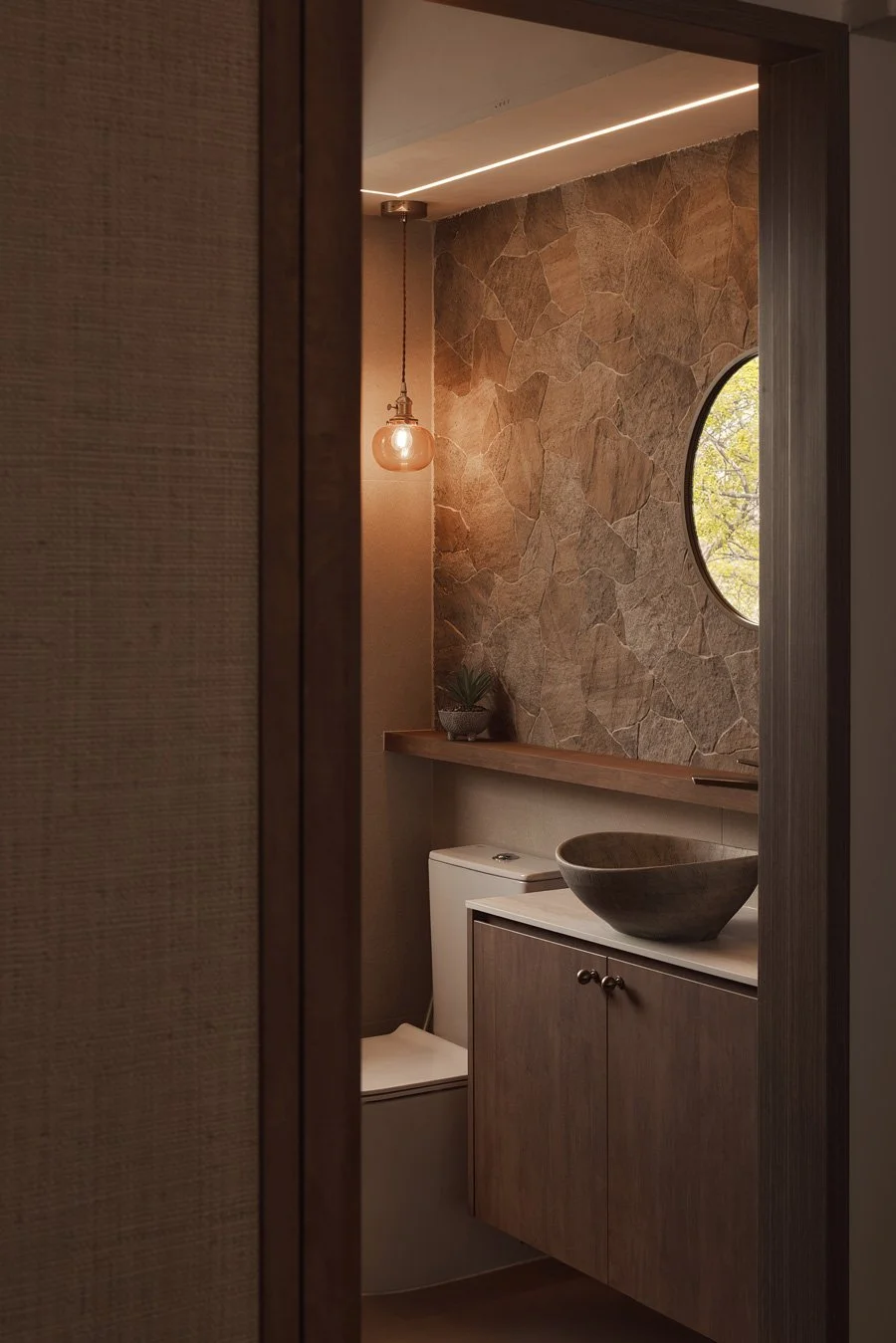
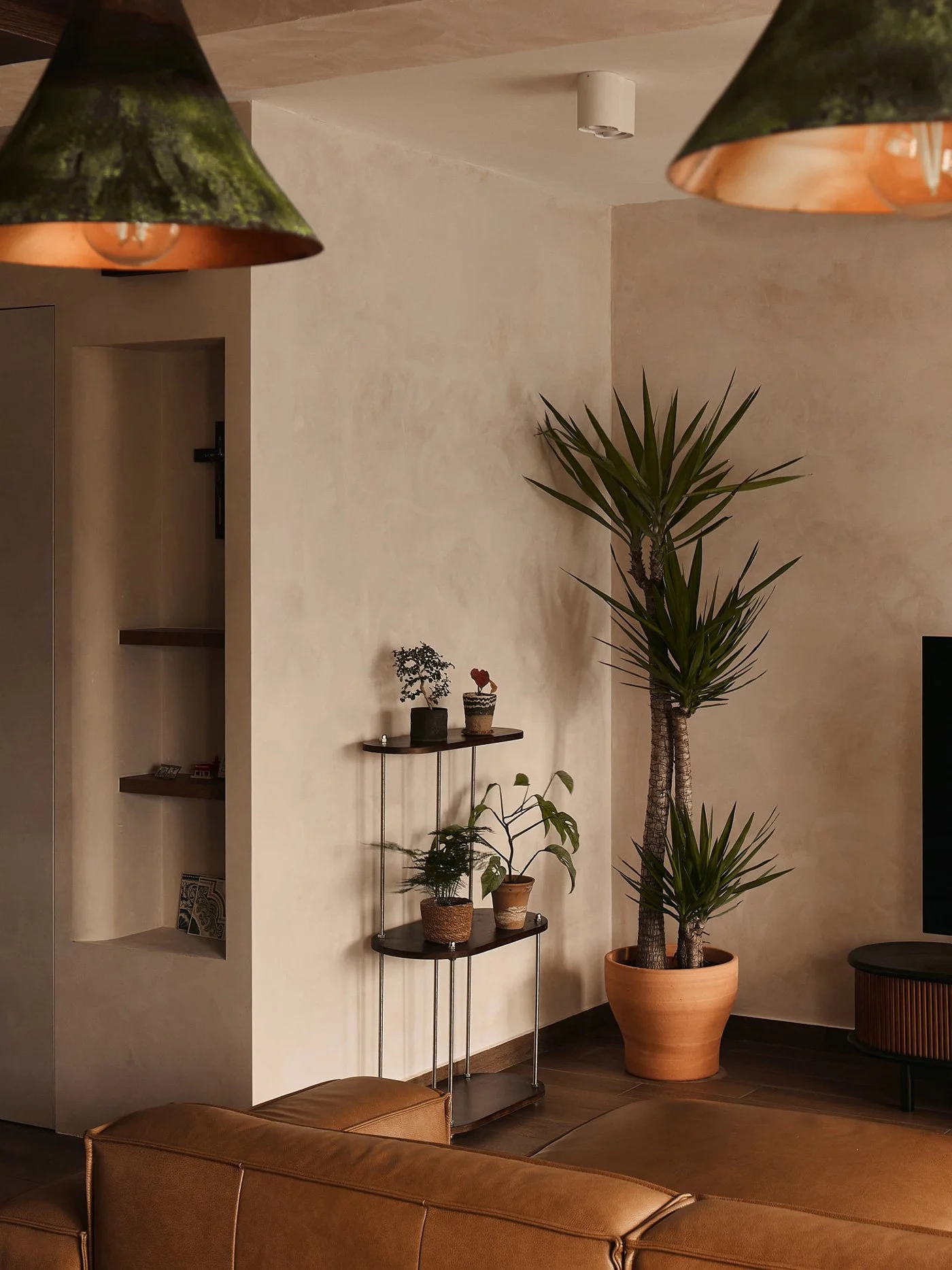
依循《A Medi-roccan Canvas》的命名,設計師將這個家,留作一張未完成的畫布。屋主從被動的居住者化身為共創者,親自塗刷低 VOC 礦物塗料的牆面、一片片拼貼尋覓而來的花磚,甚至手工為天花樑柱包覆上溫潤的木紋。空間中點綴的,是來自在地工匠的手作燈具與摩洛哥水槽,每一次的手工勞動與挑選,都替這個家烙下無可取代的專屬印記。
-
True to its name, A Medi-roccan Canvas serves as an unfinished work of art. The owners have transitioned from passive occupants to active co-creators: they personally applied the low-VOC mineral paint to the walls, painstakingly pieced together reclaimed tiles, and even handcrafted the wooden cladding for the ceiling beams. Complemented by artisanal lighting from local craftsmen and a hand-carved Moroccan sink, every labor of love and intentional choice has left an indelible, personal mark on the residence—one that is truly irreplaceable.
© Mésa Haús
© Mésa Haús