視線所及,即是心之所嚮:覺引設計在留白中構築生活的軸心
-
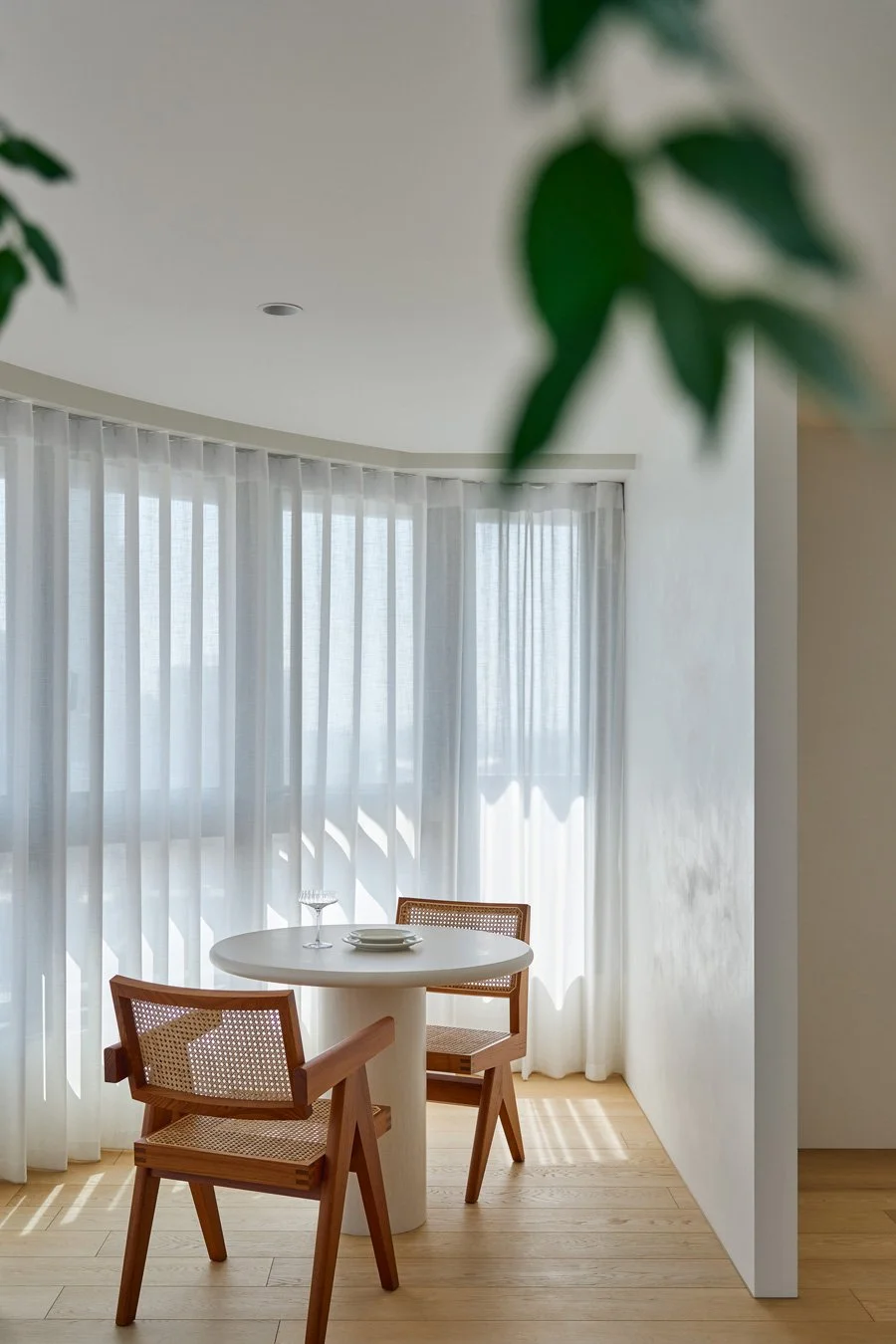
Each window holds a different kind of mind. Some look out onto a distance still ahead. Others face what feels like an arrival, the quiet end of a long way back.
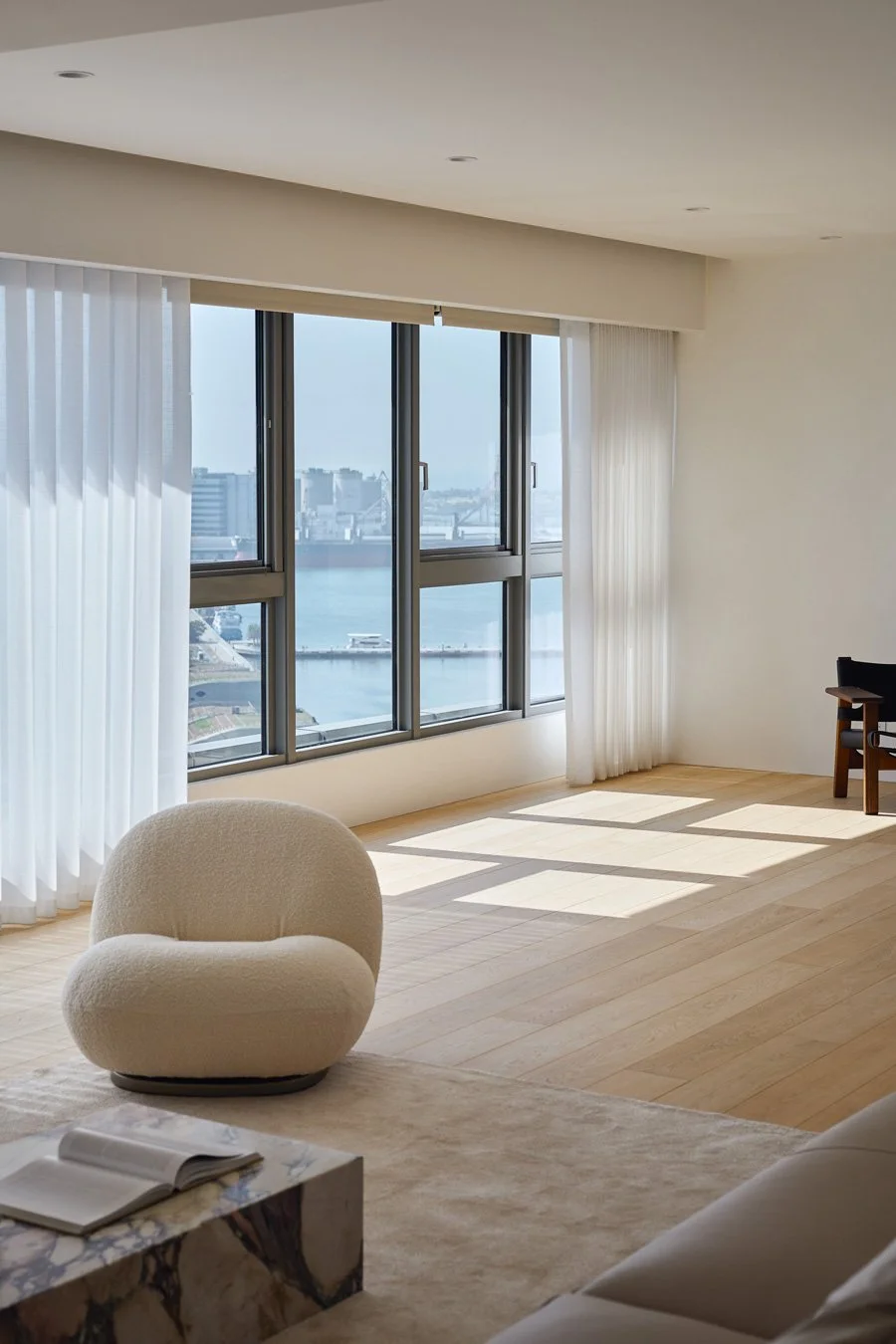
From this window view over Kaohsiung, the city seems to recede beyond the tip of land. Water lays itself out across the harbor, the river turns slowly at the edge of the grid, and the skyline leaves room for sky. Mountains appear and disappear in cloud. The calm is not dramatic. It returns in small, repeated moments, the kind you notice only once life has slowed enough to let them in.
-
From horizon to home: a walk inward
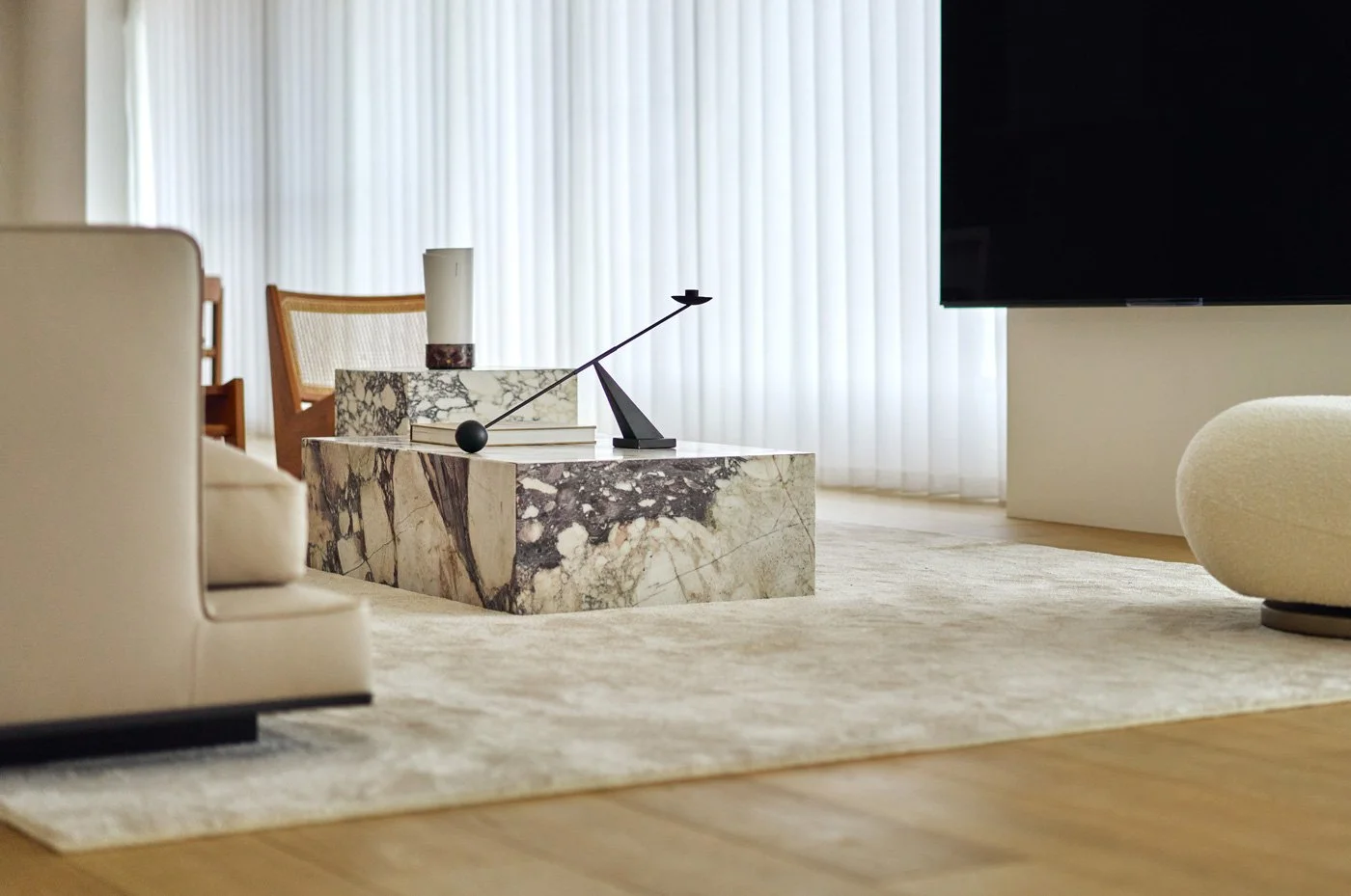
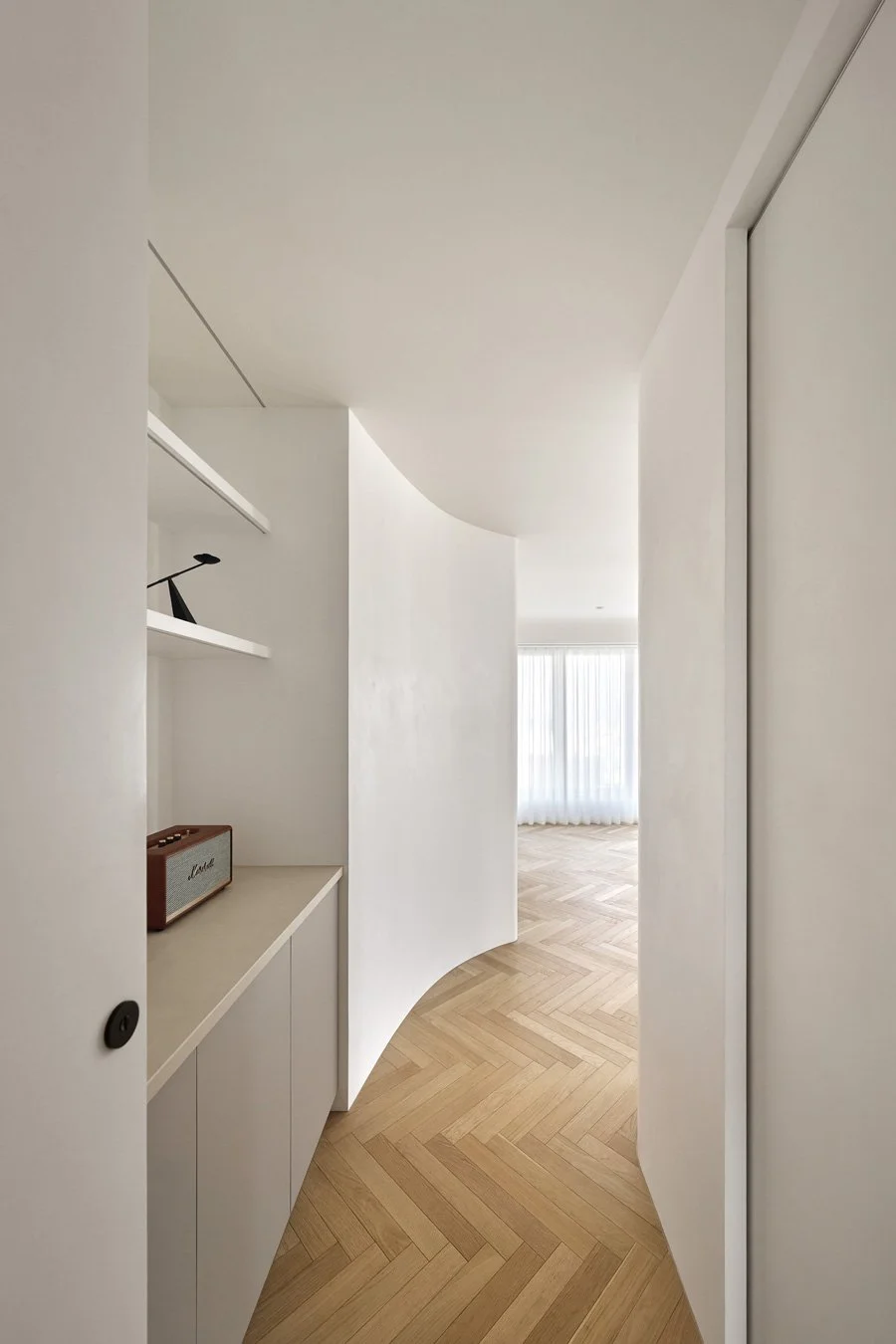
Turn back from the view and the interior answers with restraint. When Jour en Design took over, the apartment was still a bare shell, an unusually open starting point that allowed the plan to be rebuilt from first principles. The entry resists the temptation to over define. Instead of partitions, a simple shift in flooring creates a pause before the home opens up. Outside noise drops away. The space ahead feels clear, almost uncluttered by default.
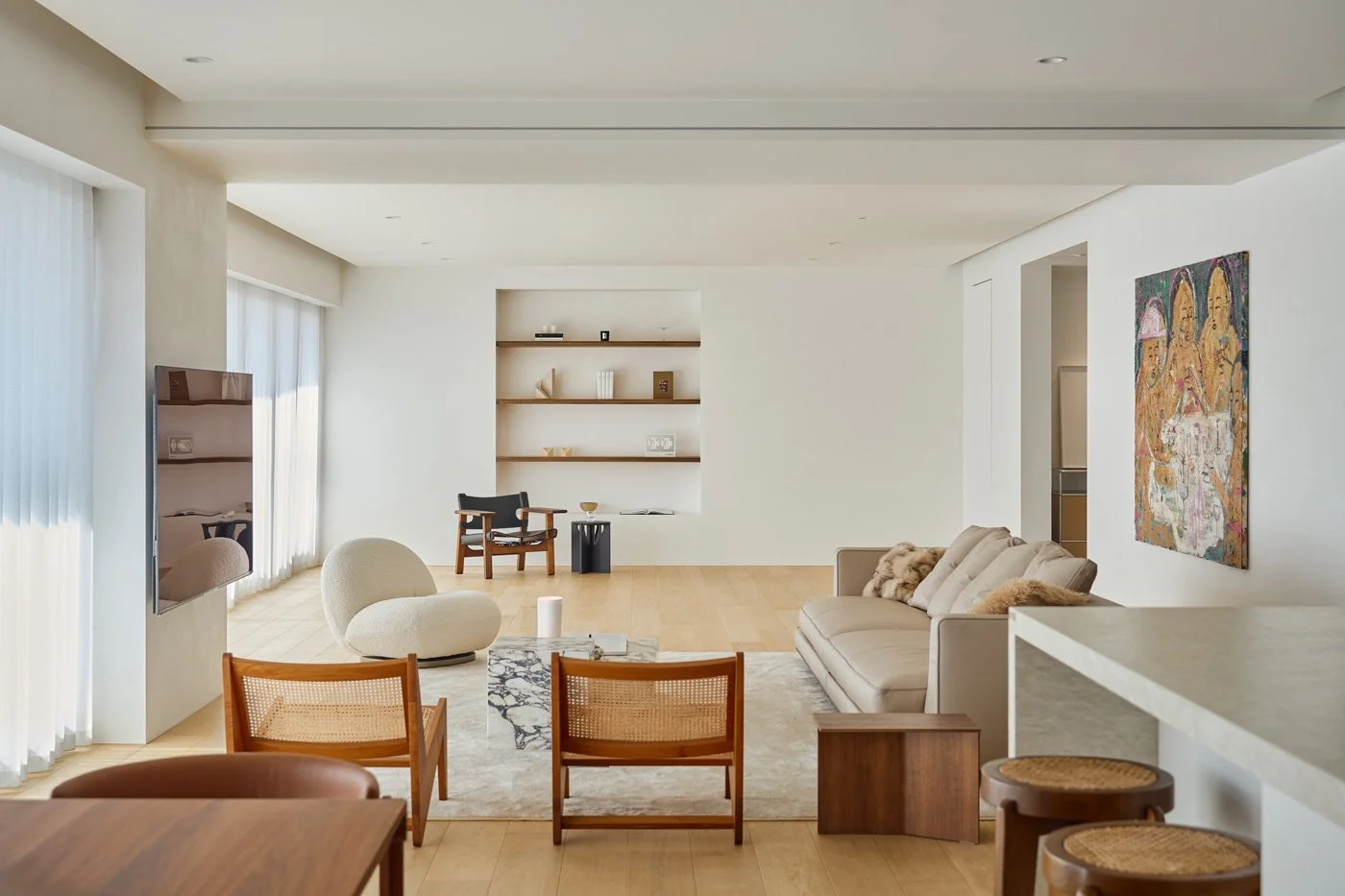
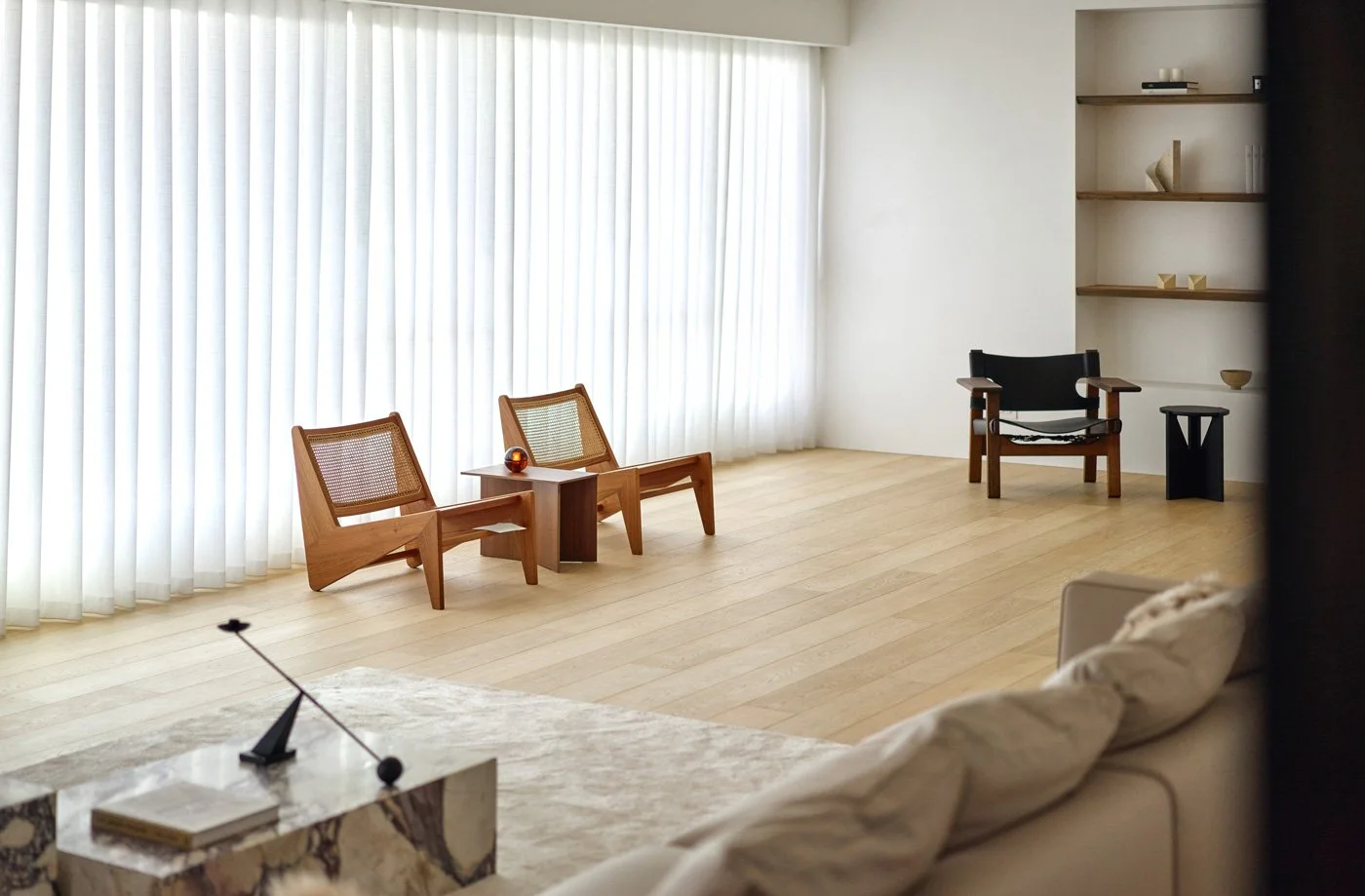
As you move inward, the public zone stretches laterally, reading like a continuous band rather than a sequence of rooms. Long planks of timber run with the length of the space, pulling the eye toward the far end. Overhead, a clean ceiling line extends the sense of width. The large structural beams are kept and reframed. Their spacing becomes a measure of movement, softening the height while guiding the gaze toward the most open part of the plan.
-
The kitchen as a shared axis
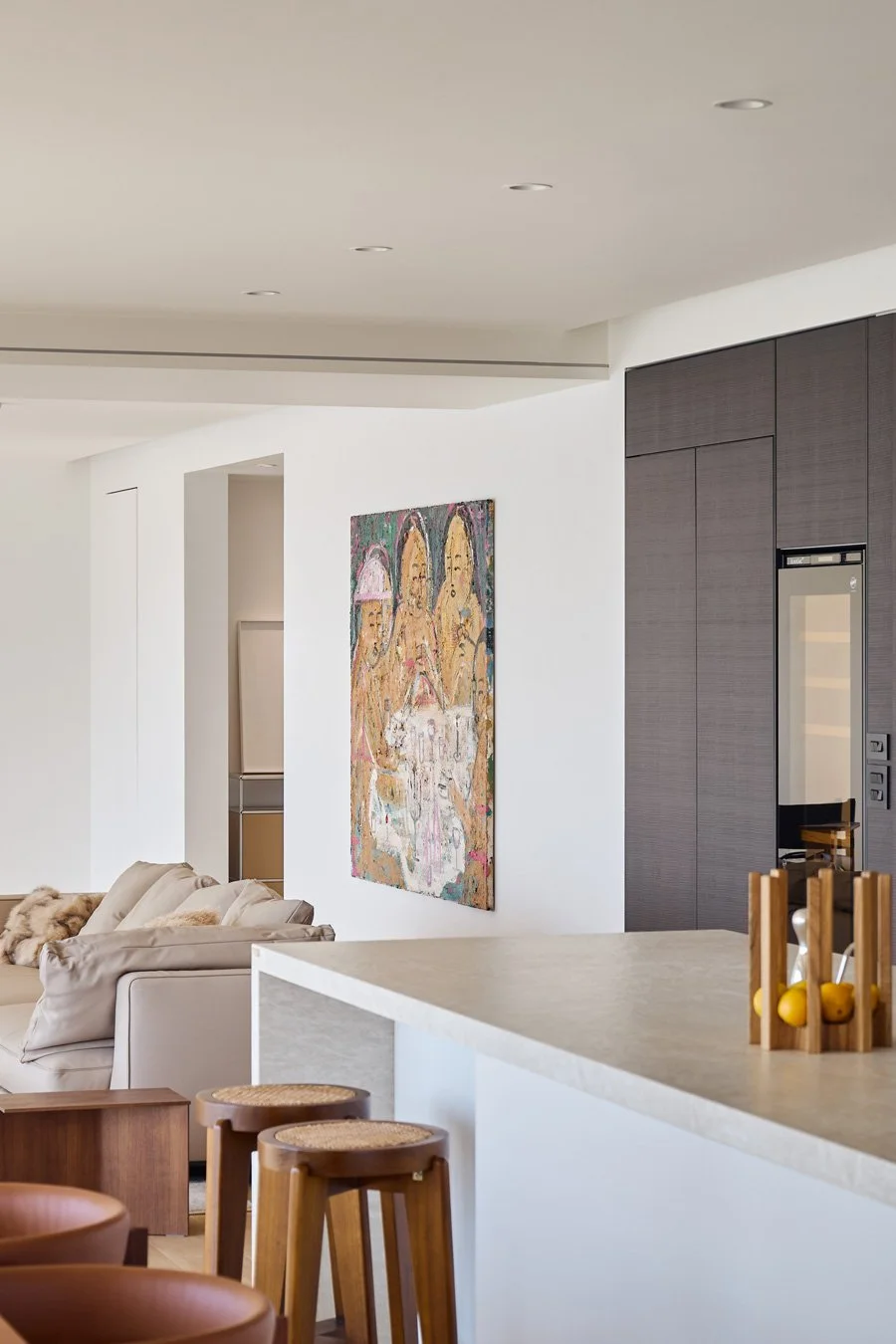
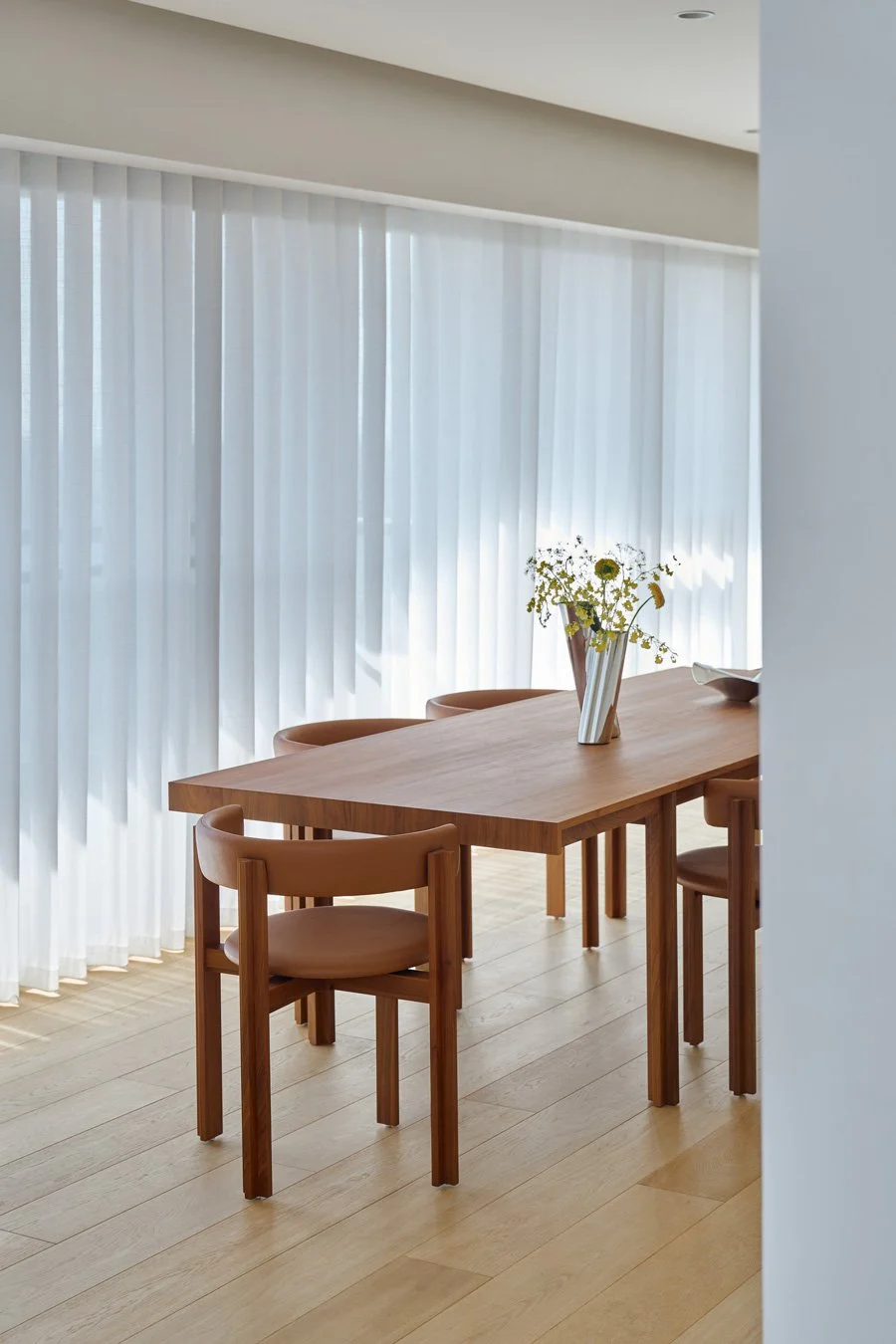
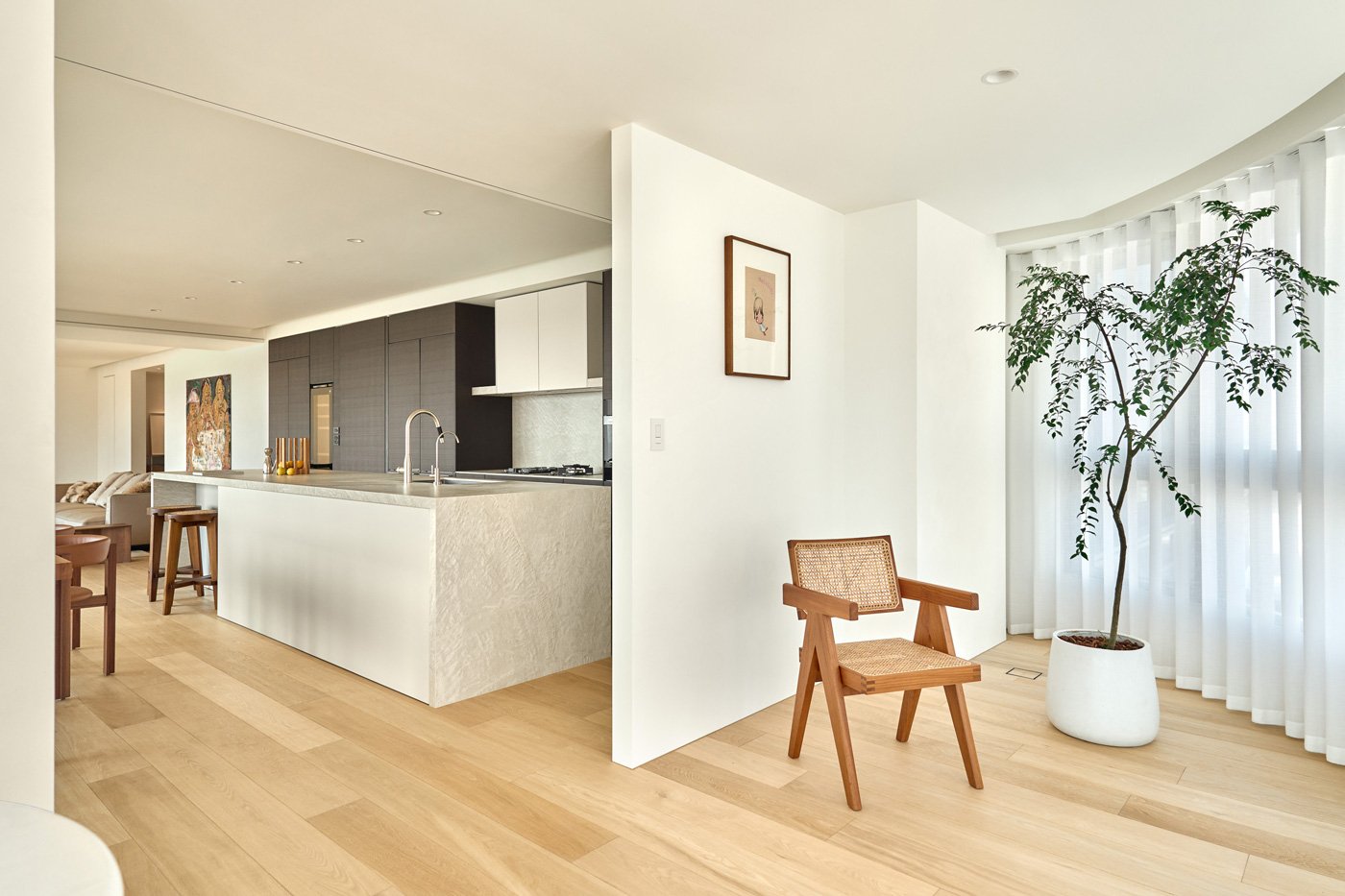
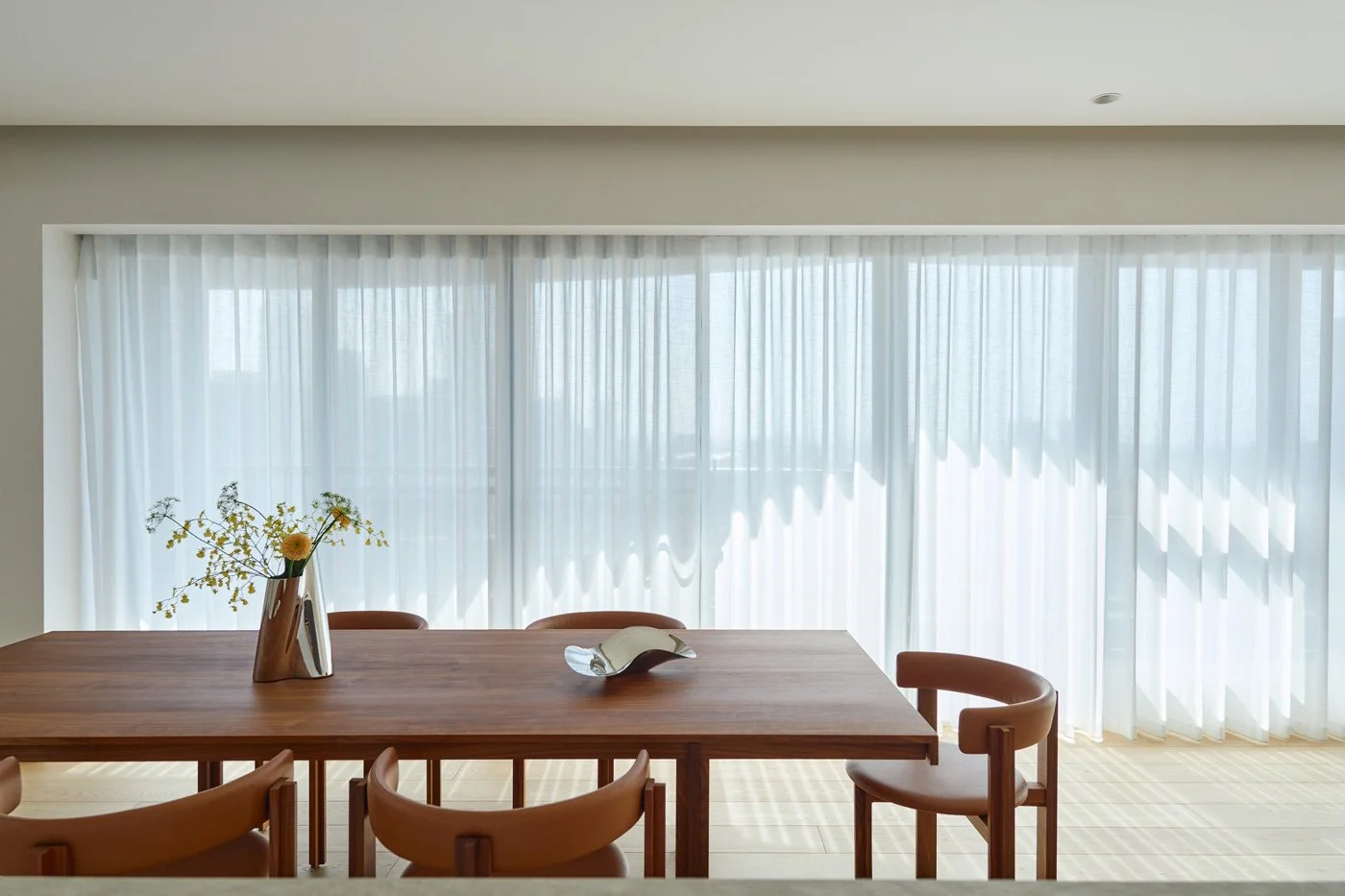
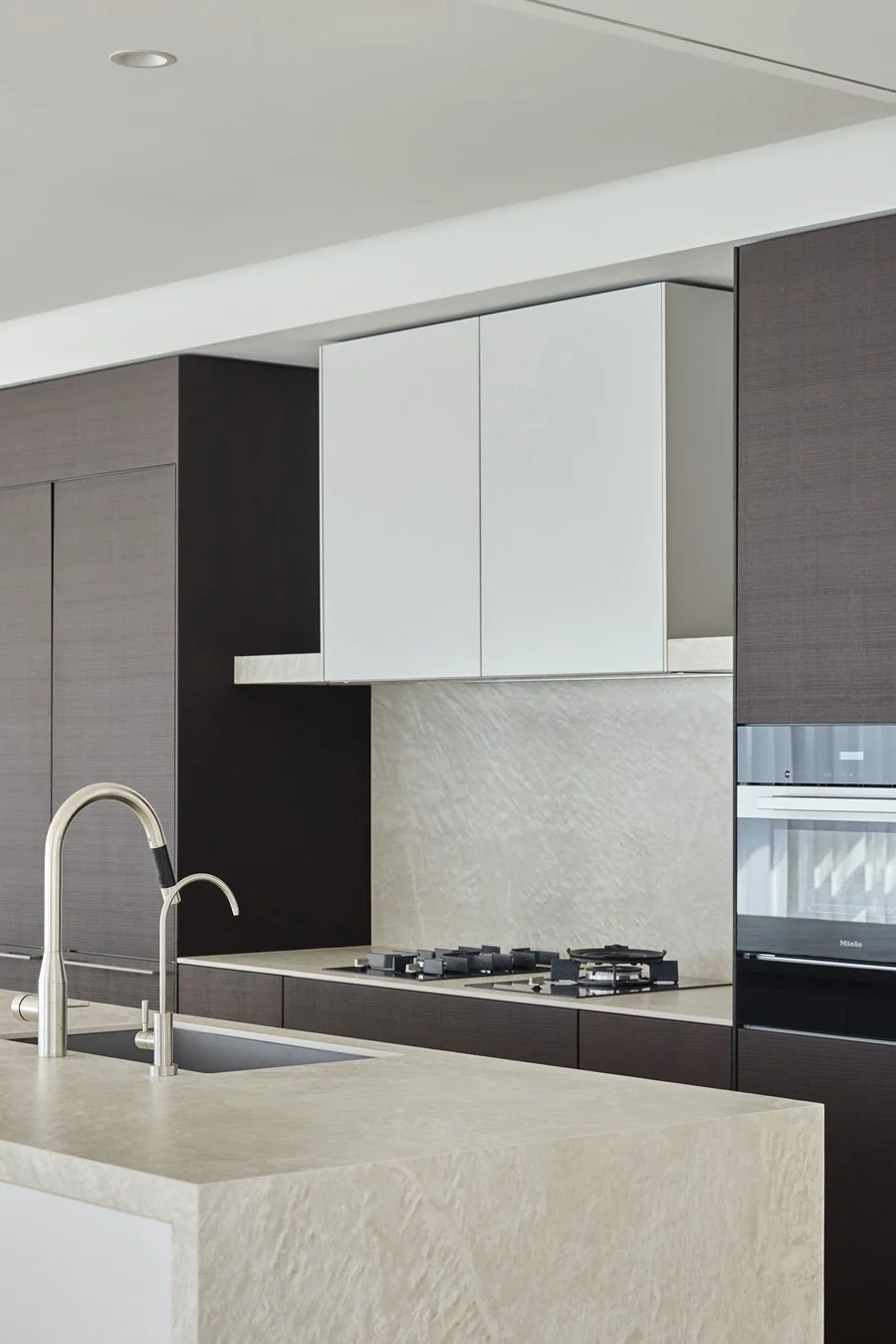
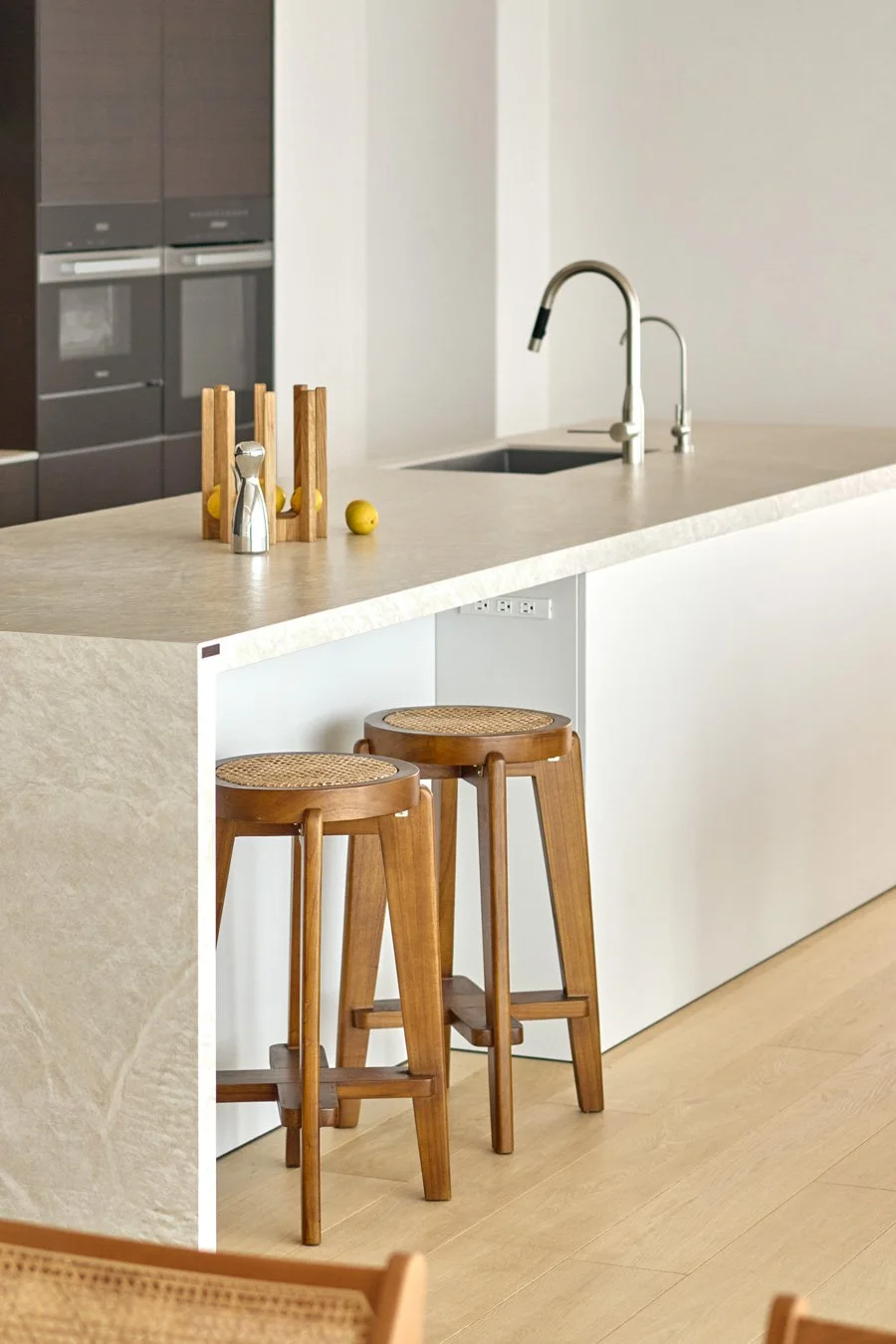
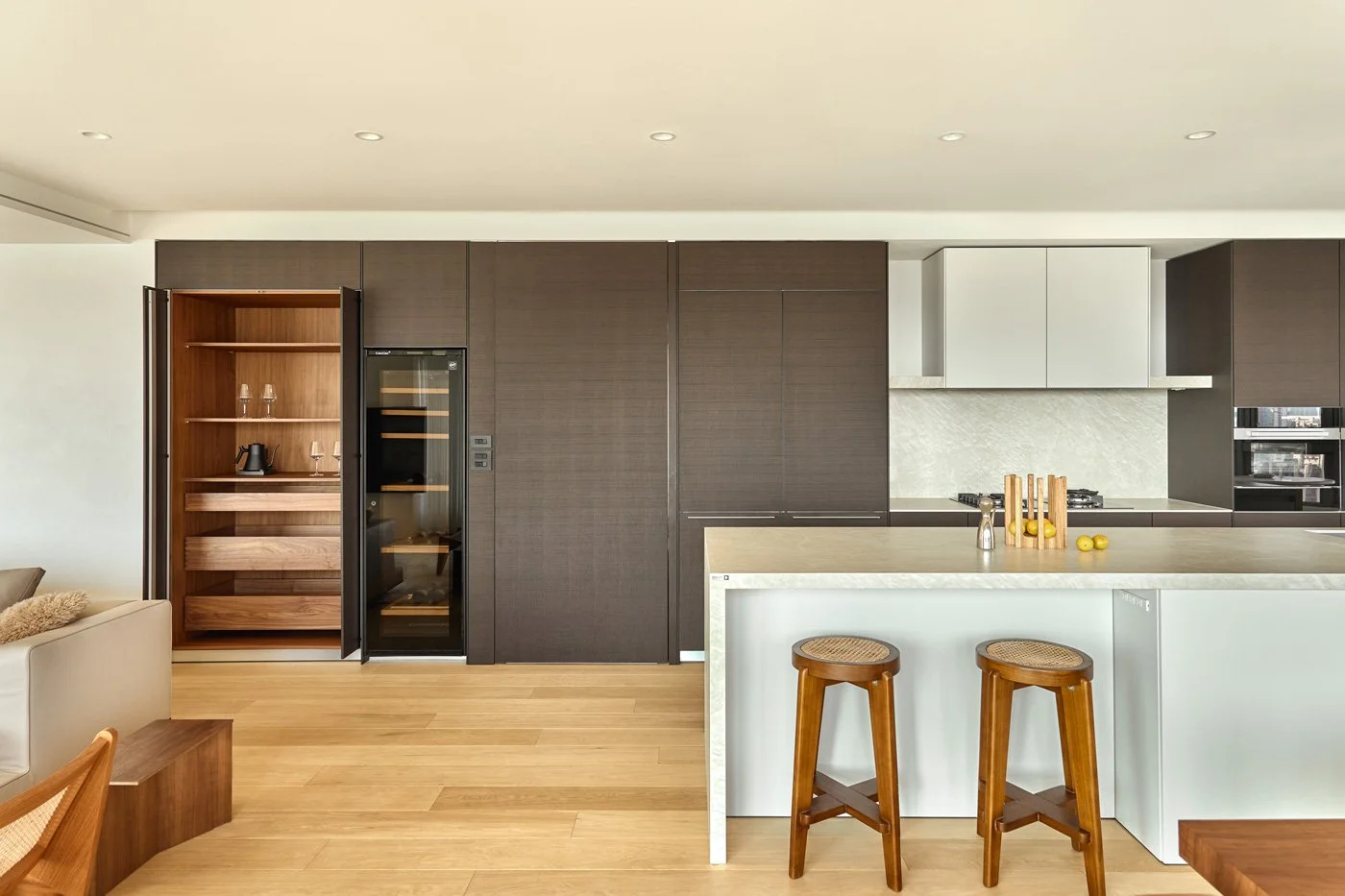
At the center sits a galley style kitchen and dining arrangement, planned in a three stroke layout. It shifts the kitchen away from its usual isolation and turns it into the homeowner’s daily anchor. Cooking and cleaning remain part of the room, not a separate task turned inward. From the sink, conversation with friends in the living area can continue without interruption.
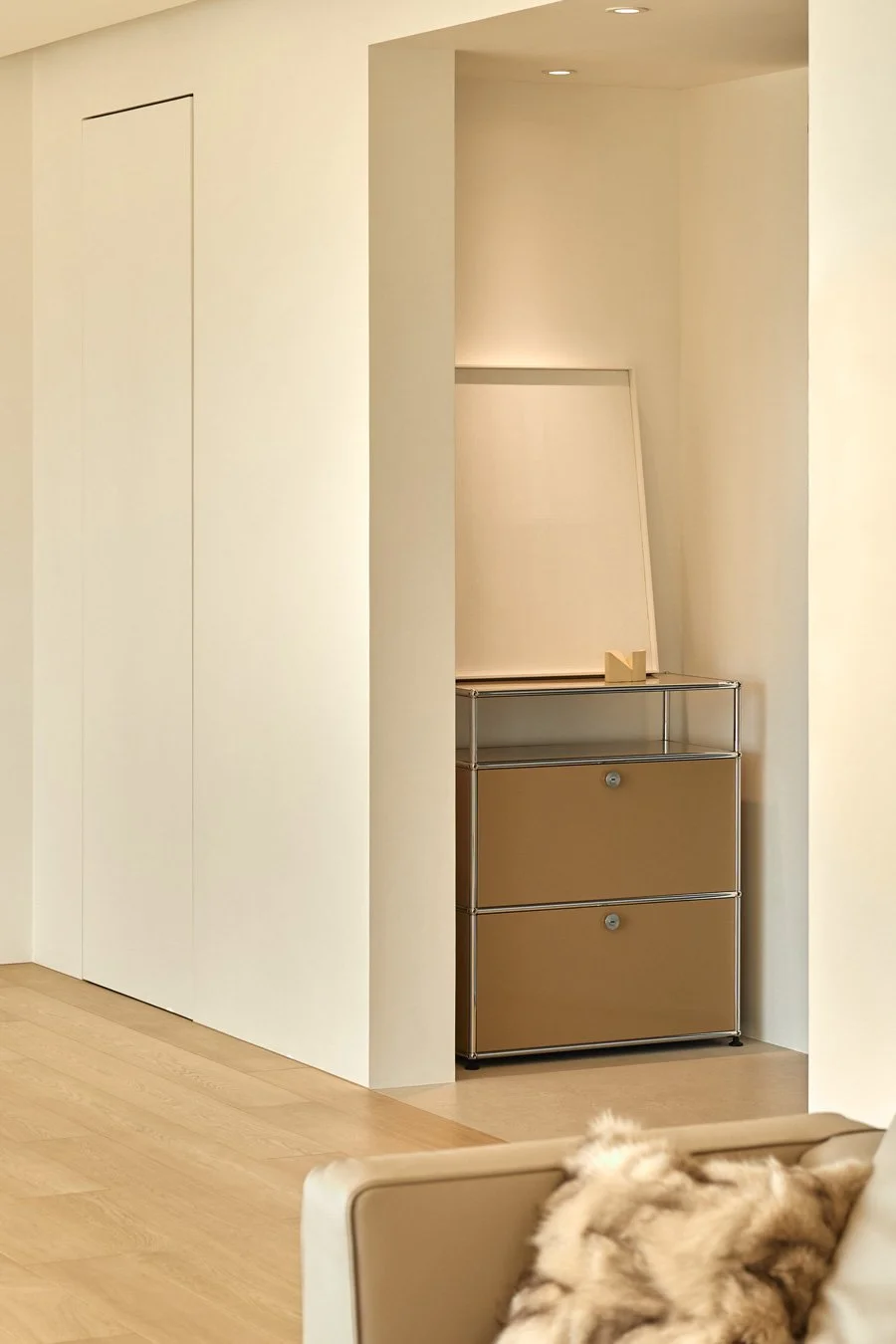
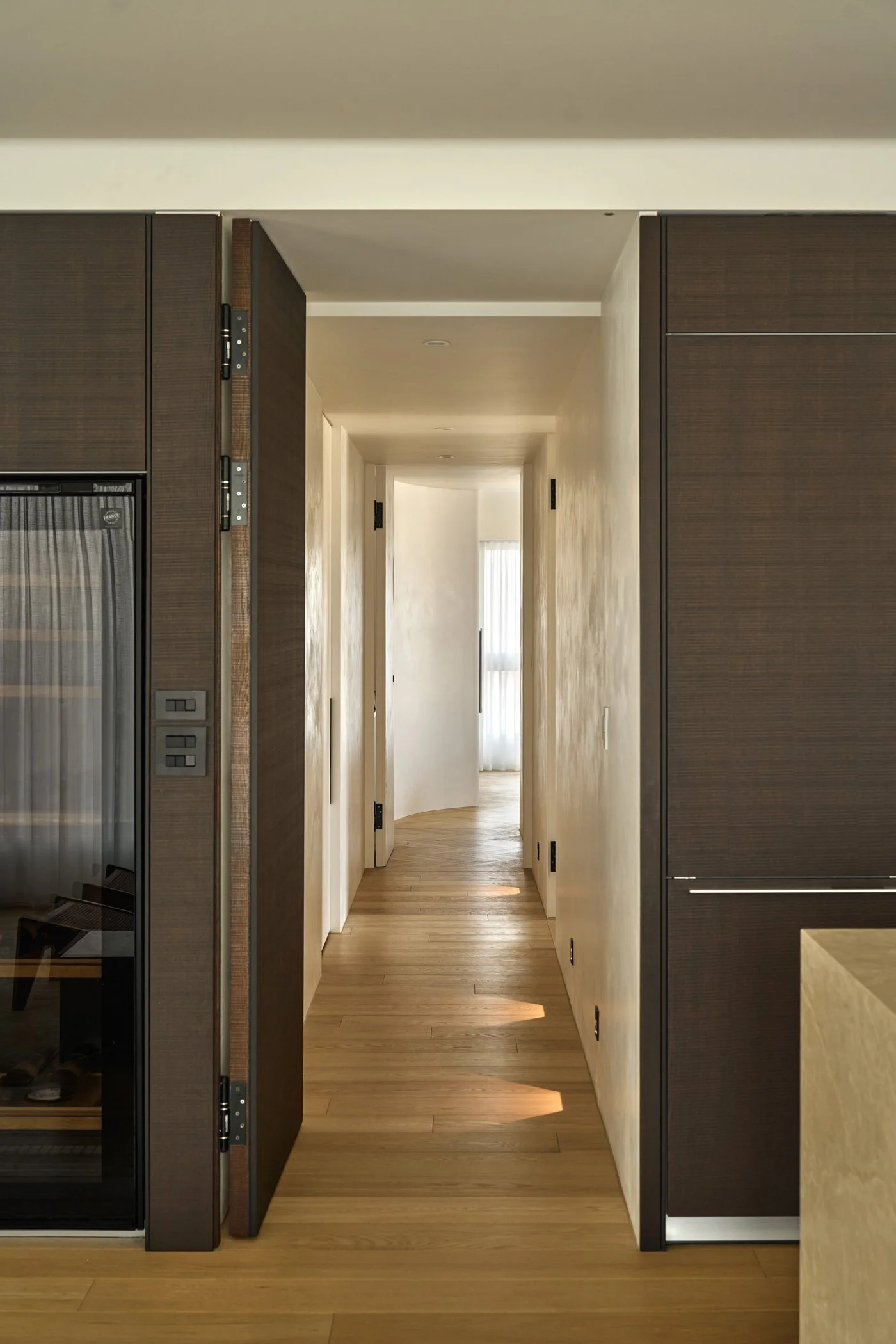
The island is finished in a stone patterned surface that reads cool and composed, set against deep brown wood cabinetry behind. The wall integrates a wine display, built in appliances, and doors leading to the private rooms into one continuous plane. With the same grain running across it, the elevation absorbs visual noise and keeps the focus on the center line of living. The effect is quiet, but deliberate.
-
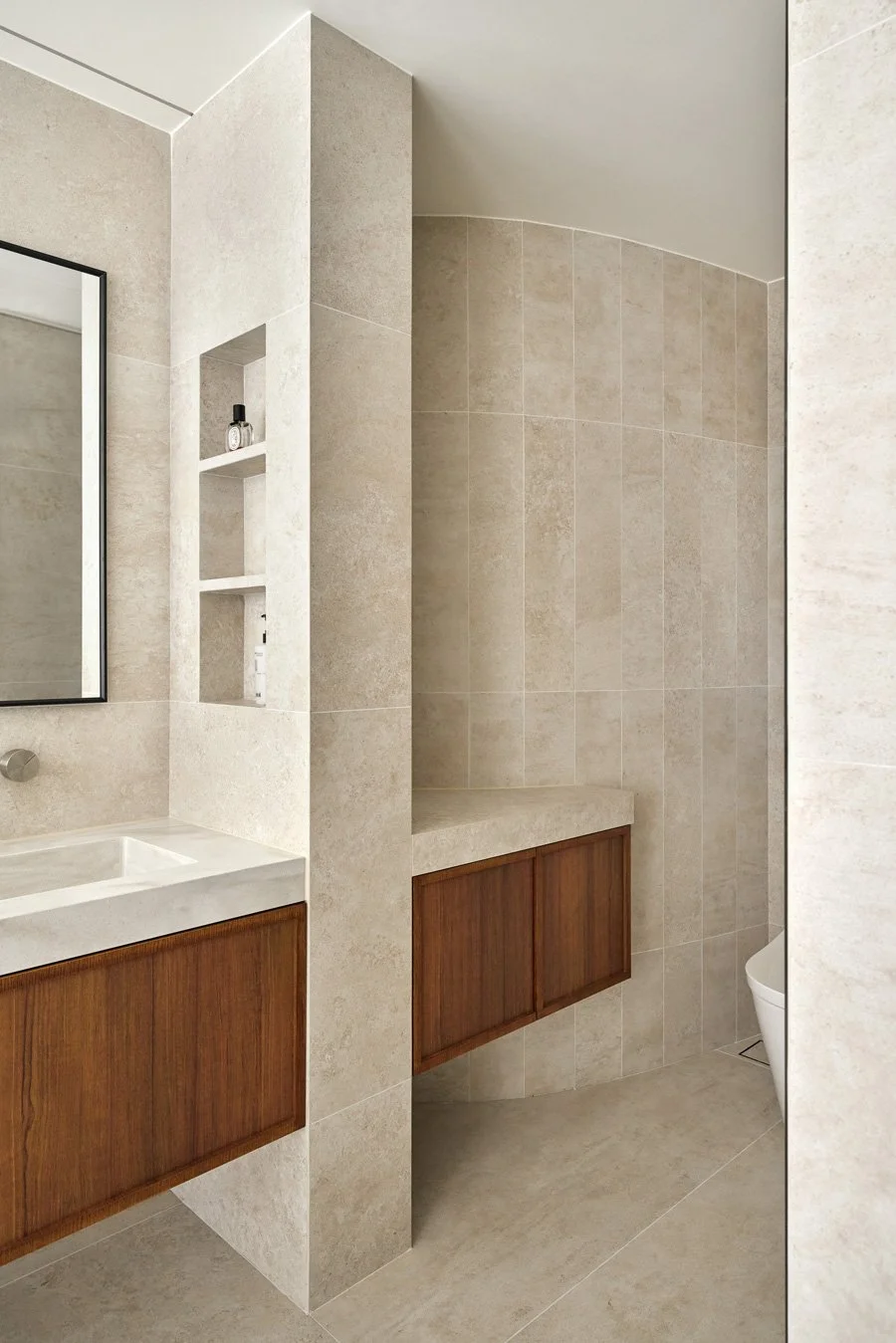
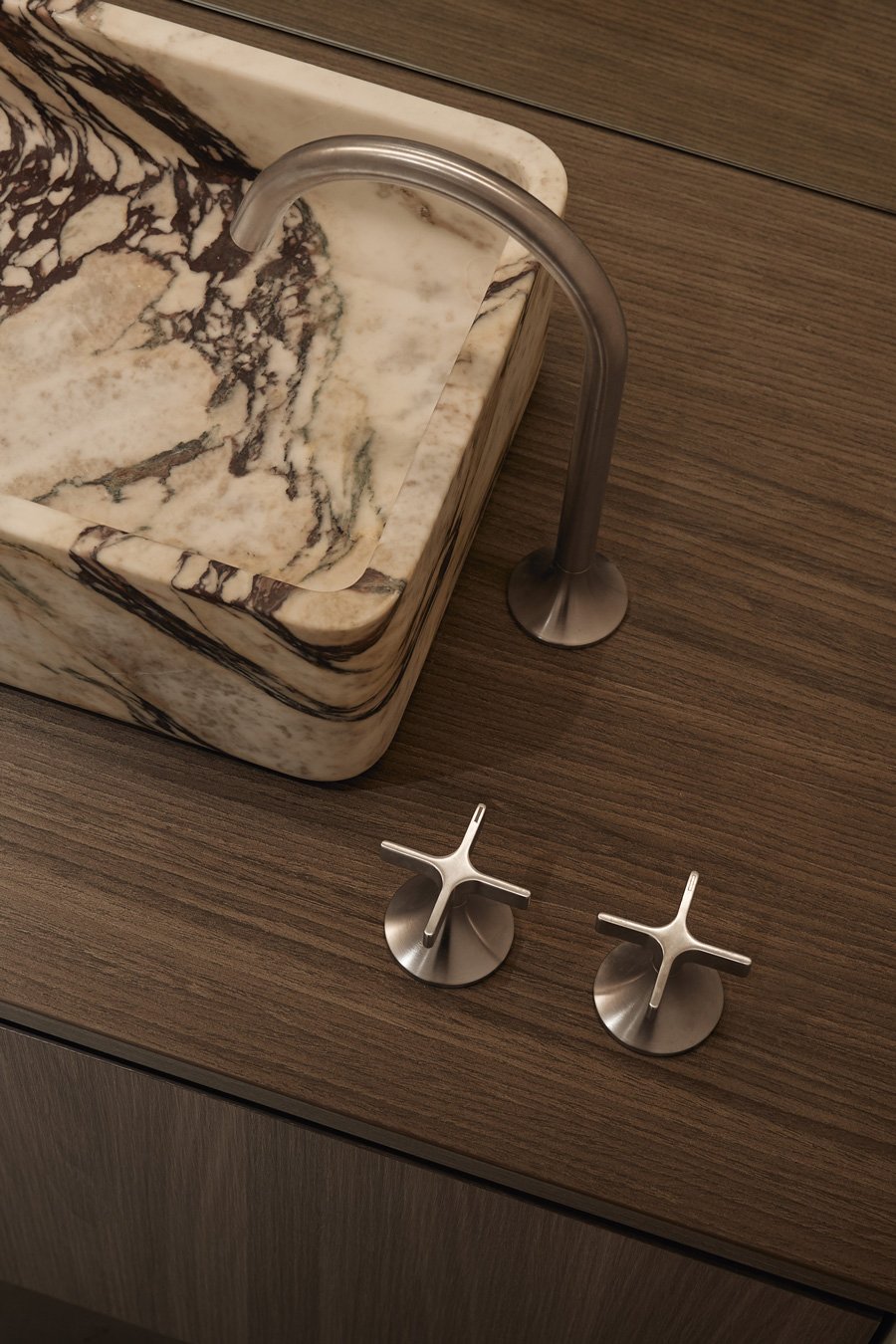
Around the corner, the guest bathroom becomes a study in how materials perform. In Taiwan’s humidity, especially in wet zones, timber is often the first to show wear. Here, wood is translated into a wood grained quartz surface for the countertop and cladding. It carries the fine texture of walnut without inheriting its vulnerabilities. Set against a more rugged stone basin, the pairing holds both tactility and clarity. A marble sink with ink like veining and carefully chosen hardware completes the composition, turning a practical decision into a calm, convincing detail.
-
Behind the hidden door, the pace shifts.
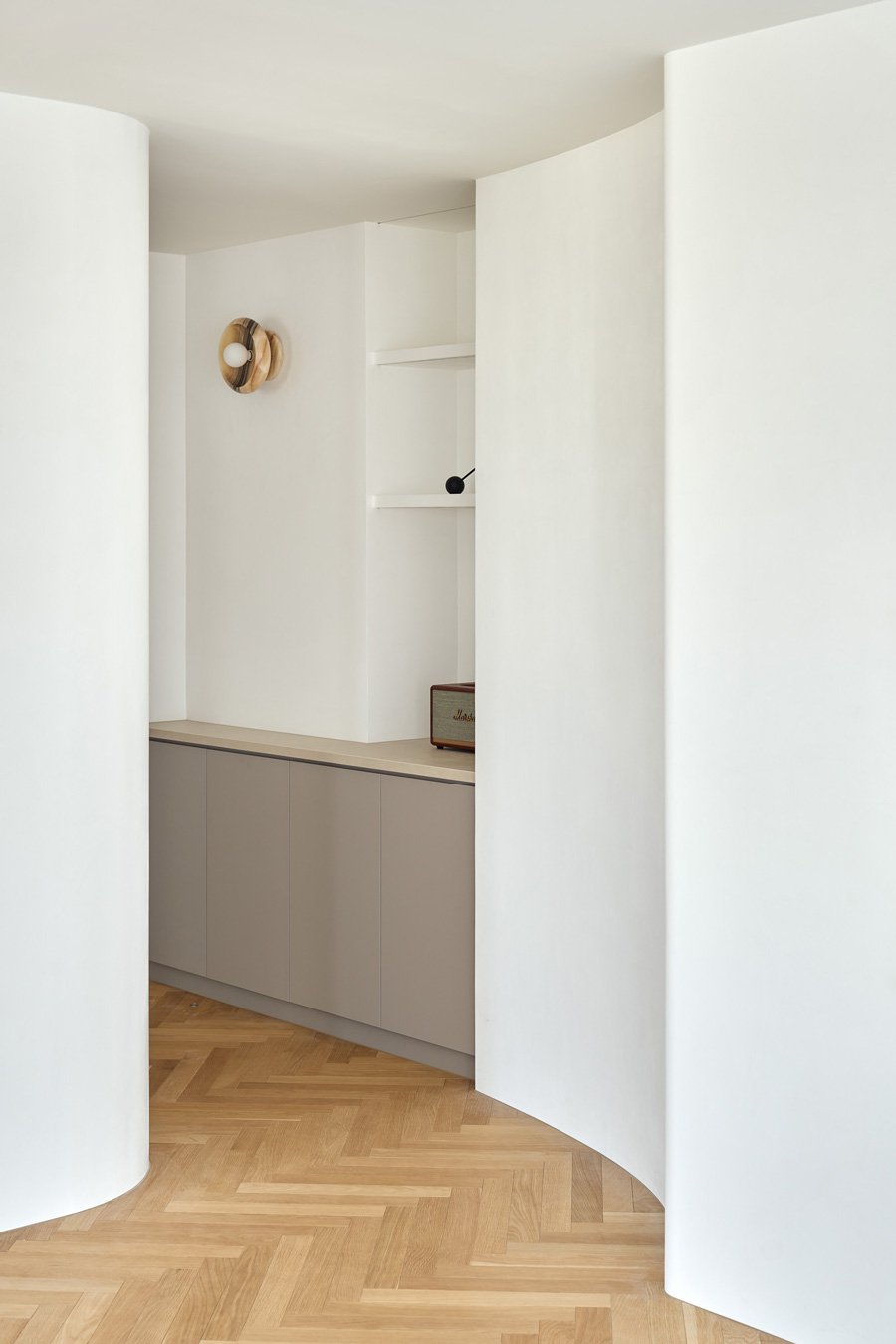
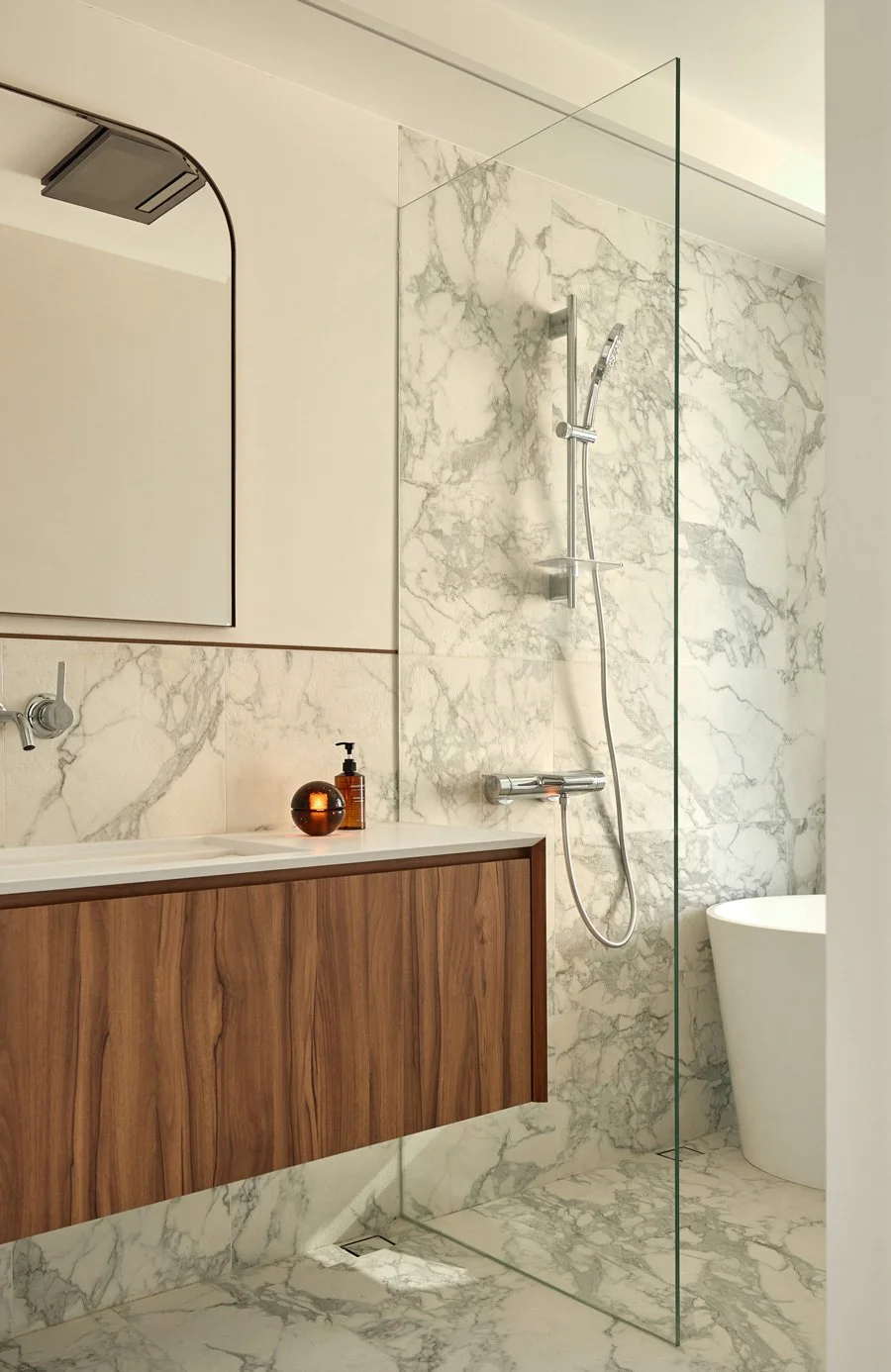
Behind a concealed dark wood door, the mood tightens and settles. The palette returns to its simplest notes: white and timber. Underfoot, herringbone solid wood flooring introduces a finer scale. The pattern guides movement subtly, and the warmth of the grain steadies the bedroom atmosphere. Artworks and selected lighting sit against generous blankness, allowing the room to feel finished without feeling filled.In the primary bathroom, large-format stone-look tiles wrap the walls and floor. Veins shift gently with the light, giving the surface a quiet sense of motion. At the end of the day, the bathtub is reduced to clean lines. Sit down, look out through the window frame, and the distant outline of the city meets the room again, not as noise, but as context.
-
Where the gaze comes to rest
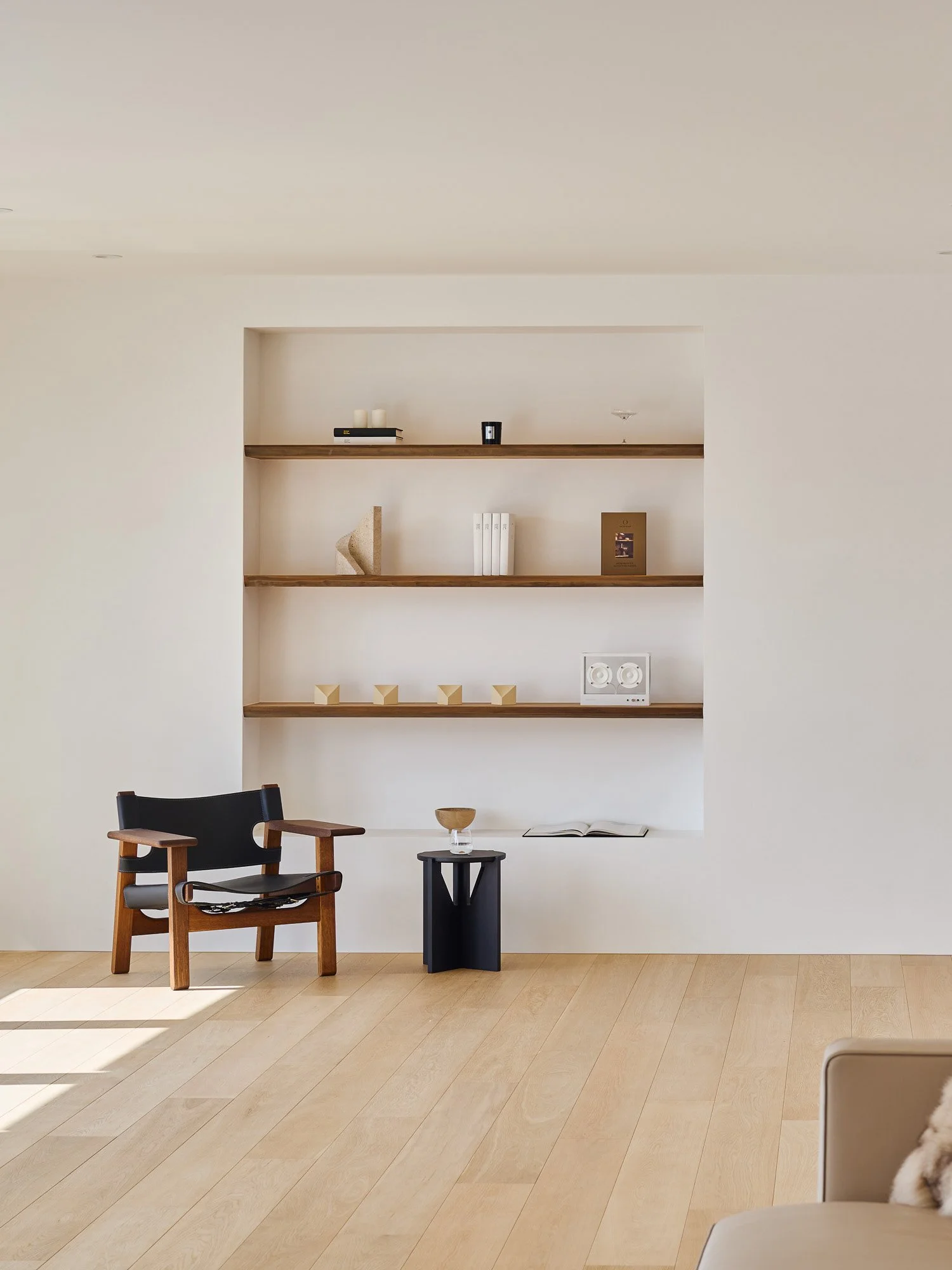
A good home is not made by adding more. It is made by removing what interferes with living. Here, the changing band of sky outside and the warmth of materials inside work together to hold a steady pace. When a space can filter the world without shutting it out, it gives its residents something rare: the ability to return to themselves, again and again, in ordinary time.