慢熬一帖當代療癒 —「迪化馬光中醫」以空間為藥引,溫補款待身心的日常
-
Dadaocheng carries its history without trying to perform it. Along Dihua Street, the old arcades still hold traces of trade, and the air does its own storytelling. Dried goods. Tea. The sharper, unmistakable presence of medicinal herbs. Even with the crowds and the pace of today’s Taipei, the area retains a particular density, a feeling that the past is not a backdrop but a living layer.
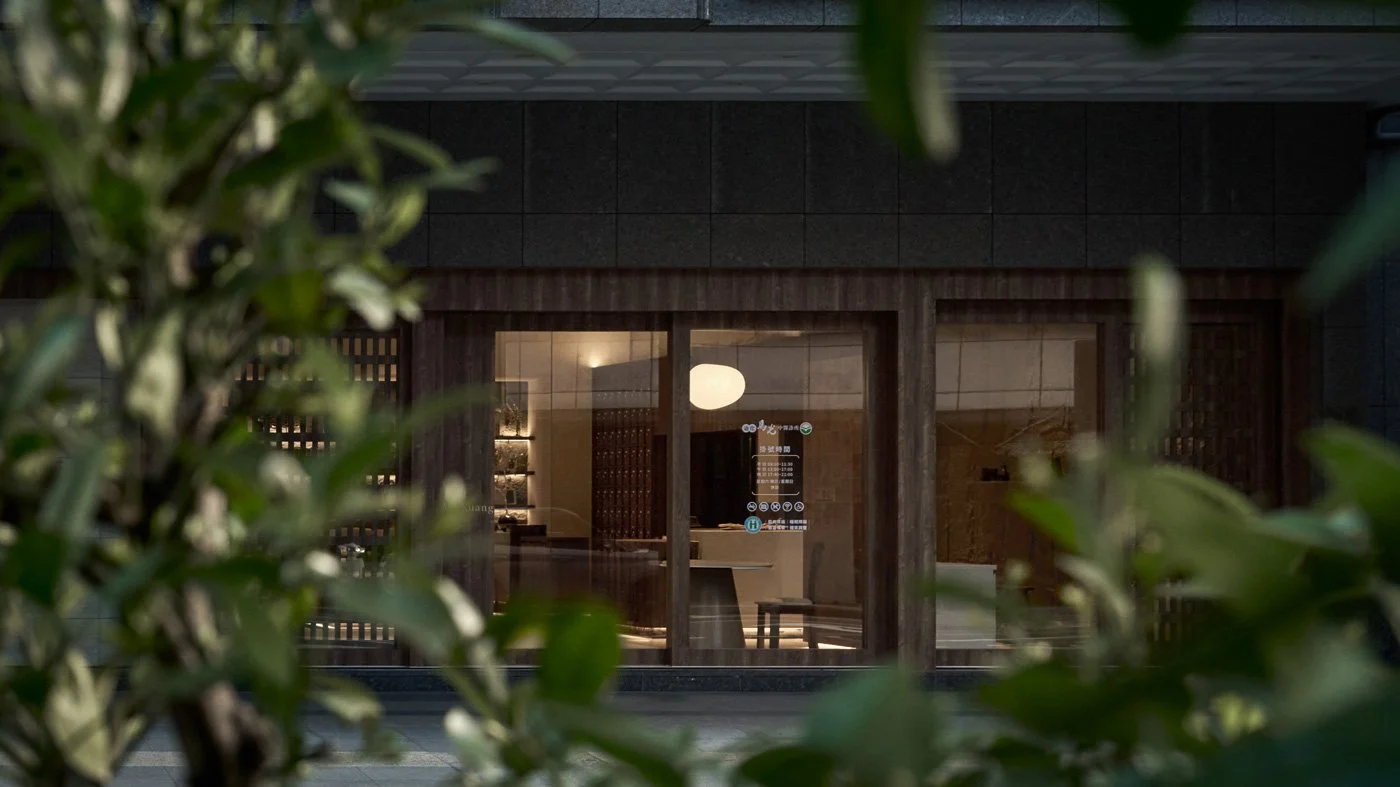
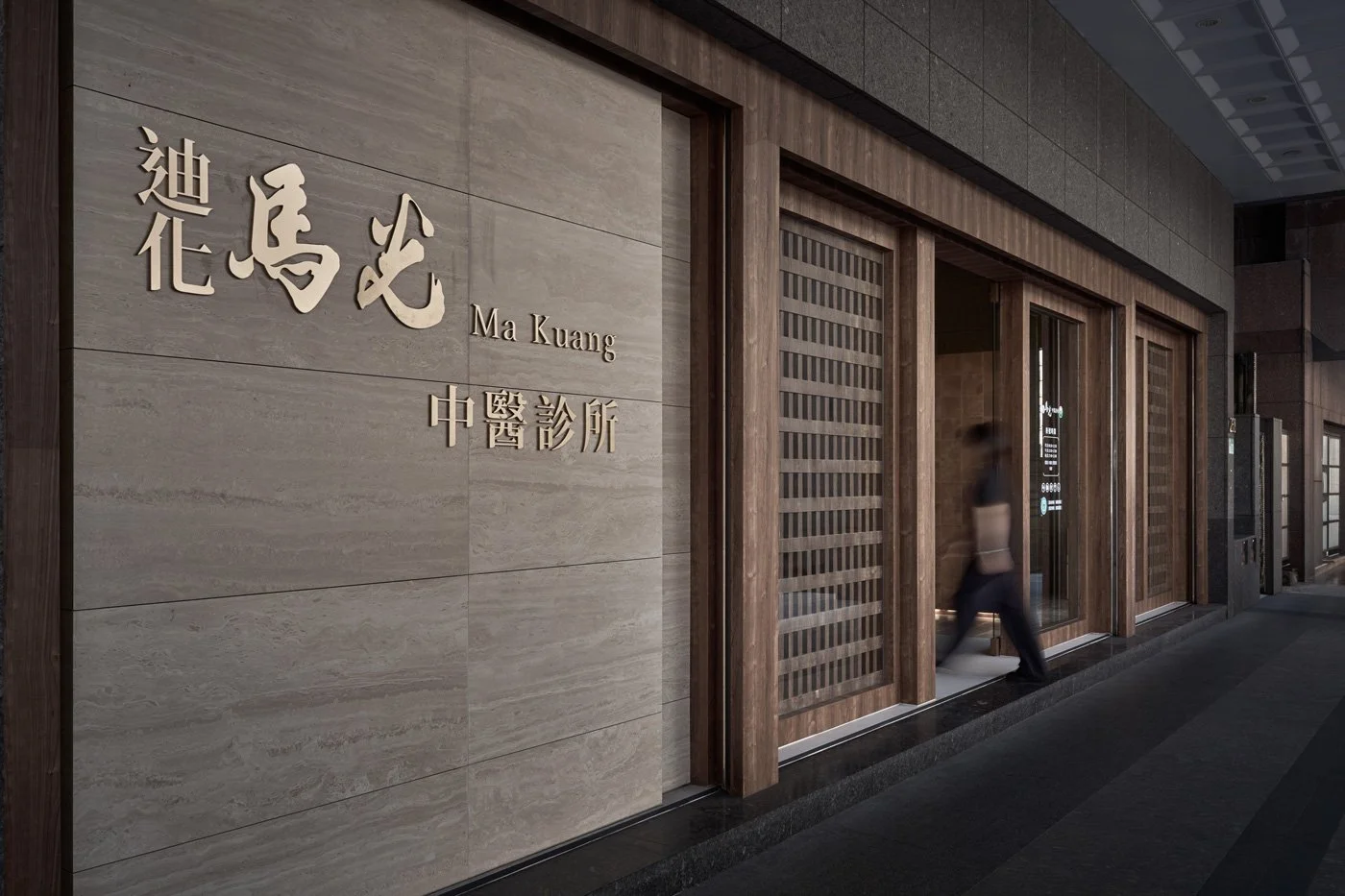
When Ma Kuang, a traditional Chinese medicine practice that began in Penghu and has built more than three decades of experience in southern Taiwan, chose to open here, it did not lean on nostalgia. On Minsheng West Road, the exterior reads as a quiet threshold: a long frame of timber holding the window and entry in one steady gesture. It gives the storefront a warmth that feels calibrated rather than decorative, softening the street before you even step inside. The herbal scent arrives early, like a familiar cue. Your breath adjusts before your eyes fully map the room.
-
This project brings together two studios with distinct sensibilities. Curtis of Dig Design is known for clarity, and a certain European ease. Jay of No.37 Studio gravitates toward understatement and surfaces that feel lived in. Their shared aim was not to mimic the past, but to let the neighbourhood’s material memory sit naturally within a contemporary interior.
“We wanted to keep the feeling of age,” they say, “but speak it in a new way.”
-
Time held in material, drawn with contemporary lines
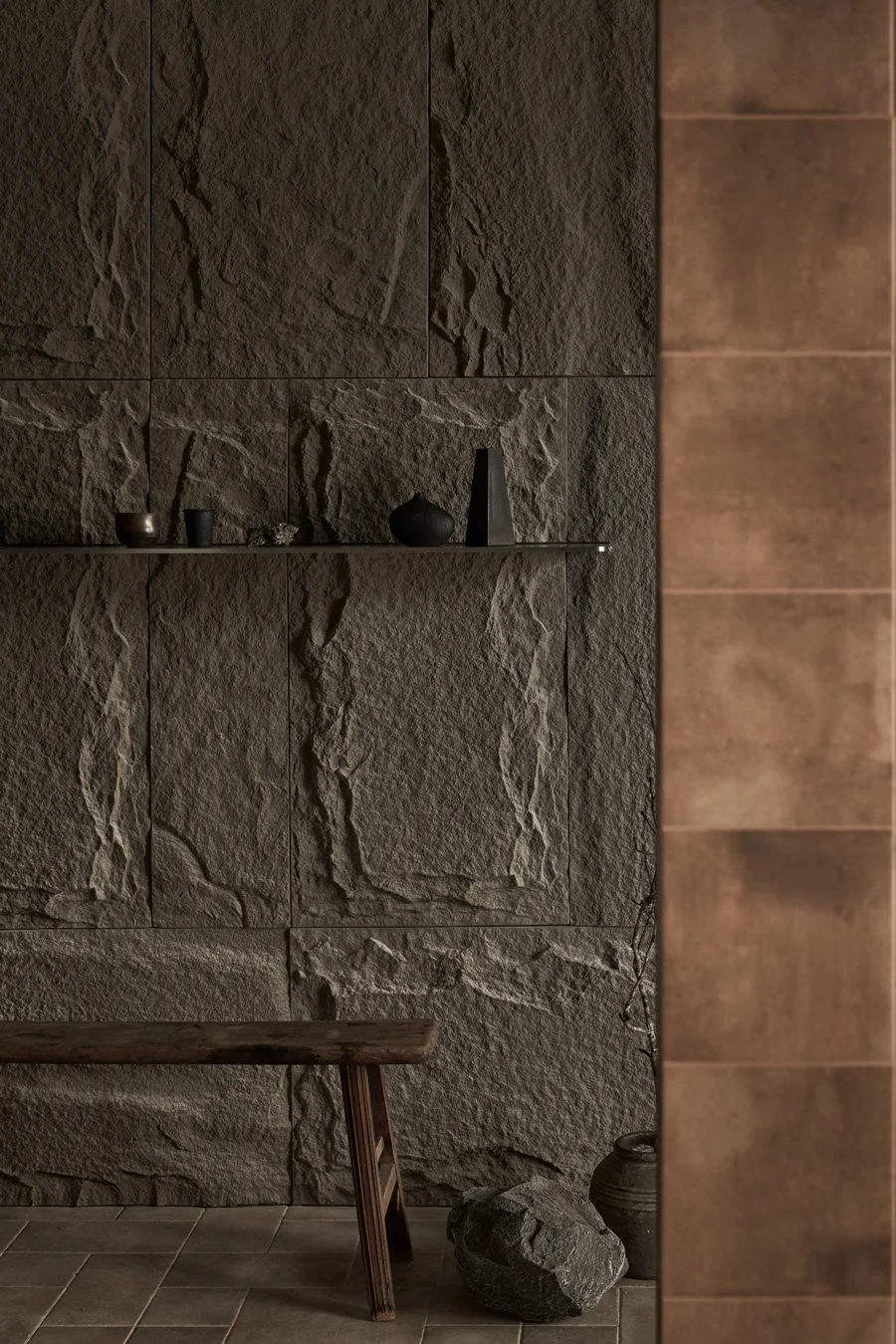
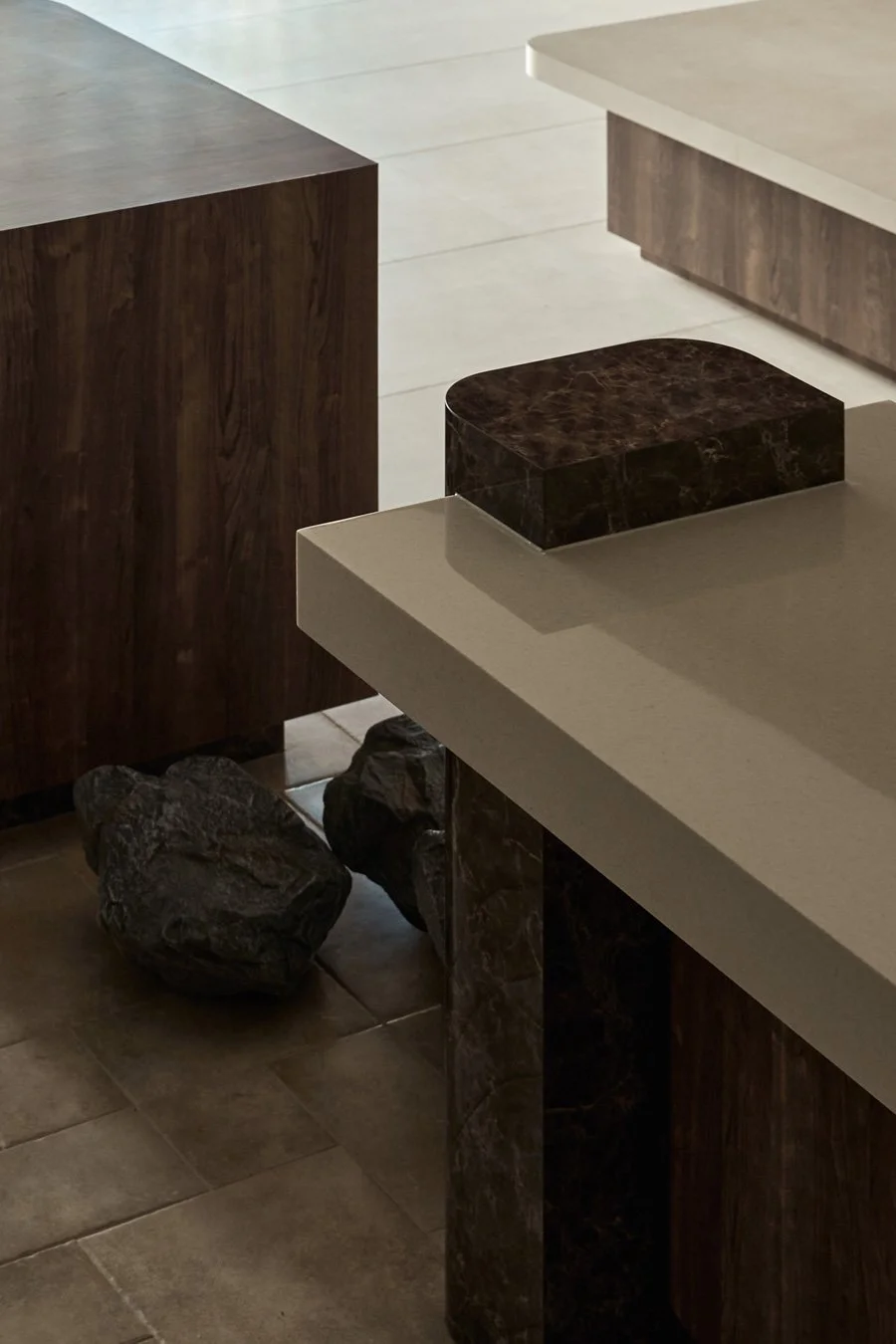
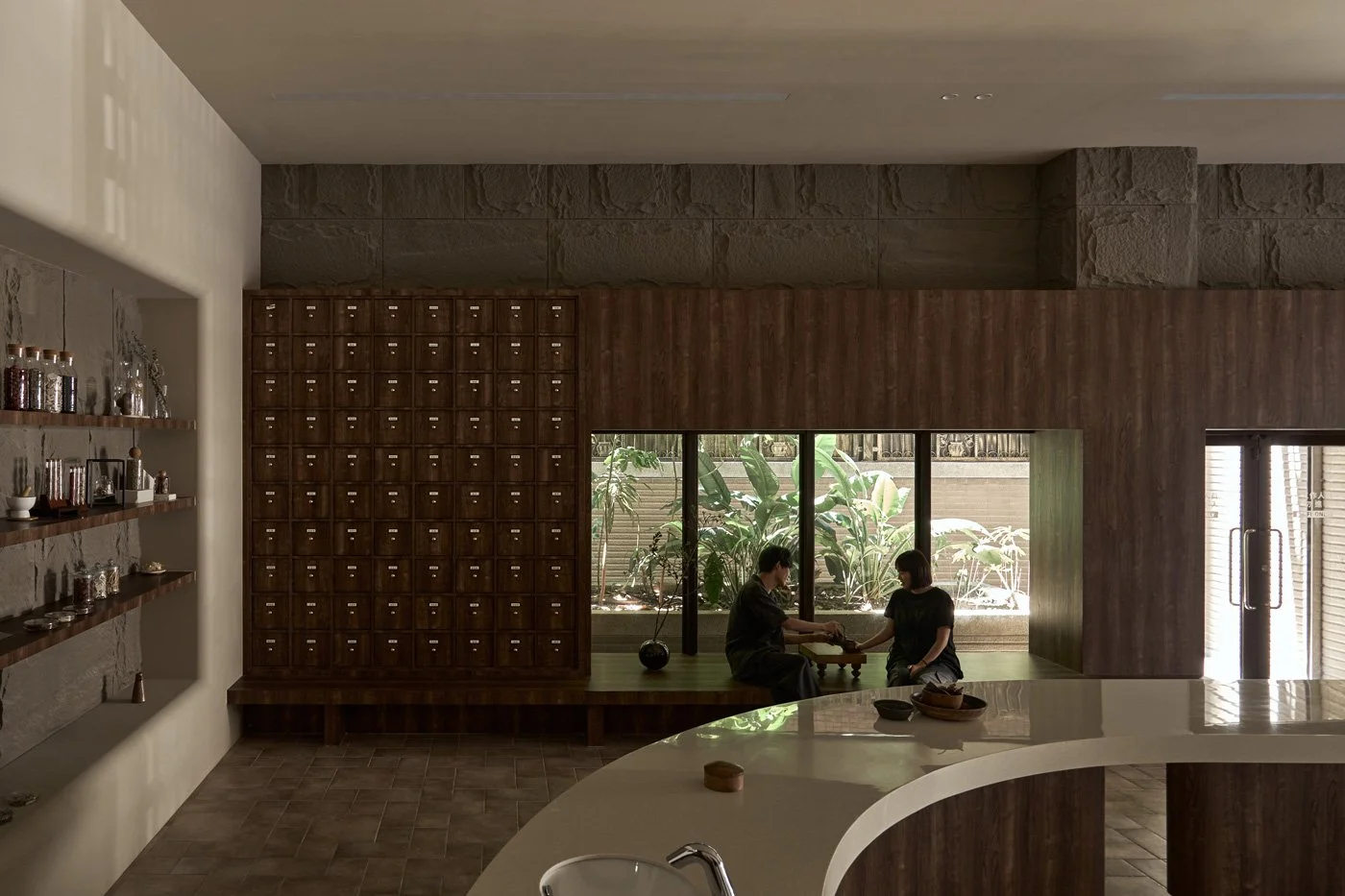
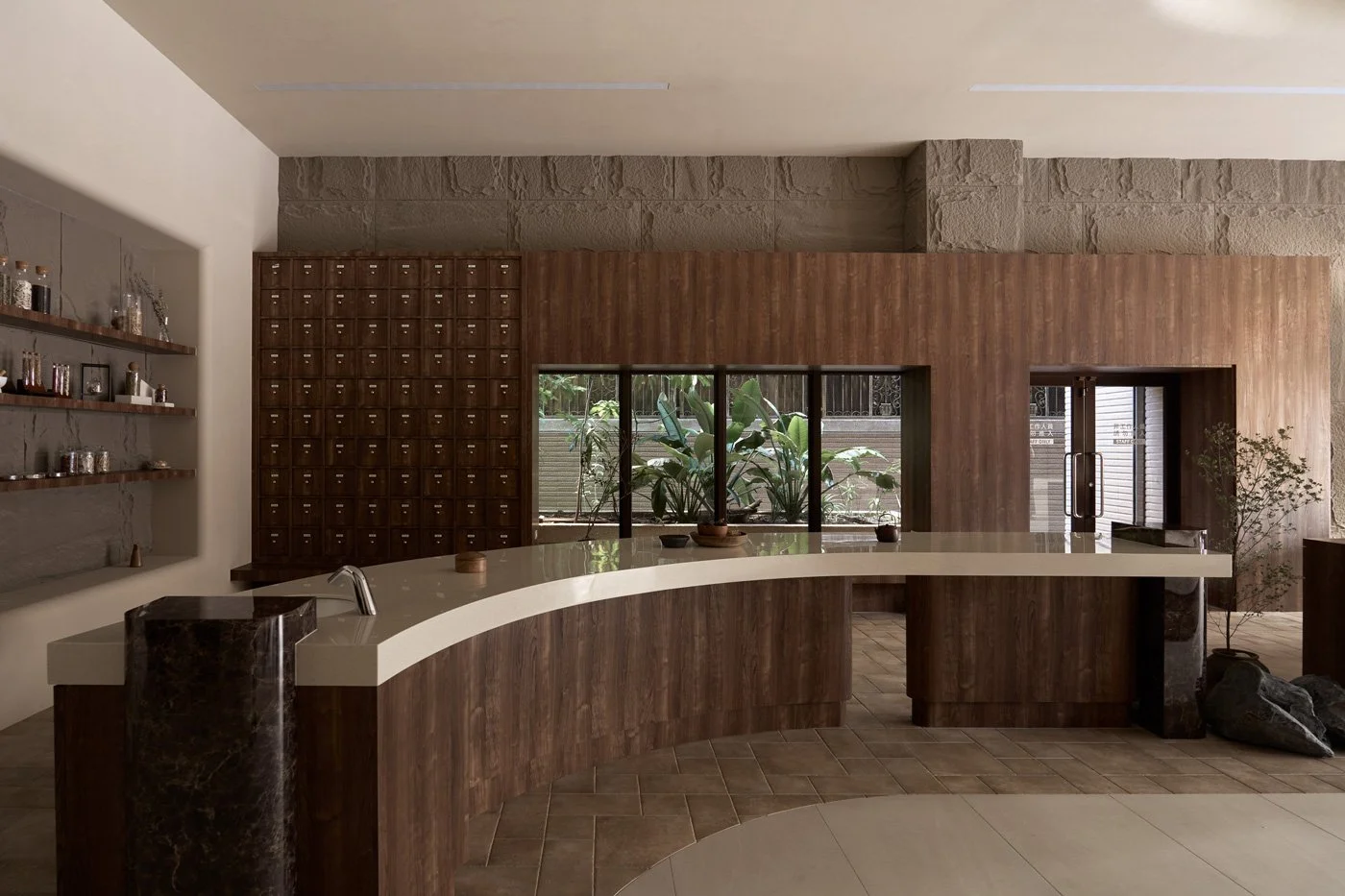
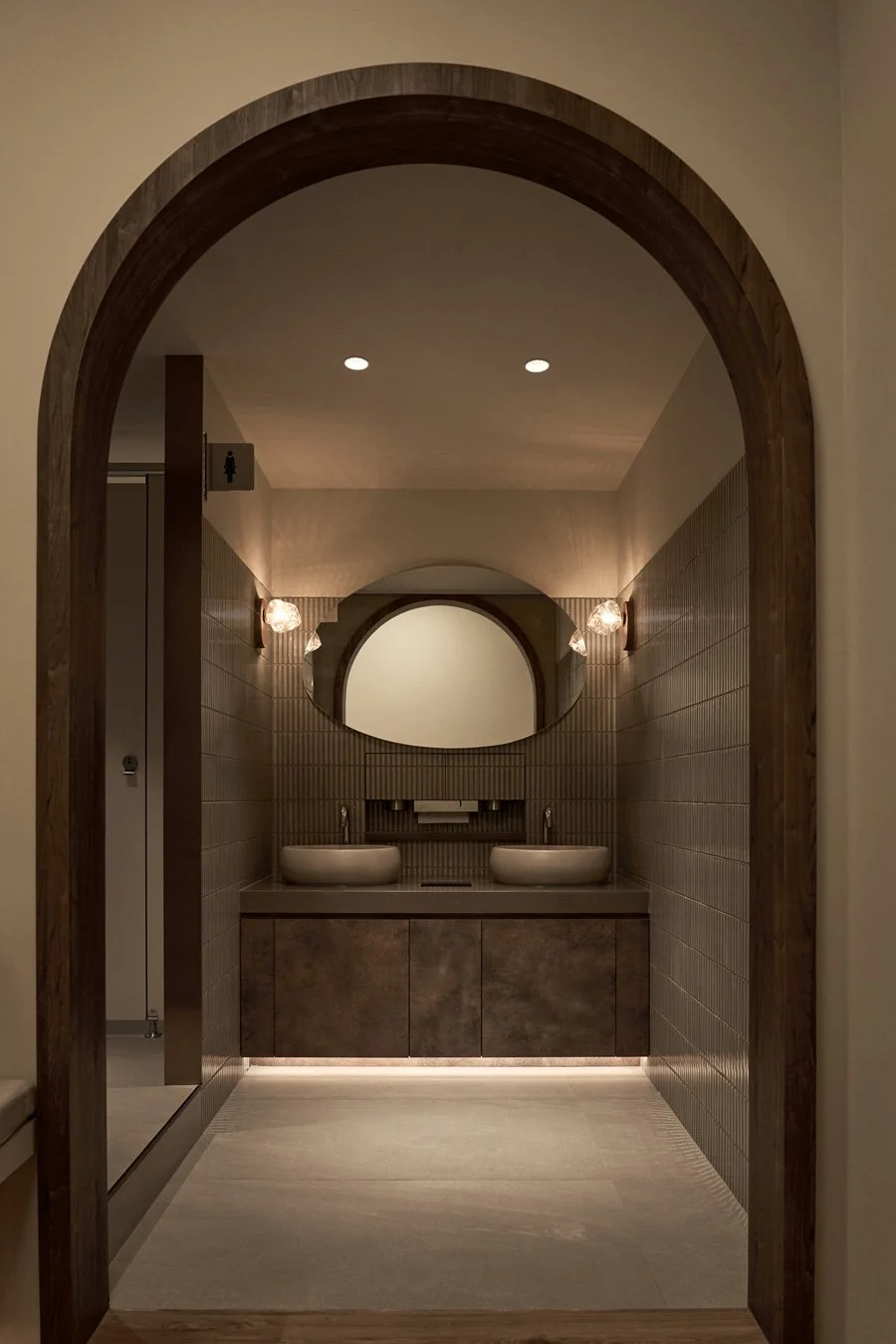
The first impression is texture. A specially treated wall finish carries the irregularity of weathered plaster, catching light in a way that makes shadow feel like a record rather than an effect. Vintage red brick appears with restraint, placed where your body will register it, along selected planes and underfoot. It recalls the brick and grey tile of old Taipei, yet the detailing remains crisp. Corners are softened. Junctions are clean. Metal accents punctuate the quieter surfaces with precision.
The balance is deliberate. Nothing here tries to cosplay tradition. Instead, the space allows older materials to do what they naturally do: ground the room, warm it, make it readable. The contemporary gestures, open sightlines, curved edges, and controlled light, do the rest, keeping the clinic firmly within the present.
There is an obvious parallel with traditional Chinese medicine itself. It is ancient knowledge, but it survives because it keeps being re applied to modern bodies, modern fatigue, modern stress. In this clinic, that idea becomes spatial. The past is not displayed. It is used.
-
A clinic that borrows from hospitality
In Taiwan, care is often relational. Patients return for years. Doctors become familiar figures. The experience is rarely limited to a single transaction. Tea is offered. Small talk eases the edges. The designers wanted to bring that warmth back, not as sentiment, but as a functional part of the visit.
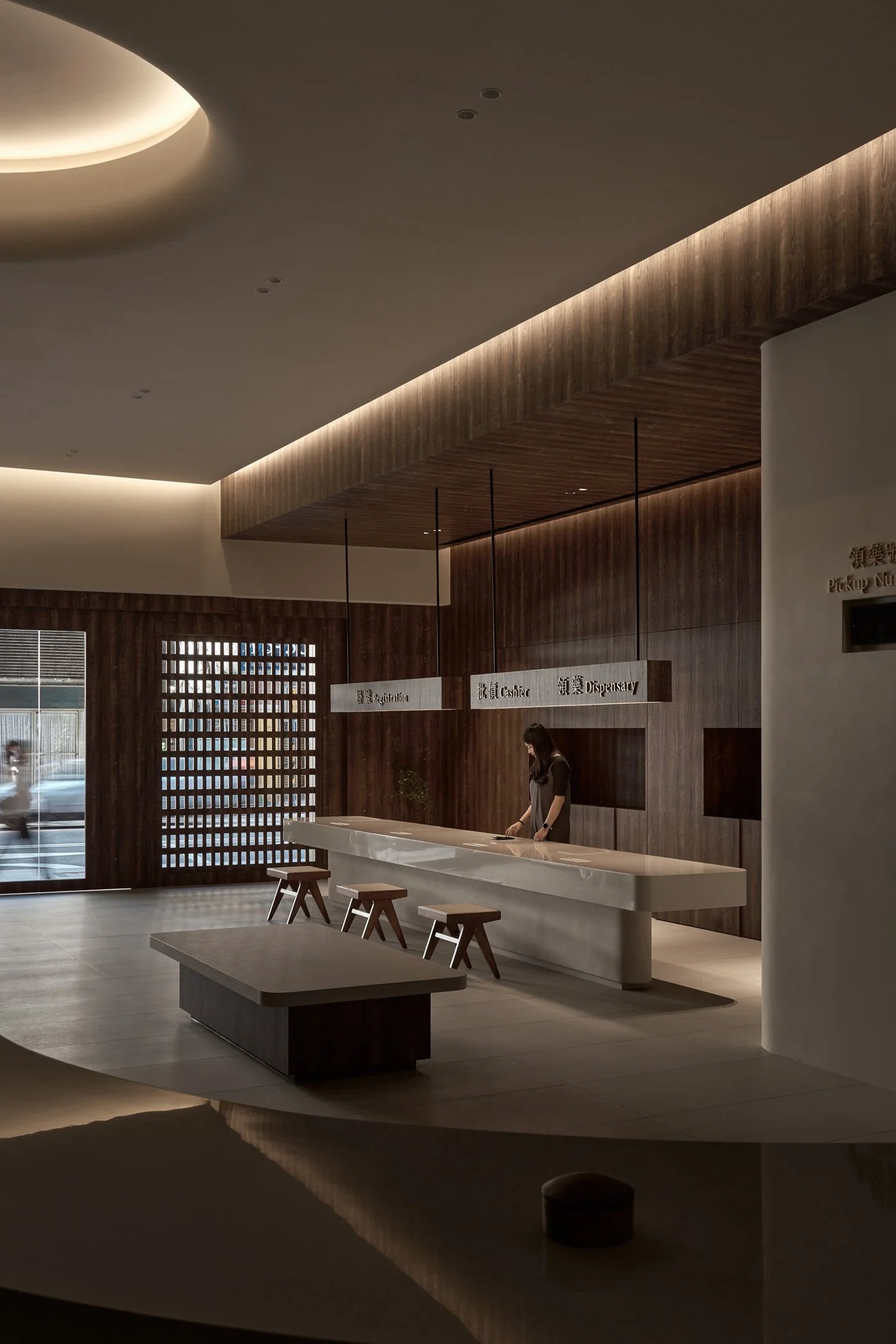
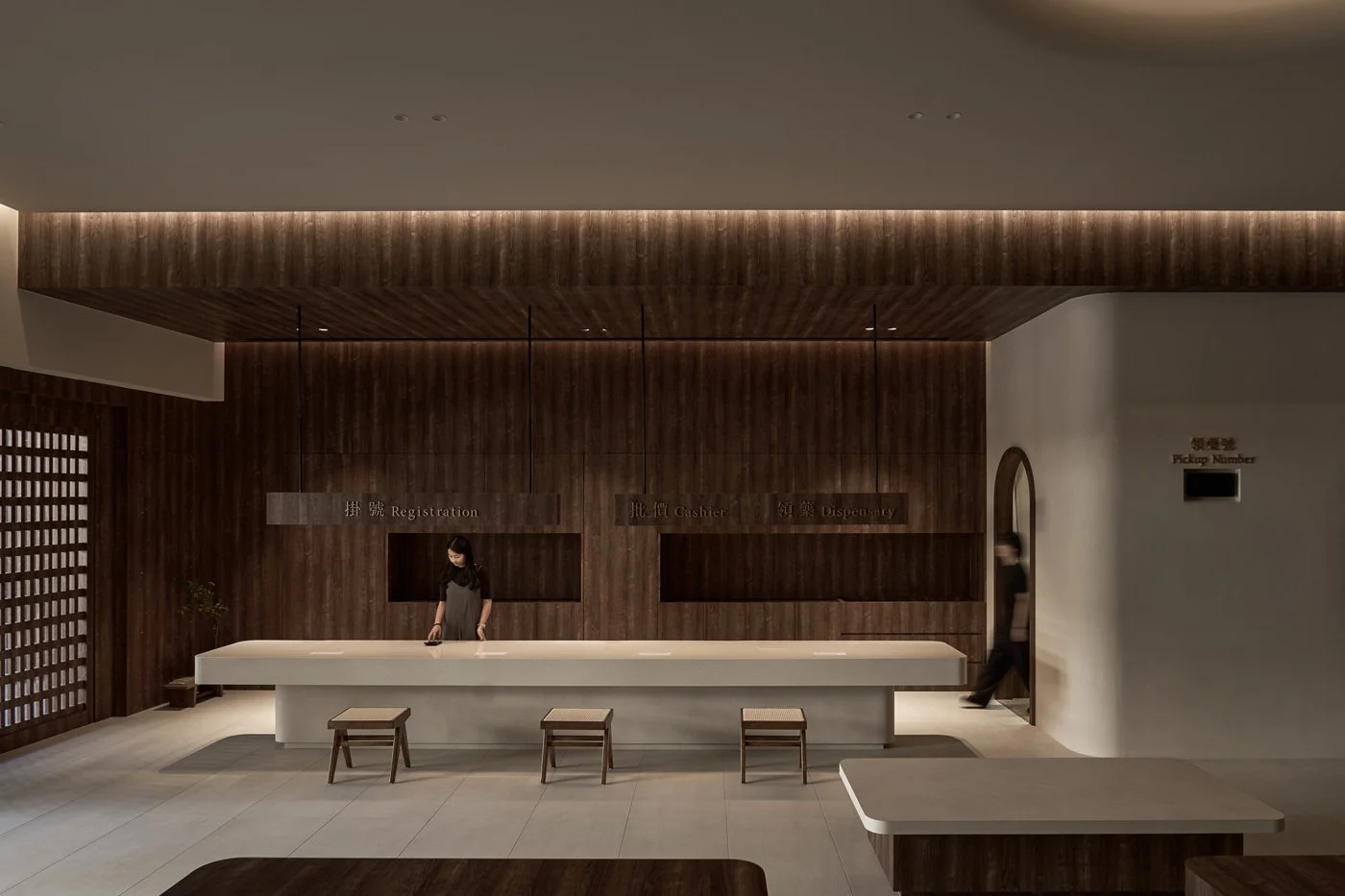
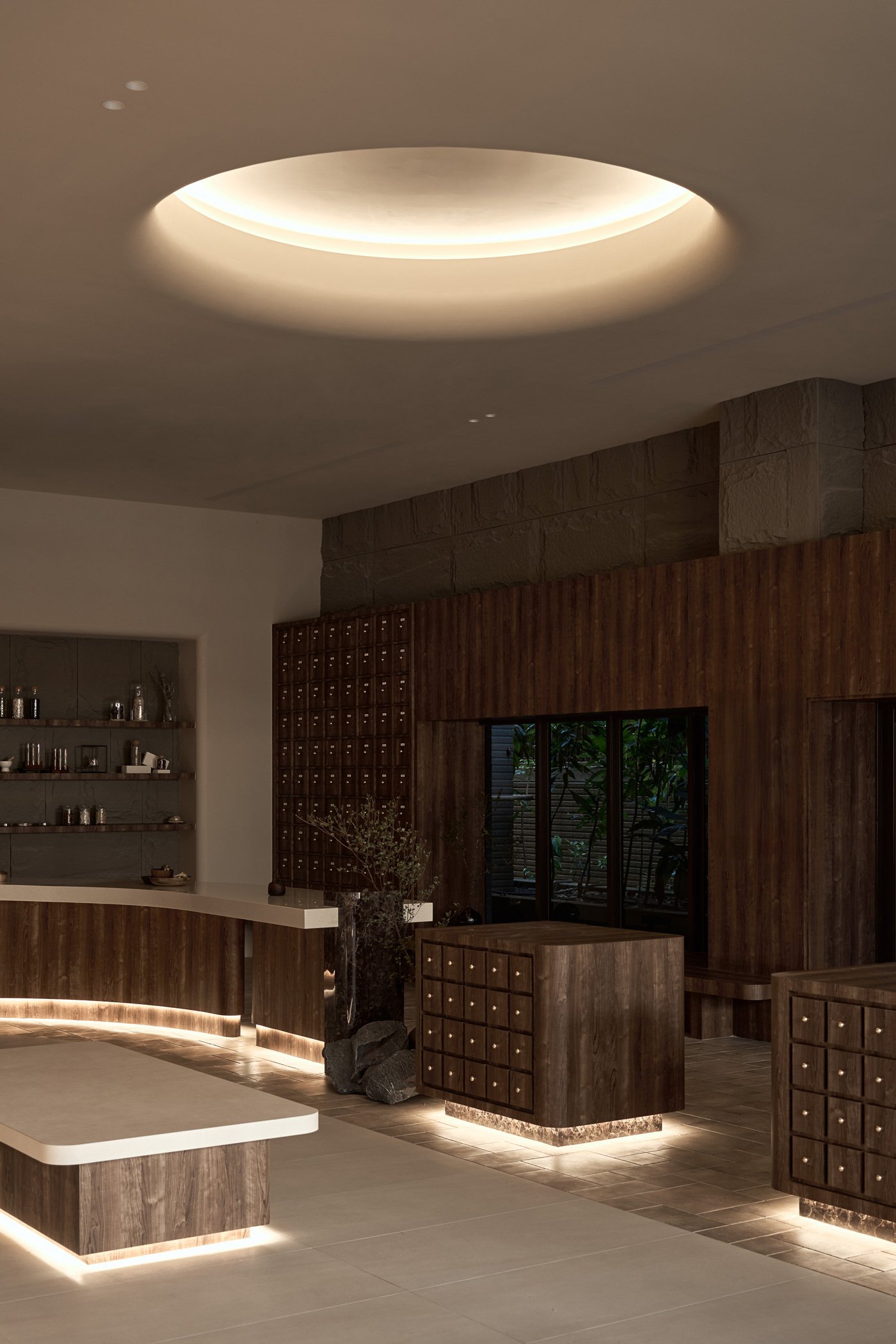
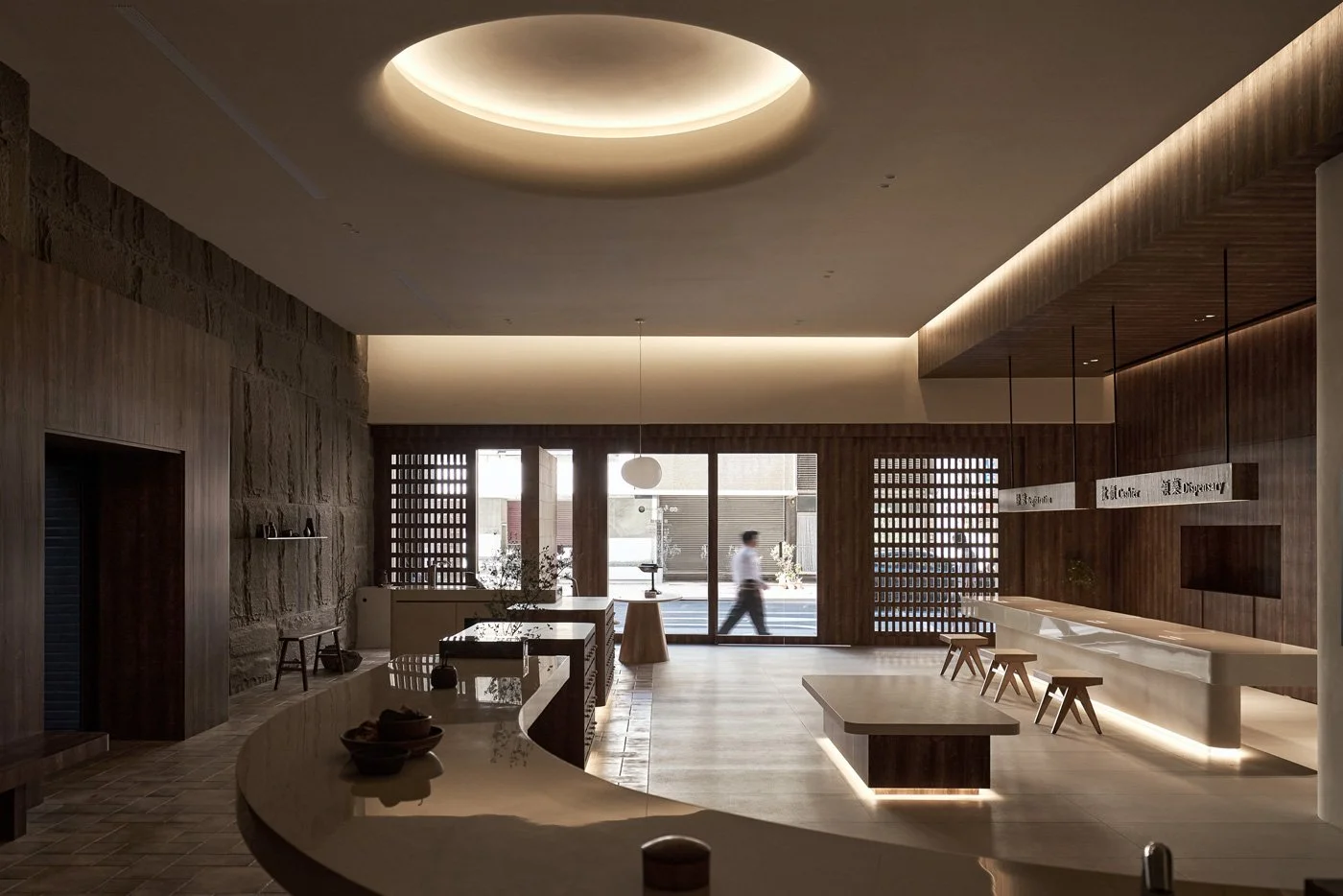
Rather than compressing reception and waiting into a narrow corridor of desks and chairs, the plan opens out. A generous circulation route and a tall volume at the entry remove the institutional feeling many clinics still carry. Zones remain clear, but they are defined through subtle shifts: flooring changes, ceiling extensions, and furniture placed like islands.
-
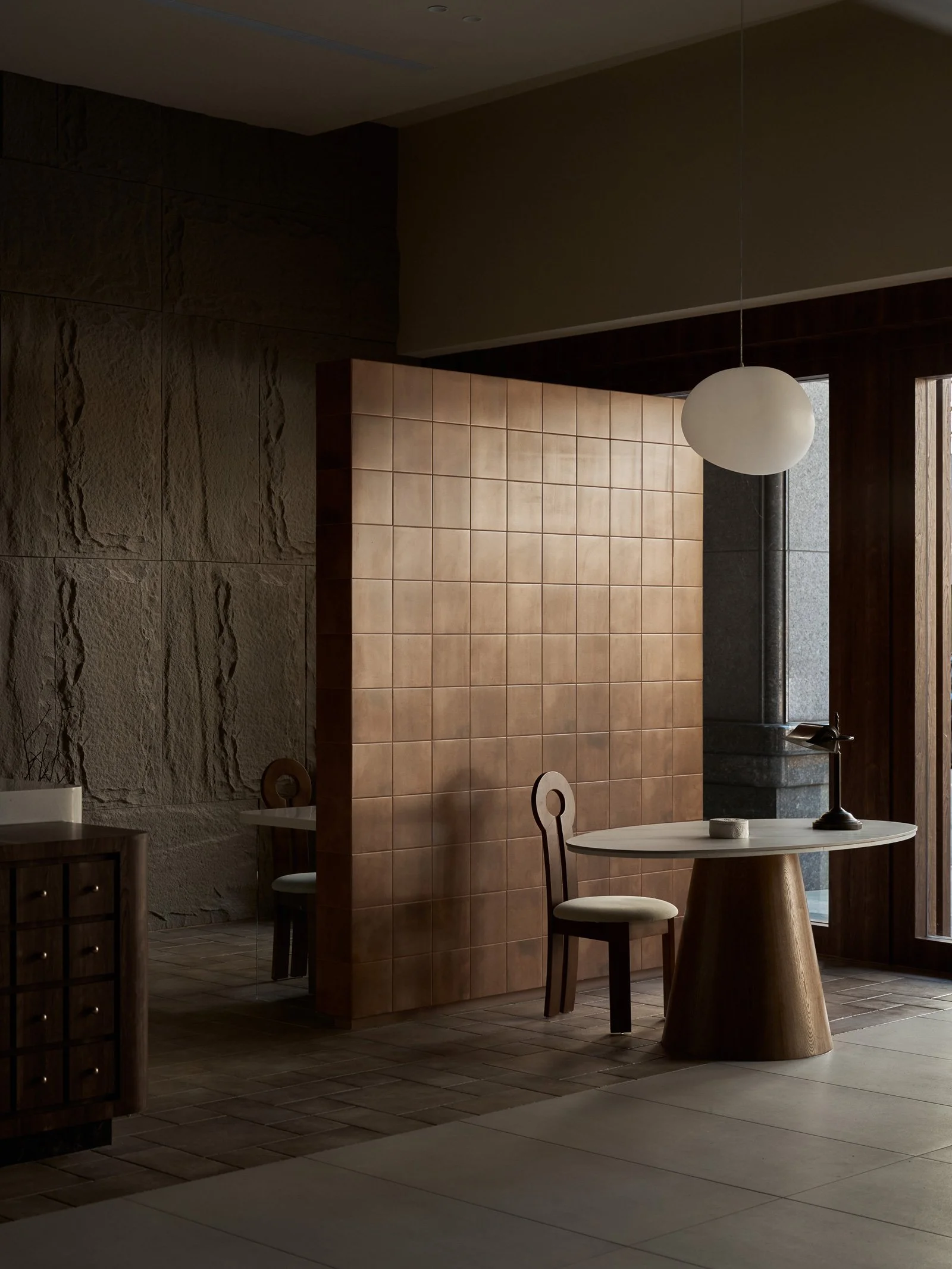
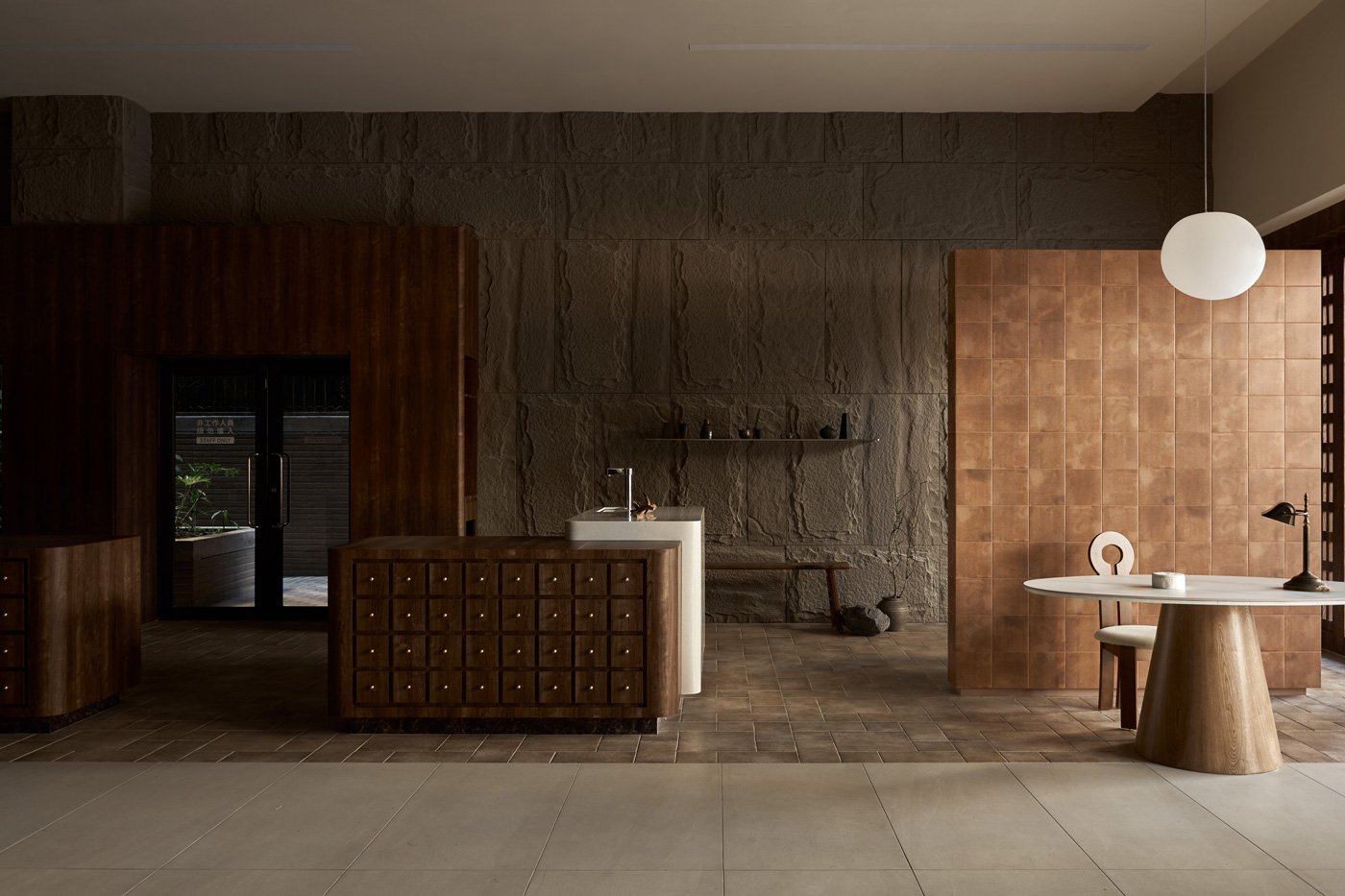
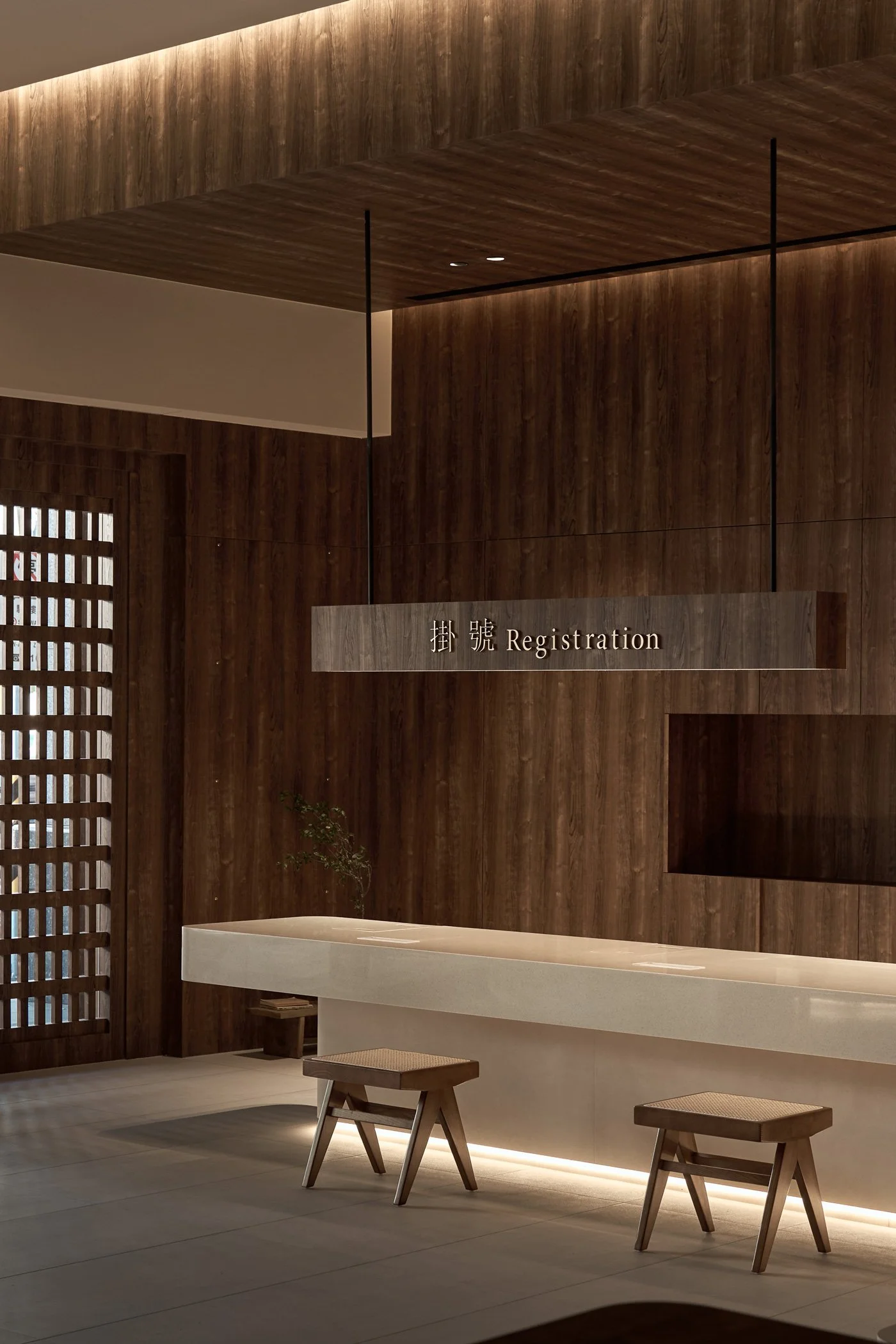
To the right of the entrance, a round table sets an immediate tone. It is a place for first contact, onboarding, and conversation. Behind it, a half height wall in glazed vintage brick creates a sense of privacy without closing the space off, while also hiding storage for medical equipment. Across the room sits the counter for registration, payment, and prescriptions. Above it, a timber slatted ceiling forms an eave like element, a simple move that brings the language of shelter into an otherwise public zone.
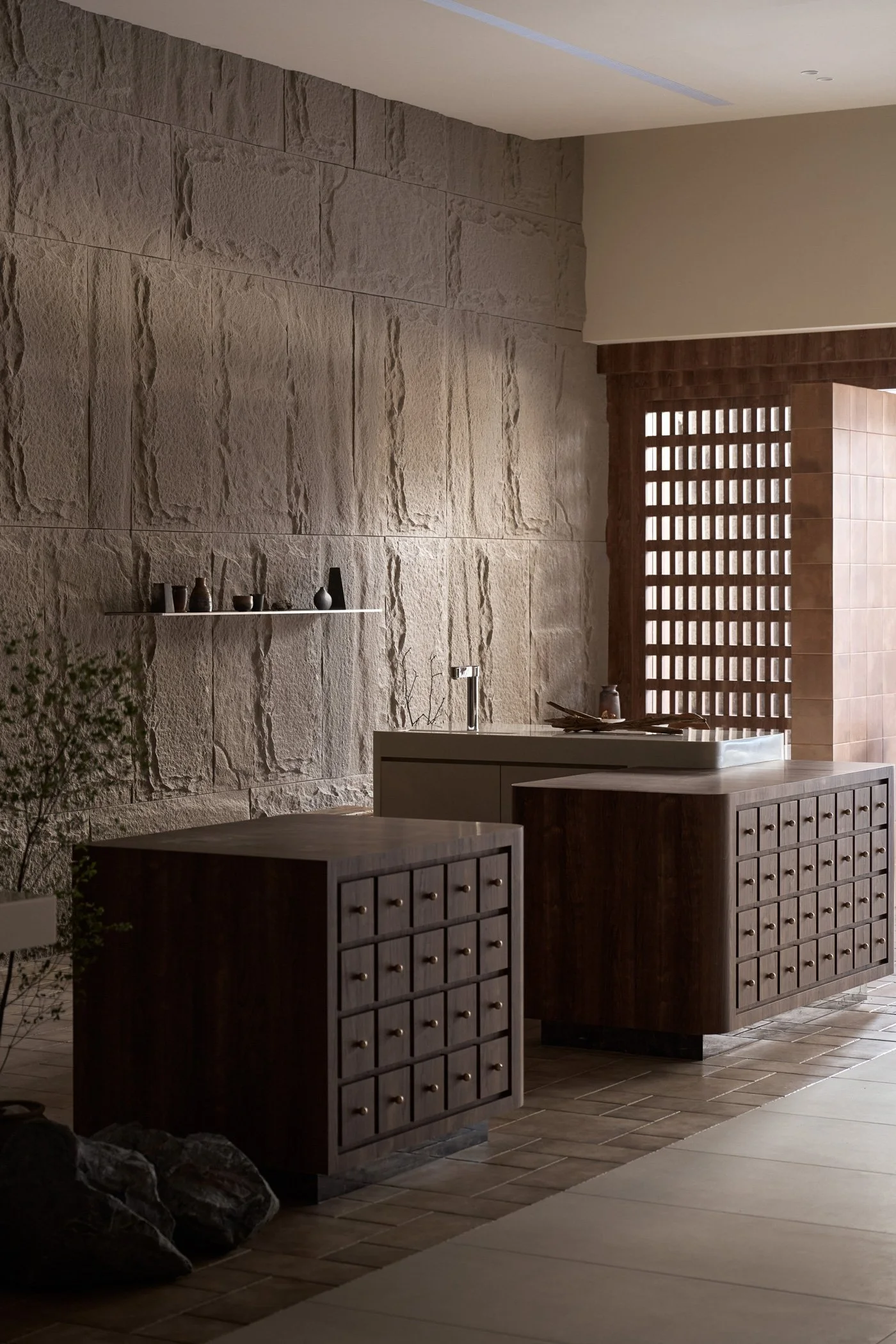
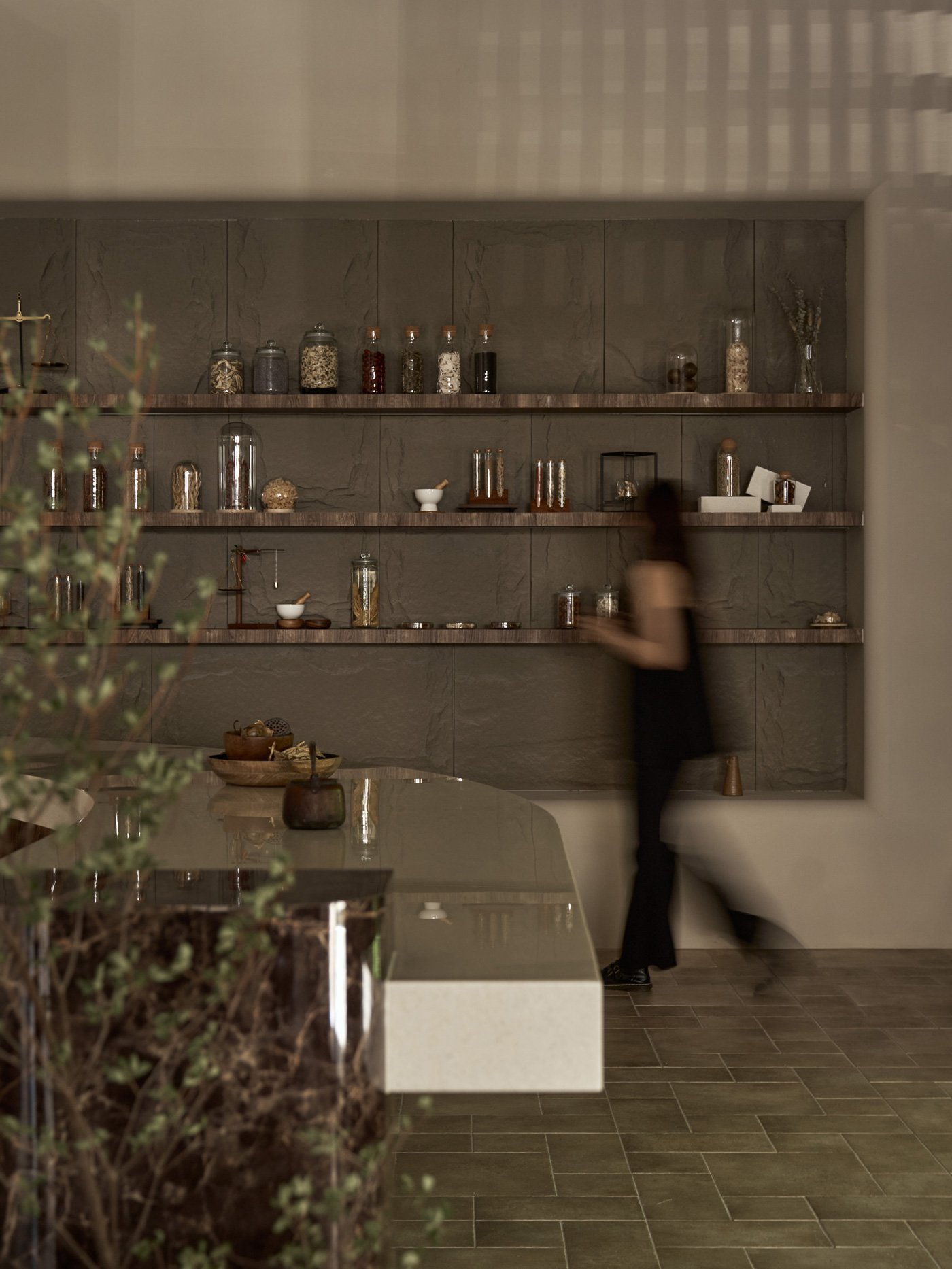
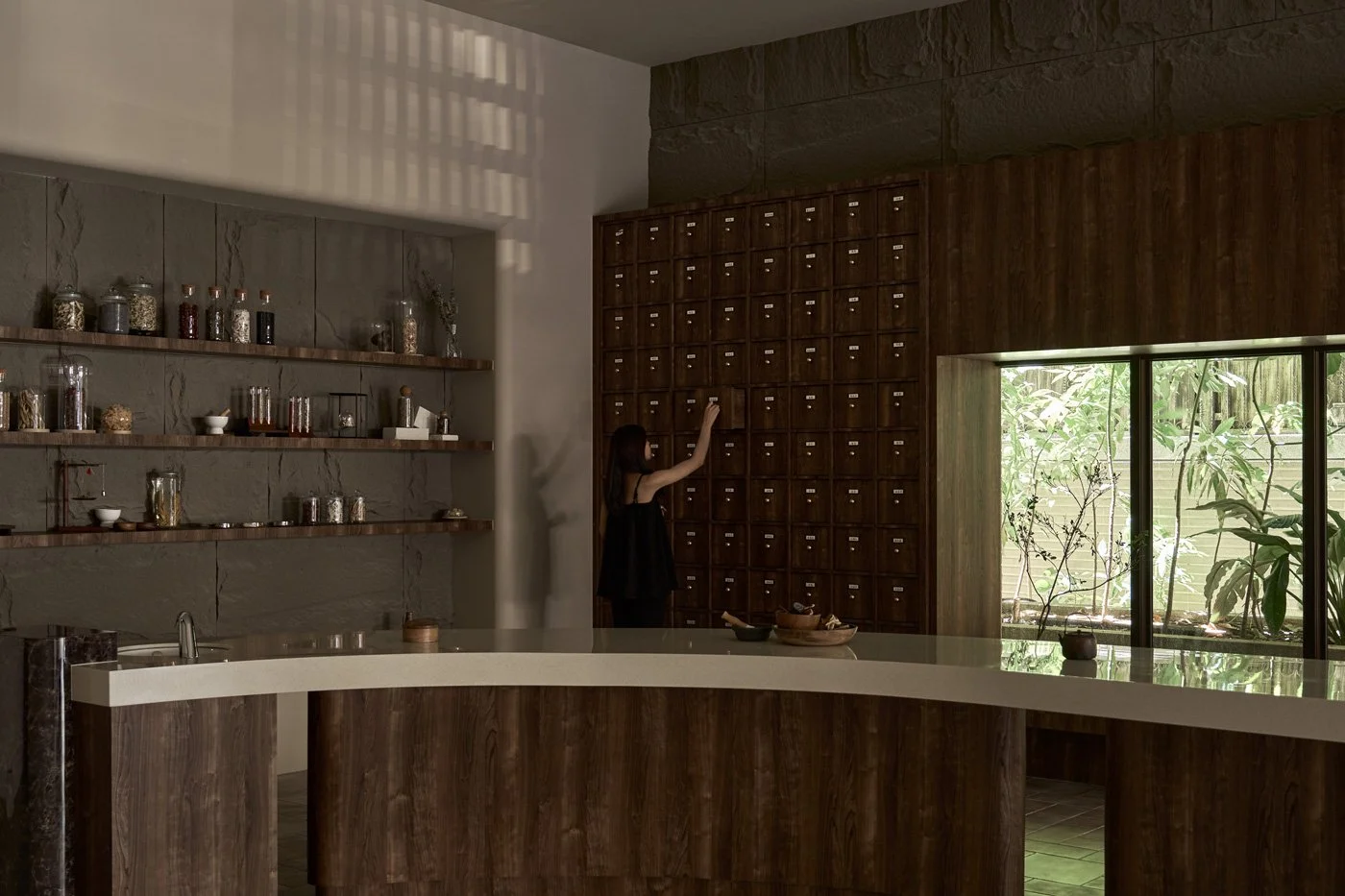
Further in, a long island reinterprets the traditional herb drawers of an old dispensary. Here, the storage becomes an encounter point. It divides the room while collecting attention, drawing patients into a slower exchange as herbs are explained and selected. Functionally, it supports circulation. Emotionally, it signals that care is not something done behind closed doors, but something you can understand and participate in.
-
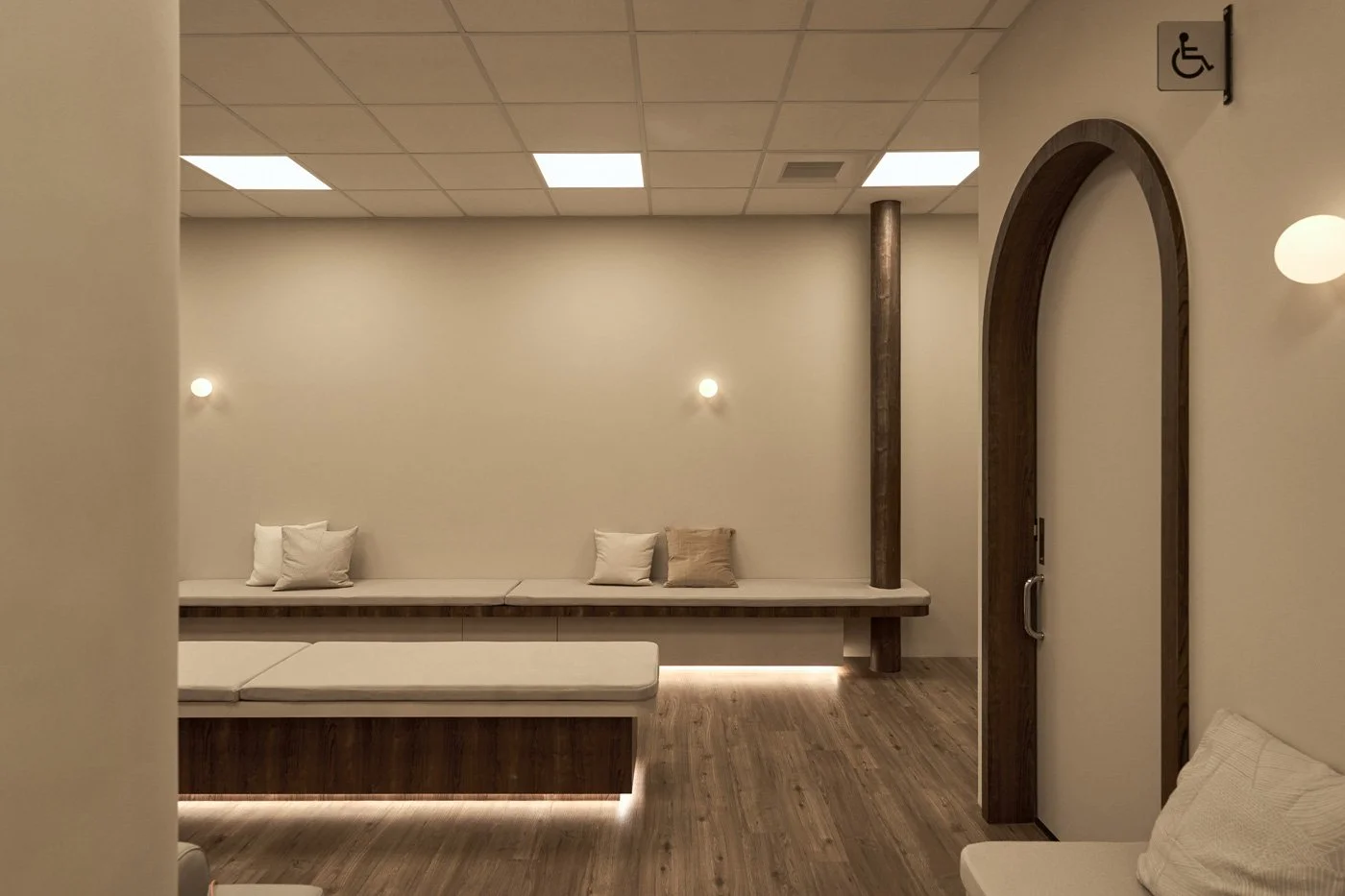
Waiting is treated with the same consideration. Seating is not arranged in rigid rows, but dispersed, allowing people to rest in different corners without feeling exposed. The atmosphere stays practical, yet it carries a domestic ease that changes the tone of the visit. When the cold boundaries of typical clinical space are removed, the experience shifts. Treatment becomes less one directional. The relationship feels closer to a conversation.
-
A quiet centre, built from a tree
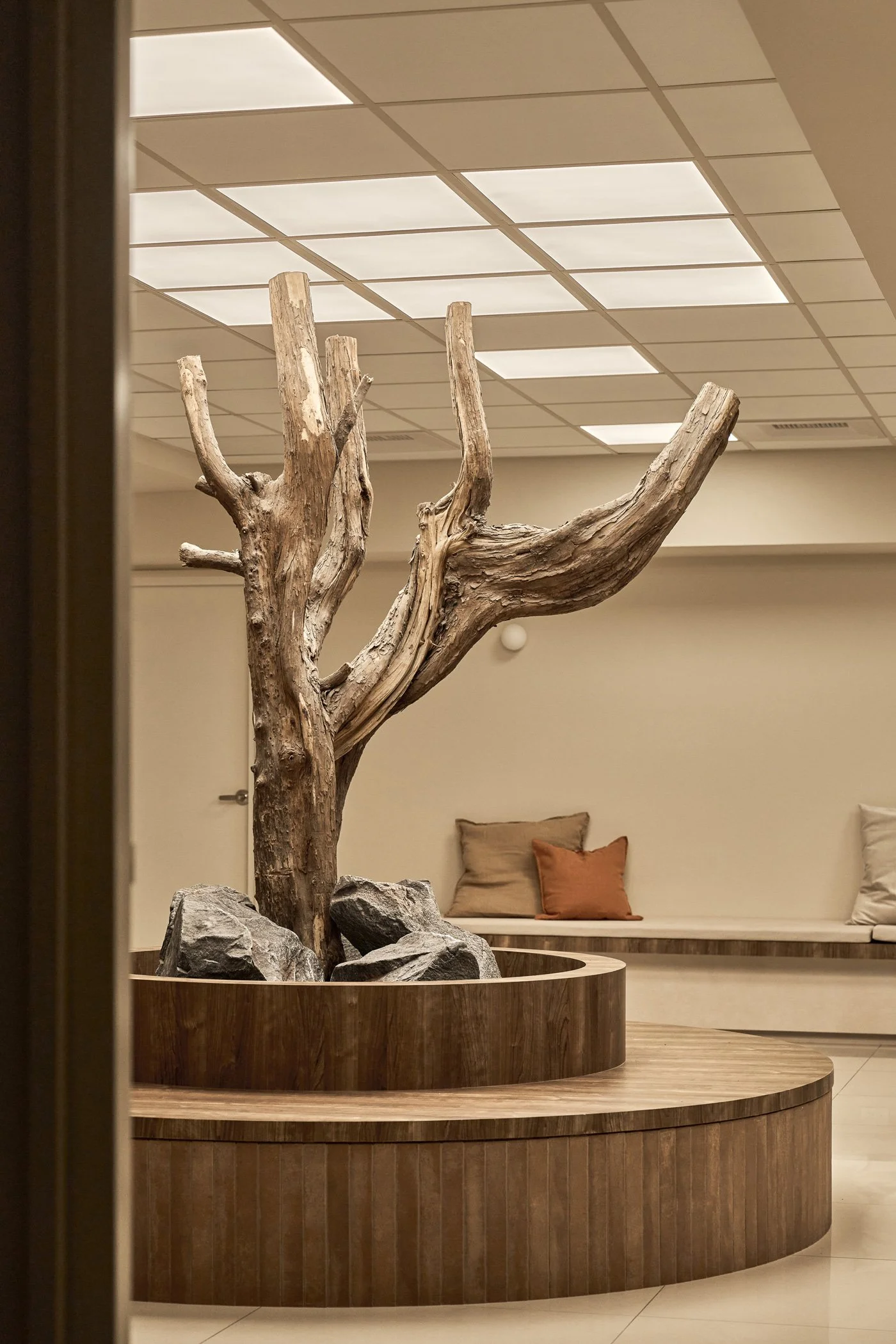
In one corner, a deadwood installation anchors the space. It is not symbolic in an obvious, literal way, yet it holds the emotional centre of the project. The trunk stands with a kind of resilience, a reminder that life moves through cycles of fading and return. The designers speak of inheritance and continuity, the way experience is passed from one generation to the next, the way an older body can still carry a powerful presence.
-
In a neighbourhood like Dadaocheng, the gesture reads as natural. Time is not romanticised, but acknowledged. Outside, traffic continues. People move quickly along the street. Inside, the clinic offers a different temperature, a slower way of arriving. It feels like something brewed patiently, not to impress, but to restore.