
「不被定型的家」讓生活依隨時間的移走,長出自己的樣子
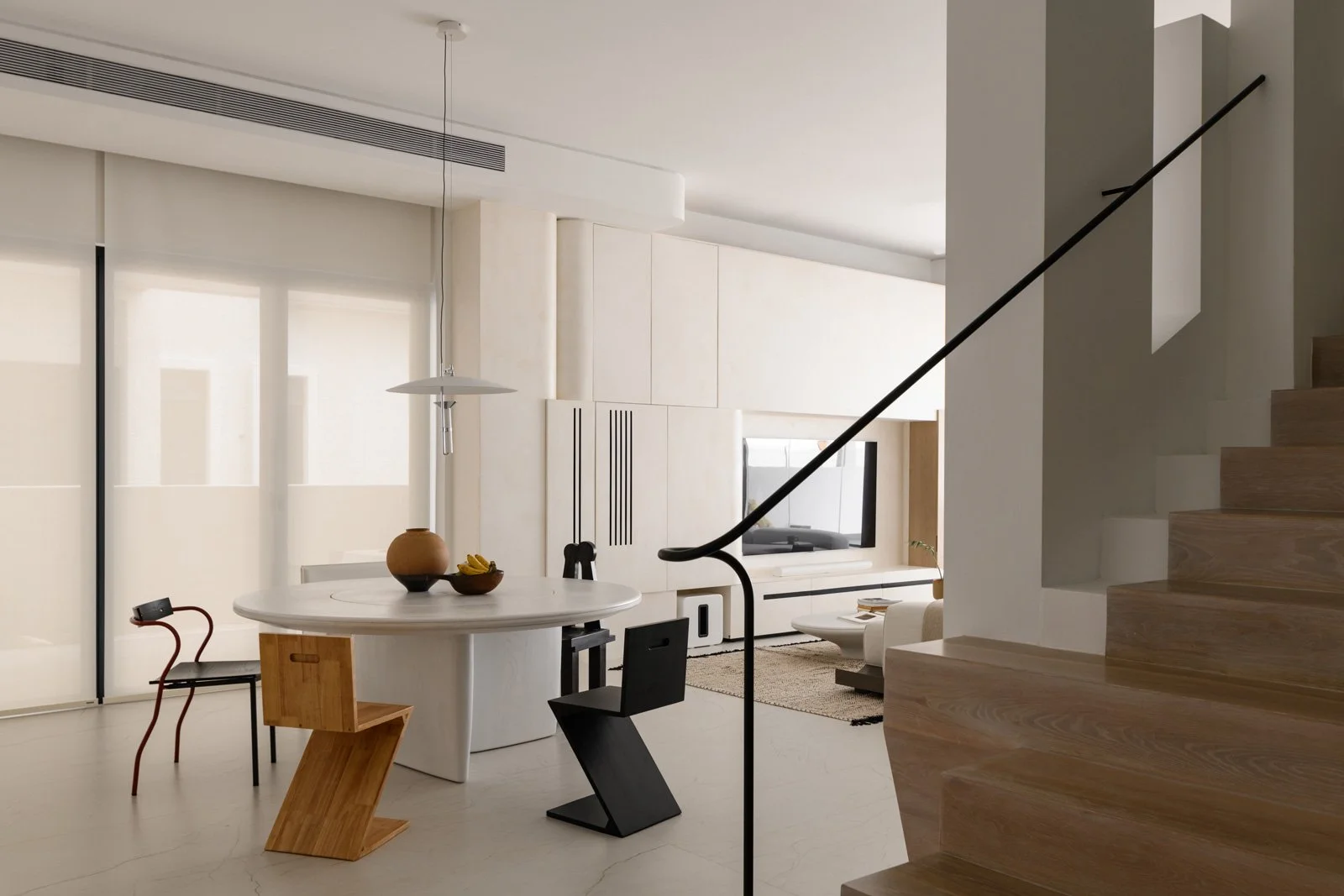
Photo Credit: TWJPTO
-
Some spaces feel entirely finished the moment they are built. Every corner is calculated, furniture is locked into place, and décor is curated with such precision that the home begins to resemble a museum. It is beautiful, certainly, but rigid—a fragile tableau where one treads lightly, fearful of disturbing the carefully orchestrated order.
But life rarely operates with such discipline. We might wake up one weekend with a sudden obsession for baking, requiring a surface for a brand-new mixer. Work documents pile up in a corner of the living room simply because the light is better there. We discover that the children prefer reading on a small landing of the staircase, transforming a mere circulation point into a favorite hideout. Real life always spills over the edges of a designer’s blueprint, sprouting organically in the cracks of the space.
This double-story residence in Malacca, Malaysia, embraces these "unexpected events" as the very foundation of its design. Eric Ooi Zi Sheng of Pins Design Studio proposes a concept where "indeterminacy is the only definition." By refusing to rush into labeling every corner, the space is left free to respond to the genuine, shifting needs of life.
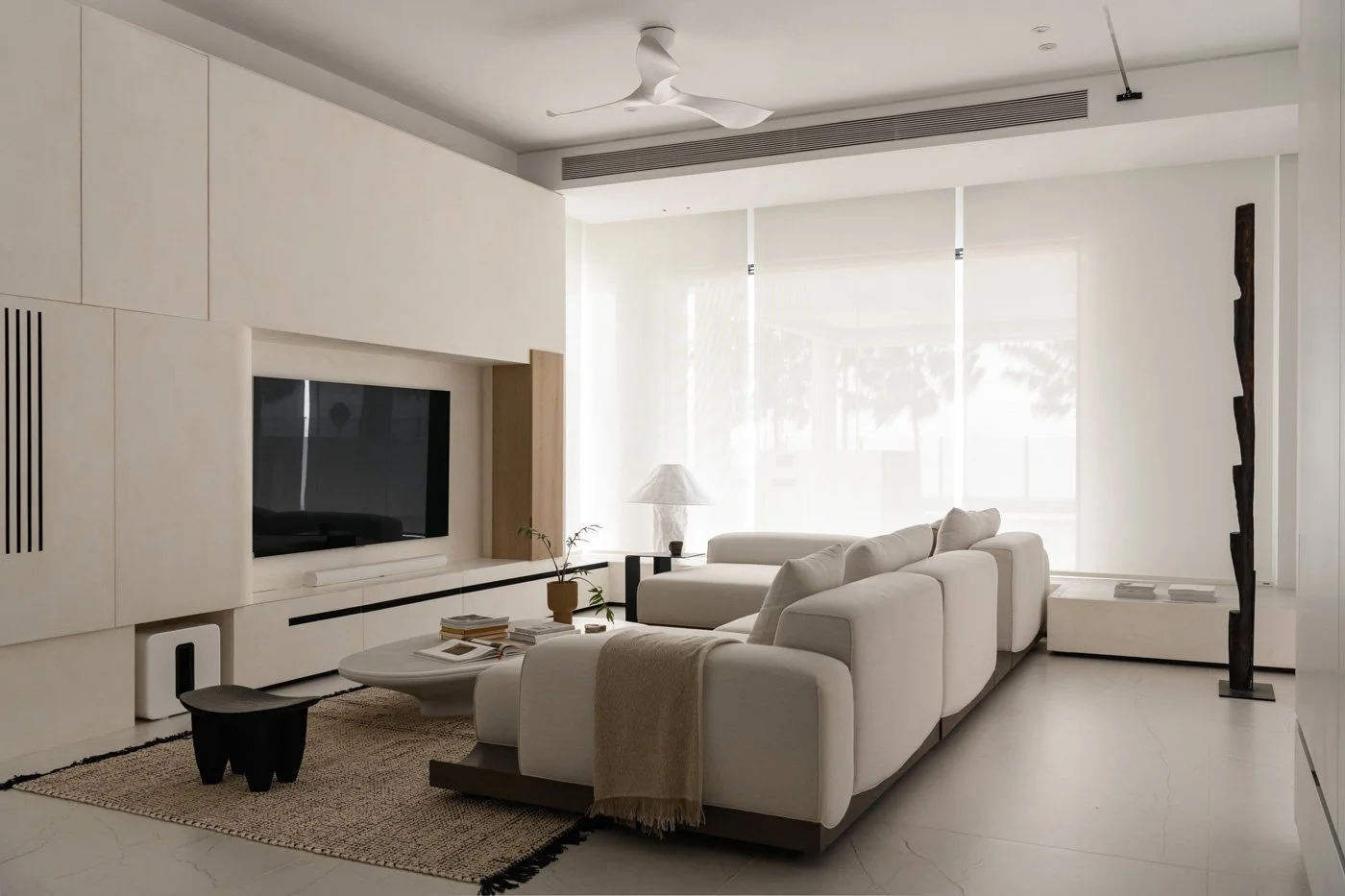
Photo Credit: TWJPTO
-
A Home Left Unfilled
Stepping inside, the first sensation is one of deliberate "breathing room." Pure white walls, beige floor tiles, and expansive floor-to-ceiling windows form the home’s quiet canvas. There is no urge to stuff the void with furniture or décor. Instead, the design invites a slow, deliberate influx of light, allowing it to become the primary resident of the house.
Dissolving Boundaries and Raised Landscapes
The narrative of the space unfolds silently through the rise and fall of lines. In the ground-floor communal area, the architect cleverly repurposes structural constraints—beams, columns, and corners once seen as obstacles—transforming them into framing devices.
Breaking away from traditional furniture logic, a raised platform extends from the wall alongside the sofa. This element serves as both an extension of seating and a concealed storage volume. By treating furniture as architecture, the function of the space is no longer singular; it can instantly shift from a reading nook to a gallery corridor for displaying collections.
The visual tension is further heightened by the seamless transition between indoors and out. Through a frameless, panoramic glass sliding door system, the physical boundaries of the architecture are deliberately blurred. When fully open, the living room and the outdoor terrace merge completely, allowing light and air to march in unobstructed. The edges of the room dissolve, and the interior geometric lines stretch outward, weaving with the garden’s greenery into a fluid, continuous depth of field.
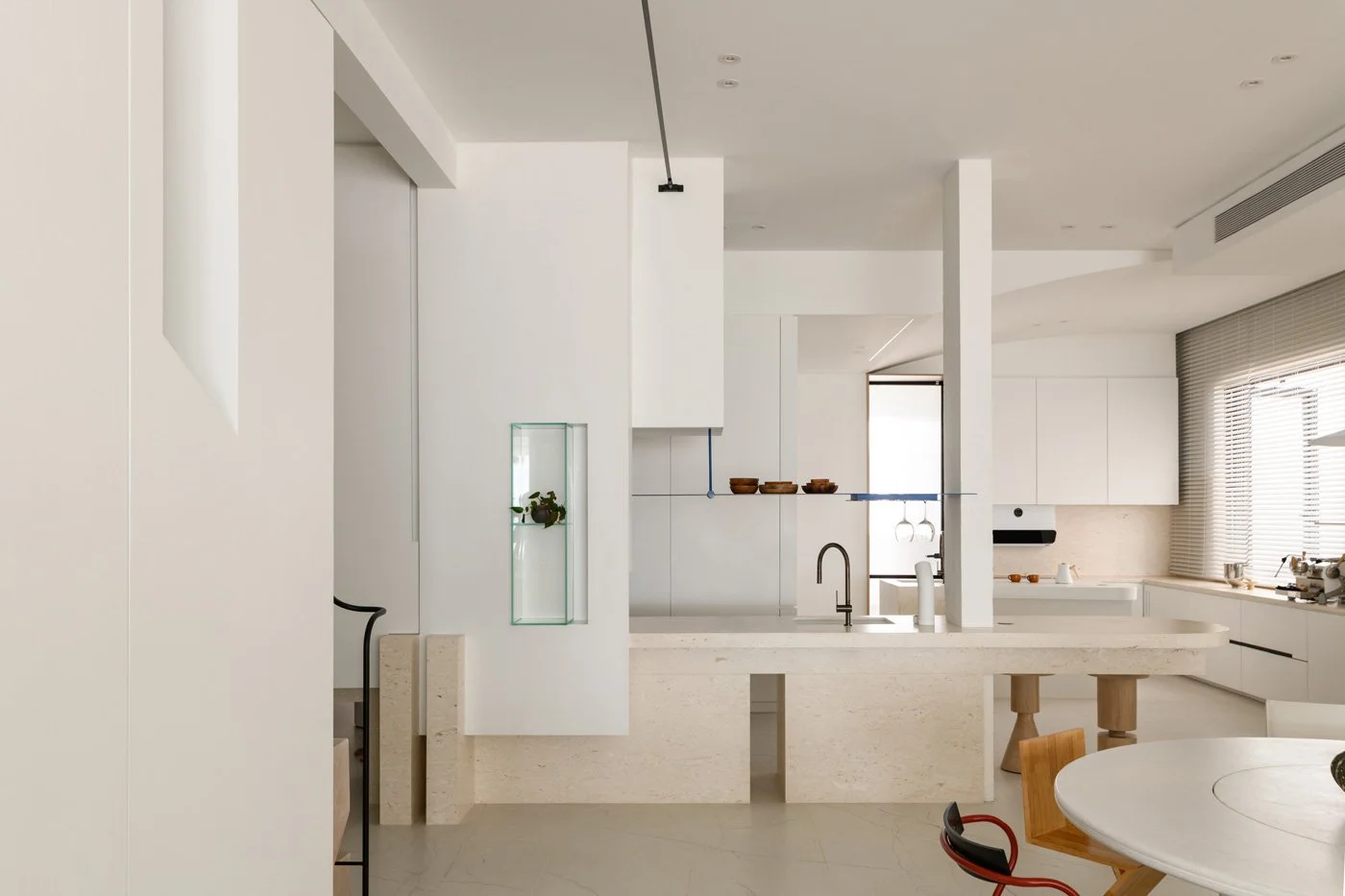
Photo Credit: TWJPTO
-
A Dialogue of Organic Curves
Transitioning into the kitchen and dining area, the design language undergoes a gentle modulation.
In the kitchen, injected with fluid, organic shapes, the focus settles on an elegant, elongated island. The designer has delicately traced a corresponding curve on the ceiling, creating a vertical dialogue between the two arcs that visually stretches the space. Light beige walls interact with pure white cabinetry, using the purity of materials to soften the potential harshness of a functional zone, returning the act of cooking to a minimalist, inclusive essence.
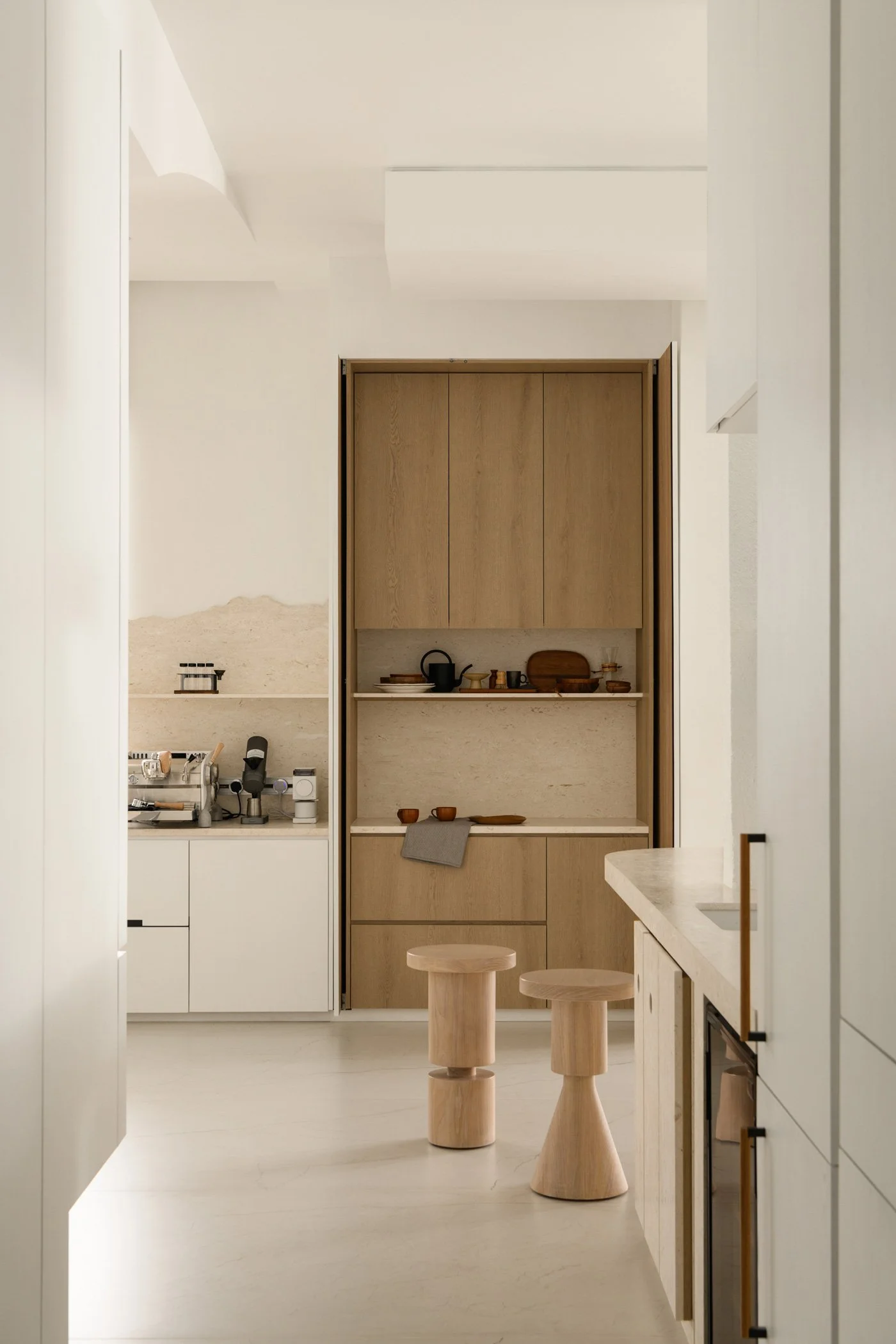
Photo Credit: TWJPTO
-
Looking outward, a pure white spiral staircase spirals up in the courtyard like a sculpture, acting as the visual anchor of the exterior. Its rotational posture echoes the interior’s curved vocabulary, casting rhythmic, dancing shadows under the sun.
Resting alongside this architectural poetry is a semi-outdoor dining area, leisurely embraced by greenery. The designer intentionally employed the concept of negative space here, letting wind and light take center stage. Whether for a morning coffee or a weekend gathering with friends, the scenes of daily life seamlessly border nature. The heat of social interaction and the intimacy of family time flow freely here, adding a layer of dimensionality and human warmth to the home’s minimalist tone.
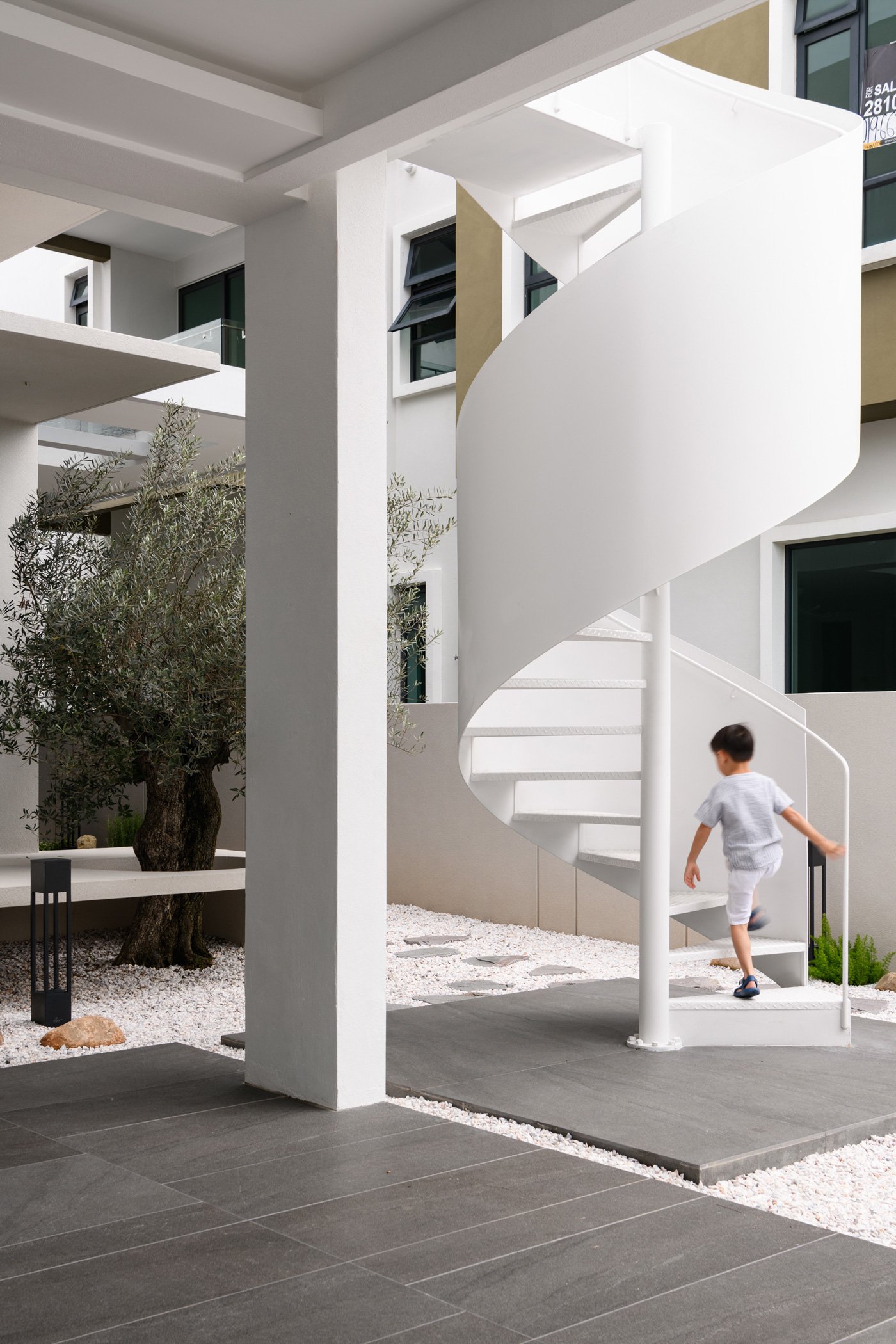
Photo Credit: TWJPTO
-
Inclusivity in Silence
Ascending the stairs feels like a ritual of leaving the daily clamor behind. As the sightlines shift and the elevation rises, the air on the second floor seems to flow more slowly. Here, the space turns to explore the texture of living—a gentle narrative closer to the touch of skin.
Continuing the warm minimalist tone, the private quarters discard superfluous decoration. Hard physical boundaries are gently erased, replaced by a smooth fluidity of space. The reading area serves as a sanctuary where thoughts can unfurl freely. The modes of work and life can switch at will, allowing the desk to shed its rigid office persona and transform into a quiet corner for reading and solitude.
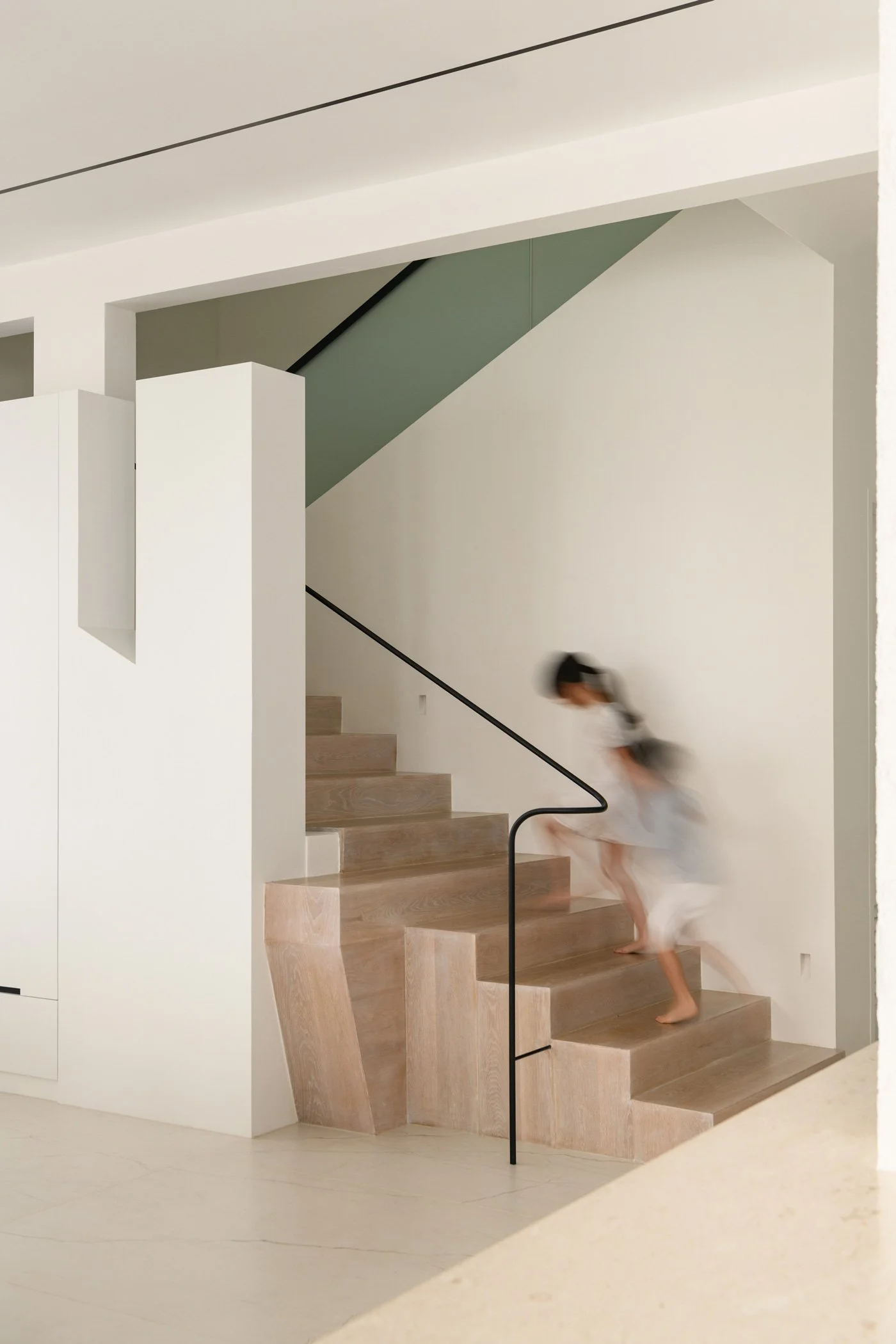
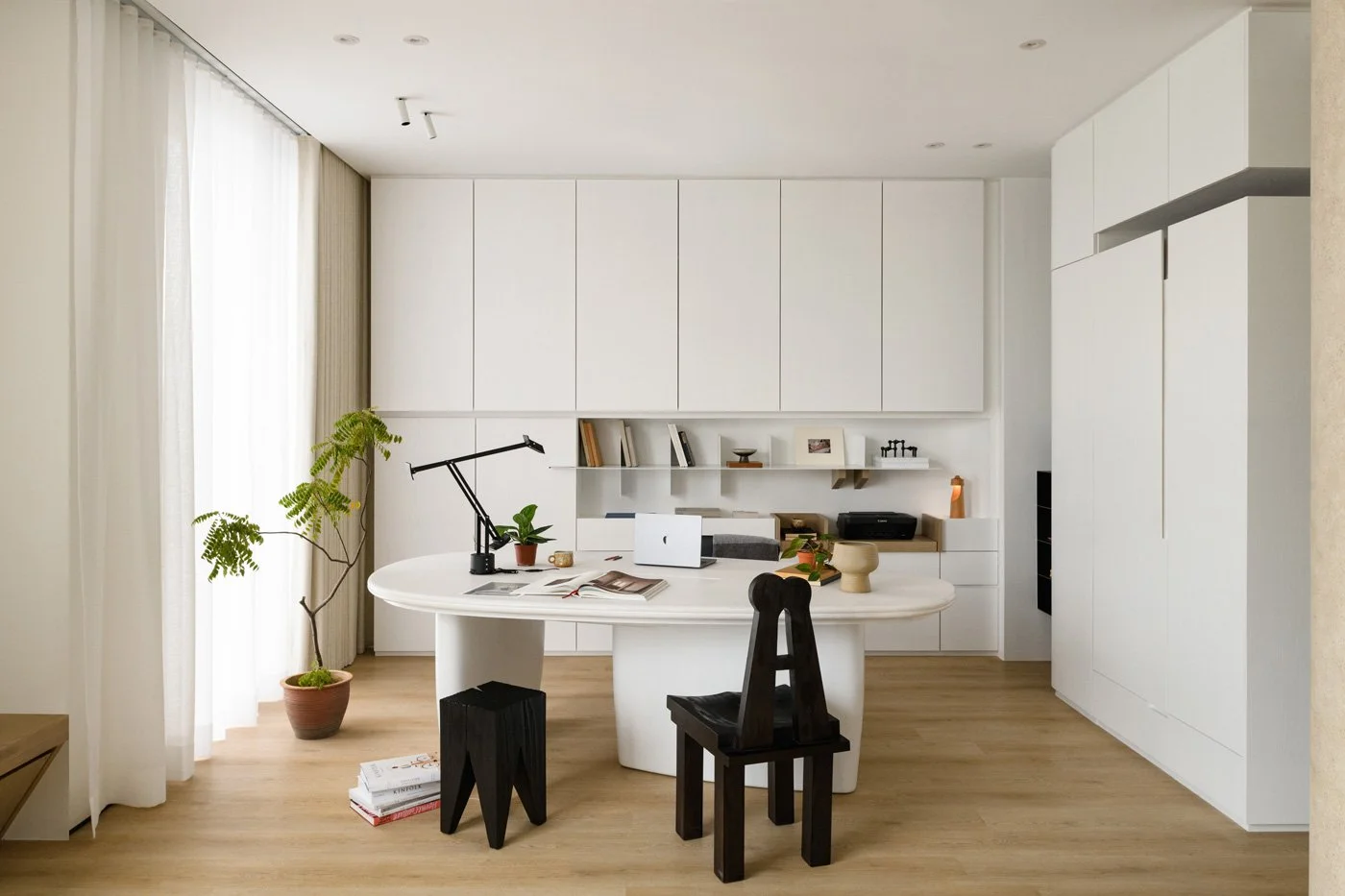
Photo Credit: TWJPTO
-
Turning into the master bedroom, the vast expanses of white walls, the wood grain beneath one's fingertips, and the warm flooring underfoot all convey a sense of stability. The senses are properly collected here; the noise of the outside world is walled off by a thick, comforting silence.
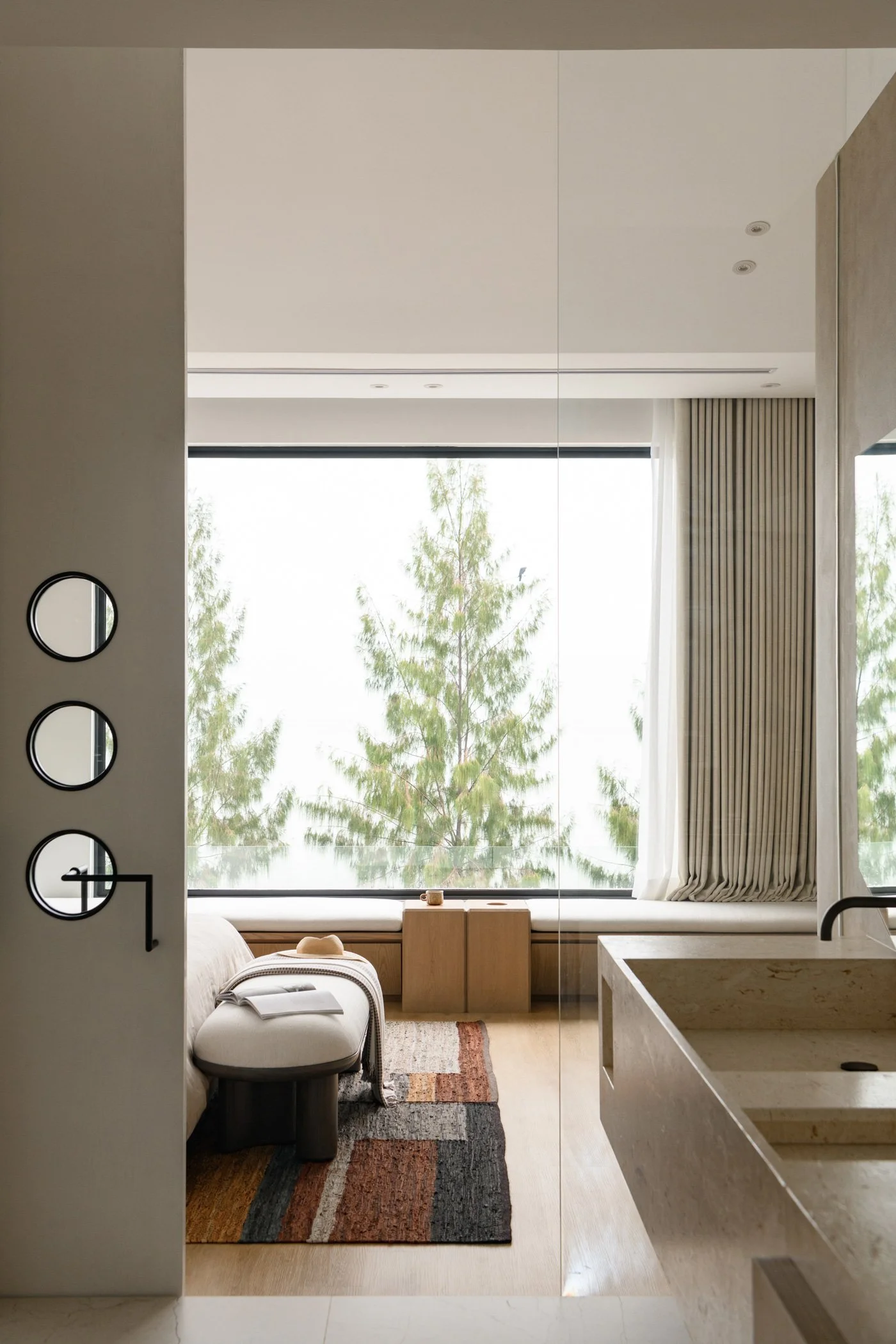
Photo Credit: TWJPTO
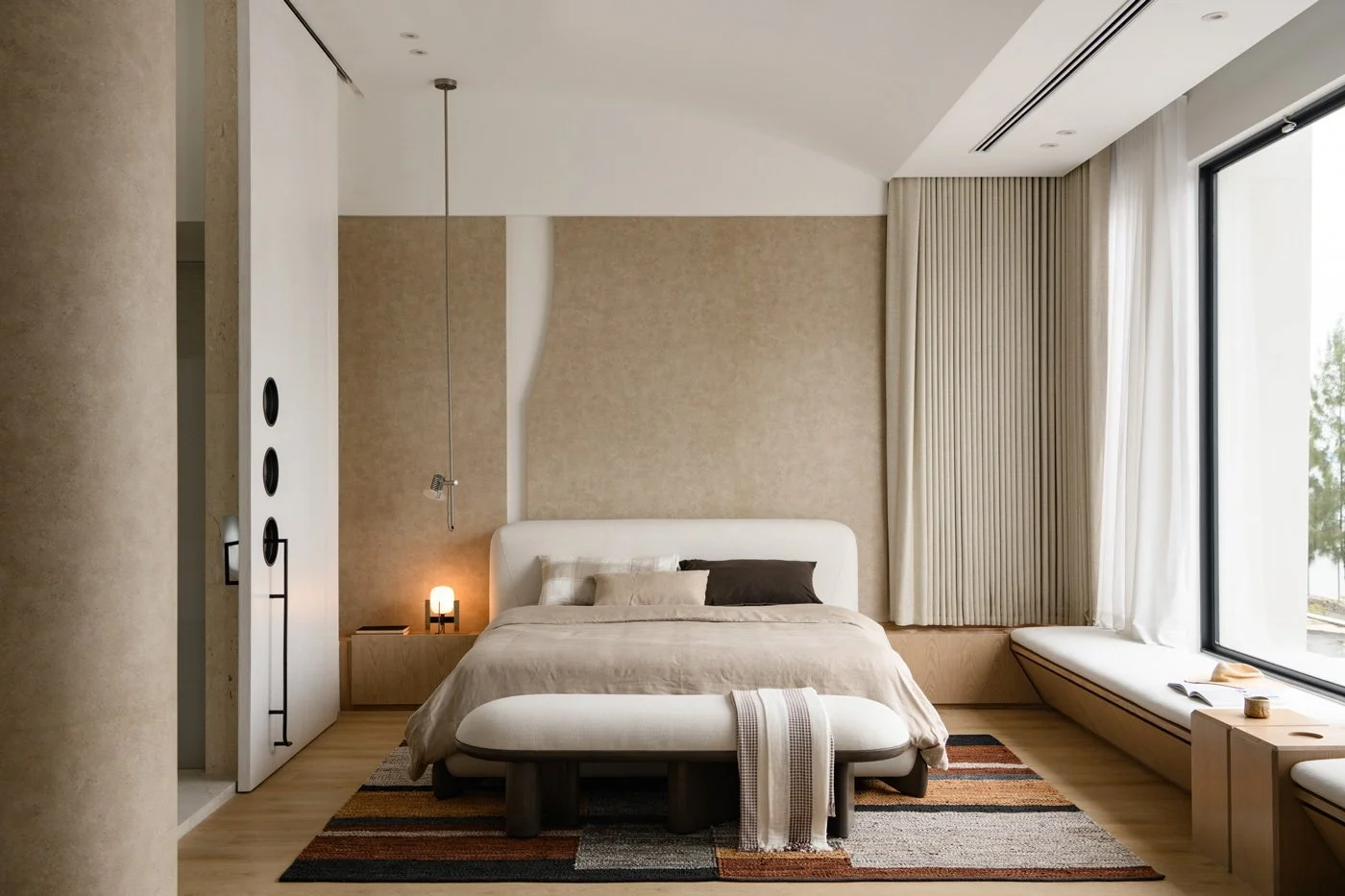
Photo Credit: TWJPTO
Photo Credit: TWJPTO
Photo Credit: TWJPTO
-
The Unfinished Finish
Walking through this home, you discover an abundance of breathing room. The designer understands the mutable nature of life: when a space ceases to frame and confine every corner, we possess more possibilities.
It is as if this home is a perpetually open field. Its story is still being written, its contours slowly taking on the unique shape of its inhabitants’ lives. Geometry and organic form, silence and vitality, definition and fluidity— they find a harmonious way to coexist, ready to catch the unexpected surprises that life brings.
Photo Credit: TWJPTO