在都會重現大自然呼吸,懷特設計將戶外露營的自由靈魂植入現代餐飲空間:日本精品熱狗品牌 EMMA’s HOTDOG
-
All things begin in the moist, fertile depths of the soil. A towering tree, capable of sheltering many, starts its journey from the muddy earth, breaking through the surface to grow sturdy stems before stretching its leaves under the shimmering sunlight. This natural order of growth inherently mirrors the process of architectural construction: both rise from a solid, grounded foundation, seeking upward support to ultimately provide shelter and security. Yet, amidst the concrete structures of modern cities, we have largely forgotten our innate instinct to be close to the earth.
This profound yearning for nature forms the design core for the Japanese boutique hot dog brand EMMA’s HOTDOG as it expands overseas to the Taoyuan Arts and Cultural District. Because the brand’s original store in Japan is nestled within a luxury glamping site, the experience of dining amidst nature is a foundational tone strictly upheld by its Japanese founder. To carry forward this brand ethos of coexisting with the earth, White Interior Design translated the rhythm of plant growth into the interior architecture. Through layered material textures and the dynamic interplay of light and shadow, the space is sculpted into an urban oasis for relaxation. As customers step away from the bustling streets and turn inside, they embark on an immersive spatial journey that visualizes the very process of life and growth.
-
An Exploratory Path from Soil to Canopy
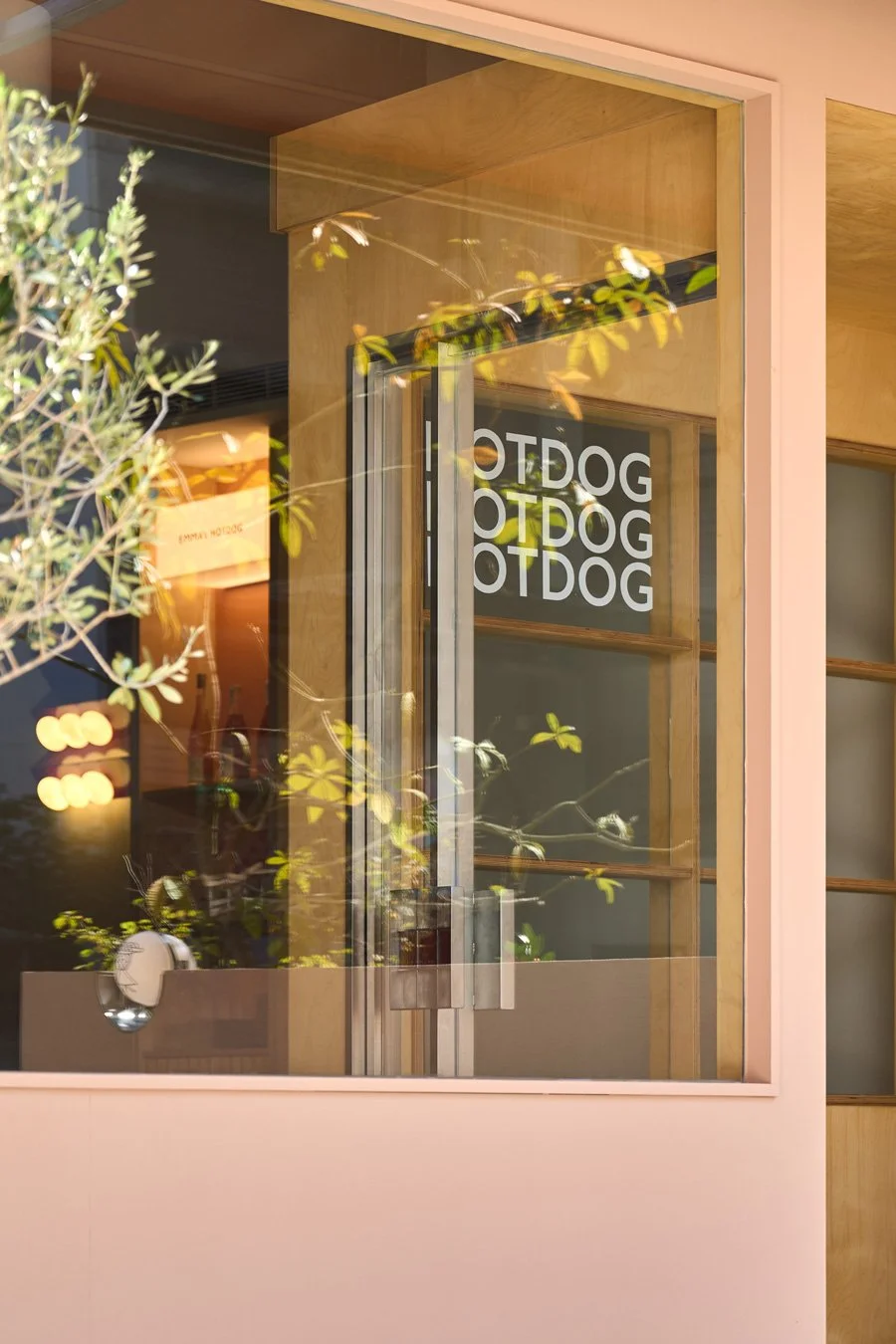
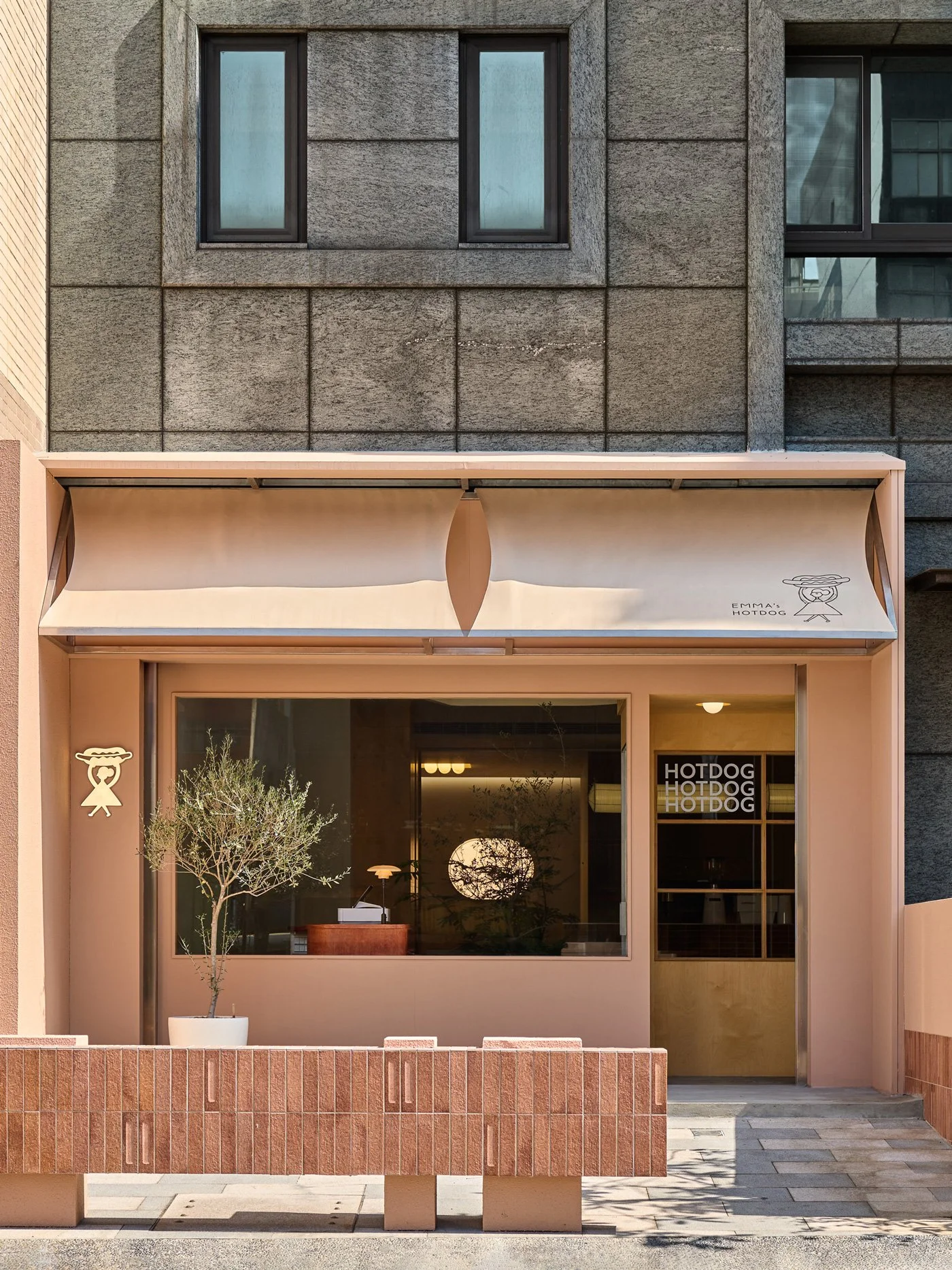
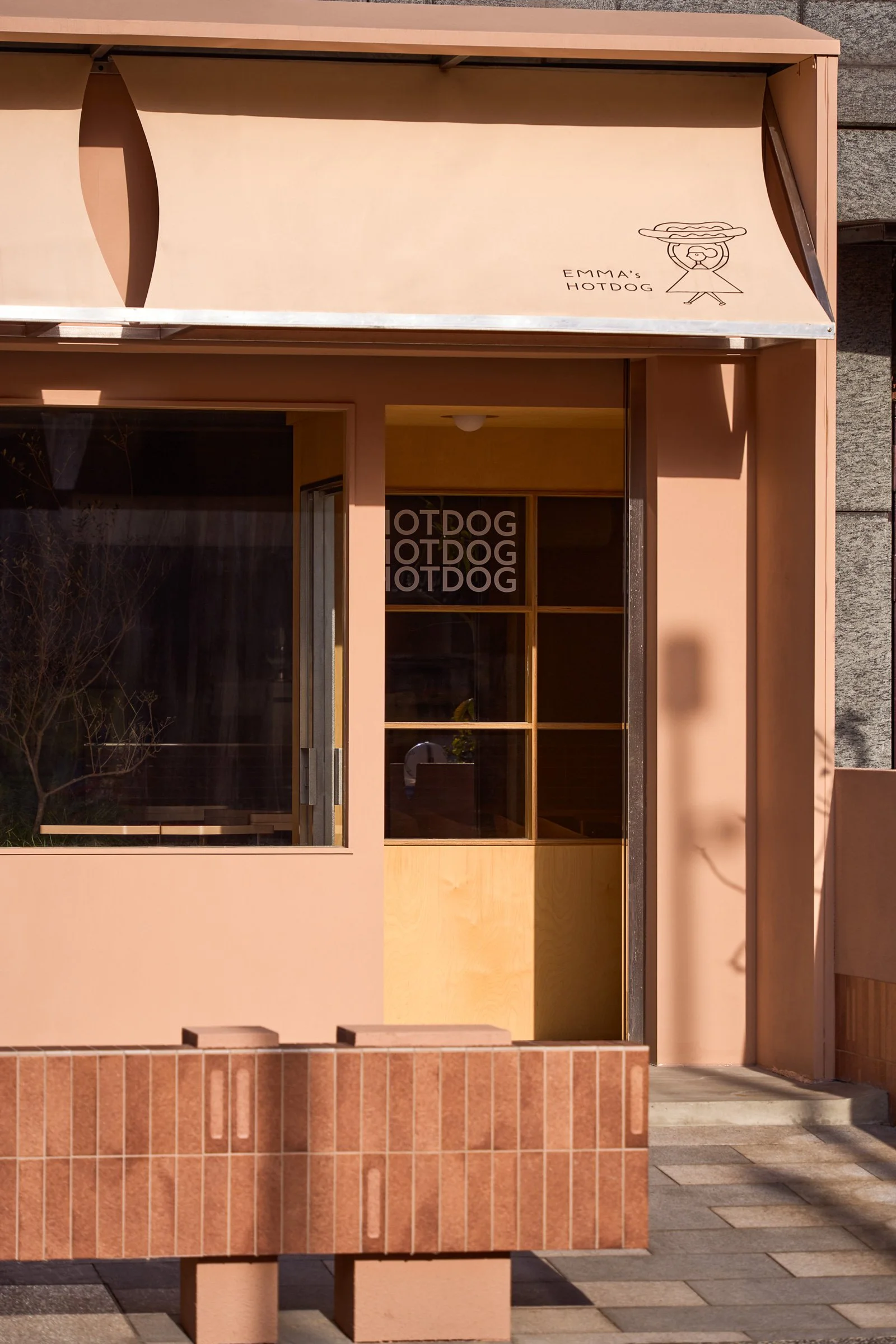
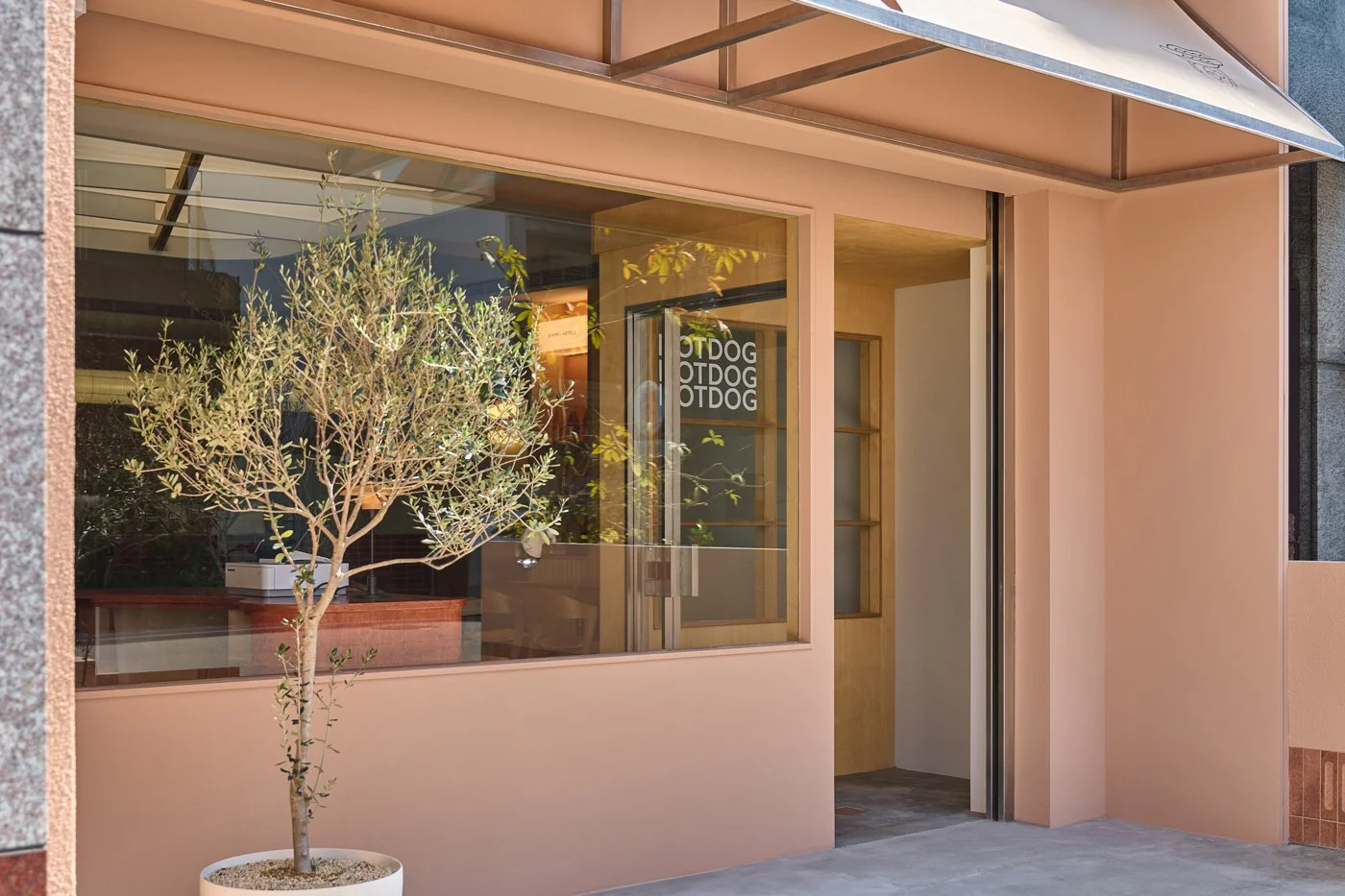
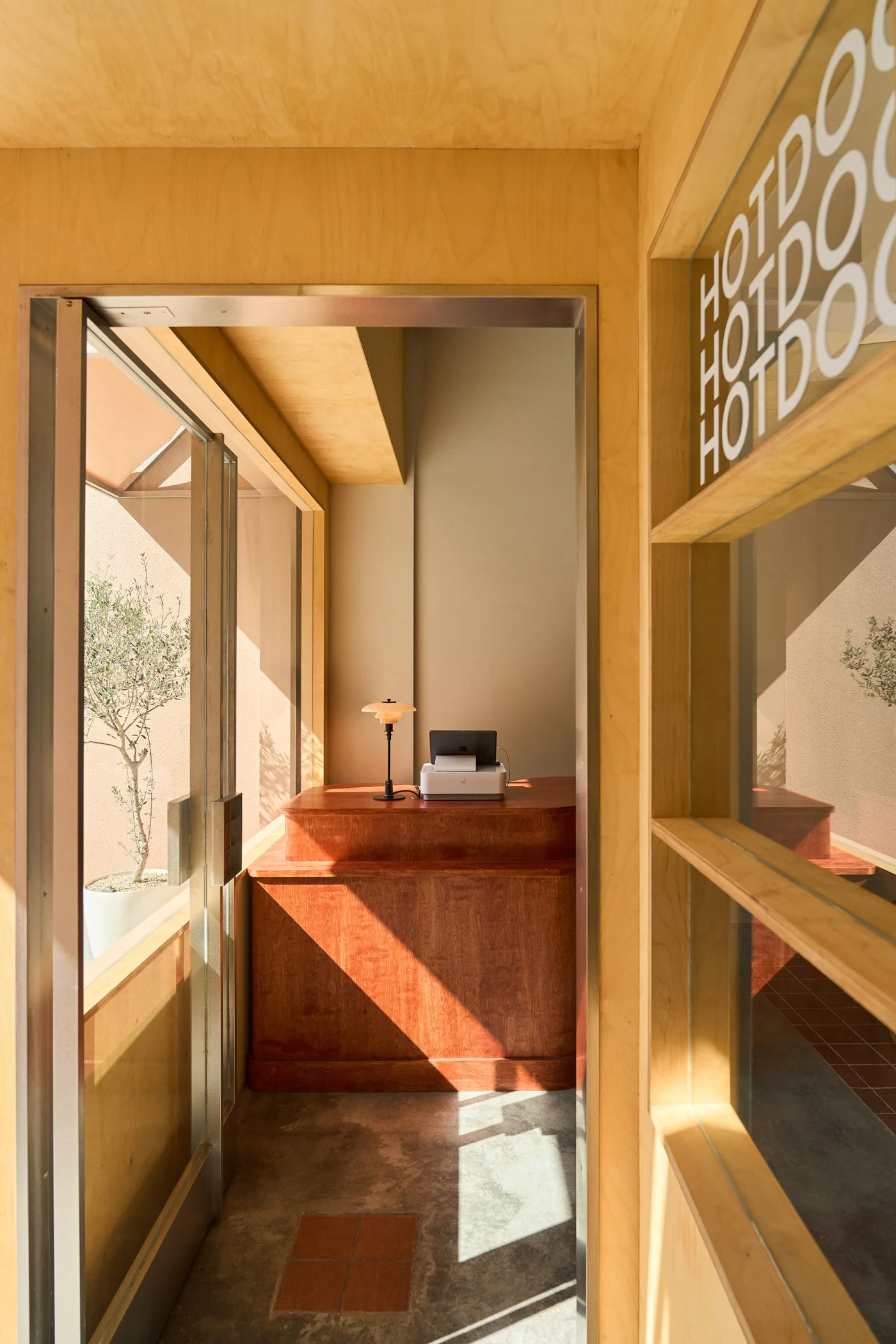
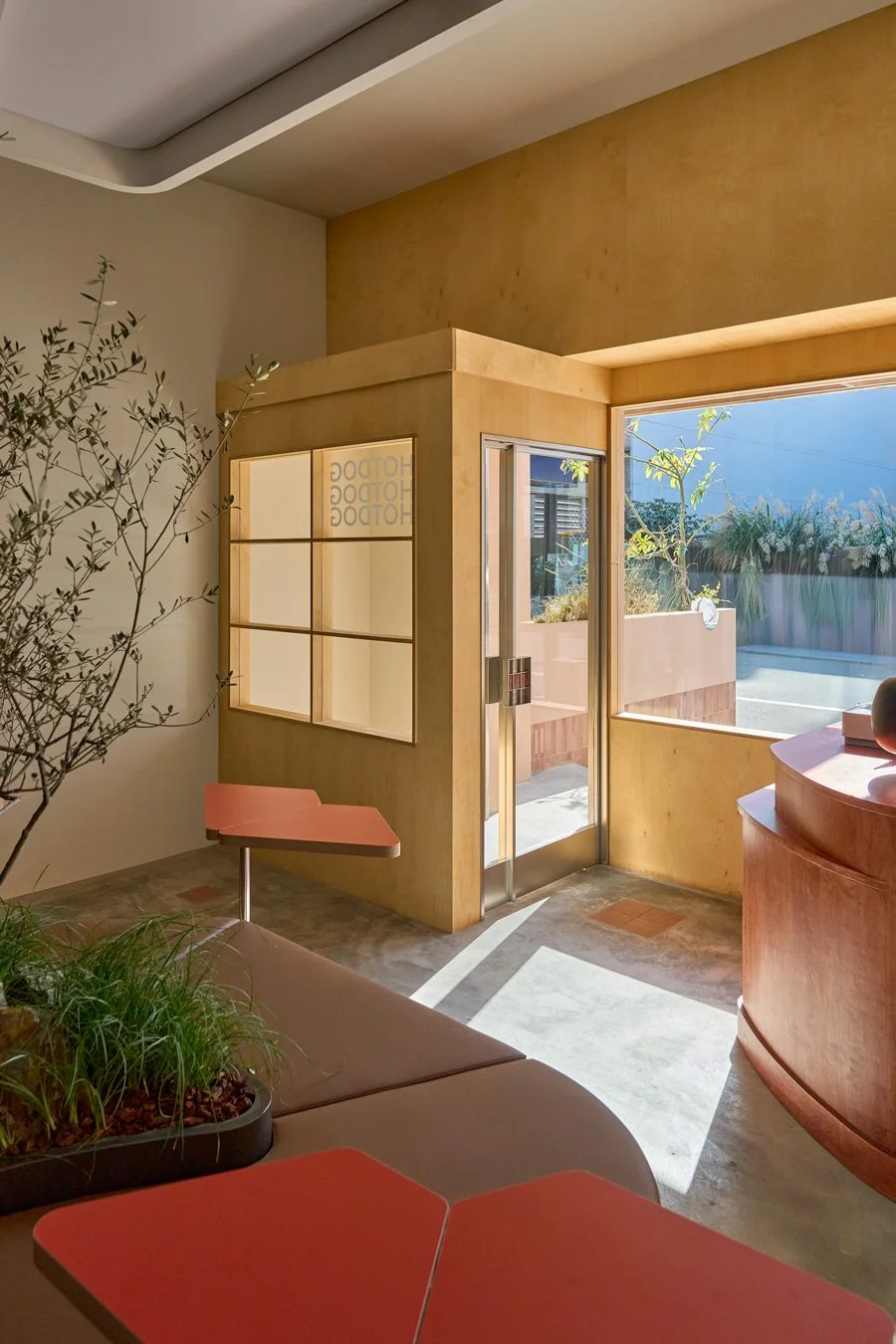
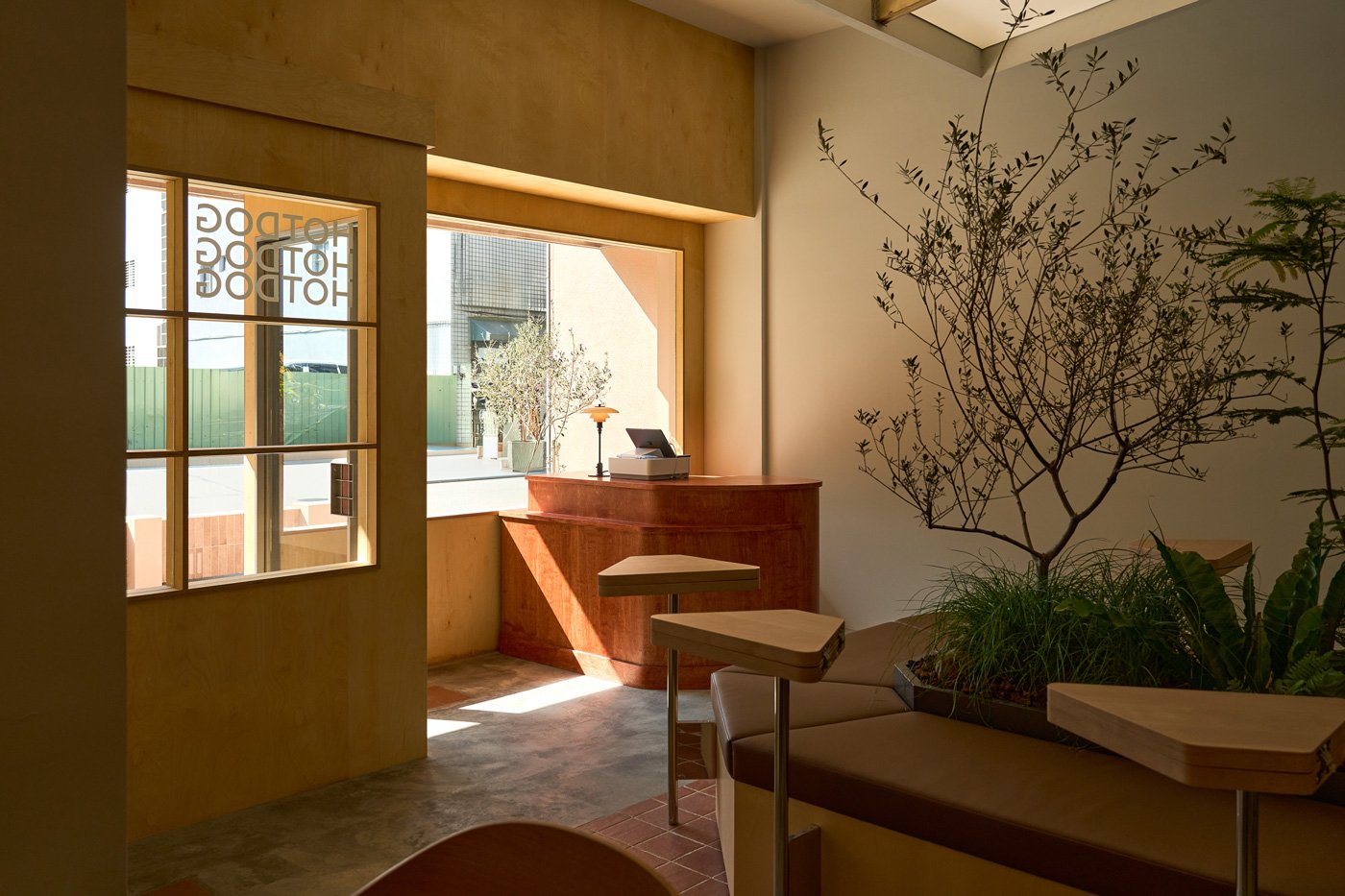
White Interior Design deconstructed the stages of plant growth, embedding them as spatial elements along the circulation path. The storefront facade adopts a solid, earthy terracotta palette, simulating the nurturing soil that supports a newborn sapling. This warm, organic hue stands out with high recognition against the predominantly monochrome streetscape.
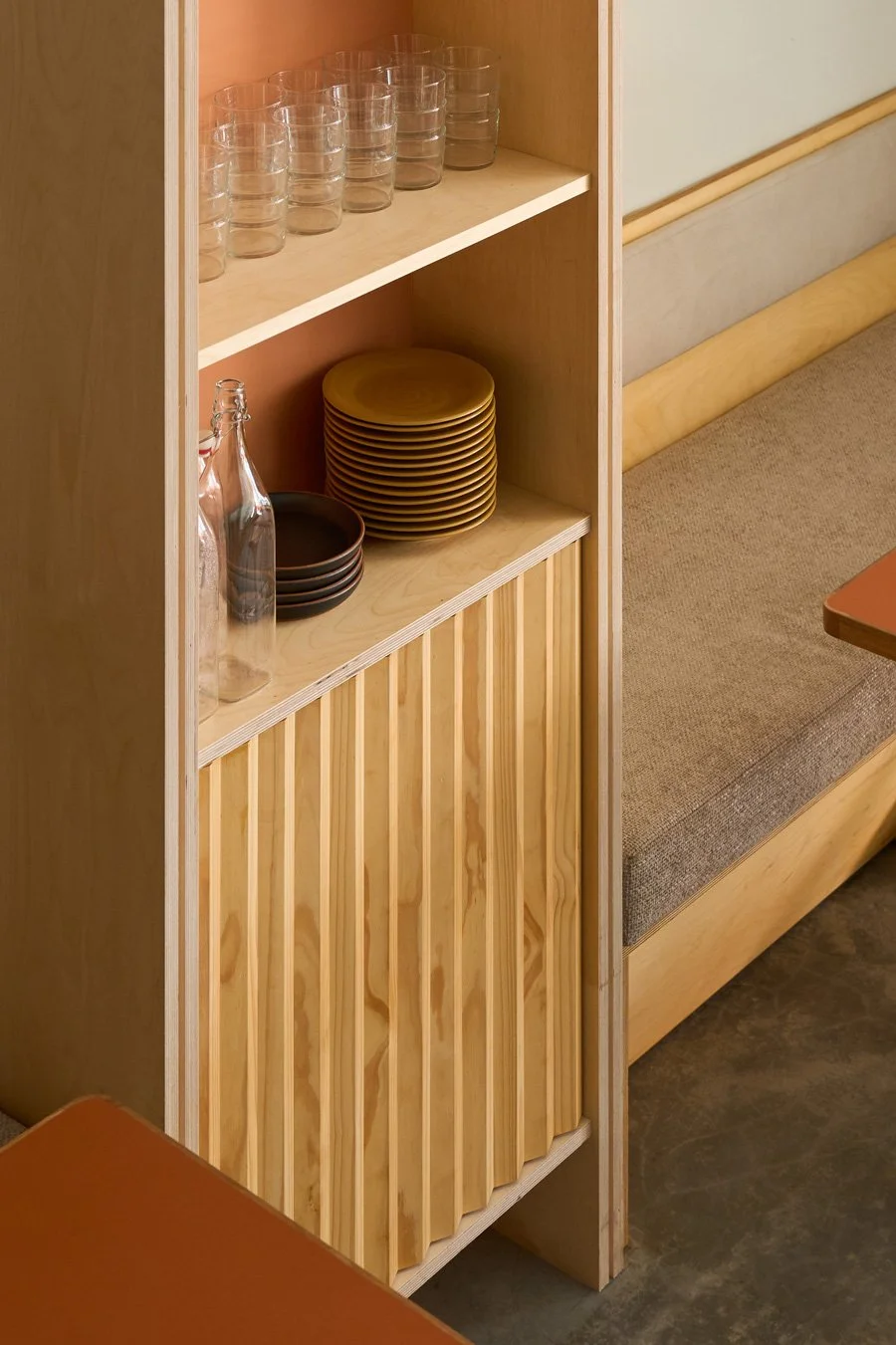
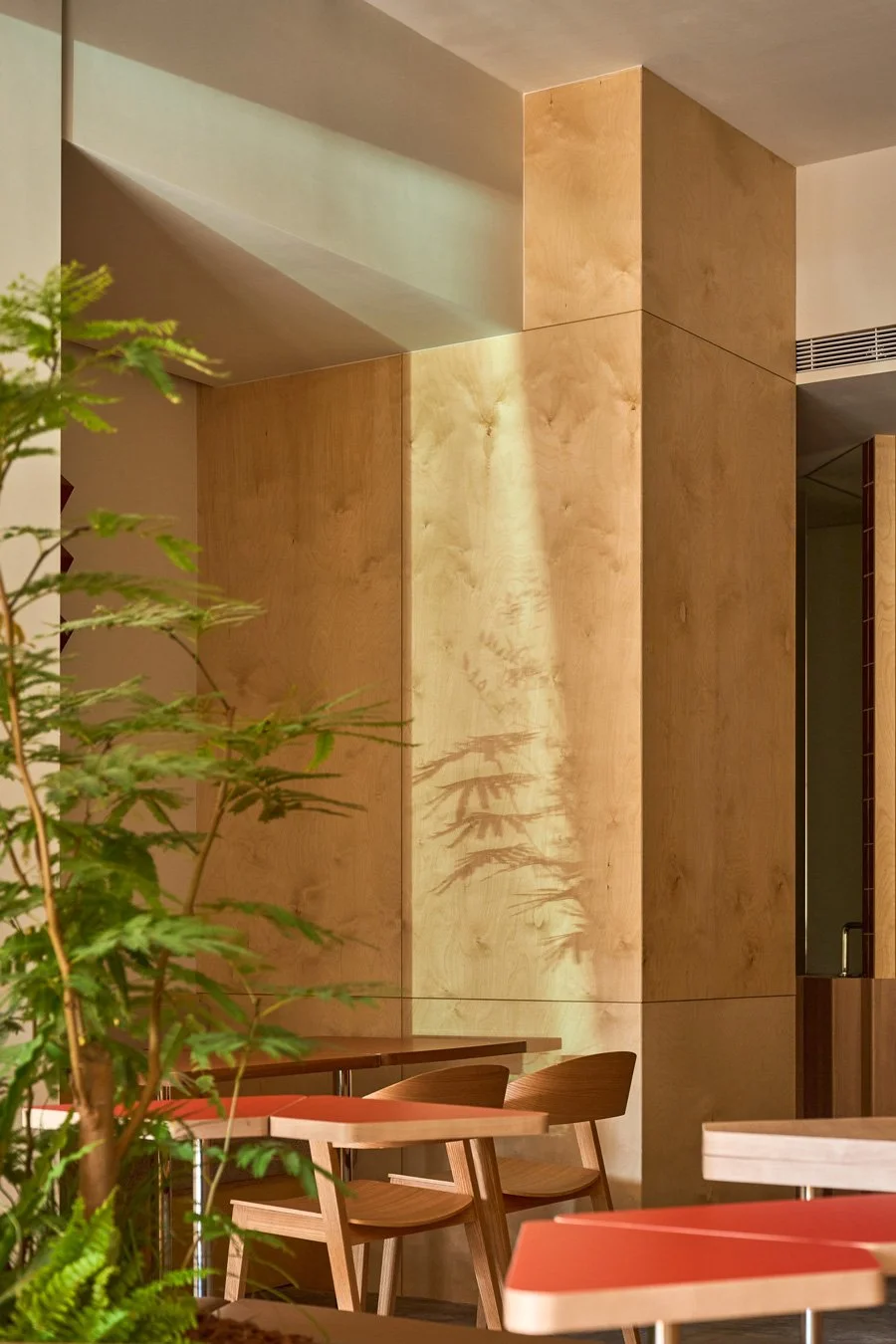
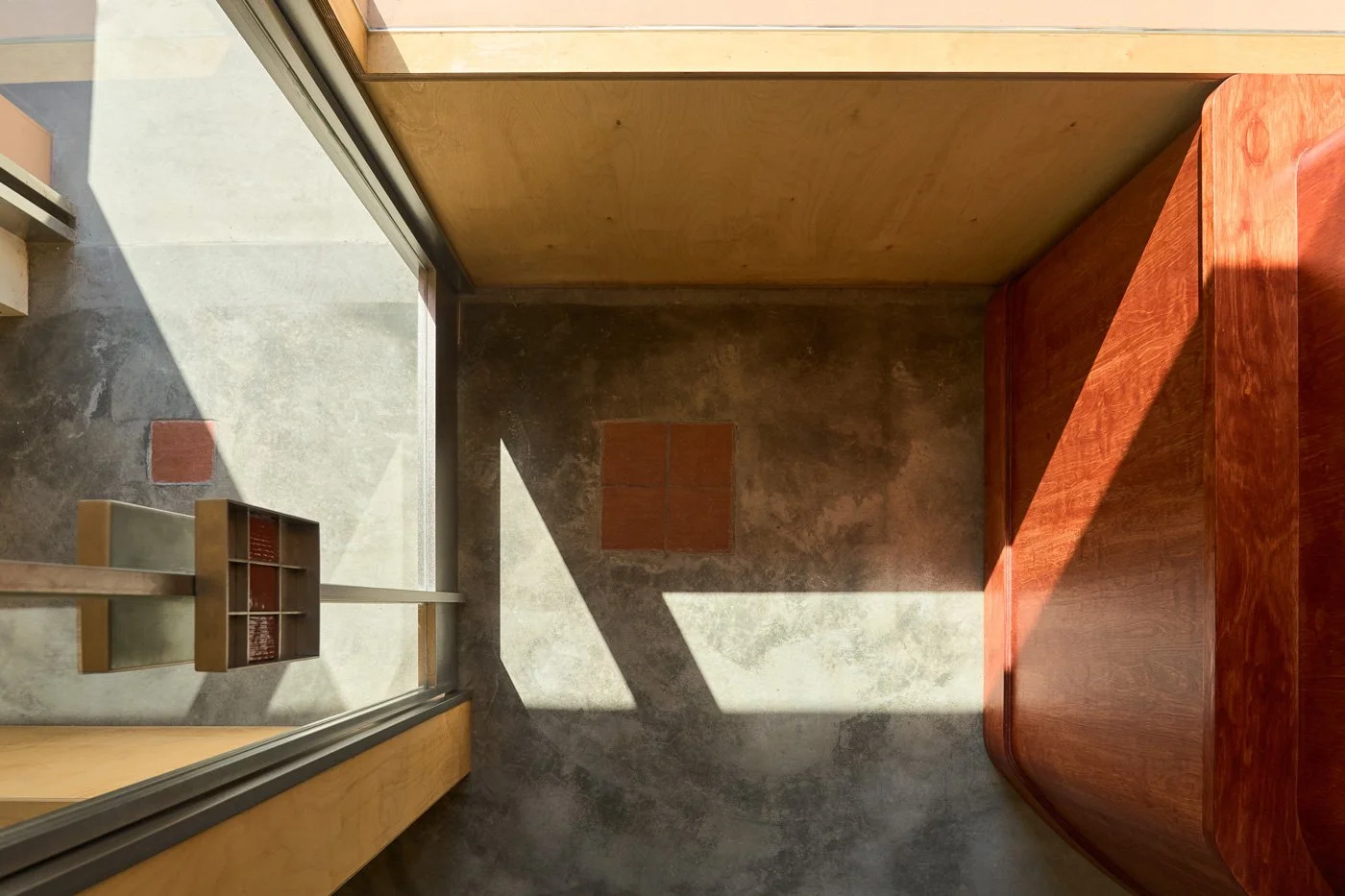
As visitors step further inside, the visual weight shifts from heavy earth to lighter textures, with wood elements gradually taking over. The walls are wrapped in a pale birch veneer, offering a warm, bark-like embrace that symbolizes the resilient upward stretch of a tree trunk. At the entrance, the reception and seating counter deliberately features a contrasting amber wood tone; this interplay of light and dark not only highlights the reception area but also enriches the spatial depth.
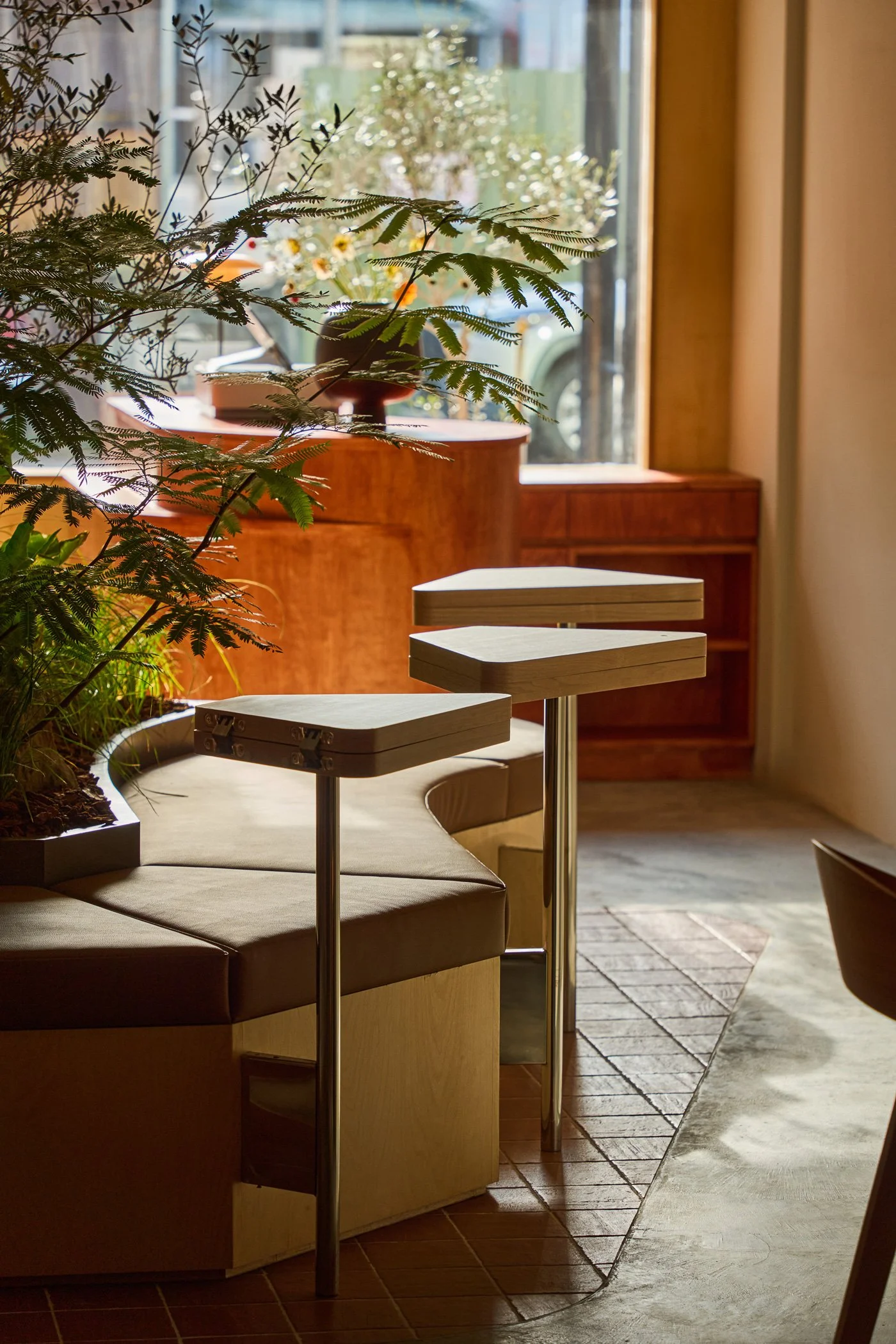
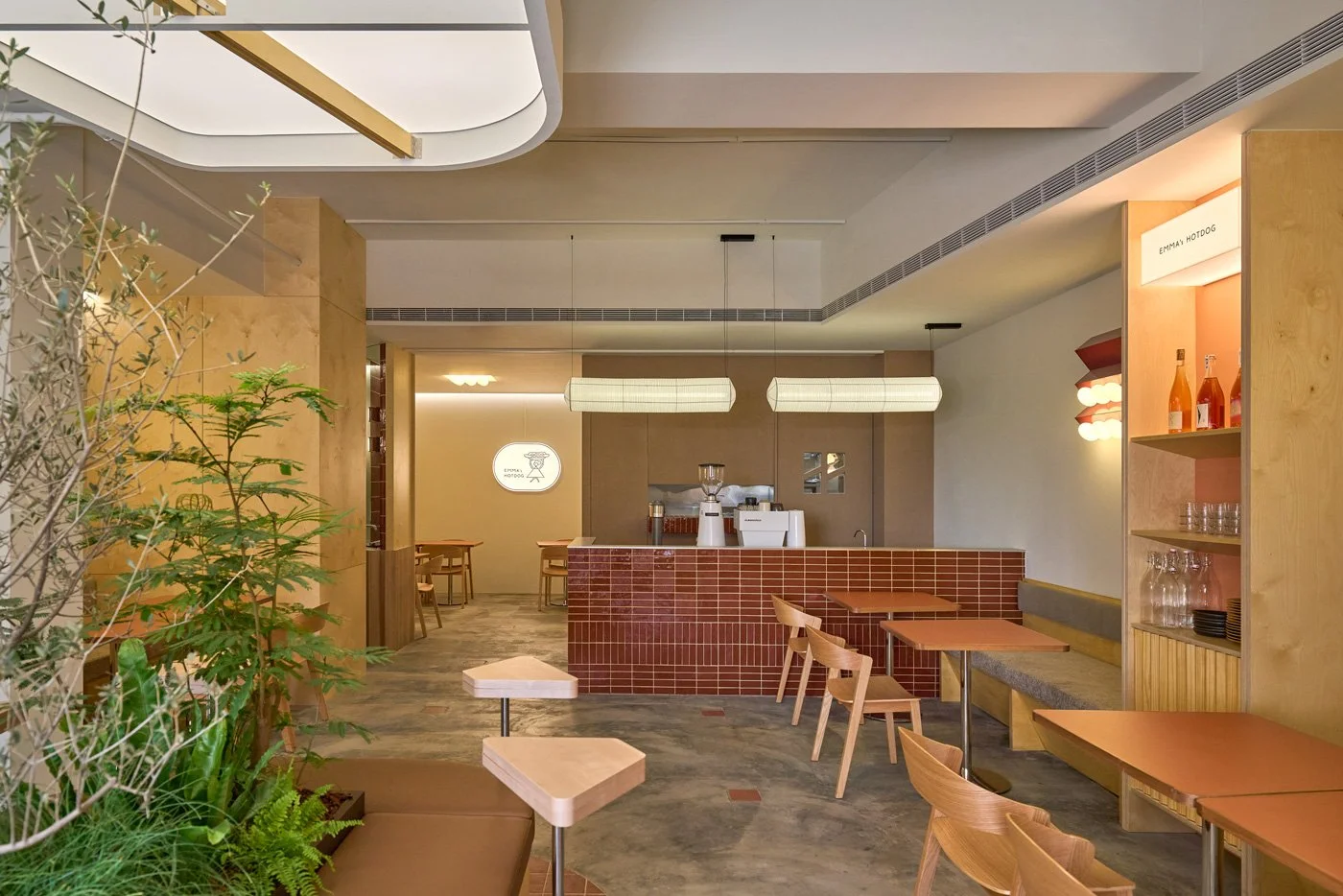
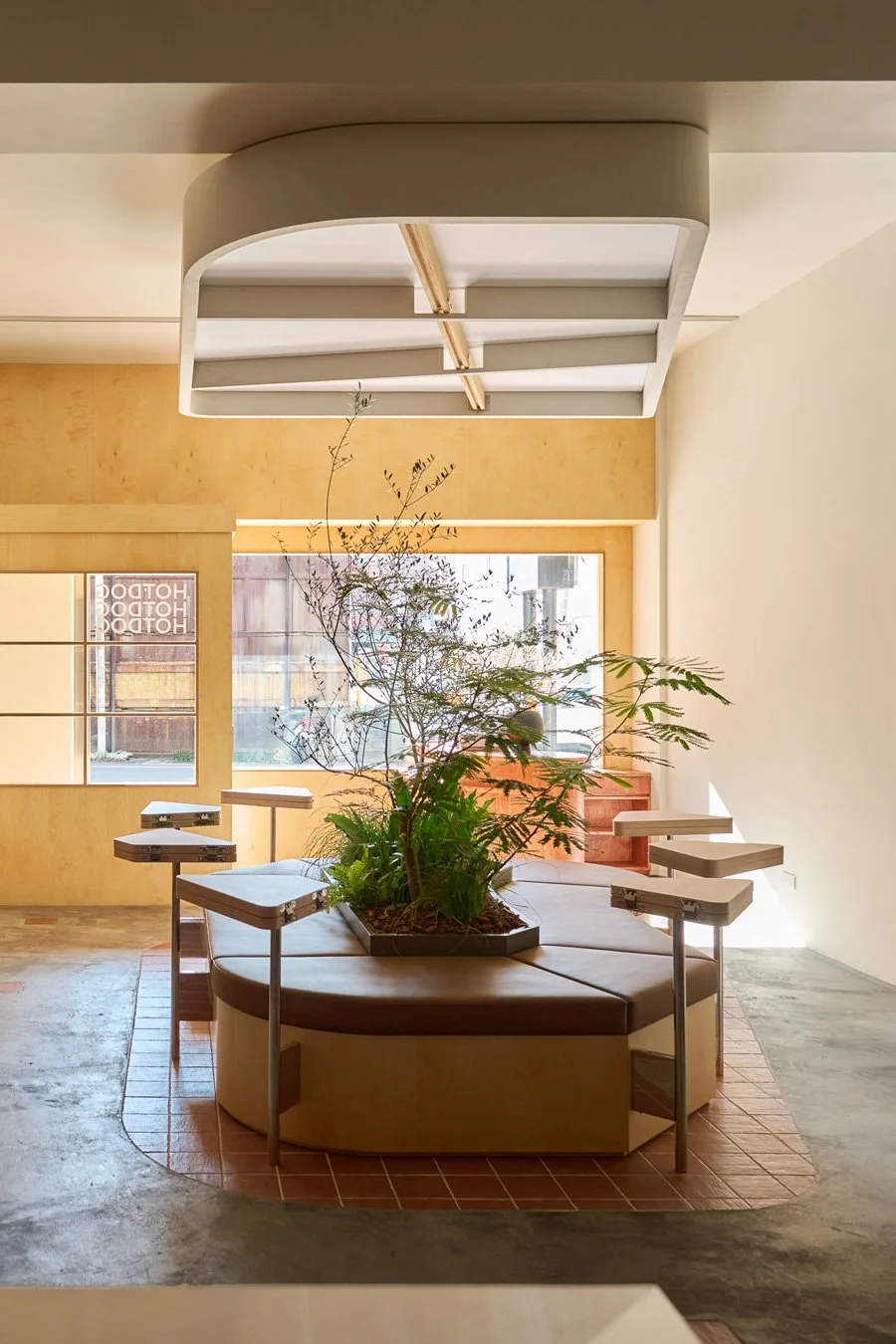
The central seating area serves as the heart of the design. Here, the design team planted a real tree beneath a luminous stretch membrane that simulates a natural skylight, allowing a dappled interplay of light and leaves. Customers dine around the tree as if finding shade on a grassy plain, perfectly embodying the brand's DNA of nature and relaxation.
-
A Dialogue Between Cross-Border Symbols and Craftsmanship
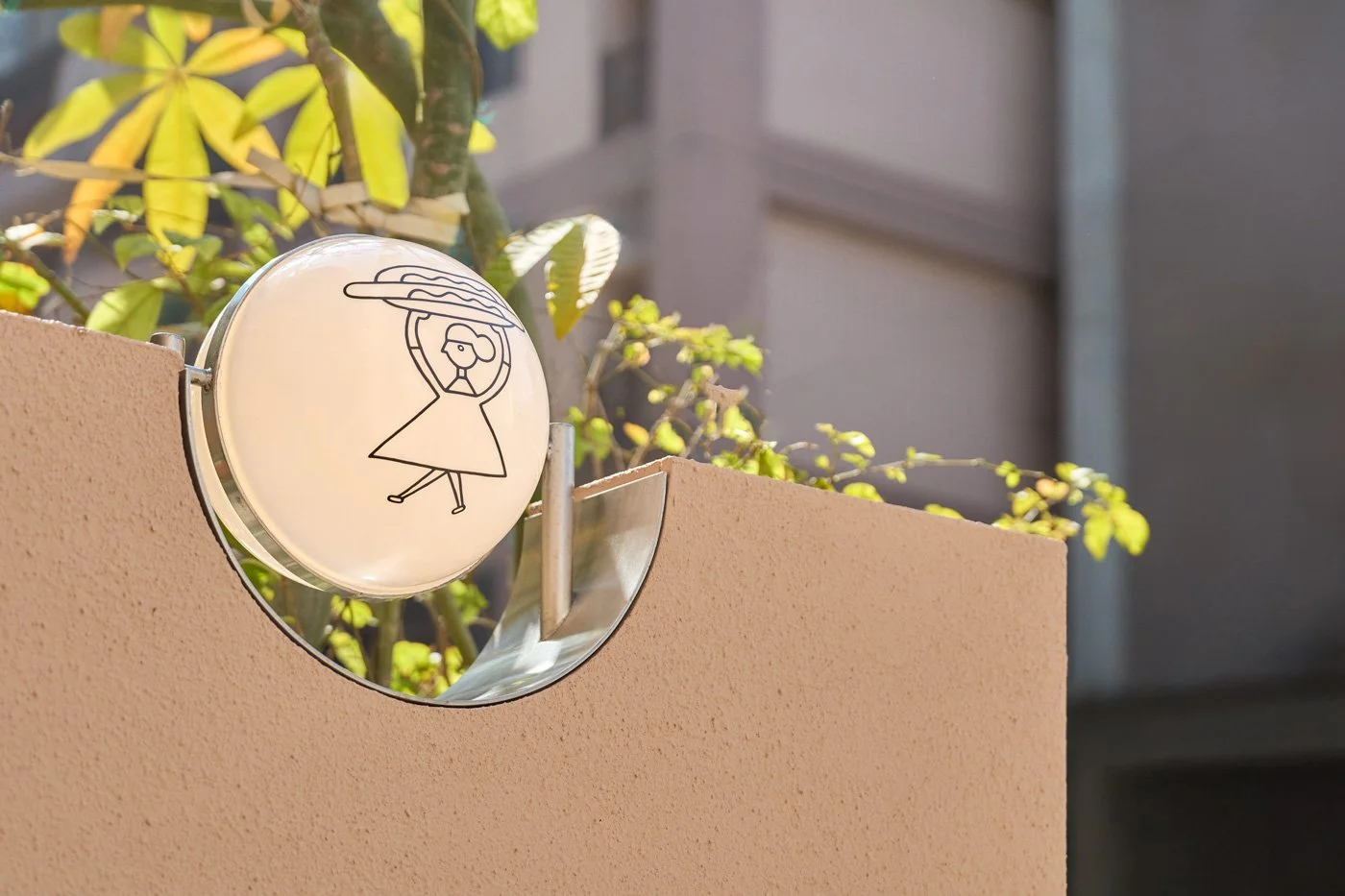
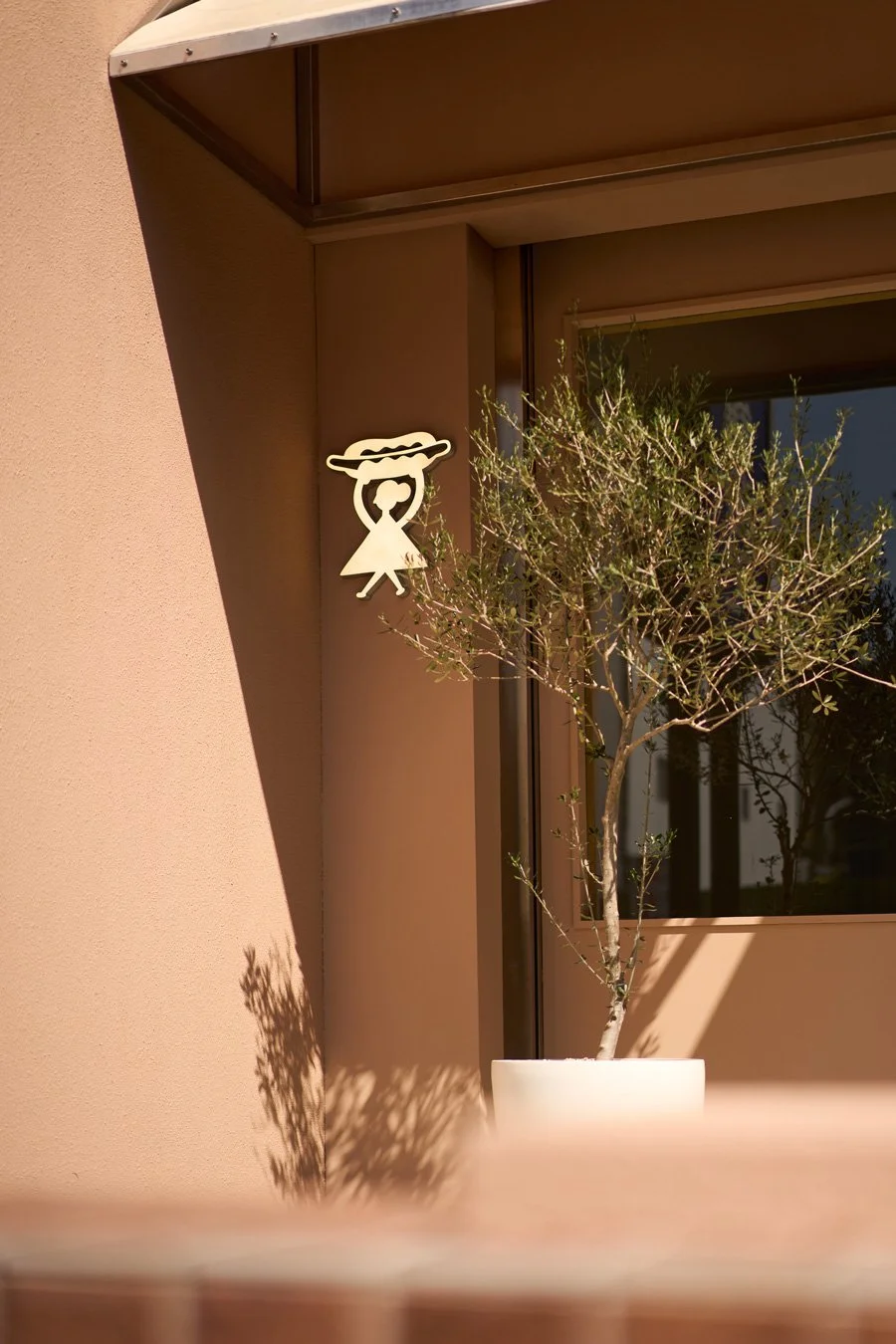
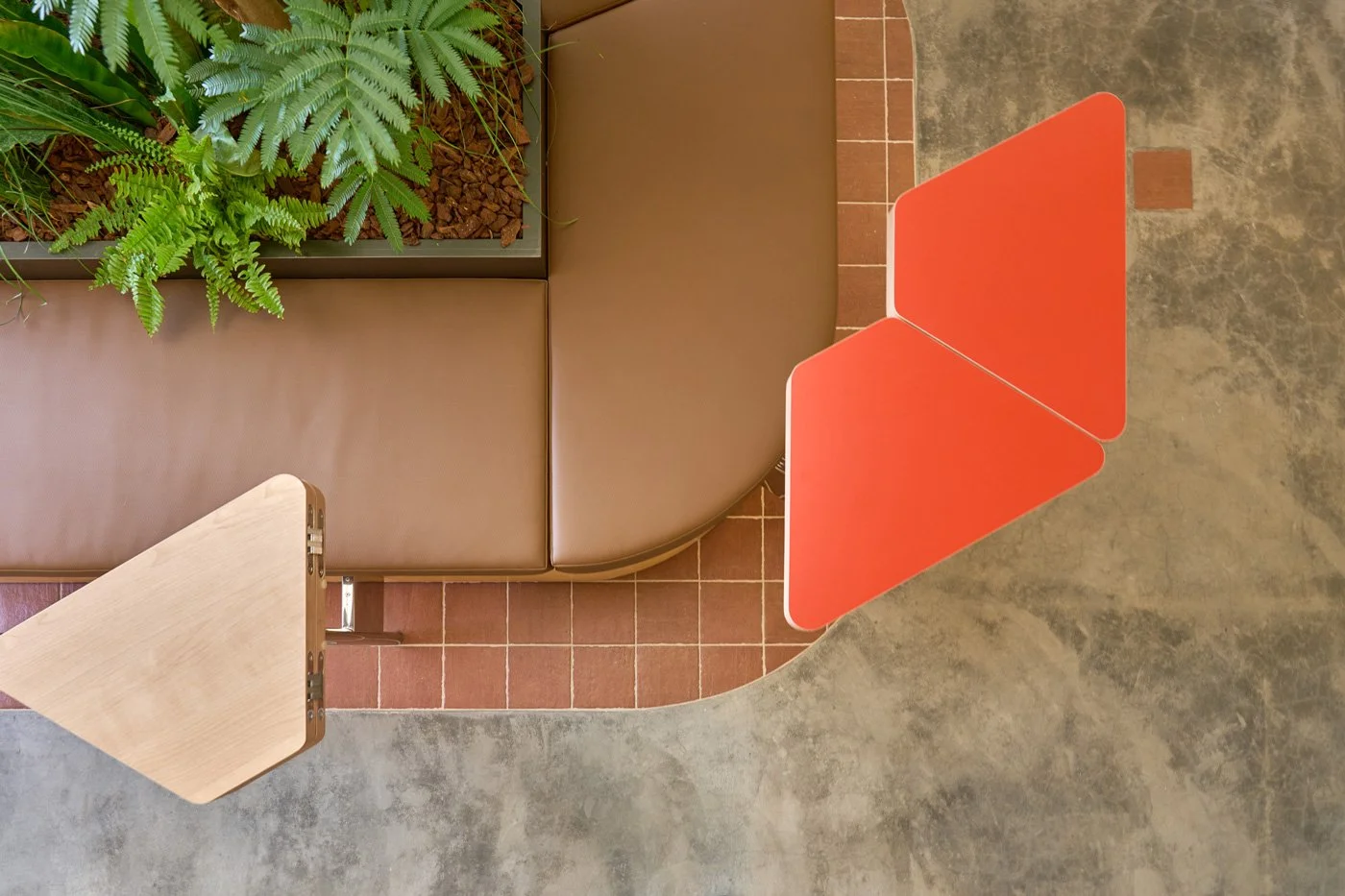
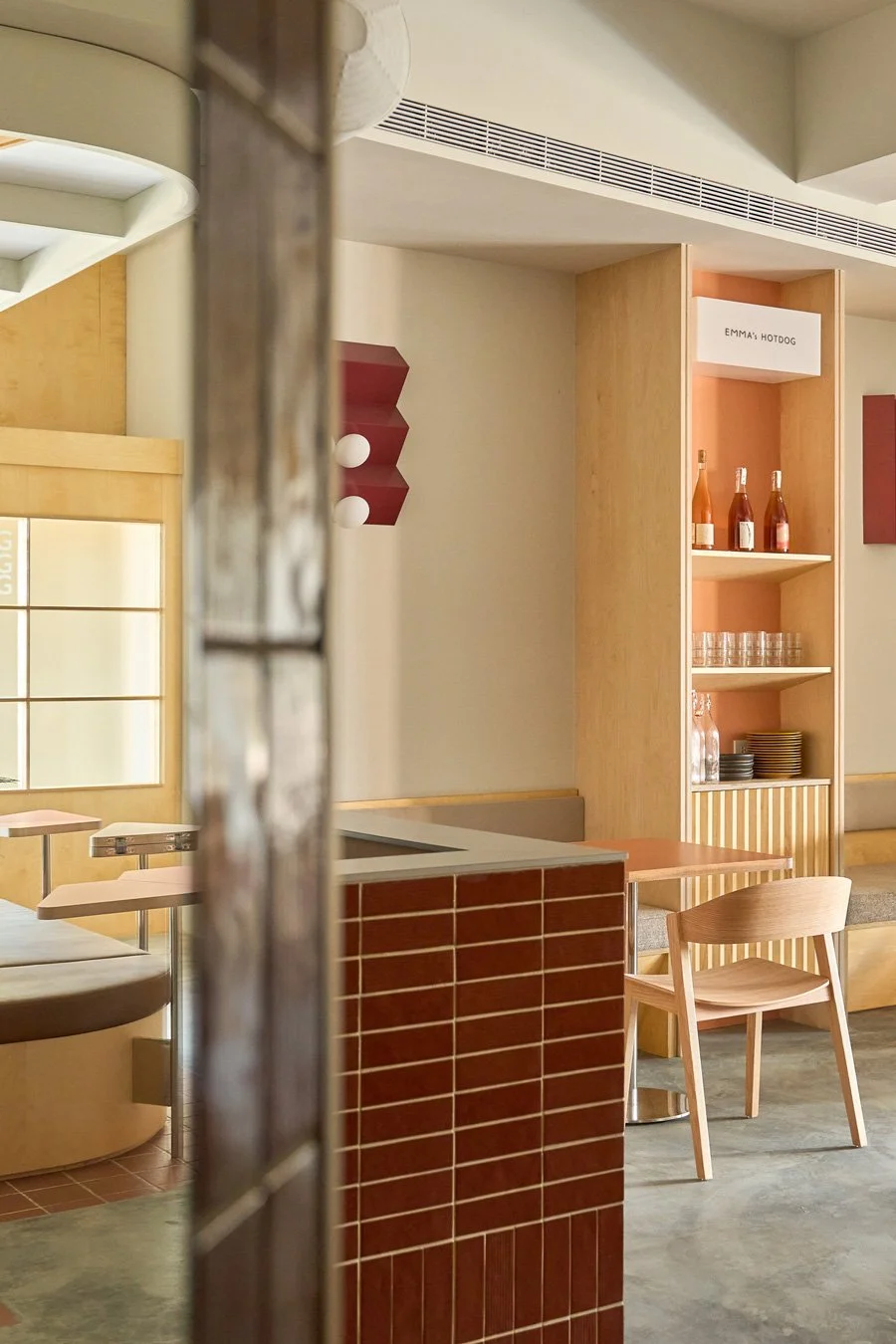
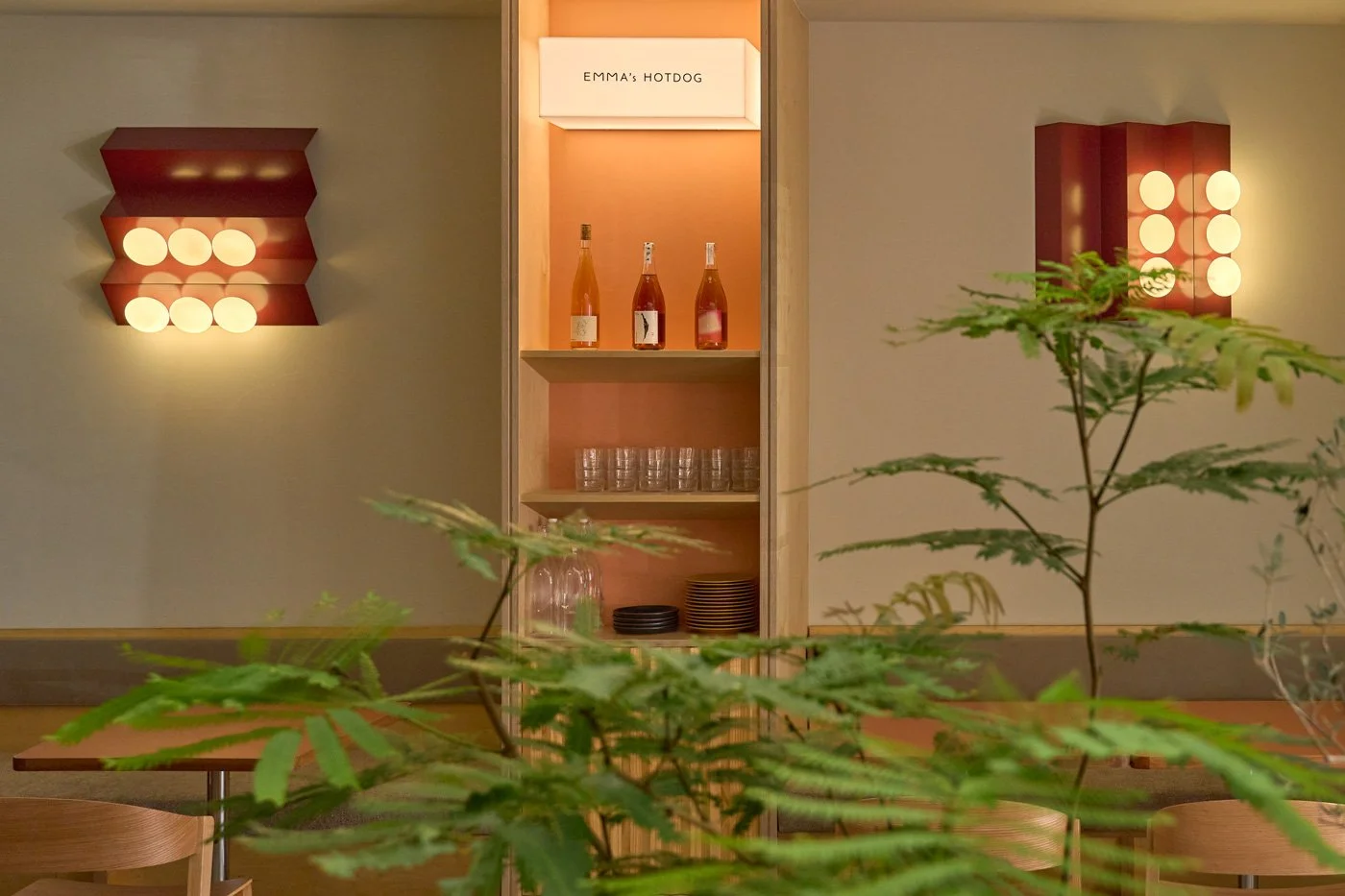
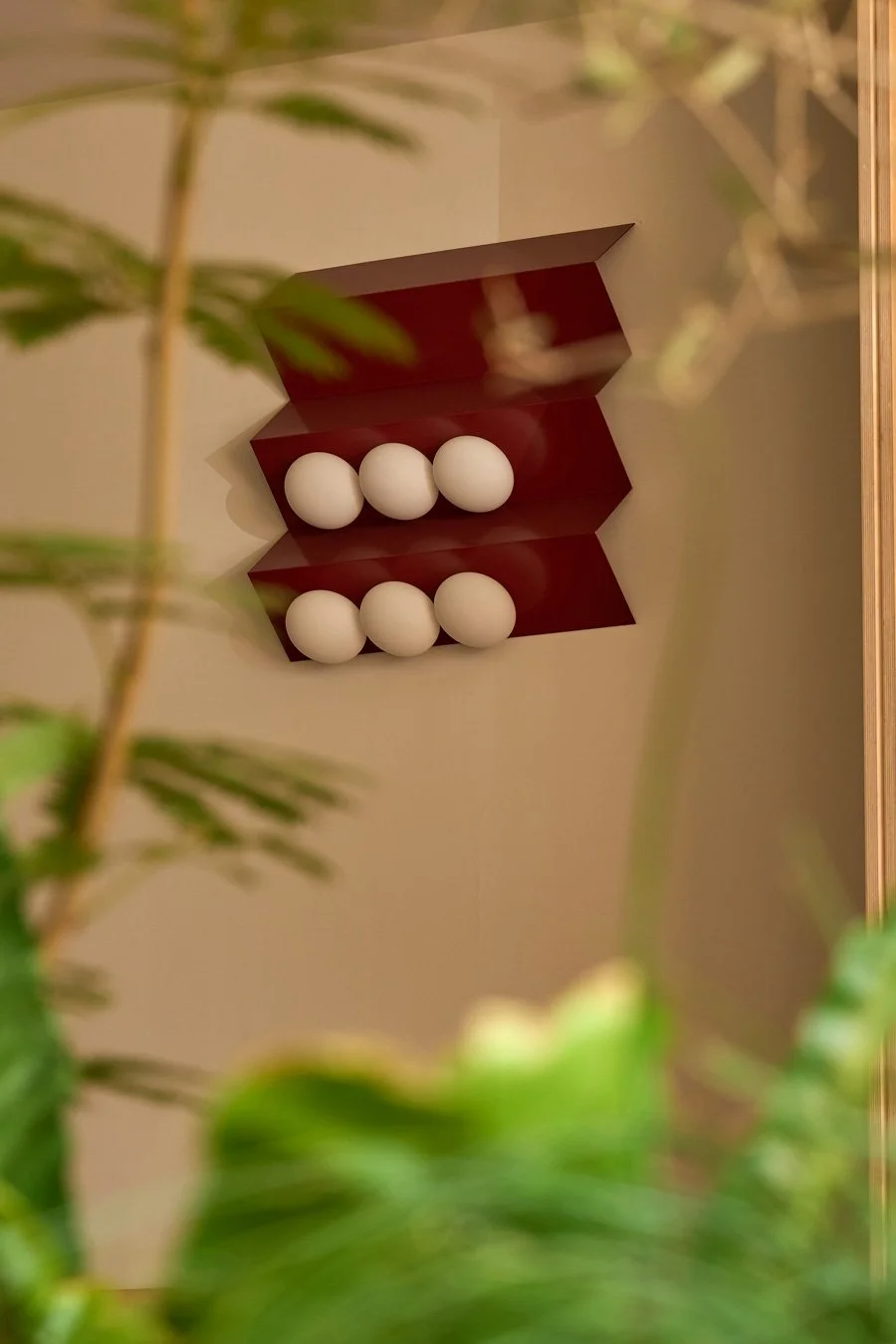
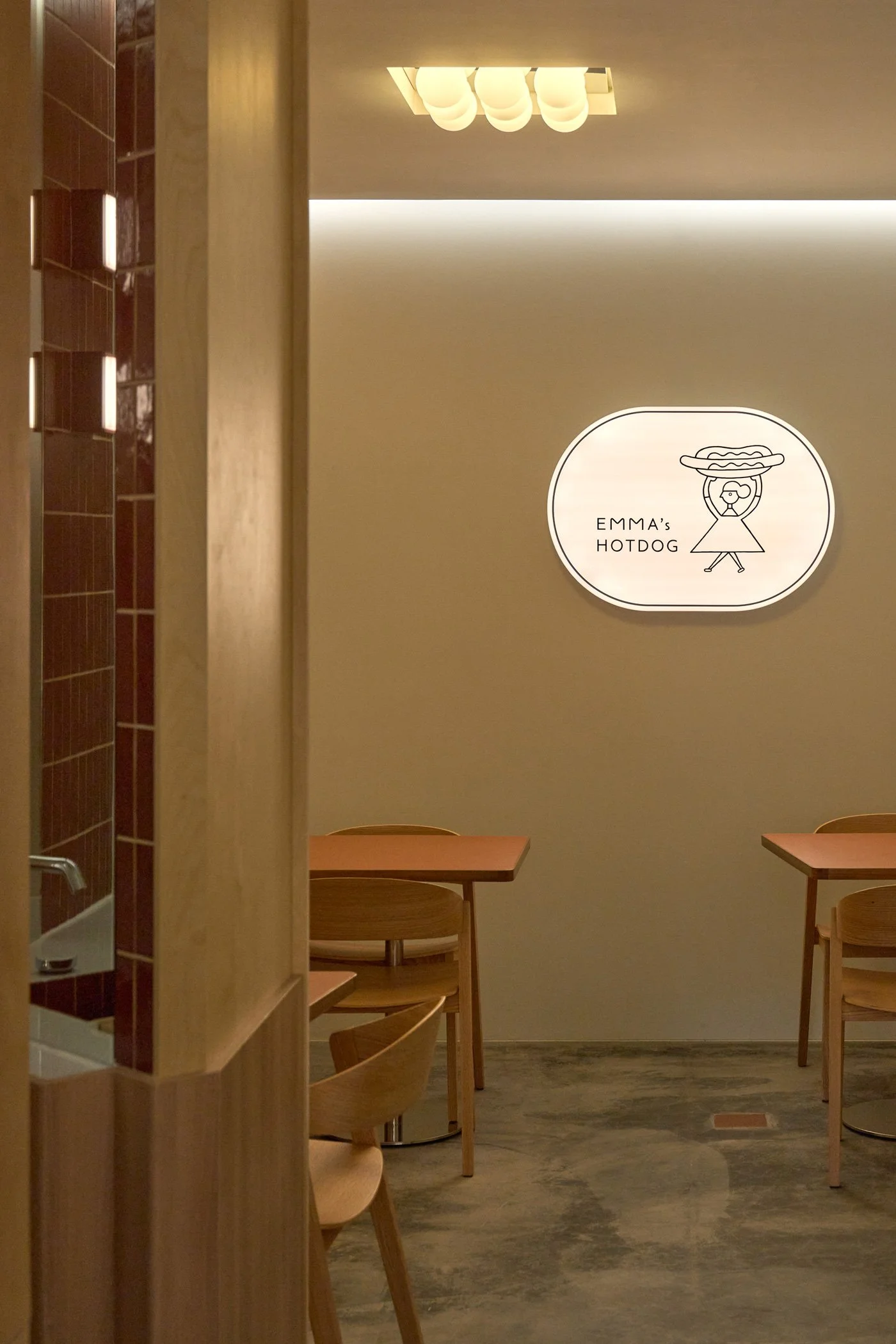
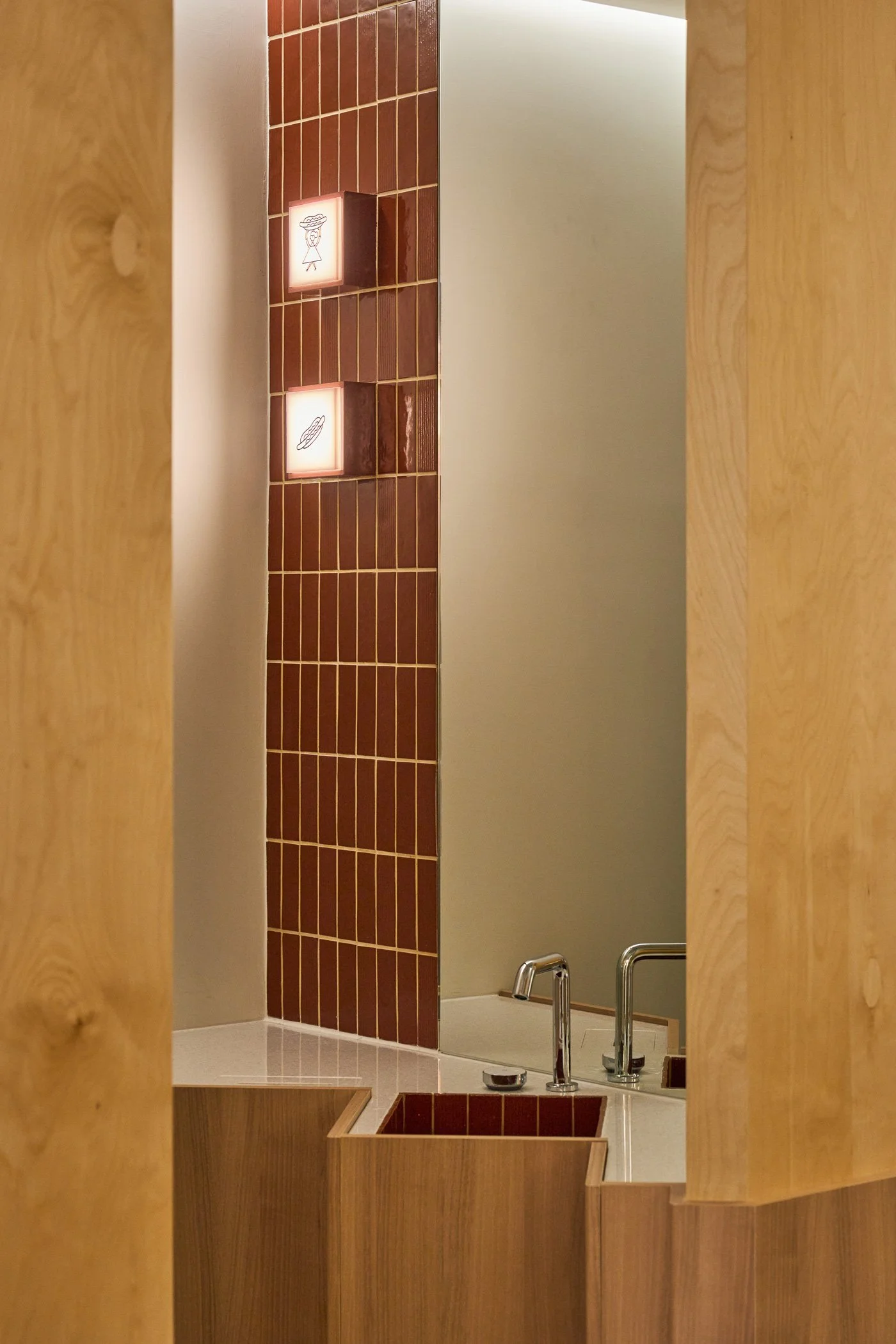
The brand's core visual identity originates from a little girl who loves exploring the world, delineated through simple, dynamic lines full of innocence and geometric tension. The design team deconstructed the lively strokes of the brand logo into pure geometric symbols, translating them into spatial installations and architectural details. The scattered red triangular light fixtures on the walls, the rectangular openings in the washroom cabinetry, and the structural forms and triangular folding tables in the central green zone are all three-dimensional extensions of the brand’s emblem.
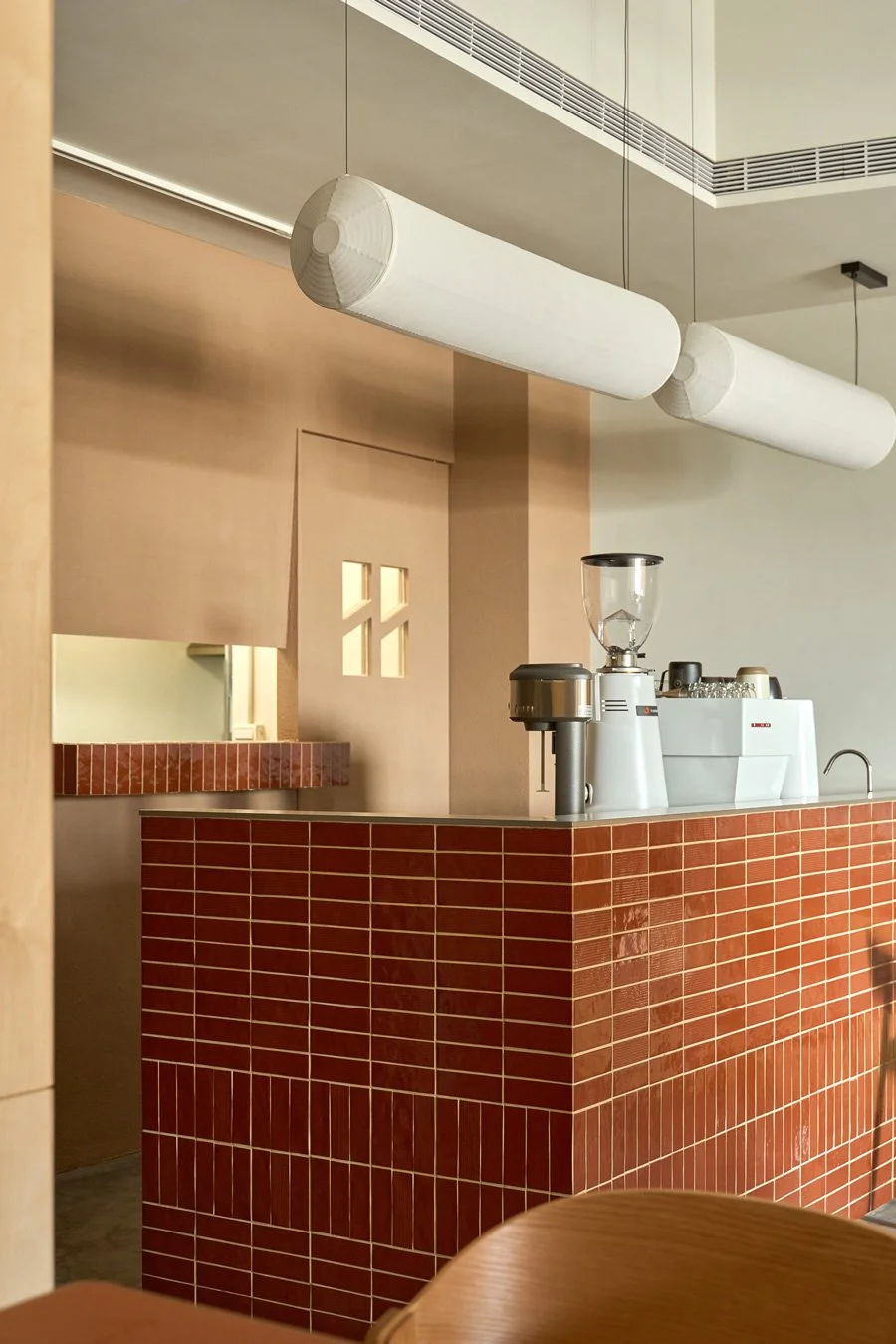
Continuing the visual language of artisanal craftsmanship, the bar area features the "Kimono" tile collection by Italian designer Federica Biasi. Through the delicate woven texture of the ceramics, the tiles capture the fabric quality of traditional Japanese kimonos, with a warm terracotta hue that perfectly complements the brand's primary color. Suspended above the bar are two tubular white paper pendants, evoking the minimalist silhouette of Japanese lanterns. Their soft glow effectively neutralizes the cold, metallic edge of the coffee equipment.
-
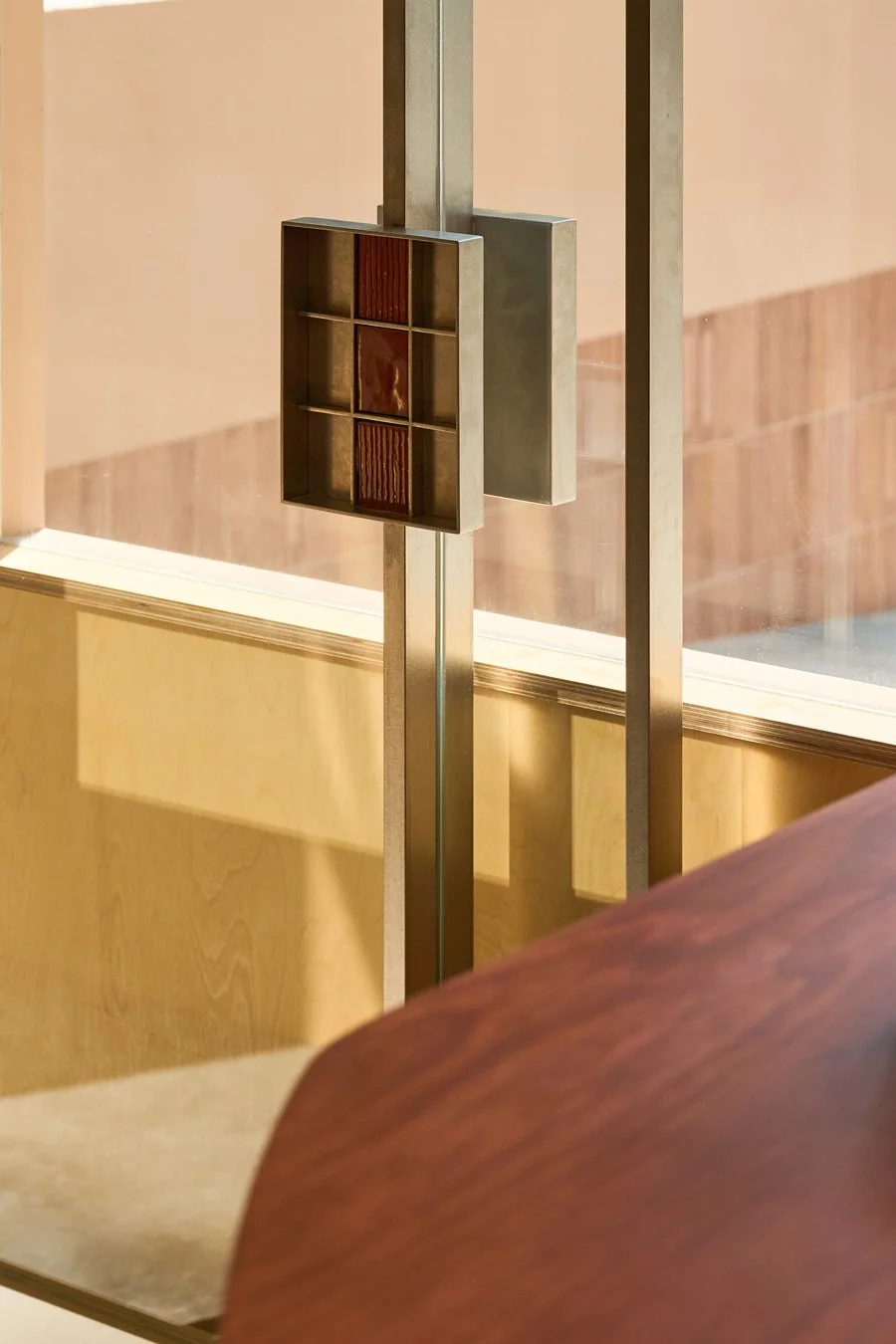
This modern reinterpretation of Japanese culture is also evident in the front door’s details. The handle incorporates stainless steel inlaid with tiles, arranged in a nine-square grid that echoes the aesthetic of the brand's upcoming signature menu items. Notably, the arrangement of the tiles within this grid was personally executed by the Japanese founder. This ceremonial act of participation not only carries a sense of blessing but also endows the space with a unique, unreplicable signature.
-
Flexible Strategies and Functional Aesthetics
Within a limited footprint, White Interior Design struck a precise balance between spatial efficiency and ambiance. The core green zone is equipped with custom triangular tables, allowing solo visitors to casually set down their coffee and light meals. For larger gatherings, these tables can be flexibly expanded and merged to accommodate various dining needs. This lightweight and highly adaptable furniture language echoes the agile spirit rooted in the brand's glamping origins.
Beyond the central green space, the circulation layout features a thoughtful nuance: a strategically reserved corner that offers a sense of anchoring. Providing an excellent vantage point, this quiet nook allows guests to observe the bustling rhythm of the bar and dining area without being disturbed. This fleeting sense of tranquil detachment from the urban clamor is exactly what makes an "urban oasis" so captivating, offering guests a moment of profound psychological rest while they enjoy their meals.
-
A Natural Resonance Returning to Rustic Materials
Through a series of refined material orchestrations, EMMA’s HOTDOG has migrated from a Japanese campsite to a Taiwanese city center, transforming into a vibrant, living tale of nature. The space strips away overly complex decorations, redirecting focus to the pure dialogue between wood, light, and earthy tones. As light and shadow flow between the woven textures of the Kimono tiles and the illuminated skylight, this corner of the Taoyuan Arts and Cultural District stands as a grounding oasis—a place where one can reconnect with the natural rhythm amidst the concrete jungle.